Oligosaccharides
Oligosaccharides are carbohydrates composed of a small number of monosaccharide units linked by glycosidic bonds. These molecules play significant roles in various biological processes, including cell recognition, signaling, and immune responses. In this section, you will find a comprehensive selection of oligosaccharides essential for research in glycoscience, biochemistry, and molecular biology. These compounds are vital for studying complex carbohydrate structures, their functions, and their interactions with other biomolecules. At CymitQuimica, we provide high-quality oligosaccharides to support your research and development needs, ensuring accurate and reliable results in your experiments.
Subcategories of "Oligosaccharides"
- Aminoethyl Glycosides, Aminopropyl Glycosides(14 products)
- Asn Binding Glycans(33 products)
- Biotinated Oligosaccharides(13 products)
- Blood Groups and Lewis Antigens(11 products)
- Blood Type Oligosaccharides(13 products)
- Cellooligosaccharides(1 products)
- Cyclodextrins(183 products)
- Disaccharides(192 products)
- Epitope Oligosaccharides(19 products)
- Fructooligosaccharides(2 products)
- Functional Oligosaccharides(554 products)
- Functionalised Oligosaccharides(1 products)
- Galactosamine(41 products)
- Galactose(261 products)
- Galb(1-3)GalNAc(21 products)
- Ganglio-series(11 products)
- Globo- and Isoglobo-series(17 products)
- Glucosamine(128 products)
- Glucuronic Acids(51 products)
- Glycoproteins, Glycopeptides(59 products)
- Glycosaminoglycan(26 products)
- Human Milk Oligosaccharides(19 products)
- Labeled O-Glycans(9 products)
- Labeled Oligosaccharides(36 products)
- LacNAc(53 products)
- Lacto- and Neolacto-series(14 products)
- Lacto-N-biose(10 products)
- Lactooligosaccharides(7 products)
- Linker Attached Oligosaccharides(19 products)
- Maltooligosaccharides(6 products)
- Milk Oligosaccharides(31 products)
- N-Glycans(149 products)
- Natural Glycosides(177 products)
- Natural Oligosaccharides(103 products)
- O-Glycan(18 products)
- Oligosaccharide Building Blocks(7 products)
- Oligosaccharide Replacement(2 products)
- Oligosaccharides by Component Sugar(225 products)
- Oligoses(24 products)
- Other Oligosaccharides(14 products)
- PEG Oligomers(33 products)
- Phosphated Sugars(17 products)
- Protected Sugars(526 products)
- Reagents for Oligosaccharide Synthesis(254 products)
- Ser, Thr Binding Glycans(9 products)
- Sialylated Oligosaccharides(3 products)
- Sphingoglycolipids(42 products)
- Sugar Amino Acids, Sugar Peptides(20 products)
- Sugar Antigens(31 products)
- Sugar Building Blocks by Target Oligosaccharides(225 products)
- Sugar Conjugates(100 products)
- Sulfated Sugars(16 products)
- Tetrasaccharides(34 products)
- Trisaccharides and Above(95 products)
- Xylooligosaccharides(5 products)
Show 47 more subcategories
Found 2278 products of "Oligosaccharides"
Sort by
Purity (%)
0
100
|
0
|
50
|
90
|
95
|
100
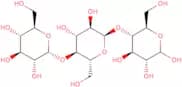
Maltotriose - Ultrapure
CAS:<p>linear a-(1,4) trisaccharide produced from starch by acid or enzyme hydrolysis</p>Formula:C18H32O16Purity:Min. 95.0 Area-%Color and Shape:PowderMolecular weight:504.44 g/molMonofucosyllacto-N-hexaose III
CAS:<p>Sialylated tetrasaccharide found in human milk, possible health benefits for the neonate by supporting resistance to pathogens, gut maturation, immune function, and cognitive development. Purity typically above 60%. Contains other oligosaccharide fragments. For a typical IC trace see datasheet section</p>Formula:C46H78N2O35Purity:(By Hpaec) Min. 60%Color and Shape:PowderMolecular weight:1,219.12 g/mol4-Methoxyphenyl 4-O-{3-O-[2,4-di-O-(3,4 ,6-tri-O-acetyl-2-deoxy-2-phthalimido-β-D-glucopyranosyl)-3 ,6-di-O-benzyl-β-D-mannopyranosyl]-4 ,6-O-benzylidene-2-O-levulinoyl-β-D-glucopyranosyl}-3 ,6-di-O-benzyl-2-deoxy-2-phthalimido-β-D-glucopyranoside
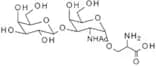
<p>4-Methoxyphenyl 4-O-{3-O-[2,4-di-O-(3,4,6-tri-O-acetyl-2-deoxy-2-phthalimido -bDglucopyranosyl)-3,6-di-ObenzylbDmannopyranosyl] -4,6-- Obenzylidene--2-- Olevulinoyl-- bDglucopyranosyl} -3,6-- diOBenzyl 2-- deoxy 2-- phthalimido bDglucopyranoside is an oligosaccharide with a sugar backbone. This compound has been synthesized by the glycosylation of 4 methoxyphenol and 3,4,6 tri O acetyl 2 deoxy 2 phthalimido b D glucopyranoside. The glycosidic bond was formed between C 1</p>Formula:C113H113N3O38Purity:Min. 95%Molecular weight:2,121.1 g/mol2-Acetamido-2-deoxy-3-O-(β-D-galactopyranosyl)-α-D-galactopyranosyl-1-O-L-serine
CAS:<p>2-Acetamido-2-deoxy-3-O-(β-D-galactopyranosyl)-a-D-galactopyranosyl-1-O-[4-(aminomethyl)benzoyl]-L-serine (2ADOGB) is a side chain of the amino acid L -serine. It has been shown to have antihypertensive, vasodilatory, and diuretic properties in mice. 2ADOGB is converted to an erythroimidazole derivative by aminomethylation and then binds to DNA as a tautomer. This binding inhibits transcription of genes that encode enzymes responsible for synthesizing prostaglandins, thereby reducing inflammation and pain.</p>Formula:C17H30N2O13Purity:Min. 95%Molecular weight:470.43 g/molHeparin disaccharide III-S trisodium salt
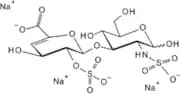
CAS:<p>Heparin disaccharide III-S trisodium salt is a synthetic and custom-synthesized drug with high purity. It is a complex carbohydrate with a molecular weight of 597.1 g/mol, an Oligosaccharide with a molecular weight of 1,008.3 g/mol, and a Glycosylation with a molecular weight of 1,069.4 g/mol. Heparin disaccharide III-S trisodium salt has been modified by the addition of fluorine atoms to create an active form that is highly reactive to electrophilic groups on proteins or nucleic acids. It can be used for Click modification or methylation reactions to modify proteins or DNA molecules in order to study protein-protein interactions or protein conformational changes in response to external stimuli.</p>Formula:C12H16NO16S2·3NaPurity:Min. 95 Area-%Color and Shape:White Yellow PowderMolecular weight:563.35 g/molChitooctaose octahydrochloride
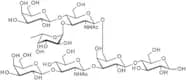
CAS:<p>Chitooctaose 8HCl is an antiviral agent that inhibits the replication of viruses. It blocks the virus from entering and infecting cells by binding to its receptor, which prevents cell-to-cell transmission. Chitooctaose 8HCl has a hydrolysable form and can be acetylated to increase its potency. This drug also interacts with ligands such as oligosaccharides, which are molecules consisting of several monomers linked together in a chain. The structural changes in these oligosaccharides are important for the interaction with chitooctaose 8HCl. Chitooctaose 8HCl has been shown to inhibit the replication of RNA viruses such as influenza A virus, human immunodeficiency virus type 1 (HIV-1), and rotavirus. This antiviral agent also inhibits the replication of DNA viruses such as herpes simplex type 2 (HSV-2) and hepatitis B virus (</p>Formula:C48H90N8O33•(HCl)8Purity:Min. 85 Area-%Color and Shape:White PowderMolecular weight:1,598.95 g/molBlood Group A pentasaccharide type I
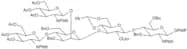
<p>A antigen pentasaccharide Type I, possible use in antiviral development</p>Formula:C34H58N2O25Purity:Min. 85%Color and Shape:PowderMolecular weight:894.82 g/molBenzyl 4-O-{4-O-[[2,4-di-O-acetyl-3-O-[2,4-di-O-(3,4,6-tri-O-acetyl-2-deoxy-2-phthalimido-b-D-glucopyranosyl)-3,6-di-O-benzyl-a-D-ma nnopyranosyl]-6-O-[3,4-di-O-acetyl-2,6-di-O-(3,4,6-tri-O-acetyl-2-deoxy-2-phthalimido-b-D-glucopyranosyl)-a-D-mannopyr
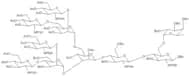
CAS:<p>The benzyl group is a type of organic group in which the hydrogen atom at the alpha position is replaced with a phenyl group. In this compound, the benzyl group is attached to a sugar molecule through an ether bond. The benzyl group can be modified to produce different compounds. For example, it can be fluorinated to produce fluoro-benzyl compounds that are used as anti-cancer agents.</p>Formula:C203H206N6O71SPurity:Min. 95%Molecular weight:3,897.87 g/molIsomaltose
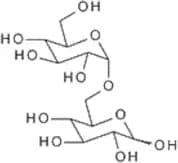
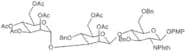
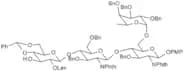
CAS:<p>Sweetener; has low cariogenicity; produced from high maltose syrup by treatment</p>Formula:C12H22O11Purity:Min. 97 Area-%Color and Shape:White PowderMolecular weight:342.3 g/mol4-Methoxyphenyl 4-O-[2,6-di-O-acetyl-3-O-(2,3,4,6-tetra-O-acetyl-α-D-mannopyranosyl)-4-O-benzyl-β-D-mannopranosyl]-3,6-di-O-benzyl-2 -deoxy-2-phthalimido-β-D-glucopyranoside
<p>4-Methoxyphenyl 4-O-[2,6-di-O-acetyl-3-O-(2,3,4,6-tetra-O-acetyl-a-D-mannopyranosyl)-4-O-benzylbDmannopranosyl]-3,6diObenzyl 2 -deoxy2 -phthalimidoBglucopyranoside is a carbohydrate that belongs to the group of oligosaccharides. It is a saccharide that consists of an acetate ester and an acetal linkage. This carbohydrate has been custom synthesized for use in click chemistry. 4MPP4ODABAGMBZ is a synthetic monosaccharide with a methylation and glycosylation modification.</p>Formula:C66H71NO24Purity:Min. 95%Molecular weight:1,262.26 g/molAgarotriose
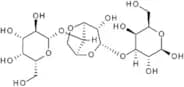
CAS:<p>Agarose is a polysaccharide found in red algae, typically Gelidium and Gracilaria. It is a strictly alternating polysaccharide of β-1,3 linked D-galactose and α-1,4 linked L-3,6 anhydrogalactose with occasional sulfation at position 6 of the anhydrogalactose residue. Agaro-oligosaccharides result from cleavage at galactose residues and neoagaro-oligosaccharides from cleavage at 3,6-anhydro residues. It is reported that agarotriose has prebiotic properties.</p>Formula:C18H30O15Purity:Min. 98 Area-%Color and Shape:White PowderMolecular weight:486.42 g/molGalacturonan DP5 sodium salt
<p>Sodium Pentagalacturonate, (β-1,4 sodium Pentagalacturonate) is derived from pectin or pectic acid, by enzymatic or partial acid hydrolysis (Combo, 2012). It is used inâ¯galacturonic acidâ¯metabolism research as a substrate to identify, differentiate, and characterize endo- and exopolygalacturonase(s), and gluconase(s) (Jayani, 2005). The addition of very short fragments of homogalacturonan, tri-galacturonate, tetra-galacturonate, and penta-galacturonate oligosaccharides, restore development in dark-grown, de-etiolated seedling mutants, suggesting that they are unable to generate de-methylesterified pectin fragments. A model of spatiotemporally separated photoreceptive and signal-responsive cell types has been proposed, that contains overlapping subsets of the regulatory network of light-dependent seedling development (Sinclair, 2017).</p>Purity:(Hpaec-Pad) Min. 65%Color and Shape:Powder2,3,6,2',3',4',6'-Hepta-O-acetyl-a-D-maltosyl bromide
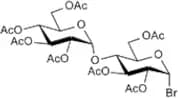
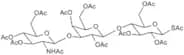
CAS:<p>2,3,6,2',3',4',6'-Hepta-O-acetyl-a-D-maltosyl bromide is a fatty acid that is isolated from the fungus Penicillium notatum. It has been shown to have anti-cancer properties by inhibiting cell proliferation and inducing cancer cell death by apoptosis. The mechanism of action has been shown to be due to its ability to inhibit the phospholipid membrane synthesis and disrupt the interaction between lipids and proteins in the membrane. This compound also inhibits the growth of cancer cells by binding with the hydroxyl group on the surface of cancer cells. 2,3,6,2',3',4',6'-Hepta-O-acetyl-a-D-maltosyl bromide has been shown to inhibit muscle cell proliferation in vitro and in vivo. This drug can be used as an alternative for treatment for cancer or other diseases that are caused by muscle</p>Formula:C26H35BrO17Purity:Min. 95 Area-%Color and Shape:White PowderMolecular weight:699.45 g/mol1,2,3,6-Tetra-O-acetyl-4-O-[2,4,6-tri-O-acetyl-3-O-(2-acetamido-3,4,6-tri-O-acetyl-2-deoxy-b-D-glucopyranosyl)-b-D-galactoyranosyl]- b-D-thioglucopyranose
<p>This is a custom synthesis of a complex carbohydrate. The modification, fluorination, methylation, and monosaccharide composition of this carbohydrate have been modified by the Click modification technique. This carbohydrate has the CAS No. 59057-77-4 and a molecular weight of 1,914. It is an oligosaccharide saccharide with glycosylation and sugar composition that are classified as carbohydrates.</p>Formula:C40H55NO25SPurity:Min. 95%Molecular weight:981.92 g/molLS-tetrasaccharide c ammonium salt
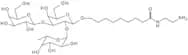
CAS:<p>Sialylated tetrasaccharide found in human milk, possible health benefits for the neonate by supporting resistance to pathogens, gut maturation, immune function, and cognitive development.</p>Formula:C37H62N2O29•NH3Purity:Min. 95 Area-%Color and Shape:White PowderMolecular weight:1,015.88 g/molBlood Group B trisaccharide, N-aminoethyl nonanamide
<p>Blood group antigen derivative for biochemical research</p>Formula:C29H54N2O16Purity:Min. 95%Color and Shape:Off-White PowderMolecular weight:686.74 g/mol4-Methoxyphenyl 4-O-[4-O-(4,6-O-benzylidene-2-O-levulinoyl-β-D-glucopyranosyl)-3,6-di-O-benzyl-2-deoxy-2-phthalimido-β-D-glucopyrano syl]-3-O-benzyl-6-O-(2,3,4-tri-O-benzyl-α-L-fucopyranosyl)-2-deoxy-2-phthalimido-β-D-glucopyranoside
<p>4-Methoxyphenyl 4-O-[4-O-(4,6-O-benzylidene-2-O-levulinoyl-b-D-glucopyranosyl)-3,6-di-O-benzyl-2-deoxy -2 -phthalimido -b -D -glucopyranoside] (MMPS) is a synthetic compound that has been modified for use as a fluorescent probe for the detection of saccharides. MMPS can be used to detect glycosylation or sugar modifications in proteins and carbohydrates. This compound has been shown to bind to saccharides containing a terminal glucose residue. The MMPS molecule was synthesized and found to be effective in detecting oligosaccharides with a high degree of accuracy. The MMPS molecule was also found to be useful in detecting glucose modifications on proteins and other carbohydrate structures, such as polysaccharides.</p>Formula:C101H100N2O25Purity:Min. 95%Molecular weight:1,741.87 g/mol2-Azidoethyl N-acetyl-D-lactosamine
CAS:<p>2-Azidoethyl N-acetyl-D-lactosamine is a custom synthesis that is a complex carbohydrate. It has been modified to include methylation and glycosylation. The saccharide is composed of several sugar molecules, including glucose and galactose, which are linked by alpha (1→4) or beta (1→3) bonds. The carbohydrate can be fluorinated, which increases its stability in the presence of oxygen. This compound has CAS number 338971-38-3. 2-Azidoethyl N-acetyl-D-lactosamine is a high purity product that can be used in the modification of other carbohydrates with click chemistry.</p>Formula:C16H28N4O11Purity:Min. 95%Color and Shape:PowderMolecular weight:452.41 g/molHeparin derived dp18 saccharide ammonium salt
<p>Heparin derived dp18 saccharide ammonium salt is a complex carbohydrate that has been modified with methylation, custom synthesis, click modification, and fluorination. It is used as an anticoagulant to prevent the formation of blood clots. Modification of the sugar chain on the heparin molecule can be achieved through either monosaccharide or polysaccharide substitution. The monosaccharides most commonly found in heparin are glucosamine and N-acetylglucosamine. The polysaccharides that can be found in heparin include chondroitin sulfate, dermatan sulfate, keratan sulfate, and heparan sulfate.<br>Heparin derived dp18 saccharide ammonium salt is a high purity product that has been modified to have a higher degree of efficacy for use in clinical applications. This product is available for purchase at a cost-effective price point.</p>Purity:Min. 95%Color and Shape:PowderMolecular weight:~ 5200 (average)Globo-N-tetraose
CAS:<p>Tetrasaccharide associated with the glycolipid globoside</p>Formula:C26H45NO21Purity:Min. 95 Area-%Color and Shape:White PowderMolecular weight:707.63 g/mol