Oligosaccharides
Oligosaccharides are carbohydrates composed of a small number of monosaccharide units linked by glycosidic bonds. These molecules play significant roles in various biological processes, including cell recognition, signaling, and immune responses. In this section, you will find a comprehensive selection of oligosaccharides essential for research in glycoscience, biochemistry, and molecular biology. These compounds are vital for studying complex carbohydrate structures, their functions, and their interactions with other biomolecules. At CymitQuimica, we provide high-quality oligosaccharides to support your research and development needs, ensuring accurate and reliable results in your experiments.
Subcategories of "Oligosaccharides"
- Aminoethyl Glycosides, Aminopropyl Glycosides(14 products)
- Asn Binding Glycans(33 products)
- Biotinated Oligosaccharides(13 products)
- Blood Groups and Lewis Antigens(11 products)
- Blood Type Oligosaccharides(13 products)
- Cellooligosaccharides(1 products)
- Cyclodextrins(183 products)
- Disaccharides(192 products)
- Epitope Oligosaccharides(19 products)
- Fructooligosaccharides(2 products)
- Functional Oligosaccharides(554 products)
- Functionalised Oligosaccharides(1 products)
- Galactosamine(41 products)
- Galactose(261 products)
- Galb(1-3)GalNAc(21 products)
- Ganglio-series(11 products)
- Globo- and Isoglobo-series(17 products)
- Glucosamine(128 products)
- Glucuronic Acids(51 products)
- Glycoproteins, Glycopeptides(59 products)
- Glycosaminoglycan(26 products)
- Human Milk Oligosaccharides(21 products)
- Labeled O-Glycans(9 products)
- Labeled Oligosaccharides(36 products)
- LacNAc(53 products)
- Lacto- and Neolacto-series(14 products)
- Lacto-N-biose(10 products)
- Lactooligosaccharides(7 products)
- Linker Attached Oligosaccharides(19 products)
- Maltooligosaccharides(6 products)
- Milk Oligosaccharides(31 products)
- N-Glycans(149 products)
- Natural Glycosides(177 products)
- Natural Oligosaccharides(103 products)
- O-Glycan(18 products)
- Oligosaccharide Building Blocks(7 products)
- Oligosaccharide Replacement(2 products)
- Oligosaccharides by Component Sugar(225 products)
- Oligoses(24 products)
- Other Oligosaccharides(14 products)
- PEG Oligomers(33 products)
- Phosphated Sugars(17 products)
- Protected Sugars(526 products)
- Reagents for Oligosaccharide Synthesis(254 products)
- Ser, Thr Binding Glycans(9 products)
- Sialylated Oligosaccharides(3 products)
- Sphingoglycolipids(42 products)
- Sugar Amino Acids, Sugar Peptides(20 products)
- Sugar Antigens(31 products)
- Sugar Building Blocks by Target Oligosaccharides(225 products)
- Sugar Conjugates(100 products)
- Sulfated Sugars(16 products)
- Tetrasaccharides(34 products)
- Trisaccharides and Above(95 products)
- Xylooligosaccharides(5 products)
Show 47 more subcategories
Found 2278 products of "Oligosaccharides"
Sort by
Purity (%)
0
100
|
0
|
50
|
90
|
95
|
100
Monosialyl, monofucosyllacto-N-neohexaose
Monosialyl, monofucosyllacto-N-neohexaose is a synthetic oligosaccharide. It has a molecular weight of 1205. The compound has been modified with a click modification and fluorination, and has been shown to be stable in the presence of acid, base, and heat. The compound is also high purity and can be synthesized on request. Monosialyl, monofucosyllacto-N-neohexaose is an example of a complex carbohydrate that contains both a sugar and polysaccharide component. The sugar component is composed of one monosaccharide: sialic acid. The polysaccharide component consists of six disaccharides: two lactose molecules linked with one glucose molecule each. Monosialyl, monofucosyllacto-N-neohexaose is used as an artificial sweetener in food products such as cookies or cakesFormula:C57H95N3O43Purity:Min. 95%Color and Shape:PowderMolecular weight:1,510.36 g/molGlycyl-asialo, galactosylated biantennary
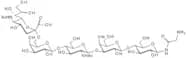
Glycyl-asialo, galactosylated biantennary is a high purity custom synthesis of sugar. Glycyl-asialo, galactosylated biantennary is custom synthesized by the click modification of glycosylation and fluorination with methylation and modification. The CAS number for glycyl-asialo, galactosylated biantennary is **********.Formula:C64H108N6O46Purity:Min. 95%Molecular weight:1,697.56 g/molGalNAcb(1-3)Gala(1-3)Galb(1-4)Glc-b-pNP
<p>GalNAcb(1-3)Gala(1-3)Galb(1-4)Glc-b-pNP is a synthetic glycoconjugate that is a glycosylated complex carbohydrate. It has been modified by Click chemistry and fluorination, and contains the monosaccharides galactose, galactosamine, glucose, and glucuronic acid. GalNAcb(1-3)Gala(1-3)Galb(1-4)Glc-b-pNP is used as a substrate for enzyme assays to study the activity of glycosyltransferases such as galactosyltransferase. This product can be used for research purposes in immunology, molecular biology, biochemistry and other fields.</p>Formula:C32H48N20O23Purity:Min. 95%Molecular weight:1,080.84 g/mol5-O-β-D-Glucopyranosyl-D-xylitol
CAS:<p>5-O-β-D-Glucopyranosyl-D-xylitol is a disaccharide that is synthesized for use in research.</p>Formula:C11H22O10Purity:Min. 95%Color and Shape:PowderMolecular weight:314.29 g/molLacto-N-difucohexaose IV
<p>Lacto-N-difucohexaose IV is a pentasaccharide with a lacto-n-difucohexaose backbone that has been shown to have inhibitory activities against human red blood cells. This pentasaccharide is a glycosaminoglycan, which is a type of carbohydrate that consists of an oligosaccharide and protein. Lacto-N-difucohexaose IV specifically binds to the antigen on the surface of human red blood cells, inhibiting their proliferation. The pentasaccharide is also known as Hansson's hapten or Hapten IV. The pentasaccharides are found in group O blood and are not found in groups A, B, or AB.</p>Formula:C38H65NO29Purity:Min. 95%Molecular weight:999.91 g/molGlycyl-sialyllacto-N-tetraose c
<p>Glycyl-sialyllacto-N-tetraose c is a custom synthesis of the carbohydrate polysaccharide glycyl-sialyllacto-N-tetraose. It is a complex carbohydrate that has been modified for use in biochemical research. Glycyl-sialyllacto-N-tetraose c contains four sugars, including erythrose and threose, and has been fluorinated at the C5 position. The modification of this carbohydrate was achieved through a click reaction. This product has been purified to be greater than 95% pure and is ready for use as an organic solvent or chemical reagent in laboratory experiments.</p>Formula:C39H66N4O29Purity:Min. 95%Molecular weight:1,054.95 g/molLacto-N-triose I
CAS:<p>Lacto-N-triose I is a carbohydrate antigen that is used as an acceptor in the synthesis of trisaccharides. Lacto-N-triose I has been shown to have acidic hydrolysis and gel permeation chromatography. It can be used for the synthesis of oligosaccharides, which are important for glycosylation reactions. Lacto-N-triose I also has a glycosylation reaction that can be activated by desulfurization.</p>Formula:C20H35NO16Purity:Min. 95%Molecular weight:545.49 g/molSialyllacto-N-fucopentaose I
<p>Sialyllacto-N-fucopentaose I is a high purity, custom synthesis, fluorinated carbohydrate that has been modified by methylation and click chemistry. This oligosaccharide is composed of a saccharide with a molecular weight of 908.5 g/mol and an enantiomeric purity of 99%. Sialyllacto-N-fucopentaose I is an Oligosaccharide with a CAS number of 61497-04-8. It is used in the synthesis of polysaccharides or as a monosaccharide or sugar substitute to produce high purity products.</p>Formula:C43H72N2O33Purity:Min. 95%Molecular weight:1,145.03 g/molHuman milk neutral di- to -tetrasaccharides
This mixture contains some of the lower oligosaccharides found in human milk. There are small amounts of lactose but the bulk of the mixture are tri- and tetrasaccharides. 3-Fucosyllactose, 3'-Sialyllactose, 6'-Sialyllactose, Lacto-N-tetraose, Sialyllacto-N-tetraose b, Sialyllacto-N-tetraose b and Blood Group A tetrasaccharide type V are the major components that have been found in the mixture by chromatography but there may be other minor components not mentioned here.Purity:Min. 95%GQ3-Oligosaccharide
<p>GQ3 oligosaccharide is the carbohydrate moiety in the GQ3 ganglioside. Breast cancer cells MCF-7 were found to express a complex pattern of neutral and sialylated glycosphingolipids from the globo- and ganglio-series, including unusual tetrasialylated and pentasialylated lactosylceramide derivatives, and GQ3 (II3Neu5Ac4-Gg2Cer) (Steenackers, 2012).</p>Formula:C56H86N4O43Na4Purity:Min. 95%Molecular weight:1,595.24 g/molThioguanosine Diphosphate Ammonium Salt
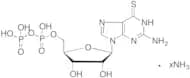
Controlled ProductFormula:C10H15N5O10P2S•xNH3Color and Shape:NeatMolecular weight:459.27 (free acid)N,N’,N’’-Triacetyl Chitotriose
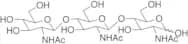
CAS:Controlled Product<p>Applications N,N’,N’’-Triacetyl Chitotriose is a multivalent glycosides with strong crosslinking activity for lectin as a specific coagulant.<br>References Bhattacharyya, L., et al.: Biochemistry, 29, 7523 (1990), Sacchettini, J., et al.: Biochemistry, 40, 3009 (2001), Maierhofer, C., et al.: Bioorg. Med. Chem., 15, 7661 (2007),<br></p>Formula:C24H41N3O16Color and Shape:NeatMolecular weight:627.60D,L-myo-Inositol-1-(n-butylfluoresceinylphosphate) Lithium Salt, ~80%
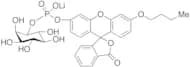
CAS:Controlled ProductFormula:C30H30LiO13PPurity:~80%Color and Shape:NeatMolecular weight:636.47Lipopolysaccharides - from Escherichia coli O55:B5
CAS:Lipopolysaccharides are a heterogeneous group of molecules that include endotoxins, lipid A, and core oligosaccharide. They are released from the cell wall of gram-negative bacteria as a result of bacterial lysis. Lipopolysaccharides are potent activators of immune cells, inducing the secretion of pro-inflammatory cytokines such as tumor necrosis factor-α (TNF-α) and interleukin-1β (IL-1β). TNF-α is also known to induce the production of other pro-inflammatory cytokines including IL-6, IL-8, IL-10, and IL-12. Lipopolysaccharides have been shown to cause liver damage in animals by increasing plasma alanine aminotransferase levels. This may also be due to their ability to induce the production of malondialdehyde and c-reactive protein.Color and Shape:Off-White PowderN-Acetylneuraminic acid tetramer sodium salt
<p>N-Acetylneuraminic acid tetramer sodium salt is a synthetic carbohydrate that belongs to the group of complex carbohydrates. It is a glycosylation product of N-acetylneuraminic acid and has been modified with fluorine, methylation, and click chemistry. N-Acetylneuraminic acid tetramer sodium salt is used as a reagent in the synthesis of oligosaccharides and has been shown to be useful for structural analysis. The CAS number for this compound is:</p>Formula:C44H66N4O33Na4Purity:Min. 95%Color and Shape:PowderMolecular weight:1,270.96 g/molGM4-Ganglioside
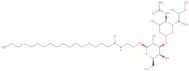
CAS:<p>GM4-ganglioside (sodium salt) is a disaccharide of sialic acid linked α2,4 to galactose and ceramide linked β to position 1 on the galactose (Ledeen, 2009). Demyelinated plaques in multiple sclerosis have decreased amounts of GM4-ganglioside, localized in myelin and oligodendroglia of the central nervous system. It has been found that the myelin basic protein is capable of releasing large quantities of entrapped [14C]glucose from multilamellar liposomes containing GM4. If the conformation of GM4 ganglioside in liposomal membranes resembles that of GM4 ganglioside in its natural environment, basic protein and GM4 may be associated within the myelin sheath of the central nervous system and their interactions are altered in demyelinating diseases, such as, multiple sclerosis (Mullin, 1981).</p>Formula:C57H106N2O17·xNaPurity:Min. 95%Molecular weight:1,091.45 g/molMethyl 2-acetamido-2-deoxy-3-O-(b-D-galactopyranosyl)-b-D-galactopyranoside
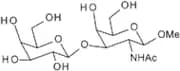
CAS:<p>Methyl 2-acetamido-2-deoxy-3-O-(b-D-galactopyranosyl)-b-D-galactopyranoside is a carbohydrate that is modified by the addition of fluorine at the 3 position. It has CAS number 88274-25-3 and belongs to the group of oligosaccharides. Methyl 2-acetamido-2-deoxy-3-(b, b'-D, galactopyranosyl)-b, D galactopyranoside is a synthetic polymer that is glycosylated with methyl groups. This product can be custom synthesized for your needs.</p>Formula:C15H27NO11Purity:Min. 95%Color and Shape:PowderMolecular weight:397.38 g/molLewis Y tetrasaccharide
CAS:Lewis Y tetrasaccharide is a type of antigen that is used as a pharmacological agent. It has been shown to be effective in treating carcinoma cell lines and primary sclerosing cholangitis. Lewis Y tetrasaccharide has also been shown to be an antigen for the mouse monoclonal antibody, which is used in cancer research. The Lewis Y tetrasaccharide stimulates the immune system by interacting with certain cells called dendritic cells and macrophages, which are responsible for activating T-cells. This interaction promotes the production of chemoattractant proteins, which are proteins that attract white blood cells to fight infection and promote healing. Lewis Y tetrasaccharide has also been shown to cause cancer cell death by lysing cells through apoptosis or necrosis depending on the tissue type.Formula:C26H45NO19Purity:(%) Min. 95%Color and Shape:PowderMolecular weight:675.64 g/molMonofucosyl (1-2)-iso-lacto-N-octaose I
<p>Monofucosyl (1-2)-iso-lacto-N-octaose I is an oligosaccharide found in human milk</p>Purity:Min. 95%