Dyes, Stains and Tinctures
Subcategories of "Dyes, Stains and Tinctures"
- Acid Dyes(49 products)
- Azobenzenes(270 products)
- Azoic Dyes(7 products)
- Basic Dyes(27 products)
- Coumarin Dyes(72 products)
- Cyanine Dyes, Squarylium Dyes(53 products)
- DCM Dyes(4 products)
- Diarylethenes(12 products)
- Dipyrromethene Dyes(26 products)
- Direct Dyes(17 products)
- Disperse Dyes(2 products)
- Dye Sensitizers(12 products)
- Dyes(418 products)
- Dyes & Stains(911 products)
- Generating Insoluble Dyes(14 products)
- Generating Soluble Dyes(11 products)
- Hexaarylbiimidazole(4 products)
- Indicators(575 products)
- Mordant Dyes(10 products)
- Near-Infrared (NIR) Dyes(28 products)
- Oil Dyes(15 products)
- Other Stains and Dyes(2 products)
- Perylene Dyes(17 products)
- Photochromic Dyes(40 products)
- Phthalocyanine Dyes, Porphyrin Dyes(101 products)
- Quinacridone Dyes(8 products)
- Spiropyrans(16 products)
- Stains and Dyes(243 products)
- Stains and Dyes for Microscopy(5 products)
- Vat Dyes(5 products)
- Xanthene Dyes(67 products)
Found 758 products of "Dyes, Stains and Tinctures"
C.I.Solvent Yellow 51
CAS:Please enquire for more information about C.I.Solvent Yellow 51 including the price, delivery time and more detailed product information at the technical inquiry form on this page
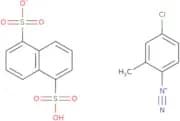
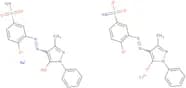
Purity:Min. 95%Fast red TR salt 1,5-naphthalenedisulfonate
CAS:Fast red TR salt 1,5-naphthalenedisulfonate salt is a reactive, multidrug molecule that binds to DNA and inhibits the synthesis of viral RNA. It also has an antiviral effect on hepatitis and some types of cancer. Fast red TR salt 1,5-naphthalenedisulfonate salt is used in conjunction with other compounds to treat cancerous tumors. The drug is activated by light when it's injected intravenously into the bloodstream, where it can be taken up by cells in the kidney or liver. Fast red TR salt 1,5-naphthalenedisulfonate salt prevents the production of acetylcholine at nerve endings and blocks the transmission of nerve impulses. This drug also prevents the binding of doxorubicin to DNA in tumor cells and blocks tumor cell growth through a process called hybridization. Fast red TR salt 1,5-naphthalenedisulfonate salt is used to create tissue
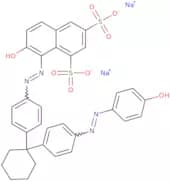
Formula:C10H7O6S2•C7H6ClN2Purity:Min. 95%Color and Shape:PowderMolecular weight:440.88 g/molAcid Black 26, Technical grade
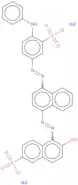
CAS:Acid Black 26 is a polyphenol with antioxidant properties. It has been shown to have an inhibitory effect on the oxidation of basic dyes and control agents. Acid Black 26 has also been used in biological treatment to remove organic matter from wastewater. The thermodynamic data for Acid Black 26 are complex, but it displays a high reactivity toward particle surfaces and functional groups. Immobilized Acid Black 26 can be used as a surface methodology for the production of activated carbon filters, which removes reactive substances from air streams.
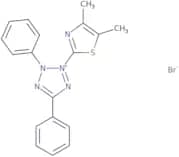
Purity:Min. 95%Thiazolyl blue tetrazolium bromide
CAS:Thiazolyl blue tetrazolium bromide, also called 3-(4,5-dimethylthiazol-2-yl)-2,5-diphenyl-2H-tetrazolium bromide and methylthiazolyldiphenyl-tetrazolium bromide, and mainly known as MTT, is employed in the so-called MTT reduction or colorimetric assay. The MTT assay is used to determine the metabolic activity of living cells and the viable cell number in proliferation and cytotoxicity studies. The assay is based on the enzymatic reduction of the yellow MTT to the purple-blue water-insoluble formazan catalysed by mitochondrial dehydrogenases of living cells. The amount of formazan produced is directly proportional to the number of viable cells and can be quantified by measuring absorbance at 570nm. The MTT assay is broadly employed in cell biology because it is rapid and economical. MTT is also used as enzyme substrates in studies of nicotinamide adenine dinucleotide phosphate (NADP)-dependent dehydrogenases.
Formula:C18H16BrN5SPurity:Min. 97 Area-%Color and Shape:Yellow PowderMolecular weight:414.32 g/molReactive orange 35
CAS:Reactive orange 35 is a functional group that is used as an analytical reagent in organic solvents. It is also used to introduce additives into polymers, oligosaccharides, and other compounds. Reactive orange 35 has been shown to react with amide groups in the presence of an amine or ammonia at elevated temperatures. This reaction system can be used to produce a variety of compounds, including pharmaceuticals and pesticides. The reactive nature of this compound makes it an excellent plant cell penetrant.
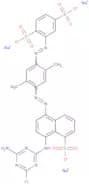
Formula:C27H19ClN9Na3O9S3Purity:Min. 95%Molecular weight:814.12 g/molC.I.Acid Orange 56
CAS:C.I. Acid Orange 56 is a surfactant that is used as an inkjetting agent for the production of polycarbonates and organic solvents. It is also used in radiation-curable coatings, such as paint and varnish, to reduce viscosity. C.I. Acid Orange 56 has been shown to be an efficient surface active agent that can remove calcium ions from surfaces and also a polymerizable photoinitiator for the production of polymeric materials such as silicon wafers, which are used in semiconductor manufacturing.br>br>
C.I. Acid Orange 56 is a member of the class of amphoteric surfactants that can act as both an acid and base in solution due to its ability to donate protons or accept protons when dissolved in water or other polar solvents.br>br>
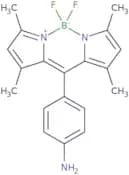
C.I. Acid Orange 56 has been shown to have a viscosity of 0.5 cPPurity:Min. 95%8-(4-Anilino) bodipy
CAS:Fluorescent probe
Formula:C19H20BF2N3Purity:Min. 90 Area-%Color and Shape:PowderMolecular weight:339.19 g/molRef: 3D-FA17933
Discontinued productPhenol red sodium salt
CAS:Phenol red is a pH indicator that finds broad applications from chemistry to microbiology. Colour varies from yellow at pH<6.8 (lmax 443nm) through to light red/pink at 6.8<pH<8.2 (lmax 570 nm) to vivid purple/red at pH>8.2. It is widely used in cell culture to monitor pH and for colorimetric titration. For example, phenol red can be used to quantify Br- content in sea or fresh water. It is added to VTM as pH indicator, at the concentration of 10mg/ml, maintaining a pink colour at neutral pH.
Formula:C19H13NaO5SColor and Shape:Slightly Brown Red PowderMolecular weight:376.36 g/molRef: 3D-FP01503
Discontinued productC.I.Disperse Red 362
CAS:Disperse Red 362 is a yellow pigment that can be used in inkjet printing. It has an express color and is typically used in the printing of textiles, paper, plastics, and other materials. The color of Disperse Red 362 is similar to that of cadmium yellow.
Purity:Min. 95%Acid Orange 154
CAS:Acid Orange 154 is a hydroxyalkyl, divalent cyclic compound that is used as a colorant for textiles and paper. This chemical is detected by absorbance at 400 nm and has an anionic charge. Acid Orange 154 has been shown to form benzyl, acidic chlorophenyl, and alkylene derivatives in the presence of metal ions or polymeric stabilizers. Acid Orange 154 can be analyzed using various techniques including gas chromatography and mass spectrometry.
Purity:Min. 95%C.I.Acid Orange 88
CAS:C.I. Acid Orange 88 is a fine chemical, which can be used as a versatile building block in the synthesis of complex compounds for use as research chemicals and reaction components. It is a useful intermediate for the production of other chemicals. C.I. Acid Orange 88 belongs to the group of speciality chemicals and has high quality properties that make it useful as a reagent in research applications.
Formula:C32H26CrN10O8S2•NaPurity:Min. 95%Color and Shape:Solid.Molecular weight:817.73 g/molRef: 3D-FA41261
Discontinued productC.I.Vat green 11
CAS:Please enquire for more information about C.I.Vat green 11 including the price, delivery time and more detailed product information at the technical inquiry form on this page
Purity:Min. 95%Acid Orange 33
CAS:Acid Orange 33 is a synthetic diazo dye used as a colorant and a dye intermediate. It is soluble in water and organic solvents, but insoluble in oils. Acid Orange 33 can be used as an ophthalmic or topical agent for the treatment of various skin conditions, such as acne. The mechanism of action of this drug is not yet fully understood, but it is known to cleave collagen at specific sites. Acid Orange 33 may also have anti-inflammatory properties, which are due to its cationic character and ability to bind with amines.
The reaction time for Acid Orange 33 varies depending on the type of amine that it binds to, with lower reactivity observed when it binds to more basic amines (e.g., methylamine).Purity:Min. 95%4-Dimethylaminocinnamaldehyde
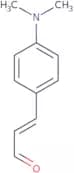
CAS:4-Dimethylaminocinnamaldehyde (DMAC) is a metabolite of the herbicide paraquat. It has been studied as an anticancer agent that inhibits the proliferation of human carcinoma cell lines and induces apoptosis. DMAC also binds to DNA, inhibiting transfer reactions and preventing the synthesis of unsymmetrical dyes and procyanidins. DMAC has been shown to inhibit inflammation in mice by blocking the production of prostaglandins and leukotrienes. The anti-inflammatory activity is due to its ability to inhibit cyclooxygenase (COX) enzymes, thereby preventing the formation of prostaglandins from arachidonic acid.
Formula:C11H13NOColor and Shape:Yellow PowderMolecular weight:175.23 g/molPigment yellow 155
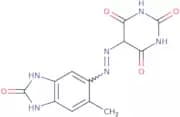
CAS:Pigment yellow 155 is a polycarboxylic acid. It has a hydroxyl group and a polymerization initiator that can polymerize monomers to form polymers. Pigment yellow 155 is soluble in organic solvents, such as alcohols and ketones. It also has functional groups, which are groups of atoms on a molecule that can react with other substances. Pigment yellow 155 is used in the production of paints, plastics, rubber, textiles, and paper. The pigment’s color varies depending on its particle size. Pigment yellow 155 is typically used for coloring objects for use in electrophotography because it produces high-quality images when exposed to light or laser radiation.
Formula:C34H32N6O12Molecular weight:716.65 g/molRef: 3D-FP164826
Discontinued productPigment Orange 64
CAS:Pigment Orange 64 is an organic solvent that can be used as a polymerization initiator. Pigment Orange 64 has been extensively used in the production of polyester, polyurethane, and epoxy resins. It is also used as a colorant in paints and textiles. Pigment Orange 64 can be detected using high-performance liquid chromatography (HPLC) with detection sensitivity of 0.01 ppm. The skeleton of Pigment Orange 64 consists of a hydrophobic benzene ring with two hydroxyl groups on either side and two double bonds on each end. It has four functional groups: a carboxylic acid group, an aromatic ring, a phenol group, and an alcohol group. Pigment Orange 64 is soluble in water to form orange solutions and can be detected by its characteristic odor. In addition, it can act as a matrix polymer for metal particles due to its basic properties.
Formula:C12H10N6O4Purity:Min. 95%Color and Shape:PowderMolecular weight:302.25 g/molAcid red 134
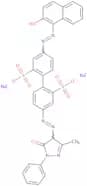
CAS:Acid Red 134 is a dye that belongs to the group of amino acid dyes. It is used in textile manufacturing as a colorant and has been found to be mutagenic for bacteria. Acid Red 134 is also used as a hydrophobic dye, which means it does not dissolve in water and instead dissolves in organic solvents such as alcohol or acetone. Acid Red 134 can be polymerized using UV light, making it an excellent initiator for polymerization reactions. This dye is hydrophobic and can form crystals with a low melting point.
Formula:C40H34N4Na2O12S2Color and Shape:Red PowderMolecular weight:872.83 g/molRef: 3D-FA41012
Discontinued productBrilliant blue FCF
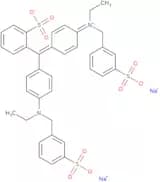
CAS:Brilliant blue FCF is a water-soluble dye that has been used for many purposes, including as a food coloring and in wastewater treatment. It is an intensely blue powder that is soluble in water and reactive to acids. The toxicity of this substance has been extensively studied, with long-term studies showing no significant negative effects on the liver or other organs. In addition, it does not cause any toxic effects when tested on human serum. The adsorption of brilliant blue FCF onto activated carbon or silica gel beads has been shown to be reversible and time-dependent. This dye can also be quantified using an analytical method involving surface methodology coupled with electrochemical impedance spectroscopy.
Formula:C37H34N2Na2O9S3Color and Shape:PowderMolecular weight:792.85 g/molRef: 3D-FB19007
Discontinued productThymol blue sodium salt
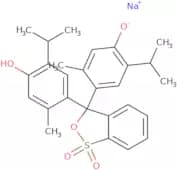
CAS:Thymol blue sodium salt is a dye that is used to stain fatty acids. The hydroxyl group of thymol blue sodium salt reacts with the carboxylic acid group of fatty acids, forming a cross-link between the two groups. This reaction can be monitored by measuring changes in the intensity of light transmitted through the solution. Thymol blue sodium salt has also been used as a cross-linking agent in polycarboxylic acid hydration reactions, and as an analytical method for determining cationic polymerization. Optical sensors have been developed that are capable of measuring changes in cavity size due to hydration or cationic polymerization.
Formula:C37H40N2Na4O13SPurity:Min. 95%Color and Shape:PowderMolecular weight:844.74 g/molRef: 3D-FT01471
Discontinued productC.I.Acid Yellow 19
CAS:Please enquire for more information about C.I.Acid Yellow 19 including the price, delivery time and more detailed product information at the technical inquiry form on this page
Purity:Min. 95%