Dyes, Stains and Tinctures
Subcategories of "Dyes, Stains and Tinctures"
- Acid Dyes(49 products)
- Azobenzenes(270 products)
- Azoic Dyes(7 products)
- Basic Dyes(27 products)
- Coumarin Dyes(72 products)
- Cyanine Dyes, Squarylium Dyes(53 products)
- DCM Dyes(4 products)
- Diarylethenes(12 products)
- Dipyrromethene Dyes(26 products)
- Direct Dyes(17 products)
- Disperse Dyes(2 products)
- Dye Sensitizers(12 products)
- Dyes(418 products)
- Dyes & Stains(911 products)
- Generating Insoluble Dyes(14 products)
- Generating Soluble Dyes(11 products)
- Hexaarylbiimidazole(4 products)
- Indicators(575 products)
- Mordant Dyes(10 products)
- Near-Infrared (NIR) Dyes(28 products)
- Oil Dyes(15 products)
- Other Stains and Dyes(2 products)
- Perylene Dyes(17 products)
- Photochromic Dyes(40 products)
- Phthalocyanine Dyes, Porphyrin Dyes(101 products)
- Quinacridone Dyes(8 products)
- Spiropyrans(16 products)
- Stains and Dyes(243 products)
- Stains and Dyes for Microscopy(5 products)
- Vat Dyes(5 products)
- Xanthene Dyes(67 products)
Found 758 products of "Dyes, Stains and Tinctures"
C.I.Solvent Orange 56
CAS:Please enquire for more information about C.I.Solvent Orange 56 including the price, delivery time and more detailed product information at the technical inquiry form on this page
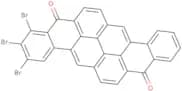
Purity:Min. 95%C.I.Vat Orange 4
CAS:C.I. Vat Orange 4 is a synthetic organic compound that is used as a pigment and a coating. It is soluble in organic solvents and can be used as an additive to polyethylene glycols, monomers, and coatings. C.I. Vat Orange 4 has been shown to react with radiation and metal hydroxides to form the polymerization inhibitor propionate. This polymerization inhibitor prevents polymerization reactions from occurring at high temperatures or when exposed to thermal energy.
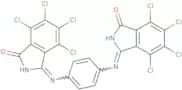
Purity:Min. 95%Pigment Yellow 110
CAS:Pigment Yellow 110 is a colorant that is used in coatings, plastics, and rubber. Pigment Yellow 110 is a derivative of the pigment barium sulfate, which exhibits thermal expansion. Pigment Yellow 110 has an absorption maximum at 590 nm, with a particle size of approximately 8 µm. This product also has reactive functional groups that can cross-link to calcium carbonate and glycol esters.
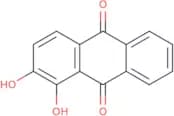
Formula:C22H6Cl8N4O2Color and Shape:PowderMolecular weight:641.93 g/molAlizarin
CAS:Alizarin, traditionally obtained from the roots of the madder plant, has been used to dye textiles since early days. Alizarin red is used in histology and medicine to stain calcium-containing specimens, e.g. bones and calcifications. Chromogenic substrates for enzymes based on alizarin have been developed and, as an example, alizarin-beta-D-galactoside (Aliz-gal) has been reported for the detection of bacterial beta-galactosidase by researchers at the University of Northumbria and the Freeman Hospital, Newcastle upon Tyne in the UK (James, 2000)
Formula:C14H8O4Purity:Min. 95%Color and Shape:Yellow PowderMolecular weight:240.21 g/molRef: 3D-FA39740
Discontinued productC.I.Vat green 13
CAS:C.I.Vat green 13 is a versatile research chemical that finds application in various fields. It is commonly used in the synthesis of copolymers and as a dye for staining purposes. C.I.Vat green 13 has shown promising results in crystallization studies and can be used as an indicator or probe in different experiments. Additionally, it has been found to have inhibitory effects on certain growth factors and enzymes such as epoxomicin. With its unique properties, C.I.Vat green 13 is a valuable tool for researchers and scientists working in diverse areas ranging from polymer chemistry to biological studies.
Purity:Min. 95%C.I.Reactive Red 222
CAS:Please enquire for more information about C.I.Reactive Red 222 including the price, delivery time and more detailed product information at the technical inquiry form on this page
Purity:Min. 95%Solvent Blue 97
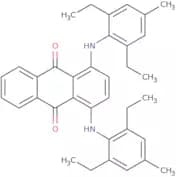
CAS:Solvent Blue 97 is a pigment that has been used in the textile, paper, and paint industries. It has a polymeric matrix that is composed of organic and inorganic compounds. The average particle diameter of Solvent Blue 97 ranges from 0.2 to 3 micrometres with a solubility of less than 1% in water. When irradiated, it emits light at wavelengths ranging from 415 to 455 nm, which is blue-green in color. The structural formula for Solvent Blue 97 is C 19 H 16 N 2 O 5 S.
Formula:C36H38N2O2Color and Shape:PowderMolecular weight:530.7 g/molRef: 3D-FS40704
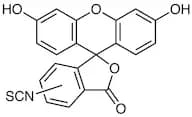
Discontinued productFluorescein Isothiocyanate (mixture of 5- and 6- isomers)
CAS:Formula:C21H11NO5SPurity:>97.0%(T)(HPLC)Color and Shape:Light yellow to Brown powder to crystalMolecular weight:389.38Pigment yellow 95
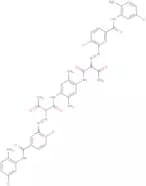
CAS:Pigment Yellow 95 is a yellow colorant that is used in paints and plastics. It has been shown to have a high thermal expansion and good light resistance, which makes it an ideal candidate for coatings. Pigment Yellow 95 can be cross-linked with glycol esters or polycarboxylic acids to form a thermosetting plastic. Pigment Yellow 95 is also used as a radiation absorber in some types of smoke detectors. This pigment has been found to be toxic to aquatic organisms and has been associated with environmental pollution in the past.
Formula:C44H38Cl4N8O6Color and Shape:PowderMolecular weight:916.63 g/molRef: 3D-FP164828
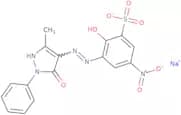
Discontinued productAcid Orange 74
CAS:Acid Orange 74 is a reactive dye that is used in wastewater treatment. It is a water-soluble dye that can be used to measure the rate of water permeability and hydrogen bond. Acid Orange 74 has been shown to induce apoptosis through its interaction with the survivin protein. The reactivity of Acid Orange 74 to wild-type cells is higher than its reactivity with mutant cells, which may be due to its ability to form hydrogen bonds in wild-type cells more easily than mutant cells. Acid Orange 74 was found to bind monoclonal antibodies and guanine nucleotide-binding proteins, which are involved in DNA replication and repair. This dye also induces reactive oxygen species (ROS) production, leading to oxidative stress in cells.
Formula:C16H10CrN5NaO8SPurity:Min. 85%Color and Shape:PowderMolecular weight:507.34 g/molRef: 3D-FA41259
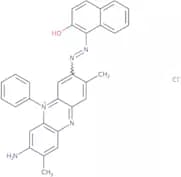
Discontinued productIndoine Blue
CAS:Indoine blue is a dye that can be used for the staining of cell nuclei in tissue sections. Indoine blue is a molecule with an acidic and basic dye group, which can be titrated with hydrochloric acid and amines to produce different colors. Indoine blue has been shown to have affinity values of 0.06 to 0.1 M in agarose gels and polymer films, respectively. Indoine blue is also an electron-rich molecule with an oxidation potential of -0.36 V (versus SCE).
Formula:C30H24N5OClPurity:Min. 95%Color and Shape:Brown PowderMolecular weight:506 g/molRef: 3D-FI52675
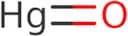
Discontinued productMercuric oxide red
CAS:Controlled ProductMercuric oxide red is a dinucleotide phosphate that has been used as an oxidation catalyst in organic synthesis. Mercuric oxide red is also used as a reagent for the conversion of glycoside derivatives to their corresponding mercuric salts. It can be used in the determination of certain metabolites, such as amino acids and fatty acids, in biological samples. In addition, it can be used to detect lipid peroxidation and oxidative stress. For example, Mercuric oxide red has been shown to have the ability to bind to Toll-like receptor 4 (TLR4). This binding induces the production of pro-inflammatory cytokines, including IL-6. Mercuric oxide red also inhibits plasma mass spectrometry by suppressing ionization and reducing fragmentation.
Formula:HgOPurity:Min. 95%Color and Shape:PowderMolecular weight:216.60 g/molRef: 3D-FM44545
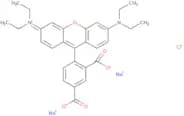
Discontinued productRhodamine WT, 20% aqueous solution
CAS:Rhodamine is a fluorescent compound that, in a 20% aqueous solution, serves as an effective fluorescent probe for detecting nitrite ions (NO2). When exposed to ultraviolet light, it undergoes a remarkable color change in response to nitrite presence. Beyond nitrite detection, rhodamine also interacts with various chemical substances, including organic solvents commonly found in wastewater treatment systems, which shows its potential, especially in environmental monitoring and analytical chemistry applications. This 20% solution is 20% w/w. Our sales mass in g is the final mass of the solution.
Formula:C29H29N2O5·Cl·2NaPurity:Min. 95%Color and Shape:Clear LiquidMolecular weight:567 g/molAf488-alkyne
CAS:Please enquire for more information about Af488-alkyne including the price, delivery time and more detailed product information at the technical inquiry form on this page
Formula:C24H17N3O10S2Purity:Min. 95%Molecular weight:571.5 g/molAcid Green 50
CAS:Acid Green 50 is a reactive dye that is used for wastewater treatment and in the pharmaceutical industry. It has been shown to be an effective treatment for infectious diseases, such as herpes simplex virus. Acid Green 50 binds to biological surfaces and forms a film-forming polymer. The adsorption mechanism of Acid Green 50 has been studied using kinetic data and kinetic studies. The acylation reaction of Acid Green 50 with collagen gel has also been investigated. This dye is able to emit light when excited by UV radiation and can be used in a flow system. In addition, this dye can be synthesized using a polymerase chain reaction (PCR).
Purity:Min. 95%Color and Shape:PowderMolecular weight:577.63 g/molRef: 3D-FA40988
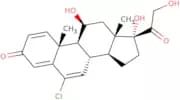
Discontinued productCloprednol
CAS:Controlled ProductCloprednol is an anti-infective agent that belongs to the group of aziridine derivatives. It is a synthetic analog of prednisolone, which has been shown to inhibit the inflammatory response in the intestine. Cloprednol has been shown to be highly biocompatible and its long-term efficacy against microbial infection has been demonstrated by kinetic data. This drug also inhibits choroidal neovascularization, which is a major cause of blindness in patients with age-related macular degeneration. Cloprednol is used for the treatment of bowel diseases such as Crohn’s disease and ulcerative colitis. It also has been shown to be effective in treating autoimmune diseases such as psoriasis, rheumatoid arthritis, and systemic lupus erythematosus.
Formula:C21H25ClO5Purity:Min. 95%Molecular weight:392.87 g/molRef: 3D-FC20516
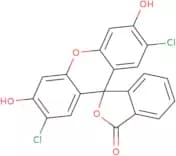
Discontinued product2,7-Dichlorofluorescein
CAS:Fluorophore used in biological assays and for labeling cells and tissues
Formula:C20H10Cl2O5Purity:Min. 95%Color and Shape:PowderMolecular weight:401.2 g/molRef: 3D-FD52655
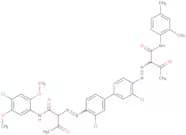
Discontinued productPigment Yelow 176
CAS:Pigment Yellow 176 is an inorganic pigment that exhibits a resistance to high temperatures and a high degree of light stability. It has been used as a pharmaceutical preparation, in coatings, and as a polymerization initiator. Pigment Yellow 176 reacts with acid molecules such as nitric acid or hydrochloric acid to form metal ion complexes. These complexes are usually unstable and may undergo reactions with other substances, such as cellulose acetate. This pigment also contains functional groups that can react with hydroxyl groups found on the surface of paper or other organic surfaces.
Formula:C36H35ClN6O6Purity:Min. 95%Color and Shape:PowderMolecular weight:683.15 g/molSanodure grey NL
Please enquire for more information about Sanodure grey NL including the price, delivery time and more detailed product information at the technical inquiry form on this page
Purity:Min. 95%Ref: 3D-FS170829
Discontinued productAlizarin Yellow R sodium salt
CAS:Acid-base indicator dye; textile dye; yellow color
Formula:C13H8N3O5NaPurity:Min. 95%Molecular weight:309.21 g/molRef: 3D-FA52710
Discontinued product