Dyes, Stains and Tinctures
Dyes, stains, and tinctures are essential tools in molecular biology, crucial for visualizing and studying DNA, chromosomes, and cell nuclei. These compounds enable researchers to highlight specific cellular components, facilitating detailed observation and analysis under a microscope. In this category, you will find a wide range of high-quality dyes and stains used in various staining techniques, including fluorescent dyes for DNA and chromosomal analysis, histological stains for tissue samples, and specific stains for cellular structures. These tools are indispensable in genetic research, cytology, histology, and diagnostics, providing clarity and contrast in biological specimens. At CymitQuimica, we offer a comprehensive selection of dyes, stains, and tinctures to support your molecular biology research and ensure precise and reliable results in your studies.
Subcategories of "Dyes, Stains and Tinctures"
- Acid Dyes(49 products)
- Azobenzenes(270 products)
- Azoic Dyes(7 products)
- Basic Dyes(27 products)
- Coumarin Dyes(71 products)
- Cyanine Dyes, Squarylium Dyes(53 products)
- DCM Dyes(4 products)
- Diarylethenes(12 products)
- Dipyrromethene Dyes(26 products)
- Direct Dyes(17 products)
- Disperse Dyes(2 products)
- Dye Sensitizers(12 products)
- Dyes(416 products)
- Dyes & Stains(911 products)
- Generating Insoluble Dyes(14 products)
- Generating Soluble Dyes(11 products)
- Hexaarylbiimidazole(4 products)
- Indicators(575 products)
- Mordant Dyes(10 products)
- Near-Infrared (NIR) Dyes(28 products)
- Oil Dyes(15 products)
- Other Stains and Dyes(2 products)
- Perylene Dyes(17 products)
- Photochromic Dyes(40 products)
- Phthalocyanine Dyes, Porphyrin Dyes(101 products)
- Quinacridone Dyes(8 products)
- Spiropyrans(16 products)
- Stains and Dyes(243 products)
- Stains and Dyes for Microscopy(5 products)
- Vat Dyes(5 products)
- Xanthene Dyes(65 products)
Show 23 more subcategories
Found 756 products of "Dyes, Stains and Tinctures"
Sort by
Purity (%)
0
100
|
0
|
50
|
90
|
95
|
100
Benz[b]indeno[1,2-d]pyran-3,4,6a,9,10(6H)-pentol, 7,11b-dihydro-,(6aS,11bR)-
CAS:Formula:C16H14O6Purity:97%Color and Shape:SolidMolecular weight:302.27876C.I.Vat green 11
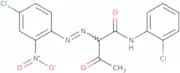
CAS:<p>Please enquire for more information about C.I.Vat green 11 including the price, delivery time and more detailed product information at the technical inquiry form on this page</p>Purity:Min. 95%Pigment Yellow 3
CAS:<p>Pigment Yellow 3 is a glycol ether that belongs to the class of organic compounds. It is used as a yellow coloring agent in paints, plastics, and textiles. Pigment Yellow 3 is also used in electrochemical impedance spectroscopy as a model system for carotenoid molecules. Pigment Yellow 3 has been shown to have an intramolecular hydrogen bond between the glycol ether moiety and the carotenoid chromophore, which stabilizes the molecule against thermal degradation. Pigment Yellow 3 is chemically stable at room temperature but decomposes when heated or irradiated with UV light. This compound can be found in nature as well as being synthesized artificially.</p>Formula:C16H12Cl2N4O4Purity:Min. 95 Area-%Color and Shape:PowderMolecular weight:395.2 g/molRef: 3D-FP40384
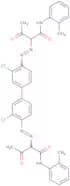
Discontinued productPigment Yellow 14
CAS:<p>Pigment Yellow 14 is a yellow pigment that belongs to the group of polyaromatic hydrocarbons. It has a particle size of 0.1-0.5 microns and consists of nitrogen atoms, intramolecular hydrogen, and magnetic particles. Pigment Yellow 14 is insoluble in water but soluble in organic solvents such as glycol ethers, fatty acids, and polycarboxylic acids. It has been detected using analytical chemistry methods such as spectroscopy, X-ray diffraction, and electron microscopy (EM). Pigment Yellow 14 is used in paints for plastics and textiles because it does not fade or lose its color when exposed to radiation or light.</p>Formula:C34H30Cl2N6O4Purity:Min. 95%Color and Shape:PowderMolecular weight:657.55 g/molRef: 3D-FP40382
Discontinued productC.I.Acid Yellow 117
CAS:<p>C.I. Acid Yellow 117 is a dye that has been used in the textile industry, but is now used primarily as a food colorant. It is not metabolized by the body and is excreted unchanged in urine and feces. C.I. Acid Yellow 117 may cause symptoms such as nausea, vomiting, abdominal pain, diarrhea, headache and dizziness at high levels of exposure (above 10 milligrams per day). The dye can also cause methemoglobinemia in children who have glucose-6-phosphate dehydrogenase deficiency or who are taking an oxidizing drug such as sulfonamides or nitrofurantoin. C.I. Acid Yellow 117 binds to form a water-soluble complex with calcium ions when it enters wastewater treatment plants where it can be removed by activated sludge treatment processes or by precipitation with lime or aluminum sulfate before release into rivers or oceans. C.I. Acid Yellow 117 has been shown to inhibit cell</p>Purity:Min. 95%Reactive orange 35
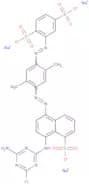
CAS:<p>Reactive orange 35 is a functional group that is used as an analytical reagent in organic solvents. It is also used to introduce additives into polymers, oligosaccharides, and other compounds. Reactive orange 35 has been shown to react with amide groups in the presence of an amine or ammonia at elevated temperatures. This reaction system can be used to produce a variety of compounds, including pharmaceuticals and pesticides. The reactive nature of this compound makes it an excellent plant cell penetrant.</p>Formula:C27H19ClN9Na3O9S3Purity:Min. 95%Molecular weight:814.12 g/molPhenol red
CAS:<p>Phenol red is a pH indicator that finds broad applications from chemistry to microbiology. Colour varies from yellow at pH<6.8 (lmax 443nm) through to light red/pink at 6.8<pH<8.2 (lmax 570 nm) to vivid purple/red at pH>8.2. It is widely used in cell culture to monitor pH and for colorimetric titration. For example, phenol red can be used to quantify Br- content in sea or fresh water. It is added to VTM as pH indicator, at the concentration of 10mg/ml, maintaining a pink colour at neutral pH.</p>Formula:C19H14O5SColor and Shape:PowderMolecular weight:354.38 g/molCrocein Orange G
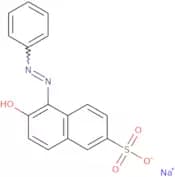
CAS:<p>Crocein Orange G is a water-soluble, orange fluorescent dye that is used in wastewater treatment. It has been shown to form stable complexes with fatty acids and other organic compounds. These complexes are more readily removed by adsorption. Crocein Orange G has also been shown to react with potassium dichromate and form a yellow product. This product can be detected at low concentrations and is not toxic to humans or animals.</p>Formula:C16H11N2O4SNaPurity:Min. 95%Color and Shape:PowderMolecular weight:350.33 g/molAcid Black 26, Technical grade
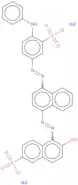
CAS:<p>Acid Black 26 is a polyphenol with antioxidant properties. It has been shown to have an inhibitory effect on the oxidation of basic dyes and control agents. Acid Black 26 has also been used in biological treatment to remove organic matter from wastewater. The thermodynamic data for Acid Black 26 are complex, but it displays a high reactivity toward particle surfaces and functional groups. Immobilized Acid Black 26 can be used as a surface methodology for the production of activated carbon filters, which removes reactive substances from air streams.</p>Purity:Min. 95%Fluorescein Isothiocyanate (mixture of 5- and 6- isomers)
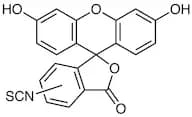
CAS:Formula:C21H11NO5SPurity:>97.0%(T)(HPLC)Color and Shape:Light yellow to Brown powder to crystalMolecular weight:389.38Acid Orange 3
CAS:<p>Acid Orange 3 is a cationic surfactant that belongs to the family of dyes. It is used as a granulosa cell stain in histology, with the basic structure of a monosodium salt. Acid Orange 3 exhibits chronic oral toxicity in rats and mice, but does not show liver lesions at doses up to 4000 mg/kg. It has been shown to cause increased incidence of fatty acid oxidation, carcinogenic potential, and carcinogenesis studies in rats. Acid Orange 3 may also cause allergic reactions, such as skin irritation and erythema when applied topically. In some cases, it has been reported to cause contact dermatitis.</p>Formula:C18H13N4NaO7SPurity:Min. 95%Color and Shape:PowderMolecular weight:452.37 g/molRef: 3D-FA41151
Discontinued productMercuric oxide red
CAS:Controlled Product<p>Mercuric oxide red is a dinucleotide phosphate that has been used as an oxidation catalyst in organic synthesis. Mercuric oxide red is also used as a reagent for the conversion of glycoside derivatives to their corresponding mercuric salts. It can be used in the determination of certain metabolites, such as amino acids and fatty acids, in biological samples. In addition, it can be used to detect lipid peroxidation and oxidative stress. For example, Mercuric oxide red has been shown to have the ability to bind to Toll-like receptor 4 (TLR4). This binding induces the production of pro-inflammatory cytokines, including IL-6. Mercuric oxide red also inhibits plasma mass spectrometry by suppressing ionization and reducing fragmentation.</p>Formula:HgOPurity:Min. 95%Color and Shape:PowderMolecular weight:216.60 g/molRef: 3D-FM44545
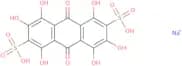
Discontinued productAcid alizarin blue 2b
CAS:<p>For the identification of acidophilic cells, blue color</p>Formula:C14H8NaO14S2Purity:Min. 95%Molecular weight:487.3 g/molRef: 3D-KAA11440
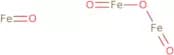
Discontinued productIron oxide black
CAS:Controlled Product<p>Iron oxide black is a reactive dye that is used in wastewater treatment. It is an oxide of iron that can be synthesized from sodium carbonate and langmuir adsorption isotherm. Iron oxide black has been shown to have a colloidal gold-like color, chemical stability, and constant pressure. The particle size of this compound ranges from 10-1000 nm and it reacts with a solution containing anhydrous sodium carbonate to form magnetite nanoparticles. Iron oxide black also has an asymmetric synthesis reaction with ferric chloride and nitric acid, which produces magnetic nanoparticles.</p>Formula:Fe3O4Purity:Min. 95%Color and Shape:PowderMolecular weight:231.53 g/molRef: 3D-FI41084
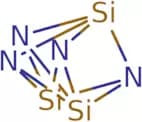
Discontinued productSilicon nitride - predominantly β-phase, -325 mesh
CAS:<p>Silicon nitride is a compound of silicon and nitrogen. It is used in the preparation of high purity silicon, as well as in the production of semiconductors, electronic devices, and other products. Silicon nitride is also used to make parts for aircraft engines and turbines. The thermal expansion coefficient of silicon nitride is typically 5x10⁻⁶/°C, which makes it ideal for use in high-temperature environments. Silicon nitride has antimicrobial properties that may be due to its ability to release hydrogen fluoride and water vapor when heated. These compounds are toxic to bacteria and fungi, making silicon nitride a potential candidate for use in biomedical implants or medical devices such as catheters or prosthetic joints. Silicon nitride is chemically stable at temperatures up to 1000°C, making it an excellent material for high-temperature applications such as aerospace engine components. Silicon nitride can also be used as a sample preparation tool because it can remove impurities from samples without</p>Formula:N4Si3Purity:Min. 95%Color and Shape:PowderMolecular weight:140.28 g/molRef: 3D-FS168689
Discontinued productIndigo
CAS:<p>Indigo is a dye that has been used for centuries in the textile industry for its unique blue color.</p>Formula:C16H10N2O2Purity:Min. 95%Color and Shape:Blue PowderMolecular weight:262.26 g/molRef: 3D-FI39298
Discontinued product
![Benz[b]indeno[1,2-d]pyran-3,4,6a,9,10(6H)-pentol, 7,11b-dihydro-,(6aS,11bR)-](/_next/image/?url=https%3A%2Fstatic.cymitquimica.com%2Fproducts%2FIN%2Fthumb-webp%2FDA00I98R.webp&w=3840&q=75)