Organometallic Ligands
In this category, you will be able to find a large number of organometallic molecules used as ligands in biomolecules. These organometallic ligands can be used in organic chemistry and synthesis in the laboratory. They play a critical role in forming coordination complexes and catalyzing various chemical reactions. At CymitQuimica, we offer a diverse selection of high-quality organometallic ligands to support your research and industrial needs.
Subcategories of "Organometallic Ligands"
- Buchwald Ligands(22 products)
- DPEN(4 products)
- DPHEN(4 products)
- JOSIPHOS(4 products)
- Phosphine(497 products)
- Porphirines(75 products)
Found 2887 products of "Organometallic Ligands"
Sort by
Purity (%)
0
100
|
0
|
50
|
90
|
95
|
100
Apixaban - Bio-X ™
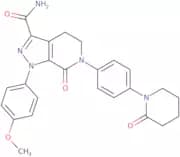
CAS:<p>Apixaban is an anticoagulant agent used for the prophylaxis of stroke and deep vein thrombosis leading to pulmonary embolism. This drug is an inhibitor of factor Xa and prothrominase. As a result, this prevents the formation of a thrombus.</p>Formula:C25H25N5O4Purity:Min. 95%Color and Shape:PowderMolecular weight:459.5 g/molFluvastatin sodium
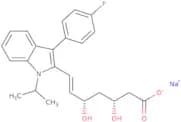
CAS:<p>Fluvastatin is a statin that lowers blood cholesterol and triglycerides by inhibiting HMG-CoA reductase, an enzyme that plays a critical role in the synthesis of cholesterol. Fluvastatin has also been shown to reduce the incidence of myocardial infarction, and to reduce atherosclerotic lesions in animal models, reducing the incidence of cardiovascular disease. Fluvastatin also has been shown to inhibit the activation of toll-like receptor 4 (TLR4) by lipopolysaccharide (LPS), which may be related to its anti-inflammatory effects. Furthermore, through lowering blood cholesterol, Fluvastatin also inhibits tubulointerstitial injury and prevents renal damage caused by high concentrations of the lipid.</p>Formula:C24H25FNNaO4Purity:Min. 98%Color and Shape:Off-White PowderMolecular weight:433.45 g/molIdelalisib
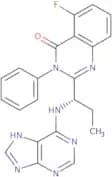
CAS:<p>Idelalisib is a pharmaceutical drug that functions as a PI3Kδ inhibitor, developed through synthetic chemical processes. Its mode of action involves selectively targeting and inhibiting phosphatidylinositol 3-kinase delta (PI3Kδ), a lipid kinase that plays a crucial role in the signaling pathways responsible for cell proliferation, survival, and differentiation. By inhibiting this enzyme, Idelalisib effectively impedes pathways that are often hyperactivated in certain hematologic malignancies, thereby exerting antitumor effects.</p>Formula:C22H18FN7OPurity:Min. 95%Color and Shape:PowderMolecular weight:415.42 g/molAfatinib - Bio-X ™
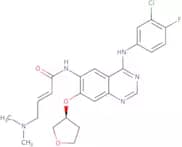
CAS:<p>Afatinib is a small molecule that inhibits the activity of cellular kinases that are involved in the progression of cancer. It is an Irreversible inhibitor of three members of the ErbB family. This molecule binds covalently to cysteine 797 residue in HER2 and blocks downstream cellular signalling which inhibits cellular growth and promotes apoptosis. It has been researched for the treatment of non-small cell lung cancer (NSCLC), breast cancer, pancreatic cancer and colorectal cancer.</p>Formula:C24H25ClFN5O3Purity:Min. 95%Color and Shape:PowderMolecular weight:485.94 g/molCarmustine - Bio-X ™
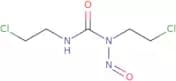
CAS:<p>Carmustine is a DNA alkylating agent which also cross-links DNA. As a result, Carmustine disrupts the function of DNA, resulting in the arrest the cell cycle and apoptosis. Consequently these properties of Carmustine, in addition to its ability to easily transmit through the blood-brain barrier, means it can be used as a cancer treatment, treating cancers such as, breast, ovarian and pancreatic as well as lymphomas and leukemias. Furthermore Carmustine can contribute to cytotoxic effects through its ability to carbamoylate DNA repair enzymes and proteins.</p>Formula:C5H9Cl2N3O2Purity:Min. 95%Color and Shape:PowderMolecular weight:214.05 g/molMitomycin C - Bio-X ™
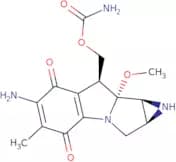
CAS:<p>Mitomycin C is a cytotoxic agent that belongs to the class of mitomycins. It has been used for the treatment of a range of cancers and for ocular surface diseases, such as the glaucoma surgery trabeculectomy. In this case it is administered to reduce post-operative scarring which could otherwise lead to failure of the procedure. Mitomycin C is an alkylating antibiotic that inhibits DNA synthesis by cross-linking the DNA double helix. Mitomycin C also stimulates the production of transforming growth factor β1 (TGF-β1) and basic fibroblast growth factor (bFGF). Clinically, mitomycin can be used both intravenously and topically, and has been studied in a range of wound healing models.</p>Formula:C15H18N4O5Purity:Min. 95%Color and Shape:PowderMolecular weight:334.33 g/molPitolisant hydrochloride
CAS:<p>Pitolisant is an inverse agonist and antagonist of the histamine (H3) receptor. It acts as an allosteric modulator of the H3 receptor to increase the activity of histamine at the M1 receptor. Pitolisant has been used in the treatment of narcolepsy, schizophrenia and Alzheimer's disease. Its mechanism of action involves binding to the amide group on histamine, which increases its affinity for the H3 receptor and enhances its activity at this site. Pitolisant has been shown to improve cognitive ability and reduce fatigue in patients with Alzheimer's disease.</p>Formula:C17H26ClNO·HClPurity:Min. 95%Color and Shape:White Off-White PowderMolecular weight:332.31 g/molCytochalasin D
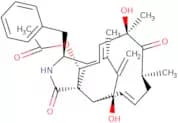
CAS:<p>Inhibits actin polymerization</p>Formula:C30H37NO6Purity:Min. 95%Color and Shape:PowderMolecular weight:507.62 g/molLY 2886721
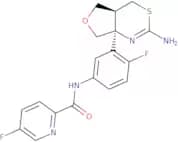
CAS:<p>Inhibitor of BACE1 protease</p>Formula:C18H16F2N4O2SPurity:Min. 98 Area-%Color and Shape:PowderMolecular weight:390.41 g/molAutogramin 2
<p>Autophagy inhibitor that selectively targets the StART domain of GRAMD1A</p>Formula:C21H27N3O4SPurity:Min. 95%Color and Shape:SolidMolecular weight:417.52 g/molDCC 2036
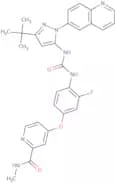
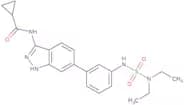
CAS:<p>Inhibits multiple tyrosine kinases (Abl1, Src family kinases, Tie-2 and VEGFR-2)</p>Formula:C30H28FN7O3Purity:Min. 95%Color and Shape:PowderMolecular weight:553.59 g/molPeiminine
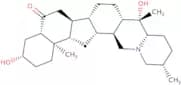
CAS:<p>Inhibitor of TGF-α, CTGF, ERK1/2, NF-κB and FasL; anti-inflammatory</p>Formula:C27H43NO3Purity:Min. 98 Area-%Molecular weight:429.64 g/molDarolutamide
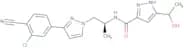
CAS:<p>Androgen receptor antagonist; therapy for endometriosis</p>Formula:C19H19ClN6O2Purity:Min. 95%Color and Shape:White To Off-White SolidMolecular weight:398.86 g/molSGC AAK1 1
CAS:<p>Dual inhibitor of the adaptor protein 2-associated kinase 1 (AAK1) and BMP2-inducible kinase (BMP2K) with IC50 values of 270 nM and 1 μM, respectively. In a recent study, SGC AAK1 1 stabilised β-catenin, inhibited phosphorylation of the AP2 complex subunit mu protein (AP2M1) and activated Wnt signalling in in vitro experiments._x000D_</p>Formula:C21H25N5O3SPurity:Min. 95%Color and Shape:SolidMolecular weight:427.52 g/molBIO
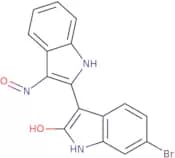
CAS:<p>Specific inhibitor of glycogen synthase kinase 3 (GSK-3) with IC50 in low nanomolar range. Studies showed that BIO maintains self-renewal in embryonic stem cells (ESCs) as well as increases activity of β-catenin. In neonatal cardiomyocytes, BIO promotes cell cycle by stimulating cell entry into S phase as well as cytokinesis. In germline stem cells from female mice (FGSCs), BIO promoted proliferation and maintenance of FGSCs by activating β-catenin and up-regulating E-cadherin.</p>Formula:C16H10BrN3O2Purity:Min. 95%Color and Shape:Red To Dark Red SolidMolecular weight:356.17 g/molLevetiracetam - Bio-X ™
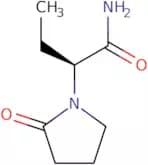
CAS:Controlled Product<p>Levetiracetam is a modulates the activity of the synaptic vesicle protein 2A (SV2A) in the brain and is used to treat epilepsy.It is not clear exactly how Levetiracetam affects the activity of SV2A and if this is through inhibiting the release of neurotransmitters. However, it is thought to work by binding to a specific site on SV2A, which interferes with its normal function and ultimately leads to changes in exocytosis. One of the postulated mechanisms of action is that this modulates glutamate release. Levetiracetam is used to treat certain types of seizures in people with epilepsy.<br>Levetiracetam is part of our Bio-X ™ Range. These products are aimed at life science researchers who need high quality ready-to-use products for assay development, screening or other R&D work. With a solubility datasheet and convenient vials, all of our Bio-X ™ products are in stock across our global warehouses for rapid delivery and ease of use.</p>Formula:C8H14N2O2Purity:Min. 95%Color and Shape:PowderMolecular weight:170.21 g/molBrimonidine-D-tartrate
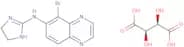
CAS:<p>Brimonidine-D-tartrate is a selective alpha-2 adrenergic agonist, which is a pharmacological compound derived synthetically, targeting specific receptor subtypes in the adrenergic receptor family. Its mode of action involves reducing aqueous humor production and increasing uveoscleral outflow in the eye, thereby lowering intraocular pressure. Additionally, it induces peripheral vasoconstriction, playing a role in reducing redness in rosacea.</p>Formula:C15H16BrN5O6Color and Shape:White PowderMolecular weight:442.22 g/molVipivotide tetraxetan linker
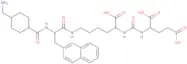
CAS:<p>Vipivotide tetraxetan is a radioactive therapeutic agent, which is a radioligand conjugate composed of a DOTA chelator linked to a targeting moiety. The source of this compound lies in its synthesis, where the DOTA ligand is conjugated to a peptide or small molecule that targets specific cell surface antigens expressed on cancer cells.</p>Formula:C33H45N5O9Purity:Min. 95%Color and Shape:PowderMolecular weight:655.7 g/molEbselen
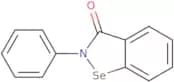
CAS:<p>Ebselen is a non-toxic organoselenium compound with antioxidant, anti-inflammatory and cytoprotective properties. Ebselen is an inhibitor of lipoxygenases, nitric oxide (NO) synthases, protein kinase C, H+/K+-ATPase, thioredoxin reductase and NADPH oxidase. Recently, ebselen has been identified by several studies as a covalent inhibitor of the main protease Mpro from coronaviruses. For the SARS-CoV-2 main protease Mpro, the IC50 value is 0.67 μM and EC50 is 4.57 μM.</p>Formula:C13H9NOSePurity:Min. 98 Area-%Color and Shape:PowderMolecular weight:274.18 g/molOndansetron hydrochloride - Bio-X ™
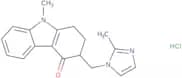
CAS:<p>Ondansetron is a serotonin 5-HT3 receptor antagonist that has been shown to inhibit the effects of serotonin in the gastrointestinal tract, thereby preventing nausea and vomiting that is caused by cancer chemotherapy. Chemotherapy and radiotherapy are associated with the release of serotonin (5-HT) from enterochromaffin cells of the small intestine, initiating a vomiting reflex through stimulation of 5-HT3 receptors located on vagal afferents. Ondansetron blocks the initiation of this reflex. The drug binds to receptors on cells in the gastrointestinal tract that are normally activated by serotonin, thereby blocking its effect.</p>Formula:C18H20N3OClPurity:Min. 95%Color and Shape:PowderMolecular weight:329.82 g/mol