Organic Halides
Subcategories of "Organic Halides"
Found 20442 products of "Organic Halides"
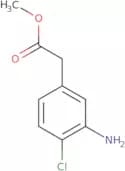
3-Amino-4-chlorophenylacetic acid methyl ester
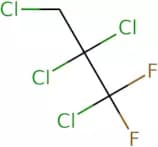
CAS:3-Amino-4-chlorophenylacetic acid methyl ester is a fine chemical that is useful as a building block in the synthesis of complex compounds. It has been used as a reagent and speciality chemical, which can be used for research purposes. CAS No. 59833-69-1Formula:C9H10ClNO2Purity:Min. 95%Molecular weight:199.63 g/mol1,1,1,3-Tetrachloro-3,3-Difluoropropane
CAS:Controlled Product1,1,1,3-Tetrachloro-3,3-difluoropropane is a colorless, volatile liquid that is miscible with water. It has a high vapor pressure and low solubility in water. 1,1,1,3-Tetrachloro-3,3-difluoropropane is used as a solvent for organic compounds and as an intermediate in the production of other chlorocarbons. It can be used to produce calcium chloride and chlorine gas. 1,1,1,3-Tetrachloro-3,3-difluoropropane also has fumigant properties because it absorbs moisture from the air and releases it later.Formula:C3H2Cl4F2Purity:Min. 95%Molecular weight:217.86 g/mol4-Bromo-3,5-dimethoxybenzaldehyde
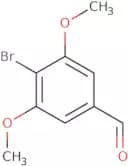
CAS:4-Bromo-3,5-dimethoxybenzaldehyde is a compound that inhibits the replication of cells. It has been shown to induce apoptosis and inhibit tumor growth, including skin tumors and malignant melanoma cells. This chemical is synthesized by reacting an acrylonitrile with sodium hydroxide in a biphenyl amide. 4-Bromo-3,5-dimethoxybenzaldehyde has been used to inhibit bacterial growth, but it is not active against Mycobacterium tuberculosis or Mycobacterium avium complex.
Formula:C9H9BrO3Purity:Min. 95%Color and Shape:PowderMolecular weight:245.07 g/molClorsulon
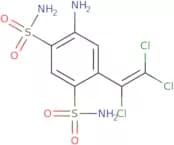
CAS:Clorsulon is an anthelmintic drug that belongs to the group of benzimidazoles. It is used in veterinary medicine to treat nematode and cestode infections, as well as tapeworm infections. Clorsulon is a dispersive solid-phase extraction (DSPE) extractant that can be used for the separation of drugs and their metabolites from biological fluids. The chemical stability of clorsulon was assessed by exposing it to various solvents and pHs. Clorsulon was found to be stable in acetate, benzene, chloroform, ethyl acetate, ethanol, methanol, and water at pH 1-14 and a variety of temperatures ranging from -20 ˚C to 50 ˚C. No significant loss or degradation occurred after exposure to these conditions for up to 24 hours.Formula:C8H8Cl3N3O4S2Purity:(Hplc) Min. 98.0%Color and Shape:PowderMolecular weight:380.66 g/mol4-Cyano-2-fluorobenzyl alcohol
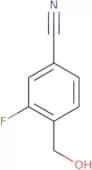
CAS:4-Cyano-2-fluorobenzyl alcohol is a reagent that is used to produce chlorine and hydrochloric acid. It is also used industrially in the production of potassium chloride, a compound that is used in fertilizers, animal feed supplements, and water treatment. 4-Cyano-2-fluorobenzyl alcohol reacts with chloride ions to form hypochlorous acid (HOCl), which then reacts with water to form hydrogen chloride gas. The reaction with fluoride ions leads to the formation of hydrofluoric acid (HF).Formula:C8H6FNOPurity:Min. 95%Color and Shape:White To Beige SolidMolecular weight:151.14 g/molDiacylglycerol kinase inhibitor II
CAS:Diacylglycerol kinase inhibitor II is a transcriptional regulator that inhibits diacylglycerol kinase. This inhibitor blocks the signaling pathways for growth factor-β1 by inhibiting the enzyme phosphatidic acid phosphatase, which plays an important role in cellular proliferation and migration. Diacylglycerol Kinase Inhibitor II has also been shown to inhibit cation channels and calcium release from intracellular stores. Diacylglycerol Kinase Inhibitor II binds to both cytosolic and nuclear proteins. It has been shown to inhibit cell proliferation and induce apoptosis in breast cancer cells.
Formula:C28H25F2N3OSPurity:Min. 97 Area-%Color and Shape:PowderMolecular weight:489.58 g/molCarbonyldiiodo(pentamethylcyclopentadienyl)cobalt(III)
CAS:Carbonyldiiodo(pentamethylcyclopentadienyl)cobalt(III) is a high-quality, reagent, complex compound that is useful as a reaction component in the production of fine chemicals and speciality chemicals. It is also used as a building block for more complex compounds. This versatile building block can be used to produce research chemicals, useful scaffolds and building blocks for organic synthesis. Carbonyldiiodo(pentamethylcyclopentadienyl)cobalt(III) has CAS number 35886-64-7.Formula:C11H15CoI2OPurity:Min. 95%Color and Shape:Black SolidMolecular weight:475.98 g/mol2-(4-(2,5-Dichlorophenylamino)-3,5-thiazolyl)acetic acid
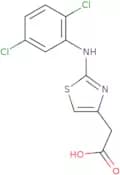
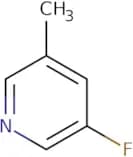
CAS:Please enquire for more information about 2-(4-(2,5-Dichlorophenylamino)-3,5-thiazolyl)acetic acid including the price, delivery time and more detailed product information at the technical inquiry form on this pagePurity:Min. 80%3-Fluoro-5-methylpyridine
CAS:3-Fluoro-5-methylpyridine is a fine chemical, useful building block and research chemical. It is a versatile building block that can be used as a reaction component or as an intermediate in the synthesis of various other organic compounds. 3-Fluoro-5-methylpyridine is also a reagent for the preparation of pharmaceuticals and agrochemicals. This compound can be used in the synthesis of complex compounds with high quality and purity, such as inorganic salts, metal complexes and organometallic compounds. 3-Fluoro-5-methylpyridine has CAS No. 407-21-6 and has been assigned to category 1B by the European Union's classification system (EU CLP).Formula:C6H6FNPurity:Min. 95%Molecular weight:111.12 g/molTetrabutylammonium fluoride - 1.0M in THF
CAS:Tetrabutylammonium fluoride-1.0M in THF is a solution of tetrabutylammonium fluoride in tetrahydrofuran. The compound is soluble in water and THF with solubility increasing with temperature. Tetrabutylammonium fluoride has been shown to be an effective inhibitor of the enzyme 4-hydroxycinnamic acid transaminase, which is involved in the metabolism of catecholamines. This property may be due to the ability of tetrabutylammonium fluoride to bind to the active site metal ion, copper, that participates in this reaction. Tetrabutylammonium fluoride can also inhibit other enzymes by binding to metal ions at their active sites, such as pyridoxal phosphate and hydroxyl groups.
Formula:C16H36FNPurity:Min. 95%Color and Shape:Clear LiquidMolecular weight:261.46 g/molDomiphen bromide
CAS:Domiphen bromide is a quaternary ammonium compound. It is a white, odorless crystalline powder, soluble in water and organic solvents. Domiphen bromide inhibits the growth of bacteria by disrupting their cell membranes. This effect is achieved through the release of free fatty acids from the lipid bilayer of the cell membrane and by the formation of pores in the membrane that allow ions to leak out. Domiphen bromide also has an antimicrobial effect against Gram-positive bacteria such as C. glabrata and Gram-negative bacteria such as Cetylpyridinium or P-hydroxybenzoic acid, which are resistant to other disinfectants. Domiphen bromide is used as a preservative in pharmaceutical products and cosmetics, as well as a disinfectant for surfaces and materials.
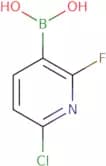
Formula:C22H40BrNOPurity:Min. 95%Color and Shape:PowderMolecular weight:414.46 g/mol6-Chloro-2-fluoropyridine-3-boronic acid
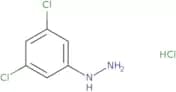
CAS:6-Chloro-2-fluoropyridine-3-boronic acid is a versatile building block for the synthesis of complex compounds, which can be used as a reagent in research or as a speciality chemical. This compound can be used as an intermediate, reaction component, or scaffold to synthesize other more complex structures. 6-Chloro-2-fluoropyridine-3-boronic acid is available in high quality and has CAS No. 1256345-66-0.Formula:C5H4BClFNO2Purity:Min. 95%Color and Shape:Light (Or Pale) Orange SolidMolecular weight:175.35 g/mol3,5-Dichlorophenylhydrazine hydrochloride
CAS:3,5-Dichlorophenylhydrazine hydrochloride is a chemical compound that can be used in the synthesis of other chemical compounds. 3,5-Dichlorophenylhydrazine hydrochloride is a versatile building block for the preparation of complex chemicals such as pharmaceuticals and agrochemicals. It has been shown to form a high quality reagent that is useful for research purposes. 3,5-Dichlorophenylhydrazine hydrochloride can be used as a reaction component or an intermediate in organic synthesis reactions. The CAS Registry Number for this chemical is 63352-99-8.Formula:C6H6Cl2N2•HClPurity:Min. 95%Molecular weight:213.49 g/mol5-[4'-Bromomethyl-(1,1'-biphenyl)-2-yl]-1-triphenylmethyltetrazole
CAS:5-[4'-Bromomethyl-(1,1'-biphenyl)-2-yl]-1-triphenylmethyltetrazole is a fluorescent dye that is used as an analytical reagent in magnetic resonance spectroscopy. It has been shown to have nitrogen atoms and a tetrazole ring. This chemical compound has a molecular weight of 366.5 g/mol and has a melting point of 200°C. 5-[4'-Bromomethyl-(1,1'-biphenyl)-2-yl]-1-triphenylmethyltetrazole was synthesized from 1,1'-biphenyl-2-carbaldehyde and methyl 3-aminotetrazolecarboxylate by reacting them with ammonium acetate in the presence of hydrochloric acid. The purity of this compound can be determined using diffraction, magnetic resonance spectroscopy, or spectroscopic data. The structure ofFormula:C33H25BrN4Purity:Min. 95%Color and Shape:White PowderMolecular weight:557.48 g/mol1,1'-Dioctadecyl-3,3,3',3'-tetramethylindodicarbocyanine perchlorate
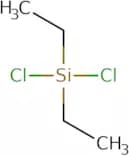
CAS:1,1'-Dioctadecyl-3,3,3',3'-tetramethylindodicarbocyanine perchlorate (DiI) is a useful scaffold for the synthesis of complex compounds. It is a high-quality research chemical that is used in the synthesis of speciality chemicals and fine chemicals. DiI reacts with diazonium salts to produce blue or red fluorescent compounds. This compound can be used as a reagent for the production of amino acids or amines. It also reacts with other organic compounds to form complexes. The CAS number for DiI is 127274-91-3.Formula:C61H99N2•ClO4Purity:Min. 95%Color and Shape:Red To Brown SolidMolecular weight:959.9 g/molDichlorodiethylsilane
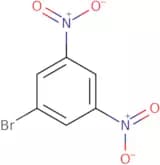
CAS:Dichlorodiethylsilane is an aromatic hydrocarbon that is a colorless liquid with a pungent odor. It has been used as a chemical intermediate and in the synthesis of dyes, pharmaceuticals, and other organic chemicals. Dichlorodiethylsilane reacts with hydrogen fluoride to form hydrogen chloride and dichloroethane. The reaction products are acidic due to the presence of hydroxyl groups, which react with water vapor to form hydrochloric acid and alcohols. Dichlorodiethylsilane reacts with nucleophiles such as chlorides or hydroxides to form ether linkages. This compound also reacts with c1-c4 haloalkyls to form chlorinated alkyl groups. Dichlorodiethylsilane is soluble in water, but not in ether or benzene. It is stable at room temperature but decomposes when heated to temperatures above 200°C (392°F).Formula:C4H10Cl2SiPurity:Min. 95%Color and Shape:PowderMolecular weight:157.11 g/mol1-Bromo-3,5-dinitrobenzene
CAS:1-Bromo-3,5-dinitrobenzene is an optical probe that has been used in reaction systems to study the reactivity of nucleophiles. The fluorescence of 1-bromo-3,5-dinitrobenzene changes with the nature of the nucleophile and its concentration. This molecule is unreactive with other molecules and can be used as a drug development tool. The centroid of 1-bromo-3,5-dinitrobenzene is constant at 298 K. Crystals for 1-bromo-3,5-dinitrobenzene have been analyzed by XRD and FTIR.Formula:C6H3BrN2O4Purity:Min. 95%Color and Shape:White PowderMolecular weight:247 g/molEthidium bromide
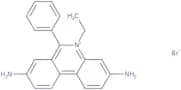
CAS:Ethidium bromide is a natural compound that is used as a fluorescent dye. The dye binds to the nucleic acids of the cell, including DNA and RNA, which intercalate with the guanine residues in the DNA. The dye molecules fluoresce when excited by ultraviolet light. This property has been used for biochemical research on nucleic acids and for labeling cells in histological sections for electron microscopy. Ethidium bromide has also been used in rat hippocampal neurons to study nicotinic acetylcholine receptor function.Formula:C21H20N3·BrPurity:Min. 98 Area-%Color and Shape:Red Purple PowderMolecular weight:394.31 g/mol2-Fluorobenzhydrazide
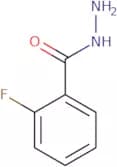
CAS:2-Fluorobenzhydrazide is an antibacterial agent that belongs to the group of phthaloyl compounds. It has been shown to be active against Gram-positive bacteria and Mycobacterium tuberculosis. The crystal structure of 2-fluorobenzhydrazide shows a hydrogen bond with the chloride ion and a strong interaction with the benzodiazepine binding site. The hydroxyl group on the benzene ring may play a role in radical scavenging activity, which is a common property of quinolones. 2-Fluorobenzhydrazide has been shown to be stable in water and organic solvents, with antibacterial activity against Gram-positive and acid-fast bacteria.Formula:C7H7FN2OPurity:Min. 95%Color and Shape:PowderMolecular weight:154.14 g/mol(4-Bromophenyl)-(pyridin-3-yl)methanone
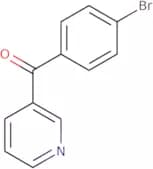
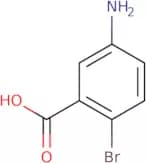
CAS:The compound is a reactive, logistic and logistic regression analysis. The logistic regression was used to determine the effects of temperature on the yields of this organic chemical. The compound is not active against test organisms such as dimethylamine, but does react with carbonyl groups in other organic chemicals. This chemical is considered reactive because it can be easily oxidized by air or water. It has been shown that this chemical reacts with oxygen molecules to form aldehydes and ketones.Formula:C12H8BrNOPurity:Min. 95%Molecular weight:262.1 g/mol5-Amino-2-bromobenzoic acid
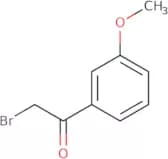
CAS:5-Amino-2-bromobenzoic acid is an organic compound that is used in the manufacture of other chemicals. It is a white crystalline solid with a melting point of 133°C, and it has a molecular weight of 222.27 g/mol. This chemical has been shown to be mutagenic, and it may also cause adverse effects on the liver, kidneys, stomach, and skin when taken orally or applied to the skin. 5-Amino-2-bromobenzoic acid is found in many products that are used for industrial purposes such as dyes, rubber chemicals, textile chemicals, pesticides, and herbicides. The chemical can be found in products that are sold in hardware stores and supermarkets.Formula:C7H6BrNO2Purity:Min. 95%Color and Shape:PowderMolecular weight:216.03 g/mol2-Bromo-3'-methoxyacetophenone
CAS:2-Bromo-3'-methoxyacetophenone is a reactive compound that has been used as an antiplatelet drug. It is a prodrug of vicagrel, which inhibits the platelet aggregation by blocking the conversion of ADP to ATP. It also has been shown to inhibit the growth of cryptococcus neoformans. This compound binds to matrix proteins and disrupts their structure, leading to a decrease in platelet adhesion. 2-Bromo-3'-methoxyacetophenone has been shown to be metabolized through a number of metabolic transformations, including hydrolysis by esterases or glucuronidases, oxidation by cytochrome P450 enzymes, reduction by glutathione reductase, or conjugation with glucuronic acid. The biological properties of this drug are complex and depend on its concentration and duration of exposure. Its effect on platelet aggregation is due to its ability to inhibit the activity of protein kinFormula:C9H9BrO2Purity:Min. 95%Molecular weight:229.07 g/molPerfluorooctylsulfonylpropylaminoethyl acrylate
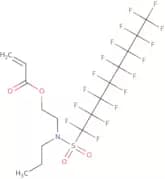
CAS:Controlled ProductPerfluorooctylsulfonylpropylaminoethyl acrylate is a sulfonate, which is a chemical that can be found in mixtures. It is a chemical substance that has the ability to connect with other chemicals. This chemical has not been classified as hazardous by the National Institute for Occupational Safety and Health (NIOSH).
Formula:C16H14F17NO4SPurity:Min. 95%Molecular weight:639.33 g/mol2',4'-Dibromoacetophenone
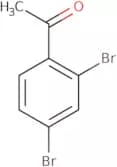
CAS:2',4'-Dibromoacetophenone is a 3',5'-cyclic monophosphate (cAMP) analogue that inhibits protein kinase and phospholipase C. It has been shown to inhibit the production of adenosine in endothelial cells by acting as an antagonist at the adenosine receptor. 2',4'-Dibromoacetophenone also has a strong inhibitory effect on human endothelial cells, which may be due to its ability to inhibit DNA synthesis and protein synthesis. This compound binds to the endothelial cell membrane and blocks the activation of phospholipase A2, preventing the release of arachidonic acid from phospholipids. Arachidonic acid is required for prostaglandin synthesis, which leads to inflammation.
Formula:C8H6Br2OPurity:Min. 95%Color and Shape:Slightly Yellow PowderMolecular weight:277.94 g/mol2-(Perfluorodecyl)ethyl acrylate
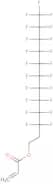
CAS:2-(Perfluorodecyl)ethyl acrylate is a cross-linking agent that can be used in the production of polymers. It has been shown to have antimicrobial properties, which may be due to its ability to bind with hydroxyl groups on the surface of microorganisms and inhibit their growth. 2-(PFDEC)EA also has strong hydrophobic properties, which make it an ideal candidate for coating applications. 2-(PFDEC)EA is also able to form covalent bonds with alcohols, yielding water-soluble polymers that are useful as coatings or adhesives. It has functional groups that make it a good candidate for use in reactive polymerization reactions.
Formula:C15H7F21O2Purity:Min. 95%Color and Shape:White Clear LiquidMolecular weight:618.18 g/mol3-((3-chlorophenyl)methyl)-4-phenyl-1,2,4-triazoline-5-thione
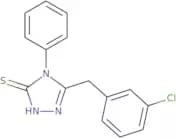
CAS:Please enquire for more information about 3-((3-chlorophenyl)methyl)-4-phenyl-1,2,4-triazoline-5-thione including the price, delivery time and more detailed product information at the technical inquiry form on this pagePurity:Min. 95%2-Bromo-5-(trifluoromethyl)benzylamine hydrochloride
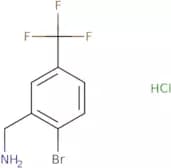
CAS:2-Bromo-5-(trifluoromethyl)benzylamine hydrochloride is a fine chemical with CAS No. 1214331-01-7 that has been used as a building block in the synthesis of various complex compounds, such as pharmaceuticals and agrochemicals. 2-Bromo-5-(trifluoromethyl)benzylamine hydrochloride is also a versatile building block for the preparation of useful intermediates and scaffolds.Formula:C8H7BrF3N•HClPurity:Min. 95%Molecular weight:290.51 g/molPitolisant hydrochloride
CAS:Pitolisant is an inverse agonist and antagonist of the histamine (H3) receptor. It acts as an allosteric modulator of the H3 receptor to increase the activity of histamine at the M1 receptor. Pitolisant has been used in the treatment of narcolepsy, schizophrenia and Alzheimer's disease. Its mechanism of action involves binding to the amide group on histamine, which increases its affinity for the H3 receptor and enhances its activity at this site. Pitolisant has been shown to improve cognitive ability and reduce fatigue in patients with Alzheimer's disease.
Formula:C17H26ClNO·HClPurity:Min. 95%Color and Shape:White Off-White PowderMolecular weight:332.31 g/mol4-(Trifluoromethyl)mandelic acid
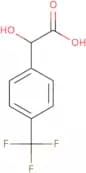
CAS:4-(Trifluoromethyl)mandelic acid (4-TFA) is a metabolite of the drug mandelic acid. It is a thermodynamically stable, stereospecific, and highly polar compound that can be easily purified by column chromatography. 4-TFA has been shown to have analytical methods in common with mandelic acid, including fluorine analysis and regression. The chemical properties of 4-TFA are similar to those of other aldehydes. It also has enantiomeric purity and can be analysed using gas chromatography-mass spectrometry in urine samples.Formula:C9H7F3O3Purity:Min. 95%Color and Shape:PowderMolecular weight:220.15 g/mol1-Butyl-3-methylimidazolium bromide
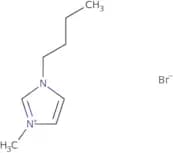
CAS:1-Butyl-3-methylimidazolium bromide is an ionic liquid that has been shown to be a good solvent for cellulose. It is also biocompatible and can be used as a polymer matrix for copper chloride. 1-Butyl-3-methylimidazolium bromide has been shown to be a good model system for studying the interaction between ions and water vapor in liquids. It has been observed that 1-butyl-3-methylimidazolium bromide undergoes hydrogen bonding interactions with water molecules, which may provide the driving force for its solvation of cellulose.Formula:C8H15BrN2Purity:(¹H-Nmr) Min. 95 Area-%Color and Shape:PowderMolecular weight:219.12 g/mol2-Bromo-N-[2-[7-Chloro-5-(2-Fluorophenyl)-2-Oxo-3H-1,4-Benzodiazepin-1-Yl]Ethyl]Acetamide
CAS:Controlled Product2-Bromo-N-[2-[7-Chloro-5-(2-fluorophenyl)-2-oxo-3H-1,4-benzodiazepin-1-yl]ethyl]acetamide is a benzodiazepine derivative that binds to the benzodiazepine receptor and is also a calcium antagonist. It has been used in clinical studies as a chronic treatment for cancer and as an anticonvulsant. 2BBA acts on benzodiazepine receptors to inhibit the release of gamma aminobutyric acid (GABA) by binding to GABA A receptors. This prevents the binding of GABA with these receptors and leads to sedation and muscle relaxation. Flunitrazepam, which is chemically similar to 2BBA, is also used as a sedative and hypnotic drug. 2BBA has affinity constants that are between 50 nM and 100 μM for benzodiazepine binding sites, while itsFormula:C19H16BrClFN3O2Purity:Min. 95%Molecular weight:452.7 g/mol2-Fluoro-3-methoxyaniline
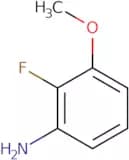
CAS:2-Fluoro-3-methoxyaniline is a high quality chemical that can be used as an intermediate in the synthesis of complex compounds. It is a reagent and useful building block, with a CAS number of 801282-00-8. 2-Fluoro-3-methoxyaniline can be used to make speciality chemicals and research chemicals, as well as versatile building blocks for reactions. This compound is also a reaction component for the synthesis of other compounds.
Formula:C7H8FNOPurity:Min. 95%Color and Shape:Clear LiquidMolecular weight:141.14 g/molHydrazine hydrochloride
CAS:Controlled ProductHydrazine hydrochloride is an antimicrobial agent that belongs to the group of hydrazines. It is a fatty acid that has been esterified with hydrochloric acid and hydrogen fluoride to form the corresponding ester hydrochloride. Hydrazine hydrochloride has shown to be effective against a variety of microorganisms. The antimicrobial activity of this drug may be due to its ability to inhibit fatty acid synthesis by binding to the active site of the enzyme, acyl-CoA:malonyl-CoA acyltransferase (MCT). Hydrazine hydrochloride also inhibits the production of pyrazoles, which are compounds that are known to induce autoimmune diseases in mice.Formula:N2H4·HClPurity:min 98%Color and Shape:White PowderMolecular weight:68.51 g/mol2-Bromo-3-hydroxybenzoic acid ethyl ester
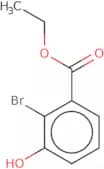
CAS:2-Bromo-3-hydroxybenzoic acid ethyl ester is a versatile building block that can be used in the synthesis of complex compounds. It is a fine chemical and research chemical with CAS No. 1260889-94-8. This compound has high quality and is used as a reagent, scaffold, or intermediate in organic syntheses. 2-Bromo-3-hydroxybenzoic acid ethyl ester is also useful for the preparation of speciality chemicals and reaction components.Formula:C9H9BrO3Purity:Min. 95%Color and Shape:Yellow PowderMolecular weight:245.07 g/molMethyl 2,6-dibromobenzoate
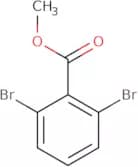
CAS:Methyl 2,6-dibromobenzoate is a versatile building block that can be used in the synthesis of many different types of compounds. It is a fine chemical with CAS number 873994-34-4. Methyl 2,6-dibromobenzoate is a useful building block for research chemicals and reagents. This compound is also an intermediate or scaffold in organic synthesis. Methyl 2,6-dibromobenzoate has been shown to react with boronic acid esters to produce boronate esters. The reaction proceeds via nucleophilic substitution and elimination reactions. In addition, methyl 2,6-dibromobenzoate reacts with potassium permanganate to produce hydrogen peroxide and manganese dioxide.Formula:C8H6Br2O2Purity:Min. 95%Color and Shape:Off-White PowderMolecular weight:293.94 g/mol1-(Azidomethyl)-4-chlorobenzene ~ 0.5 M solution in dichloromethane
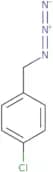
CAS:1-(Azidomethyl)-4-chlorobenzene is a chemical compound that is used in organic synthesis. It is a colorless liquid with a strong smell. It inhibits the growth of fungi by inhibiting the sclerotinia phosphatase, which catalyzes the conversion of propiolic acid to p-hydroxybenzoic acid. This mechanism may also be responsible for its properties as an antifungal agent. 1-(Azidomethyl)-4-chlorobenzene has shown no inhibitory effects on mammalian phosphatases and does not show any adverse reactions when tested against animal cells.Formula:C7H6ClN3Purity:Min. 95%Color and Shape:Clear LiquidMolecular weight:167.6 g/mol3-Fluoro-4-nitrotoluene
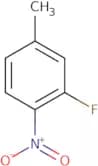
CAS:3-Fluoro-4-nitrotoluene is a chemical that belongs to the class of nitro compounds. It is used as an intermediate for the synthesis of beta-cyclodextrin, which is a cyclic oligosaccharide that has been found to be effective in inhibiting influenza virus. 3-Fluoro-4-nitrotoluene can be produced through the reaction of formaldehyde with sodium nitrate and hydrofluoric acid in a liquid phase. This reaction takes place at room temperature and produces a yield of about 50%. The production of this compound is also efficient and inexpensive.Formula:C7H6FNO2Purity:Min. 95%Color and Shape:PowderMolecular weight:155.13 g/mol2-Amino-4'-fluoroacetophenone hydrochloride
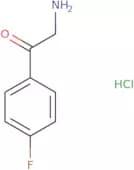
CAS:Controlled Product2-Amino-4'-fluoroacetophenone hydrochloride is a fine chemical with a versatile building block. It is an intermediate used in research and a reaction component for the synthesis of complex compounds. 2-Amino-4'-fluoroacetophenone hydrochloride can be used as a reagent in the synthesis of pharmaceuticals or other useful chemicals. Its CAS number is 456-00-8.Formula:C8H9ClFNOPurity:Min. 95%Molecular weight:189.61 g/mol2-Amino-3-(4-dimethylaminophenyl)propanol dihydrochloride
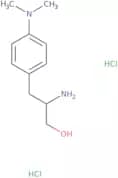
CAS:2-Amino-3-(4-dimethylaminophenyl)propanol dihydrochloride is a perovskite with the chemical formula CHN. It is a crystalline solid that has been found in the nasal cavity of Typhlopidae and Rostral rostral, dorsum, dorsal profile advances. 2-Amino-3-(4-dimethylaminophenyl)propanol dihydrochloride has not been determined to be either an organic or inorganic compound. The nature of this material is unclear, but it has been shown to have crystallization properties.Formula:C11H18N2O•2HClPurity:Min. 95%Molecular weight:267.19 g/mol7-Bromoindole
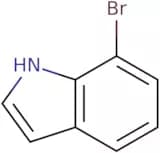
CAS:7-Bromoindole is a synthetic compound that has been used as an analog for indole. It has been shown to have some biological activity in vivo, but it is not known if this activity is due to the drug itself or its breakdown products. 7-Bromoindole can be decarboxylated under acid conditions and saponified with sodium hydroxide. The isolated yield of this reaction is about 2 grams per mole of reactant. 7-Bromoindole shows hemolytic activity against human pathogens such as Staphylococcus aureus and Escherichia coli, but not against Bacillus subtilis or Pseudomonas aeruginosa.Formula:C8H6BrNColor and Shape:PowderMolecular weight:196.04 g/mol2-Chloro-5-methoxybenzonitrile
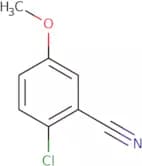
CAS:2-Chloro-5-methoxybenzonitrile is an organic compound that has a chlorinated methoxy group and a cyano group. It is synthesized by the reaction of 2-chloro-5-hydroxybenzonitrile with sulfuryl chloride in the presence of potassium carbonate. The yield of this reaction can be increased by adding a chlorinated solvent such as dichloromethane or chloroform. 2-Chloro-5-methoxybenzonitrile is used in the synthesis of various drugs and other organic compounds, such as amides and benzene ring compounds.Formula:C8H6ClNOColor and Shape:PowderMolecular weight:167.59 g/molD-Phenylglycine tert-butyl ester hydrochloride
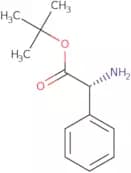
CAS:D-Phenylglycine tert-butyl ester hydrochloride is a fine chemical that has versatile uses in research as a building block, intermediate, or reagent. It can be used to make complex compounds and useful scaffolds for organic chemistry. D-Phenylglycine tert-butyl ester hydrochloride is also a useful reaction component and can be used to make high-quality products.
Formula:C12H17NO2·HClPurity:Min. 95%Color and Shape:PowderMolecular weight:243.73 g/molNelotanserin
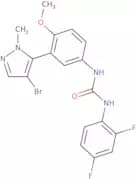
CAS:1-[3-(4-Bromo-1-methyl-1H-pyrazol-5-yl)-4-methoxyphenyl]-3-(2,4-difluorophenyl)urea is the active ingredient in a drug that is used to treat chronic schizophrenia. It has been shown to have both antipsychotic and antidepressant properties. The drug works by blocking the 5HT2A receptor, which inhibits the effects of serotonin on heterocyclic amines at the postsynaptic membrane. This causes hyperpolarization of the membrane, which blocks neurotransmitter release and prevents further transmission of signals. It also blocks the H1 receptor, which decreases histamine release and reduces inflammation in the brain.Formula:C18H15BrF2N4O2Purity:Min. 95%Color and Shape:PowderMolecular weight:437.24 g/molChlorin e6
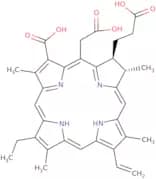
CAS:Chlorin e6 is a photosensitizer, which is derived from chlorophyll, specifically the breakdown products of chlorophyll a extracted from plants and algae. It has a significant absorption in the red and near-infrared region of the electromagnetic spectrum, facilitating its use in photodynamic therapy (PDT). Upon activation by light, chlorin e6 produces reactive oxygen species, including singlet oxygen, which can induce cell death. This photochemical mechanism allows for the targeted destruction of cancer cells when used in oncological settings.Formula:C34H36N4O6Purity:90%MinColor and Shape:Dark Blue-Green Or Dark Purple SolidMolecular weight:596.67 g/mol5-(4-Chlorobutyl)-1-cyclohexyltetrazole
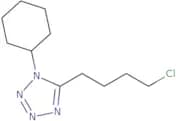
CAS:5-(4-Chlorobutyl)-1-cyclohexyltetrazole is a synthetic, phosphorus pentachloride-derived compound that is used in the analytical method for determining the concentration of hydroxyl groups. It has been shown to be genotoxic and have toxic effects on aquatic organisms. 5-(4-Chlorobutyl)-1-cyclohexyltetrazole is not metabolized and does not interact with other medicines. The main impurities are chloride, water, and tetrazole. 5-(4-Chlorobutyl)-1-cyclohexyltetrazole is an inorganic base with a hydrated chloride ion. This product contains phosphorus oxychloride as an impurity.Formula:C11H19ClN4Purity:Min. 95%Color and Shape:White Off-White PowderMolecular weight:242.75 g/molL-Threonine benzyl ester hydrochloride
CAS:L-Threonine benzyl ester hydrochloride is a glycopeptide that is used as a precursor to L-threonine. It is synthesized from cycloserine, which contains a phenyl group, and D-serine, which contains an amino acid with two threonine molecules. The synthesis starts with the activation of the benzyl ester by treatment with hydrazoic acid. This activated compound reacts with D-serine in the presence of an organic base to form the benzyl ester of D-serine. The reaction can be carried out in one pot without isolation steps. The final step is an oxidative cleavage of the benzyl group by irradiation with ultraviolet light or exposure to hydrogen peroxide, yielding L-threonine benzyl ester hydrochloride as a white solid.
Formula:C11H15NO3•HClPurity:Min. 95%Color and Shape:White To Off-White SolidMolecular weight:245.7 g/mol2-Bromophenylacetonitrile
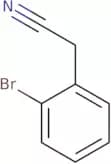
CAS:2-Bromophenylacetonitrile is a synthetic compound that is used in wastewater treatment. It is effective at removing cyanides, phenylpropionic acid, and aldehydes from wastewater. 2-Bromophenylacetonitrile has been shown to be an efficient method for the removal of liriodenine from sewage water and for the removal of 2-bromostyrene from industrial waste water. This process can be used as an analytical method to measure the concentration of these substances in samples of wastewater. The reaction mechanism involves the formation of a nitrilium ion intermediate and subsequent reactions with alcohols to form esters or ethers.
Formula:C8H6BrNPurity:Min. 95%Color and Shape:Colourless To Pale Yellow Clear LiquidMolecular weight:196.04 g/mol2-Bromo-2-nitroethanol
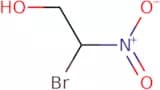
CAS:2-Bromo-2-nitroethanol is a chemical reagent that has the hydroxyl group. It is a site specific biocide, which is used to kill bacteria. 2-Bromo-2-nitroethanol has bactericidal activity against gram negative and gram positive bacteria. It can be used as a preservative in food and pharmaceutical products. This chemical is also effective for killing bacteria in water and wastewater treatment plants. 2-Bromo-2-nitroethanol is applied to surfaces by spraying or dipping, or it can be added to water at concentrations of 0.5 ppm or higher. 2-Bromo-2-nitroethanol can also be used to treat textiles, paper, leather, and rubber products by dipping or spraying these materials with the chemical solution containing 2% concentration of 2-bromo-2 nitroethanol in an aqueous solution of sodium hydroxide (0.5Formula:C2H4BrNO3Purity:Min. 95%Color and Shape:Clear LiquidMolecular weight:169.96 g/mol6-Chlorotryptamine
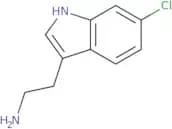
CAS:Controlled Product6-Chlorotryptamine is an indole alkaloid that is found in plants such as "Inula helenium". It has vasoconstrictive properties, which is due to its ability to inhibit the enzyme tryptophan decarboxylase. This inhibition leads to a decrease in serotonin levels, which causes blood vessels to narrow and slows blood flow. 6-Chlorotryptamine also inhibits protein synthesis by preventing the cross-coupling of amino acids. The compound can be found in a number of natural sources, including aerocolonigenes and plant species such as "Inula helenium" and "Lysimachia nummularia".
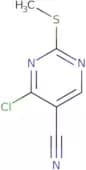
Formula:C10H11ClN2Purity:Min. 98 Area-%Color and Shape:PowderMolecular weight:194.66 g/mol4-Chloro-2-(methylthio)pyrimidine-5-carbonitrile
CAS:4-Chloro-2-(methylthio)pyrimidine-5-carbonitrile (MTPC) is a cardiac drug that has been shown to be effective in preventing autoimmune myocarditis and heart transplant rejection. It inhibits the activity of protein kinase, which is an enzyme involved in the development of autoimmune diseases. MTPC was found to be selective for rat heart isozymes and does not inhibit other isozymes, such as those found in brain, kidney, or liver tissues. MTPC also has high selectivity for allografts over autoantigens.
Formula:C6H4ClN3SPurity:Min. 95%Color and Shape:PowderMolecular weight:185.63 g/mol




![5-[4'-Bromomethyl-(1,1'-biphenyl)-2-yl]-1-triphenylmethyltetrazole](/_next/image/?url=https%3A%2Fstatic.cymitquimica.com%2Fproducts%2F3D%2Fthumb-webp%2FFB19245.webp&w=3840&q=75)


![2-Bromo-N-[2-[7-Chloro-5-(2-Fluorophenyl)-2-Oxo-3H-1,4-Benzodiazepin-1-Yl]Ethyl]Acetamide](/_next/image/?url=https%3A%2Fstatic.cymitquimica.com%2Fproducts%2F3D%2Fthumb-webp%2FFB101616.webp&w=3840&q=75)