Organic Halides
Subcategories of "Organic Halides"
Found 20442 products of "Organic Halides"
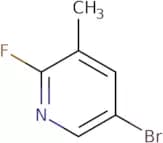
5-Bromo-2-fluoro-3-methylpyridine
CAS:5-Bromo-2-fluoro-3-methylpyridine is a fine chemical that is used as a scaffold for building more complex compounds. This chemical can be used in the synthesis of sulfonamides, thiocarbamates, and other organic compounds. 5-Bromo-2-fluoro-3-methylpyridine is also a versatile intermediate that can be used in the production of research chemicals and speciality chemicals. The purity of this compound is high and it has been shown to be a useful reagent in various reactions.
Formula:C6H5BrFNPurity:Min. 95%Molecular weight:190.02 g/mol4-Bromo-2-fluoro-5-nitrotoluene
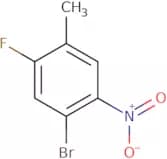
CAS:4-Bromo-2-fluoro-5-nitrotoluene is a chemical building block that is used as a research and speciality chemical. It has been shown to be useful in the synthesis of complex compounds, including pharmaceuticals and dyes. 4-Bromo-2-fluoro-5-nitrotoluene is also used as a reagent for the reaction with other chemicals, such as thiourea, to form 2,4,6-trichlorophenylacetonitrile. This compound is classified as hazardous by the American Chemical Society (ACS) because it can cause irritation to the skin and eyes.Formula:C7H5BrFNO2Purity:Min. 95%Color and Shape:PowderMolecular weight:234.02 g/molAzetidine hydrochloride
CAS:Azetidine hydrochloride is a prodrug that is converted to its active form, azetidine-2-carboxylic acid, in the body. Azetidine hydrochloride inhibits the production of MMP-9 and other inflammatory molecules such as prostaglandins and leukotrienes. It also has an inhibitory effect on the activity of aromatic hydrocarbon metabolism enzymes, such as cytochrome P450 enzymes, which are involved in fatty acid synthesis. Azetidine hydrochloride has been shown to be effective against diabetic neuropathy and insulin resistance by inhibiting the activity of protein kinase C (PKC). Azetidine hydrochloride is a potent antagonist of low energy for its ability to bind to the GABA receptor at high concentrations.
Formula:C3H8ClNPurity:Min. 95%Color and Shape:White PowderMolecular weight:93.56 g/mol3-Bromocinnamic acid ethyl ester
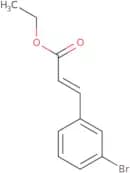
CAS:3-Bromocinnamic acid ethyl ester is a chemical that is useful as a building block for the synthesis of more complex compounds. It is an intermediate in the synthesis of organic compounds and can be used as a reaction component. 3-Bromocinnamic acid ethyl ester has CAS No. 24398-80-9 and is a reagent that can be used to synthesize other chemicals. 3-Bromocinnamic acid ethyl ester is also useful as a scaffold in the development of new drugs, because it has an amide bond, which may lead to new types of drug molecules with different properties.Formula:C11H11BrO2Purity:Min. 95%Molecular weight:255.11 g/mol3-Nitro-5-(trifluoromethyl)benzene-1,2-diamine
CAS:3-Nitro-5-(trifluoromethyl)benzene-1,2-diamine is a chemical compound that can be used as a reaction component or reagent in research. It is a useful scaffold and building block for complex compounds. 3-Nitro-5-(trifluoromethyl)benzene-1,2-diamine has CAS No. 2078-01-5 and is classified as a speciality chemical. This chemical is versatile because it has many uses in both organic chemistry and biology, including use as an intermediate or building block for more complex compounds.Formula:C7H6F3N3O2Purity:Min. 95%Color and Shape:PowderMolecular weight:221.14 g/molrac-cis-N-Desmethyl sertraline hydrochloride
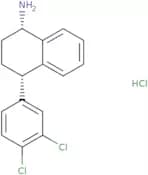
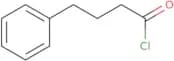
CAS:Rac-cis-N-Desmethyl sertraline hydrochloride is an analog of the antidepressant drug, sertraline. It is a racemic mixture of two stereoisomers that are mirror images of each other and have different effects on the human body. Rac-cis-N-Desmethyl sertraline hydrochloride has been shown to inhibit reuptake of serotonin from the synaptic cleft, which may be responsible for its antidepressant effect. The compound is also radiolabeled with carbon 11 and can be used as a diagnostic agent for positron emission tomography (PET).Formula:C16H16Cl3NPurity:Min. 96 Area-%Color and Shape:White PowderMolecular weight:328.66 g/mol4-Phenylbutyryl chloride
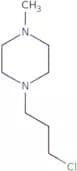
CAS:4-Phenylbutyryl chloride is a chemical with a chiral center and an asymmetric carbon atom. The chemical can be synthesized by the reaction of phenylacetic acid and butyric acid chloride. This compound has been shown to have hypoglycemic effects in animal studies, which may be due to its ability to inhibit the activity of alpha-glucosidase. 4-Phenylbutyryl chloride has also been used for the synthesis of some drugs, including acarbose, miglitol, and glipizide. It has also been shown to have anti-cancer properties in prostate cancer cells. 4-Phenylbutyryl chloride is metabolized by the liver into urinary metabolites that are detectable in urine samples.Formula:C10H11ClOPurity:Min. 97 Area-%Color and Shape:Brown Off-White Yellow Clear LiquidMolecular weight:182.65 g/mol1-(3-Chloropropyl)-4-methylpiperazine
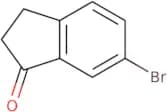
CAS:1-(3-Chloropropyl)-4-methylpiperazine is an analog of chlorpromazine. It has been shown to be a transactivator, which causes the activation of genes in response to a variety of stimuli and plays a role in the pathogenesis of infections. 1-(3-Chloropropyl)-4-methylpiperazine also interacts with chloride ions, causing an increase in intracellular chloride concentrations. This increased concentration leads to an increase in transcription and replication rates. The structures of viral RNA were determined using 1-(3-chloropropyl)-4-methylpiperazine as a fluorescent probe.Formula:C8H17ClN2Purity:Min. 95%Color and Shape:Clear LiquidMolecular weight:176.69 g/mol6-Bromo-1-indanone
CAS:6-Bromo-1-indanone is a chemical compound with the molecular formula C5H5BrNO. It belongs to the class of aromatic ketones and has a herringbone structure. 6-Bromo-1-indanone has been shown to inhibit cancer cells by binding to their a2a adenosine receptors and disrupting their function. This analog also inhibits survivin, an enzyme that regulates cell death, which may be due to its ability to form intramolecular hydrogen bonds. The crystal structure of 6-bromo-1-indanone was determined using crystallography and found to have two different conformations in solution, which is stereoselective.Formula:C9H7BrOPurity:Min. 95%Color and Shape:White PowderMolecular weight:211.06 g/mol3-Amino-3'-nitrobiphenyl hydrochloride
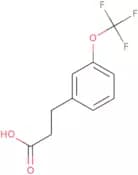
CAS:3-Amino-3'-nitrobiphenyl hydrochloride is a versatile intermediate that can be used in the synthesis of complex compounds. It is a white crystalline solid with a melting point of 178 °C. This product is soluble in water, methanol, ethanol, acetone and chloroform. 3-Amino-3'-nitrobiphenyl hydrochloride has many applications including research chemicals and speciality chemicals.Formula:C12H10N2O2·HClPurity:Min. 95%Color and Shape:PowderMolecular weight:250.68 g/mol3-(Trifluoromethoxy)hydrocinnamic acid
CAS:3-(Trifluoromethoxy)hydrocinnamic acid is a useful building block that is used in the synthesis of many organic compounds. It has been used as a reagent and as a speciality chemical, and is also a versatile building block for the synthesis of complex compounds. 3-(Trifluoromethoxy)hydrocinnamic acid can be synthesized from cinnamic acid, which is available commercially and can be obtained by reacting benzaldehyde with nitric acid. 3-(Trifluoromethoxy)hydrocinnamic acid has CAS No. 168833-77-0 and can be found under the name 2,4-dichloro-3-(trifluoromethoxy)benzene.
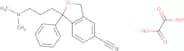
Formula:C10H9F3O3Purity:Min. 98 Area-%Color and Shape:Clear LiquidMolecular weight:234.17 g/molrac Desfluoro citalopram oxalate
CAS:Racemic Desfluoro-Citalopram Oxalate is a novel reagent for the synthesis of pharmaceuticals. It is a building block for speciality chemicals and research chemicals. Racemic Desfluoro-Citalopram Oxalate has many uses, including as an intermediate in the synthesis of Citalopram, as well as a versatile building block for organic chemistry. This compound is also used to modify the physical properties of polymers and other materials. This product can be used to synthesize research chemicals or serve as a reaction component in organic chemistry.Formula:C22H24N2O5Purity:Min. 95%Color and Shape:White PowderMolecular weight:396.44 g/molAmorolfine hydrochloride
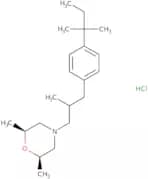
CAS:Anti-fungal agent; inhibits ergosterol biosynthesis
Formula:C21H35ON•HClPurity:Min. 95%Color and Shape:White PowderMolecular weight:353.97 g/mol6-Bromo-betamethasone 17,21-dipropionate
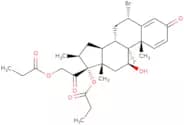
CAS:Controlled Product6-Bromo-betamethasone 17,21-dipropionate is a chemical intermediate that can be used to synthesize a wide variety of compounds. It has a high quality and is versatile. 6-Bromo-betamethasone 17,21-dipropionate is a fine chemical with many uses in the research and development industry. This compound is also useful for the production of pharmaceuticals, pesticides, antibiotics, and other organic compounds.Formula:C28H36BrFO7Purity:Min. 95 Area-%Color and Shape:White PowderMolecular weight:583.48 g/molN-[(8-Fluoro-2,3-Dihydro-1-Methyl-5-Phenyl-1H-1,4-Benzodiazepin-2-Yl)Methyl]-3-Furancarboxamide
CAS:Controlled ProductN-[(8-Fluoro-2,3-Dihydro-1-Methyl-5-Phenyl-1H-1,4-Benzodiazepin-2-Yl)Methyl]-3-Furancarboxamide is a hydrophobic, implanting drug with an iontophoresis device. It has been shown to have therapeutic effects in cancer. The drug is a targetable molecule that can be used for diagnostic purposes and the treatment of various cancers. N-[(8-Fluoro-2,3-Dihydro-1,5 -Phenyl 1H -1,4 Benzodiazepin 2 Yl) Methyl] 3 Furancarboxamide has been shown to inhibit cell proliferation by blocking the synthesis of proteins required for DNA replication and also inhibits the activity of protein kinase C.Purity:Min. 95%4-[2-[[3-(4-Hydroxyphenyl)-1-methylpropyl]amino]ethyl]-1,2-benzenediol hydrochloride
CAS:Dobutamine is a beta-adrenergic agonist that causes the heart to contract and increase blood pressure. It is used for pharmacological treatment of congestive heart failure and ventricular arrhythmias, as well as during angiography of the coronary arteries. Dobutamine stimulates dopamine receptors in the heart, which increases the systolic pressure. Dobutamine has been shown to be effective in improving myocardial contractility, left ventricle function, and cardiac output in patients with chronic congestive heart failure. This drug also improves left ventricular regional wall motion, papillary muscle function, and mitral valve regurgitation. Dobutamine may cause side effects such as nausea, vomiting, headache, or chest pain.Formula:C18H24ClNO3Purity:Min. 95%Color and Shape:PowderMolecular weight:337.84 g/molMca-Tyr-Val-Ala-Asp-Ala-Pro-Lys(Dnp)-OH trifluoroacetate
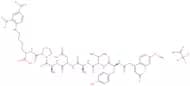
CAS:Please enquire for more information about Mca-Tyr-Val-Ala-Asp-Ala-Pro-Lys(Dnp)-OH trifluoroacetate including the price, delivery time and more detailed product information at the technical inquiry form on this pageFormula:C53H64N10O19•(C2HF3O2)xPurity:95%NmrColor and Shape:PowderMolecular weight:1,145.13 g/molp-Aminophenyldichloroarsine hydrochloride
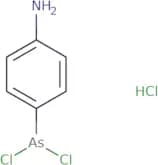
CAS:p-Aminophenyldichloroarsine hydrochloride (APD) is a reversible alkylating agent that binds to sulphydryls and reversibly inhibits the activity of nicotinic acetylcholine receptors. It is also an arsenical that has been shown to react with other proteins, such as acetylcholine receptor subunits. When it reacts with the acetylcholine receptor, it forms stable complexes and irreversible bonds. This prevents the receptor from functioning normally and leads to paralysis of muscles. The APD also binds to the reactive sites on DNA and blocks rRNA synthesis, leading to cell death.
APD is active against many bacteria, including Mycobacterium tuberculosis, but not against Gram-positive bacteria such as staphylococci or streptococci. It is also active against some fungi and protozoa but not against viruses.Formula:C6H7AsCl3NPurity:Min. 95%Color and Shape:PowderMolecular weight:274.41 g/mol3-Bromo-4-hydroxycinnamic acid
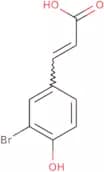
CAS:3-Bromo-4-hydroxycinnamic acid is a useful building block that is obtained from cinnamic acid by substitution of the hydroxyl group with a bromine atom. It has been used in research as a reagent, speciality chemical, and reaction component. 3-Bromo-4-hydroxycinnamic acid is also an important intermediate for the synthesis of various organic compounds. This compound can be used as a scaffold for the synthesis of complex compounds.Formula:C9H7BrO3Color and Shape:PowderMolecular weight:243.05 g/mol3-Hydroxy-2,4,6-tribromobenzyl alcohol
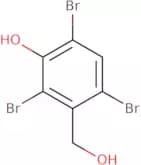
CAS:3-Hydroxy-2,4,6-tribromobenzyl alcohol is a chemoenzymatic reagent that is used in the production of phenols. It is prepared from acetone and sodium bromide and catalyzes the bromination of phenols. This product has high yield and can be used as a source for 3-hydroxy-2,4,6-tribromobenzyl alcohol. 3-Hydroxy-2,4,6-tribromobenzyl alcohol is also an important reagent in the synthesis of polymers that are used in the production of paints and coatings.
Formula:C7H5Br3O2Purity:Min. 95%Color and Shape:PowderMolecular weight:360.83 g/mol4-Bromo-6-nitro-m-xylene
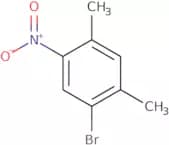
CAS:4-Bromo-6-nitro-m-xylene is a fine chemical that belongs to the group of reagents and speciality chemicals. It is a versatile building block that can be used as a reaction component or intermediate in the synthesis of complex compounds. 4-Bromo-6-nitro-m-xylene has been shown to react with nucleophiles, such as amines, alcohols, and thiols, to form nitrosamines. This chemical has been used as a research tool for studying the mechanism of action for various drugs. The compound is also useful as a scaffold for other complex compounds.
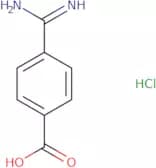
Formula:C8H8BrNO2Purity:Min. 95%Color and Shape:PowderMolecular weight:230.06 g/mol4-Amidinobenzoic acid hydrochloride
CAS:4-Amidinobenzoic acid hydrochloride is a catalytic molecule that inhibits serine proteases. It has been shown to be an effective inhibitor of the proteolytic activity of trypsin and chymotrypsin when used at concentrations of 3 mM or higher. 4-Amidinobenzoic acid hydrochloride functions by binding to the active site of the enzyme, preventing access to the substrate. This inhibition is reversible, with a half-life of about 10 minutes. The inhibitory constants for 4-amidinobenzoic acid hydrochloride are in the range of 1 μM to 100 μM.
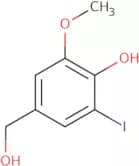
Formula:C8H8N2O2•HClPurity:Min. 95%Color and Shape:PowderMolecular weight:200.62 g/mol4-Hydroxy-5-iodo-3-methoxybenzyl alcohol
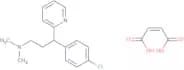
CAS:4-Hydroxy-5-iodo-3-methoxybenzyl alcohol is a polymer that has been synthesized as a model compound for lignin. It is a synthetic compound, which has not been found in nature. 4-Hydroxy-5-iodo-3-methoxybenzyl alcohol is toxic to bacteria and fungi, but not to mammalian cells. The metabolic products of this compound have not yet been identified.Formula:C8H9IO3Purity:Min. 95%Color and Shape:PowderMolecular weight:280.06 g/molChlorpheniramine maleate
CAS:Histamine (H1) antagonist; used to treat allergiesFormula:C16H19ClN2•C4H4O4Purity:Min. 95%Color and Shape:White PowderMolecular weight:390.86 g/mol4,6-Diaminoresorcinol dihydrochloride
CAS:4,6-Diaminoresorcinol dihydrochloride is a white solid that has viscosity and hydrochloric acid as its structural formula. It is soluble in water and reacts with proton, monosodium salt to form a precipitate. 4,6-Diaminoresorcinol dihydrochloride reacts with phosphorus pentoxide to form the sulfonation product. The thermal expansion of this material is 2.8 x 10^-5/K and it has shown chemical stability at high temperatures up to 450°C. This compound has been found to be an element analysis for chloride (Cl), hydrogen chloride (HCl) and morphology.Formula:C6H10N2O2Cl2Purity:Min. 98 Area-%Molecular weight:213.06 g/molLorcaserin hydrochloride hemihydrate
CAS:Controlled ProductSerotonin receptor 5-HT2C agonistFormula:(C11H14ClN)2•(HCl)2•H2OPurity:Min. 95%Color and Shape:White PowderMolecular weight:482.31 g/mol2-Fluorobenzoic acid
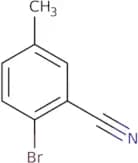
CAS:2-Fluorobenzoic acid is an organic compound that is used as a pharmaceutical intermediate. It has been shown to be effective in treating autoimmune diseases, such as lupus and rheumatoid arthritis, by inhibiting the production of inflammatory cytokines. 2-Fluorobenzoic acid is synthesized from hydrogen fluoride and sodium citrate in the presence of water vapor. X-ray diffraction data have shown that this reaction occurs in a complex with nitrogen atoms and group p2 water molecules. The product formed is an acid complex with benzoate. This compound inhibits wst-1 activity, which can lead to mitochondrial membrane potential loss.Formula:C7H5FO2Purity:Min. 95%Color and Shape:PowderMolecular weight:140.11 g/mol4-Bromo-3-cyanotoluene
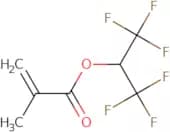
CAS:4-Bromo-3-cyanotoluene is a quinazolinone that can be synthesized by reacting 2-bromotoluene with nitric acid. It is a substrate for the synthesis of other quinazolinones.Formula:C8H6BrNPurity:Min. 95%Molecular weight:196.04 g/mol1,1,1,3,3,3-Hexafluoroisopropyl methacrylate - Stabilized with 100-200 ppm MEHQ
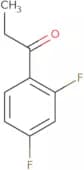
CAS:1,1,1,3,3,3-Hexafluoroisopropyl methacrylate is a carbonyl group with an unsaturated alkyl. It has low energy and hydrogen fluoride resistance and is a conditioning agent that can be used to reduce the permeability of water in polymer films. This compound has optical properties that are determined by the chemical structure. It is also an effective cross-linking agent for metal surfaces. 1,1,1,3,3,3-Hexafluoroisopropyl methacrylate reacts with fluorine compounds to produce polymer films with high stability.Formula:C7H6F6O2Purity:Min. 98 Area-%Color and Shape:Colorless Clear LiquidMolecular weight:236.11 g/mol2,4-Difluoropropiophenone
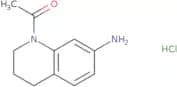
CAS:2,4-Difluoropropiophenone is a chiral compound that belongs to the ketones class of compounds. It is used as an antifungal agent and has been shown to be effective against some strains of Candida albicans. This compound can be synthesized enantioselectively by reacting 2,4-dichlorophenol with propiophenone in the presence of a chiral catalyst.Formula:C9H8F2OPurity:Min. 95%Color and Shape:Slightly Yellow Clear LiquidMolecular weight:170.16 g/mol1-Acetyl-1,2,3,4-tetrahydroquinolin-7-amine hydrochloride
CAS:1-Acetyl-1,2,3,4-tetrahydroquinolin-7-amine hydrochloride is a versatile building block that can be used in the synthesis of complex compounds with high quality and as a speciality chemical. This compound is useful as a reagent and reaction component in organic synthesis. It has been shown to be useful in the synthesis of new scaffolds for drug discovery.
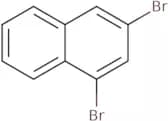
Formula:C11H14N2O·HClPurity:Min. 95%Color and Shape:Off-White PowderMolecular weight:226.7 g/mol1,3-Dibromonaphthalene
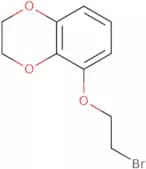
CAS:1,3-Dibromonaphthalene is a brominated derivative of naphthalene. It can be synthesized by reacting methoxy with chloride in the presence of a base (e.g., sodium hydroxide) and brominating the resulting 1,2-dibromoethane with bromine. The compound has been used as an analytical standard for natural gas and has been shown to have good trackability. 1,3-Dibromonaphthalene is used in research, primarily as a precursor to other compounds that are more reactive or less toxic. This molecule has been shown to undergo elimination reactions with alcohols and phenols, which can be useful for synthesis of other molecules. Synopses are available for this molecule at the following links: a) https://pubchem.ncbi.nlm.nih.gov/compound/1,3-Dibromonaphthalene#section=SynonymsFormula:C10H6Br2Purity:Min. 95%Color and Shape:PowderMolecular weight:285.96 g/mol5-(2-Bromoethoxy)-2,3-dihydro-1,4-benzodioxine
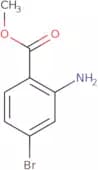
CAS:5-(2-Bromoethoxy)-2,3-dihydro-1,4-benzodioxine is a drug that belongs to the group of local anesthetics. It blocks nerve conduction by inhibiting voltage-gated sodium channels and is used for the treatment of pain. 5-(2-Bromoethoxy)-2,3-dihydro-1,4-benzodioxine has been shown to have two dimensional energies that are greater than those of other drugs in this category. The interactions between molecules are isomorphous and there are strong hydrogen bonds. 5-(2-Bromoethoxy)-2,3-dihydro-1,4-benzodioxine also interacts with the interatomic distance between hydrogens and bromines on adjacent molecules.Formula:C10H11BrO3Purity:Min. 95%Molecular weight:259.1 g/molMethyl 2-amino-4-bromobenzoate
CAS:Methyl 2-amino-4-bromobenzoate is an amide that has a potential use as a cross-coupling agent in organic synthesis. It is labile and must be handled with care; it can also be used as an additive to polymerize natural polymers. Methyl 2-amino-4-bromobenzoate has been shown to enhance the efficiency of chemical reactions, including those between carboxylic acid and amines, and has been used in the synthesis of peptides. This chemical has functional groups that are compatible with a wide range of sequences, allowing for its use as a toolkit in synthetic chemistry. Methyl 2-amino-4-bromobenzoate is an analog of methyl 4-(aminomethyl)benzoate (MAMB).Formula:C8H8BrNO2Purity:Min. 95%Color and Shape:PowderMolecular weight:230.06 g/mol4-Methyl-N-[3-(Trifluoromethyl)Phenyl]Benzenesulfonamide
CAS:Please enquire for more information about 4-Methyl-N-[3-(Trifluoromethyl)Phenyl]Benzenesulfonamide including the price, delivery time and more detailed product information at the technical inquiry form on this pageFormula:C14H12F3NO2SPurity:Min. 95%Molecular weight:315.31 g/molBromocriptine mesylate
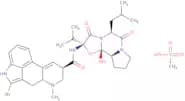
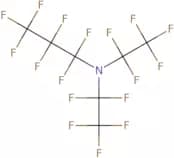
CAS:Controlled ProductDopamine (D2) agonist; inhibits neuronal NOS enzymeFormula:C32H40BrN5O5•CH4O3SPurity:Min. 95%Color and Shape:PowderMolecular weight:750.7 g/mol1,1,2,2,3,3,3-Heptafluoro-N,N-Bis(1,1,2,2,2-Pentafluoroethyl)Propan-1-Amine
CAS:Controlled ProductThe heptafluoro-N,N-bis(1,1,2,2,2-pentafluoroethyl)propane-1-amine is a chemical compound that is used as an additive. This additive has been shown to be efficient in the removal of organic compounds such as benzene and toluene from water. It can also be used for the treatment of biofuel waste water. The heptafluoro-N,N-bis(1,1,2,2,2-pentafluoroethyl)propane-1-amine has shown to have a wavelength absorbance profile with a maximum at 370 nm in the ultraviolet region of the electromagnetic spectrum. This compound can also be used for barcoding and identification purposes in applications where human contact is required.Formula:C7F17NPurity:Min. 95%Molecular weight:421.05 g/mol3'-Fluoro-2'-hydroxy-β-methyl-β-nitrostyrene
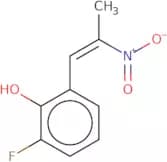
CAS:3'-Fluoro-2'-hydroxy-beta-methyl-beta-nitrostyrene is a fine chemical with a CAS No. 1017060-19-3. It is an intermediate that can be used in the synthesis of complex compounds and research chemicals. This product also has high purity and quality, making it a versatile building block for speciality chemicals. 3'-Fluoro-2'-hydroxy-beta-methyl-beta-nitrostyrene is useful as a reaction component in the synthesis of many other chemical compounds.Formula:C9H8FNO3Purity:Min. 95%Color and Shape:PowderMolecular weight:197.16 g/mol2-Amino-3-chloro-5-(trifluoromethyl)pyridine
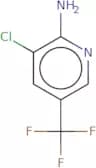
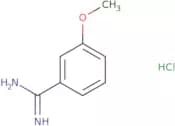
CAS:2-Amino-3-chloro-5-(trifluoromethyl)pyridine is a versatile building block that can be used in the synthesis of complex compounds. It is a useful intermediate for synthetic organic chemistry, and can be used as a reagent or speciality chemical. This compound has shown to have high quality and is useful as a scaffold in the synthesis of research chemicals.Formula:C6H4ClF3N2Purity:Min. 95%Color and Shape:PowderMolecular weight:196.56 g/mol3-Methoxybenzamidine hydrochloride
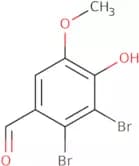
CAS:3-Methoxybenzamidine hydrochloride is a chemical that belongs to the group of acid chlorides. It is used in organic synthesis as an intermediate for the production of triazines, which are used as herbicides and insecticides. 3-Methoxybenzamidine hydrochloride is usually prepared by reacting methylamine with nitrous acid. The use of 3-methoxybenzamidine hydrochloride in organic synthesis has been shown to be highly efficient, with yields up to 95%. This chemical also exhibits fluorescence at low temperatures.Formula:C8H10N2O·HClPurity:Min. 95%Color and Shape:PowderMolecular weight:186.64 g/mol5,6-Dibromovanillin
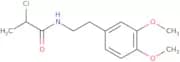
CAS:5,6-Dibromovanillin is a chemical compound that has been shown to have both anti-cancer and anti-inflammatory properties. This drug is metabolized via cytochrome P450 enzymes into 5,6-dibromovanillyl alcohol and 5,6-dibromovanillin acid. The metabolic pathways for this compound are similar to those of estradiol and other estrogens. The effects of 5,6-dibromovanillin on cancer cells are highly dependent on the expression levels of cytochrome P450 enzymes. This drug may be used as a treatment for breast cancer or prostate cancer.Formula:C8H6Br2O3Color and Shape:PowderMolecular weight:309.94 g/molN-(2-(3,4-dimethoxyphenyl)ethyl)-2-chloropropanamide
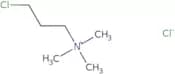
CAS:Please enquire for more information about N-(2-(3,4-dimethoxyphenyl)ethyl)-2-chloropropanamide including the price, delivery time and more detailed product information at the technical inquiry form on this pagePurity:Min. 95%(3-Chloropropyl)-trimethylammonium chloride
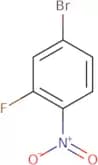
CAS:Please enquire for more information about (3-Chloropropyl)-trimethylammonium chloride including the price, delivery time and more detailed product information at the technical inquiry form on this pageFormula:C6H15ClN•ClPurity:Min. 95%Molecular weight:172.1 g/mol4-Bromo-2-fluoro-1-nitrobenzene
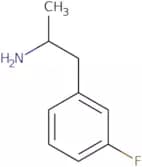
CAS:4-Bromo-2-fluoro-1-nitrobenzene is a molecule that has anticancer activity. It inhibits cancer cells, but does not affect normal cells. The mechanism of action of 4-bromo-2-fluoro-1-nitrobenzene is not yet known. However, it may be due to its ability to react with the prenyl group in the cell membrane, which is important for cell growth and division. The human liver metabolizes 4-bromo-2-fluoro-1-nitrobenzene by kinetic and thermodynamic properties. This drug also has pharmacokinetic properties and can be detected in the bloodstream, urine, and feces for up to two weeks after administration. Fatty acid metabolism can cause drug reactions when taken with 4bromo2furo1nitrobenzene. Protein–protein interactions can also lead to side effects when taking this drug, such as enzyme inhibitionFormula:C6H3BrFNO2Purity:Min. 95%Color and Shape:PowderMolecular weight:220 g/mol1-(3-Fluorophenyl)propan-2-amine
CAS:Controlled Product3-Fluorophenylpropan-2-amine (3FPPA) is a synthetic, nonselective dopamine and serotonin reuptake inhibitor. 3FPPA has been shown to inhibit the growth of cancer cells in vitro, and enhances the release of growth factors from nerve endings in rat brain slices. 3FPPA can be used as a test compound for investigating the effects of psychostimulants on neural cell division. 3FPPA binds to fatty acids and can be used as a medication to treat obesity or cancer. 3FPPA is not selective for either dopamine or serotonin, but is an analog of both amines.Formula:C9H12FNPurity:Min. 95%Molecular weight:153.2 g/mol3,4,5,6-Tetrafluorophthalic acid
CAS:3,4,5,6-Tetrafluorophthalic acid is a crystalline solid that is used in the synthesis of polycarboxylic acids. It is also an antimicrobial agent that can be used to fight cancer cell lines. 3,4,5,6-Tetrafluorophthalic acid has been shown to inhibit the growth of carcinoma cells and other microorganisms by binding to their DNA and interfering with the production of proteins essential for cell division. 3DCTKP binds to bacterial 16S ribosomal RNA and inhibits protein synthesis. This drug has hydrogen bonding interactions with chlorine atoms and fluorescence properties due to its carbonyl group. The kinetic data for this compound was determined using liquid chromatography method.
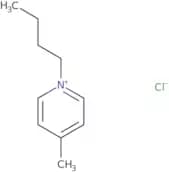
Formula:C8H2F4O4Purity:Min. 95%Color and Shape:PowderMolecular weight:238.09 g/mol1-Butyl-4-methylpyridinium chloride
CAS:1-Butyl-4-methylpyridinium chloride is a pyridine salt that is used for the treatment of osteoporosis. It has been shown to increase the rate of mineralization and reduce the viscosity of beta-amyloid peptide solutions. The biological activity of 1-butyl-4-methylpyridinium chloride has been demonstrated in animal studies, where it was shown to have a significant effect on calcium assays, hydrophilic interaction chromatography, and beta amyloid peptide. This drug also has pharmacokinetic properties that are similar to those of other pyridinium salts. Molecular modeling studies show that 1-butyl-4-methylpyridinium chloride binds well to calcium ions, which may be due to functional groups such as chlorides. This drug also has photocatalytic activity and can be used as a homogeneous catalyst in chromatographic science.Formula:C10H16ClNPurity:Area-% Min. 95 Area-%Color and Shape:PowderMolecular weight:185.69 g/molRimonabant hydrochloride
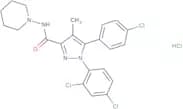
CAS:Controlled ProductCB1 cannabinoid antagonist, non-CB1/CB2 receptor (GPR55) agonist; anorecticFormula:C22H22Cl4N4OPurity:Min. 98 Area-%Color and Shape:PowderMolecular weight:500.25 g/moltert-Butyl diphenylchlorosilane
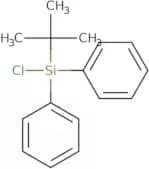
CAS:Tert-butyl diphenylchlorosilane is a chemical compound that belongs to the group of organosilicon compounds. It is used for the preparation of various organosilicon compounds, such as trifluoroacetic acid, which is used in analytical chemistry. The synthesis of tert-butyl diphenylchlorosilane starts with the reaction between hydrochloric acid and sodium citrate. This yields a phosphate bond and a hydroxyl group. In order to form the desired product, tert-butyl diphenylchlorosilane, this intermediate is reacted with trifluoroacetic acid in an asymmetric synthesis to yield the desired product. The reaction mechanism of this process involves hydrogen chloride as an electrophile attacking the carbonyl carbon atom in trifluoroacetic acid, leading to an elimination reaction. This elimination reaction results in two possible products: tert-butyl acetate or tert-butyl chlorosFormula:C16H19ClSiPurity:Min. 97 Area-%Color and Shape:Clear LiquidMolecular weight:274.87 g/mol(2,4-Dichlorophenoxy)acetic acid methyl ester
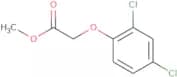
CAS:2,4-Dichlorophenoxyacetic acid methyl ester is a herbicide that inhibits the growth of plants by inhibiting photosynthesis. It is an organic compound with a molecular weight of 168.2 g/mol. This product has been shown to biodegrade in soil and water, as well as be non-persistent in the environment. 2,4-Dichlorophenoxyacetic acid methyl ester is also a pesticide that kills plants by blocking the synthesis of chlorophyll and other plant pigments. This product can be used on trees and shrubs for control of broadleaf weeds and grasses.Formula:C9H8Cl2O3Purity:Min. 95%Color and Shape:PowderMolecular weight:235.06 g/mol



![N-[(8-Fluoro-2,3-Dihydro-1-Methyl-5-Phenyl-1H-1,4-Benzodiazepin-2-Yl)Methyl]-3-Furancarboxamide](/_next/image/?url=https%3A%2Fstatic.cymitquimica.com%2Fproducts%2F3D%2Fthumb-webp%2FFF102093.webp&w=3840&q=75)
![4-[2-[[3-(4-Hydroxyphenyl)-1-methylpropyl]amino]ethyl]-1,2-benzenediol hydrochloride](/_next/image/?url=https%3A%2Fstatic.cymitquimica.com%2Fproducts%2F3D%2Fthumb-webp%2FFH27507.webp&w=3840&q=75)


![4-Methyl-N-[3-(Trifluoromethyl)Phenyl]Benzenesulfonamide](/_next/image/?url=https%3A%2Fstatic.cymitquimica.com%2Fproducts%2F3D%2Fthumb-webp%2FFM94658.webp&w=3840&q=75)