Organic Halides
Subcategories of "Organic Halides"
Found 20442 products of "Organic Halides"
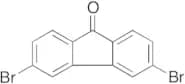
3,6-Dibromo-9H-fluoren-9-one
CAS:Controlled ProductApplications 3,6-Dibromo-9H-fluoren-9-one is a reagent in the preparation of diphenylamine-fluorenone derivatives as potential fluorescent probes for neuroblastoma cell staining.
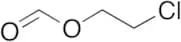
References Capodilupo, A., et al.: Tetrahedron, 72, 2920 (2016)Formula:C13H6Br2OColor and Shape:NeatMolecular weight:337.992-Chloroethyl Formate
CAS:Controlled ProductApplications 2-Chloroethyl Formate is a chemical reagent used in the hydrolysis of esters.
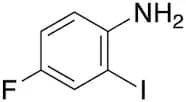
References Stefanidis, D. et al.: J. Am. Chem. Soc., 115, 6045 (1993);Formula:C3H5ClO2Color and Shape:NeatMolecular weight:108.5244-Fluoro-2-iodoaniline
CAS:Controlled ProductApplications 4-Fluoro-2-iodoaniline is a useful reactant for the synthesis of cyclohepta[b]indole scaffold via annulative two-carbon ring-expansion.
References Tymann, D. C., et al.: Chem. Eur. J, 26, 11974 (2020)Formula:C6H5FINColor and Shape:NeatMolecular weight:237.012-Chloroethyl Benzoate
CAS:Controlled ProductStability Hygroscopic
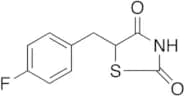
Applications 2-Chloroethyl benzoate (cas# 939-55-9) is a useful research chemical.Formula:C9H9O2ClColor and Shape:NeatMolecular weight:184.625-(4-Fluorobenzyl)-2,4-thiazolidinedione
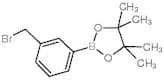
CAS:Controlled ProductFormula:C10H8FNO2SColor and Shape:NeatMolecular weight:225.243-Bromomethylphenylboronic Acid, Pinacol Ester
CAS:Controlled ProductApplications 3-Bromomethylphenylboronic acid, pinacol ester
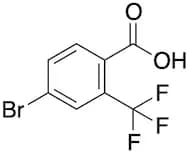
Formula:C12H18O13Color and Shape:NeatMolecular weight:370.2644-Bromo-2-(trifluoromethyl)benzoic acid
CAS:Controlled ProductApplications 4-Bromo-2-(trifluoromethyl)benzoic acid
Formula:C8H4BrF3O2Color and Shape:NeatMolecular weight:269.02N-[3-[[3-Fluoro-4-(4-morpholinyl)phenyl]amino]-2-hydroxypropyl]acetamide
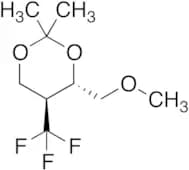
CAS:Controlled ProductFormula:C15H22FN3O3Color and Shape:NeatMolecular weight:311.352(4S-trans)-4-(Methoxymethyl)-2,2-dimethyl-5-(trifluoromethyl)-1,3-dioxane
CAS:Controlled ProductApplications (4S-trans)-4-(Methoxymethyl)-2,2-dimethyl-5-(trifluoromethyl)-1,3-dioxane is a organic reagent and building block in pharmaceutical synthesis.
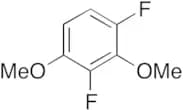
References Di Francesco, M. PCT Int. Appl. (2016), WO 2016004417 A1 20160107.Formula:C9H15F3O3Color and Shape:NeatMolecular weight:228.2091,3-Dimethoxy-2,4-difluorobenzene
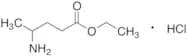
CAS:Controlled ProductFormula:C8H8F2O2Color and Shape:NeatMolecular weight:174.145Ethyl 4-Aminopentanoate Hydrochloride
CAS:Controlled ProductApplications ethyl 4-aminopentanoate hydrochloride (cas# 119396-97-3) is a useful research chemical.
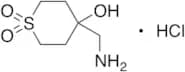
Formula:C7H15NO2·HClColor and Shape:NeatMolecular weight:181.664-(Aminomethyl)-4-hydroxy-1λ6-thiane-1,1-dione Hydrochloride
CAS:Controlled ProductFormula:C6H13NO3S·HClColor and Shape:NeatMolecular weight:215.69Ethenesulfonyl chloride
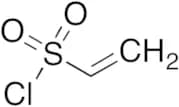
CAS:Controlled ProductApplications Ethenesulfonyl chloride is a useful reactant for the preparation of oral quinoline-based ALDH1A1 inhibitors as potential antitumor agents.
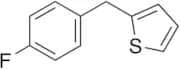
References Yang, SM., et al.: J. Med. Chem., 61, 4883-4903 (2018);Formula:C2H3ClO2SColor and Shape:ColourlessMolecular weight:126.562-(4-Fluorobenzyl)thiophene
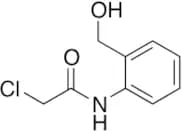
CAS:Controlled ProductFormula:C11H9FSColor and Shape:NeatMolecular weight:192.2532-Chloro-N-(2-(hydroxymethyl)phenyl) Acetamide
CAS:Controlled ProductFormula:C9H10ClNO2Color and Shape:NeatMolecular weight:199.6341-Chloro-3-(3,5-dimethylphenoxy)-2-propanol
CAS:Controlled ProductApplications 1-Chloro-3-(3,5-dimethylphenoxy)-2-propanol is an intermediate used in the synthesis of 1-Amino-3-(3,5-dimethylphenoxy)-2-propanol (A607300), which is a degradation product of Metaxalone (M225850); a muscle relaxant used to relax muscles and relieve pain.
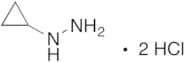
References Rao, R.N., et al.: Biomed. Chromatogr., 27, 1733 (2013)Formula:C11H15ClO2Color and Shape:NeatMolecular weight:214.689Cyclopropylhydrazine Dihydrochloride
CAS:Controlled ProductApplications Cyclopropylhydrazine Dihydrochloride, is a building block used in preparation of more complex compound.
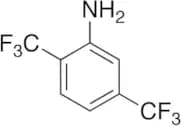
Formula:C3H8N2·2HClColor and Shape:NeatMolecular weight:145.032,5-Bis(trifluoromethyl)aniline
CAS:Controlled ProductApplications 2,5-Bis(trifluoromethyl)aniline is a haloalkul substituted aniline used in the preparation of anti-benign prostatic hyperplasia drug, Dutasteride (D735000).
References Liang, Y. et al.: Jil. Dax. Xueb. Lixeub., 45, 1035 (2007);Formula:C8H5F6NColor and Shape:ColourlessMolecular weight:229.122-{[(tert-Butoxy)carbonyl]amino}-5,5,5-trifluoropentanoic Acid
CAS:Controlled ProductFormula:C10H16F3NO4Color and Shape:NeatMolecular weight:271.2342-[2-(Diethylamino)ethoxy]-fluoren-9-one Hydrochloride
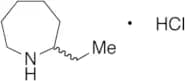
CAS:Controlled ProductFormula:C19H21NO2·HClColor and Shape:NeatMolecular weight:331.837Hexahydro-2-ethyl-1H-azepine Hydrochloride
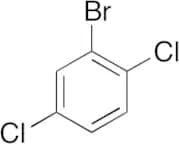
CAS:Controlled ProductFormula:C8H17N·HClColor and Shape:NeatMolecular weight:163.6882-Bromo-1,4-dichlorobenzene
CAS:Controlled ProductApplications 2-Bromo-1,4-dichlorobenzene is a reactant used in the synthesis of C-13 and C-14-labeled versions of the investigational proteasome inhibitor MLN9708.
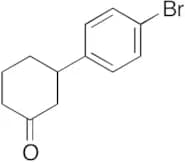
References Plesescu, M., et. al.: J. Labelled Compd. Rad., 56, 464 (2013)Formula:C6H3BrCl2Color and Shape:NeatMolecular weight:225.93-(4-Bromophenyl)cyclohexanone
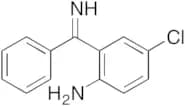
CAS:Controlled ProductFormula:C12H13BrOColor and Shape:NeatMolecular weight:253.1354-Chloro-2(imino(phenyl)methyl)aniline
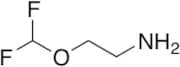
CAS:Controlled ProductFormula:C13H11ClN2Color and Shape:NeatMolecular weight:230.6932-(difluoromethoxy)ethan-1-amine
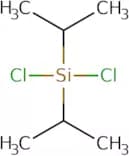
CAS:Controlled ProductFormula:C3H7F2NOColor and Shape:NeatMolecular weight:111.091Dichlorodiisopropylsilane
CAS:Dichlorodiisopropylsilane is a cycloaddition process, which is the addition of two molecules to create a new ring. It reacts with an unsaturated organic compound, such as an alkene or alkyne, to produce a reactive functional group. Dichlorodiisopropylsilane has been used in chemistry as a cross-linking agent for proteins and as a solid catalyst. The chemical stability of dichlorodiisopropylsilane makes it useful in the synthesis of model proteins. This compound also has low bioavailability due to its high reactivity with hydrochloric acid found in the stomach.
Formula:C6H14Cl2SiPurity:Min. 95%Color and Shape:Clear LiquidMolecular weight:185.17 g/molrac 2-palmitoyl-3-chloropropanediol
CAS:Please enquire for more information about rac 2-palmitoyl-3-chloropropanediol including the price, delivery time and more detailed product information at the technical inquiry form on this page
Formula:C19H37ClO3Purity:Min. 95%Molecular weight:348.95 g/molDidecyl dimethyl ammonium chloride - 80% aqueous solution
CAS:Didecyl dimethyl ammonium chloride is a quaternary ammonium compound that has been shown to have a broad-spectrum antimicrobial activity. It has been used in disinfectants and as an active ingredient in pharmaceuticals, cosmetics, and foods. The compound is not toxic to humans or animals at concentrations up to 50%. Didecyl dimethyl ammonium chloride has been shown to be effective against infectious diseases caused by bacteria, viruses, fungi, and protozoa. This compound also has an effect on the epithelial-mesenchymal transition (EMT) process. Didecyl dimethyl ammonium chloride can be prepared by titration calorimetry or analytical method. The preparation of didecyl dimethyl ammonium chloride can be done using chloroform and benzalkonium chloride or glycol ether.
Formula:C22H48ClNColor and Shape:Clear LiquidMolecular weight:362.08 g/mol[(4-Methyl-1H-imidazol-5-yl)methyl]amine hydrochloride
CAS:Please enquire for more information about [(4-Methyl-1H-imidazol-5-yl)methyl]amine hydrochloride including the price, delivery time and more detailed product information at the technical inquiry form on this pageFormula:C5H9N3Purity:Min. 95%Molecular weight:111.15 g/mol3-Chlorothiophene-2-carbonylchloride
CAS:3-Chlorothiophene-2-carbonylchloride (3C2CC) is a heterobicyclic compound that is a ligand for the amine receptor. It is also used as an intermediate in the synthesis of other heterocycles. 3C2CC has been shown to interact with amines to form a nitrene, which can be detected by luminescence or x-ray diffraction techniques. 3C2CC interacts with chloride ions to form a crystal that has a different x-ray diffraction pattern from the one obtained from chloride alone. The crystal structure of this complex was determined using x-ray crystallography.Formula:C5H2Cl2OSPurity:Min. 95%Color and Shape:PowderMolecular weight:181.04 g/mol3-Fluoro-4-nitrobenzonitrile
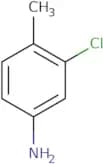
CAS:3-Fluoro-4-nitrobenzonitrile is a diamine that is activated by a nitro group and a halogen. It can be used as an intermediate in the synthesis of other chemicals, such as dyes, pharmaceuticals, and pesticides. 3-Fluoro-4-nitrobenzonitrile is also used to synthesize nitroaminobenzenes, which are converted to aminonitriles by reaction with ammonia. Nitro groups on 3-fluoro-4-nitrobenzonitrile react with alcohols to form nitrosamines. 3-Fluoro-4-nitrobenzonitrile has been shown to be effective in the treatment of angina pectoris and myocardial infarction due to its ability to dilate coronary arteries.Formula:C7H3FN2O2Purity:Min. 95%Color and Shape:White PowderMolecular weight:166.11 g/mol3-Chloro-4-methylaniline
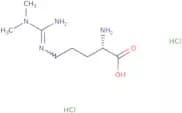
CAS:3-Chloro-4-methylaniline is a chemical compound with a chlorinated aromatic ring. It is a metabolite of the herbicide atrazine, which has been found to produce toxic effects in humans and animals. 3-Chloro-4-methylaniline has been shown to disrupt energy metabolism in mammalian cells through its interaction with mitochondrial respiratory chain complexes I and II. This compound has also been found to cause tubule cell death in the kidneys of rats, as well as liver lesions in mice.Formula:C7H8ClNPurity:Min. 95%Molecular weight:141.60 g/molNG,NG'-Dimethyl-L-arginine dihydrochloride
CAS:NG,NG'-Dimethyl-L-arginine dihydrochloride is a substrate for nitrite reductase and is used to diagnose kidney disease. It has been shown in vitro to inhibit the activity of steroidogenic enzymes in the zona fasciculata of the adrenal gland. NG,NG'-Dimethyl-L-arginine dihydrochloride is also used as a diagnostic agent in pediatric patients with hypogonadotropic hypogonadism and during inhalation therapy in adults with asthma. NG,NG'-Dimethyl-L-arginine dihydrochloride has been shown to reduce inflammatory diseases such as rheumatoid arthritis and Crohn's disease by inhibiting arginine methylation. The drug also reduces age-related changes in steroidogenesis and blood pressure.Formula:C8H18N4O2·2HClPurity:Min. 95%Color and Shape:PowderMolecular weight:275.18 g/molDimethylthiambutene hydrochloride
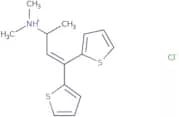
CAS:Controlled ProductPlease enquire for more information about Dimethylthiambutene hydrochloride including the price, delivery time and more detailed product information at the technical inquiry form on this pageFormula:C14H18ClNS2Purity:Min. 95%Molecular weight:299.88 g/mol5-Chloro-2-(ethylsulfonyl)pyrimidine-4-carboxylic acid
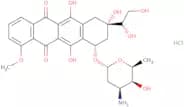
CAS:Please enquire for more information about 5-Chloro-2-(ethylsulfonyl)pyrimidine-4-carboxylic acid including the price, delivery time and more detailed product information at the technical inquiry form on this pageFormula:C7H7ClN2O4SPurity:Min. 95%Molecular weight:250.66 g/molDoxorubicinol hydrochloride - Mixture of Diasteromers
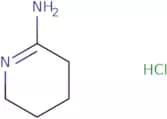
CAS:Please enquire for more information about Doxorubicinol hydrochloride - Mixture of Diasteromers including the price, delivery time and more detailed product information at the technical inquiry form on this pageFormula:C27H32ClNO11Purity:Min. 95%Molecular weight:582 g/mol2-Iminopiperidine hydrochloride
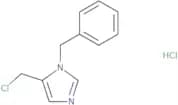
CAS:2-Iminopiperidine hydrochloride is an acetylcholine receptor agonist. It is used as a biochemical tool to study the function of acetylcholine receptors, which are important for the transmission of nerve impulses from the brain and spinal cord to other parts of the body. 2-Iminopiperidine hydrochloride has been shown to be effective in treating Alzheimer's disease, and may be a factor receptor for this disease. The compound has also been shown to have efficient methods of introducing into cells, such as hydrochloric acid and dimethyl formamide. 2-Iminopiperidine hydrochloride binds with phosphoinositides, which are important in intracellular signal transduction pathways. This compound is expressed at M1 receptors in various tissues, including the heart and gastrointestinal tract.Formula:C5H11ClN2Purity:Min. 95%Molecular weight:134.61 g/mol1-Benzyl-5-(chloromethyl)-1H-imidazole hydrochloride
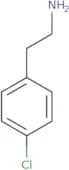
CAS:Controlled ProductPlease enquire for more information about 1-Benzyl-5-(chloromethyl)-1H-imidazole hydrochloride including the price, delivery time and more detailed product information at the technical inquiry form on this pageFormula:C11H11ClN2Purity:Min. 95%Molecular weight:206.67 g/mol2-(4-Chlorophenyl)ethylamine
CAS:Controlled Product2-(4-Chlorophenyl)ethylamine (CPA) is a synthetic serotonergic amine that has inhibitory activities. It is able to bind with the 5-HT receptor, which is also known as the serotonin receptor. CPA has been shown to be an anticancer compound and can be used in experimental solubility studies. This drug binds to brain cells, but does not affect their viability. CPA hydrolyzes in the presence of hydrochloric acid or hydrogen chloride to produce 2-(4-chlorophenyl)ethanol (CPE). The reaction of CPA with serotonin produces 4-chloroamphetamine (PCA), which is a stimulant drug.
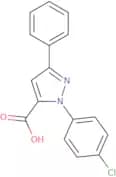
Formula:C8H10ClNPurity:Min. 95%Molecular weight:155.62 g/mol1-(4-Chlorophenyl)-3-phenyl-1H-pyrazole-5-carboxylic acid
CAS:Controlled ProductPlease enquire for more information about 1-(4-Chlorophenyl)-3-phenyl-1H-pyrazole-5-carboxylic acid including the price, delivery time and more detailed product information at the technical inquiry form on this pageFormula:C16H11ClN2O2Purity:Min. 95%Color and Shape:PowderMolecular weight:298.72 g/mol4-[(4-Chlorophenyl)phenylmethyl]-1-piperazineethanol dihydrochloride
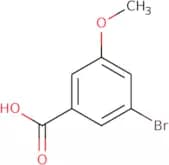
CAS:4-[(4-Chlorophenyl)phenylmethyl]-1-piperazineethanol dihydrochloride is a cholinergic drug that is used to treat allergic rhinitis in children and adults. It has been shown to be well tolerated in pediatric patients and geriatric patients, as well as being an innovative, labile, and biopharmaceutical compound. 4-[(4-Chlorophenyl)phenylmethyl]-1-piperazineethanol dihydrochloride is not metabolized by the liver and does not have significant side effects. It has a low potential for abuse because of its low solubility in water. It is an antihistamine that blocks the action of histamine at H1 receptors on smooth muscle cells in the nose, which helps reduce nasal congestion and sneezing.Formula:C19H23ClN2O·2HClPurity:Min. 95%Molecular weight:403.77 g/mol3-Bromo-5-methoxybenzoic acid
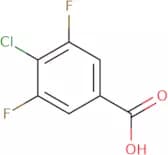
CAS:3-Bromo-5-methoxybenzoic acid is a cytotoxic agent that inhibits the activity of acid transporter, which is involved in the transport of organic acids from the cell to the blood. It is used as an antineoplastic agent for animal studies and has been shown to have a safety profile similar to benzbromarone. 3-Bromo-5-methoxybenzoic acid also inhibits uricosuric activity in mouse hepatocytes and metabolic activation in mice. This compound has inhibitory effects on mouse liver cells and can be used for the treatment of liver cancer.Formula:C8H7BrO3Purity:Min. 95%Molecular weight:231.04 g/mol4-Chloro-3,5-difluorobenzoic acid
CAS:Please enquire for more information about 4-Chloro-3,5-difluorobenzoic acid including the price, delivery time and more detailed product information at the technical inquiry form on this page
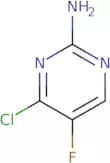
Formula:C7H3ClF2O2Purity:Min. 95%Molecular weight:192.55 g/mol4-chloro-5-fluoropyrimidin-2-amine
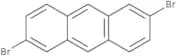
CAS:Please enquire for more information about 4-chloro-5-fluoropyrimidin-2-amine including the price, delivery time and more detailed product information at the technical inquiry form on this pageFormula:C4H3ClFN3Purity:Min. 95%Molecular weight:147.54 g/mol2,6-Dibromoanthracene
CAS:2,6-Dibromoanthracene is an aromatic hydrocarbon that can be synthesized in a cross-coupling reaction. It has been shown to have a high electron mobility and good thermal stability. The compound was prepared by the Suzuki coupling reaction of 2,6-dibromobenzene with phenylboronic acid. This product has no commercial use but has been tested for its transport properties and has been found to be activated by heat.
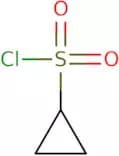
Purity:Min. 95%Cyclopropanesulfonyl chloride
CAS:Cyclopropanesulfonyl chloride (CPSC) is a bicyclic heterocycle that has been shown to have potent inhibitory activity against the human pathogens hepatitis B virus, dengue virus, and influenza A virus. CPSC inhibits the NS3 protease of these viruses by forming hydrogen bonding interactions with the nucleophilic nitrogen atom of the enzyme and also by competing with a chloride ion for binding to the chlorine atom on the enzyme. It also inhibits HIV-1 infection in cell culture experiments. CPSC has been found to be effective in preventing inflammation caused by cytokines, such as interleukin-1β, tumor necrosis factor-α, and prostaglandin E2. The inhibition of inflammatory cytokines may be due to its ability to bind glucocorticoid receptors.
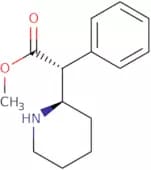
Formula:C3H5ClO2SPurity:Min. 99.0%Color and Shape:Clear LiquidMolecular weight:140.59 g/molL-threo-methylphenidate hydrochloride
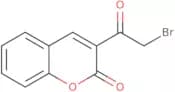
CAS:Controlled ProductL-threo-methylphenidate hydrochloride is a drug with a long duration of action. It has been shown to be effective in the treatment of ADHD symptoms and is used as an alternative to dexmethylphenidate. L-threo-methylphenidate hydrochloride is metabolized by cytochrome P450s, which results in slower pharmacokinetics, but also increases its bioavailability. L-threo-methylphenidate hydrochloride inhibits the activity of dopamine transporters, which leads to increased extracellular dopamine levels and reduced locomotor activity in mice. This drug has been shown to have an anti-inflammatory effect on alopecia areata and may be useful as a treatment for this condition. L-threo-methylphenidate hydrochloride has also been shown to have a protective effect against neurotoxicity induced by methamphetamine in CD1 mice.Formula:C14H20ClNO2Purity:Min. 95%Molecular weight:269.77 g/mol3-(2-Bromoacetyl)-2H-chromen-2-one
CAS:3-(2-Bromoacetyl)-2H-chromen-2-one is a compound that has been shown to inhibit the growth of human liver cancer cells and has been used in the treatment of some cancers. 3-(2-Bromoacetyl)-2H-chromen-2-one is a nucleophile, which reacts with electrophiles, such as 2Nal, to form an intermediate covalent bond. The reaction mechanism for this process involves a nucleophilic substitution reaction, where one atom (the nucleophile) attacks another atom (the electrophile) from the side opposite its electron cloud. This process results in the formation of a covalent bond between the two atoms and the release of water. 3-(2-Bromoacetyl)-2H-chromen-2one was found to be effective against Streptococcus faecalis and other bacteria after being tested in vitro with these organisms. In addition to beingFormula:C11H7BrO3Purity:Min. 95%Color and Shape:PowderMolecular weight:267.08 g/molMethyl 2-amino-4,6-dichloropyridine-3-carboxylate
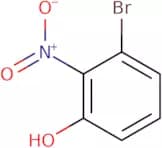
CAS:Please enquire for more information about Methyl 2-amino-4,6-dichloropyridine-3-carboxylate including the price, delivery time and more detailed product information at the technical inquiry form on this pageFormula:C7H6Cl2N2O2Purity:Min. 95%Molecular weight:221.04 g/mol3-Bromo-2-nitrophenol
CAS:3-Bromo-2-nitrophenol (3-BNP) is a brominating agent that can be used in the synthesis of a variety of compounds. It is prepared by the refluxing of 3-bromo-2-nitrobenzene with lithium chloride, followed by treatment with trifluoromethanesulfonic anhydride to yield 3-bromo-2-(trifluoromethyl)phenoxyacetic acid. The product can also be obtained from 2,4,6-trinitrophenol and NBS. 3-BNP has shown chemoselectivity for chlorides relative to iodides or fluorides. The yields are higher when it is used in coupling reactions and permutations with lithium or magnesium.Formula:C6H4BrNO3Purity:Min. 95%Molecular weight:218 g/mol


![N-[3-[[3-Fluoro-4-(4-morpholinyl)phenyl]amino]-2-hydroxypropyl]acetamide](/_next/image/?url=https%3A%2Fstatic.cymitquimica.com%2Fproducts%2FTR%2Fthumb-webp%2FF632029.webp&w=3840&q=75)

![2-{[(tert-Butoxy)carbonyl]amino}-5,5,5-trifluoropentanoic Acid](/_next/image/?url=https%3A%2Fstatic.cymitquimica.com%2Fproducts%2FTR%2Fthumb-webp%2FB813535.webp&w=3840&q=75)
![2-[2-(Diethylamino)ethoxy]-fluoren-9-one Hydrochloride](/_next/image/?url=https%3A%2Fstatic.cymitquimica.com%2Fproducts%2FTR%2Fthumb-webp%2FD443150.webp&w=3840&q=75)



![[(4-Methyl-1H-imidazol-5-yl)methyl]amine hydrochloride](/_next/image/?url=https%3A%2Fstatic.cymitquimica.com%2Fproducts%2F3D%2Fthumb-webp%2FFM125220.webp&w=3840&q=75)



![4-[(4-Chlorophenyl)phenylmethyl]-1-piperazineethanol dihydrochloride](/_next/image/?url=https%3A%2Fstatic.cymitquimica.com%2Fproducts%2F3D%2Fthumb-webp%2FFC53582.webp&w=3840&q=75)