Organic Halides
Subcategories of "Organic Halides"
Found 20443 products of "Organic Halides"
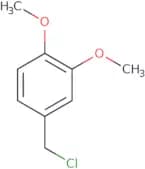
3,4-Dimethoxybenzyl chloride
CAS:3,4-Dimethoxybenzyl chloride is an acetate extract that has been shown to have anticancer properties. It is also a corrosion inhibitor with the ability to inhibit fatty acid demethylation and antimicrobial agents. It has been used in pharmaceutical preparations for treating high blood pressure, as well as in the production of eugenol, papaverine and other drugs.
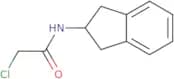
Formula:C9H11ClO2Purity:Min. 95%Molecular weight:186.64 g/mol2-Chloro-N-(2,3-dihydro-1H-inden-2-yl)acetamide
CAS:Controlled ProductPlease enquire for more information about 2-Chloro-N-(2,3-dihydro-1H-inden-2-yl)acetamide including the price, delivery time and more detailed product information at the technical inquiry form on this page
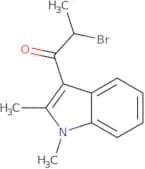
Formula:C11H12ClNOPurity:Min. 95%Molecular weight:209.67 g/mol2-Bromo-1-(1,2-dimethyl-1H-indol-3-yl)propan-1-one
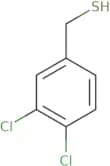
CAS:Controlled ProductPlease enquire for more information about 2-Bromo-1-(1,2-dimethyl-1H-indol-3-yl)propan-1-one including the price, delivery time and more detailed product information at the technical inquiry form on this pageFormula:C13H14BrNOPurity:Min. 95%Molecular weight:280.16 g/mol3,4-Dichlorobenzyl mercaptan
CAS:3,4-Dichlorobenzyl mercaptan is a yellow, volatile liquid that has been shown to be toxic to animals and humans. It is a sulfide compound that has been classified as an acid halide. 3,4-Dichlorobenzyl mercaptan is used as a pheromone in the sex attractant of some species of insects and moths. In addition, it can be used as a plant growth regulator or herbicide for plants such as eggplants. It has low toxicity against other plants and mammals, but high toxicity against some insects.
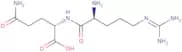
Formula:C7H6Cl2SPurity:Min. 95%Molecular weight:193.09 g/molH-Arg-Gln-OH hydrochloride salt
CAS:H-Arg-Gln-OH is a growth factor that has been shown to be effective in the genetic ablation of mice. This growth factor is taken up by cells via receptor activity and stimulates DNA synthesis and cell division. H-Arg-Gln-OH has been shown to be successful in the treatment of congenital heart disease. The onset latency is site specific and low energy, which means that it can be used for noninvasive treatments.Formula:C11H22N6O4Purity:Min. 95%Molecular weight:302.33 g/mol1-Azaspiro[4.4]nonane hydrochloride
CAS:1-Azaspiro[4.4]nonane hydrochloride is a versatile building block that is also used in research, as a reagent, and as a speciality chemical. It has been shown to be an excellent building block for complex compounds, with wide applications in the pharmaceutical industry. 1-Azaspiro[4.4]nonane hydrochloride has a CAS No. of 1417567-64-6 and can be found under the trade name Azapropynalene Hydrochloride (AP). It is soluble in water, alcohols, ethers and acetone but insoluble in most other solvents. 1-Azaspiro[4.4]nonane hydrochloride has been shown to have high quality and stability when stored under appropriate conditions; it is also resistant to degradation by light or air.Formula:C8H15N•HClPurity:Min. 95%Color and Shape:PowderMolecular weight:161.67 g/mol(Oc-6-21)-(4-Aminophenyl)Pentafluoro-Sulfur
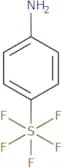
CAS:(Oc-6-21)-(4-Aminophenyl)Pentafluoro-Sulfur is a synthetic chemical that has the molecular formula of CF5SO2NH. It is a five membered heterocycle with an affinity for chloride ions. The compound was synthesized using phenacyl chloride and chlorosulfonyl fluoride in a one step synthesis. This chemical has shown to be an analog of serotonin with hydrogen bonding capabilities. (Oc-6-21)-(4-Aminophenyl)Pentafluoro-Sulfur can act as both a sensor and an electroneutral chlorine ionophore.Formula:C6H6F5NSPurity:Min. 95%Molecular weight:219.18 g/molDichloromethylsilane
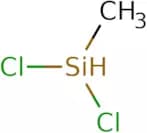
CAS:Dichloromethylsilane (DCS) is a chemical compound that is used in the synthesis of silicone rubber, silicone elastomers, and silicone sealants. It can also be used as a cross-linking agent for polymers such as polyurethane, epoxy resin, and silicone. The synthesis of DCS is achieved by reacting chlorosilanes with methyl alcohol or methyl chloride in the presence of an acid catalyst. DCS exhibits high chemical stability and can be activated at room temperature. This product has been shown to be useful for fabricating medical devices that are implanted into the human body because it does not react with water or blood.
Formula:CH4Cl2SiPurity:Min. 95%Molecular weight:115.03 g/molMethyl 2-methylpropanimidic acid hydrochloride
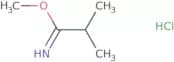
CAS:Methyl 2-methylpropanimidic acid hydrochloride is a neutralizing agent that can be used to react with water, acids, and bases. It has been shown to react with gaseous compounds at temperatures as high as 200°C. Methyl 2-methylpropanimidic acid hydrochloride is soluble in organic solvents such as alcohols, ethers, and acetone and can be used to prepare esters by reacting with the corresponding alcohol or phenol. In addition, it has been shown to interact with haloalkyl groups and oxazinones. This compound also has nod-like receptor binding properties that have been shown to play a role in mediating the transport of organic solutions into cells. A receptor protein that reacts with methyl 2-methylpropanimidic acid hydrochloride has been identified in some organisms. The stereostructure of this compound resembles that of triazines and other organometallic compounds.
Formula:C5H11NO·HClPurity:Min. 95%Molecular weight:137.61 g/mol4-Trifluoromethylbenzene sulfonyl chloride
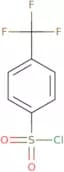
CAS:4-Trifluoromethylbenzene sulfonyl chloride (TFB) is a functional group that is used as a ligand in some chemical reactions. TFB has been shown to be fluorescent, and can be used as a cancer cell marker. It also inhibits the growth of cancer cells by binding to their surface and inhibiting protein synthesis. 4-Trifluoromethylbenzene sulfonyl chloride can be synthesized by reacting ethylene with salicylic acid, followed by the reaction of the resulting ester with chloroform. This process yields TFB and chloride ions, which are then neutralized with sodium hydroxide to yield TFB sulfonate salt.Formula:C7H4ClF3O2SPurity:Min. 95%Color and Shape:Colourless Or White To Light (Or Pale) Yellow To Brown SolidMolecular weight:244.62 g/mol1,3-Difluoro-2-propanol
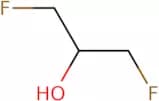
CAS:1,3-Difluoro-2-propanol is a hydrogen bond donor. It is used as an animal repellent and insecticide. It has been shown to be effective against the larvae of mosquitoes and flies. 1,3-Difluoro-2-propanol has also been found to be effective against some fungi, although it is not active against bacteria. The octanol/water partition coefficient (log Kow) of 1,3-difluoro-2-propanol is -0.86. 1,3-Difluoro-2-propanol has been shown to inhibit biochemical reactions in animals by inhibiting ATPase and phosphate uptake in mitochondria. This inhibition leads to the accumulation of metabolites such as lactic acid and pyruvic acid which are responsible for the symptoms seen with exposure to this chemical. 1,3-Difluoro-2-propanol has also been shown
Formula:C3H6F2OPurity:Min. 99 Area-%Color and Shape:Colorless Clear LiquidMolecular weight:96.08 g/mol4-Methoxyphenyl chloroformate
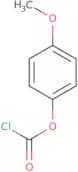
CAS:4-Methoxyphenyl chloroformate is a reactive chemical that can be used to synthesize amides, esters, and anhydrides. It reacts with nucleophiles such as chloride or hydroxide to form an intermediate product. This intermediate product then reacts with the desired molecule to form the desired final product. 4-Methoxyphenyl chloroformate has shown selectivity for binding to opioid receptors, including mu and delta subtypes. This chemical may be used in the synthesis of antibiotic drugs that have similar receptor subtypes. 4-Methoxyphenyl chloroformate also has been shown to modulate G protein signaling pathways in cells, which may lead to improved pharmacokinetic properties.Formula:C8H7ClO3Purity:Min. 95%Color and Shape:Clear LiquidMolecular weight:186.59 g/mol4-Bromoisoquinoline
CAS:4-Bromoisoquinoline is an aryl halide that can be used in the cross-coupling reaction with other aryl halides. It has been shown to have anticancer activity and to inhibit the growth of tumour cell lines in vitro. This compound is also efficient for inhibiting leukemia cells. 4-Bromoisoquinoline has been shown to have an inhibitory effect on cancer cells through the inhibition of DNA synthesis and RNA transcription, as well as by inducing apoptosis. The mechanism of action may be due to its ability to bind to aromatic hydrocarbons and halides, which leads to thermodynamic changes and vibrational energy transfer.Formula:C9H6BrNPurity:Min. 95%Molecular weight:208.05 g/mol(R)-2-Chloromandelic acid
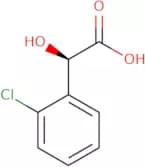
CAS:(R)-2-Chloromandelic acid is an organic compound with the formula CHClCOH. It is a mandelonitrile, which is a benzene ring fused to a nitrile. It has an optimal reaction at acidic pH and in organic solvents and is enantiopure. The cell lysis of Escherichia coli can be achieved by this compound, as seen through the use of acid dehydrogenase. (R)-2-Chloromandelic acid has been shown to inhibit platelet aggregation, making it an antiplatelet agent. This product can be synthesized using methods such as the enantioselective synthesis of clopidogrel or the asymmetric synthesis of D-mandelic acid methyl ester. The isolated yield for (R)-2-Chloromandelic acid is about 45%.Formula:C8H7ClO3Purity:Min. 95%Color and Shape:SolidMolecular weight:186.59 g/mol5-Methyl-4H-1,2,4-triazole-3-sulfonyl chloride
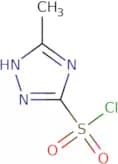
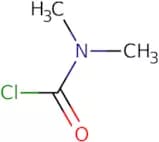
CAS:Please enquire for more information about 5-Methyl-4H-1,2,4-triazole-3-sulfonyl chloride including the price, delivery time and more detailed product information at the technical inquiry form on this pageFormula:C3H4ClN3O2SPurity:Min. 95%Color and Shape:White PowderMolecular weight:181.6 g/molDimethylcarbamoyl chloride
CAS:Dimethylcarbamoyl chloride is a chemical that is used as an ionization reagent in analytical chemistry. It is a colorless liquid with a neutral pH, boiling point of 73 °C, and density of 1.01 g/mL. Dimethylcarbamoyl chloride can be used to synthesize acylated amines and carbonyls for use in pharmaceuticals, polymers, dyes and other chemicals. The chlorine atom can also be substituted with other halogens. The compound has been shown to be chemically stable and resistant to oxidation by catalysts such as oxygen or hydrogen peroxide. Dimethylcarbamoyl chloride is mainly used as an analytical tool for the detection of carbonyl groups in molecules using chemical ionization (CI). Dimethylcarbamoyl chloride has also been shown to have anti-cancer properties due to its effects on choroidal neovascularization (a condition associated with eye diseases) by inhibiting vascular endothelial growth
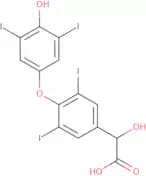
Formula:C3H6ClNOPurity:Min. 95%Color and Shape:Colourless To Pale Yellow LiquidMolecular weight:107.54 g/mol3,5,3',5' -Tetraiodo thyromandelic acid
CAS:Please enquire for more information about 3,5,3',5' -Tetraiodo thyromandelic acid including the price, delivery time and more detailed product information at the technical inquiry form on this page
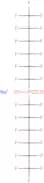
Formula:C14H8I4O5Purity:Min. 95%Color and Shape:PowderMolecular weight:763.83 g/molBis(perfluorohexyl)phosphinic acid sodium salt
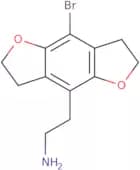
CAS:Please enquire for more information about Bis(perfluorohexyl)phosphinic acid sodium salt including the price, delivery time and more detailed product information at the technical inquiry form on this pageFormula:C12F26NaO2PPurity:Min. 95%Molecular weight:724.05 g/molDesmethyl-8-bromo dragonfly hydrochloride
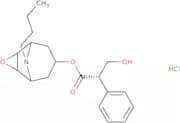
CAS:Controlled ProductDesmethyl-8-bromo dragonfly hydrochloride is a recreational drug that is a benzofuran derivative. It acts as a serotonin receptor agonist, with high potency for 5HT1A receptors and with an affinity for histamine H1 receptors. Desmethyl-8-bromo dragonfly hydrochloride has been shown to be addictive in humans, and the behavioral effects of this drug include increased motor activity and decreased anxiety.Formula:C12H15BrClNO2Purity:Min. 95%Molecular weight:320.61 g/molN-Butyl nor scopolamine hydrochloride
CAS:Please enquire for more information about N-Butyl nor scopolamine hydrochloride including the price, delivery time and more detailed product information at the technical inquiry form on this pageFormula:C20H28ClNO4Purity:Min. 95%Molecular weight:381.89 g/mol

![1-Azaspiro[4.4]nonane hydrochloride](/_next/image/?url=https%3A%2Fstatic.cymitquimica.com%2Fproducts%2F3D%2Fthumb-webp%2FFA130012.webp&w=3840&q=75)