Antibiotics
Antibiotics are compounds designed to destroy or inhibit the growth of various microorganisms, playing a crucial role in treating infections and preventing the spread of diseases. This category offers a diverse range of active ingredients specifically for research in the biochemical field. These compounds are essential tools in studying bacterial mechanisms, resistance patterns, and the development of new therapeutic agents. Researchers can explore a wide variety of antibiotics to understand their effects, optimize their use, and develop novel treatments to combat emerging microbial threats. The availability of such a broad spectrum of antibiotics supports advanced research and innovation in microbiology and pharmaceutical sciences.
Subcategories of "Antibiotics"
- Macrolide Antibiotics(26 products)
- Steroidal Antibiotics(31 products)
- Tetracycline Antibiotics(20 products)
- β-Lactam Antibiotics(11 products)
Found 4102 products of "Antibiotics"
Sort by
Purity (%)
0
100
|
0
|
50
|
90
|
95
|
100
9-Deoxo-9a-aza-9a-homo erythromycin A
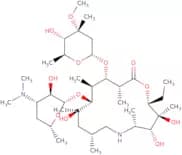
CAS:9-Deoxo-9a-aza-9a-homo erythromycin A is a semi-synthetic macrolide antibiotic, which is derived from the naturally occurring antibiotic erythromycin. This compound is structurally modified to enhance its pharmacokinetic properties and antibacterial spectrum. By altering the erythromycin molecule, 9-Deoxo-9a-aza-9a-homo erythromycin A introduces a nitrogen atom into the lactone ring, thereby modifying its interaction with bacterial ribosomes.Formula:C37H70N2O12Purity:(%) Min. 90%Color and Shape:White PowderMolecular weight:734.96 g/molAmpicillin sodium
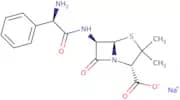
CAS:<p>Ampicillin sodium is a broad-spectrum antibiotic, which is a semisynthetic derivative of penicillin. It is sourced from the natural fermentation products of Penicillium fungi, followed by chemical modification. Ampicillin functions by inhibiting bacterial cell wall synthesis. This is achieved through the irreversible binding to penicillin-binding proteins (PBPs), which play a crucial role in constructing the peptidoglycan layer of bacterial cell walls. This interruption of cell wall synthesis leads to cell lysis and ultimately the death of the bacteria.</p>Formula:C16H18N3O4S·NaPurity:Min. 95%Color and Shape:White PowderMolecular weight:371.4 g/molAztreonam
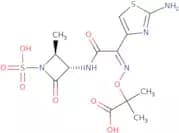
CAS:<p>A β-lactam antibiotic of monobactam subclass, which targets peptidoglycan synthesis in bacterial cell wall. Aztreonam is effective against Gram-negative aerobic bacteria and is more resistant to β-lactamases than other β-lactam antibiotics.</p>Formula:C13H17N5O8S2Purity:Min. 97 Area-%Color and Shape:White Off-White PowderMolecular weight:435.43 g/molKanamycin B
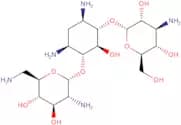
CAS:<p>Kanamycin B is a broad spectrum antibiotic active against both gram-positive and gram-negative bacteria, often used to treat eye infections. Compared to Kanamycin A, it exhibits stronger interaction with the acidic phospholipids.</p>Formula:C18H37N5O10Purity:Min. 95%Color and Shape:PowderMolecular weight:483.51 g/molColistin sodium methanesulfonate
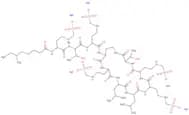
CAS:<p>Colistin sodium methanesulfonate is an antibiotic, which is a derivative of polymyxin E sourced from the bacterium Paenibacillus polymyxa. Its mode of action involves disrupting the bacterial cell membrane by interacting with lipopolysaccharides and phospholipids, leading to cell death.</p>Formula:C58H115N16Na5O28S5Purity:ReportedColor and Shape:PowderMolecular weight:1,759.9 g/molDifloxacin HCl - Bio-X ™
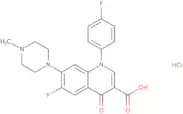
CAS:<p>Difloxacin is a bactericidal, broad-spectrum, fluroquinolone antibiotic which is active against both Gram-positive and Gram-negative bacteria. By interfering with the bacterial enzyme DNA gyrase, which is necessary for the upkeep and synthesis of bacterial DNA, it causes an antibacterial impact. It is used for the treatment of many bacterial infections including skin infections.</p>Formula:C21H19F2N3O3•HClPurity:Min. 95%Color and Shape:PowderMolecular weight:435.85 g/molSarafloxacin hydrochloride
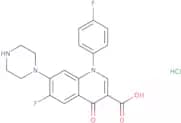
CAS:<p>Sarafloxacin hydrochloride is a fluoroquinolone antibiotic with action on bacterial DNA gyrase and topoisomerase IV and is used for treating bacterial infections in veterinary medicine.</p>Formula:C20H18ClF2N3O3Purity:Min. 95%Color and Shape:Off-White PowderMolecular weight:421.82 g/molCefuroxime axetil
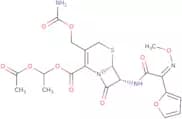
CAS:<p>Cefuroxime axetil is a prodrug of cefuroxime with action on bacterial cell wall synthesis and is used for treating bacterial infections like sinusitis, bronchitis, and gonorrhea.</p>Formula:C20H22N4O10SPurity:Min. 98 Area-%Color and Shape:PowderMolecular weight:510.48 g/molGentamycin sulphate
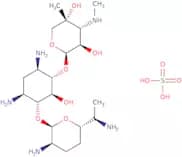
CAS:<p>Gentamycin sulphate is the salt form of the broad-spectrum antibiotic gentamycin (a.k.a. gentamicin). Gentamycin is active against clinically relevant bacteria, such as: Pseudomonas aeruginosa, Klebsiella pneumoniae, Escherichia coli, Serratia marcescens, and is used to fight infections from Staphylococcus, Citrobacter and Enterobacteriaceae species. Gentamycin is a natural mixture of four congeners, one of which is gentamicin C2a. Gentamycin has been included in biomedical implantable materials, such as, bone grafts, to reduce the risk of infection.</p>Formula:C21H43N5O7·H2SO4Color and Shape:White PowderMolecular weight:575.68 g/molValrubicin
CAS:<p>Chemotherapy for bladder cancer; semi-synthetic analog of doxorubicin</p>Formula:C34H36F3NO13Purity:Min. 95 Area-%Color and Shape:PowderMolecular weight:723.64 g/molRosaramicin butyrate
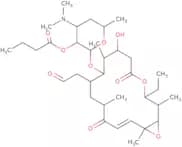
CAS:Rosaramicin butyrate is a macrolide antibiotic, which is derived from the fermentation of Streptomyces bacteria. With a mechanism of action that involves the inhibition of bacterial protein synthesis, it binds to the 50S subunit of the bacterial ribosome. This interference prevents the translocation step during protein translation, effectively halting the growth of susceptible bacterial strains.Formula:C35H57NO10Purity:Min. 95%Molecular weight:651.83 g/molPhleomycin HCl
CAS:<p>Phleomycin HCl is an antibiotic compound derived from *Streptomyces verticillus*, which is known for its robust DNA-cleaving activity. As an antibiotic, it functions primarily by inducing breaks in DNA strands, thereby inhibiting DNA replication and transcription processes. This mechanism of action is particularly effective in targeting rapidly dividing cells, making Phleomycin a valuable tool in molecular biology.</p>Formula:C55H85O21N20S2Cu•HClColor and Shape:Blue PowderMolecular weight:1,525 g/molDalbavancin
CAS:<p>Dalbavancin is a lipoglycopeptide antibiotic with action against gram-positive bacteria, including MRSA and is used for treating acute bacterial skin and skin structure infections.</p>Formula:C88H100Cl2N10O28Purity:Min. 95%Color and Shape:PowderMolecular weight:1,816.69 g/molSpiramycin base
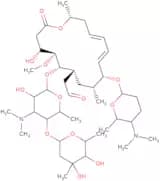
CAS:<p>A broad-spectrum antibiotic of macrolide class, which inhibits 50S ribosomal subunit and inhibits protein synthesis. Spiramycin is also effective against Gram-positive and gram-negative bacteria as well as protozoal parasite Toxoplasma gondii.</p>Formula:C43H74N2O14Purity:Min. 95%Color and Shape:White PowderMolecular weight:843.05 g/molNovobiocin sodium
CAS:Inhibitor of prokaryotic DNA gyrase, eukaryotic DNA topoisomerase and HSP90Formula:C31H35N2NaO11Purity:Min. 94%Color and Shape:PowderMolecular weight:634.61 g/molMethacycline HCl
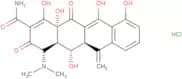
CAS:<p>Methacycline HCl is a tetracycline antibiotic with action on bacterial protein synthesis by binding to the 30S ribosomal subunit and is used for treating bacterial infections such as respiratory and urinary tract infections.</p>Formula:C22H22N2O8·HClPurity:Min. 95%Color and Shape:PowderMolecular weight:478.88 g/molGriselimycin
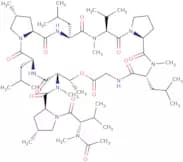
CAS:<p>Griselimycin is an antibiotic, which is derived from the bacterial genus *Streptomyces*. This compound exhibits its mode of action by targeting bacterial protein synthesis, specifically binding to the DNA polymerase sliding clamp, thereby inhibiting replication and cell division in a range of bacterial pathogens. Griselimycin has been the focus of renewed scientific interest due to its potent activity against Mycobacterium tuberculosis, including multi-drug-resistant strains. The compound’s unique mode of action makes it a promising candidate for further development in the treatment of tuberculosis and potentially other bacterial infections that have developed resistance to more commonly used antibiotics. Advances in understanding its biosynthesis have facilitated semi-synthetic modifications, potentially enhancing its pharmacokinetic properties and antimicrobial spectrum. The applications of Griselimycin extend to research contexts where understanding resistance mechanisms and novel antibiotic development are critical. Continued exploration of this compound may contribute significantly to addressing the global challenge of antibiotic resistance.</p>Formula:C57H96N10O12Purity:Min. 95%Molecular weight:1112.72092Netropsin dihydrochloride
CAS:<p>Netropsin dihydrochloride is a pyrrole-amidine antibiotic with action on AT-rich sequences of DNA to inhibit replication and is used for research on DNA-binding properties and antiviral activity.</p>Formula:C18H28N10O3Cl2Purity:Min. 98 Area-%Color and Shape:PowderMolecular weight:503.39 g/molFostriecin
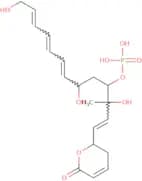
CAS:<p>Fostriecin is a potent anticancer agent, which is a natural product isolated from the bacterium Streptomyces pulveraceus. It acts primarily as an inhibitor of protein phosphatases, particularly protein phosphatase 2A (PP2A) and protein phosphatase 4 (PP4), functioning by blocking their catalytic activity. This inhibition disrupts cell cycle regulation, leading to apoptosis in cancer cells.</p>Formula:C19H27O9PPurity:Min. 95%Molecular weight:403.4 g/molAmphotericin B, Antibiotic for Culture Media Use Only
CAS:Amphotericin B is a macrocycle antibiotic first isolated from Streptomyces nodosus. Its antifungal activity is exerted by interacting with the fungal membrane, mainly ergosterol, and inducing pore formation. The increase in membrane permeability causes loss of ions and cell death. The C-2 hydroxyl residue of the mycosamine carbohydrate moiety in the structure seems to have a major role in binding to ergosterol. It is used in cell culture to prevent growth of microbial contaminants, such as yeast and fungi. It is recommended by the WHO and CDC as an antifungal component for VTM at a concentration of 250ug/ml.Formula:C47H73NO17Purity:Min. 80.0 Area-%Molecular weight:924.08 g/mol