Antibiotics
Antibiotics are compounds designed to destroy or inhibit the growth of various microorganisms, playing a crucial role in treating infections and preventing the spread of diseases. This category offers a diverse range of active ingredients specifically for research in the biochemical field. These compounds are essential tools in studying bacterial mechanisms, resistance patterns, and the development of new therapeutic agents. Researchers can explore a wide variety of antibiotics to understand their effects, optimize their use, and develop novel treatments to combat emerging microbial threats. The availability of such a broad spectrum of antibiotics supports advanced research and innovation in microbiology and pharmaceutical sciences.
Subcategories of "Antibiotics"
- Macrolide Antibiotics(26 products)
- Steroidal Antibiotics(31 products)
- Tetracycline Antibiotics(20 products)
- β-Lactam Antibiotics(11 products)
Found 4102 products of "Antibiotics"
Sort by
Purity (%)
0
100
|
0
|
50
|
90
|
95
|
100
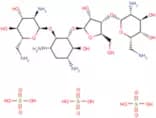
Neomycin sulfate
CAS:<p>Neomycin sulfate (Framycin sulfate) is a broad-spectrum aminoglycoside antibiotic that blocks the synthesis of bacterial proteins in order to exert</p>Formula:C23H46N6O13·3H2SO4Purity:99.4% - 99.88%Color and Shape:Tan PowderMolecular weight:908.87Bestatin
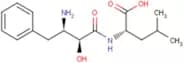
CAS:<p>Bestatin (Ubenimex) competitively inhibits many aminopeptidases. Bestatin is a microbial metabolite and dipeptide with immunomodulatory and antitumor effects.</p>Formula:C16H24N2O4Purity:98% - 99.63%Color and Shape:White Crystalline PowderMolecular weight:308.37Imipenem, Monohydrate
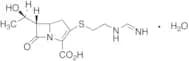
CAS:Controlled ProductFormula:C12H17N3O4S·H2OColor and Shape:White To Light YellowMolecular weight:317.36CORM-401
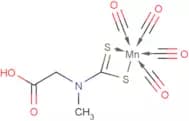
CAS:CORM-401 is an oxidant-sensitive CO-releasing molecule. It can be used in oxidative stress-mediated pathologies and the research of inflammatory.Formula:C8H6MnNO6S2Color and Shape:SolidMolecular weight:331.2Sulfaquinoxaline
CAS:Sulfaquinoxaline (Sulfabenzpyrazine) is an antiprotozoal agent.Formula:C14H12N4O2SPurity:99.38% - 99.81%Color and Shape:Crystalline SolidMolecular weight:300.34Tirilazad mesylate
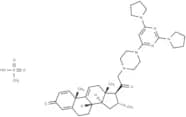
CAS:Tirilazad mesylate (U 74006F) is a lipid peroxidation inhibitor with antiviral activity.Tirilazad mesylate is used in the study of neurological disorders.Formula:C39H56N6O5SPurity:99.65% - 99.75%Color and Shape:SolidMolecular weight:720.963-(Trifluoromethyl)cinnamic acid
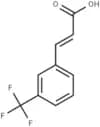
CAS:3-(Trifluoromethyl)cinnamic acid (3-(3-(Trifluoromethyl)phenyl)acrylic acid) can be used to study drug-resistant bacterial infections.Formula:C10H7F3O2Purity:99.59%Color and Shape:SolidMolecular weight:216.157Nisin Z (~80%) Hydrochloride
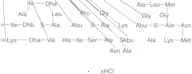
CAS:<p>Applications Nisin Z Hydrochloride is a peptide antibiotic synthesized by Lactococcus lactis. Nisin Z interacts with lipid II, a lipid component of cell wall, to form pores in the plasma membrane.<br>References Kuipers, O. P., et al.: J. Biol. Chem. 270, 27299 (1995); Breukink, E., et al.: Science 286, 2361 (1999); Breukink, E., et al.: Biochemistry 36, 6968 (1997)<br></p>Formula:C141H229N41O38S7·x(HCl)Color and Shape:NeatMolecular weight:3331.033646Surfactin
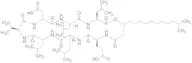
CAS:<p>Applications Surfactin is a lipopeptide antibiotic and biosurfactant.<br></p>Formula:C53H93N7O13Color and Shape:NeatMolecular weight:1036.34Difloxacin
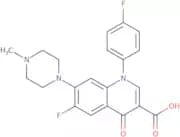
CAS:<p>Difloxacin is a fluoroquinolone antibiotic, which is a synthetic compound derived from chemical synthesis methods. Its source involves complex organic chemistry that modifies the quinolone backbone to enhance its antibacterial properties. Difloxacin functions by inhibiting bacterial DNA gyrase and topoisomerase IV, which are critical enzymes involved in DNA replication, transcription, and repair. This inhibition leads to the prevention of cellular division and ultimately results in bacterial cell death.</p>Formula:C21H19F2N3O3Purity:Min. 95%Molecular weight:399.39 g/molNovobiocin sodium
CAS:<p>Inhibitor of prokaryotic DNA gyrase, eukaryotic DNA topoisomerase and HSP90</p>Formula:C31H35N2NaO11Purity:Min. 94%Color and Shape:PowderMolecular weight:634.61 g/molSpectinomycin dihydrochloride pentahydrate
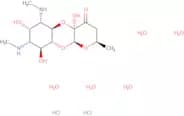
CAS:<p>Inhibitor of protein synthesis; aminocyclitol class</p>Formula:C14H24N2O7•(HCl)2•(H2O)5Purity:Min 93%Color and Shape:PowderMolecular weight:495.35 g/molMeropenem sodium
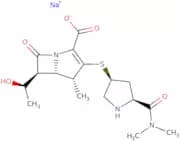
CAS:<p>Inhibitor of cell-wall synthesis; carbapenem class</p>Formula:C17H25N3O5S•NaPurity:Min. 95%Color and Shape:PowderMolecular weight:406.45 g/molPenicillin G sodium
CAS:<p>Penicillin G sodium is a natural penicillin antibiotic with action on bacterial cell wall synthesis and is used for treating bacterial infections such as pneumonia, gonorrhea, and anthrax.</p>Formula:C16H17N2NaSO4Color and Shape:White PowderMolecular weight:356.37 g/molNourseothricin sulfate
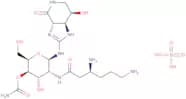
CAS:<p>Aminoglycoside antibiotic; inhibits protein synthesis by inducing miscoding</p>Formula:C19H34O8N8•H2SO4Purity:Min. 85%Color and Shape:White PowderMolecular weight:600 g/molNalidixic acid sodium salt
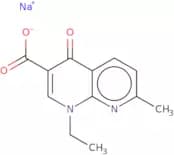
CAS:<p>Nalidixic acid sodium salt is a sodium salt form of nalidixic acid with similar action and applications as nalidixic acid.</p>Formula:C12H11N2NaO3Purity:(%) Min. 98%Color and Shape:White PowderMolecular weight:254.22 g/molCephradine
CAS:<p>Cephradine is a first-generation cephalosporin antibiotic with action on bacterial cell wall synthesis and is used for treating bacterial infections like urinary tract infections, respiratory infections, and skin infections.</p>Formula:C16H19N3O4SPurity:Min. 95%Color and Shape:PowderMolecular weight:349.41 g/molHerbicidin E
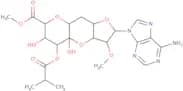
CAS:<p>Herbicidin E is a potent herbicidal compound, derived from blue-green algae, with a biochemical mode of action focused on inhibiting photosynthetic electron transport. It effectively disrupts the photosynthetic process by binding to specific sites within the chloroplasts of target plants, impairing their ability to convert light energy into chemical energy. This leads to a depletion of essential energy reserves, resulting in the controlled demise of the plant.</p>Formula:C22H29N5O10Purity:Min. 95%Molecular weight:523.49 g/molPolymyxin B sulfate
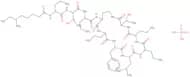
CAS:<p>Membrane-disrupting agent</p>Formula:C56H98N16O13·H2SO4Purity:Min 6000 Iu/MgColor and Shape:White PowderMolecular weight:1,301.56 g/mol5-(3,4,5-Trimethoxybenzyl)pyrimidine-2,4-diamine 2-hydroxypropanoate
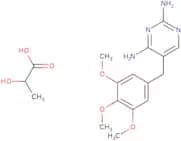
CAS:<p>5-(3,4,5-Trimethoxybenzyl)pyrimidine-2,4-diamine 2-hydroxypropanoate is an antibacterial compound with a broad spectrum of activity against Gram-positive and Gram-negative bacteria. It is active against strains resistant to other antibiotics, such as, tetracycline and penicillin. 5-(3,4,5-Trimethoxybenzyl)pyrimidine-2,4-diamine 2-hydroxypropanoate has been shown to be effective in vitro against Campylobacter jejuni - the most common cause of bacterial gastroenteritis in humans. The compound also inhibits the growth cycle of Campylobacter jejuni by arresting the cells at the G1 phase. The molecule has been shown to inhibit DNA synthesis in E. coli and S. typhimurium with IC50 values of 1 ÎŒM and 0.8 ÎŒM respectively. This molecule has been tested for its surface active properties and it can be used as an additive in personal care products for improved wetting and spreading on surfaces. The compound is also researched for its antifungal efficacy against Candida albicans by inhibiting the growth cycle of the fungus.</p>Formula:C17H24N4O6Purity:Min. 98 Area-%Molecular weight:380.40 g/mol