Building Blocks
Subcategories of "Building Blocks"
- Boronic Acids & Boronic Acid Derivatives(5,786 products)
- Chiral Building Blocks(1,246 products)
- Hydrocarbon Building Blocks(6,107 products)
- Organic Building Blocks(61,080 products)
Found 205472 products of "Building Blocks"
o-[3-(Dimethylamino)propyl]hydroxylamine dihydrochloride
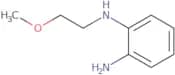
CAS:o-[3-(Dimethylamino)propyl]hydroxylamine dihydrochloride is a drug used to treat cardiovascular disorders. It is a prodrug that is metabolized in the body to form hydroxylamine, which has affinity for c1-6 alkyl groups. The hydroxyl group on the heterocycle of o-[3-(Dimethylamino)propyl]hydroxylamine dihydrochloride also has biological properties. This drug is an inhibitor of monoamine oxidase and may reduce the risk of heart disease by lowering blood pressure and decreasing cholesterol levels. The stereoisomers of this compound are used for the treatment of hypertension. The benzyl group on o-[3-(Dimethylamino)propyl]hydroxylamine dihydrochloride may be responsible for its ability to inhibit monoamine oxidase A and B, as well as other enzymes involved in cardiovascular diseases.Formula:C5H16Cl2N2OPurity:Min. 95%Molecular weight:191.1 g/molN1-(2-Methoxyethyl)benzene-1,2-diamine
CAS:Versatile small molecule scaffoldFormula:C9H14N2OPurity:Min. 95%Molecular weight:166.22 g/molMethyl 2-[(3-aminophenyl)formamido]acetate
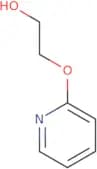
CAS:Versatile small molecule scaffoldFormula:C10H12N2O3Purity:Min. 95%Molecular weight:208.21 g/mol2-(Pyridin-2-yloxy)ethan-1-ol
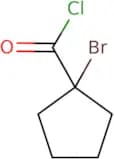
CAS:Versatile small molecule scaffoldFormula:C7H9NO2Purity:Min. 95%Molecular weight:139.15 g/mol1-Bromocyclopentane-1-carbonyl chloride
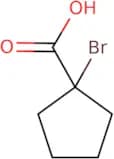
CAS:Versatile small molecule scaffoldFormula:C6H8BrClOPurity:Min. 95%Molecular weight:211.48 g/mol1-Bromocyclopentane-1-carboxylic acid
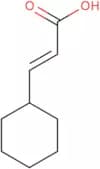
CAS:Cyclopentane-1,2-dicarboxylic acid is an organic compound with the molecular formula C5H8O4. The molecule consists of a cyclopentane ring and two carboxylic acid groups. Cyclopentane-1,2-dicarboxylic acid can be synthesized by an intramolecular cyclization reaction between a 1-bromocyclopentane and a chalcone. This reagent can also be used to synthesize other compounds such as phenoxyethanol, an enolate, and organozinc compounds.Formula:C6H9BrO2Purity:Min. 95%Molecular weight:193.04 g/mol(E)-3-Cyclohexylacrylic acid
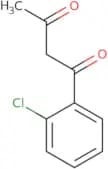
CAS:(E)-3-Cyclohexylacrylic acid is an antibacterial agent that inhibits the growth of bacteria by binding to the 50S ribosomal subunit. It binds to bacterial 16S ribosomal RNA and inhibits protein synthesis, leading to cell death by inhibiting the production of proteins vital for cell division. (E)-3-Cyclohexylacrylic acid has been shown to be effective against methicillin-resistant Staphylococcus aureus (MRSA) and Clostridium perfringens, although is not active against acid-fast bacteria such as Mycobacterium tuberculosis or Mycobacterium avium complex. This compound also has anticancer activity, which may be due to its ability to inhibit topoisomerase II activity in cells.Formula:C9H14O2Purity:Min. 95%Molecular weight:154.21 g/mol1-(2-Chlorophenyl)-1,3-butanedione
CAS:Versatile small molecule scaffoldFormula:C10H9O2ClPurity:Min. 95%Molecular weight:196.63 g/mol7H,8H-Imidazo[1,5-a]pyrazin-8-one
CAS:7H,8H-Imidazo[1,5-a]pyrazin-8-one is a potent and selective inhibitor of the bromodomain family. Bromodomains are protein domains found in many proteins that have been implicated in regulating gene expression, DNA repair, and protein degradation. Inhibiting this domain leads to decreased proliferation of tumor cells. 7H,8H-Imidazo[1,5-a]pyrazin-8-one has also shown potential as an anti-neurodegenerative agent by inhibiting the enzyme acetylcholinesterase. This compound is active against cancerous cell lines and is crystalline with a polymorphic form that can be used for medicine production.Formula:C6H5N3OPurity:Min. 95%Molecular weight:135.12 g/mol4-(Propan-2-yl)benzene-1,2-diamine
CAS:Versatile small molecule scaffoldFormula:C9H14N2Purity:Min. 95%Molecular weight:150.22 g/molThieno[3,2-b]pyridine-5-carboxylic acid
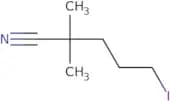
CAS:Versatile small molecule scaffoldFormula:C8H5NO2SPurity:Min. 95%Molecular weight:179.2 g/mol5-Iodo-2,2-dimethylpentanenitrile
CAS:Versatile small molecule scaffold
Formula:C7H12INPurity:Min. 95%Molecular weight:237.08 g/molDimethyl bicyclo[3.2.1]octane-1,5-dicarboxylate
CAS:Versatile small molecule scaffoldFormula:C12H18O4Purity:Min. 95%Molecular weight:226.27 g/mol2-[2-(Ethylamino)ethoxy]ethan-1-ol
CAS:Versatile small molecule scaffoldFormula:C6H15NO2Purity:Min. 95%Molecular weight:133.19 g/molImidazo[1,2-a]pyrimidine-3-carbaldehyde
CAS:Imidazo[1,2-a]pyrimidine-3-carbaldehyde is a pyridine that has been shown to have antibacterial activity. The imidazopyridines are a class of compounds with a 1,2-imidazole ring fused to a pyridine ring. Imidazo[1,2-a]pyrimidine-3-carbaldehyde is an example of such a compound. Imidazopyridines may be used as scaffolds for the development of new antibiotics. The chemical structure and activity of this compound may be related to its ability to bind to the 50S ribosomal subunit in bacteria and inhibit protein synthesis. This inhibition leads to cell death by inhibiting the production of proteins vital for cell division.
Formula:C7H5N3OPurity:Min. 95%Molecular weight:147.13 g/molN-[2-(Diethylamino)ethyl]-4-hydroxybenzamide
CAS:Versatile small molecule scaffoldFormula:C13H20N2O2Purity:Min. 95%Molecular weight:236.31 g/mol(2-Methoxyethyl)[(5-methylfuran-2-yl)methyl]amine
CAS:Versatile small molecule scaffold
Formula:C9H15NO2Purity:Min. 95%Molecular weight:169.22 g/mol[2-(4-Chlorophenoxy)ethyl]amine hydrochloride
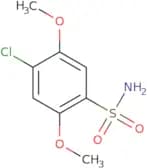
CAS:Versatile small molecule scaffoldFormula:C8H11Cl2NOPurity:Min. 95%Molecular weight:208.08 g/mol4-Chloro-2,5-dimethoxybenzene-1-sulfonamide
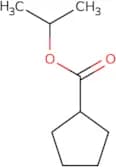
CAS:Versatile small molecule scaffoldFormula:C8H10ClNO4SPurity:Min. 95%Molecular weight:251.69 g/molPropan-2-yl cyclopentanecarboxylate
CAS:Propan-2-yl cyclopentanecarboxylate is an inorganic compound that inhibits the pericyclic reaction of dienolate and cyclopentadiene. It has been shown to bind to tyrosine kinase, which is a protein involved in many cellular processes such as cell growth, proliferation, differentiation, and survival. The inhibitory activity of this compound was found to be mediated by its benzamide function. Propan-2-yl cyclopentanecarboxylate has been used as a pesticide for controlling weeds and pests on agricultural crops. It can also be used as an intermediate for the synthesis of other compounds such as imidazopyrazine or carbocycles.Formula:C9H16O2Purity:Min. 95%Molecular weight:156.22 g/mol1-[2-(Dimethylamino)ethyl]-2,3-dihydro-1H-indole-2,3-dione
CAS:Versatile small molecule scaffoldFormula:C12H14N2O2Purity:Min. 95%Molecular weight:218.25 g/mol1-[2-(Diethylamino)ethyl]-2,3-dihydro-1H-indole-2,3-dione
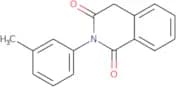
CAS:Versatile small molecule scaffoldFormula:C14H18N2O2Purity:Min. 95%Molecular weight:246.3 g/mol2-(3-Methylphenyl)-1,2,3,4-tetrahydroisoquinoline-1,3-dione
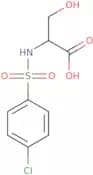
CAS:Versatile small molecule scaffoldFormula:C16H13NO2Purity:Min. 95%Molecular weight:251.28 g/mol2-(4-Chlorobenzenesulfonamido)-3-hydroxypropanoic acid
CAS:Versatile small molecule scaffoldFormula:C9H10ClNO5SPurity:Min. 95%Molecular weight:279.7 g/molMethyl 2-oxopiperidine-3-carboxylate
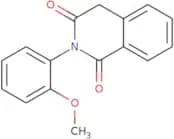
CAS:Versatile small molecule scaffoldFormula:C10H7NOPurity:Min. 95%Molecular weight:157.17 g/mol2-(2-Methoxyphenyl)-1,2,3,4-tetrahydroisoquinoline-1,3-dione
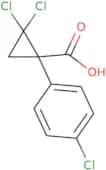
CAS:Versatile small molecule scaffoldFormula:C16H13NO3Purity:Min. 95%Molecular weight:267.28 g/mol2,2-Dichloro-1-(4-chlorophenyl)cyclopropane-1-carboxylic acid
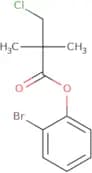
CAS:Versatile small molecule scaffoldFormula:C10H7Cl3O2Purity:Min. 95%Molecular weight:265.5 g/mol2-Bromophenyl 3-chloro-2,2-dimethylpropanoate
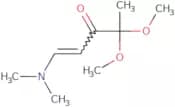
CAS:Versatile small molecule scaffoldFormula:C11H12BrClO2Purity:Min. 95%Molecular weight:291.57 g/mol(E)-1-Dimethylamino-4,4-dimethoxy-pent-1-en-3-one
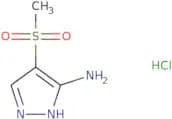
CAS:Versatile small molecule scaffoldFormula:C9H17NO3Purity:Min. 95%Molecular weight:187.24 g/mol4-Methanesulfonyl-1H-pyrazol-5-amine hydrochloride
CAS:Versatile small molecule scaffoldFormula:C4H8ClN3O2SPurity:Min. 95%Molecular weight:197.64 g/mol{2-Oxatricyclo[3.3.1.1,3,7]decan-1-yl}methanamine
CAS:Versatile small molecule scaffoldFormula:C10H17NOPurity:Min. 95%Molecular weight:167.2 g/mol2-Oxatricyclo[3.3.1.1,3,7]decane-1-carboxylic acid
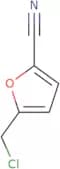
CAS:Versatile small molecule scaffoldFormula:C10H14O3Purity:Min. 95%Molecular weight:182.22 g/mol5-(Chloromethyl)furan-2-carbonitrile
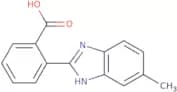
CAS:Versatile small molecule scaffoldFormula:C6H4ClNOPurity:Min. 95%Molecular weight:141.55 g/mol2-(6-Methyl-1H-1,3-benzodiazol-2-yl)benzoic acid
CAS:Versatile small molecule scaffoldFormula:C15H12N2O2Purity:Min. 95%Molecular weight:252.27 g/mol2-(Benzyloxy)-4-fluorophenol
CAS:Versatile small molecule scaffoldFormula:C13H11FO2Purity:Min. 95%Molecular weight:218.22 g/mol1-{Thieno[3,2-c]pyridin-4-yl}piperazine
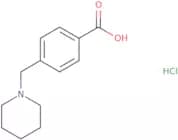
CAS:Versatile small molecule scaffoldFormula:C11H13N3SPurity:Min. 95%Molecular weight:219.31 g/mol4-(Piperidin-1-ylmethyl)benzoic acid hydrochloride
CAS:Versatile small molecule scaffold
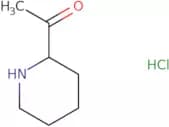
Formula:C13H18ClNO2Purity:Min. 95%Molecular weight:255.74 g/mol1-(Piperidin-2-yl)ethanone hydrochloride
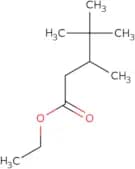
CAS:Versatile small molecule scaffoldFormula:C7H13NO·HClPurity:Min. 95%Molecular weight:163.65 g/molEthyl 3,4,4-trimethylpentanoate
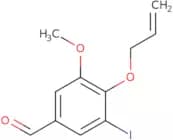
CAS:Ethyl 3,4,4-trimethylpentanoate is an alkane with the chemical formula C5H12O2. This compound can be produced by the disproportionation of ethyl 2-methylbutanoate and is a precursor to propylene oxide. It is an important intermediate for other chemicals, such as alkylating agents and pharmaceuticals. Ethyl 3,4,4-trimethylpentanoate has been shown to undergo diastereoselective reactions in the presence of Lewis acids, which produces a single stereoisomer.Formula:C10H20O2Purity:Min. 95%Molecular weight:172.26 g/mol3-Iodo-5-methoxy-4-(prop-2-en-1-yloxy)benzaldehyde
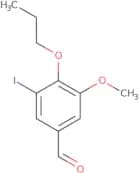
CAS:Versatile small molecule scaffoldFormula:C11H11IO3Purity:Min. 95%Molecular weight:318.11 g/mol3-Iodo-5-methoxy-4-propoxybenzaldehyde
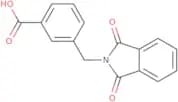
CAS:Versatile small molecule scaffoldFormula:C11H13IO3Purity:Min. 95%Molecular weight:320.12 g/mol3-(1,3-Dioxo-1,3-dihydro-isoindol-2-ylmethyl)-benzoic acid
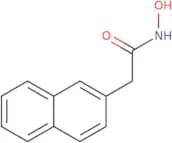
CAS:Versatile small molecule scaffoldFormula:C16H11NO4Purity:Min. 95%Molecular weight:281.27 g/molN-Hydroxy-2-(naphthalen-2-yl)acetamide
CAS:Versatile small molecule scaffoldFormula:C12H11NO2Purity:Min. 95%Molecular weight:201.22 g/molMethyl 2,3,4,5-tetrahydro-1H-azepine-1-carboxylate
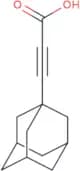
CAS:Versatile small molecule scaffoldFormula:C8H13NO2Purity:Min. 95%Molecular weight:155.2 g/mol3-(Adamantan-1-yl)prop-2-ynoic acid
CAS:Versatile small molecule scaffoldFormula:C13H16O2Purity:Min. 95%Molecular weight:204.26 g/mol7-Oxa-1-azaspiro[3.5]nonane
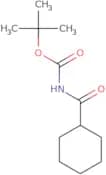
CAS:Versatile small molecule scaffoldFormula:C7H13NOPurity:Min. 95%Molecular weight:127.18 g/molN-Boc-µ-caprolactam
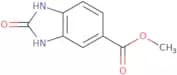
CAS:N-Boc-µ-caprolactam is a heterocyclic compound that is synthesized through the palladium-catalyzed coupling of boronic acids and vinyl phosphates. This compound can be converted to a variety of heteroaryl compounds using the Suzuki reaction, which involves the addition of an organometallic reagent to an unsaturated bond. The nitrogen atom in this molecule can also react with metal catalysts to form nitrogen-containing compounds. N-Boc-µ-caprolactam has been shown to be effective for palladium-catalyzed coupling reactions with various boronic acids and acetylenes.Formula:C11H19NO3Purity:Min. 95%Molecular weight:213.27 g/molMethyl 2-oxo-2,3-dihydro-1H-1,3-benzimidazole-5-carboxylate
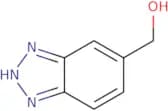
CAS:Versatile small molecule scaffoldFormula:C9H8N2O3Purity:Min. 95%Molecular weight:192.18 g/mol1H-1,2,3-Benzotriazol-5-ylmethanol
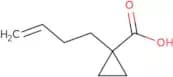
CAS:Versatile small molecule scaffoldFormula:C7H7N3OPurity:Min. 95%Molecular weight:149.15 g/mol1-(But-3-en-1-yl)cyclopropane-1-carboxylic acid
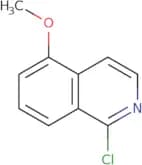
CAS:Versatile small molecule scaffoldFormula:C8H12O2Purity:Min. 95%Molecular weight:140.18 g/mol1-chloro-5-methoxyisoquinoline
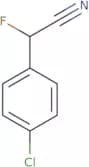
CAS:Versatile small molecule scaffoldFormula:C10H8ClNOPurity:Min. 95%Molecular weight:193.63 g/mol2-(4-Chlorophenyl)-2-fluoroacetonitrile
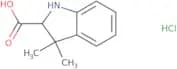
CAS:Versatile small molecule scaffoldFormula:C8H5ClFNPurity:Min. 95%Molecular weight:169.58 g/mol3,3-Dimethyl-2,3-dihydro-1H-indole-2-carboxylic acid hydrochloride
CAS:Versatile small molecule scaffoldFormula:C11H14ClNO2Purity:Min. 95%Molecular weight:227.69 g/molFuro[2,3-c]pyridin-3-one hydrochloride
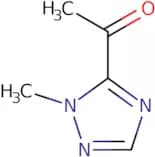
CAS:Versatile small molecule scaffoldFormula:C7H6ClNO2Purity:Min. 95%Molecular weight:171.58 g/molEthanone, 1-(1-methyl-1H-1,2,4-triazol-5-yl)-
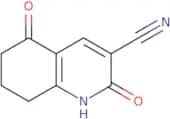
CAS:Versatile small molecule scaffoldFormula:C5H7N3OPurity:Min. 95%Molecular weight:125.13 g/mol2,5-Dioxo-1,2,5,6,7,8-hexahydroquinoline-3-carbonitrile
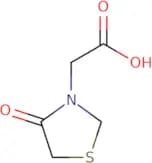
CAS:Versatile small molecule scaffoldFormula:C10H8N2O2Purity:Min. 95%Molecular weight:188.18 g/mol2-(4-Oxo-1,3-thiazolidin-3-yl)acetic acid
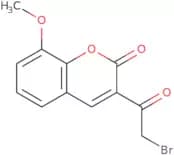
CAS:2-(4-Oxo-1,3-thiazolidin-3-yl)acetic acid is a reactive compound that is used as an intermediate in organic synthesis. It has been shown to be a potential precursor for the synthesis of psychotropic drugs. The carboxyl group on the molecule can be oxidized or eliminated under acidic conditions. 2-(4-Oxo-1,3-thiazolidin-3-yl)acetic acid also undergoes an elimination reaction with an alcohol and a base to form an ethyl ester and an acid ethyl ester.Formula:C5H7NO3SPurity:Min. 95%Molecular weight:161.18 g/mol3-(2-Bromoacetyl)-8-methoxy-2H-chromen-2-one
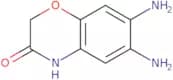
CAS:Versatile small molecule scaffoldFormula:C12H9BrO4Purity:Min. 95%Molecular weight:297.1 g/mol6,7-Diamino-3,4-dihydro-2H-1,4-benzoxazin-3-one
CAS:Versatile small molecule scaffold
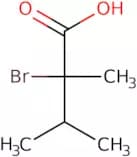
Formula:C8H9N3O2Purity:Min. 95%Molecular weight:179.18 g/mol2-Bromo-2,3-dimethylbutanoic acid
CAS:Versatile small molecule scaffold
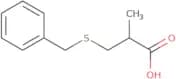
Formula:C6H11BrO2Purity:Min. 95%Molecular weight:195.05 g/mol3-(Benzylsulfanyl)-2-methylpropanoic acid
CAS:Versatile small molecule scaffoldFormula:C11H14O2SPurity:Min. 95%Molecular weight:210.29 g/mol2-[(Naphthalen-1-ylmethyl)sulfanyl]ethan-1-amine
CAS:Versatile small molecule scaffold
Formula:C13H15NSPurity:Min. 95%Molecular weight:217.33 g/mol1-[2-(Oxiran-2-yl)ethyl]-1H-pyrrole
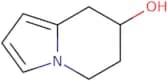
CAS:Versatile small molecule scaffoldFormula:C8H11NOPurity:Min. 95%Molecular weight:137.18 g/mol5,6,7,8-Tetrahydroindolizin-7-ol
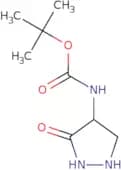
CAS:Versatile small molecule scaffoldFormula:C8H11NOPurity:Min. 95%Molecular weight:137.18 g/moltert-Butyl N-(3-oxopyrazolidin-4-yl)carbamate
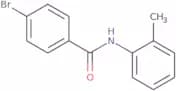
CAS:Versatile small molecule scaffoldFormula:C8H15N3O3Purity:Min. 95%Molecular weight:201.22 g/mol4-Bromo-N-(2-methylphenyl)benzamide
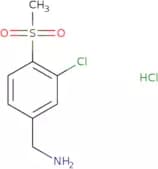
CAS:Versatile small molecule scaffoldFormula:C14H12BrNOPurity:Min. 95%Molecular weight:290.15 g/mol(3-Chloro-4-methanesulfonylphenyl)methanamine hydrochloride
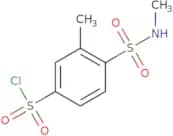
CAS:Versatile small molecule scaffoldFormula:C8H11Cl2NO2SPurity:Min. 95%Molecular weight:256.15 g/mol3-Methyl-4-(methylsulfamoyl)benzene-1-sulfonyl chloride
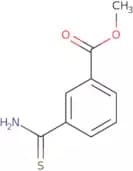
CAS:Versatile small molecule scaffoldFormula:C8H10ClNO4S2Purity:Min. 95%Molecular weight:283.8 g/molMethyl 3-carbamothioylbenzoate
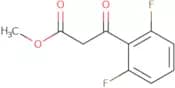
CAS:Versatile small molecule scaffoldFormula:C9H9NO2SPurity:Min. 95%Molecular weight:195.24 g/molMethyl 3-(2,6-difluorophenyl)-3-oxopropanoate
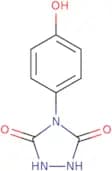
CAS:Versatile small molecule scaffoldFormula:C10H8F2O3Purity:Min. 95%Molecular weight:214.16 g/mol4-(4-Hydroxyphenyl)-1,2,4-triazolidine-3,5-dione
CAS:Versatile small molecule scaffoldFormula:C8H7N3O3Purity:Min. 95%Molecular weight:193.16 g/mol2-(Thiophen-2-yl)-1,3-oxazole-5-carboxylic acid
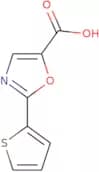
CAS:Versatile small molecule scaffold
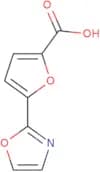
Formula:C8H5NO3SPurity:Min. 95%Molecular weight:195.2 g/mol5-(1,3-Oxazol-2-yl)furan-2-carboxylic acid
CAS:Versatile small molecule scaffoldFormula:C8H5NO4Purity:Min. 95%Molecular weight:179.1 g/mol1H-Pyrazolo[3,4-b]quinolin-3-amine
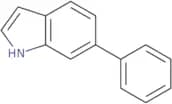
CAS:Versatile small molecule scaffoldFormula:C10H8N4Purity:Min. 95%Molecular weight:184.2 g/mol6-Phenyl-1H-indole
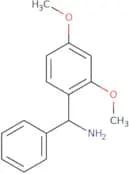
CAS:6-Phenyl-1H-indole is a tripeptide that has been modified to include a pharmacophore group. It has potential use in cancer therapy as a factor receptor ligand. This drug has shown some efficacy against muramyl dipeptide and mononuclear leukocytes in cell culture models, suggesting that it may be useful for cancer therapy. 6-Phenyl-1H-indole is also able to bind to chloride ions, which are involved in the regulation of growth factors and efficiencies of cells. The lack of this ion can lead to inefficient growth and cancer.Formula:C14H11NPurity:Min. 95%Molecular weight:193.24 g/mol(2,4-Dimethoxyphenyl)(phenyl)methanamine
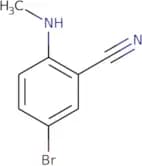
CAS:2,4-Dimethoxyphenyl-(phenyl)methanamine (2,4-DMPP) is a synthetic amino acid. It is synthesized from the reaction of acetonitrile and phenylmagnesium bromide in trifluoroacetic acid. The product is purified by preparative ion-exchange chromatography, followed by amino acid analysis. 2,4-DMPP has been shown to have biological properties that are similar to those of serotonin. This compound has been used as a starting material for the synthesis of other compounds with biological activity. 2,4-DMPP can be synthesized by solid phase synthesis or high pressure liquid chromatography with reversed phase. Selectivities for these processes are controlled by the type and concentration of solvents used in the process.Formula:C15H17NO2Purity:Min. 95%Molecular weight:243.3 g/mol5-Bromo-2-(methylamino)benzonitrile
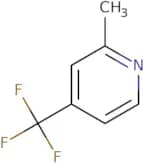
CAS:Versatile small molecule scaffoldFormula:C8H7BrN2Purity:Min. 95%Molecular weight:211.06 g/mol2-Methyl-4-(trifluoromethyl)pyridine
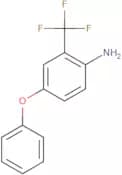
CAS:Versatile small molecule scaffoldFormula:C7H6F3NPurity:Min. 95%Molecular weight:161.13 g/mol4-Phenoxy-2-(trifluoromethyl)aniline
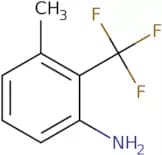
CAS:Versatile small molecule scaffoldFormula:C13H10F3NOPurity:Min. 95%Molecular weight:253.22 g/mol3-Methyl-2-(trifluoromethyl)aniline
CAS:Versatile small molecule scaffoldFormula:C8H8F3NPurity:Min. 95%Molecular weight:175.15 g/mol3-Methyl-4-(trifluoromethyl)aniline
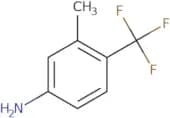
CAS:3-Methyl-4-(trifluoromethyl)aniline is a methyl ester that has been analyzed using cyclic voltammetry and photovoltaic techniques. It is used in solar cells as an acceptor molecule to enhance the efficiency of the cell. 3-Methyl-4-(trifluoromethyl)aniline is a metabolite of endogenous compounds, such as tryptophan, which is a precursor for serotonin. It has shown efficiencies up to 10% in photoelectrochemical cells and can be quantified by analyzing its mass spectrometric profile.Formula:C8H8F3NPurity:Min. 95%Molecular weight:175.15 g/mol5-Methyl-2-(trifluoromethyl)phenol
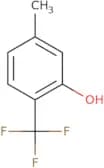
CAS:Versatile small molecule scaffold
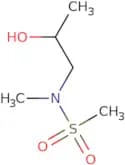
Formula:C8H7F3OPurity:Min. 95%Molecular weight:176.14 g/molN-(2-Hydroxypropyl)-N-methylmethanesulfonamide
CAS:Versatile small molecule scaffoldFormula:C5H13NO3SPurity:Min. 95%Molecular weight:167.23 g/mol2-[2-(Methylamino)phenyl]ethan-1-ol
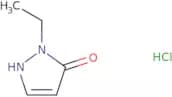
CAS:Versatile small molecule scaffoldFormula:C9H13NOPurity:Min. 95%Molecular weight:151.2 g/mol1-Ethyl-1H-pyrazol-5-ol hydrochloride
CAS:Versatile small molecule scaffoldFormula:C5H9ClN2OPurity:Min. 95%Molecular weight:148.59 g/mol(R)-2-(Benzylamino)-3-hydroxypropanoic acid
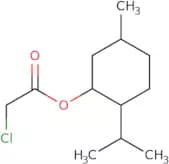
CAS:(R)-2-(Benzylamino)-3-hydroxypropanoic acid is a methyl ester of the amino acid, L-leucine. It is an efficient reagent for the synthesis of chiral amides and esters, with high stereoselectivity and diastereoselectivity. The use of an allyl group as a protecting group in this synthesis provides a regioisomerically pure product. (R)-2-(Benzylamino)-3-hydroxypropanoic acid has been used in syntheses of sulfamidates with high diastereoselectivity.Formula:C10H13NO3Purity:Min. 95%Molecular weight:195.22 g/mol5-Methyl-2-(propan-2-yl)cyclohexyl 2-chloroacetate
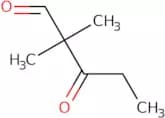
CAS:5-Methyl-2-(propan-2-yl)cyclohexyl 2-chloroacetate is a molecule with a carbonyl group and trifluoroacetic acid. It is used in the preparation of pharmaceuticals, such as cardiotonics, antiarrhythmics, and antianxiety agents. This compound has been shown to be an effective insecticide against mosquitoes. 5-Methyl-2-(propan-2-yl)cyclohexyl 2-chloroacetate is also used in the synthesis of fatty acid esters and hydroxyl groups. The desymmetrization reaction of 5-methylcyclohexanecarboxylic acid with chloroacetic acid under kinetic conditions was successfully carried out using deionized water and sodium hydrogen at room temperature for 16 hours.Formula:C12H21ClO2Purity:Min. 95%Molecular weight:232.74 g/mol2,2-Dimethyl-3-oxopentanal
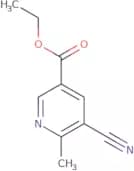
CAS:2,2-Dimethyl-3-oxopentanal is a molecule that forms during the oxidation of isobutene. It is involved in a variety of reactions and has been shown to have surface chemistry properties. The adsorption and desorption of 2,2-dimethyl-3-oxopentanal on a ruthenium surface has been studied by XPS and photoelectron spectroscopy. The molecule has also been shown to form from the gas phase reaction of monoxide and metallic rhodium. This molecule can be used as a ligand in coordination chemistry.Formula:C7H12O2Purity:Min. 95%Molecular weight:128.17 g/molEthyl 5-cyano-6-methylnicotinate
CAS:Versatile small molecule scaffoldFormula:C10H10N2O2Purity:Min. 95%Molecular weight:190.2 g/mol[3-(Prop-2-en-1-yl)phenyl]methanol
CAS:Versatile small molecule scaffoldFormula:C10H12OPurity:Min. 95%Molecular weight:148.2 g/mol(R)-4-Benzyl-5-oxo-3-morpholinecarboxylic acid
CAS:Versatile small molecule scaffold
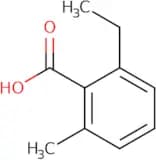
Formula:C12H13NO4Purity:Min. 95%Molecular weight:235.24 g/mol6-Ethyl-2-methylbenzoic acid
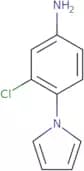
CAS:Versatile small molecule scaffoldFormula:C10H12O2Purity:Min. 95%Molecular weight:164.2 g/mol3-Chloro-4-(1H-pyrrol-1-yl)aniline
CAS:Versatile small molecule scaffoldFormula:C10H9ClN2Purity:Min. 95%Molecular weight:192.64 g/mol2-[2-(Propan-2-yl)phenyl]propan-2-ol
CAS:Versatile small molecule scaffold
Formula:C12H18OPurity:Min. 95%Molecular weight:178.27 g/mol5,6-Dimethyl-2-(morpholin-4-ylmethyl)-3H,4H-thieno[2,3-d]pyrimidin-4-one
CAS:Versatile small molecule scaffoldFormula:C13H17N3O2SPurity:Min. 95%Molecular weight:279.36 g/mol2-{[4-(2-Methoxyphenyl)-5-methyl-4H-1,2,4-triazol-3-yl]sulfanyl}acetic acid
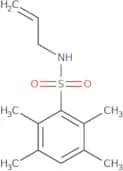
CAS:Versatile small molecule scaffoldFormula:C12H13N3O3SPurity:Min. 95%Molecular weight:279.32 g/mol2,3,5,6-Tetramethyl-N-(prop-2-en-1-yl)benzene-1-sulfonamide
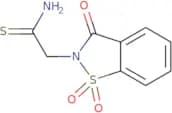
CAS:Versatile small molecule scaffoldFormula:C13H19NO2SPurity:Min. 95%Molecular weight:253.4 g/mol2-(1,1,3-Trioxo-2,3-dihydro-1,2-benzothiazol-2-yl)ethanethioamide
CAS:Versatile small molecule scaffoldFormula:C9H8N2O3S2Purity:Min. 95%Molecular weight:256.3 g/mol(2E)-2-Cyano-3-[2,5-dimethyl-1-(3-methylbutyl)-1H-pyrrol-3-yl]acrylic acid
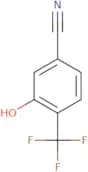
CAS:Controlled Product2-Cyano-3-[2,5-dimethyl-1-(3-methylbutyl)-1H-pyrrol-3-yl]acrylic acid is a research tool that is used to study the function of ion channels and receptors. It is a potent inhibitor of ligand binding to ion channel receptors, such as nicotinic acetylcholine receptor and glycine receptor. It has shown to inhibit the activation of these receptors in vitro with an IC50 value of 0.4 µM. 2Cyano-3-[2,5-dimethyl-1-(3-methylbutyl)-1H-pyrrol-3-yl]acrylic acid has also been shown to be a potent inhibitor of ligand binding to peptide receptors, such as bradykinin B2 receptor and angiotensin II type 1A receptor.Formula:C15H20N2O2Purity:Min. 95%Molecular weight:260.33 g/mol3-Hydroxy-4-(trifluoromethyl)benzonitrile
CAS:Versatile small molecule scaffoldFormula:C8H4F3NOPurity:Min. 95%Molecular weight:187.12 g/mol
![o-[3-(Dimethylamino)propyl]hydroxylamine dihydrochloride](/_next/image/?url=https%3A%2Fstatic.cymitquimica.com%2Fproducts%2F3D%2Fthumb-webp%2FGCA42532.webp&w=3840&q=75)

![Methyl 2-[(3-aminophenyl)formamido]acetate](/_next/image/?url=https%3A%2Fstatic.cymitquimica.com%2Fproducts%2F3D%2Fthumb-webp%2FGCA44569.webp&w=3840&q=75)
![7H,8H-Imidazo[1,5-a]pyrazin-8-one](/_next/image/?url=https%3A%2Fstatic.cymitquimica.com%2Fproducts%2F3D%2Fthumb-webp%2FGCA46821.webp&w=3840&q=75)

![Thieno[3,2-b]pyridine-5-carboxylic acid](/_next/image/?url=https%3A%2Fstatic.cymitquimica.com%2Fproducts%2F3D%2Fthumb-webp%2FGCA47392.webp&w=3840&q=75)
![Dimethyl bicyclo[3.2.1]octane-1,5-dicarboxylate](/_next/image/?url=https%3A%2Fstatic.cymitquimica.com%2Fproducts%2F3D%2Fthumb-webp%2FGEA00411.webp&w=3840&q=75)
![2-[2-(Ethylamino)ethoxy]ethan-1-ol](/_next/image/?url=https%3A%2Fstatic.cymitquimica.com%2Fproducts%2F3D%2Fthumb-webp%2FGEA00799.webp&w=3840&q=75)
![Imidazo[1,2-a]pyrimidine-3-carbaldehyde](/_next/image/?url=https%3A%2Fstatic.cymitquimica.com%2Fproducts%2F3D%2Fthumb-webp%2FGEA01256.webp&w=3840&q=75)
![N-[2-(Diethylamino)ethyl]-4-hydroxybenzamide](/_next/image/?url=https%3A%2Fstatic.cymitquimica.com%2Fproducts%2F3D%2Fthumb-webp%2FGEA01837.webp&w=3840&q=75)
![(2-Methoxyethyl)[(5-methylfuran-2-yl)methyl]amine](/_next/image/?url=https%3A%2Fstatic.cymitquimica.com%2Fproducts%2F3D%2Fthumb-webp%2FGEA02747.webp&w=3840&q=75)
![[2-(4-Chlorophenoxy)ethyl]amine hydrochloride](/_next/image/?url=https%3A%2Fstatic.cymitquimica.com%2Fproducts%2F3D%2Fthumb-webp%2FGEA03800.webp&w=3840&q=75)
![1-[2-(Dimethylamino)ethyl]-2,3-dihydro-1H-indole-2,3-dione](/_next/image/?url=https%3A%2Fstatic.cymitquimica.com%2Fproducts%2F3D%2Fthumb-webp%2FGEA11060.webp&w=3840&q=75)
![1-[2-(Diethylamino)ethyl]-2,3-dihydro-1H-indole-2,3-dione](/_next/image/?url=https%3A%2Fstatic.cymitquimica.com%2Fproducts%2F3D%2Fthumb-webp%2FGEA11061.webp&w=3840&q=75)

![{2-Oxatricyclo[3.3.1.1,3,7]decan-1-yl}methanamine](/_next/image/?url=https%3A%2Fstatic.cymitquimica.com%2Fproducts%2F3D%2Fthumb-webp%2FGEA23715.webp&w=3840&q=75)
![2-Oxatricyclo[3.3.1.1,3,7]decane-1-carboxylic acid](/_next/image/?url=https%3A%2Fstatic.cymitquimica.com%2Fproducts%2F3D%2Fthumb-webp%2FGEA23717.webp&w=3840&q=75)

![1-{Thieno[3,2-c]pyridin-4-yl}piperazine](/_next/image/?url=https%3A%2Fstatic.cymitquimica.com%2Fproducts%2F3D%2Fthumb-webp%2FGEA26127.webp&w=3840&q=75)
![7-Oxa-1-azaspiro[3.5]nonane](/_next/image/?url=https%3A%2Fstatic.cymitquimica.com%2Fproducts%2F3D%2Fthumb-webp%2FGEA40452.webp&w=3840&q=75)
![Furo[2,3-c]pyridin-3-one hydrochloride](/_next/image/?url=https%3A%2Fstatic.cymitquimica.com%2Fproducts%2F3D%2Fthumb-webp%2FGEA53151.webp&w=3840&q=75)
![2-[(Naphthalen-1-ylmethyl)sulfanyl]ethan-1-amine](/_next/image/?url=https%3A%2Fstatic.cymitquimica.com%2Fproducts%2F3D%2Fthumb-webp%2FGEA67025.webp&w=3840&q=75)
![1-[2-(Oxiran-2-yl)ethyl]-1H-pyrrole](/_next/image/?url=https%3A%2Fstatic.cymitquimica.com%2Fproducts%2F3D%2Fthumb-webp%2FGEA68122.webp&w=3840&q=75)
![1H-Pyrazolo[3,4-b]quinolin-3-amine](/_next/image/?url=https%3A%2Fstatic.cymitquimica.com%2Fproducts%2F3D%2Fthumb-webp%2FGEA83544.webp&w=3840&q=75)
![2-[2-(Methylamino)phenyl]ethan-1-ol](/_next/image/?url=https%3A%2Fstatic.cymitquimica.com%2Fproducts%2F3D%2Fthumb-webp%2FGEA89900.webp&w=3840&q=75)
![[3-(Prop-2-en-1-yl)phenyl]methanol](/_next/image/?url=https%3A%2Fstatic.cymitquimica.com%2Fproducts%2F3D%2Fthumb-webp%2FGEA96554.webp&w=3840&q=75)
![2-[2-(Propan-2-yl)phenyl]propan-2-ol](/_next/image/?url=https%3A%2Fstatic.cymitquimica.com%2Fproducts%2F3D%2Fthumb-webp%2FGEA98932.webp&w=3840&q=75)
![5,6-Dimethyl-2-(morpholin-4-ylmethyl)-3H,4H-thieno[2,3-d]pyrimidin-4-one](/_next/image/?url=https%3A%2Fstatic.cymitquimica.com%2Fproducts%2F3D%2Fthumb-webp%2FGEB00194.webp&w=3840&q=75)
![2-{[4-(2-Methoxyphenyl)-5-methyl-4H-1,2,4-triazol-3-yl]sulfanyl}acetic acid](/_next/image/?url=https%3A%2Fstatic.cymitquimica.com%2Fproducts%2F3D%2Fthumb-webp%2FGEB00198.webp&w=3840&q=75)
![(2E)-2-Cyano-3-[2,5-dimethyl-1-(3-methylbutyl)-1H-pyrrol-3-yl]acrylic acid](/_next/image/?url=https%3A%2Fstatic.cymitquimica.com%2Fproducts%2F3D%2Fthumb-webp%2FGEB00211.webp&w=3840&q=75)