Building Blocks
This section contains fundamental products for the synthesis of organic and biological compounds. Building blocks are the essential starting materials used to construct complex molecules through various chemical reactions. They play a critical role in drug discovery, material science, and chemical research. At CymitQuimica, we offer a diverse range of high-quality building blocks to support your innovative research and industrial projects, ensuring you have the essential components for successful synthesis.
Subcategories of "Building Blocks"
- Boronic Acids & Boronic Acid Derivatives(5,778 products)
- Chiral Building Blocks(1,242 products)
- Hydrocarbon Building Blocks(6,098 products)
- Organic Building Blocks(61,098 products)
Found 199594 products of "Building Blocks"
Sort by
Purity (%)
0
100
|
0
|
50
|
90
|
95
|
100
3-Chloropropyldichloromethylsilane
CAS:<p>3-Chloropropyldichloromethylsilane is an inorganic particle that is used as a substrate film. It has been shown to have thermal expansion properties and hydrophobic effects, which are advantageous for use in a variety of applications. 3-Chloropropyldichloromethylsilane can be used to coat copper oxide particles, which provides the substrate film with anti-fouling properties. 3-Chloropropyldichloromethylsilane also has potential application in the treatment of the pandemic flu virus covid-19. Covid-19 is a virus that causes severe respiratory illness and death in humans. 3-Chloropropyldichloromethylsilane has been found to inhibit covid-19 replication and may be able to reduce its severity or prevent infection altogether.</p>Formula:C4H9Cl3SiPurity:Min. 95%Molecular weight:191.55 g/mol1-Phenyl-1H-indazole
CAS:<p>1-Phenyl-1H-indazole is a molecule that has antiinflammatory, analgesic, and antipyretic properties. It has been shown to inhibit the production of aldehydes such as prostaglandin PGE2 and thromboxane A2, which are involved in the inflammatory response. 1-Phenyl-1H-indazole also inhibits platelet aggregation by means of its ability to yield an alkoxy radical. The molecule is used as a starting point for the synthesis of pyrazole derivatives with therapeutic activity against c. glabrata, which are fungi that cause mucormycosis.</p>Formula:C13H10N2Purity:Min. 95%Molecular weight:194.23 g/molCadmium bromide ar
CAS:<p>Cadmium bromide is a carcinogenic inorganic compound that has been shown to induce cancer in animals. Cadmium bromide is used as a model system for the study of cancer regression and women's health. It is also used as an approximation of the viscosity of gases and liquids. The Database of Interacting Proteins contains information on interactions between proteins and small molecules, such as cadmium bromide. This database can be accessed via the Internet. The solubility and volatility of cadmium bromide are low, making it a good solvent for organic compounds. Cadmium bromide is classified as a flammable liquid with a high degree of toxicity to humans when inhaled or ingested; it may cause skin irritation or burns upon contact with skin, eyes, or mucous membranes.</p>Formula:Br2CdPurity:Min. 95%Molecular weight:272.22 g/mol1-Ethyl-3-pyrrolidinamine 2HCl
CAS:Versatile small molecule scaffoldFormula:C6H16Cl2N2Purity:Min. 95%Molecular weight:187.11 g/mol4-Formyl-7-methoxy-1-benzofuran-2-carboxylic acid
CAS:<p>Versatile small molecule scaffold</p>Formula:C11H8O5Purity:Min. 95%Molecular weight:220.18 g/mol1-Octanesulfonyl Chloride
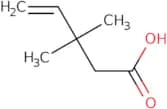
CAS:1-Octanesulfonyl chloride is a chemical compound that belongs to the group of heterocyclic compounds. It is used in the synthesis of pharmaceutical drugs, such as ophthalmic drugs. 1-Octanesulfonyl chloride has been shown to inhibit methionine aminopeptidase, an enzyme that degrades proteins and peptides, which may be due to its proximity to hydroxy groups. This compound also has a phase transition temperature of -103°C, which means it can exist as a liquid or solid at room temperature. The presence of fluorine in this compound gives it a sharp nmr spectrum with signals seen between 0.8 and 1.2 ppm. This chemical reacts with water and other molecules to form new molecules that have different properties, such as the formation of chlorides from hydrogen chloride gas and 1-octanesulfonyl chloride.Formula:C8H17ClO2SPurity:Min. 95%Molecular weight:212.73 g/mol3,3-Dimethylpent-4-enoic acid
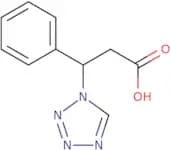
CAS:<p>3,3-Dimethylpent-4-enoic acid (DMPA) is a solid catalyst that is used in the synthesis of chrysanthemic acid. DMPA is prepared by reacting methyl alcohol with chlorine and trimethylchloride in a cavity of an acid catalyst at high temperature. The reaction yield increases with increasing reaction time. DMPA reacts with carbon tetrachloride to produce filtrate and residue. The filtrate contains DMPA, which can be recovered easily by distillation of the solvent. DMPA has been used as an organic solvent for various reactions involving organic compounds.</p>Formula:C7H12O2Purity:Min. 95%Molecular weight:128.17 g/mol3-Phenyl-3-(1H-1,2,3,4-tetrazol-1-yl)propanoic acid
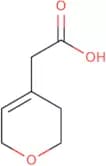
CAS:<p>3-Phenyl-3-(1H-1,2,3,4-tetrazol-1-yl)propanoic acid is a monocarboxylic acid. It is structurally related to propanoic acid and benzenes. 3-Phenyl-3-(1H-1,2,3,4-tetrazol-1-yl)propanoic acid can be used to synthesize other organic compounds.</p>Formula:C10H10N4O2Purity:Min. 95%Molecular weight:218.21 g/mol2-(3,6-Dihydro-2H-pyran-4-yl)acetic acid
CAS:<p>Versatile small molecule scaffold</p>Formula:C7H10O3Purity:Min. 95%Molecular weight:142.15 g/mol1-{[(9H-Fluoren-9-yl)methoxy]carbonyl}azepane-2-carboxylic acid
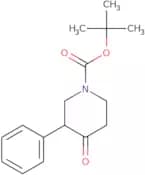
CAS:Versatile small molecule scaffoldFormula:C22H23NO4Purity:Min. 95%Molecular weight:365.4 g/mol1-Boc-3-Phenylpiperidin-4-one
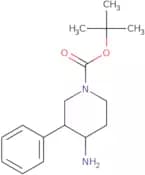
CAS:<p>Versatile small molecule scaffold</p>Formula:C16H21NO3Purity:Min. 95%Molecular weight:275.35 g/moltert-butyl 4-amino-3-phenylpiperidine-1-carboxylate
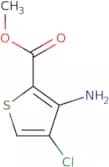
CAS:Versatile small molecule scaffoldFormula:C16H24N2O2Purity:Min. 95%Molecular weight:276.4 g/molMethyl 3-amino-4-chlorothiophene-2-carboxylate
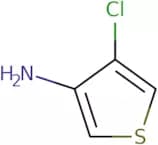
CAS:Versatile small molecule scaffoldFormula:C6H6ClNO2SPurity:Min. 95%Molecular weight:191.64 g/mol4-Chlorothiophen-3-amine
CAS:<p>Versatile small molecule scaffold</p>Formula:C4H4ClNSPurity:Min. 95%Molecular weight:133.6 g/mol4-[3-(Trifluoromethyl)phenoxy]benzoic acid
CAS:<p>Versatile small molecule scaffold</p>Formula:C14H9F3O3Purity:Min. 95%Molecular weight:282.21 g/mol2-[(2,4-Difluorophenyl)methoxy]benzaldehyde
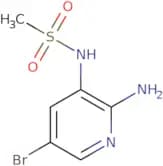
CAS:<p>Versatile small molecule scaffold</p>Formula:C14H10F2O2Purity:Min. 95%Molecular weight:248.22 g/molN-(2-Amino-5-bromopyridin-3-yl)methanesulfonamide
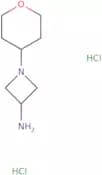
CAS:<p>Versatile small molecule scaffold</p>Formula:C6H8BrN3O2SPurity:Min. 95%Molecular weight:266.12 g/mol1-(Oxan-4-yl)azetidin-3-amine dihydrochloride
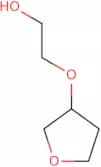
CAS:Versatile small molecule scaffoldFormula:C8H18Cl2N2OPurity:Min. 95%Molecular weight:229.14 g/mol2-(Oxolan-3-yloxy)ethan-1-ol
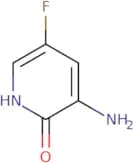
CAS:<p>Versatile small molecule scaffold</p>Formula:C6H12O3Purity:Min. 95%Molecular weight:132.16 g/mol3-Amino-5-fluoropyridin-2-ol
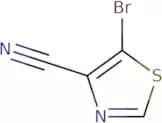
CAS:<p>Versatile small molecule scaffold</p>Formula:C5H5FN2OPurity:Min. 95%Molecular weight:128.1 g/mol5-Bromo-1,3-thiazole-4-carbonitrile
CAS:<p>Versatile small molecule scaffold</p>Formula:C4HBrN2SPurity:Min. 95%Molecular weight:189.04 g/mol1-{2-Chloroimidazo[1,2-a]pyridin-3-yl}ethan-1-one
CAS:Versatile small molecule scaffoldFormula:C9H7ClN2OPurity:Min. 95%Molecular weight:194.62 g/mol1-[(3-Aminophenyl)methyl]pyrrolidin-3-ol
CAS:Versatile small molecule scaffoldFormula:C11H16N2OPurity:Min. 95%Molecular weight:192.26 g/mol1-{6-Chloroimidazo[2,1-b][1,3]thiazol-5-yl}ethan-1-one
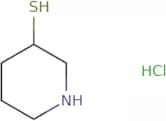
CAS:<p>Versatile small molecule scaffold</p>Formula:C7H5ClN2OSPurity:Min. 95%Molecular weight:200.65 g/molPiperidine-3-thiol hydrochloride
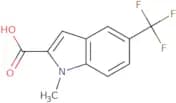
CAS:<p>Versatile small molecule scaffold</p>Formula:C5H12ClNSPurity:Min. 95%Molecular weight:153.67 g/mol1-methyl-5-(trifluoromethyl)-1H-indole-2-carboxylic acid
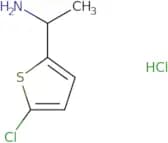
CAS:<p>Versatile small molecule scaffold</p>Formula:C11H8F3NO2Purity:Min. 95%Molecular weight:243.19 g/mol(1R)-1-(5-Chlorothiophen-2-yl)ethan-1-amine hydrochloride
CAS:<p>Versatile small molecule scaffold</p>Formula:C6H9Cl2NSPurity:Min. 95%Molecular weight:198.11 g/mol[1-(4-Pyrimidinyl)ethyl]amine dihydrochloride
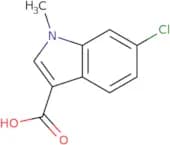
CAS:Versatile small molecule scaffoldFormula:C6H11Cl2N3Purity:Min. 95%Molecular weight:196.07 g/mol6-Chloro-1-methyl-1H-indole-3-carboxylic acid
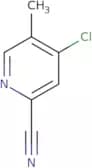
CAS:Controlled ProductVersatile small molecule scaffoldFormula:C10H8ClNO2Purity:Min. 95%Molecular weight:209.63 g/mol4-Chloro-5-methylpyridine-2-carbonitrile
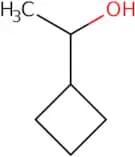
CAS:<p>Versatile small molecule scaffold</p>Formula:C7H5ClN2Purity:Min. 95%Molecular weight:152.58 g/mol(R)-1-Cyclobutylethan-1-ol
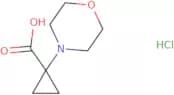
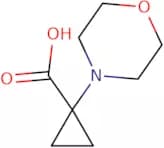
CAS:<p>Versatile small molecule scaffold</p>Formula:C6H12OPurity:Min. 95%Molecular weight:100.16 g/mol1-(Morpholin-4-yl)cyclopropane-1-carboxylic acid hydrochloride
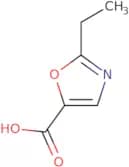
CAS:<p>Versatile small molecule scaffold</p>Formula:C8H14ClNO3Purity:Min. 95%Molecular weight:207.65 g/mol2-Ethyl-1,3-oxazole-5-carboxylic acid
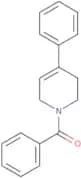
CAS:<p>Versatile small molecule scaffold</p>Formula:C6H7NO3Purity:Min. 95%Molecular weight:141.12 g/mol1-Benzoyl-4-phenyl-1,2,3,6-tetrahydropyridine
CAS:Versatile small molecule scaffoldFormula:C18H17NOPurity:Min. 95%Molecular weight:263.3 g/mol1-(Morpholin-4-yl)cyclopropane-1-carboxylic acid
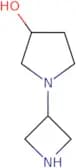
CAS:<p>Versatile small molecule scaffold</p>Formula:C8H13NO3Purity:Min. 95%Molecular weight:171.19 g/mol(3R)-1-(Azetidin-3-yl)pyrrolidin-3-ol
CAS:<p>Versatile small molecule scaffold</p>Formula:C7H14N2OPurity:Min. 95%Molecular weight:142.2 g/moltert-Butyl 3-hydroxy-[1,3'-biazetidine]-1'-carboxylate
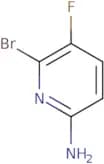
CAS:Versatile small molecule scaffoldFormula:C11H20N2O3Purity:Min. 95%Molecular weight:228.29 g/mol6-bromo-5-fluoropyridin-2-amine
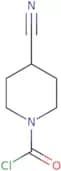
CAS:<p>Versatile small molecule scaffold</p>Formula:C5H4BrFN2Purity:Min. 95%Molecular weight:191 g/mol4-Cyanopiperidine-1-carbonyl chloride
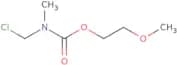
CAS:<p>Versatile small molecule scaffold</p>Formula:C7H9ClN2OPurity:Min. 95%Molecular weight:172.61 g/mol2-Methoxyethyl (chloromethyl)(methyl)carbamate
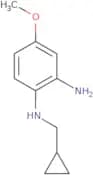
CAS:<p>Versatile small molecule scaffold</p>Formula:C6H12ClNO3Purity:Min. 95%Molecular weight:181.62 g/molN1-(Cyclopropylmethyl)-4-methoxybenzene-1,2-diamine
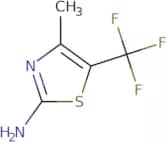
CAS:Versatile small molecule scaffoldFormula:C11H16N2OPurity:Min. 95%Molecular weight:192.26 g/mol4-Methyl-5-(trifluoromethyl)-1,3-thiazol-2-amine
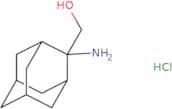
CAS:Versatile small molecule scaffoldFormula:C5H5F3N2SPurity:Min. 95%Molecular weight:182.17 g/mol(2-Aminoadamantan-2-yl)methanol hydrochloride
CAS:Versatile small molecule scaffoldFormula:C11H20ClNOPurity:Min. 95%Molecular weight:217.73 g/moltert-Butyl N-{5-azaspiro[2.4]heptan-7-yl}-N-methylcarbamate
CAS:Versatile small molecule scaffoldFormula:C12H22N2O2Purity:Min. 95%Molecular weight:226.32 g/molrac-tert-Butyl (3aR,7aS)-octahydro-1H-pyrrolo[3,4-c]pyridine-5-carboxylate
CAS:Versatile small molecule scaffoldFormula:C12H22N2O2Purity:Min. 95%Molecular weight:226.32 g/mol4-(Difluoromethyl)bicyclo[2.2.2]octane-1-carboxylic acid
CAS:<p>Versatile small molecule scaffold</p>Formula:C10H14F2O2Purity:Min. 95%Molecular weight:204.21 g/mol1-Methyl-1H,4H,5H,6H,7H-pyrazolo[4,3-c]pyridin-4-one
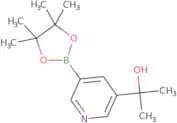
CAS:<p>Versatile small molecule scaffold</p>Formula:C7H9N3OPurity:Min. 95%Molecular weight:151.17 g/mol2-(5-(4,4,5,5-Tetramethyl-1,3,2-dioxaborolan-2-yl)pyridin-3-yl)propan-2-ol
CAS:<p>Versatile small molecule scaffold</p>Formula:C14H22BNO3Purity:Min. 95%Molecular weight:263.14 g/mol[3-(2-Aminoethyl)phenyl]boronic acid hydrochloride
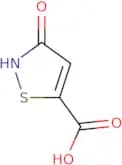
CAS:Versatile small molecule scaffoldFormula:C8H13BClNO2Purity:Min. 95%Molecular weight:201.46 g/mol2,3-Dihydro-3-oxo-5-isothiazolecarboxylic acid
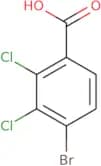
CAS:Versatile small molecule scaffoldFormula:C4H3NO3SPurity:Min. 95%Molecular weight:145.14 g/mol4-Bromo-2,3-dichlorobenzoic acid
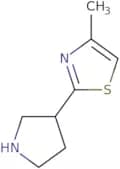
CAS:<p>Versatile small molecule scaffold</p>Formula:C7H3BrCl2O2Purity:Min. 95%Molecular weight:269.9 g/mol4-Methyl-2-(pyrrolidin-3-yl)-1,3-thiazole
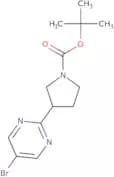
CAS:<p>Versatile small molecule scaffold</p>Formula:C8H12N2SPurity:Min. 95%Molecular weight:168.26 g/moltert-Butyl 3-(5-bromopyrimidin-2-yl)pyrrolidine-1-carboxylate
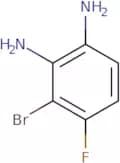
CAS:<p>Versatile small molecule scaffold</p>Formula:C13H18BrN3O2Purity:Min. 95%Molecular weight:328.2 g/mol3-Bromo-4-fluorobenzene-1,2-diamine
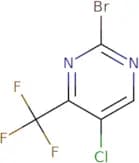
CAS:<p>Versatile small molecule scaffold</p>Formula:C6H6BrFN2Purity:Min. 95%Molecular weight:205.03 g/mol2-Bromo-5-chloro-4-(trifluoromethyl)pyrimidine
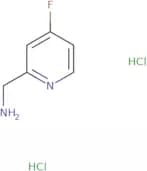
CAS:<p>Versatile small molecule scaffold</p>Formula:C5HBrClF3N2Purity:Min. 95%Molecular weight:261.43 g/mol(4-Fluoropyridin-2-yl)methanamine dihydrochloride
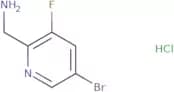
CAS:<p>Versatile small molecule scaffold</p>Formula:C6H9Cl2FN2Purity:Min. 95%Molecular weight:199.05 g/mol2-(Aminomethyl)-5-bromo-3-fluoropyridine hydrochloride
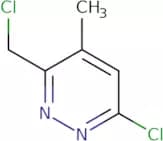
CAS:Versatile small molecule scaffoldFormula:C6H7BrClFN2Purity:Min. 95%Molecular weight:241.49 g/mol6-Chloro-3-(chloromethyl)-4-methylpyridazine
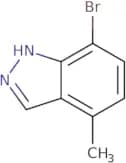
CAS:<p>Versatile small molecule scaffold</p>Formula:C6H6Cl2N2Purity:Min. 95%Molecular weight:177.03 g/mol7-Bromo-4-methyl-1H-indazole
CAS:<p>Versatile small molecule scaffold</p>Formula:C8H7BrN2Purity:Min. 95%Molecular weight:211.06 g/mol5-[(4-Methanesulfonylphenyl)methyl]-1,3,4-oxadiazol-2-amine
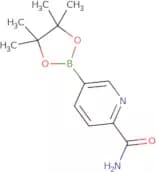
CAS:<p>Versatile small molecule scaffold</p>Formula:C10H11N3O3SPurity:Min. 95%Molecular weight:253.28 g/mol6-(Aminocarbonyl)pyridine-3-boronic acid pinacol ester
CAS:<p>Versatile small molecule scaffold</p>Formula:C12H17BN2O3Purity:Min. 95%Molecular weight:248.09 g/mol3-Methyl-6-(4,4,5,5-tetramethyl-1,3,2-dioxaborolan-2-yl)-3H-imidazo[4,5-b]pyridine
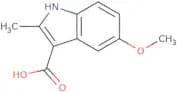
CAS:<p>Versatile small molecule scaffold</p>Formula:C13H18BN3O2Purity:Min. 95%Molecular weight:259.12 g/mol5-Methoxy-2-methyl-1H-indole-3-carboxylic acid
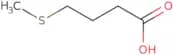
CAS:<p>Versatile small molecule scaffold</p>Formula:C11H11NO3Purity:Min. 95%Molecular weight:205.21 g/mol4-(Methylsulfanyl)butanoic acid
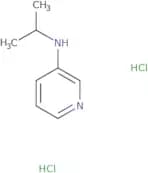
CAS:<p>4-(Methylsulfanyl)butanoic acid is an organic solvent that is used in the production of butyric acid and butyronitrile. It is also a reaction product of inorganic acids, such as sulfuric acid, hydrogen sulfate, and nitric acid. 4-(Methylsulfanyl)butanoic acid has a crystalline structure and optical properties that are similar to those of acetic acid. This compound is expressed in plasmids and can be used as an amide or metal chelate. The enzymatic methods of 4-(methylsulfanyl)butanoic acid are supplementing with hydrogen sulfate or recycled by adding an acid catalyst.</p>Formula:C5H10O2SPurity:Min. 95%Molecular weight:134.2 g/molN-(Propan-2-yl)pyridin-3-amine
CAS:<p>Versatile small molecule scaffold</p>Formula:C8H14Cl2N2Purity:Min. 95%Molecular weight:209.11 g/mol3,5-Dichloro-4-methoxyaniline
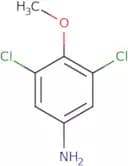
CAS:<p>3,5-Dichloro-4-methoxyaniline is a chemical compound that belongs to the group of medicinal compounds. It is used as an intermediate in organic synthesis and has been found to inhibit the growth of cancer cells. This molecule can be prepared by reacting 3,5-dichloroaniline with methoxyacetone in the presence of hydrochloric acid. The chemical shifts observed for this compound's proton resonances are consistent with its structure as a geometric isomer. This molecule has two chiral centers and eight possible stereoisomers. Tic10 (N-[3-(3,4-dichlorophenyl)propionyl]glycine) is one such stereoisomer that inhibits the growth of cancer cells through damage to protein structures. Tic10 has been shown to be more potent than bosutinib, an inhibitor of Bcr-Abl kinase, in inhibiting tumor growth in animal models.</p>Formula:C7H7Cl2NOPurity:Min. 95%Molecular weight:192.04 g/mol2-Bromo-5-fluorothiophene
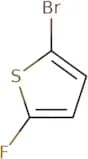
CAS:<p>Versatile small molecule scaffold</p>Formula:C4H2BrFSPurity:Min. 95%Molecular weight:181.03 g/molN-[(5-Acetylthiophen-2-yl)methyl]acetamide
CAS:<p>Versatile small molecule scaffold</p>Formula:C9H11NO2SPurity:Min. 95%Molecular weight:197.26 g/molEthyl [(5-amino-1,3,4-thiadiazol-2-yl)thio]acetate
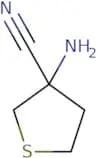
CAS:<p>Versatile small molecule scaffold</p>Formula:C6H9N3O2S2Purity:Min. 95%Molecular weight:219.3 g/mol3-Aminothiolane-3-carbonitrile
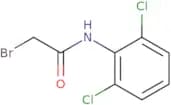
CAS:<p>Versatile small molecule scaffold</p>Formula:C5H8N2SPurity:Min. 95%Molecular weight:128.2 g/mol2-Bromo-N-(2,6-dichlorophenyl)acetamide
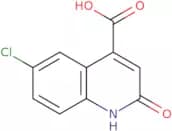
CAS:<p>Versatile small molecule scaffold</p>Formula:C8H6BrCl2NOPurity:Min. 95%Molecular weight:282.95 g/mol6-Chloro-2-oxo-1,2-dihydroquinoline-4-carboxylic acid
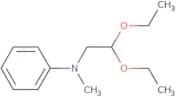
CAS:<p>6-Chloro-2-oxo-1,2-dihydroquinoline-4-carboxylic acid (6ClOQ) is a molecule that is used as a diagnostic agent and biodegradable drug. It has high affinity binding with target tissues, such as the liver and kidney. 6ClOQ also has potential as an anticancer drug, which may be due to its ability to inhibit DNA synthesis by interacting with hydroxyl groups. 6ClOQ can be conjugated with different molecules, such as monoclonal antibodies, and this characteristic can be used to increase its efficacy in targeting cancer cells. The conjugation of 6ClOQ to a monoclonal antibody increases the stability of the drug and decreases its toxicity.</p>Formula:C10H6ClNO3Purity:Min. 95%Molecular weight:223.61 g/molN-(2,2-Diethoxyethyl)-N-methylaniline
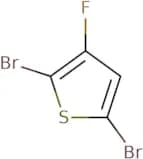
CAS:<p>Versatile small molecule scaffold</p>Formula:C13H21NO2Purity:Min. 95%Molecular weight:223.31 g/mol2,5-dibromo-3-fluorothiophene
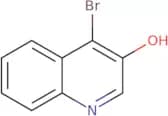
CAS:<p>Versatile small molecule scaffold</p>Formula:C4HBr2FSPurity:Min. 95%Molecular weight:259.9 g/mol4-bromoquinolin-3-ol
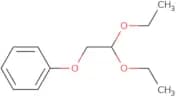
CAS:<p>4-bromoquinolin-3-ol is a piperidine derivative that belongs to the group of pyrrole derivatives. It is primarily used as a reagent in organic synthesis and in the preparation of 3-bromo-5-hydroxypyridine, 2-amino-4-hydroxypyridine, and 3-amino-2-bromopyridine. 4BQ3H is an isomeric nucleus with substitutions on the 2-, 4-, or 6 positions. The hydroxy group on the 3 position can be substituted with a variety of groups such as methoxy, ethoxy, or acetoxy. The oxindole moiety can also be replaced by a piperidide moiety. Note that the aminations are reversible under basic conditions.</p>Formula:C9H6NOBrPurity:Min. 95%Molecular weight:224.05 g/mol(2,2-Diethoxyethoxy)benzene
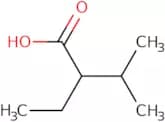
CAS:<p>2,2-Diethoxyethoxy)benzene is a chemical that belongs to the group of polyvinyl alcohols. It is an organic compound that can be found in the environment, usually as a byproduct of industrial processes. The chemical is used in coatings, plasticizers, and solvents. 2,2-Diethoxyethoxy)benzene has been shown to cause heart disease and eye disorders when it binds to the receptors in the body.</p>Formula:C12H18O3Purity:Min. 95%Molecular weight:210.27 g/mol2-Ethyl-3-methylbutanoic acid
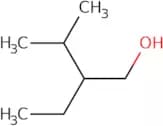
CAS:<p>2-Ethyl-3-methylbutanoic acid is a plant cell-active compound that belongs to the group of alkylating agents. It is an acetaldehyde analogue and can be used for the synthesis of trachelanthamine, which is a skeleton building agent in the biosynthesis pathway for valine. 2-Ethyl-3-methylbutanoic acid is activated by incubation with unlabelled ethyl groups. This compound can also be used to synthesize acetaldehyde, which can be analyzed using chromatography.</p>Formula:C7H14O2Purity:Min. 95%Molecular weight:130.18 g/mol2-Ethyl-3-methylbutan-1-ol
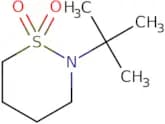
CAS:<p>2-Ethyl-3-methylbutan-1-ol is a chemical that can be activated at the 2-, 3-, or 4-position by a stepwise process. The amines are used in the synthesis of other compounds, such as pharmaceuticals and polymers. The selectivity for the alkylation reaction is high, with yields greater than 95%. The ethyl group can be removed from 2-ethyl-3-methylbutan-1-ol by using an alcohol catalyst. This chemical has been shown to have high yields when synthesized with a transfer hydrogenation reaction. It also has a byproduct that can be removed with hydrogen gas in the presence of palladium on carbon.</p>Formula:C7H16OPurity:Min. 95%Molecular weight:116.2 g/mol2-tert-Butyl-1λ⁶,2-thiazinane-1,1-dione
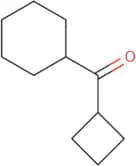
CAS:<p>Versatile small molecule scaffold</p>Formula:C8H17NO2SPurity:Min. 95%Molecular weight:191.29 g/molCyclobutyl(cyclohexyl)methanone
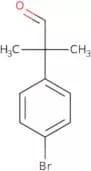
CAS:<p>Versatile small molecule scaffold</p>Formula:C11H18OPurity:Min. 95%Molecular weight:166.26 g/mol2-(4-Bromophenyl)-2-methylpropanal
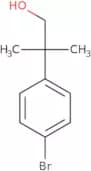
CAS:<p>Versatile small molecule scaffold</p>Formula:C10H11BrOPurity:Min. 95%Molecular weight:227.1 g/mol2-(4-Bromophenyl)-2-methylpropan-1-ol
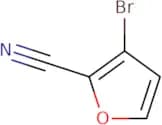
CAS:<p>Versatile small molecule scaffold</p>Formula:C10H13BrOPurity:Min. 95%Molecular weight:229.11 g/mol3-Bromofuran-2-carbonitrile
CAS:<p>Versatile small molecule scaffold</p>Formula:C5H2BrNOPurity:Min. 95%Molecular weight:171.98 g/mol1-[3-Methoxy-4-(methylsulfanyl)phenyl]ethan-1-one
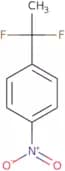
CAS:Versatile small molecule scaffoldFormula:C10H12O2SPurity:Min. 95%Molecular weight:196.27 g/mol1-(1,1-Difluoroethyl)-4-nitrobenzene
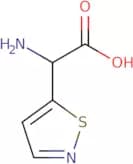
CAS:<p>Versatile small molecule scaffold</p>Formula:C8H7F2NO2Purity:Min. 95%Molecular weight:187.15 g/mol2-Amino-2-(1,2-thiazol-5-yl)acetic acid
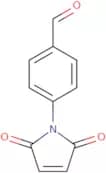
CAS:<p>Versatile small molecule scaffold</p>Formula:C5H6N2O2SPurity:Min. 95%Molecular weight:158.18 g/mol4-(2,5-Dioxo-2,5-dihydro-1H-pyrrol-1-yl)benzaldehyde
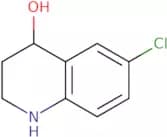
CAS:<p>Versatile small molecule scaffold</p>Formula:C11H7NO3Purity:Min. 95%Molecular weight:201.18 g/mol6-Chloro-1,2,3,4-tetrahydroquinolin-4-ol
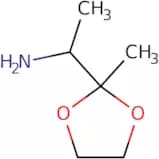
CAS:<p>Versatile small molecule scaffold</p>Formula:C9H10ClNOPurity:Min. 95%Molecular weight:183.63 g/mol1-(2-Methyl-1,3-dioxolan-2-yl)ethan-1-amine
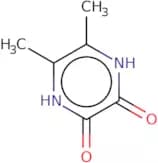
CAS:<p>Versatile small molecule scaffold</p>Formula:C6H13NO2Purity:Min. 95%Molecular weight:131.17 g/mol5,6-Dimethylpyrazine-2,3(1H,4H)-dione
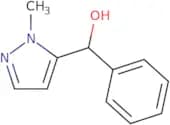
CAS:<p>Versatile small molecule scaffold</p>Formula:C6H8N2O2Purity:Min. 95%Molecular weight:140.14 g/mol(1-Methyl-1H-pyrazol-5-yl)(phenyl)methanol
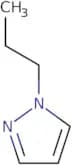
CAS:<p>Versatile small molecule scaffold</p>Formula:C11H12N2OPurity:Min. 95%Molecular weight:188.23 g/mol1-Propylpyrazole
CAS:<p>1-Propylpyrazole is a non-classical inhibitor of aldehyde oxidase that has been shown to have an inhibitory effect on pentane. 1-Propylpyrazole has peroxidase-like activity, which means it can bind to lipid hydroperoxides in the presence of hydrogen peroxide or peroxidase. It has also been shown to be an effective inhibitor of dehydrogenase, which is an enzyme that catalyzes the oxidation of aldehydes and ketones to carboxylic acids. This drug is not active against classical aldehyde oxidases such as alcohol dehydrogenase, but it does inhibit polyunsaturated fatty acid synthesis by binding with cytochrome P450 enzymes.</p>Formula:C6H10N2Purity:Min. 95%Molecular weight:110.16 g/mol1H-Pyrrolo[3,2-b]pyridin-2(3H)-one
CAS:<p>1H-Pyrrolo[3,2-b]pyridin-2(3H)-one belongs to a class of heterocyclic compounds that are structurally related to the pyridine ring. It has been shown to inhibit the activity of b-raf and may be used as an anticancer agent. 1H-Pyrrolo[3,2-b]pyridin-2(3H)-one is synthesized from formamide and ammonium acetate by a two step process involving nucleophilic substitution and elimination reactions. It is hypothesized that 1H-Pyrrolo[3,2-b]pyridin-2(3H)-one may have an effect on cancer due to its ability to inhibit protein synthesis.</p>Formula:C7H6N2OPurity:Min. 95%Molecular weight:134.14 g/mol2-Methylbicyclo[2.2.1]heptane-2-carboxylic acid
CAS:<p>2-Methylbicyclo[2.2.1]heptane-2-carboxylic acid is a carotenoid that is found in some bacteria and plants, including the green alga Chlorella sorokiniana. It has been shown to have anticancer activity by inducing apoptosis in cancer cells. 2-Methylbicyclo[2.2.1]heptane-2-carboxylic acid also reduces the redox potential of cancer cells and inhibits their growth, which may be due to its ability to regulate cell cycle progression and inhibit protein synthesis. This compound also has been shown to stimulate the formation of bacteriochlorophyll a and membrane systems in bacteria, such as Escherichia coli and Pseudomonas aeruginosa, respectively. The gene product responsible for this carotenoid biosynthesis has been identified as a transcriptional regulator of dna binding activity and protein expression in Escher</p>Formula:C9H14O2Purity:Min. 95%Molecular weight:154.21 g/molMethyl(1-phenylethyl)amine
CAS:<p>Methyl(1-phenylethyl)amine is a receptor protein that binds to the factor receptor and has been shown to be a potent growth factor. It can be used in the diagnosis of diseases, such as cancer. Methyl(1-phenylethyl)amine is detected by mass spectrometry and chromatography. The chemical structure of this compound is amide, which is composed of an amine group with an organic acid molecule. Methyl(1-phenylethyl)amine has been shown to have constitutive activation activity due to its tyrosine kinase activity.</p>Formula:C9H13NPurity:Min. 95%Molecular weight:135.21 g/molcis-4-Carbomethoxycyclohexane-1-carboxylic acid
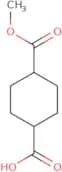
CAS:<p>cis-4-Carbomethoxycyclohexane-1-carboxylic acid is a dicarboxylic acid that is produced by the inorganic and organic hydrolysis of cyclohexanecarboxylic acid. The average yield of cis-4-carbomethoxycyclohexane-1-carboxylic acid is around 30%. It has been used for the production of diacids such as adipic acid, succinic acid, and glutaric acid. cis-4-Carbomethoxycyclohexane-1-carboxylic acid can be used as an activating agent for the industrial synthesis of monomethyl esters or methyl alcohols. In this reaction, cis-4-carbomethoxycyclohexane-1-carboxylic acid reacts with an alcohol to form a carbonyl group, which then reacts with methyl chloride to form a methyl es</p>Formula:C9H14O4Purity:Min. 95%Molecular weight:186.21 g/mol5-Hydroxy-3-methyl-1-phenylimidazolidine-2,4-dione
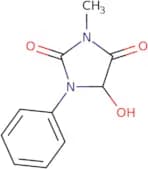
CAS:<p>5-Hydroxy-3-methyl-1-phenylimidazolidine-2,4-dione is a phenylcarbamate that is used as a herbicide and fungicide. The compound is transformed into glyoxylic acid by the action of sodium ethoxide in the presence of prototropic acid. It has been shown that this transformation occurs at a faster rate when it is added to water than when it is added to an organic solvent. The glyoxylic acid derivatives are then formed by adding an organic solvent such as isopropyl alcohol to the solution. This reaction produces various compounds depending on the type of alcohol used and its concentration.</p>Formula:C10H10N2O3Purity:Min. 95%Molecular weight:206.2 g/molEthyl 2-oxo-2-(1,2-thiazol-5-yl)acetate
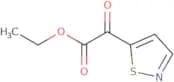
CAS:<p>Versatile small molecule scaffold</p>Formula:C7H7NO3SPurity:Min. 95%Molecular weight:185.2 g/mol2-Ethynyl-1-methyl-1H-1,3-benzodiazole
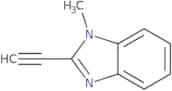
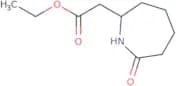
CAS:<p>2-Ethynyl-1-methyl-1H-1,3-benzodiazole is a fluorescent compound that has been shown to emit light in the visible region of the spectrum. The emission of light from this compound is due to its alkynyl group, which contains an electron with a high degree of reactivity. This chemical also has inorganic functionalities and optical properties that make it useful for inorganic chemistry and luminescent or optical devices.</p>Formula:C10H8N2Purity:Min. 95%Molecular weight:156.18 g/molEthyl 2-(7-oxoazepan-2-yl)acetate
CAS:<p>Versatile small molecule scaffold</p>Formula:C10H17NO3Purity:Min. 95%Molecular weight:199.25 g/mol


![1-{[(9H-Fluoren-9-yl)methoxy]carbonyl}azepane-2-carboxylic acid](/_next/image/?url=https%3A%2Fstatic.cymitquimica.com%2Fproducts%2F3D%2Fthumb-webp%2FHAB35045.webp&w=3840&q=75)
![4-[3-(Trifluoromethyl)phenoxy]benzoic acid](/_next/image/?url=https%3A%2Fstatic.cymitquimica.com%2Fproducts%2F3D%2Fthumb-webp%2FHAB36611.webp&w=3840&q=75)
![2-[(2,4-Difluorophenyl)methoxy]benzaldehyde](/_next/image/?url=https%3A%2Fstatic.cymitquimica.com%2Fproducts%2F3D%2Fthumb-webp%2FHAB62621.webp&w=3840&q=75)
![1-{2-Chloroimidazo[1,2-a]pyridin-3-yl}ethan-1-one](/_next/image/?url=https%3A%2Fstatic.cymitquimica.com%2Fproducts%2F3D%2Fthumb-webp%2FHAC07814.webp&w=3840&q=75)
![1-[(3-Aminophenyl)methyl]pyrrolidin-3-ol](/_next/image/?url=https%3A%2Fstatic.cymitquimica.com%2Fproducts%2F3D%2Fthumb-webp%2FHAC07882.webp&w=3840&q=75)
![1-{6-Chloroimidazo[2,1-b][1,3]thiazol-5-yl}ethan-1-one](/_next/image/?url=https%3A%2Fstatic.cymitquimica.com%2Fproducts%2F3D%2Fthumb-webp%2FHAC07894.webp&w=3840&q=75)
![[1-(4-Pyrimidinyl)ethyl]amine dihydrochloride](/_next/image/?url=https%3A%2Fstatic.cymitquimica.com%2Fproducts%2F3D%2Fthumb-webp%2FHAC10674.webp&w=3840&q=75)
![tert-Butyl 3-hydroxy-[1,3'-biazetidine]-1'-carboxylate](/_next/image/?url=https%3A%2Fstatic.cymitquimica.com%2Fproducts%2F3D%2Fthumb-webp%2FHAC29386.webp&w=3840&q=75)
![tert-Butyl N-{5-azaspiro[2.4]heptan-7-yl}-N-methylcarbamate](/_next/image/?url=https%3A%2Fstatic.cymitquimica.com%2Fproducts%2F3D%2Fthumb-webp%2FHAC38930.webp&w=3840&q=75)
![rac-tert-Butyl (3aR,7aS)-octahydro-1H-pyrrolo[3,4-c]pyridine-5-carboxylate](/_next/image/?url=https%3A%2Fstatic.cymitquimica.com%2Fproducts%2F3D%2Fthumb-webp%2FHAC38994.webp&w=3840&q=75)
![4-(Difluoromethyl)bicyclo[2.2.2]octane-1-carboxylic acid](/_next/image/?url=https%3A%2Fstatic.cymitquimica.com%2Fproducts%2F3D%2Fthumb-webp%2FHAC39759.webp&w=3840&q=75)
![1-Methyl-1H,4H,5H,6H,7H-pyrazolo[4,3-c]pyridin-4-one](/_next/image/?url=https%3A%2Fstatic.cymitquimica.com%2Fproducts%2F3D%2Fthumb-webp%2FHAC40386.webp&w=3840&q=75)
![[3-(2-Aminoethyl)phenyl]boronic acid hydrochloride](/_next/image/?url=https%3A%2Fstatic.cymitquimica.com%2Fproducts%2F3D%2Fthumb-webp%2FHAC43715.webp&w=3840&q=75)
![5-[(4-Methanesulfonylphenyl)methyl]-1,3,4-oxadiazol-2-amine](/_next/image/?url=https%3A%2Fstatic.cymitquimica.com%2Fproducts%2F3D%2Fthumb-webp%2FHAC55309.webp&w=3840&q=75)
![3-Methyl-6-(4,4,5,5-tetramethyl-1,3,2-dioxaborolan-2-yl)-3H-imidazo[4,5-b]pyridine](/_next/image/?url=https%3A%2Fstatic.cymitquimica.com%2Fproducts%2F3D%2Fthumb-webp%2FHAC55402.webp&w=3840&q=75)
![N-[(5-Acetylthiophen-2-yl)methyl]acetamide](/_next/image/?url=https%3A%2Fstatic.cymitquimica.com%2Fproducts%2F3D%2Fthumb-webp%2FHBA41545.webp&w=3840&q=75)
![Ethyl [(5-amino-1,3,4-thiadiazol-2-yl)thio]acetate](/_next/image/?url=https%3A%2Fstatic.cymitquimica.com%2Fproducts%2F3D%2Fthumb-webp%2FHBA41824.webp&w=3840&q=75)
![1-[3-Methoxy-4-(methylsulfanyl)phenyl]ethan-1-one](/_next/image/?url=https%3A%2Fstatic.cymitquimica.com%2Fproducts%2F3D%2Fthumb-webp%2FHBA46774.webp&w=3840&q=75)
![1H-Pyrrolo[3,2-b]pyridin-2(3H)-one](/_next/image/?url=https%3A%2Fstatic.cymitquimica.com%2Fproducts%2F3D%2Fthumb-webp%2FHBA50105.webp&w=3840&q=75)
![2-Methylbicyclo[2.2.1]heptane-2-carboxylic acid](/_next/image/?url=https%3A%2Fstatic.cymitquimica.com%2Fproducts%2F3D%2Fthumb-webp%2FHBA50822.webp&w=3840&q=75)