Building Blocks
This section contains fundamental products for the synthesis of organic and biological compounds. Building blocks are the essential starting materials used to construct complex molecules through various chemical reactions. They play a critical role in drug discovery, material science, and chemical research. At CymitQuimica, we offer a diverse range of high-quality building blocks to support your innovative research and industrial projects, ensuring you have the essential components for successful synthesis.
Subcategories of "Building Blocks"
- Boronic Acids & Boronic Acid Derivatives(5,756 products)
- Chiral Building Blocks(1,242 products)
- Hydrocarbon Building Blocks(6,093 products)
- Organic Building Blocks(60,533 products)
Found 195534 products of "Building Blocks"
Sort by
Purity (%)
0
100
|
0
|
50
|
90
|
95
|
100
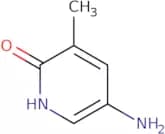
5-Amino-3-methylpyridin-2-ol
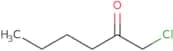
CAS:<p>Versatile small molecule scaffold</p>Formula:C6H8N2OPurity:Min. 95%Molecular weight:124.14 g/mol1-Chlorohexan-2-one
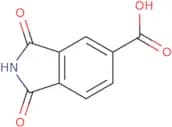
CAS:<p>1-Chlorohexan-2-one is a chiral, monomeric enzyme that catalyzes the reversible formation of the enamine. 1-Chlorohexan-2-one is used in organic chemistry as an enantioselective catalyst and is used in the synthesis of acetoacetate and enantiopure alcohols. 1-Chlorohexan-2-one has a molecular weight of 132.18 g/mol and a filtration rate constant of 3.5 × 10 cm/s at 25 °C and pH 7. The chemical constants are logP = 2.12, logD = -1.54, pKa = 8.0, and nD25°C = 1.4 × 10 cm/s at 25 °C and pH 7.</p>Formula:C6H11ClOPurity:Min. 95%Molecular weight:134.6 g/mol1,3-dioxo-2,3-dihydro-1H-isoindole-5-carboxylic a acid
CAS:<p>1,3-dioxo-2,3-dihydro-1H-isoindole-5-carboxylic acid (IDCA) is an organic compound that is a diacid with a hydroxyl group. IDCA has a methyl ethyl side chain and is a multi-walled carbon with n-dimethyl formamide as its solvent. The chemical structure of IDCA can be classified as a polycarboxylic acid. The melting point of IDCA is 132°C and the boiling point is 218°C at 1 mm Hg. FTIR spectroscopy indicates that IDCA has an absorption peak at 1650 cm−1, which corresponds to the stretching vibration of the carboxylic acid group. The UV absorption spectrum of IDCA shows three peaks at 230 nm, 284 nm, and 305 nm corresponding to the uv absorption maxima of the carboxylic acid group. The molecular weight of IDCA is</p>Formula:C9H5NO4Purity:Min. 95%Molecular weight:191.14 g/mol4-[(2-Chlorophenyl)amino]-4-oxobutanoic acid
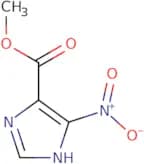
CAS:<p>4-[(2-Chlorophenyl)amino]-4-oxobutanoic acid is a molecule that consists of a benzene ring with an amide group. It has two conformations: one in which the amide group is in the "trans" conformation and one in which it is in the "cis" conformation. In the trans conformation, hydrogen bonds are formed between the carboxylic acid group and the amide group and also between NH groups on adjacent carbons. The cis conformation does not allow for these interactions. This molecule has systematic name, 4-[(2-chlorophenyl)amino]-4-oxobutanoic acid (CAS number: 569-10-8). It belongs to the class of organic compounds called amides. The systematic name for this compound is 4-[(2-chlorophenyl)amino]-4-oxobutanoic acid. This molecule belongs to the</p>Formula:C10H10ClNO3Purity:Min. 95%Molecular weight:227.64 g/molMethyl 5-nitro-1H-imidazole-4-carboxylate
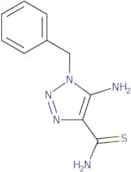
CAS:<p>Versatile small molecule scaffold</p>Formula:C5H5N3O4Purity:Min. 95%Molecular weight:171.11 g/mol5-Amino-1-benzyl-1H-1,2,3-triazole-4-carbothioamide
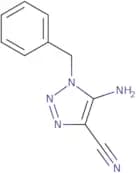
CAS:<p>Versatile small molecule scaffold</p>Formula:C10H11N5SPurity:Min. 95%Molecular weight:233.3 g/mol5-Amino-1-benzyl-1H-1,2,3-triazole-4-carbonitrile
CAS:<p>Versatile small molecule scaffold</p>Formula:C10H9N5Purity:Min. 95%Molecular weight:199.21 g/mol[2-(Pyridin-2-yl)ethyl]urea
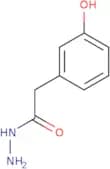
CAS:<p>Versatile small molecule scaffold</p>Formula:C8H11N3OPurity:Min. 95%Molecular weight:165.19 g/mol2-(3-Hydroxyphenyl)acetohydrazide
CAS:<p>Versatile small molecule scaffold</p>Formula:C8H10N2O2Purity:Min. 95%Molecular weight:166.18 g/mol2-[(2-Hydroxyphenyl)sulfanyl]acetohydrazide
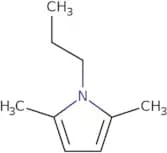
CAS:<p>Versatile small molecule scaffold</p>Formula:C8H10N2O2SPurity:Min. 95%Molecular weight:198.24 g/mol2,5-Dimethyl-1-propyl-1H-pyrrole
CAS:<p>2,5-Dimethyl-1-propyl-1H-pyrrole is an antineoplastic drug that belongs to the class of amides. It is used in the treatment of infant leukemia, a cancer of the blood and bone marrow. The long duration of this drug has been shown to be effective in women with chronic myelogenous leukemia who have a high risk for relapse after chemotherapy. 2,5-Dimethyl-1-propyl-1H-pyrrole can cause neutropenia and other side effects such as skin rash and diarrhea. This drug binds to nucleophilic sites on proteins and inhibits protein synthesis by preventing the formation of dihedral angles in five membered rings. 2,5-Dimethyl-1-propyl-1H-pyrrole also has antipyrine activity, which means it inhibits the production of prostaglandins by blocking their synthesis at the cyclooxygenase level. It can also inhibit the</p>Formula:C9H15NPurity:Min. 95%Molecular weight:137.22 g/mol2-Cyclopentylacetohydrazide
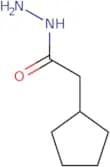
CAS:<p>2-Cyclopentylacetohydrazide is a ligand that has been shown to regulate angiogenesis in the nanomolar range. This drug is efficient for screening and identification of lung diseases. It has been used to denature proteins and peptides, as well as to react with lipoxygenases or aminopeptidases. 2-Cyclopentylacetohydrazide binds to methionine aminopeptidase, an enzyme that modifies proteins by removing the last amino acid from their carboxy terminus, and acylhydrazones, which are compounds formed by the condensation of an hydrazine molecule with an organic acid.</p>Formula:C7H14N2OPurity:Min. 95%Molecular weight:142.2 g/mol2-(2-Chloro-4-phenylphenoxy)acetic acid
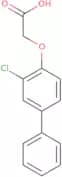
CAS:<p>Versatile small molecule scaffold</p>Formula:C14H11ClO3Purity:Min. 95%Molecular weight:262.69 g/mol5-Methyl-2,3-dihydro-1H-inden-4-ol
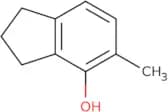
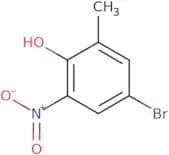
CAS:<p>Versatile small molecule scaffold</p>Formula:C10H12OPurity:Min. 95%Molecular weight:148.2 g/mol4-Bromo-2-methyl-6-nitrophenol
CAS:<p>Versatile small molecule scaffold</p>Formula:C7H6BrNO3Purity:Min. 95%Molecular weight:232.03 g/mol2-[(4-Fluorophenyl)amino]ethane-1-thiol
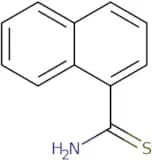
CAS:<p>Versatile small molecule scaffold</p>Formula:C8H10FNSPurity:Min. 95%Molecular weight:171.24 g/molNaphthalene-1-thiocarboxamide
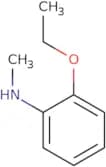
CAS:<p>Naphthalene-1-thiocarboxamide is a chemical compound with the molecular formula C8H6N2O2S and molecular weight of 228.09 g/mol. It is an organic thiocarboxamide derivative that can be synthesized by reacting naphthalene-1-carboxylic acid with thiourea in the presence of an oxidant and ultrasonic irradiation. This compound has been shown to yield high yields of dimers, which are terminal oxidants, when exposed to light or heat. Naphthalene-1-thiocarboxamide undergoes oxidative dimerization in a reaction time of approximately 3 hours at room temperature in chloranil and oxygen, producing hydroxyl radicals as byproducts. Naphthalene-1-thiocarboxamide has also been used as a catalyst for the sonochemical oxidation process due to its high reactivity and stability.</p>Formula:C11H9NSPurity:Min. 95%Molecular weight:187.26 g/mol2-Ethoxy-N-methylaniline
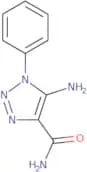
CAS:<p>2-Ethoxy-N-methylaniline is a research chemical that belongs to the group of N-substituted acrylamides. It is commonly used in scientific studies and experiments. This compound has various applications in different fields, including pharmaceutical research, organic synthesis, and material science. Its unique properties make it a valuable tool for researchers looking to explore new possibilities and develop innovative solutions. With its versatility and potential for discovery, 2-Ethoxy-N-methylaniline is an essential component in the world of scientific exploration.</p>Formula:C9H13NOPurity:Min. 95%Molecular weight:151.21 g/mol5-Amino-1-phenyl-1H-1,2,3-triazole-4-carboxamide
CAS:<p>Versatile small molecule scaffold</p>Formula:C9H9N5OPurity:Min. 95%Molecular weight:203.2 g/molHexadecyl(2-hydroxyethyl)dimethylazanium bromide
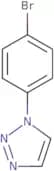
CAS:<p>Hexadecyl(2-hydroxyethyl)dimethylazanium bromide is a surfactant that is used in the textile industry. It is a gemini surfactant that has the ability to interact with both the hydrophilic and lipophilic regions of the surface of a textile fiber. The chemical nature of this compound allows it to be either monocationic or dicationic, depending on the pH. This surfactant also has an excellent sensitivity for micelles and can be used as a catalyst for reactions involving naphthalene or anthracene.</p>Formula:C20H44BrNOPurity:Min. 95%Molecular weight:394.5 g/mol1-(4-bromophenyl)-1h-1,2,3-triazole
CAS:<p>1-(4-Bromophenyl)-1H-1,2,3-triazole is a stereoselective decarboxylation product of ethyl propiolate. It is also a byproduct of the reaction between ethyl propiolate and azide. 1-(4-Bromophenyl)-1H-1,2,3-triazole can be used for synthesis of other compounds such as triazoles, which are used in pharmaceuticals and cosmetics.</p>Formula:C8H6BrN3Purity:Min. 95%Molecular weight:224.06 g/mol2-[(tert-Butylamino)carbonyl]benzoic acid
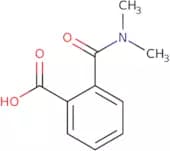
CAS:<p>2-[(tert-Butylamino)carbonyl]benzoic acid is an organic compound that is used as a chemical intermediate. It has a carboxylic acid group, which can be used for esterification or amidation reactions to create different derivatives. 2-[(tert-Butylamino)carbonyl]benzoic acid is deactivated by chlorine and other halogens, and can be reactivated through the addition of glycine or sodium bicarbonate. 2-[(tert-Butylamino)carbonyl]benzoic acid also suppresses malonic acid when mixed with mixtures and solutions of this compound.</p>Formula:C12H15NO3Purity:Min. 95%Molecular weight:221.25 g/mol2-(Dimethylcarbamoyl)benzoic acid
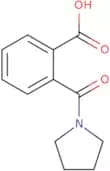
CAS:<p>Dimethylcarbamoylbenzoic acid is an ionic compound that can be categorized as a carboxylic acid. It has been shown to be a competitive inhibitor of acetonitrile-catalysed reactions, with the rate constant (k) of 1.02 x 10 M-1s-1. Dimethylcarbamoylbenzoic acid has also been shown to be an intramolecular nucleophile and is therefore classified as a stepwise reaction. The solvents used in this reaction are ethanol and acetonitrile, which have nonionized and ionized forms respectively.</p>Formula:C10H11NO3Purity:Min. 95%Molecular weight:193.2 g/mol2-(1-Pyrrolidinylcarbonyl)benzoic acid
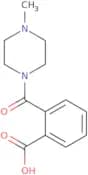
CAS:<p>Versatile small molecule scaffold</p>Formula:C12H13NO3Purity:Min. 95%Molecular weight:219.24 g/mol2-(4-Methylpiperazine-1-carbonyl)benzoic acid
CAS:<p>Versatile small molecule scaffold</p>Formula:C13H16N2O3Purity:Min. 95%Molecular weight:248.28 g/mol7-Methoxy-2,2-dimethyl-3,4-dihydro-2H-1-benzopyran-4-one
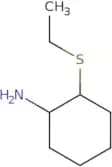
CAS:<p>7-Methoxy-2,2-dimethyl-3,4-dihydro-2H-1-benzopyran-4-one is a labile, hydrolysed and deprotonated chlorochromene derivative. It is the synthetic precursor to indole derivatives. This compound is used as a reagent in the ring opening of piperidine with acetaldehyde to form 1,4,5,6-tetrahydropyridines. 7MDC is also used for the synthesis of substituted indoles from anion condensation with pyridine. The yields are low because this compound has a high reactivity towards nucleophiles and cannot be stored for long periods of time.</p>Formula:C12H14O3Purity:Min. 95%Molecular weight:206.24 g/mol2-(Ethylsulfanyl)cyclohexan-1-amine
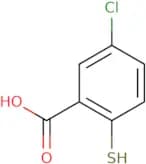
CAS:<p>Versatile small molecule scaffold</p>Formula:C8H17NSPurity:Min. 95%Molecular weight:159.29 g/mol5-Chloro-2-sulfanylbenzoic acid
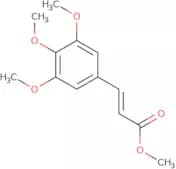
CAS:<p>5-Chloro-2-sulfanylbenzoic acid (CSA) is a white solid that is soluble in water. It is an intermediate in the synthesis of benzothiazoles and has been shown to undergo polycyclization to form cyanic acid. CSA can also be converted into an oxime, which is used as a reagent for the synthesis of 5-chloro-2-(trifluoromethyl)benzoic acid. This product has been shown to have activity against organisms such as Bacillus anthracis and Staphylococcus aureus.</p>Formula:C7H5ClO2SPurity:Min. 95%Molecular weight:188.63 g/mol3,4,5-Trimethyl-methylcinnamate
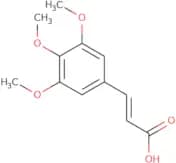
CAS:<p>3,4,5-Trimethyl-methylcinnamate (3,4,5-TMMC) is a synthetic compound that has been shown to inhibit the uptake of glucose by cells. The electrophysiological effects of 3,4,5-TMMC have been studied using patch-clamp technique on ventricular myocytes from rat hearts. This study showed that 3,4,5-TMMC inhibits the release of calcium ions from the endoplasmic reticulum and thus prevents depolarization. 3,4,5-TMMC also has an inhibitory effect on aldehyde dehydrogenase and can be used as an antidiabetic drug. 3,4,5-TMMC has also been shown to have an inhibitory effect on leishmania parasites in immunoassays and assays.</p>Formula:C13H16O5Purity:Min. 95%Molecular weight:252.26 g/mol(E)-3,4,5-Trimethoxycinnamic Acid
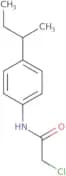
CAS:<p>(E)-3,4,5-Trimethoxycinnamic Acid is a p-hydroxybenzoic acid found in Chinese herbs. It has been shown to inhibit the growth of bacteria by binding to the enzyme 4-hydroxycinnamic acid oxidase. This binding prevents the formation of 4-hydroxycinnamic acid from p-hydroxybenzoic acid, which can be toxic for humans. (E)-3,4,5-Trimethoxycinnamic Acid also has antimicrobial activity against various strains of bacteria and fungi. It is an effective agent in preventing bacterial growth on surfaces due to its matrix effect with sodium carbonate. (E)-3,4,5-Trimethoxycinnamic Acid also has effects on neurotransmitters such as gamma-aminobutyric acid and ent-kaurane diterpenoid that may contribute to its anti-inflammatory properties.</p>Formula:C12H14O5Purity:Min. 95%Molecular weight:238.24 g/molN-(4-Sec-butylphenyl)-2-chloroacetamide
CAS:<p>Versatile small molecule scaffold</p>Formula:C12H16ClNOPurity:Min. 95%Molecular weight:225.71 g/mol6-Aminobenzo[d][1,3]dioxole-5-carboxylic acid
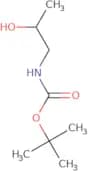
CAS:<p>Versatile small molecule scaffold</p>Formula:C8H7NO4Purity:Min. 95%Molecular weight:181.15 g/moltert-Butyl N-(2-hydroxypropyl)carbamate
CAS:<p>Versatile small molecule scaffold</p>Formula:C8H17NO3Purity:Min. 95%Molecular weight:175.23 g/mol[(4-Bromophenyl)(dimethylamino)phosphanyl]dimethylamine
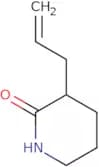
CAS:<p>Versatile small molecule scaffold</p>Formula:C10H16BrN2PPurity:Min. 95%Molecular weight:275.13 g/mol3-(Prop-2-en-1-yl)piperidin-2-one
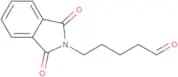
CAS:<p>Versatile small molecule scaffold</p>Formula:C8H13NOPurity:Min. 95%Molecular weight:139.19 g/mol5-(1,3-Dioxo-2,3-dihydro-1H-isoindol-2-yl)pentanal
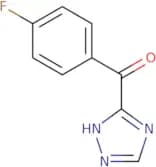
CAS:<p>Versatile small molecule scaffold</p>Formula:C13H13NO3Purity:Min. 95%Molecular weight:231.25 g/mol3-(4-Fluorobenzoyl)-4H-1,2,4-triazole
CAS:<p>Versatile small molecule scaffold</p>Formula:C9H6FN3OPurity:Min. 95%Molecular weight:191.16 g/mol2-Chloro-1-[4-(trifluoromethyl)phenyl]ethan-1-one
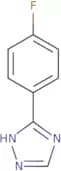
CAS:<p>Versatile small molecule scaffold</p>Formula:C9H6ClF3OPurity:Min. 95%Molecular weight:222.59 g/mol3-(4-Fluorophenyl)-4H-1,2,4-triazole
CAS:<p>Versatile small molecule scaffold</p>Formula:C8H6FN3Purity:Min. 95%Molecular weight:163.15 g/mol3-(Chloromethyl)-1H-1,2,4-triazole hydrochloride
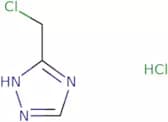
CAS:<p>Versatile small molecule scaffold</p>Formula:C3H5Cl2N3Purity:Min. 95%Molecular weight:154 g/mol2-Bromo-4'-(trifluoromethyl)propiophenone
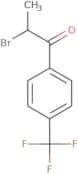
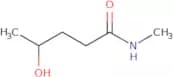
CAS:<p>Versatile small molecule scaffold</p>Formula:C10H8BrF3OPurity:Min. 95%Molecular weight:281.07 g/mol4-Hydroxy-N-methylpentanamide
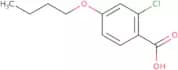
CAS:<p>Versatile small molecule scaffold</p>Formula:C6H13NO2Purity:Min. 95%Molecular weight:131.17 g/mol4-Butoxy-2-chlorobenzoic acid
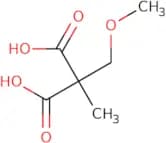
CAS:<p>Versatile small molecule scaffold</p>Formula:C11H13ClO3Purity:Min. 95%Molecular weight:228.67 g/mol2-(Methoxymethyl)-2-methylpropanedioic acid
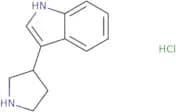
CAS:<p>Versatile small molecule scaffold</p>Formula:C6H10O5Purity:Min. 95%Molecular weight:162.14 g/mol3-(Pyrrolidin-3-yl)-1H-indole hydrochloride
CAS:<p>Versatile small molecule scaffold</p>Formula:C12H15ClN2Purity:Min. 95%Molecular weight:222.7 g/mol2-[(4-Methyl-2-oxo-2H-chromen-6-yl)oxy]acetic acid
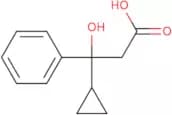
CAS:<p>Versatile small molecule scaffold</p>Formula:C12H10O5Purity:Min. 95%Molecular weight:234.2 g/mol3-Cyclopropyl-3-hydroxy-3-phenylpropanoic acid
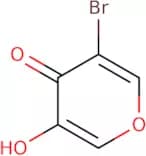
CAS:<p>Versatile small molecule scaffold</p>Formula:C12H14O3Purity:Min. 95%Molecular weight:206.24 g/mol3-Bromo-5-hydroxy-4H-pyran-4-one
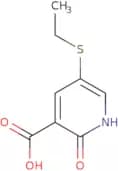
CAS:<p>Versatile small molecule scaffold</p>Formula:C5H3BrO3Purity:Min. 95%Molecular weight:190.98 g/mol5-(Ethylsulfanyl)-2-oxo-1,2-dihydropyridine-3-carboxylic acid
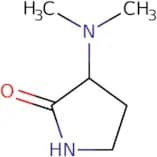
CAS:<p>Versatile small molecule scaffold</p>Formula:C8H9NO3SPurity:Min. 95%Molecular weight:199.23 g/mol3-(Dimethylamino)pyrrolidin-2-one
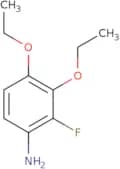
CAS:<p>Versatile small molecule scaffold</p>Formula:C6H12N2OPurity:Min. 95%Molecular weight:128.17 g/mol3,4-Diethoxy-2-fluoroaniline
CAS:<p>Versatile small molecule scaffold</p>Formula:C10H14FNO2Purity:Min. 95%Molecular weight:199.22 g/mol2-(Cyclopentyloxy)acetic acid
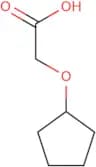
CAS:<p>2-(Cyclopentyloxy)acetic acid (CPA) is an organic chemical compound that exists as a cyclic ester of acetic acid. It is an electron-rich, hydrophobic molecule with a molecular weight of 142.2 g/mol. CPA has been prepared by reacting alkyloxides with magnesium and titanium in the presence of methoxyisobutyl or phenylmagnesium bromide. CPA can be obtained through the hydrolysis of 2-cyclohexen-1-one with potassium hydroxide in methanol, or from the reaction between ethylene glycol and oxadiazole in the presence of titanium tetrachloride.</p>Formula:C7H12O3Purity:Min. 95%Molecular weight:144.17 g/mol5,6-Dimethyl-1-benzofuran-2-carboxylic acid
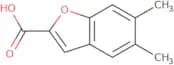
CAS:<p>Versatile small molecule scaffold</p>Formula:C11H10O3Purity:Min. 95%Molecular weight:190.19 g/mol5-Iodo-2-(piperazin-1-yl)pyrimidine
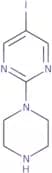
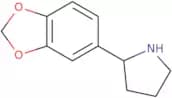
CAS:<p>Versatile small molecule scaffold</p>Formula:C8H11IN4Purity:Min. 95%Molecular weight:290.1 g/mol2-(2H-1,3-Benzodioxol-5-yl)pyrrolidine
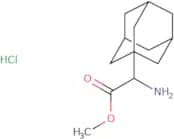
CAS:<p>Versatile small molecule scaffold</p>Formula:C11H13NO2Purity:Min. 95%Molecular weight:191.23 g/molMethyl 2-(adamantan-1-yl)-2-aminoacetate hydrochloride
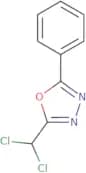
CAS:<p>Versatile small molecule scaffold</p>Formula:C13H22ClNO2Purity:Min. 95%Molecular weight:259.8 g/mol2-(Dichloromethyl)-5-phenyl-1,3,4-oxadiazole
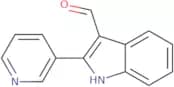
CAS:<p>Versatile small molecule scaffold</p>Formula:C9H6Cl2N2OPurity:Min. 95%Molecular weight:229.06 g/mol2-(Pyridin-3-yl)-1H-indole-3-carbaldehyde
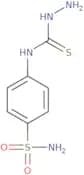
CAS:<p>Versatile small molecule scaffold</p>Formula:C14H10N2OPurity:Min. 95%Molecular weight:222.24 g/mol3-Amino-1-(4-sulfamoylphenyl)thiourea
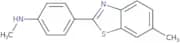
CAS:<p>Versatile small molecule scaffold</p>Formula:C7H10N4O2S2Purity:Min. 95%Molecular weight:246.3 g/molN-Methyl-4-(6-methyl-1,3-benzothiazol-2-yl)aniline
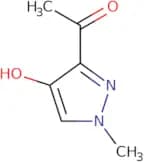
CAS:<p>Versatile small molecule scaffold</p>Formula:C15H14N2SPurity:Min. 95%Molecular weight:254.4 g/mol1-(4-Hydroxy-1-methyl-1H-pyrazol-3-yl)ethan-1-one
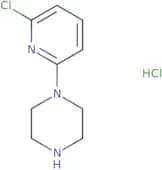
CAS:<p>Versatile small molecule scaffold</p>Formula:C6H8N2O2Purity:Min. 95%Molecular weight:140.14 g/mol1-(6-chloropyridin-2-yl)piperazine hydrochloride
CAS:<p>Versatile small molecule scaffold</p>Formula:C9H13Cl2N3Purity:Min. 95%Molecular weight:234.1 g/mol4-(3-Chlorophenyl)-1,2,3,6-tetrahydropyridine
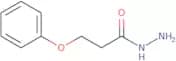
CAS:<p>Versatile small molecule scaffold</p>Formula:C11H12ClNPurity:Min. 95%Molecular weight:193.67 g/mol3-Phenoxypropanehydrazide
CAS:<p>Versatile small molecule scaffold</p>Formula:C9H12N2O2Purity:Min. 95%Molecular weight:180.2 g/molN-{[(2-Phenoxyethyl)carbamoyl]amino}propanamide
CAS:<p>Versatile small molecule scaffold</p>Formula:C12H17N3O3Purity:Min. 95%Molecular weight:251.28 g/mol7-Bromo-2,3-dihydro-[1,4]dioxino[2,3-b]pyridine
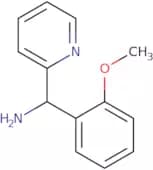
CAS:<p>Versatile small molecule scaffold</p>Formula:C7H6BrNO2Purity:Min. 95%Molecular weight:216.03 g/mol(2-Methoxyphenyl)(pyridin-2-yl)methanamine
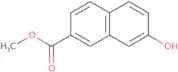
CAS:<p>Versatile small molecule scaffold</p>Formula:C13H14N2OPurity:Min. 95%Molecular weight:214.26 g/molMethyl 7-hydroxy-2-naphthoate
CAS:<p>Methyl 7-hydroxy-2-naphthoate is a bioactive organic compound that is used in the synthesis of pharmaceuticals and other organic compounds. It has been shown to have anti-inflammatory properties, which may be due to its ability to inhibit prostaglandin synthesis. Methyl 7-hydroxy-2-naphthoate also has mechanistic properties that are similar to those of the drug farnesoid, which is used in the treatment of acute intermittent porphyria. Methyl 7-hydroxy-2-naphthoate is an analog of farnesoid and can be synthesized through a mechanism involving bond cleavage and catalysis.</p>Formula:C12H10O3Purity:Min. 95%Molecular weight:202.21 g/molMethyl 6-sulfanylnaphthalene-2-carboxylate
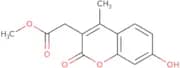
CAS:<p>Versatile small molecule scaffold</p>Formula:C12H10O2SPurity:Min. 95%Molecular weight:218.3 g/molMethyl 2-(7-hydroxy-4-methyl-2-oxo-2H-chromen-3-yl)acetate
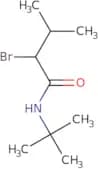
CAS:<p>Versatile small molecule scaffold</p>Formula:C13H12O5Purity:Min. 95%Molecular weight:248.23 g/mol2-Bromo-N-tert-butyl-3-methylbutanamide
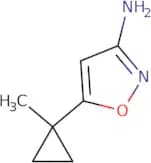
CAS:<p>Versatile small molecule scaffold</p>Formula:C9H18BrNOPurity:Min. 95%Molecular weight:236.15 g/mol5-(1-Methylcyclopropyl)-1,2-oxazol-3-amine
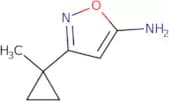
CAS:<p>Versatile small molecule scaffold</p>Formula:C7H10N2OPurity:Min. 95%Molecular weight:138.17 g/mol3-(1-Methylcyclopropyl)-1,2-oxazol-5-amine
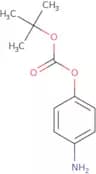
CAS:<p>Versatile small molecule scaffold</p>Formula:C7H10N2OPurity:Min. 95%Molecular weight:138.17 g/mol4-Aminophenyl tert-butyl carbonate
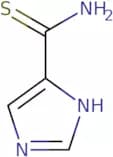
CAS:<p>Versatile small molecule scaffold</p>Formula:C11H15NO3Purity:Min. 95%Molecular weight:209.24 g/mol1H-Imidazole-4-carbothioamide
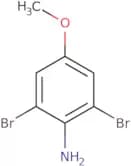
CAS:<p>1H-Imidazole-4-carbothioamide is a compound that has been identified as a lead for drug discovery, with the potential to be used in the treatment of diseases such as cancer and Alzheimer's. The compound has been shown to bind to the protein beta-secretase and inhibit its activity, which may prevent Alzheimer's disease from progressing. 1H-Imidazole-4-carbothioamide has also been shown to bind to an enzyme called lipoxygenase, which is found in cells that cause inflammation. This binding prevents the formation of inflammatory compounds known as leukotrienes and prostaglandins.</p>Formula:C4H5N3SPurity:Min. 95%Molecular weight:127.17 g/mol2,6-dibromo-4-methoxyaniline
CAS:<p>2,6-dibromo-4-methoxyaniline is a tetracyclic compound with a thiophene ring and an indole ring. It is a synthetic aromatic amine that is used in the synthesis of carbazoles and other heterocyclic compounds. 2,6-dibromo-4-methoxyaniline can be prepared by the reaction of bromoacetic acid with methoxyamine, which catalyzes the cyclization of benzene derivatives to form indoles. This compound constitutes one part of the synthesis of substituted benzene derivatives.</p>Formula:C7H7Br2NOPurity:Min. 95%Molecular weight:280.9 g/mol[2-(1-Ethylpiperidin-4-yl)-ethyl]amine hydrochloride
CAS:<p>Versatile small molecule scaffold</p>Formula:C9H21ClN2Purity:Min. 95%Molecular weight:192.73 g/molN-[3-(Carbamoylamino)phenyl]acetamide
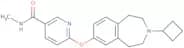
CAS:<p>N-[3-(Carbamoylamino)phenyl]acetamide (NS3) is a replication inhibitor that has been shown to inhibit the activity of NS3 protease, which is a serine protease. This drug has been shown to be effective against the replication of several types of viruses, including HIV and HCV. NS3 can be used in combination with other antiviral drugs such as ddI and AZT. NS3 has also been shown to inhibit the activity of mammalian cell cyclic peptide fatty acid synthase (FAS) in vitro and in vivo. FAS is an enzyme that converts free fatty acids into fatty acid-CoA esters for use in energy production. The inhibition of FAS by NS3 may be responsible for its anti-cancer effects, as it disrupts cellular metabolism.</p>Formula:C9H11N3O2Purity:Min. 95%Molecular weight:193.2 g/molGSK189254A
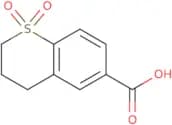
CAS:<p>GSK189254A is a drug that is a novel, potent, and selective H3 receptor antagonist. GSK189254A has a high affinity for the H3 receptor and can be used to treat chronic diseases such as schizophrenia and Alzheimer's disease. GSK189254A has been shown to block histamine-induced increases in striatal dopamine concentration in rats. It also blocks 3-methoxyphenylacetic acid binding to the H3 receptor with an IC50 of 1 nM. GSK189254A has undergone clinical trials in humans and was found to have pharmacokinetic properties similar to other established drugs that are used for the treatment of schizophrenia.</p>Formula:C21H25N3O2Purity:Min. 95%Molecular weight:351.44 g/mol3,4-Dihydro-2H-1-benzothiopyran-6-carboxylic acid 1,1-dioxide
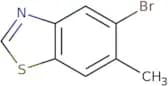
CAS:<p>Versatile small molecule scaffold</p>Formula:C10H10O4SPurity:Min. 95%Molecular weight:226.25 g/mol5-Bromo-6-methyl-1,3-benzothiazole
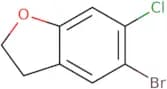
CAS:<p>Versatile small molecule scaffold</p>Formula:C8H6BrNSPurity:Min. 95%Molecular weight:228.11 g/mol5-Bromo-6-chloro-2,3-dihydro-1-benzofuran
CAS:<p>Versatile small molecule scaffold</p>Formula:C8H6BrClOPurity:Min. 95%Molecular weight:233.49 g/mol6-bromo-5-methylpyrazolo[1,5-a]pyridine
CAS:<p>Versatile small molecule scaffold</p>Formula:C8H7BrN2Purity:Min. 95%Molecular weight:211.06 g/mol4-Bromo-5-methylpyrazolo[1,5-a]pyridine
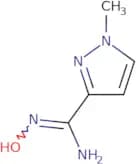
CAS:<p>Versatile small molecule scaffold</p>Formula:C8H7BrN2Purity:Min. 95%Molecular weight:211.06 g/molN'-Hydroxy-1-methyl-1H-pyrazole-3-carboximidamide
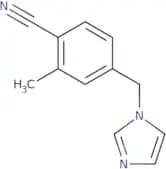
CAS:<p>Versatile small molecule scaffold</p>Formula:C5H8N4OPurity:Min. 95%Molecular weight:140.14 g/mol4-(1H-Imidazol-1-ylmethyl)-2-methylbenzonitrile
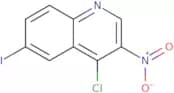
CAS:<p>Versatile small molecule scaffold</p>Formula:C12H11N3Purity:Min. 95%Molecular weight:197.24 g/mol4-Chloro-6-iodo-3-nitroquinoline
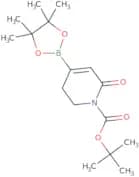
CAS:<p>Versatile small molecule scaffold</p>Formula:C9H4ClIN2O2Purity:Min. 95%Molecular weight:334.5 g/moltert-Butyl 6-oxo-4-(tetramethyl-1,3,2-dioxaborolan-2-yl)-1,2,3,6-tetrahydropyridine-1-carboxylate
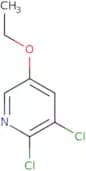
CAS:<p>Versatile small molecule scaffold</p>Formula:C16H26BNO5Purity:Min. 95%Molecular weight:323.2 g/mol2,3-Dichloro-5-ethoxypyridine
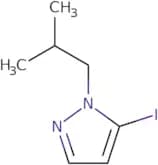
CAS:<p>Versatile small molecule scaffold</p>Formula:C7H7Cl2NOPurity:Min. 95%Molecular weight:192.04 g/mol5-Iodo-1-isobutylpyrazole
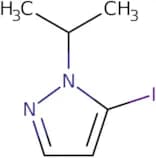
CAS:<p>Versatile small molecule scaffold</p>Formula:C7H11IN2Purity:Min. 95%Molecular weight:250.08 g/mol5-Iodo-1-isopropylpyrazole
CAS:<p>Versatile small molecule scaffold</p>Formula:C6H9IN2Purity:Min. 95%Molecular weight:236.05 g/molMethyl({[1-(2,2,2-trifluoroethyl)-1H-pyrazol-5-yl]methyl})amine
CAS:<p>Versatile small molecule scaffold</p>Formula:C7H10F3N3Purity:Min. 95%Molecular weight:193.17 g/moltert-Butyl N-[2,2-dimethyl-3-(methylamino)propyl]carbamate
CAS:<p>Versatile small molecule scaffold</p>Formula:C11H24N2O2Purity:Min. 95%Molecular weight:216.32 g/molThieno[3,2-b]pyridine-3-carboxylic acid
CAS:<p>Versatile small molecule scaffold</p>Formula:C8H5NO2SPurity:Min. 95%Molecular weight:179.2 g/mol3-{2-[(tert-Butoxy)carbonyl]-1,2,3,4-tetrahydroisoquinolin-3-yl}propanoic acid
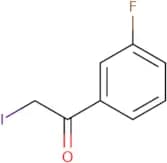
CAS:<p>Versatile small molecule scaffold</p>Formula:C17H23NO4Purity:Min. 95%Molecular weight:305.4 g/mol1-(3-Fluorophenyl)-2-iodoethan-1-one
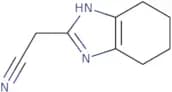
CAS:<p>Versatile small molecule scaffold</p>Formula:C8H6FIOPurity:Min. 95%Molecular weight:264.03 g/mol2-(4,5,6,7-Tetrahydro-1H-1,3-benzodiazol-2-yl)acetonitrile
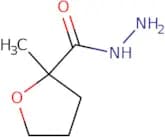
CAS:<p>Versatile small molecule scaffold</p>Formula:C9H11N3Purity:Min. 95%Molecular weight:161.2 g/mol2-Methyloxolane-2-carbohydrazide
CAS:<p>Versatile small molecule scaffold</p>Formula:C6H12N2O2Purity:Min. 95%Molecular weight:144.17 g/mol1-[5-(Trifluoromethyl)pyridin-2-yl]ethan-1-ol
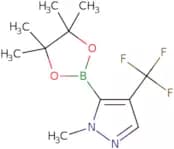
CAS:<p>Versatile small molecule scaffold</p>Formula:C8H8F3NOPurity:Min. 95%Molecular weight:191.15 g/mol1-Methyl-5-(tetramethyl-1,3,2-dioxaborolan-2-yl)-4-(trifluoromethyl)-1H-pyrazole
CAS:<p>Versatile small molecule scaffold</p>Formula:C11H16BF3N2O2Purity:Min. 95%Molecular weight:276.07 g/mol

![4-[(2-Chlorophenyl)amino]-4-oxobutanoic acid](/_next/image/?url=https%3A%2Fstatic.cymitquimica.com%2Fproducts%2F3D%2Fthumb-webp%2FVAA26625.webp&w=3840&q=75)
![[2-(Pyridin-2-yl)ethyl]urea](/_next/image/?url=https%3A%2Fstatic.cymitquimica.com%2Fproducts%2F3D%2Fthumb-webp%2FVAA27353.webp&w=3840&q=75)
![2-[(2-Hydroxyphenyl)sulfanyl]acetohydrazide](/_next/image/?url=https%3A%2Fstatic.cymitquimica.com%2Fproducts%2F3D%2Fthumb-webp%2FVAA27706.webp&w=3840&q=75)
![2-[(4-Fluorophenyl)amino]ethane-1-thiol](/_next/image/?url=https%3A%2Fstatic.cymitquimica.com%2Fproducts%2F3D%2Fthumb-webp%2FVAA29560.webp&w=3840&q=75)

![2-[(tert-Butylamino)carbonyl]benzoic acid](/_next/image/?url=https%3A%2Fstatic.cymitquimica.com%2Fproducts%2F3D%2Fthumb-webp%2FVAA32035.webp&w=3840&q=75)

![6-Aminobenzo[d][1,3]dioxole-5-carboxylic acid](/_next/image/?url=https%3A%2Fstatic.cymitquimica.com%2Fproducts%2F3D%2Fthumb-webp%2FVAA33216.webp&w=3840&q=75)
![[(4-Bromophenyl)(dimethylamino)phosphanyl]dimethylamine](/_next/image/?url=https%3A%2Fstatic.cymitquimica.com%2Fproducts%2F3D%2Fthumb-webp%2FVDA68276.webp&w=3840&q=75)
![2-Chloro-1-[4-(trifluoromethyl)phenyl]ethan-1-one](/_next/image/?url=https%3A%2Fstatic.cymitquimica.com%2Fproducts%2F3D%2Fthumb-webp%2FVDA72789.webp&w=3840&q=75)
![2-[(4-Methyl-2-oxo-2H-chromen-6-yl)oxy]acetic acid](/_next/image/?url=https%3A%2Fstatic.cymitquimica.com%2Fproducts%2F3D%2Fthumb-webp%2FVDA76760.webp&w=3840&q=75)

![N-{[(2-Phenoxyethyl)carbamoyl]amino}propanamide](/_next/image/?url=https%3A%2Fstatic.cymitquimica.com%2Fproducts%2F3D%2Fthumb-webp%2FVDA88512.webp&w=3840&q=75)
![7-Bromo-2,3-dihydro-[1,4]dioxino[2,3-b]pyridine](/_next/image/?url=https%3A%2Fstatic.cymitquimica.com%2Fproducts%2F3D%2Fthumb-webp%2FVDA89749.webp&w=3840&q=75)
![[2-(1-Ethylpiperidin-4-yl)-ethyl]amine hydrochloride](/_next/image/?url=https%3A%2Fstatic.cymitquimica.com%2Fproducts%2F3D%2Fthumb-webp%2FVDB00191.webp&w=3840&q=75)
![N-[3-(Carbamoylamino)phenyl]acetamide](/_next/image/?url=https%3A%2Fstatic.cymitquimica.com%2Fproducts%2F3D%2Fthumb-webp%2FVDB67020.webp&w=3840&q=75)
![6-bromo-5-methylpyrazolo[1,5-a]pyridine](/_next/image/?url=https%3A%2Fstatic.cymitquimica.com%2Fproducts%2F3D%2Fthumb-webp%2FVDC12123.webp&w=3840&q=75)
![4-Bromo-5-methylpyrazolo[1,5-a]pyridine](/_next/image/?url=https%3A%2Fstatic.cymitquimica.com%2Fproducts%2F3D%2Fthumb-webp%2FVDC12129.webp&w=3840&q=75)
![Methyl({[1-(2,2,2-trifluoroethyl)-1H-pyrazol-5-yl]methyl})amine](/_next/image/?url=https%3A%2Fstatic.cymitquimica.com%2Fproducts%2F3D%2Fthumb-webp%2FVDC51073.webp&w=3840&q=75)
![tert-Butyl N-[2,2-dimethyl-3-(methylamino)propyl]carbamate](/_next/image/?url=https%3A%2Fstatic.cymitquimica.com%2Fproducts%2F3D%2Fthumb-webp%2FVDC53272.webp&w=3840&q=75)
![Thieno[3,2-b]pyridine-3-carboxylic acid](/_next/image/?url=https%3A%2Fstatic.cymitquimica.com%2Fproducts%2F3D%2Fthumb-webp%2FVDC55682.webp&w=3840&q=75)
![3-{2-[(tert-Butoxy)carbonyl]-1,2,3,4-tetrahydroisoquinolin-3-yl}propanoic acid](/_next/image/?url=https%3A%2Fstatic.cymitquimica.com%2Fproducts%2F3D%2Fthumb-webp%2FVDC67323.webp&w=3840&q=75)
![1-[5-(Trifluoromethyl)pyridin-2-yl]ethan-1-ol](/_next/image/?url=https%3A%2Fstatic.cymitquimica.com%2Fproducts%2F3D%2Fthumb-webp%2FVDC97317.webp&w=3840&q=75)