Building Blocks
This section contains fundamental products for the synthesis of organic and biological compounds. Building blocks are the essential starting materials used to construct complex molecules through various chemical reactions. They play a critical role in drug discovery, material science, and chemical research. At CymitQuimica, we offer a diverse range of high-quality building blocks to support your innovative research and industrial projects, ensuring you have the essential components for successful synthesis.
Subcategories of "Building Blocks"
- Boronic Acids & Boronic Acid Derivatives(5,756 products)
- Chiral Building Blocks(1,242 products)
- Hydrocarbon Building Blocks(6,093 products)
- Organic Building Blocks(60,532 products)
Found 195534 products of "Building Blocks"
Sort by
Purity (%)
0
100
|
0
|
50
|
90
|
95
|
100
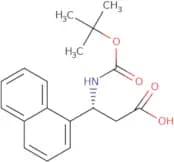
Boc-(R)-3-Amino-3-(1-naphthyl)-propionic acid
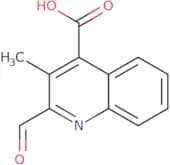
CAS:<p>Versatile small molecule scaffold</p>Formula:C18H21NO4Purity:Min. 95%Molecular weight:315.37 g/mol2-Formyl-3-methylquinoline-4-carboxylic acid
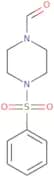
CAS:<p>Versatile small molecule scaffold</p>Formula:C12H9NO3Purity:Min. 95%Molecular weight:215.2 g/mol4-(Benzenesulfonyl)piperazine-1-carbaldehyde
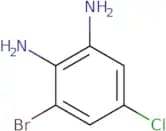
CAS:<p>Versatile small molecule scaffold</p>Formula:C11H14N2O3SPurity:Min. 95%Molecular weight:254.31 g/mol3-Bromo-5-chlorobenzene -1,2-diamine
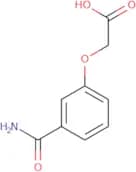
CAS:<p>Versatile small molecule scaffold</p>Formula:C6H6BrClN2Purity:Min. 95%Molecular weight:221.48 g/mol2-(3-Carbamoylphenoxy)acetic acid
CAS:<p>Versatile small molecule scaffold</p>Formula:C9H9NO4Purity:Min. 95%Molecular weight:195.17 g/mol5-[(4-Chlorophenyl)methyl]-1,3,4-oxadiazol-2-amine
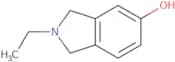
CAS:<p>Versatile small molecule scaffold</p>Formula:C9H8ClN3OPurity:Min. 95%Molecular weight:209.63 g/mol2-Ethyl-2,3-dihydro-1H-isoindol-5-ol
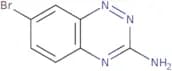
CAS:<p>Versatile small molecule scaffold</p>Formula:C10H13NOPurity:Min. 95%Molecular weight:163.22 g/mol7-Bromo-1,2,4-benzotriazin-3-amine
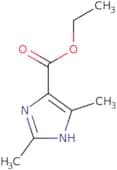
CAS:<p>Versatile small molecule scaffold</p>Formula:C7H5BrN4Purity:Min. 95%Molecular weight:225.05 g/molEthyl 2,4-dimethyl-1H-imidazole-5-carboxylate
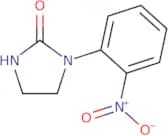
CAS:<p>Versatile small molecule scaffold</p>Formula:C8H12N2O2Purity:Min. 95%Molecular weight:168.19 g/mol1-(2-nitrophenyl)imidazolidin-2-one
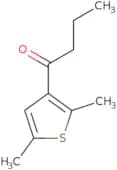
CAS:<p>Versatile small molecule scaffold</p>Formula:C9H9N3O3Purity:Min. 95%Molecular weight:207.18 g/mol1-(2,5-Dimethylthiophen-3-yl)butan-1-one
CAS:<p>Versatile small molecule scaffold</p>Formula:C10H14OSPurity:Min. 95%Molecular weight:182.28 g/mol1-[(2-Aminophenyl)methyl]pyrrolidine-2,5-dione
CAS:<p>Versatile small molecule scaffold</p>Formula:C11H12N2O2Purity:Min. 95%Molecular weight:204.22 g/moltert-Butyl N-{2-[bis(3-aminopropyl)amino]ethyl}carbamate
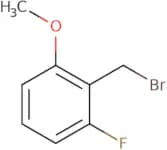
CAS:<p>Versatile small molecule scaffold</p>Formula:C13H30N4O2Purity:Min. 95%Molecular weight:274.4 g/mol2-(Bromomethyl)-1-fluoro-3-methoxybenzene
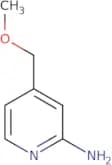
CAS:<p>Versatile small molecule scaffold</p>Formula:C8H8BrFOPurity:Min. 95%Molecular weight:219.05 g/mol4-(Methoxymethyl)pyridin-2-amine
CAS:<p>Versatile small molecule scaffold</p>Formula:C7H10N2OPurity:Min. 95%Molecular weight:138.17 g/mol1H,4H,5H,6H,7H-[1,2,3]Triazolo[4,5-b]pyridine
CAS:<p>1H,4H,5H,6H,7H-[1,2,3]Triazolo[4,5-b]pyridine is a synthetic compound that has been shown to be mediated in vivo. It has also been found to have pharmacokinetic profiles that are similar to those of other triazole drugs. This drug has been shown to have antidepressant effects in animal studies and is being studied for its use as a pharmaceutical formulation for the treatment of depression. 1H,4H,5H,6H,7H-[1,2,3]Triazolo[4,5-b]pyridine also inhibits the release of neurokinin-1 (NK-1), which may provide an additional mechanism for its antidepressant activity. 1H,4H,5H,6H,7H-[1 2 3]Triazolo[4 5 b]pyridine is not active against tachykinins such as</p>Formula:C5H8N4Purity:Min. 95%Molecular weight:124.14 g/mol5-Methyl-1,2-thiazole-4-carboxylic acid
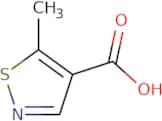
CAS:<p>Versatile small molecule scaffold</p>Formula:C5H5NO2SPurity:Min. 95%Molecular weight:143.17 g/molEthyl 5-bromo-2-chlorothiazole-4-carboxylate
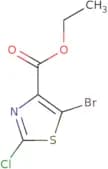
CAS:<p>Versatile small molecule scaffold</p>Formula:C6H5BrClNO2SPurity:Min. 95%Molecular weight:270.5 g/mol6-Bromo[1,2,5]-oxadiazolo[3,4-b]pyridine
CAS:<p>Versatile small molecule scaffold</p>Formula:C5H2BrN3OPurity:Min. 95%Molecular weight:200 g/mol5-Bromo-N-methyl-N-phenylpyridin-2-amine
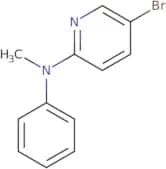
CAS:<p>Versatile small molecule scaffold</p>Formula:C12H11BrN2Purity:Min. 95%Molecular weight:263.13 g/mol6-Bromo-2-chloronicotinaldehyde
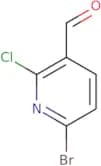
CAS:<p>Versatile small molecule scaffold</p>Formula:C6H3BrClNOPurity:Min. 95%Molecular weight:220.45 g/mol6-(3-Ethoxyphenyl)pyridin-2-amine
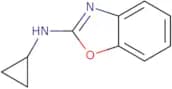
CAS:<p>Versatile small molecule scaffold</p>Formula:C13H14N2OPurity:Min. 95%Molecular weight:214.26 g/molN-Cyclopropyl-1,3-benzoxazol-2-amine
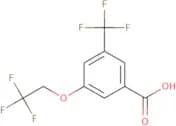
CAS:<p>Versatile small molecule scaffold</p>Formula:C10H10N2OPurity:Min. 95%Molecular weight:174.2 g/mol3-(2,2,2-Trifluoroethoxy)-5-(trifluoromethyl)benzoic acid
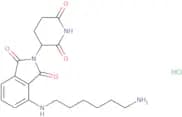
CAS:<p>Versatile small molecule scaffold</p>Formula:C10H6F6O3Purity:Min. 95%Molecular weight:288.14 g/molPomalidomide-C6-amine hydrochloride
CAS:<p>Versatile small molecule scaffold</p>Formula:C19H25ClN4O4Purity:Min. 95%Molecular weight:408.9 g/molrac-(1R,2S,4R,5R)-5-Amino-2-methylbicyclo[2.2.1]heptan-2-ol hydrochloride
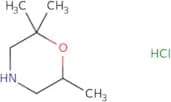
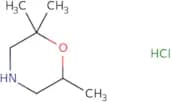
CAS:<p>Versatile small molecule scaffold</p>Formula:C8H16ClNOPurity:Min. 95%Molecular weight:177.7 g/mol(6S)-2,2,6-Trimethylmorpholine hydrochloride
CAS:<p>Versatile small molecule scaffold</p>Formula:C7H16ClNOPurity:Min. 95%Molecular weight:165.7 g/mol6-[(3R)-3-Aminopyrrolidin-1-yl]-3-ethyl-1,2,3,4-tetrahydropyrimidine-2,4-dione dihydrochloride
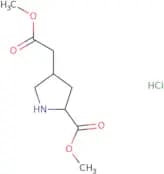
CAS:<p>Versatile small molecule scaffold</p>Formula:C10H18Cl2N4O2Purity:Min. 95%Molecular weight:297.2 g/molMethyl (2S,4R)-4-(2-methoxy-2-oxoethyl)pyrrolidine-2-carboxylate hydrochloride
CAS:<p>Versatile small molecule scaffold</p>Formula:C9H16ClNO4Purity:Min. 95%Molecular weight:237.7 g/mol(2R,4S)-1-[(tert-Butoxy)carbonyl]-4-methanesulfonylpyrrolidine-2-carboxylic acid
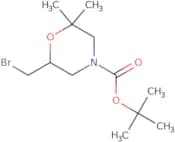
CAS:<p>Versatile small molecule scaffold</p>Formula:C11H19NO6SPurity:Min. 95%Molecular weight:293.3 g/moltert-Butyl (6R)-6-(bromomethyl)-2,2-dimethylmorpholine-4-carboxylate
CAS:<p>Versatile small molecule scaffold</p>Formula:C12H22BrNO3Purity:Min. 95%Molecular weight:308.21 g/mol(8'aS)-Hexahydro-1'H-spiro[cyclopropane-1,7'-pyrrolo[1,2-a]piperazine]
CAS:<p>Versatile small molecule scaffold</p>Formula:C9H16N2Purity:Min. 95%Molecular weight:152.2 g/molrac-Methyl 2-[(3R,4R)-4-(2-methoxy-2-oxoethyl)pyrrolidin-3-yl]acetate hydrochloride
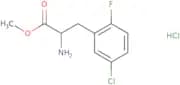
CAS:<p>Versatile small molecule scaffold</p>Formula:C10H18ClNO4Purity:Min. 95%Molecular weight:251.7 g/molMethyl (2S)-2-amino-3-(5-chloro-2-fluorophenyl)propanoate hydrochloride
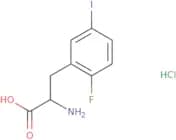
CAS:<p>Versatile small molecule scaffold</p>Formula:C10H12Cl2FNO2Purity:Min. 95%Molecular weight:268.1 g/mol(2S)-2-Amino-3-(2-fluoro-5-iodophenyl)propanoic acid hydrochloride
CAS:<p>Versatile small molecule scaffold</p>Formula:C9H10ClFINO2Purity:Min. 95%Molecular weight:345.5 g/mol4-[(3R)-3-(dimethylamino)pyrrolidin-1-yl]-5,6-dimethylpyrimidine-2-carboxylate lithium
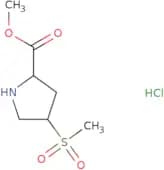
CAS:<p>Versatile small molecule scaffold</p>Formula:C13H19LiN4O2Purity:Min. 95%Molecular weight:270.3 g/molMethyl (2S,4R)-4-methanesulfonylpyrrolidine-2-carboxylate hydrochloride
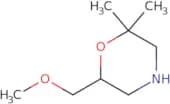
CAS:<p>Versatile small molecule scaffold</p>Formula:C7H14ClNO4SPurity:Min. 95%Molecular weight:243.7 g/mol(6S)-6-(Methoxymethyl)-2,2-dimethylmorpholine
CAS:<p>Versatile small molecule scaffold</p>Formula:C8H17NO2Purity:Min. 95%Molecular weight:159.2 g/mol(2R,3S)-3-(tert-Butoxy)-2-(2-{[(tert-butoxy)carbonyl]amino}acetamido)butanoic acid
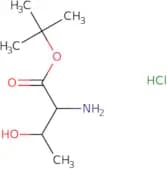
CAS:<p>Versatile small molecule scaffold</p>Formula:C15H28N2O6Purity:Min. 95%Molecular weight:332.4 g/moltert-Butyl (2R,3S)-2-amino-3-hydroxybutanoate hydrochloride
CAS:<p>Versatile small molecule scaffold</p>Formula:C8H18ClNO3Purity:Min. 95%Molecular weight:211.7 g/mol(2S)-Bicyclo[2.2.2]octan-2-amine hydrochloride
CAS:<p>Versatile small molecule scaffold</p>Formula:C8H16ClNPurity:Min. 95%Molecular weight:161.7 g/mol(6R)-2,2,6-Trimethylmorpholine hydrochloride
CAS:<p>Versatile small molecule scaffold</p>Formula:C7H16ClNOPurity:Min. 95%Molecular weight:165.7 g/molMethyl 2-[(1R,3R,4S)-2-azabicyclo[2.2.1]heptan-3-yl]acetate hydrochloride
CAS:<p>Versatile small molecule scaffold</p>Formula:C9H16ClNO2Purity:Min. 95%Molecular weight:205.7 g/mol2-[(1R,3R,4S)-2-Azabicyclo[2.2.1]heptan-3-yl]acetic acid hydrochloride
CAS:<p>Versatile small molecule scaffold</p>Formula:C8H14ClNO2Purity:Min. 95%Molecular weight:191.7 g/mol(2R)-Bicyclo[2.2.2]octan-2-amine hydrochloride
CAS:<p>Versatile small molecule scaffold</p>Formula:C8H16ClNPurity:Min. 95%Molecular weight:161.7 g/molrac-Methyl (1R,3S,5S,8R)-8-hydroxybicyclo[3.2.1]octane-3-carboxylate
CAS:<p>Versatile small molecule scaffold</p>Formula:C10H16O3Purity:Min. 95%Molecular weight:184.2 g/moltert-Butyl (4R)-4-{[(tert-butoxy)carbonyl]amino}-5-oxopentanoate
CAS:<p>Versatile small molecule scaffold</p>Formula:C14H25NO5Purity:Min. 95%Molecular weight:287.4 g/mol(2S,3R)-3-(tert-Butoxy)-2-(2-{[(tert-butoxy)carbonyl]amino}acetamido)butanoic acid
CAS:<p>Versatile small molecule scaffold</p>Formula:C15H28N2O6Purity:Min. 95%Molecular weight:332.4 g/mol[(3S,5R)-3-(Aminomethyl)-4,5-dimethylmorpholin-3-yl]methanol
CAS:<p>Versatile small molecule scaffold</p>Formula:C8H18N2O2Purity:Min. 95%Molecular weight:174.2 g/moltert-Butyl (6S)-6-(bromomethyl)-2,2-dimethylmorpholine-4-carboxylate
CAS:<p>Versatile small molecule scaffold</p>Formula:C12H22BrNO3Purity:Min. 95%Molecular weight:308.21 g/molrac-Methyl (1R,4R,6R,7S)-6-hydroxy-2-azabicyclo[2.2.1]heptane-7-carboxylate hydrochloride
CAS:<p>Versatile small molecule scaffold</p>Formula:C8H14ClNO3Purity:Min. 95%Molecular weight:207.7 g/moltert-Butyl (2S,3R)-2-amino-3-methoxybutanoate hydrochloride
CAS:<p>Versatile small molecule scaffold</p>Formula:C9H20ClNO3Purity:Min. 95%Molecular weight:225.7 g/molrac-(3R,4S)-4-Aminooxolane-3-carboxamide hydrochloride
CAS:<p>Versatile small molecule scaffold</p>Formula:C5H11ClN2O2Purity:Min. 95%Molecular weight:166.6 g/mol(5R)-5-Methylthiomorpholin-3-one
CAS:<p>Versatile small molecule scaffold</p>Formula:C5H9NOSPurity:Min. 95%Molecular weight:131.2 g/mol(6R)-6-(Methoxymethyl)-2,2-dimethylmorpholine
CAS:<p>Versatile small molecule scaffold</p>Formula:C8H17NO2Purity:Min. 95%Molecular weight:159.2 g/molMethyl (2R)-2-(2-aminoacetamido)-3-(4-hydroxyphenyl)propanoate hydrochloride
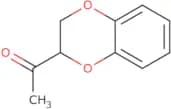
CAS:<p>Versatile small molecule scaffold</p>Formula:C12H17ClN2O4Purity:Min. 95%Molecular weight:288.7 g/mol1-(2,3-Dihydro-1,4-benzodioxin-2-yl)ethanone
CAS:<p>1-(2,3-Dihydro-1,4-benzodioxin-2-yl)ethanone is an ester that is synthesized through the reaction of diethylamine with sulfur. This compound has a pharmacophoric structure that includes amines and n-substituted amines. It has been shown to have sympatholytic effects in animals by blocking the release of noradrenaline and adrenaline. 1-(2,3-Dihydro-1,4-benzodioxin-2-yl)ethanone also binds to chloride ions and inhibits acid chloride formation in the body by reacting with acid chlorides to form amides.</p>Formula:C10H10O3Purity:Min. 95%Molecular weight:178.18 g/moltrans-2-Methoxycinnamic Acid
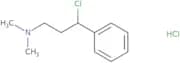
CAS:<p>trans-2-Methoxycinnamic Acid is a hydroxylated phenolic compound that has been shown to have an inhibitory effect on l. acidophilus and k562 cells. It is also a bioactive phytochemical, which can be found in many different plants and fruits. In addition, it has been shown to inhibit the growth of bacterial strain. This compound is also used as an analytical chemistry reagent, especially for the determination of tyrosinase activity. Trans-2-Methoxycinnamic Acid can be found in dimorphic fungi and its matrix effect is responsible for the production of cinnamic acid derivatives. Tyrosinase activity has also been observed in hematopoietic cells and trans-2-Methoxycinnamic Acid is a molecule that plays an important role in tyrosinase activity.</p>Formula:C10H10O3Purity:Min. 95%Molecular weight:178.19 g/mol(3-Chloro-3-phenyl-propyl)-dimethyl-amine hydrochloride
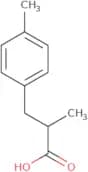
CAS:<p>Versatile small molecule scaffold</p>Formula:C11H17Cl2NPurity:Min. 95%Molecular weight:234.17 g/mol2-Methyl-3-(4-methylphenyl)propanoic acid
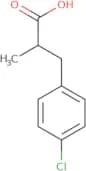
CAS:<p>Versatile small molecule scaffold</p>Formula:C11H14O2Purity:Min. 95%Molecular weight:178.23 g/mol3-(4-Chloro-phenyl)-2-methyl-propionic acid
CAS:<p>Versatile small molecule scaffold</p>Formula:C10H11ClO2Purity:Min. 95%Molecular weight:198.65 g/mol2-[4-(Chloromethyl)phenoxy]acetamide
CAS:<p>Versatile small molecule scaffold</p>Formula:C9H10ClNO2Purity:Min. 95%Molecular weight:199.63 g/mol2-{3-Azaspiro[5.5]undecan-3-yl}ethan-1-amine
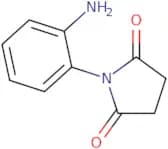
CAS:<p>Versatile small molecule scaffold</p>Formula:C12H24N2Purity:Min. 95%Molecular weight:196.33 g/mol1-(2-Aminophenyl)pyrrolidine-2,5-dione
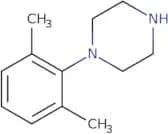
CAS:<p>Versatile small molecule scaffold</p>Formula:C10H10N2O2Purity:Min. 95%Molecular weight:190.2 g/mol1-(2,6-Dimethylphenyl)piperazine
CAS:Controlled Product<p>Versatile small molecule scaffold</p>Formula:C12H18N2Purity:Min. 95%Molecular weight:190.28 g/mol1-(2,6-Dimethylphenyl)piperazine hydrochloride
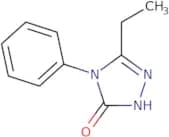
CAS:Controlled Product<p>Versatile small molecule scaffold</p>Formula:C12H19ClN2Purity:Min. 95%Molecular weight:226.75 g/mol3-Ethyl-4-phenyl-1H-1,2,4-triazol-5(4H)-one
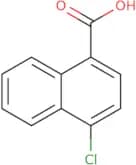
CAS:<p>Versatile small molecule scaffold</p>Formula:C10H11N3OPurity:Min. 95%Molecular weight:189.21 g/mol4-Chloro-1-napthalenecarboxylic Acid
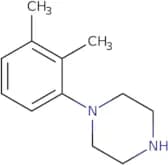
CAS:<p>4-Chloro-1-naphthalenecarboxylic acid (4CNA) is a naphthalene derivative that can be used as a chlorinating agent. The optical rotation of 4CNA is -8 degrees in water and +10 degrees in acetonitrile. This compound has been shown to react with alkali metals to form metal salts, which are useful for the bioluminescent detection of DNA. 4CNA yields are increased by substituent effects, such as the introduction of an electron-withdrawing group on the ring, and decreased by electron donating groups on the ring. It also has been shown to have antirheumatic properties like salicylic acid, which is known to inhibit prostaglandin synthesis.</p>Formula:C11H7ClO2Purity:Min. 95%Molecular weight:206.63 g/mol1-(2,3-Dimethylphenyl)piperazine
CAS:Controlled Product<p>1-(2,3-Dimethylphenyl)piperazine is a piperidine derivative that has been shown to have antidepressant activity in both in vitro and in vivo studies. It acts as an antagonist at the 5-HT1A receptor and as an agonist at the 5-HT2A receptor. 1-(2,3-Dimethylphenyl)piperazine has been shown to inhibit the production of dopamine, serotonin, and citric acid by inhibiting the enzyme citrate synthase. This drug also increases the concentration of chloride ions in cells. 1-(2,3-Dimethylphenyl)piperazine is used to treat depression, anxiety disorders, and other conditions that may be related to chemical imbalances of serotonin.</p>Formula:C12H18N2Purity:Min. 95%Molecular weight:190.29 g/mol1-(2,5-Dimethylphenyl)piperazine
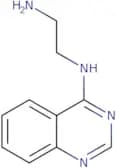
CAS:Controlled Product<p>1-(2,5-Dimethylphenyl)piperazine is a cholinergic drug that is structurally related to an arylpiperazine. The apoptotic activities of 1-(2,5-dimethylphenyl)piperazine have been studied in vitro using amines and anions. It has been shown to induce apoptosis in mcf-7 cells and show cytotoxic effects on cancer cells by ring opening. This drug also induces apoptosis in mcf-7 cells by the release of cytochrome c and activation of caspase-3. Immunohistochemical staining has shown that 1-(2,5-dimethylphenyl)piperazine can be used as a marker for neurodegenerative diseases.</p>Formula:C12H18N2Purity:Min. 95%Molecular weight:190.29 g/molN-(2-Aminoethyl)quinazolin-4-amine
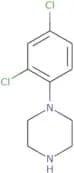
CAS:<p>Versatile small molecule scaffold</p>Formula:C10H12N4Purity:Min. 95%Molecular weight:188.23 g/mol1-(2,4-Dichlorophenyl)piperazine
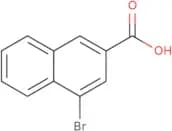
CAS:Controlled Product<p>Versatile small molecule scaffold</p>Formula:C10H12Cl2N2Purity:Min. 95%Molecular weight:231.12 g/mol4-bromonaphthalene-2-carboxylic acid
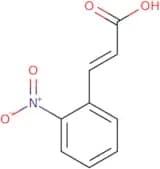
CAS:<p>4-Bromonaphthalene-2-carboxylic acid (4-BNCA) is a naphthalene derivative that is used as a starting material for the synthesis of binaphthyls and benzyne. 4-BNCA is a methyl ester that can be obtained from the reaction of 4-bromoaniline with formaldehyde and sodium hydroxide in ethanol. It has been shown to react with benzene, forming an adduct which is destabilized by acid methylation. This product has been used in the chemistry of cycloaddition reactions and aromaticity.</p>Formula:C11H7BrO2Purity:Min. 95%Molecular weight:251.1 g/moltrans-2-Nitrocinnamic Acid
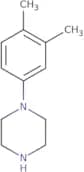
CAS:<p>Trans-2-nitrocinnamic acid is an organic compound that belongs to the ester compounds group. It is a precursor to cinnamic acid derivatives, which are used in analytical chemistry and as reagents in synthetic chemistry. Trans-2-nitrocinnamic Acid can be obtained from the reaction of nitrobenzene with acetic anhydride and hydrochloric acid. The spectra of trans-2-nitrocinnamic acid are characterized by a single peak at δ 3.4 ppm for the protonated molecule, and two peaks at δ 4.0 and δ 5.3 ppm for the deprotonated molecule. Trans-2-Nitrocinnamic Acid has been shown to have genotoxic activity in human lymphocytes in vitro, although this activity was not observed in mice or hamster cells.</p>Formula:C9H7NO4Purity:Min. 95%Molecular weight:193.16 g/mol1-(3,4-Dimethylphenyl)piperazine
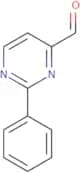
CAS:Controlled Product<p>1-(3,4-Dimethylphenyl)piperazine is a chiral building block for the synthesis of polysubstituted piperazines. It can be used as a bridgehead to synthesize asymmetric amines. The enantioselectivity and yields are high when 1-(3,4-dimethylphenyl)piperazine is used in the ring-opening reaction with an aliphatic allylic amine. This reaction is also efficient with nucleophiles such as primary amines or alcohols.</p>Formula:C12H18N2Purity:Min. 95%Molecular weight:190.29 g/mol2-Phenylpyrimidine-4-carbaldehyde
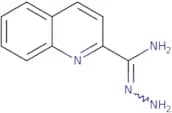
CAS:<p>Versatile small molecule scaffold</p>Formula:C11H8N2OPurity:Min. 95%Molecular weight:184.19 g/molN-Aminoquinoline-2-carboximidamide
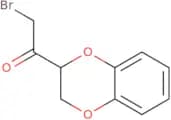
CAS:<p>Versatile small molecule scaffold</p>Formula:C10H10N4Purity:Min. 95%Molecular weight:186.21 g/mol2-Bromo-1-(2,3-dihydro-1,4-benzodioxin-2-yl)ethan-1-one
CAS:<p>Versatile small molecule scaffold</p>Formula:C10H9BrO3Purity:Min. 95%Molecular weight:257.08 g/mol3-Chloro-6-cyclohexylaminopyridazine
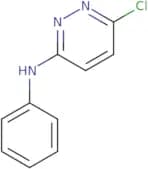
CAS:<p>Versatile small molecule scaffold</p>Formula:C10H14ClN3Purity:Min. 95%Molecular weight:211.7 g/mol6-Chloro-N-phenylpyridazin-3-amine
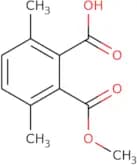
CAS:<p>Versatile small molecule scaffold</p>Formula:C10H8ClN3Purity:Min. 95%Molecular weight:205.64 g/mol2-(Methoxycarbonyl)-3,6-dimethylbenzoic acid
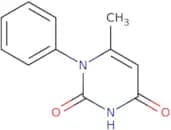
CAS:<p>Versatile small molecule scaffold</p>Formula:C11H12O4Purity:Min. 95%Molecular weight:208.2 g/mol6-Methyl-1-phenyl-1,2,3,4-tetrahydropyrimidine-2,4-dione
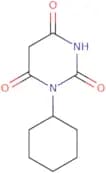
CAS:<p>Versatile small molecule scaffold</p>Formula:C11H10N2O2Purity:Min. 95%Molecular weight:202.21 g/mol1-Cyclohexyl-1,3-diazinane-2,4,6-trione
CAS:<p>Versatile small molecule scaffold</p>Formula:C10H14N2O3Purity:Min. 95%Molecular weight:210.23 g/mol5-Methyl-1-phenyl-1H-[1,2,4]triazole-3-carboxylic acid
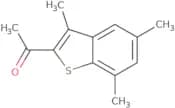
CAS:<p>Versatile small molecule scaffold</p>Formula:C10H9N3O2Purity:Min. 95%Molecular weight:203.2 g/mol1-(3,5,7-Trimethyl-1-benzothiophen-2-yl)ethan-1-one
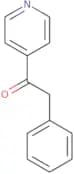
CAS:<p>Versatile small molecule scaffold</p>Formula:C13H14OSPurity:Min. 95%Molecular weight:218.32 g/mol2-Phenyl-1-(pyridin-4-yl)ethan-1-one
CAS:<p>Versatile small molecule scaffold</p>Formula:C13H11NOPurity:Min. 95%Molecular weight:197.23 g/mol1-[(3-Aminophenyl)methyl]-1,2-dihydropyridin-2-one
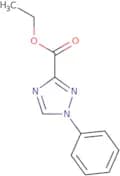
CAS:<p>Versatile small molecule scaffold</p>Formula:C12H12N2OPurity:Min. 95%Molecular weight:200.24 g/molEthyl 1-phenyl-1,2,4-triazole-3-carboxylate
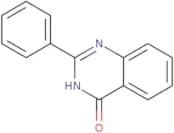
CAS:<p>Versatile small molecule scaffold</p>Formula:C11H11N3O2Purity:Min. 95%Molecular weight:217.23 g/mol2-Phenyl-4(3H)-quinazolinone
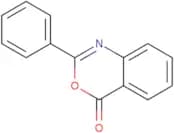
CAS:<p>2-Phenyl-4(3H)-quinazolinone (2-PKQ) is a novel chemical compound that has been shown to have apoptotic properties. It induces cell death by inducing apoptosis, and it blocks the antiplatelet effects of adriamycin. 2-PKQ also has significant inhibitory activities against cancer cells, and it inhibits the growth of B16 melanoma cells in vitro with an IC50 of 0.004 μM. 2-PKQ has been shown to be effective in inhibiting platelet aggregation in a dose dependent manner, suggesting that it may be useful for treating patients with thrombocytopenia or thrombocytopathy associated with leukemia or other blood diseases. 2-PKQ has been found to be fluorescent, which can be used for its detection and quantification.</p>Formula:C14H10N2OPurity:Min. 95%Molecular weight:222.24 g/molBentranil
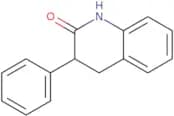
CAS:<p>Bentranil is a chemical compound that contains a pyrazole ring. It is used in the synthesis of more complex molecules and has been shown to have an inhibitory effect on mollusca. Bentranil is produced when carbon disulphide reacts with nitrobenzene, or when amines react with fatty acid. The molecule has a hydrogen bond between its nitrogen and oxygen atoms, which may be due to the presence of an intramolecular hydrogen bond. Bentranil also has an n-oxide group which can form an amine group by reacting with hydrogen peroxide. This reaction can be catalyzed by light or heat.</p>Formula:C14H9NO2Purity:Min. 95%Molecular weight:223.23 g/mol3-Phenyl-1,2,3,4-tetrahydroquinolin-2-one
CAS:<p>Versatile small molecule scaffold</p>Formula:C15H13NOPurity:Min. 95%Molecular weight:223.27 g/molN-(2-Bromophenyl)-4-methylbenzene-1-sulfonamide
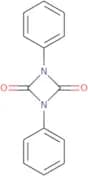
CAS:<p>N-(2-Bromophenyl)-4-methylbenzene-1-sulfonamide (MBAS) is a pentacyclic molecule that contains an atom transfer reaction. The reaction is catalyzed by aryl bromides, chlorides, and iodides. MBAS is efficient for the synthesis of 1,2,3-triazoles from 2-bromoarylketones. It is also used in the synthesis of aspidophylline.</p>Formula:C13H12BrNO2SPurity:Min. 95%Molecular weight:326.21 g/mol1,3-Diphenyl-1,3-diazetidine-2,4-dione
CAS:<p>1,3-Diphenyl-1,3-diazetidine-2,4-dione is a compound that has been synthesized by the reaction of benzene with ethyl acetoacetate and cyclopentadiene. This organometallic compound has an expansion of 10 degrees C to 40 degrees C and can be used as a monosubstituted benzene. It has been shown that 1,3-Diphenyl-1,3-diazetidine-2,4-dione can be converted into hydantoin through the addition of sodium hydroxide. This conversion occurs at temperatures between 100 degrees C and 120 degrees C. The ultraviolet absorption spectrum for 1,3-Diphenyl-1,3-diazetidine-2,4-dione is found in the range of 270 nanometers to 350 nanometers. The Raman spectra for this compound are found in the range of 1600</p>Formula:C14H10N2O2Purity:Min. 95%Molecular weight:238.24 g/mol1-Benzyl-2-phenylpyrrolidine
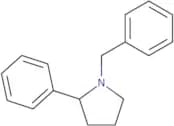
CAS:<p>Versatile small molecule scaffold</p>Formula:C17H19NPurity:Min. 95%Molecular weight:237.34 g/molethyl 1-benzyl-4-oxo-pyrrolidine-3-carboxylate
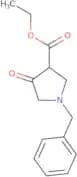
CAS:<p>Versatile small molecule scaffold</p>Formula:C14H17NO3Purity:Min. 95%Molecular weight:247.29 g/mol3-(4-Bromophenyl)-2-thioxo-2,3-dihydroquinazolin-4(1H)-one
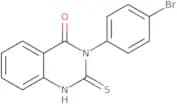
CAS:<p>3-(4-Bromophenyl)-2-thioxo-2,3-dihydroquinazolin-4(1H)-one is a compound with disorder. It crystallizes in the monoclinic space group P21/c and has a pairwise stabilized crystal structure. 3-(4-Bromophenyl)-2-thioxo-2,3-dihydroquinazolin-4(1H)-one is stable as dimers and amides, which are linked by hydrogen bonds. The amide bond distance is 1.47 Å. The dihedral angle between substituents is 99° and it has an HOMO energy level of -5.94 eV, making it a hole acceptor. 3-(4-Bromophenyl)-2-thioxo-2,3-dihydroquinazolin-4(1H)-one has the following crystal structures:</p>Formula:C14H9BrN2OSPurity:Min. 95%Molecular weight:333.2 g/mol3-(4-methoxyphenyl)-2-thioxo-1,3-dihydroquinazolin-4-one
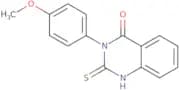
CAS:<p>Versatile small molecule scaffold</p>Formula:C15H12N2O2SPurity:Min. 95%Molecular weight:284.3 g/mol3-(4-Ethoxyphenyl)-2-thioxo-2,3-dihydroquinazolin-4(1H)-one
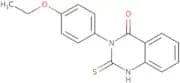
CAS:<p>Versatile small molecule scaffold</p>Formula:C16H14N2O2SPurity:Min. 95%Molecular weight:298.36 g/molMordant Blue 13
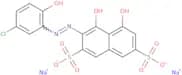
CAS:<p>Mordant Blue 13 is a mordant dye that is used in the textile industry for the dying of wool. It has been shown to have physiological activities such as adhesion prevention and anti-viral properties. Mordant Blue 13 is also used as a diagnostic agent to detect damaged tissue and measure the degree of damage. Langmuir adsorption isotherms have shown that Mordant Blue 13 has an affinity for virus particles, which can be used to control viral infections. Metallochromic dyes are blue or violet dyes that change color depending on pH, which can be used to measure enzymatic reactions. Mordant Blue 13 also has optical properties such as colorants and fluorescence emission.</p>Formula:C16H9ClN2O9S2·2NaPurity:Min. 95%Molecular weight:518.82 g/molDiethyl Allylphosphonate
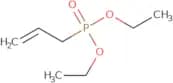
CAS:<p>Diethyl allylphosphonate is a cross-linking agent that has been shown to inhibit HIV infection. It is a macrocyclic inhibitor that binds to the active site of the protease enzyme, preventing it from cleaving the viral polyprotein into its constituent proteins. The chemical stability of diethyl allylphosphonate and its biological properties make it an efficient method for inhibiting HIV.</p>Formula:C7H15O3PPurity:Min. 95%Molecular weight:178.17 g/mol

![5-[(4-Chlorophenyl)methyl]-1,3,4-oxadiazol-2-amine](/_next/image/?url=https%3A%2Fstatic.cymitquimica.com%2Fproducts%2F3D%2Fthumb-webp%2FAVA86712.webp&w=3840&q=75)
![1-[(2-Aminophenyl)methyl]pyrrolidine-2,5-dione](/_next/image/?url=https%3A%2Fstatic.cymitquimica.com%2Fproducts%2F3D%2Fthumb-webp%2FAVA89660.webp&w=3840&q=75)
![tert-Butyl N-{2-[bis(3-aminopropyl)amino]ethyl}carbamate](/_next/image/?url=https%3A%2Fstatic.cymitquimica.com%2Fproducts%2F3D%2Fthumb-webp%2FAVA90424.webp&w=3840&q=75)
![1H,4H,5H,6H,7H-[1,2,3]Triazolo[4,5-b]pyridine](/_next/image/?url=https%3A%2Fstatic.cymitquimica.com%2Fproducts%2F3D%2Fthumb-webp%2FAVB40540.webp&w=3840&q=75)
![6-Bromo[1,2,5]-oxadiazolo[3,4-b]pyridine](/_next/image/?url=https%3A%2Fstatic.cymitquimica.com%2Fproducts%2F3D%2Fthumb-webp%2FAVB40996.webp&w=3840&q=75)

![rac-(1R,2S,4R,5R)-5-Amino-2-methylbicyclo[2.2.1]heptan-2-ol hydrochloride](/_next/image/?url=https%3A%2Fstatic.cymitquimica.com%2Fproducts%2F3D%2Fthumb-webp%2FAVD24758.webp&w=3840&q=75)
![6-[(3R)-3-Aminopyrrolidin-1-yl]-3-ethyl-1,2,3,4-tetrahydropyrimidine-2,4-dione dihydrochloride](/_next/image/?url=https%3A%2Fstatic.cymitquimica.com%2Fproducts%2F3D%2Fthumb-webp%2FAVD24779.webp&w=3840&q=75)
![(2R,4S)-1-[(tert-Butoxy)carbonyl]-4-methanesulfonylpyrrolidine-2-carboxylic acid](/_next/image/?url=https%3A%2Fstatic.cymitquimica.com%2Fproducts%2F3D%2Fthumb-webp%2FAVD24788.webp&w=3840&q=75)
![(8'aS)-Hexahydro-1'H-spiro[cyclopropane-1,7'-pyrrolo[1,2-a]piperazine]](/_next/image/?url=https%3A%2Fstatic.cymitquimica.com%2Fproducts%2F3D%2Fthumb-webp%2FAVD24797.webp&w=3840&q=75)
![rac-Methyl 2-[(3R,4R)-4-(2-methoxy-2-oxoethyl)pyrrolidin-3-yl]acetate hydrochloride](/_next/image/?url=https%3A%2Fstatic.cymitquimica.com%2Fproducts%2F3D%2Fthumb-webp%2FAVD24807.webp&w=3840&q=75)
![4-[(3R)-3-(dimethylamino)pyrrolidin-1-yl]-5,6-dimethylpyrimidine-2-carboxylate lithium](/_next/image/?url=https%3A%2Fstatic.cymitquimica.com%2Fproducts%2F3D%2Fthumb-webp%2FAVD24821.webp&w=3840&q=75)
![(2R,3S)-3-(tert-Butoxy)-2-(2-{[(tert-butoxy)carbonyl]amino}acetamido)butanoic acid](/_next/image/?url=https%3A%2Fstatic.cymitquimica.com%2Fproducts%2F3D%2Fthumb-webp%2FAVD24847.webp&w=3840&q=75)
![(2S)-Bicyclo[2.2.2]octan-2-amine hydrochloride](/_next/image/?url=https%3A%2Fstatic.cymitquimica.com%2Fproducts%2F3D%2Fthumb-webp%2FAVD24864.webp&w=3840&q=75)
![Methyl 2-[(1R,3R,4S)-2-azabicyclo[2.2.1]heptan-3-yl]acetate hydrochloride](/_next/image/?url=https%3A%2Fstatic.cymitquimica.com%2Fproducts%2F3D%2Fthumb-webp%2FAVD24877.webp&w=3840&q=75)
![2-[(1R,3R,4S)-2-Azabicyclo[2.2.1]heptan-3-yl]acetic acid hydrochloride](/_next/image/?url=https%3A%2Fstatic.cymitquimica.com%2Fproducts%2F3D%2Fthumb-webp%2FAVD24881.webp&w=3840&q=75)
![(2R)-Bicyclo[2.2.2]octan-2-amine hydrochloride](/_next/image/?url=https%3A%2Fstatic.cymitquimica.com%2Fproducts%2F3D%2Fthumb-webp%2FAVD24884.webp&w=3840&q=75)
![rac-Methyl (1R,3S,5S,8R)-8-hydroxybicyclo[3.2.1]octane-3-carboxylate](/_next/image/?url=https%3A%2Fstatic.cymitquimica.com%2Fproducts%2F3D%2Fthumb-webp%2FAVD24891.webp&w=3840&q=75)
![tert-Butyl (4R)-4-{[(tert-butoxy)carbonyl]amino}-5-oxopentanoate](/_next/image/?url=https%3A%2Fstatic.cymitquimica.com%2Fproducts%2F3D%2Fthumb-webp%2FAVD24912.webp&w=3840&q=75)
![(2S,3R)-3-(tert-Butoxy)-2-(2-{[(tert-butoxy)carbonyl]amino}acetamido)butanoic acid](/_next/image/?url=https%3A%2Fstatic.cymitquimica.com%2Fproducts%2F3D%2Fthumb-webp%2FAVD24917.webp&w=3840&q=75)
![[(3S,5R)-3-(Aminomethyl)-4,5-dimethylmorpholin-3-yl]methanol](/_next/image/?url=https%3A%2Fstatic.cymitquimica.com%2Fproducts%2F3D%2Fthumb-webp%2FAVD24936.webp&w=3840&q=75)

![rac-Methyl (1R,4R,6R,7S)-6-hydroxy-2-azabicyclo[2.2.1]heptane-7-carboxylate hydrochloride](/_next/image/?url=https%3A%2Fstatic.cymitquimica.com%2Fproducts%2F3D%2Fthumb-webp%2FAVD24951.webp&w=3840&q=75)



![2-[4-(Chloromethyl)phenoxy]acetamide](/_next/image/?url=https%3A%2Fstatic.cymitquimica.com%2Fproducts%2F3D%2Fthumb-webp%2FBAA01220.webp&w=3840&q=75)
![2-{3-Azaspiro[5.5]undecan-3-yl}ethan-1-amine](/_next/image/?url=https%3A%2Fstatic.cymitquimica.com%2Fproducts%2F3D%2Fthumb-webp%2FBAA01258.webp&w=3840&q=75)



![5-Methyl-1-phenyl-1H-[1,2,4]triazole-3-carboxylic acid](/_next/image/?url=https%3A%2Fstatic.cymitquimica.com%2Fproducts%2F3D%2Fthumb-webp%2FBAA01657.webp&w=3840&q=75)
![1-[(3-Aminophenyl)methyl]-1,2-dihydropyridin-2-one](/_next/image/?url=https%3A%2Fstatic.cymitquimica.com%2Fproducts%2F3D%2Fthumb-webp%2FBAA01751.webp&w=3840&q=75)