Building Blocks
This section contains fundamental products for the synthesis of organic and biological compounds. Building blocks are the essential starting materials used to construct complex molecules through various chemical reactions. They play a critical role in drug discovery, material science, and chemical research. At CymitQuimica, we offer a diverse range of high-quality building blocks to support your innovative research and industrial projects, ensuring you have the essential components for successful synthesis.
Subcategories of "Building Blocks"
- Boronic Acids & Boronic Acid Derivatives(5,778 products)
- Chiral Building Blocks(1,242 products)
- Hydrocarbon Building Blocks(6,098 products)
- Organic Building Blocks(61,098 products)
Found 199594 products of "Building Blocks"
Sort by
Purity (%)
0
100
|
0
|
50
|
90
|
95
|
100
5-Hydroxymethylfurfural
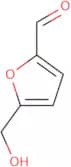
CAS:5-Hydroxymethylfurfural (5-HMF) is a model system used to study the effects of 5-hmf on therapy groups. It can be used as a catalyst in the production of p-hydroxybenzoic acid, and it has been shown to have an antioxidant effect in bowel disease and oxidative injury. 5-HMF is also able to produce hydroxymethylfurfural (HMF) from glucose injection. HMF can be found in foods such as fructose, and is toxic to humans when consumed at high levels.Formula:C6H6O3Purity:Min. 97%Color and Shape:Slightly Brown PowderMolecular weight:126.11 g/mol4-Hydroxy-3-methoxyphenylacetone
CAS:<p>4-Hydroxy-3-methoxyphenylacetone is a natural compound that is found in lignin and has been studied as a potential treatment for congestive heart failure. The compound has been shown to inhibit the activity of enzymes involved in the transfer reactions of bacterial cells. It also reduces the production of acetate, which is used by bacteria for growth. 4-Hydroxy-3-methoxyphenylacetone has been found to be nontoxic to mice at doses up to 10 g/kg. This study also showed that 4-hydroxy-3-methoxyphenylacetone had no effect on enzyme activities in rat liver mitochondria or rat brain synaptosomes.</p>Formula:C10H12O3Purity:Min. 98 Area-%Color and Shape:Clear LiquidMolecular weight:180.2 g/molGlycine
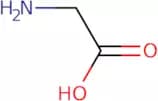
CAS:<p>Glycine is the simplest amino acid and is used as a reagent for the synthesis of proteins. It is also a component of buffer solutions to maintain a stable pH in lab applications like electrophoresis and enzyme assays.</p>Formula:NH2CH2COOHColor and Shape:White Off-White PowderMolecular weight:75.07 g/molGlyceryl-4-aminobenzoate monomer
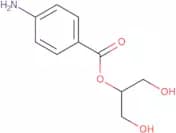
CAS:<p>Glyceryl-4-aminobenzoate monomer is a fine chemical that is an important building block in the synthesis of a variety of complex compounds. It has been used as a reagent and intermediate in research and development of pharmaceuticals and agrochemicals. Glyceryl-4-aminobenzoate monomer is a versatile building block, which can be used to form polymers, coatings, adhesives, elastomers, polyurethanes, and more. The compound also has been shown to have anticancer activity against human breast cancer cells.</p>Formula:C10H13NO4Purity:Min. 75 Area-%Color and Shape:Off-white to beige solid.Molecular weight:211.21 g/molGallaldehyde hemihydrate
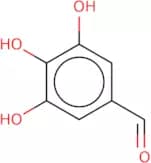
CAS:<p>Gallaldehyde hemihydrate is a bioactive phenolic compound that inhibits the tyrosine kinase domain of the epidermal growth factor receptor (EGFR). It has been shown to inhibit tumor cell growth and induce apoptosis in cancer tissues. Gallaldehyde hemihydrate has also been found in lentils, which might be used as a potential biomarker for this compound. The optimum pH for gallaldehyde hemihydrate is between 2.0-4.0, and it can bind to cation channels and act as a potential biomarker for skin cancer cells.</p>Formula:C7H6O4Purity:Min. 95%Color and Shape:PowderMolecular weight:154.12 g/mol7-Fluoro-2-methyl-1H-indole
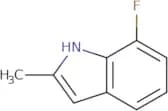
CAS:<p>7-Fluoro-2-methyl-1H-indole is a chemical compound that can be used as a building block to synthesize other organic compounds. The compound is also useful as a reagent in reactions such as the conversion of nitrobenzene to aniline. 7-Fluoro-2-methyl-1H-indole is soluble in acetone, chloroform, and ether. It has CAS number 432025-24-6, which identifies it as a fine chemical with many uses.</p>Formula:C9H8FNPurity:Min. 95%Color and Shape:White PowderMolecular weight:149.16 g/mol2-(4-Bromo-1H-imidazol-1-yl)acetic acid
CAS:<p>2-(4-Bromo-1H-imidazol-1-yl)acetic acid is a fine chemical that can be used as a versatile building block, a reaction component and as a speciality chemical. It is an intermediate in the synthesis of other compounds, such as 2-(4-bromophenylimino)-N-(2-chlorophenyl)acetamide. It has been shown to be useful in the synthesis of complex compounds with high quality, such as 2-[4-(2,6-Dichlorobenzoyloxy)phenylimino]-N-(2,4-dimethoxyphenyl)acetamide.</p>Formula:C5H5BrN2O2Purity:Min. 95%Color and Shape:PowderMolecular weight:205.01 g/mol3-Fluoro-4-methoxybenzaldehyde
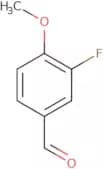
CAS:<p>3-Fluoro-4-methoxybenzaldehyde is a chemical compound that is used in the synthesis of natural products. It has been shown to have inhibitory properties against cancer cells, and has been synthesized as an analog of 3-fluoro-4-hydroxybenzaldehyde. The biological function of 3-fluoro-4-methoxybenzaldehyde is not yet known. Hydrochloric acid may be used to react with 3-fluoro-4-methoxybenzaldehyde to form a salt. This chemical also has anti-tumor effects and can be synthesized using cryogenic techniques.</p>Formula:C8H7FO2Purity:Min. 95%Color and Shape:Slightly Yellow PowderMolecular weight:154.14 g/mol3-Fluoro-4-hydroxybenzaldehyde
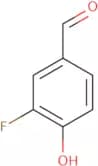
CAS:<p>3-Fluoro-4-hydroxybenzaldehyde is a hydroxyl group with an activation energy of 87.7 kJ/mol. The molecule can be synthesized by the reaction of salicylaldehyde and 3,4-dihydroxybenzaldehyde in the presence of an organic solvent such as chloroform or methylene chloride. This compound has been shown to cause cell death in ht-29 cells and cancer cell lines, as well as human ovarian carcinoma cells. It causes apoptosis by inhibiting mitochondrial membrane potential, which leads to decreased intracellular ATP levels. 3-Fluoro-4-hydroxybenzaldehyde is most commonly used in molecular modeling studies to represent the hydroxyl group due to its simplicity in comparison to other hydroxyl groups like methanol or ethanol.</p>Formula:C7H5FO2Purity:90%Color and Shape:White PowderMolecular weight:140.11 g/molFmoc-D-glu-OtBu
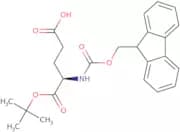
CAS:<p>Fmoc-D-glu-OtBu is an amide that can be used as a screening reagent for the detection of carbohydrate and periplasmic compounds. It has been shown to inhibit hepatitis in humans, which may be due to its ability to bind with muramyl dipeptide. Fmoc-D-glu-OtBu has also been shown to synergize with other vaccines, such as tetanus and escherichia coli surface antigen.</p>Formula:C24H27NO6Purity:Min. 95%Color and Shape:White PowderMolecular weight:425.47 g/molFmoc-D-Leu-OH
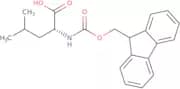
CAS:<p>Fmoc-D-Leu-OH is a disulfide bond containing molecule with an intracellular Ca2+ chelating activity. It has been shown to have cytoprotective effects against oxidative stress and cell death, and has also been found to have antiinflammatory properties. Fmoc-D-Leu-OH can inhibit the activities of various enzymes such as cyclooxygenase, lipoxygenase, phospholipases, and diamine oxidase. This molecule also exhibits cytotoxic activity against bladder cancer cells in vitro. The pharmacokinetic properties of Fmoc-D-Leu-OH are similar to other molecules that are used as antibiotics.<br>Fmoc-D-Leu-OH is a cyclic peptide with antimicrobial peptide (AMP) activity that inhibits bacterial growth by disrupting their cell membranes or inhibiting protein synthesis. It binds to bacterial 16S ribosomal RNA and inhibits protein synthesis, leading</p>Formula:C21H23NO4Purity:Min. 98 Area-%Color and Shape:White PowderMolecular weight:353.41 g/molFmoc-D-Val-OH
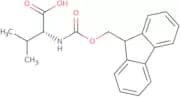
CAS:<p>Fmoc-D-Val-OH is a synthetic acetal that is used as a substrate for protein modification. It has been shown to bind to the active site of enzymes such as butyrylcholinesterase and esterases, which are involved in the metabolism of fatty acids. Fmoc-D-Val-OH also binds to mammalian cells and can be conjugated with other molecules, such as nanoribbons, to improve their solubility in water.</p>Formula:C20H21NO4Purity:Min. 98 Area-%Color and Shape:PowderMolecular weight:339.39 g/molFmoc-L-Asn-OH
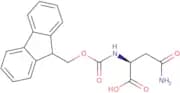
CAS:<p>Fmoc-L-Asn-OH is an organic compound that belongs to the group of amides. It reacts with a reactive site in the molecule and is able to form an amide bond. Fmoc-L-Asn-OH has been shown to be effective in the treatment of Alzheimer's disease by inhibiting the formation of beta-amyloid plaques. This compound has also been shown to have a role in cancer prevention, as it can inhibit tumor growth and reduce tumor size. Fmoc-L-Asn-OH can be used as a potential antiinflammatory agent because its mechanism studies have revealed that it inhibits prostaglandin synthesis.</p>Formula:C19H18N2O5Purity:Min. 95%Color and Shape:PowderMolecular weight:354.36 g/mol2-Amino-6-bromo-4-fluorophenol
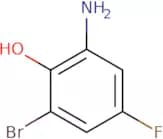
CAS:2-Amino-6-bromo-4-fluorophenol is a reagent that is used in the synthesis of complex compounds. It is also a useful intermediate for the production of fine chemicals and speciality chemicals. This chemical is used as a building block in the synthesis of versatile building blocks, which are needed to produce speciality chemicals such as pharmaceuticals, agrochemicals, fragrances, and dyes. 2-Amino-6-bromo-4-fluorophenol has been used as a reaction component in the synthesis of various organic compounds. It can be synthesized from phenol or aniline via reductive amination.Formula:C6H5BrFNOPurity:Min. 95 Area-%Color and Shape:PowderMolecular weight:206.01 g/moltert-Butyl 7-oxo-2-azaspiro[4.4]nonane-2-carboxylate
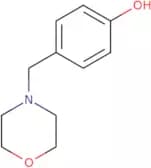
CAS:<p>Versatile small molecule scaffold</p>Formula:C13H21NO3Purity:Min. 95%Molecular weight:239.31 g/mol4-(Morpholinomethyl)phenol
CAS:<p>4-(Morpholinomethyl)phenol is a potent acetylcholinesterase inhibitor that binds to the active site of the enzyme and prevents its function. It has been shown to have inhibitory activity against acetylcholinesterase and may be used for the treatment of Alzheimer's disease. 4-(Morpholinomethyl)phenol is a competitive inhibitor and is structurally similar to galanthamine, an acetylcholinesterase inhibitor that has been used in the treatment of Alzheimer's disease.</p>Formula:C11H15NO2Purity:Min. 95 Area-%Color and Shape:PowderMolecular weight:193.24 g/mol3,5-Dihydroxycinnamic acid
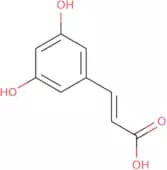
CAS:<p>3,5-Dihydroxycinnamic acid is a metabolite of the amino acid tyrosine and an intermediate in the biosynthesis of phenylalanine. It has been shown to have anti-inflammatory properties that may be due to its ability to inhibit prostaglandin synthesis. 3,5-Dihydroxycinnamic acid has also been identified as a carcinogen and is associated with an increased risk of cancer in women. 3,5-Dihydroxycinnamic acid is found in urine samples at concentrations between 2 and 10 µmol/L.</p>Formula:C9H8O4Purity:Min. 98 Area-%Color and Shape:PowderMolecular weight:180.16 g/mol2,5-Difluoro-3-methylbenzoic acid methyl ester
CAS:<p>2,5-Difluoro-3-methylbenzoic acid methyl ester is a high quality, complex compound that can be used as a versatile building block in synthesis. It acts as a reagent and can be used as a research chemical. 2,5-Difluoro-3-methylbenzoic acid methyl ester is an intermediate in the production of other chemicals and can also be used as a reaction component or useful scaffold.</p>Formula:C9H8F2O2Purity:Min. 95%Color and Shape:PowderMolecular weight:186.16 g/mol2,4-Dihydroxy-3-methylbenzoic acid
CAS:<p>2,4-Dihydroxy-3-methylbenzoic acid (2,4-DMB) is a potent compound that has been shown to have chemotherapeutic properties. It is a DNA repair agent that also inhibits the activity of topoisomerase II and DNA polymerase III. 2,4-DMB can be used in the treatment of radiation and ionizing radiation induced cancers. The pharmacophore of 2,4-DMB has been identified as being composed of three hydrophobic regions and one hydrophilic region. This pharmacophore has been used to design other potent compounds with similar activity against cancer cells.</p>Formula:C8H8O4Purity:Min. 95%Color and Shape:PowderMolecular weight:168.15 g/mol(R)-2,5-Dihydro-3,6-dimethoxy-2-isopropylpyrazine
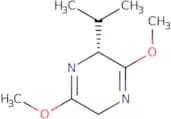
CAS:<p>(R)-2,5-Dihydro-3,6-dimethoxy-2-isopropylpyrazine and its enantiomer (S)-2,5-Dihydro-3,6-dimethoxy-2-isopropylpyrazine are also known as Schöllkopf chiral auxiliaries or Schöllkopf reagents, and are used to produce optically pure α-amino acids via asymmetric synthesis. The Schöllkopf reagent can be deprotonated at the prochiral α-carbon, and the resulting enolate is trapped with electrophiles to yield adducts with high (typically > 95% d.e.) diastereoselectivity. The enolate is essentially planar, and the steric bulk of the isopropyl group directs the incoming electrophile to attack from the opposite face, yielding trans adducts. A wide range of electrophiles including alkyl halides, alkyl sulfonates, acyl chlorides, aldehydes, ketones, epoxides, thioketones and enones can be used. Hydrolysis, typically under mild acidic conditions, yields the non-substituted amino acid with high (typically > 95 e.e.) enantiopurity.</p>Formula:C9H16N2O2Purity:Min. 98%Color and Shape:Colorless Yellow Clear LiquidMolecular weight:184.24 g/mol



![tert-Butyl 7-oxo-2-azaspiro[4.4]nonane-2-carboxylate](/_next/image/?url=https%3A%2Fstatic.cymitquimica.com%2Fproducts%2F3D%2Fthumb-webp%2FUCC71642.webp&w=3840&q=75)