Building Blocks
This section contains fundamental products for the synthesis of organic and biological compounds. Building blocks are the essential starting materials used to construct complex molecules through various chemical reactions. They play a critical role in drug discovery, material science, and chemical research. At CymitQuimica, we offer a diverse range of high-quality building blocks to support your innovative research and industrial projects, ensuring you have the essential components for successful synthesis.
Subcategories of "Building Blocks"
- Boronic Acids & Boronic Acid Derivatives(5,756 products)
- Chiral Building Blocks(1,242 products)
- Hydrocarbon Building Blocks(6,095 products)
- Organic Building Blocks(61,055 products)
Found 199650 products of "Building Blocks"
Sort by
Purity (%)
0
100
|
0
|
50
|
90
|
95
|
100
2,2,8-Trimethyl-2H,4H-[1,3]dioxino[4,5-c]pyridine-5-carboxylic acid
CAS:<p>Versatile small molecule scaffold</p>Formula:C11H13NO4Purity:Min. 95%Molecular weight:223.22 g/mol1-(2,4-Difluorophenyl)propan-2-amine
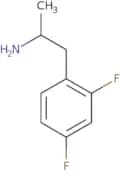
CAS:Controlled Product<p>Versatile small molecule scaffold</p>Formula:C9H11F2NPurity:Min. 95%Molecular weight:171.19 g/mol2-Hydroxy-N-methyl-2-phenylacetamide
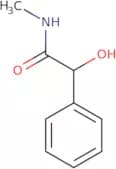
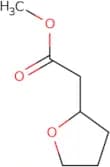
CAS:<p>2-Hydroxy-N-methyl-2-phenylacetamide is a hydroxamic acid, which is an organic compound that contains both a hydroxymethyl and an acyl group. It has been shown to be efficient in the catalyzed production of activated carbonyls from aliphatic amides. This molecule also has electron donating properties, which are demonstrated by its protonation. 2-Hydroxy-N-methyl-2-phenylacetamide is an inorganic molecule that contains a hydroxamic acid moiety with a carbonyl group. The hydroxamic acid moiety can act as an electron acceptor, resulting in the formation of an oxocarbenium ion intermediate. The carbonyl group can act as an electron donor, leading to the formation of a ketone or enolate intermediate after protonation.</p>Formula:C9H11NO2Purity:Min. 95%Molecular weight:165.19 g/molmethyl 2-(tetrahydrofuran-2-yl)acetate
CAS:<p>Versatile small molecule scaffold</p>Formula:C7H12O3Purity:Min. 95%Molecular weight:144.17 g/mol2-(2-Naphthyl)ethanamine hydrochloride
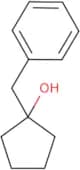
CAS:Controlled Product<p>Versatile small molecule scaffold</p>Formula:C12H13N·HClPurity:Min. 95%Molecular weight:207.7 g/mol1-Benzylcyclopentan-1-ol
CAS:<p>1-Benzylcyclopentan-1-ol is a cyclic alcohol that can be prepared by hydrogenolysis of the corresponding carbinols. It has been shown to react with chlorine, chloroform, and halides to produce amines and residuals. The reaction product can be used as an analgesic.</p>Formula:C12H16OPurity:Min. 95%Molecular weight:176.25 g/mol{[amino(phenoxy)phosphoryl]oxy}benzene
CAS:<p>{[amino(phenoxy)phosphoryl]oxy}benzene is an anti-inflammatory compound. It has been shown to inhibit the activity of epoxidases and aminopeptidases, which are enzymes that break down key inflammatory compounds. This compound has also been shown to be effective against autoimmune diseases such as alopecia areata. It inhibits the growth of cancer cells and stimulates hair growth in cases of alopecia areata. {[amino(phenoxy)phosphoryl]oxy}benzene has been shown to be effective against infectious diseases such as Herpes simplex virus type 1 (HSV-1) and HIV-1 and inflammatory diseases such as arthritis. The most effective dose for anti-inflammatory properties is 100 mg/kg body weight in mice, which is equivalent to 4 mg/kg body weight in humans.<br>{[amino(phenoxy)phosphoryl]oxy}ben</p>Formula:C12H12NO3PPurity:Min. 95%Molecular weight:249.21 g/mol[(1-Aminopropan-2-yl)sulfanyl]benzene
CAS:<p>Versatile small molecule scaffold</p>Formula:C9H13NSPurity:Min. 95%Molecular weight:167.27 g/molN-[2-(Phenylthio)ethyl]-acetamide
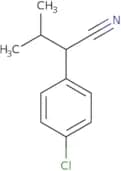
CAS:<p>Versatile small molecule scaffold</p>Formula:C10H13NOSPurity:Min. 95%Molecular weight:195.28 g/mol2-(4-Chlorophenyl)-3-methylbutanenitrile
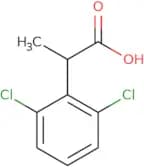
CAS:<p>2-(4-Chlorophenyl)-3-methylbutanenitrile is a substrate for copper and copper salts, which are used in preparations to inhibit gram-negative bacteria. This compound is a nucleophile that form a covalent bond with the copper ion. The reaction proceeds through an intermediate molecule called chloroformate. 2-(4-Chlorophenyl)-3-methylbutanenitrile is stereoselective, meaning that it reacts preferentially with one of two enantiomers of the same compound. It has been shown to be effective against some strains of Escherichia coli and Pseudomonas aeruginosa, but not against Enterobacteriaceae and Klebsiella pneumoniae.</p>Formula:C11H12ClNPurity:Min. 95%Molecular weight:193.67 g/mol2-(2,6-Dichlorophenyl)propanoic acid
CAS:<p>Versatile small molecule scaffold</p>Formula:C9H8Cl2O2Purity:Min. 95%Molecular weight:219.06 g/molPhenylthiohydantoin-glycine
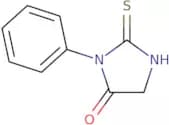
CAS:<p>Phenylthiohydantoin-glycine is a drug used for the treatment of muscle diseases such as myasthenia gravis, Lambert-Eaton syndrome, and post-polio syndrome. It inhibits the production of acetylcholine at neuromuscular junctions by interfering with the synthesis of proteins that are critical for signal transmission from nerve cells to muscles. Phenylthiohydantoin-glycine is a small molecule consisting of two amino acids, phenylthiohydantoin and glycine. The drug binds to lysine residues on proteins using its hydroxyl group and trifluoroacetic acid moiety. This binding prevents the formation of an active enzyme that catalyzes the conversion of choline into acetylcholine at neuromuscular junctions.</p>Formula:C9H8N2OSPurity:Min. 95%Molecular weight:192.24 g/mol(E)-3-(Naphthalen-1-yl)acrylic Acid
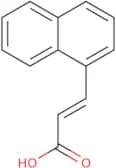
CAS:<p>(E)-3-(Naphthalen-1-yl)acrylic acid is an organic compound that belongs to the class of cinnamic acids derivatives. It is a white crystalline solid that has a melting point of 124 degrees Celsius. This molecule can be hydrolyzed in alkaline solution and is soluble in water. (E)-3-(Naphthalen-1-yl)acrylic acid has been shown to have antimicrobial properties, which may be due to its ability to inhibit propiolic acid synthesis by nitrite. The functional theory suggests that this molecule will react with a nucleophile on the target cell's surface and form an ion pair, which leads to an increased permeability of the cell membrane and the release of cytoplasmic contents.</p>Formula:C13H10O2Purity:Min. 95%Molecular weight:198.22 g/mol3-(3-Nitrophenyl)-1-phenylurea
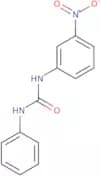
CAS:<p>3-(3-Nitrophenyl)-1-phenylurea is a fluorinated compound that inhibits the growth of plants by inhibiting photosynthesis. It is used as an insecticide and fungicide. 3-(3-Nitrophenyl)-1-phenylurea also has been shown to have some antiviral properties.</p>Formula:C13H11N3O3Purity:Min. 95%Molecular weight:257.24 g/moltert-Butyl 4-(carboxy)-3-methylpiperazine-1-carboxylate
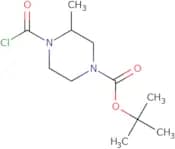
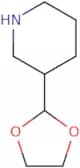
CAS:<p>Versatile small molecule scaffold</p>Formula:C11H19ClN2O3Purity:Min. 95%Molecular weight:262.73 g/mol3-(1,3-Dioxolan-2-yl)piperidine
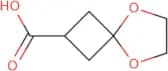
CAS:<p>Versatile small molecule scaffold</p>Formula:C8H15NO2Purity:Min. 95%Molecular weight:157.21 g/mol3-(1,3-Dioxolane)cyclobutanecarboxylic acid
CAS:<p>Versatile small molecule scaffold</p>Formula:C7H10O4Purity:Min. 95%Molecular weight:158.15 g/mol2-{1-[(Methylsulfanyl)methyl]cyclopropyl}acetic acid
CAS:<p>Versatile small molecule scaffold</p>Formula:C7H12O2SPurity:Min. 95%Molecular weight:160.24 g/mol2-{1-[(Prop-2-en-1-ylsulfanyl)methyl]cyclopropyl}acetic acid
CAS:<p>Versatile small molecule scaffold</p>Formula:C9H14O2SPurity:Min. 95%Molecular weight:186.27 g/moltert-Butyl 3-(hydrazinecarbonyl)azetidine-1-carboxylate
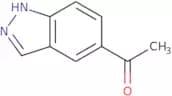
CAS:<p>Versatile small molecule scaffold</p>Formula:C9H17N3O3Purity:Min. 95%Molecular weight:215.25 g/mol1-(1H-Indazol-5-yl)ethanone
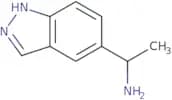
CAS:<p>Versatile small molecule scaffold</p>Formula:C9H8N2OPurity:Min. 95%Molecular weight:160.18 g/mol1-(1H-Indazol-5-yl)ethan-1-amine
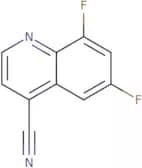
CAS:<p>Versatile small molecule scaffold</p>Formula:C9H11N3Purity:Min. 95%Molecular weight:161.2 g/mol6,8-Difluoroquinoline-4-carbonitrile
CAS:<p>Versatile small molecule scaffold</p>Formula:C10H4F2N2Purity:Min. 95%Molecular weight:190.15 g/mol1-[(1,3-Dimethyl-1H-pyrazol-4-yl)methyl]piperazine
CAS:Controlled Product<p>Versatile small molecule scaffold</p>Formula:C10H18N4Purity:Min. 95%Molecular weight:194.28 g/mol4-Bromo-1-[(4-fluorophenyl)methyl]-1H-pyrazol-3-amine
CAS:<p>Versatile small molecule scaffold</p>Formula:C10H9BrFN3Purity:Min. 95%Molecular weight:270.1 g/mol4-Bromo-1-[(2-fluorophenyl)methyl]-1H-pyrazol-3-amine
CAS:<p>Versatile small molecule scaffold</p>Formula:C10H9BrFN3Purity:Min. 95%Molecular weight:270.1 g/mol4-Chloro-1-[(3-fluorophenyl)methyl]-1H-pyrazol-3-amine
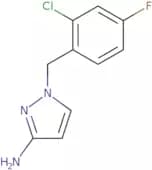
CAS:<p>Versatile small molecule scaffold</p>Formula:C10H9ClFN3Purity:Min. 95%Molecular weight:225.65 g/mol1-(2-Chloro-4-fluorobenzyl)-1H-pyrazol-3-amine
CAS:<p>Versatile small molecule scaffold</p>Formula:C10H9ClFN3Purity:Min. 95%Molecular weight:225.65 g/mol1-[(1,5-Dimethyl-1H-pyrazol-4-yl)methyl]-1H-pyrazol-4-amine
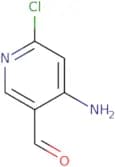
CAS:<p>Versatile small molecule scaffold</p>Formula:C9H13N5Purity:Min. 95%Molecular weight:191.23 g/mol4-amino-6-chloropyridine-3-carbaldehyde
CAS:<p>Versatile small molecule scaffold</p>Formula:C6H5ClN2OPurity:Min. 95%Molecular weight:156.6 g/mol4-Chloro-1-ethyl-1H-pyrazole-3-carbohydrazide
CAS:<p>Versatile small molecule scaffold</p>Formula:C6H9ClN4OPurity:Min. 95%Molecular weight:188.61 g/mol4-Chloro-1-ethyl-1H-pyrazole-5-carbohydrazide
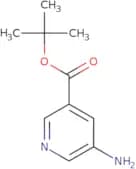
CAS:<p>Versatile small molecule scaffold</p>Formula:C6H9ClN4OPurity:Min. 95%Molecular weight:188.61 g/moltert-Butyl 5-aminopyridine-3-carboxylate
CAS:Versatile small molecule scaffoldFormula:C10H14N2O2Purity:Min. 95%Molecular weight:194.23 g/mol1-[4-(Trifluoromethyl)phenyl]pyrrolidin-3-amine
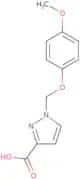
CAS:<p>Versatile small molecule scaffold</p>Formula:C11H13F3N2Purity:Min. 95%Molecular weight:230.23 g/mol1-(4-Methoxyphenoxymethyl)-1H-pyrazole-3-carboxylic acid
CAS:<p>Versatile small molecule scaffold</p>Formula:C12H12N2O4Purity:Min. 95%Molecular weight:248.23 g/mol1-[(4-bromo-1H-pyrazol-1-yl)methyl]-1H-pyrazole-3-carboxylic acid
CAS:<p>Versatile small molecule scaffold</p>Formula:C8H7BrN4O2Purity:Min. 95%Molecular weight:271.1 g/mol2-[5-Methyl-4-nitro-3-(trifluoromethyl)-1H-pyrazol-1-yl]acetic acid
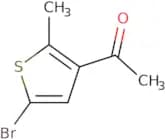
CAS:<p>Versatile small molecule scaffold</p>Formula:C7H6F3N3O4Purity:Min. 95%Molecular weight:253.14 g/mol1-(5-Bromo-2-methylthiophen-3-yl)ethan-1-one
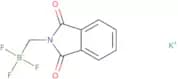
CAS:<p>Versatile small molecule scaffold</p>Formula:C7H7BrOSPurity:Min. 95%Molecular weight:219.1 g/molPotassium (Phthalimidomethyl)trifluoroborate
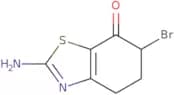
CAS:<p>Versatile small molecule scaffold</p>Formula:C9H6BF3KNO2Purity:Min. 95%Molecular weight:267.06 g/mol2-Amino-6-bromo-5,6-dihydro-7(4H)-benzothiazolone
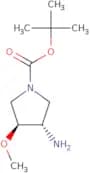
CAS:Versatile small molecule scaffoldFormula:C7H7BrN2OSPurity:Min. 95%Molecular weight:247.11 g/mol(3S,4S)-N-Boc-3-amino-4-methoxypyrrolidine ee
CAS:<p>Versatile small molecule scaffold</p>Formula:C10H20N2O3Purity:Min. 95%Molecular weight:216.28 g/mol2-[(Furan-2-yl)formamido]propanoic acid
CAS:<p>Versatile small molecule scaffold</p>Formula:C8H9NO4Purity:Min. 95%Molecular weight:183.16 g/mol{2-[4-(Benzyloxy)phenoxy]ethyl}(methyl)amine
CAS:<p>Versatile small molecule scaffold</p>Formula:C16H19NO2Purity:Min. 95%Molecular weight:257.33 g/mol[(Propan-2-yl)carbamoyl]methyl 4-aminobenzoate
CAS:Versatile small molecule scaffoldFormula:C12H16N2O3Purity:Min. 95%Molecular weight:236.27 g/molN-(4-Acetylphenyl)-4-bromo-1-methyl-1H-pyrazole-5-carboxamide
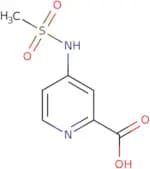
CAS:<p>Versatile small molecule scaffold</p>Formula:C13H12BrN3O2Purity:Min. 95%Molecular weight:322.16 g/mol4-Methanesulfonamidopyridine-2-carboxylic acid
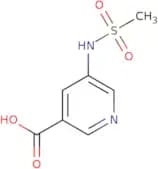
CAS:Versatile small molecule scaffoldFormula:C7H8N2O4SPurity:Min. 95%Molecular weight:216.22 g/mol5-Methanesulfonamidopyridine-3-carboxylic acid
CAS:<p>Versatile small molecule scaffold</p>Formula:C7H8N2O4SPurity:Min. 95%Molecular weight:216.22 g/mol2-{[4-(1-Ethyl-3-methyl-1H-pyrazol-4-yl)-6-(trifluoromethyl)pyrimidin-2-yl]sulfanyl}acetic acid
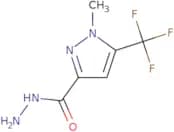
CAS:<p>Versatile small molecule scaffold</p>Formula:C13H13F3N4O2SPurity:Min. 95%Molecular weight:346.33 g/mol1-Methyl-5-(trifluoromethyl)-1H-pyrazole-3-carbohydrazide
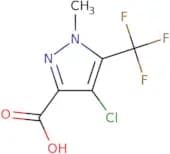
CAS:<p>Versatile small molecule scaffold</p>Formula:C6H7F3N4OPurity:Min. 95%Molecular weight:208.14 g/mol4-Chloro-1-methyl-5-(trifluoromethyl)-1H-pyrazole-3-carboxylic acid
CAS:<p>4-Chloro-1-methyl-5-(trifluoromethyl)-1H-pyrazole-3-carboxylic acid (4CMP) is an antimicrobial agent, which exhibits significant cytotoxicity against a number of cancer cell lines. It has been shown to have a number of biological properties, including the ability to inhibit the Mcl-1 protein and p-hydroxybenzoic acid. 4CMP has also been shown to be metabolized into picolinic acid and other analogs, which are thought to be responsible for its cytotoxic activity. The optimum concentrations of 4CMP range from 10 µM to 100 µM.</p>Formula:C6H4ClF3N2O2Purity:Min. 95%Molecular weight:228.55 g/mol
![2,2,8-Trimethyl-2H,4H-[1,3]dioxino[4,5-c]pyridine-5-carboxylic acid](/_next/image/?url=https%3A%2Fstatic.cymitquimica.com%2Fproducts%2F3D%2Fthumb-webp%2FCAA02766.webp&w=3840&q=75)


![{[amino(phenoxy)phosphoryl]oxy}benzene](/_next/image/?url=https%3A%2Fstatic.cymitquimica.com%2Fproducts%2F3D%2Fthumb-webp%2FCAA01556.webp&w=3840&q=75)
![[(1-Aminopropan-2-yl)sulfanyl]benzene](/_next/image/?url=https%3A%2Fstatic.cymitquimica.com%2Fproducts%2F3D%2Fthumb-webp%2FCAA01476.webp&w=3840&q=75)
![N-[2-(Phenylthio)ethyl]-acetamide](/_next/image/?url=https%3A%2Fstatic.cymitquimica.com%2Fproducts%2F3D%2Fthumb-webp%2FCAA01472.webp&w=3840&q=75)
![2-{1-[(Methylsulfanyl)methyl]cyclopropyl}acetic acid](/_next/image/?url=https%3A%2Fstatic.cymitquimica.com%2Fproducts%2F3D%2Fthumb-webp%2FBQB90763.webp&w=3840&q=75)
![2-{1-[(Prop-2-en-1-ylsulfanyl)methyl]cyclopropyl}acetic acid](/_next/image/?url=https%3A%2Fstatic.cymitquimica.com%2Fproducts%2F3D%2Fthumb-webp%2FBQB90754.webp&w=3840&q=75)

![1-[(1,3-Dimethyl-1H-pyrazol-4-yl)methyl]piperazine](/_next/image/?url=https%3A%2Fstatic.cymitquimica.com%2Fproducts%2F3D%2Fthumb-webp%2FBQB75758.webp&w=3840&q=75)
![4-Bromo-1-[(4-fluorophenyl)methyl]-1H-pyrazol-3-amine](/_next/image/?url=https%3A%2Fstatic.cymitquimica.com%2Fproducts%2F3D%2Fthumb-webp%2FBQB75757.webp&w=3840&q=75)
![4-Bromo-1-[(2-fluorophenyl)methyl]-1H-pyrazol-3-amine](/_next/image/?url=https%3A%2Fstatic.cymitquimica.com%2Fproducts%2F3D%2Fthumb-webp%2FBQB75756.webp&w=3840&q=75)
![4-Chloro-1-[(3-fluorophenyl)methyl]-1H-pyrazol-3-amine](/_next/image/?url=https%3A%2Fstatic.cymitquimica.com%2Fproducts%2F3D%2Fthumb-webp%2FBQB75755.webp&w=3840&q=75)
![1-[(1,5-Dimethyl-1H-pyrazol-4-yl)methyl]-1H-pyrazol-4-amine](/_next/image/?url=https%3A%2Fstatic.cymitquimica.com%2Fproducts%2F3D%2Fthumb-webp%2FBQB75747.webp&w=3840&q=75)


![1-[4-(Trifluoromethyl)phenyl]pyrrolidin-3-amine](/_next/image/?url=https%3A%2Fstatic.cymitquimica.com%2Fproducts%2F3D%2Fthumb-webp%2FBQB75531.webp&w=3840&q=75)
![1-[(4-bromo-1H-pyrazol-1-yl)methyl]-1H-pyrazole-3-carboxylic acid](/_next/image/?url=https%3A%2Fstatic.cymitquimica.com%2Fproducts%2F3D%2Fthumb-webp%2FBQB75512.webp&w=3840&q=75)
![2-[5-Methyl-4-nitro-3-(trifluoromethyl)-1H-pyrazol-1-yl]acetic acid](/_next/image/?url=https%3A%2Fstatic.cymitquimica.com%2Fproducts%2F3D%2Fthumb-webp%2FBQB75477.webp&w=3840&q=75)
![2-[(Furan-2-yl)formamido]propanoic acid](/_next/image/?url=https%3A%2Fstatic.cymitquimica.com%2Fproducts%2F3D%2Fthumb-webp%2FBQB61679.webp&w=3840&q=75)
![{2-[4-(Benzyloxy)phenoxy]ethyl}(methyl)amine](/_next/image/?url=https%3A%2Fstatic.cymitquimica.com%2Fproducts%2F3D%2Fthumb-webp%2FBQB58728.webp&w=3840&q=75)
![[(Propan-2-yl)carbamoyl]methyl 4-aminobenzoate](/_next/image/?url=https%3A%2Fstatic.cymitquimica.com%2Fproducts%2F3D%2Fthumb-webp%2FBQB57250.webp&w=3840&q=75)

![2-{[4-(1-Ethyl-3-methyl-1H-pyrazol-4-yl)-6-(trifluoromethyl)pyrimidin-2-yl]sulfanyl}acetic acid](/_next/image/?url=https%3A%2Fstatic.cymitquimica.com%2Fproducts%2F3D%2Fthumb-webp%2FBQB56016.webp&w=3840&q=75)