Carboxylic Acids
Found 12457 products of "Carboxylic Acids"
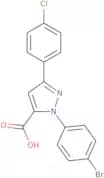
1-(4-Bromophenyl)-3-(4-chlorophenyl)-1H-pyrazole-5-carboxylic acid
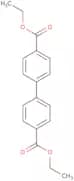
CAS:Controlled ProductPlease enquire for more information about 1-(4-Bromophenyl)-3-(4-chlorophenyl)-1H-pyrazole-5-carboxylic acid including the price, delivery time and more detailed product information at the technical inquiry form on this pageFormula:C16H10BrClN2O2Purity:Min. 95%Molecular weight:377.62 g/molDiethyl 4,4'-Biphenyldicarboxylate
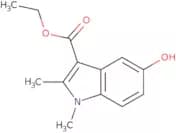
CAS:Diethyl 4,4'-biphenyldicarboxylate is an organic compound that has a chiral center, making it optically active. It is an ester of biphenyl and dicarboxylic acid with the chemical formula CH2=C(CH3)2. The compound has been shown to be a model for other aromatic compounds with similar structures such as phenyl benzoate, which can also form crystals. Diethyl 4,4'-biphenyldicarboxylate is also a mesogen, which means it has liquid crystalline properties and can form thin films. The molecule's conformations are centrosymmetric and its crystal structure is spacer-type centrosymmetric.Formula:C18H18O4Purity:Min. 95%Molecular weight:298.33 g/molEthyl 1,2-dimethyl-5-hydroxyindole-3-carboxylate
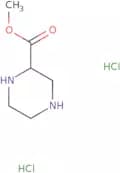
CAS:Controlled ProductEthyl 1,2-dimethyl-5-hydroxyindole-3-carboxylate (EDMC) is an implantable drug that is used to treat hypertension. It is a diuretic that can be taken orally or injected. EDMC works by reducing the amount of urea nitrogen in the blood and increasing the amount of chlorine atom in the urine. This leads to an increase in active substances such as malonic acid and a decrease in arthropoda. EDMC has been shown to have antihypertensive activity due to its ability to lower diastolic and systolic pressure. The molecule also contains hydroxyl group and aldehyde groups that are analyzed by analytical chemistry.Formula:C13H15NO3Purity:Min. 95%Molecular weight:233.26 g/molPiperazine-2-carboxylic acid methyl esterdihydrochloride
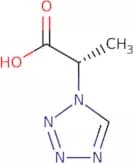
CAS:Piperazine-2-carboxylic acid methyl ester (PPCM) is a chemical compound that is used as an intermediate in the production of ethylenediamine and piperazine-2-carboxylic acid dihydrochloride. It is a white crystalline solid that can be synthesized by reacting ethylene diamine with piperazine-2-carboxylic acid. PPCM has been shown to inhibit the growth of bacteria, yeast, and fungi by inhibiting protein synthesis. This chemical also inhibits the production of proteins essential for respiration and cell wall formation.Formula:C6H14Cl2N2O2Purity:Min. 95%Molecular weight:217.09 g/mol(2S)-2-(1H-Tetrazol-1-yl)propanoic acid
CAS:Please enquire for more information about (2S)-2-(1H-Tetrazol-1-yl)propanoic acid including the price, delivery time and more detailed product information at the technical inquiry form on this pageFormula:C4H6N4O2Purity:Min. 95%Molecular weight:142.12 g/molZiconotide acetate
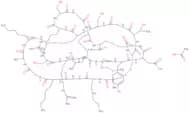
CAS:Controlled ProductZiconotide acetate is a polymer conjugate of ziconotide and goserelin acetate. It is used to treat severe chronic pain in patients who have not responded to other treatments, such as opioids or local anesthetics. Ziconotide acetate is administered by injection into the intrathecal space, where it acts on nerve cells in the dorsal horn of the spinal cord. The drug is slowly released from the polymer conjugate over time, which effectively reduces its irritant effects. It also has low solubility in water, which helps reduce its rate of clearance from the body. The active substances in this drug are ziconotide and goserelin acetate, both of which have been shown to be effective for treating chronic pain. Ziconotide acetate has also been shown to cause a decrease in blood levels of cholesterol and lipoproteins, although this effect may be due to goserelin acetate rather than ziconotide itself.Formula:C102H172N36O32S7C2H4O2Purity:Min. 95%Molecular weight:2,699.19 g/molBetamethasone 21-acetate
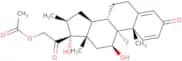
CAS:Betamethasone 21-acetate is a potent corticosteroid that is effective in the treatment of inflammatory conditions, such as asthma and arthritis. It also helps to reduce the symptoms of inflammatory skin diseases, including atopic dermatitis, contact dermatitis, and psoriasis. Betamethasone 21-acetate is used to treat perinatal complications such as preterm labor and neonatal respiratory distress syndrome. This drug has been shown to have a low cardiac effect when administered at a low dose (1 mg/kg). The stability of betamethasone 21-acetate in blood samples is increased by adding benzalkonium chloride or trifluoroacetic acid. Betamethasone 21-acetate has been shown to be absorbed rapidly from the gastrointestinal tract and distributed widely throughout the body. It binds to plasma proteins and has a short elimination half-life of 1.5 hours.Formula:C24H31FO6Purity:Min. 95%Color and Shape:PowderMolecular weight:434.5 g/molChloroacetic Acid-13C2
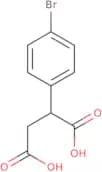
CAS:Please enquire for more information about Chloroacetic Acid-13C2 including the price, delivery time and more detailed product information at the technical inquiry form on this pagePurity:Min. 95%2-(4-Bromophenyl)succinic acid
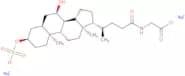
CAS:Please enquire for more information about 2-(4-Bromophenyl)succinic acid including the price, delivery time and more detailed product information at the technical inquiry form on this pageFormula:C10H9BrO4Purity:Min. 95%Molecular weight:273.08 g/molGlycochenodeoxycholic acid 3-sulfate disodium salt
CAS:Please enquire for more information about Glycochenodeoxycholic acid 3-sulfate disodium salt including the price, delivery time and more detailed product information at the technical inquiry form on this pageFormula:C26H41NNa2O8SPurity:Min. 95%Color and Shape:PowderMolecular weight:573.65 g/molN-alpha-Trityl-Nbeta-Fmoc-L-2,3-diaminopropionic acid
CAS:Please enquire for more information about N-alpha-Trityl-Nbeta-Fmoc-L-2,3-diaminopropionic acid including the price, delivery time and more detailed product information at the technical inquiry form on this pageFormula:C37H32N2O4Purity:Min. 95%Molecular weight:568.66 g/molNonafluorovaleric acid
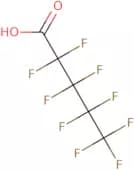
CAS:Nonafluorovaleric acid is a glycol ether that is used as a solvent and in the manufacture of fluoropolymers. Nonafluorovaleric acid is considered to be a potential biomarker for perfluoroalkyl substances, which are toxic chemicals found in many household products. It has been shown to inhibit matrix metalloproteinase activity and can be used to study autoimmune diseases. Nonafluorovaleric acid can also be used as a synchronous fluorescent probe for enzyme-linked immunosorbent assays. The toxicity of this chemical has been studied extensively and it is well known that nonafluorovaleric acid can induce enzyme induction, leading to increased production of enzymes such as cytochrome P450.
Formula:C5HF9O2Purity:Min. 95%Color and Shape:Clear LiquidMolecular weight:264.05 g/mol4-Methyloctanoic acid
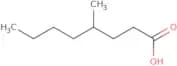
CAS:4-Methyloctanoic acid is a fatty acid that is synthesized from adipose tissue in animals. It can be used as a matrix effect for the production of enantiopure chemical compounds by chemical ionization, and it has been used in magnetic resonance spectroscopy to analyze kinetic data. 4-Methyloctanoic acid has been shown to have a number of biological effects, including an ability to inhibit the growth of type strain bacteria such as Escherichia coli and Staphylococcus aureus. The synthesis pathway for 4-methyloctanoic acid is not known, but it may be derived from hydrogenated octanoic acid.Formula:C9H18O2Purity:Min. 95%Color and Shape:Clear LiquidMolecular weight:158.24 g/mol2,5-Pyridinedicarboxylic acid diethyl ester
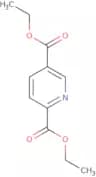
CAS:2,5-Pyridinedicarboxylic acid diethyl ester is a porphyrin derivative that has been used in the synthesis of phthalocyanines and porphyrins. It is reactive and can be made to react with other compounds by cross-coupling reactions. This compound can also be synthesized through the reaction of picolyl chloride with 2,5-diketopiperazine. The yield of this product is low, but it can be improved through cross-coupling reactions. The functionality of this molecule is determined by the pyridyl group at one end and the diethyl ester at the other.Formula:C11H13NO4Purity:Min. 95%Color and Shape:White PowderMolecular weight:223.23 g/mol(R)-(-)-2-Methylglutaric Acid
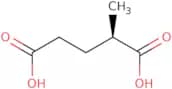
CAS:Please enquire for more information about (R)-(-)-2-Methylglutaric Acid including the price, delivery time and more detailed product information at the technical inquiry form on this page
Formula:C6H10O4Purity:Min. 95%Molecular weight:146.14 g/mol(6-Hydroxy-2-methyl-4-oxoquinazolin-3(4H)-yl)acetic acid
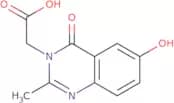
CAS:Controlled ProductPlease enquire for more information about (6-Hydroxy-2-methyl-4-oxoquinazolin-3(4H)-yl)acetic acid including the price, delivery time and more detailed product information at the technical inquiry form on this pageFormula:C11H10N2O4Purity:Min. 95%Molecular weight:234.21 g/mol5,6-Epoxy-13-cis retinoic acid
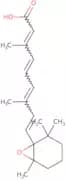
CAS:5,6-Epoxy-13-cis retinoic acid (5,6-ER) is the most active metabolite of all-trans-retinoic acid. 5,6-ER binds to the nuclear receptor and acts as a transcription factor. It has been shown to inhibit the growth of several cancer cell lines in vitro, including T47D cells. 5,6-ER also has antacid properties and can be used for the treatment of inflammatory bowel disease. 5,6-ER is found in low concentrations in plasma and tissues and accumulates in high concentrations in rat liver microsomes. The major metabolic pathway includes hydrolysis by trifluoroacetic acid which produces 5,6 epoxyretinoyl coenzyme A (5,6 epoxyretinoyl CoA). This compound is then converted to 5,6 epoxyretinol by an unknown mechanism.Formula:C20H28O3Purity:Min. 95%Molecular weight:316.43 g/mol2-Amino-3-(4-hydroxy-3-methoxyphenyl)propanoic acid
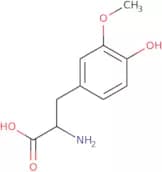
CAS:Controlled Product2-Amino-3-(4-hydroxy-3-methoxyphenyl)propanoic acid is a metabolite of levodopa in the body. It is formed by oxidation of levodopa via the enzyme catechol-O-methyltransferase (COMT). This compound is used as an analytical reagent to measure levels of levodopa and its metabolites in biological samples. 2-Amino-3-(4-hydroxy-3-methoxyphenyl)propanoic acid can also be used to diagnose Parkinson’s disease, since it is produced in excess when dopamine production decreases due to the degeneration of dopaminergic neurons. The concentration–time curve for this compound can be used to calculate the clearance rate of levodopa from the blood plasma.Formula:C10H13NO4Purity:Min. 95 Area-%Color and Shape:PowderMolecular weight:211.21 g/mol4-Methoxy-4-oxobutanoic acid
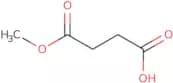
CAS:Succinic acid monomethyl ester (SAMME) is an antimicrobial agent that inhibits the enzyme activities of succinate dehydrogenase, producing mitochondrial membrane depolarization and neuronal death. SAMME has been shown to be effective in treating syncytial virus infection and solid tumours, although it has not been studied in depth. The biological sample used for this study was water vapor, which is a substrate molecule for the enzyme succinic acid semialdehyde dehydrogenase (SASD). This enzyme converts SAMME to succinic acid, which can then inhibit phosphofructokinase-1 or pyruvate kinase, leading to cellular necrosis.
Formula:C5H8O4Purity:Min. 95%Molecular weight:132.11 g/mol2-Methyl-3-(4-methyl-1H-pyrazol-1-yl)propanoic acid
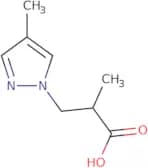
CAS:Controlled ProductPlease enquire for more information about 2-Methyl-3-(4-methyl-1H-pyrazol-1-yl)propanoic acid including the price, delivery time and more detailed product information at the technical inquiry form on this pageFormula:C8H12N2O2Purity:Min. 95%Molecular weight:168.19 g/mol