Pharmaceutical Standards
Pharmaceutical standards are a comprehensive set of reference materials essential for ensuring the safety, efficacy, and quality of pharmaceutical products. This category includes standards for active pharmaceutical ingredients (APIs), which are the core components responsible for therapeutic effects. Additionally, it covers compounds and metabolites relevant to both the pharmaceutical and veterinary industries, providing benchmarks for the accurate measurement and analysis of these substances. Nitrosamine control standards are crucial for detecting and mitigating potentially harmful nitrosamines in drug formulations. Toxicology standards help assess the safety and potential adverse effects of pharmaceutical compounds. Furthermore, enzyme activators and inhibitors standards are vital for research and development, enabling precise studies of biochemical pathways and drug mechanisms. These pharmaceutical standards are indispensable tools for regulatory compliance, quality control, and research, ensuring that pharmaceutical products meet stringent safety and effectiveness criteria.
Subcategories of "Pharmaceutical Standards"
- APIs for research and impurities(273,463 products)
- Enzyme Activators and Inhibitors(2,827 products)
- Nitrosamines(2,605 products)
- Pharmaceutical and Veterinary Compounds and Metabolites(2,577 products)
- Toxicology(13,652 products)
Found 7836 products of "Pharmaceutical Standards"
Sort by
Purity (%)
0
100
|
0
|
50
|
90
|
95
|
100
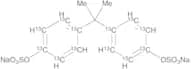
Bisphenol A Bissulfate Disodium Salt-13C12
CAS:Controlled Product<p>Stability Hygroscopic<br>Applications Labelled a Bisphenol (B519515) derivative having antihemolytic activity.<br>References Morgan, B., et al.: Eur. J. Clin. Invest., 24, 219 (1994), Liszewski, M., et al.: Adv. Immunol., 61, 201 (1996), Assefa, H., et al.: Bioorg. Med. Chem. Lett., 9, 1889 (1999), Burdelev, O., et al.: Bioorg. Khim., 29, 159 (2003),<br></p>Formula:C3C12H14Na2O8S2Color and Shape:NeatMolecular weight:444.29(3E,8Z,11Z)-Tetradeca-3,8,11-trienyl Acetate (Technical Grade)
CAS:Controlled Product<p>Applications (3E,8Z,11Z)-Tetradeca-3,8,11-trienyl Acetate is a compound found in the pheromones. It is a major sex pheromone component of the tomato pest.<br>References Attygalle, A., et al.: Bioorg. Med. Chem., 4, 305 (1996); Hungerford, N., Kitching, W.: J. Chem. Soc., Perkin Trans. 1, 1839 (1998);<br></p>Formula:C16H26O2Purity:>75%Color and Shape:NeatMolecular weight:250.38ASM-DNT
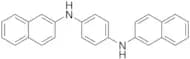
CAS:<p>Applications N,N'-Di-2-naphthyl-1,4-phenylenediamine (cas# 93-46-9) is a useful research chemical.<br></p>Formula:C26H20N2Color and Shape:NeatMolecular weight:360.4504trans-Caffeic Acid
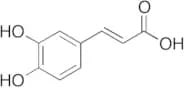
CAS:<p>Applications trans-Caffeic Acid is a useful synthetic intermediate. It was used as a reactant to synthesize N-caffeoylphenalkylamide derivatives as bacterial efflux pump inhibitors. It is also used to prepare caffeic acid phenethyl ester analogs with antitumor structures.<br>References Michalet, S., et al.: Bioorg. Med. Chem. Lett., 17, 1755 (2007); Nagaoka, T., et al.: Bioorg. Med. Chem., 10, 3351 (2002)<br></p>Formula:C9H8O4Color and Shape:NeatMolecular weight:180.16Trimethylurea
CAS:Controlled Product<p>Applications Trimethylurea (cas# 632-14-4) is a useful research chemical.<br></p>Formula:C4H10N2OColor and Shape:NeatMolecular weight:102.14Copper Acetoarsenite (Technical Grade)
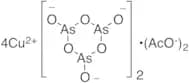
CAS:<p>Applications Copper Acetoarsenite has been used as a rodenticide and insecticide, and also as a pigment, despite its toxicity. It is also used as a blue colorant for fireworks.<br> Not a dangerous good if item is equal to or less than 1g/ml and there is less than 100g/ml in the package<br>References Gaines, T.: Toxicol. Appl. Pharm., 2, 88 (1960); Jameson, F.: Paint Manu., 13, 6 (1943)<br></p>Formula:C2H3O2·6AsO2·4CuColor and Shape:NeatMolecular weight:1013.79Pyochelin I and Pyochelin II
CAS:Controlled Product<p>Impurity 2.5<br>Applications Pyochelin I and Pyochelin II are the two major siderophores produced and secreted by Pseudomonas aeruginosa PAO1 to assimilate iron. It also has trphenyltin (T809350) decomposition capacity.<br>References Braud, A., et al.: J. Bacteriol., 191, 3517 (2009); Sun, G., et al.: Appl. Environ. Microb., 72, 7264 (2006)<br></p>Formula:C14H16N2O3S2Color and Shape:NeatMolecular weight:324.421,3-Propylene-d6 Thiourea
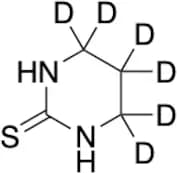
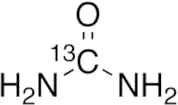
CAS:Controlled Product<p>Applications 1,3-Propylene-d6 Thiourea (CAS# 1219802-05-7) is a useful isotopically labeled research compound.<br></p>Formula:C4H2D6N2SColor and Shape:NeatMolecular weight:122.222Urea-13C
CAS:<p>Applications Labelled Urea. Physiological regulator of nitrogen excretion in mammals; synthesized in the liver as an end-product of protein catabolism and excreted in urine. Also occurs normally in skin. Emollient; diuretic.<br>References Demetriou, A., et al.: Science, 233, 1190 (1986); Aebischer, P., et al.: Nat. Med., 2, 696(1996); Prakash, S., et al.: Biotechnol. Bioeng., 46, 621(1995);<br></p>Formula:CH4N2OColor and Shape:NeatMolecular weight:61.056-Methyl-1,4-naphthoquinone
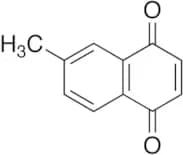
CAS:Controlled Product<p>Applications 6-Methyl-1,4-naphthoquinone (cas# 605-93-6) is a compound useful in organic synthesis.<br></p>Formula:C11H8O2Color and Shape:NeatMolecular weight:172.183-Hydroxybutyrylcarnitine Chloride
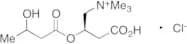
CAS:Controlled Product<p>Stability Hygroscopic<br>Applications 3-Hydroxybutyrylcarnitine is a reagent used to study acylcarnitine profile in thyroid disease.<br>References Wong, S., et al.: Clinical Biochem., 46, 180 (2013); Alu, F., et al.: Heredity, 110, 253 (2013); Adam, B., et al.: Clinical Biochem., 44, 1445 (2011)<br></p>Formula:C11H22ClNO5Color and Shape:Colourless To Light YellowMolecular weight:283.75L-(-)-Malic Acid
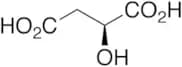
CAS:<p>Applications The naturally occuring isomer is the L-form which has been found in apples and many other fruits and plants. Selective α-amino protecting reagent for amino acid derivatives. Versatile synthon for the preparation of chiral compounds including κ-opioid receptor agonists, 1α,25-dihydroxyvitamin D3 analogue, and phoslactomycin B.<br>References Rindi, G., et al.: Biochem. J., 80, 214 (1961), Wolfgang, M., et al.: J. Biol. Chem., 281, 37265 (2006), Navarro, D., et al.: Metab. Brain Dis., 23, 115 (2008),<br></p>Formula:C4H6O5Color and Shape:WhiteMolecular weight:134.09Isoguanosine Hydrate
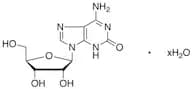
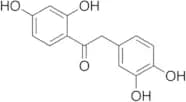
CAS:Controlled Product<p>Applications A useful synthetic intermedate. A naturally occuring, biologically active isomer of guanosine. Reported to stimulate the accumulation of cyclic-AMP in the brain. It is an inhibitor of IMP pyrophosphorylase, and its 5’-di and -tri-phosphates inhibit glutamic acid dehydrogenase. May contain approximately 0.6 moles of water.<br>References Divakar, K.J., et al.: J. Chem. Soc. Perkin Trans., 1, 771 (1991), Montsch, H.H., et al: Biochemistry, 14, 5593 (1975), Hagen, C.: Biochim. Biophys. Acta., 293, 105 (1973), Huang, M., et al.: J. Med. Chem., 15, 462 (1972)<br></p>Formula:C10H13N5O5·H2OColor and Shape:NeatMolecular weight:301.26[1-(2,4-Dihydroxyphenyl)-2-(3’,4’-dihydroxyphenyl)ethanone
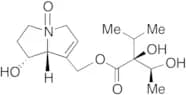
CAS:Controlled Product<p>Stability Store in Freezer<br>Applications [1-(2,4-Dihydroxyphenyl)-2-(3’,4’-dihydroxyphenyl)ethanone (cas# 887354-66-7) is a compound useful in organic synthesis.<br>References Biosci. Biotechnol. Biochem., 57(1), 107 (1993)<br></p>Formula:C14H12O5Color and Shape:NeatMolecular weight:260.24(+)-Lycopsamine N-Oxide (>85%)
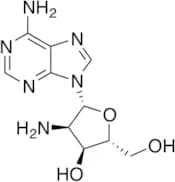
CAS:<p>Applications (+)-Lycopsamine N-Oxide, is occurs in pyrrolizidine alkaloid-containing plants, which are the most common poisonous plants affecting livestock, wildlife, and humans. Thye are being known as hepatotoxins and tumorigens.<br>References Qingsu, X., et al.: Chem. Res. Toxic., 26, 1384 (2013); Bosi,, C. F., et al.: Revista Brasileira de Farmacognosia, 23, 425 (2013);<br></p>Formula:C15H25NO6Purity:>85%Color and Shape:NeatMolecular weight:315.362'-Amino-2'-deoxyadenosine
CAS:Controlled Product<p>Stability Hygroscopic<br>Applications 2'-Amino-2'-deoxyadenosine (cas# 10414-81-0) is a useful research chemical.<br></p>Formula:C10H14N6O3Color and Shape:NeatMolecular weight:266.26Cresyl Diphenyl Phosphate-d7 Isomer 1
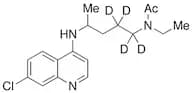
CAS:Controlled Product<p>Applications Cresyl Diphenyl Phosphate-d7 Isomer 1 is the deuterated form of Cresyl Diphenyl Phosphate (C783015), which is a phosphorus flame retardant additive.<br>References van der Veen., et al.: Chemosphere, 88, 1119 (2012);<br></p>Formula:C19D7H10O4PColor and Shape:NeatMolecular weight:347.353N-Acetyl Desethyl Chloroquine-d4
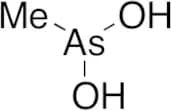
CAS:Controlled Product<p>Applications A labelled Chloroquine metabolite, also an intermediate in the preparation of labelled Chloroquine It is a COVID19-related research product.<br>References Brown, N., et al.: J. Chromatogr., Biomed. App., 309, 426 (1984), Nord, K., et al.: Int. J. Pharm., 72, 11 (1991),<br></p>Formula:C18D4H20ClN3OColor and Shape:NeatMolecular weight:337.88Monomethylarsonous Acid
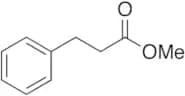
CAS:Controlled Product<p>Applications Monomethylarsonous Acid is a highly toxic metabolite of inorganic arsenic. Monomethylarsonous Acid can induce malignant transformation of human cells. Chronic exposure to Monomethylarsonous Acid can increase the risk of developing multiple cancers in humans. This compound may be in its trimeric form.<br> Not a dangerous good if item is equal to or less than 1g/ml and there is less than 100g/ml in the package<br>References Ge, Y., et. al.: Toxicology, 312, 30 (2013)<br></p>Formula:CH5AsO2Color and Shape:White To Off-WhiteMolecular weight:123.97Methyl 3-Phenylpropionate(3-Phenylpropionic Acid Methyl Ester)
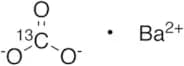
CAS:Controlled Product<p>Applications 3-Phenylpropionic Acid Methyl Ester is an ester derivative of 3-phenylpropionic acid that is sometimes present in fragrance ingredients.<br>References Belsito, D. et al.: Food Chem. Toxicol., 49, S256 (2011):<br></p>Formula:C10H12O2Color and Shape:NeatMolecular weight:164.2Barium Carbonate-13C
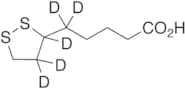
CAS:Controlled Product<p>Applications A stable Barium Carbonate isotope used for studies on drug metabolism.<br>References Horie, M. et al.: Yakug. Zas., 97, 805 (1977);<br></p>Formula:CBaO3Color and Shape:NeatMolecular weight:198.33rac α-Lipoic Acid-d5
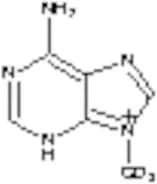
CAS:Controlled Product<p>Applications A fat-metabolism stimulator.<br>References Plotzker, R., et al.: Am. J. Med. Sci., 283, 79 (1982),<br></p>Formula:C8H9D5O2S2Color and Shape:Light YellowMolecular weight:211.369-Methyl Adenine-d3
CAS:Controlled Product<p>Applications Labelled receptor adenine derivative binding membrane brain animal cell line.<br>References Camaioni, E., et al.: Bioorg. Med. Chem., 6, 523 (1998), Kelly, M., et al.: Br. J. Pharmacol., 125, 979 (1998), Redzic, Z., et al.: Brain Res., 888, 66 (2001), Levy, D., et al.: J. Med. Chem., 46, 2177 (2003),<br></p>Formula:C62H3H4N5Color and Shape:NeatMolecular weight:152.172,7-Diisopropylnaphthalene
CAS:Controlled Product<p>Applications 2,7-Diisopropylnaphthalene (cas# 40458-98-8) is a useful research chemical.<br> Not a dangerous good if item is equal to or less than 1g/ml and there is less than 100g/ml in the package<br></p>Formula:C16H20Color and Shape:ColourlessMolecular weight:212.33α-Naphthyl Glycidyl Ether, 90%
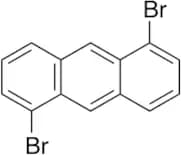
CAS:Controlled Product<p>Applications Used in the preparation of Naftopidil (N213500) and propranolol (P831800).<br>References Erhard, P., et al.: J. Med. Chem., 25, 1402 (1982), Campbell, L., et al.: BioMed. Chem. Lett., 4, 2627 (1994),<br></p>Formula:C13H12O2Purity:90%Color and Shape:NeatMolecular weight:200.231,5-Dibromoanthracene
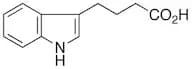
CAS:Controlled Product<p>Applications 1,5-dibromoanthracene (cas# 3278-82-8) is a useful research chemical.<br></p>Formula:C14H8Br2Color and Shape:NeatMolecular weight:336.02Indole-3-butyric Acid
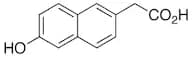
CAS:<p>Applications Used to stimulate root formation of plant clippings. Suitable for plant cell culture tested.<br> Not a dangerous good if item is equal to or less than 1g/ml and there is less than 100g/ml in the package<br>References Handa, A., et al.: Plant Physiol., 69, 514 (1982), Polanco, C., et al.: Plant Sci., 162, 817 (2002), Rzepka-Plevnes, D., et al.: J. Food Agric. Environ., 5, 194 (2007),<br></p>Formula:C12H13NO2Color and Shape:BeigeMolecular weight:203.246-Hydroxy-2-naphthaleneacetic Acid
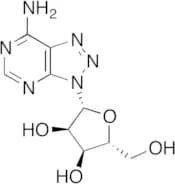
CAS:<p>Applications A metabolite of Nabumetone.<br>References Nobilis, M., et al.: J., Pharm., Biomed., Anal., 32, 641 (2003),<br></p>Formula:C12H10O3Color and Shape:NeatMolecular weight:202.218-Azaadenosine
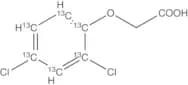
CAS:Controlled Product<p>Applications Hydrogen bonding in 8-Azaadenosine was examined in this study.8-Azaadenosine is one of the best substrates of highly purified rabbit liver adenosine kinase.<br>References Jeffrey, G., et al.: Int. J. Biol. Macromol., 7, 336 (1985).Miller, R., et al.: J. Biol. Chem., 254, 2346 (1979).<br></p>Formula:C9H12N6O4Color and Shape:NeatMolecular weight:268.232,4-Dichlorophenoxyacetic Acid-13C6
CAS:Controlled Product<p>Applications Herbicide. Used to increase latex output of old rubber trees.<br> Not a dangerous good if item is equal to or less than 1g/ml and there is less than 100g/ml in the package<br>References Rowe, V.K., et al.: Am. J. Vet. Res., 15, 622 (1954), Way, J.M., et al.: Residue Rev., 26, 37 (1969),<br></p>Formula:C6C2H6Cl2O3Color and Shape:Off White SolidMolecular weight:226.994-[(5,6,7,8-Tetrahydro-3,5,5,8,8-pentamethyl-2-naphthalenyl)carbonyl]benzoic Acid
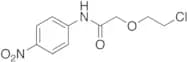
CAS:Controlled Product<p>Applications 4-[(5,6,7,8-Tetrahydro-3,5,5,8,8-pentamethyl-2-naphthalenyl)carbonyl]benzoic Acid is used in the preparation of pentamethylnaphthylmethylbenzoates as a selective retinoid X receptor ligands that induce apoptosis in leukemia cells.<br>References Boehm, M.F., et al.: J. Med. Chem., 38, 3146-55 (1995); Furmie, J.K., et al.: ChemMedChem, 7, 1551-66 (2012)<br></p>Formula:C23H26O3Color and Shape:NeatMolecular weight:350.452-(2-Chloroethoxy)-N-(4-nitrophenyl)acetamide
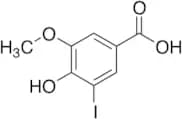
CAS:Controlled Product<p>Applications Reagent used in the preparation of N-Arylmorpholinones.<br>References Mederski, W., et al.: Bioorg. Med. Chem. Lett., 14, 5817 (2004),<br></p>Formula:C10H11ClN2O4Color and Shape:NeatMolecular weight:258.665-Iodovanillic Acid
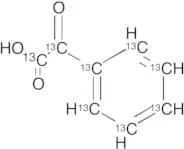
CAS:Controlled Product<p>Applications 5-Iodovanillic acid (cas# 98554-57-5) is a useful research chemical.<br></p>Formula:C8H7IO4Color and Shape:Off-WhiteMolecular weight:294.04Phenylglyoxylic Acid-13C8
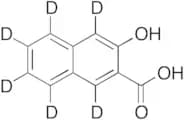
CAS:<p>Applications Phenylglyoxylic Acid-13C8 is an intermediate used in the synthesis of Mandelic Acid-13C8 (M162523), which is the C13 labelled Mandelic Acid which is used as an antiseptic (urinary). It is also used as a short-term exposure biomarker in urine from styrene exposed workers.<br>References Pessela, B., et al.: Enzyme Microb. Technol., 40, 310 (2007); Carrasco-Lopez, C., et al.: J. Biol. Chem., 284, 4365 (2009); Fustinoni, S., et al.: Toxicol. Lett., 192, 40 (2010)<br></p>Formula:C8H6O3Color and Shape:NeatMolecular weight:158.073-Hydroxy-2-naphthoic acid
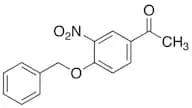
CAS:Controlled Product<p>Applications 3-Hydroxy-2-naphthoic acid<br></p>Formula:C11H8O3Color and Shape:NeatMolecular weight:188.184’-Benzyloxy-3’-nitroacetophenone
CAS:Controlled Product<p>Applications 4’-Benzyloxy-3’-nitroacetophenone (cas# 14347-05-8) is a compound useful in organic synthesis.<br></p>Formula:C15H13NO4Color and Shape:NeatMolecular weight:271.27β-Geranyl Acetate
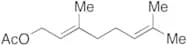
CAS:<p>Applications β-Geranyl Acetate is found in essential oils such as Moroccan commercial essential oils which has anti-oxidant, anti-inflammatory and anti-proliferative activities; and in Salvia scabiosifolia from Bulgaria.<br>References Aazza, S., et. al.: Nat. Prod. Comm., 9, 587 (2014); Marchev, A., et. al.: J. Essential Oil-bearing Plants, 15, 908 (2012)<br></p>Formula:C12H20O2Color and Shape:NeatMolecular weight:196.29Inosine-5'-monophosphate Disodium Salt Hydrate
CAS:Controlled Product<p>Applications Inosine-5'-monophosphate Disodium Salt Hydrate is used in Raman spectra of alkali and alkaline earth metal salts of inosine 5'-monophosphoric acid.<br>References Carmona, P., et al.: J. Raman Spectrosc., 27, 817 (1996)<br></p>Formula:C10H11N4O8PNa·xH2OColor and Shape:NeatMolecular weight:392.17+144.12DL-Isocitric Acid Lactone
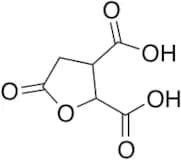
CAS:Controlled Product<p>Applications DL-Isocitric Acid Lactone (cas# 4702-32-3) was identified as a component in Aloe vera leaves and commercial aloe juice powders.<br>References Zhang, Y., et al.: J. AOAC, 101, 1741 (2018)<br></p>Formula:C6H6O6Color and Shape:NeatMolecular weight:174.112,2':6',2''-Terpyridine
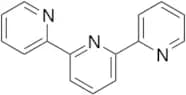
CAS:Controlled Product<p>Applications 2,2':6',2''-Terpyridine (cas# 1148-79-4) is a useful research chemical.<br></p>Formula:C15H11N3Color and Shape:Beige To Light BrownMolecular weight:233.27Adenosine-15N
CAS:Controlled Product<p>Applications Nitrogen 15 labelled analogue of Adenosine (A280400), a purine nucleoside that plays an important role in various biochemical processes.<br>References Long, X., et al.: J. Pharmacol. Exper. Ther., 335, 781 (2010); Ham, M., et al.: J. Pharmacol. Exper. Ther., 335, 607 (2010)<br></p>Formula:C10H1315NN4O4Color and Shape:NeatMolecular weight:268.2352,2'-Dihydroxy-4,4'-dimethoxybenzophenone
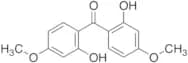
CAS:Controlled Product<p>Applications 2,2'-Dihydroxy-4,4'-dimethoxybenzophenone (cas# 131-54-4) is a useful research chemical.<br></p>Formula:C15H14O5Color and Shape:NeatMolecular weight:274.27Guanyl Urea-15N4 Hydrochloride
CAS:Controlled Product<p>Applications Labelled Guanylurea. It is used for detecting and determining Ni and its separation from Co and other metals.<br>References Jacob, K.D., et al.: J. Agric. Res., 28, 37 (1924),<br></p>Formula:C2H7ClN4OColor and Shape:NeatMolecular weight:142.53CJC-1293 TFA Salt Hydrate (>90%)
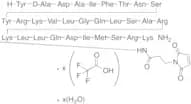
CAS:Formula:C162H263N46O47S•xTFA•xH2OPurity:>90%Color and Shape:Off-WhiteMolecular weight:3639.171140218Cholesterol-d6
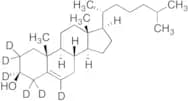
CAS:Controlled Product<p>Stability Hygroscopic<br>Applications Labelled Cholesterol (C432501). Cholesterol is the principal sterol of the higher animals. Cholesterol was found in all body tissues, especial in the brain, spinal cord, and in animal fats or oils. Cholesterol is the main constituent of gallstones.<br>References Rosin, Z., et al.: Physiol. Chem., 124, 282 (1923), Schoenheimer, et al.: J. Biol. Chem., 105, 355 (1934), Gemant, et al.: Life Sci., 1, 233 (1962), Johnson, K., et al.: 4, 457 (1964),<br></p>Formula:C272H6H40OColor and Shape:Off White SolidMolecular weight:392.69Cyanidin 3-O-β-D-Galactopyranoside Chloride
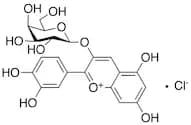
CAS:Controlled Product<p>Applications An anthocyanin responsible for red pigment in fruits and berries. It is an antioxidant, protecting the cell against damage from SOD.<br>References Riihinen, K., et al.: Food Chem., 110, 156 (2008), Khanizadeh, S., et al.: J. Food Comp. Anal., 21, 396 (2008), Viskelis, P., et al.: J. Food Sci., 74, C157 (2009), Comeskey, D., et al.: J. Agric. Food Chem., 57, 2035 (2009),<br></p>Formula:C21H21O11·ClColor and Shape:Dark Brown SolidMolecular weight:484.844-Aminohippuric-d4 Acid
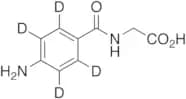
CAS:Controlled Product<p>Applications Labelled 4-Aminohippuric Acid is used in the measurement of renal plasma flow as a diagnostic tool which may be applied towards kidney disorders.<br>References Phillips, R. et al.: Am. J. Physiol., 152, 523 (1948);<br></p>Formula:C92H4H6N2O3Color and Shape:NeatMolecular weight:198.21N-Nitroso-N-ethyl Urea (Contains 40% water, 1.8 % AcOH)
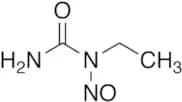
CAS:Controlled Product<p>Stability Temperature Sensitive<br>Applications Precursor of Diazoethane<br> Not a dangerous good if item is equal to or less than 1g/ml and there is less than 100g/ml in the package<br>References 1. Chemistry--A European Journal, 15(12), 2923-2931, (2009), Journal of the American Chemical Society, 129(19), 6210-6215, (2007).<br></p>Formula:C3H7N3O2Color and Shape:NeatMolecular weight:117.11Methyl 2,3,4-Tri-O-isobutyryl-D-glucopyranuronate
CAS:Controlled Product<p>Stability Temperature Sensitive<br>Applications Methyl 2,3,4-Tri-O-isobutyryl-D-glucopyranuronate (cas# 1190403-86-1) is a compound useful in organic synthesis.<br></p>Formula:C19H30O10Color and Shape:NeatMolecular weight:418.443-Hydroxyglutaric Acid
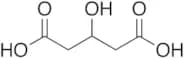
CAS:<p>Applications 3-Hydroxyglutaric Acid (cas# 638-18-6) is a compound useful in organic synthesis.<br></p>Formula:C5H8O5Color and Shape:White To Light OrangeMolecular weight:148.11β-(m-Hydroxyphenyl)hydracrylic Acid
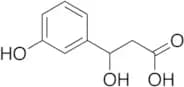
CAS:Controlled Product<p>Applications β-(m-Hydroxyphenyl)hydracrylic Acid is a urinary metabolite of phenylalanine from the Clostridium gram-positive bacteria cell line. Urinary metabolite of Rutin (R701800), a capillary protectant in plants.<br>References Harrison, et al.: J. Am. Pharm. Assoc., 39, 557 (1950), Humphreys, et al.: Econ. Bot., 18, 195 (1964), Khalifa, T.I., et al.: Anal. Profiles Drug Subs., 12, 623 (1983); Shigeo, B. et al.: J. Pharm. Sci., 72, 1155 (1983)<br></p>Formula:C9H10O4Color and Shape:NeatMolecular weight:182.17N,N-bis(1-naphthylmethyl)aminomethane
CAS:Controlled Product<p>Applications N-Methyl-N-(1-naphthalenylmethyl)-1-naphthalenemethanamine is a reagent used in the synthesis of Butenafine Hydrochloride (B690195) an anti-fungal.<br>References Maeda, T., et al.: Yakugaku Zasshi, 111, 126 (1991).<br></p>Formula:C23H21NColor and Shape:NeatMolecular weight:311.42Methyl 1-Naphthaleneacetate
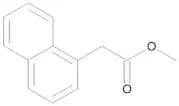
CAS:<p>Applications Methyl 1-naphthaleneacetate (cas# 2876-78-0) is a useful research chemical.<br></p>Formula:C13H12O2Color and Shape:NeatMolecular weight:200.237-Hydroxy-1,3,6-naphthalenetrisulfonic Acid Trisodium
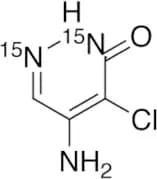
CAS:<p>Applications 7-Hydroxy-1,3,6-naphthalenetrisulfonic Acid is a pollutant that is found in waste water.<br>References Cristiano, N., et al.: Ind, Eng. Chem. Res., 46, 6674 (2007)<br></p>Formula:C10H5O10S3·3NaColor and Shape:NeatMolecular weight:450.30Desphenyl Chloridazon-15N2
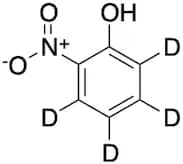
CAS:<p>Applications The labelled metabolite in soil and sugar beets of Chloridazon.<br>References Smith, D.T., et al.: Weed Sci., 18, 260 (1970),<br></p>Formula:C4H4Cl15N2NOColor and Shape:Off-WhiteMolecular weight:147.532-Nitrophenol-3,4,5,6-d4
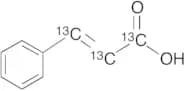
CAS:Controlled Product<p>Applications 2-Nitrophenol-3,4,5,6-d4 (CAS# 93951-78-1) is a useful isotopically labeled research compound.<br></p>Formula:C6D4HNO3Color and Shape:NeatMolecular weight:143.13Cinnamic Acid-13C3
CAS:<p>Applications Cinnamic Acid-13C3 is the labelled analogue of Cinnamic Acid which is rac-form of trans-Cinnamic Acid (P336185) that is used in the synthesis of amides and esters through coupling reactions involving carboxylic acids and amines and N-methylation of amides and O-methylation of carboxylic acids.<br>References Kunishima, M. et al.: Tetrahedron, 55, 13159 (1999); Xia, Q. et al.: Org. Lett., 15, 3326 (2013);<br></p>Formula:C613C3H8O2Color and Shape:White To Off-WhiteMolecular weight:151.14Ademethionine-d3 1,4-Butanedisulfonate (>85%)
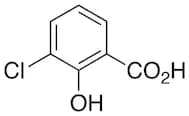
CAS:Controlled Product<p>Applications Ademethionine-d3 1,4-Butanedisulfonate, is a labeled analogue of Ademethionine 1,4-Butanedisulfonate (A280355), used in the synthesis of sulfonio-adenosyl-L-methionine (SAMe) salts.<br></p>Formula:C15H20D3N6O5S(C4H8O6S2)·(C4H10O6S2)Purity:>85%Color and Shape:NeatMolecular weight:402.46 (Free Base)3-Chlorosalicylic Acid
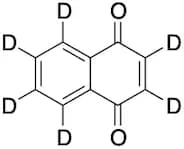
CAS:<p>Applications 3-Chlorosalicylic Acid (cas# 1829-32-9) is a compound useful in organic synthesis.<br>References Shackelford, J.M.: J.O.C., 26, 4908 (1961)<br></p>Formula:C7H5ClO3Color and Shape:NeatMolecular weight:172.571,4-Naphthoquinone-d6
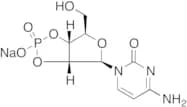
CAS:Controlled Product<p>Applications 1,4-Naphthoquinone-d6 (CAS# 26473-08-5) is a useful isotopically labeled research compound.<br></p>Formula:C10D6O2Color and Shape:NeatMolecular weight:164.19Cytidine 2':3'-cyclic Monophosphate Monosodium Salt (>85%)
CAS:Controlled Product<p>Stability Hygroscopic<br>Applications Cytidine 2':3'-cyclic Monophosphate Monosodium Salt is a key compound in the enzymic synthesis of short oligoribonucleotides. Reagent in the amine catalyzed solid-phase synthesis of oligonucleotides.<br>References Gusenkova, N. M., et al.: Zhurnal Obshchei Khimii, 46, 939 (1976); Tomasz, J., et al.: Nucleic Acid Chem., 2, 875 (1978)<br></p>Formula:C9H11N3NaO7PPurity:>85%Color and Shape:NeatMolecular weight:327.1612-Amino-1-dodecanoic Acid Methyl Ester Hydrochloride Salt
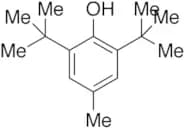
CAS:<p>Applications 12-Amino-1-dodecanoic Acid Methyl Ester Hydrochloride Salt (cas# 4271-86-7) is a compound useful in organic synthesis.<br></p>Formula:C13H27NO2·ClHColor and Shape:NeatMolecular weight:265.822,6-Di-tert-butyl-p-cresol
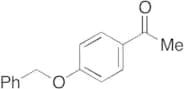
CAS:<p>Applications 2,6-Di-tert-butyl-p-cresol (cas# 128-37-0) is a compound useful in organic synthesis.<br> Not a dangerous good if item is equal to or less than 1g/ml and there is less than 100g/ml in the package<br></p>Formula:C15H24OColor and Shape:WhiteMolecular weight:220.354-Benzyloxyacetophenone
CAS:Controlled Product<p>Applications 4-Benzyloxyacetophenone is used in preparation of inhibitors of various proteins such as hepatitis C virus polymerase, glucosylceramide synthase and protein tyrosine phosphatase 1B.<br> Not a dangerous good if item is equal to or less than 1g/ml and there is less than 100g/ml in the package<br>References Deng, Y., et al.: Bioorg. Med. Chem. Lett., 19, 5363 (2009); Lee, L., et al.: J. Biol. Chem., 274, 14662 (2009); Liu, Z., et al.: Bioorg. Med. Chem. Lett., 21, 3755 (2011)<br></p>Formula:C15H14O2Color and Shape:NeatMolecular weight:226.27β-Benzyl L-Aspartic Acid N-carboxyanhydride
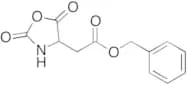
CAS:Controlled Product<p>Applications β-Benzyl L-Aspartic Acid N-carboxyanhydride is used in the synthesis of PEG-poly(aspartate) block copolymer micelles in cancer cells.<br>References Eckman, A., et al.: Pharm. Res, 29, 1755 (2012); Guo, M., et al.: Biomateials, 35, 4656 (2014)<br></p>Formula:C12H11NO5Color and Shape:NeatMolecular weight:249.221,2-Bis(3,5-di-tert-butyl-4-hydroxyhydrocinnamoyl)hydrazine
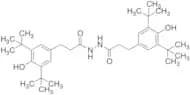
CAS:Controlled Product<p>Applications 1,2-Bis(3,5-di-tert-butyl-4-hydroxyhydrocinnamoyl)hydrazine is used as a stabilizer for Irganox MD 1024 on thermo-oxidative stability of PP/PP-g-MA/OMMT nanocomposites.<br>References Fitaroni, L, B.; et al.: Polym. Test., 53, 165 (2016).<br></p>Formula:C34H52N2O4Color and Shape:White To Off-WhiteMolecular weight:552.78779-Bromoanthracene
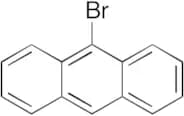
CAS:Controlled Product<p>Applications 9-Bromoanthracene is an intermediate in the synthesis of 9-substituted derivative of the polycyclic aromatic hydrocarbon (PAH) anthracene (A678400).<br>References Corream A., et al.: J. Am. Chem. Soc., 136, 1062 (2014)<br></p>Formula:C14H9BrColor and Shape:Light YellowMolecular weight:257.13NN'-Bis(2-hydroxyethyl)urea
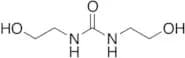
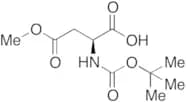
CAS:<p>Applications NN'-Bis(2-hydroxyethyl)urea (cas# 15438-70-7) is a useful research chemical.<br></p>Formula:C5H12N2O3Color and Shape:NeatMolecular weight:148.16Boc-L-aspartic Acid β-Methyl Ester
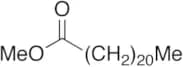
CAS:Controlled Product<p>Applications Boc-L-aspartic Acid β-Methyl Ester is used to prepare isoxazoline glycoprotein IIb/IIIa antagonists. It is also used to synthesize glutamic acid analogs as potent inhibitors of leukotriene A4 hydrolase.<br>References Xue, C., et al.: J. Med. Chem., 40, 2064 (1997); Kirkland, T., et al.: Bioorg. Med. Chem., 16, 4963 (2008)<br></p>Formula:C10H17NO6Color and Shape:NeatMolecular weight:247.245Docosanoic Acid Methyl Ester
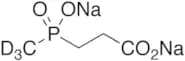
CAS:<p>Applications Docosanoic Acid Methyl Ester is a long chain fatty acid, existing as a wax and is found in sunflower seeds. It can be used in biodiesel production.<br>References Soh, L. et al.: Green Chem., 13, 1422 (2011); Kanya, T.. et al.: Food Chem., 101, 1552 (2006);<br></p>Formula:C23H46O2Color and Shape:Off White SolidMolecular weight:354.613-Methylphosphinicopropionic Acid-d3 Sodium Salt
CAS:Controlled Product<p>Stability Very Hygroscopic<br>Applications The major labelled metabolite of Glufosinate (G596950), used as herbicide.<br>References Royer, A., et al.: Anal. Chem., 72, 3826 (2000), Muller, B., et al.: Pestic. Manag. Sci., 57, 46 (2001), Duke, S., et al.: J. Agric. Food Chem., 51, 340 (2003),<br></p>Formula:C4D3H4O4P·2NaColor and Shape:White To Off-WhiteMolecular weight:199.068N,N'-Bis[3-(trifluoromethyl-4-cyanophenyl]urea
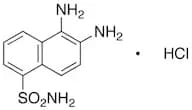
CAS:Controlled Product<p>Applications N,N'-Bis[3-(trifluoromethyl-4-cyanophenyl]urea can be obtained from 5-Amino-2-cyanobenzotrifluoride (A603630) which can be used for the preparation of benzene derivatives as non-steroidal androgen receptor modulators.<br>References Xiao, H.-Y., et al.: Bioorg. Med. Chem. Lett., 20, 4491 (2010)<br></p>Formula:C17H8F6N4OColor and Shape:NeatMolecular weight:398.2621,2-Diamino-naphthalene-5-sulfonamide, Hydrochloride
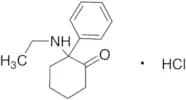
CAS:Controlled ProductFormula:C10H11N3O2S·ClHColor and Shape:NeatMolecular weight:273.74Deschloro-N-ethyl-ketamine Hydrochloride (1 mg/ml in Acetonitrile)
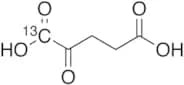
CAS:Controlled ProductFormula:C14H19NO·HClColor and Shape:Single SolutionMolecular weight:253.802-Ketoglutaric Acid-13C1
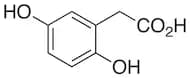
CAS:Controlled Product<p>Applications Labelled 2-Ketoglutaric Acid is used in enzymic preparation and conversion to radiolabeled isocitric acid<br>References Ehrlich, R.S. et al.: Biochemistry, 26, 3461 (1987);<br></p>Formula:CC4H6O5Color and Shape:NeatMolecular weight:147.09Homogentisic Acid
CAS:<p>Applications An intermediate in the metabolism of tyrosine and phenylalanine. Occurs in plants and in the urine of alkaptonurics.<br>References Knox, W.E., et al.: Biochem. J., 49, 686 (1951), LaDu, B.N., et al.: J. Biol. Chem., 217, 777 (1955)<br></p>Formula:C8H8O4Color and Shape:NeatMolecular weight:168.15N-(1-Naphthylmethyl)methylamine Hydrochloride
CAS:Controlled Product<p>Impurity Terbinafine BP Impurity A; Terbinafine USP Related Compound A<br>Applications N-Methyl-1-naphthalenemethanamine hydrochloride (Terbinafine BP Impurity A; Terbinafine USP Related Compound A) is an intermediate used in the synthesis of various pharmaceuticals such as Terbinafine hydrochloride (T107500) and Butenafine hydrochloride (B690195).<br>References Petranyi, G., et al.: Science, 224, 1239 (1984); Ryder, N.S., et al.: Antimicrob. Agents Chemother., 27, 252 (1985); Evans, E.G.V., et al.: Br. Med. J., 318, 1031 (1999); Kokjohn, K., et al.: Int. J. Dermatol., 42, 11 (2003); Sumikawa, M., et al.: J. Dermatol., 34, 456 (2007)<br></p>Formula:C12H13N·ClHColor and Shape:WhiteMolecular weight:207.70Xanthurenic Acid-d4
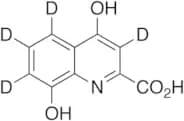
CAS:Controlled Product<p>Applications Labelled Xanthurenic Acid (X743500). Excreted by pyridoxine-deficient animals after the ingestion of tryptophan.<br>References Aquilina, J., et al.: Biochemistry, 39, 16176 (2000), Roberts, J., et al.: Photochem. Photobiol., 74, 740 (2001),<br></p>Formula:C102H4H3NO4Color and Shape:NeatMolecular weight:209.19Carboxymethyl Cellulose Ether Sodium Salt
CAS:Controlled Product<p>Applications Carboxymethyl Cellulose Ether is used as a thickener to enhance rigidity and composition of pharmaceutical compounds as well as the stability of electrode slurries in composite electrodes. Also provides ion-exchange for chromotography media.<br>References Salerno, C. et al.: AAPS PharmSciTech., 11, 986 (2010); Porcher, W. et al. J. Electrochem. Soc., 156, A133 (2009); Wang, H. et al.: Biochem. Biophys. Res. Comm., 342, 349 (2006);<br></p>Formula:C2H4O3•xUnspecified•xNaColor and Shape:Neat1-Acenaphthenol
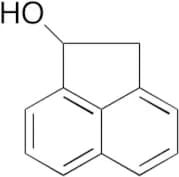
CAS:<p>Applications 1-Acenaphthenol is a product of the microbial metabolism and photolysis of acenaphthene, of acenaphthene, a polycyclic hydrocarbon that has potential to act as polyploidizing agents in plants. 1-Acenaphthenol is also a known substrate of dihydrodiol dehydrogenases.<br>References Reyes, C., et al.: J. Photochem. Photobiol. A, 112, 277 (1998); Šavlík, M., et al.: Res. Vet. Sci., 83, 20 (2007); Schocken, M. & Gibson, D.: Appl. Environ. Microb., 48, 10 (1984);<br></p>Formula:C12H10OColor and Shape:NeatMolecular weight:170.21α,2,4-Trichloroacetophenone
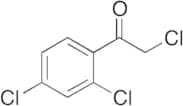
CAS:Controlled Product<p>Applications α,2,4-Trichloroacetophenone is a reagent used in the synthesis of isoconazole, a potent antifungal agent.<br>References Dulcevscaia, G. et al.: Polyhed., 52, 106 (2013); Wang, Y. et al.: Bioorg. Med. Chem. Lett., 22, 5363 (2012);<br></p>Formula:C8H5Cl3OColor and Shape:NeatMolecular weight:223.48(1S)-(+)-10-Camphorsulfonic Acid
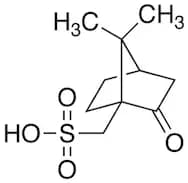
CAS:Controlled Product<p>Stability Hygroscopic<br>Applications Used as a resolving agent, and as a catalyst for coupling dipeptides.<br> Not a dangerous good if item is equal to or less than 1g/ml and there is less than 100g/ml in the package<br></p>Formula:C10H16O4SColor and Shape:NeatMolecular weight:232.30Tetramethyluric Acid
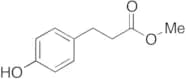
CAS:Controlled Product<p>Applications Tetramethyluric acid is an impurity of caffeine. Caffeine is a bitter, white crystalline xanthine alkaloid that acts as a stimulant drug and a reversible acetylcholinesterase inhibitor. Caffeine is found in varying quantities in the seeds, leaves, and fruit of some plants, where it acts as a natural pesticide that paralyzes and kills certain insects feeding on the plants. In humans, caffeine acts as a central nervous system stimulant, temporarily warding off drowsiness and restoring alertness. Caffeine is a cardiac and respiratory stimulant; diuretic. Caffeine is toxic at sufficiently high doses.<br>References Zubair, U.M., et al.: Anal. Profiles Drug Subs., 15, 71 (1986); Cherrah, Y., et al.: Biochem. Pharmacol., 37, 1311 (1988);<br></p>Formula:C9H12N4O3Color and Shape:NeatMolecular weight:224.223-(4-Hydroxyphenyl)propionic Acid Methyl Ester
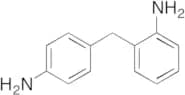
CAS:Controlled Product<p>Applications 3-(4-Hydroxyphenyl)propionic Acid Methyl Ester is a useful synthetic intermediate. It can be used to prepare potent and orally available G protein-coupled receptor 40 agonists as potential antidiabetic agents.<br>References Sasaki, S., et al.: J. Med. Chem., 54, 1365 (2011); Christiansen, E., et al.: ACS Med. Chem. Lett., 1, 345 (2010)<br></p>Formula:C10H12O3Color and Shape:NeatMolecular weight:180.22',4-Bis(aminophenyl)methane
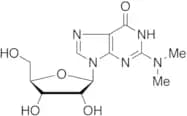
CAS:Controlled Product<p>Applications 2',4-Bis(aminophenyl)methane is an analog of 4,4'-Methylenedianiline (M304180) and is used in the manufacturing of resin enamel coating materials for copper wires.<br> Not a dangerous good if item is equal to or less than 1g/ml and there is less than 100g/ml in the package<br>References Bhanu, V.A., et al.: Paintindia, 59, 77 (2009)<br></p>Formula:C13H14N2Color and Shape:Off-WhiteMolecular weight:198.262-(Dimethylamino)guanosine
CAS:Controlled Product<p>Applications 2-(Dimethylamino)guanosine (cas# 2140-67-2) is a compound useful in organic synthesis.<br></p>Formula:C12H17N5O5Color and Shape:NeatMolecular weight:311.293-Hydroxy-2-pyrone
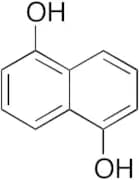
CAS:Controlled Product<p>Applications 3-Hydroxy-2-pyrone<br></p>Formula:C5H4O3Color and Shape:NeatMolecular weight:112.081,5-Dihydroxynaphthalene
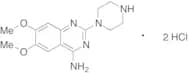
CAS:<p>Applications 1,5-Dihydroxynaphthalene has been incorportated into degradable lysine diisocyanate methylester-glycerol polyurethane foam and showed the presence of functional 1-naphthol group-dependent drug release in aqueous solution.<br>References Sivak, W.N., et. al.: Bio-Med. Mater. Eng., 20, 269 (2010)<br></p>Formula:C10H8O2Color and Shape:NeatMolecular weight:160.169N-Des((tetrahydrofuran-2-yl)methanone)) Terazosin Dihydrochloride
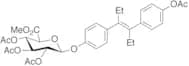
CAS:Controlled Product<p>Applications N-Des((tetrahydrofuran-2-yl)methanone)) Terazosin Dihydrochloride is a related compound to Terazosin (T105000), a α-1-adrenergic blocker related to Prazosin (P702325).<br>References Patterson, S.E., et al.: J. Chromatog., 311, 206 (1984), Fort, F.L., et al.: Drug Chem. Toxicol., 7, 435 (1984), Lepor, H., et al.: J. Urol., 148, 1467 (1992),<br></p>Formula:C14H19N5O2HClColor and Shape:NeatMolecular weight:362.25Acetyldiethylstilbestrol 2,3,4-Tri-O-acetyl-β-D-glucuronide Methyl Ester
CAS:Controlled Product<p>Applications Intermediate for the preparation of Diethylstilbestrol β-D-Glucuronide.<br></p>Formula:C33H38O12Color and Shape:Light YellowMolecular weight:626.65Vanillylmethanol
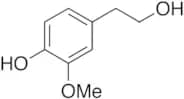
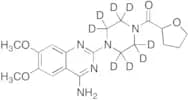
CAS:Controlled Product<p>Applications An odorant found in strawberries, grapes and olive oil. Vanillylmethanol has high scavenging activities and inhibits homocysteine-induced endothelial cell adhesion.<br>References Ubeda, C. et al.: J. Agr. Food. Chem., 60, 6095 (2012); Barata, A. et al.: J. Agr. Food Chem., 59, 2543 (2011); Manna, C. et al.: J. Agr. Food Chem., 57, 3478 (2009)<br></p>Formula:C9H12O3Color and Shape:NeatMolecular weight:168.19Terazosin (piperazine D8)
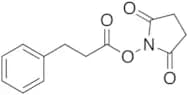
CAS:Controlled Product<p>Applications Terazosin (piperazine D8) is labelled Terazosin (T105000, HCl salt; T105005, HCl Dihydrate) which is an α-1-adrenergic blocker related to prazosin.<br>References Patterson, S.E., et al.: J. Chromatog., 311, 206 (1984); Fort, F.L., et al.: Drug Chem. Toxicol., 7, 435 (1984); Lepor, H., et al.: J. Urol., 148, 1467 (1992)<br></p>Formula:C19H17D8N5O4Color and Shape:NeatMolecular weight:395.48Hydrocinnamic Acid N-Hydroxysuccinimide Ester
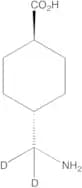
CAS:Controlled Product<p>Applications Hydrocinnamic Acid N-Hydroxysuccinimide Ester (cas# 109318-10-7) is a compound useful in organic synthesis.<br></p>Formula:C13H13NO4Color and Shape:NeatMolecular weight:247.25Tranexamic-d2 Acid
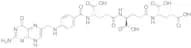
CAS:Controlled Product<p>Applications Tranexamic-d2 acid is deuterium labelled tranexamic acid (T714505), which is an antifibrinolytic agent that blocks lysine binding sites of plasminogen. Hemostatic.<br>References Andersson, et al.: Scand. J. Haematol. 2, 230 (1965), Melander, B., et al.: Acta Pharmacol. Toxicol., 22, 340 (1965), Bonnar, J., et al.: Br. Med. J., 313, 579 (1996), Dunn, C.J., et al.: Drugs, 57, 1005 (1999),<br></p>Formula:C8H13D2NO2Color and Shape:NeatMolecular weight:159.22Pteroyltri-γ-L-glutamic acid (>85%)
CAS:<p>Applications Pteroyltri-γ-L-glutamic acid is a folate derivative found in various foods such as yeast, spinach, beef liver, beef fillet and peas.<br>References Tamura, T., et al.: Br. J. Haematol., 25, 513 (1973); Ndaw, S., et al.: J. Chromatogr. A, 928, 77 (2001)<br></p>Formula:C29H33N9O12Purity:>85%Color and Shape:Off WhiteMolecular weight:699.625Dimethachlor Ethane Sulfonic Acid Sodium Salt-d6
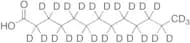
CAS:Controlled Product<p>Applications Dimethachlor Ethane Sulfonic Acid Sodium Salt-d6 is the deuterium labelled form of Dimethachlor Ethane Sulfonic Acid Sodium Salt (D460283), which is a pesticide metabolite and pollutant found in groundwater, surface water, and wastewater.<br>References Huntscha, S., et al.: J. Chromatogr. A, 1268, 74 (2012); Reemtsma, T., et al.: J. Chromatogr. A, 1271, 95 (2013);<br></p>Formula:C13D6H12NNaO5SColor and Shape:Off White SolidMolecular weight:329.38Tridecanoic-d25 Acid
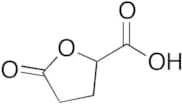
CAS:Controlled Product<p>Applications Isotope labelled Tridecanoic Acid, commonly found in dairy products. It is also a useful synthetic intermediate. It is used to synthesize Testosterone Tridecanoate (T55180).<br>References Kliem, K., et al.: Food Chem., 141, 274 (2013);<br></p>Formula:C13D25HO2Color and Shape:NeatMolecular weight:239.5Carboxybutyrolactone
CAS:Controlled Product<p>Applications Carboxybutyrolactone is a structural analog of (±)-Paraconic Acid (P191200) and is used as a reagent in the synthesis of methylenecarboxybutyrolactones which have antibacterial activity.<br>References Tonari, K., et al.: J. Oleo Sci., 51, 259 (2002)<br></p>Formula:C5H6O4Color and Shape:Off-WhiteMolecular weight:130.1






![4-[(5,6,7,8-Tetrahydro-3,5,5,8,8-pentamethyl-2-naphthalenyl)carbonyl]benzoic Acid](/_next/image/?url=https%3A%2Fstatic.cymitquimica.com%2Fproducts%2FTR%2Fthumb-webp%2FT294945.webp&w=3840&q=75)








![N,N'-Bis[3-(trifluoromethyl-4-cyanophenyl]urea](/_next/image/?url=https%3A%2Fstatic.cymitquimica.com%2Fproducts%2FTR%2Fthumb-webp%2FB585473.webp&w=3840&q=75)