Pharmaceutical Standards
Pharmaceutical standards are a comprehensive set of reference materials essential for ensuring the safety, efficacy, and quality of pharmaceutical products. This category includes standards for active pharmaceutical ingredients (APIs), which are the core components responsible for therapeutic effects. Additionally, it covers compounds and metabolites relevant to both the pharmaceutical and veterinary industries, providing benchmarks for the accurate measurement and analysis of these substances. Nitrosamine control standards are crucial for detecting and mitigating potentially harmful nitrosamines in drug formulations. Toxicology standards help assess the safety and potential adverse effects of pharmaceutical compounds. Furthermore, enzyme activators and inhibitors standards are vital for research and development, enabling precise studies of biochemical pathways and drug mechanisms. These pharmaceutical standards are indispensable tools for regulatory compliance, quality control, and research, ensuring that pharmaceutical products meet stringent safety and effectiveness criteria.
Subcategories of "Pharmaceutical Standards"
- APIs for research and impurities(274,905 products)
- Enzyme Activators and Inhibitors(2,827 products)
- Nitrosamines(2,605 products)
- Pharmaceutical and Veterinary Compounds and Metabolites(2,871 products)
- Toxicology(13,652 products)
Found 7836 products of "Pharmaceutical Standards"
Sort by
Purity (%)
0
100
|
0
|
50
|
90
|
95
|
100
Descyclopropyl abacavir
CAS:<p>Descyclopropyl abacavir is a synthetic prodrug form of the antiviral drug abacavir, which is used to treat HIV infection. It is metabolized by amine oxidases and, as such, has been shown to be a potent inhibitor of these enzymes. Descyclopropyl abacavir has also been shown to have herbicidal properties against control weeds and glyphosate-resistant weeds.</p>Formula:C11H14N6OPurity:Min. 95%Molecular weight:246.27 g/mol4b-Hydroxy cholesterol
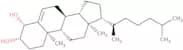
CAS:Controlled Product<p>4b-Hydroxy cholesterol is a sterol that is found in human serum and rat liver microsomes. It has been shown to be a potent inducer of CYP3A4, which is an important enzyme in the metabolism of many drugs. 4b-Hydroxy cholesterol has also been shown to induce transcriptional regulation by binding to the sterol regulatory element binding protein (SREBP) and activating it. This activation results in the increased production of cholesterol and other sterols by upregulating transcription of genes that are involved in cholesterol synthesis. 4b-Hydoxy cholesterol has been shown to have anti-inflammatory properties due to its inhibition of triclosan and clinical studies show that it can reduce serum levels of total cholesterol and low density lipoprotein (LDL) cholesterol in women.</p>Formula:C27H46O2Purity:Min. 95%Molecular weight:402.65 g/molMexiletine
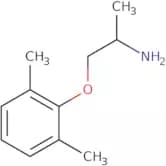
CAS:Mexiletine is a drug that belongs to the class of drugs called antiarrhythmics. It is used for the treatment of ventricular arrhythmias and for removing cardiac conduction abnormalities. Mexiletine acts by inhibiting the release of calcium ions from the sarcoplasmic reticulum, which leads to a reduction in excitability of the heart muscle. Mexiletine has been shown to have a matrix effect on bacterial DNA, which may be due to its ability to bind with dinucleotide phosphate or its inhibitory effects on hypersensitivity syndrome. Mexiletine also has an effect on cardiac tissue, leading to decreased contractility and increased relaxation time. The mechanism by which mexiletine leads to these effects is not well understood but may be related to its ability to interact with ion channels in myocardial cells or alter protein function in these cells. Mexiletine has been shown to have some drug interactions, such as with other drugs that are metabolized through cyFormula:C11H17NOPurity:Min. 95%Color and Shape:Yellow Clear LiquidMolecular weight:179.26 g/molN,N-Diethyl-N'-1-naphthylethylenediamine oxalate
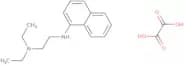
CAS:N,N-Diethyl-N'-1-naphthylethylenediamine oxalate (NDENOX) is a naphthalene derivative that is used to inhibit the growth of bacteria. It binds to the extracellular site on the bacterial cell membrane and inhibits sulfadiazine uptake. NDENOX has been shown to be effective against S. aureus and other bacteria that are resistant to sulfonamides, but not against Staphylococcus epidermidis or E. coli. This drug also inhibits enzyme activity in damaged human serum, which may be due to its binding with kynurenine or pupal. NDENOX is hydrolyzed by hydrochloric acid and procaine to release naphthalene and diethylenetriamine, respectively.Formula:C18H24N2O4•C2H2O4xPurity:Min. 95 Area-%Color and Shape:PowderMolecular weight:332.39 g/mol7-Dehydro desmosterol
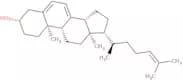
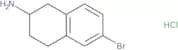
CAS:Controlled Product<p>7-Dehydro Desmosterol is a hydroxylated sterol found in the liver. It is an intermediate in cholesterol synthesis and participates in the regulation of glucose metabolism. The enzyme responsible for its synthesis (7-dehydrocholesterol reductase) is inhibited by radiation, which leads to its accumulation in the liver. 7-Dehydro desmosterol has been shown to have beneficial effects on experimental models of diabetes and metabolic disorders. In these studies, it was found that 7-dehydro desmosterol can inhibit glucose absorption from the intestine and stimulate insulin secretion from pancreatic beta cells.</p>Formula:C27H42OPurity:Min. 95%Color and Shape:PowderMolecular weight:382.62 g/mol6-Bromo-1,2,3,4-tetrahydronaphthalen-2-ylamine hydrochloride
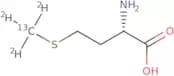
CAS:Controlled Product<p>Please enquire for more information about 6-Bromo-1,2,3,4-tetrahydronaphthalen-2-ylamine hydrochloride including the price, delivery time and more detailed product information at the technical inquiry form on this page</p>Formula:C10H12BrN·HClPurity:Min. 95%Molecular weight:262.57 g/molL-Methionine-methyl-13C,methyl-D3
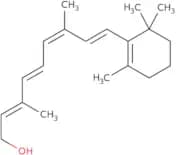
CAS:Controlled ProductPlease enquire for more information about L-Methionine-methyl-13C,methyl-D3 including the price, delivery time and more detailed product information at the technical inquiry form on this pageFormula:C5H8D3NO2SPurity:Min. 95%Molecular weight:152.23 g/mol9-cisRetinol
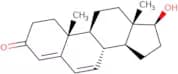
CAS:<p>9-cisRetinol is a form of vitamin A that plays an important role in the synthesis of lipids and proteins. It has been shown to inhibit acid formation in the liver and to stimulate growth in some types of cancer cells. 9-cisRetinol is converted to all-trans retinoic acid, which is a nuclear hormone receptor that regulates gene expression. It also has been shown to be effective in clinical studies for the treatment of congenital amaurosis and cancer. 9-cisRetinol can inhibit phospholipase A2, which prevents the release of arachidonic acid from membrane phospholipids, as well as inhibit prostaglandin synthesis. The optimum pH for 9-cisRetinol activity is between 7 and 8.</p>Formula:C20H30OPurity:Min. 95%Molecular weight:286.45 g/molDelta6-Testosterone
CAS:Controlled Product<p>Delta6-Testosterone is a natural steroid hormone that belongs to the group of steroid drugs. It is a potent androgen, or male sex hormone, which stimulates the development and maintenance of male sexual characteristics, including the growth of prostate gland and seminal vesicles. The effects of Delta6-testosterone are mediated by binding to and activating the Androgen Receptor (AR). The effects may also be increased when Delta6-testosterone binds to AR in combination with other hormones such as estradiol.<br>Delta6-Testosterone is metabolized by the liver into testosterone through the cytochrome p450 enzyme system. This process begins with conversion of Delta6-testosterone into 6alpha-dihydrotestosterone (DHT) by 5a-reductase. DHT can then be converted into testosterone by 3beta-hydroxysteroid dehydrogenase/3alpha-hydroxysteroid dehydrogenase (3betaHSD) or 17beta hyd</p>Formula:C19H26O2Purity:Min. 95%Molecular weight:286.41 g/molBoc-L-aspartic acid 4-tert-butyl ester
CAS:Boc-L-aspartic acid 4-tert-butyl ester is a synthetic aminoacylase that is used in the synthesis of ergosterol. It is an efficient and economical reagent for the preparation of esters of aspartic acid, which are used in fungal antifungal agents. Boc-L-aspartic acid 4-tert-butyl ester has been shown to have various physiological functions, including the ability to inhibit ergosterol synthesis by inhibiting the enzyme polymeric ergosterol synthase in fungi. This compound can also be used to synthesize n-substituted aspartates.Formula:C13H23NO6Purity:Min. 95 Area-%Color and Shape:PowderMolecular weight:289.32 g/molClovamide
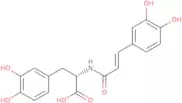
CAS:<p>Clovamide is a bioactive compound, which is a naturally occurring phenolic amide found primarily in certain plant species. This compound is derived from sources such as the leaves of Trifolium pratense (red clover) and certain leguminous plants. With its molecular structure comprising both phenolic acid and amino acid moieties, clovamide exhibits significant antioxidant properties.</p>Formula:C18H17NO7Purity:Area-% Min. 95 Area-%Color and Shape:PowderMolecular weight:359.33 g/mol(±)-3-Methyl-2-oxovaleric acid
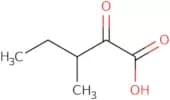
CAS:<p>(±)-3-Methyl-2-oxovaleric acid is a fatty acid that is found in the mitochondria of liver cells and other tissues. It is an intermediate in the citric acid cycle and can be converted into acetyl-CoA, which is used for energy production. (±)-3-Methyl-2-oxovaleric acid has been shown to cause necrotic cell death when it binds to the mitochondrial membrane potential and causes a loss of ATP production. This results in a lack of energy for the cell, leading to cell death. (±)-3-Methyl-2-oxovaleric acid has also been shown to inhibit protein synthesis by decreasing uptake and increasing creatine kinase activity. This inhibition leads to decreased body formation and tissue culture growth in vitro. In vivo, (±)-3-Methyl-2-oxovaleric acid causes primary sclerosing cholangitis, a disease characterized by inflammation of bile ducts that</p>Formula:C6H10O3Purity:Min. 95%Color and Shape:White PowderMolecular weight:130.14 g/mol5,6-Epoxy-13-cis retinoic acid
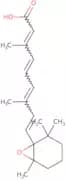
CAS:<p>5,6-Epoxy-13-cis retinoic acid (5,6-ER) is the most active metabolite of all-trans-retinoic acid. 5,6-ER binds to the nuclear receptor and acts as a transcription factor. It has been shown to inhibit the growth of several cancer cell lines in vitro, including T47D cells. 5,6-ER also has antacid properties and can be used for the treatment of inflammatory bowel disease. 5,6-ER is found in low concentrations in plasma and tissues and accumulates in high concentrations in rat liver microsomes. The major metabolic pathway includes hydrolysis by trifluoroacetic acid which produces 5,6 epoxyretinoyl coenzyme A (5,6 epoxyretinoyl CoA). This compound is then converted to 5,6 epoxyretinol by an unknown mechanism.</p>Formula:C20H28O3Purity:Min. 95%Molecular weight:316.43 g/molN-Cbz-L-aspartic acid 1-benzyl ester
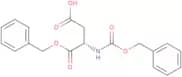
CAS:<p>N-Cbz-L-aspartic acid 1-benzyl ester is a synthetic stereoselective allyl group that can be used for biochemical studies. It has been shown to have a role in the repair of damaged DNA and cellular growth. N-Cbz-L-aspartic acid 1-benzyl ester is an adenosine diphosphate (ADP) analog, which acts as an acceptor of ADP and inhibits phosphatases.</p>Formula:C19H19NO6Purity:Min. 95%Color and Shape:PowderMolecular weight:357.36 g/molCholesterol Isopropyl Carbonate
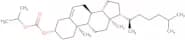
CAS:Controlled ProductCholesterol Isopropyl Carbonate is an inorganic, high melting coating that is used to enhance the properties of microcapsules. This material is a solid at room temperature and can be applied to particles such as liposomes, polymers, and nanoparticles. Cholesterol Isopropyl Carbonate has a particle size range of 500-2,000 nm and contains functional groups such as carboxylic acids. Treatment methods for this product include heating with thermal energy or irradiation with optical energy.Purity:Min. 95%Isovaleryl-Phe-Nle-Sta-Ala-Sta-OH
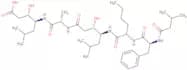
CAS:<p>Isovaleryl-Phe-Nle-Sta-Ala-Sta-OH (IVAS) is a small molecule that has been shown to be an angiotensin system inhibitor. IVAS blocks the binding site of the angiotensin receptor and prevents the activation of this system. This effect is dose dependent and can be used to treat high blood pressure in humans. IVAS is a long-acting drug and has been shown to be effective in primates as well as humans. The drug is rapidly absorbed from the gastrointestinal tract and eliminated by metabolism, mainly through hydrolysis by esterases or glucuronidases, oxidation by cytochrome P450 enzymes, reduction by glutathione reductase, or conjugation with glucuronic acid. IVAS also specifically binds to markers expressed at high levels in Mycobacterium tuberculosis strains (e.g., ESX-1 secretion system protein) and inhibits cell growth in culture.</p>Formula:C39H65N5O9Purity:Min. 95%Molecular weight:747.96 g/molBeclomethasone-21-Aldehyde
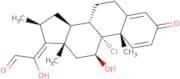
CAS:Controlled ProductPlease enquire for more information about Beclomethasone-21-Aldehyde including the price, delivery time and more detailed product information at the technical inquiry form on this pageFormula:C22H27ClO4Purity:Min. 95%Color and Shape:PowderMolecular weight:390.9 g/molL-Methionine tert-butyl ester hydrochloride
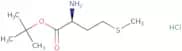
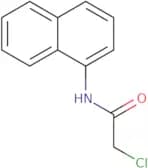
CAS:<p>L-Methionine tert-butyl ester hydrochloride is a peptide that is used for the treatment of lysosomal storage diseases. It is a metabolic precursor for polypeptides and may be useful for the treatment of tissue damage due to elimination. L-Methionine tert-butyl ester hydrochloride has been shown to have a stable half-life in murine studies, and it is eliminated primarily by the kidneys. Radiometabolites with short half-lives are found in blood and urine samples following intravenous administration. The elimination rate of L-Methionine tert-butyl ester hydrochloride can be calculated by measuring the radioactivity in urine over time.</p>Formula:C9H19NO2S•HClPurity:Min. 95%Color and Shape:PowderMolecular weight:241.78 g/mol2-Chloro-N-1-naphthylacetamide
CAS:<p>2-Chloro-N-1-naphthylacetamide is a synthetic organic compound that belongs to the class of sulfur compounds. It is used in the synthesis of other compounds and has been shown to be a potent inhibitor of hydroxylapatite and sulfate hydrolysis. The reaction mechanism for this compound’s inhibition of sulfate hydrolysis is not known, but it may be due to its ability to act as an electron donor or acceptor. 2-Chloro-N-1-naphthylacetamide also has carcinogenic properties, with some studies suggesting that it can cause liver cancer in rodents.</p>Formula:C12H10ClNOPurity:Min. 95%Molecular weight:219.67 g/mol22α-Hydroxy cholesterol
CAS:Controlled Product<p>22a-Hydroxycholesterol is a naturally occurring, oxygenated cholesterol metabolite. It binds to the transcriptional coactivator retinoid X receptor (RXR) and inhibits the activity of certain liver enzymes. 22a-Hydroxycholesterol has been shown to have toxic effects on mouse tumors and to inhibit the production of ATP in vitro. 22a-Hydoxycholesterol also inhibits the function of ATP binding cassette (ABC) transporter proteins, which are involved in cholesterol transport from cells. The long-term toxicity of 22a-hydroxycholesterol is not well understood, although it has been shown that this metabolite can induce autoimmune diseases in rats.</p>Formula:C27H46O2Purity:Min. 95%Molecular weight:402.65 g/mol