Flavonoids
Subcategories of "Flavonoids"
- Anthocyanidins(46 products)
- Anthocyanin(46 products)
- Catechin(88 products)
- Chalcones(237 products)
- Pterocarpan(28 products)
Found 2410 products of "Flavonoids"
5-Hydroxy-3',4'-dimethoxyflavone
CAS:5-Hydroxy-3',4'-dimethoxyflavone is a naturally occurring flavone, which is a type of polyphenolic compound found in various plants. It is derived from plant sources, specifically from certain species that are known for their rich phenolic content. The mode of action of this compound involves antioxidant activity, where it scavenges free radicals and reduces oxidative stress, which may contribute to its health-related properties.
Formula:C17H14O5Purity:Min. 95%Molecular weight:298.29 g/mol4'-O-Methyl quercetin
CAS:4'-O-Methyl quercetin is a naturally occurring flavonoid, which is a derivative of quercetin. It is primarily sourced from various plants where it functions as part of the plant’s defense mechanism. This compound exhibits its mode of action by influencing cellular pathways, particularly those involved in oxidative stress and inflammation. It achieves this by modulating signaling pathways and interacting with cellular receptors, thereby exerting antioxidant and anti-inflammatory effects.Formula:C16H12O7Purity:Min. 95%Color and Shape:Yellow SolidMolecular weight:316.26 g/mol7,2'-Dimethoxyflavone
CAS:7,2'-Dimethoxyflavone is a naturally occurring flavone compound, which is a type of phytochemical widely distributed in the plant kingdom. It is derived from various plant sources, particularly within species known for traditional medicinal uses. The compound exhibits multiple modes of action, primarily interacting with cellular pathways related to oxidative stress and enzyme modulation. It acts as an inhibitor of specific enzymatic processes, contributing to its potential therapeutic effects.Formula:C17H14O4Purity:Min. 95%Color and Shape:PowderMolecular weight:282.29 g/molBryacarpene-2
CAS:Bryacarpene-2 is a terpene compound, which is derived from natural sources, specifically marine bryozoans. Its mode of action involves interacting with specific biological pathways, potentially influencing cellular processes such as apoptosis and inflammation. This interaction suggests its potential as a therapeutic agent in various biomedical fields. The uses and applications of Bryacarpene-2 are currently under investigation, particularly its role in medical research related to anti-cancer, anti-inflammatory, and antimicrobial properties. The exploration of Bryacarpene-2 highlights its capacity as a candidate for drug development, offering a promising avenue for scientific exploration and potential clinical applications.
Formula:C18H16O6Purity:Min. 95%Molecular weight:328.32 g/mol2'-Benzyloxy-7,4'-dimethoxyisoflavone
CAS:2'-Benzyloxy-7,4'-dimethoxyisoflavone is a synthetic isoflavone, which is primarily derived from the benzyl ether of naturally occurring flavones. Isoflavones are typically sourced from plants, such as soybeans, and are known for their estrogenic activity and various biological effects. The modification to produce 2'-Benzyloxy-7,4'-dimethoxyisoflavone involves chemical synthesis that retains the core isoflavone structure while introducing specific substituents to enhance its biological properties.
Formula:C24H20O5Purity:Min. 95%Molecular weight:388.41 g/mol7,3-Dihydroxyflavone
CAS:7,3-Dihydroxyflavone is a potent small-molecule flavonoid, which is a naturally occurring compound sourced primarily from plants. This compound functions as a selective agonist for the TrkB receptor, which is the high-affinity receptor for brain-derived neurotrophic factor (BDNF). By mimicking BDNF, 7,3-Dihydroxyflavone activates intracellular signaling pathways that are crucial for neuronal survival, differentiation, and synaptic plasticity.
Formula:C15H10O4Purity:Min. 95%Color and Shape:PowderMolecular weight:254.24 g/mol7,2'-Dibenzyloxy-3',4'-dimethoxyisoflavone
CAS:7,2'-Dibenzyloxy-3',4'-dimethoxyisoflavone is a synthetic isoflavone derivative, which is primarily synthesized from organic intermediates using specialized chemical procedures. This compound belongs to the isoflavone class, a group of compounds often studied for their potential bioactive properties. The mode of action of 7,2'-Dibenzyloxy-3',4'-dimethoxyisoflavone involves interactions with cellular signaling pathways, which could influence various biological activities, such as enzyme inhibition or receptor binding.Formula:C31H26O6Purity:Min. 95%Molecular weight:494.53 g/molNaringin hydrate
CAS:Naringin hydrate is a flavonoid compound, which is found predominantly in citrus fruits such as grapefruits. This compound is a glycoside, sourced primarily from the peels and seeds of these fruits, playing a role as a natural constituent of the fruit's phytonutrient profile. The mode of action of naringin hydrate involves its ability to modulate a variety of biological pathways. It exhibits antioxidant properties by scavenging free radicals and enhancing the body’s endogenous antioxidant enzymes. Additionally, naringin hydrate demonstrates anti-inflammatory actions through the inhibition of pro-inflammatory cytokines and the modulation of signaling pathways such as NF-kB and MAPK.Formula:C27H32O14•H2OPurity:Min. 95%Color and Shape:PowderMolecular weight:598.55 g/molKaempferol 3-O-b-D-glucuronide
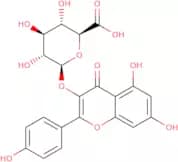
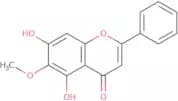
CAS:Kaempferol 3-O-b-D-glucuronide is a bioactive flavonoid glucuronide, which is a naturally occurring compound found in various plants, fruits, and vegetables. It is formed through the glucuronidation of the parent compound, kaempferol, a process which enhances its solubility and bioavailability. This compound exhibits significant antioxidant activity through its ability to scavenge free radicals and reduce oxidative stress within biological systems.Formula:C21H18O12Purity:Min. 95%Color and Shape:PowderMolecular weight:462.36 g/mol6,7-Dimethoxy-3',4',5-trihydroxyflavone
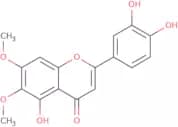
CAS:6,7-Dimethoxy-3',4',5-trihydroxyflavone is a specialized flavonoid compound, which is commonly isolated from plant sources known for their rich polyphenolic content. These compounds are typically synthesized by plants as secondary metabolites, playing critical roles in plant defense and pigmentation. The mode of action of 6,7-Dimethoxy-3',4',5-trihydroxyflavone primarily involves its potent antioxidant activity, where it effectively scavenges free radicals and inhibits oxidative stress at the cellular level. This antioxidant property is attributed to its ability to donate hydrogen atoms or electrons, thereby neutralizing potentially damaging reactive oxygen species (ROS).
Formula:C17H14O7Purity:Min. 95%Color and Shape:White PowderMolecular weight:330.29 g/mol7,8-Methylenedioxy-4'-methoxyisoflavone
CAS:7,8-Methylenedioxy-4'-methoxyisoflavone is a synthetic isoflavone, which is a type of organic compound typically derived from plant sources, known for their diverse biological activities. This compound is structurally characterized by a methoxy group and a methylenedioxy bridge, contributing to its unique chemical behavior. Although synthetic, its structure is inspired by naturally occurring isoflavones found in plants such as soy.Formula:C17H12O5Purity:Min. 95%Molecular weight:296.27 g/mol3'-Hydroxyflavanone
CAS:3'-Hydroxyflavanone is a naturally occurring flavonoid compound, which is derived from various plant sources, including citrus fruits and some leguminous plants. Its chemical structure contains a flavanone backbone with a hydroxyl group at the 3' position, contributing to its unique properties and biological activity.Formula:C15H12O3Purity:Min. 95%Color and Shape:White PowderMolecular weight:240.25 g/mol3-Hydroxyflavone
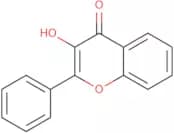
CAS:3-Hydroxyflavone is a naturally derived flavonoid compound found in various plants. As a member of the flavonoid family, it is synthesized through the phenylpropanoid pathway, starting from phenylalanine or tyrosine in plants. Its unique structure allows it to interact with a range of biological targets through its antioxidant, anti-inflammatory, and enzyme modulation properties. The mode of action primarily involves the scavenging of free radicals and reactive oxygen species, as well as the inhibition of specific enzymes such as cyclooxygenases and lipoxygenases. These actions contribute to its protective effects against oxidative stress and inflammation.Formula:C15H10O3Purity:Min. 95%Color and Shape:PowderMolecular weight:238.24 g/molEriodictyol-7-neohesperidoside
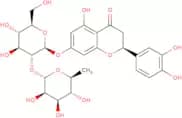
CAS:Eriodictyol-7-neohesperidoside is a flavonoid glycoside, a type of compound that naturally occurs in certain plant species, notably within the genus Eriodictyon. This compound is a derivative of eriodictyol, which is found widely in citrus fruits. Its mode of action is primarily linked to its ability to interact with taste receptors, making it notable for its potential to modulate taste perceptions, specifically in the context of bitterness. This makes it of significant interest in the field of food science and technology.Formula:C27H32O15Purity:Min. 95%Color and Shape:PowderMolecular weight:596.53 g/mol3-Hydroxy-6,3',4',5'-tetramethoxyflavone
CAS:3-Hydroxy-6,3',4',5'-tetramethoxyflavone is a naturally occurring flavonoid, which is derived from various plant sources, including certain species of the genus Chromolaena. It belongs to a class of polyphenolic compounds known for their potential biological activities. This flavonoid acts primarily through antioxidant mechanisms, where it scavenges free radicals and inhibits oxidative stress pathways. Additionally, it can modulate various signaling pathways, implicating roles in anti-inflammatory processes and cellular protection.Formula:C19H18O7Purity:Min. 95%Molecular weight:358.34 g/molSwertiajaponin
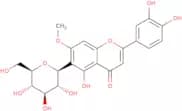
CAS:Swertiajaponin is a natural bioactive compound, classified as a flavonoid glycoside, which is derived from the plant Swertia japonica. Swertia japonica, a member of the Gentianaceae family, is predominantly found in East Asia, where it has been traditionally used in herbal medicine. As with many bioactive compounds, swertiajaponin exhibits its pharmacological effects through various biochemical interactions, including antioxidant, anti-inflammatory, and hepatoprotective activities. It is known to modulate cellular pathways and free radical scavenging, contributing to its therapeutic potential.Formula:C22H22O11Purity:Min. 98 Area-%Color and Shape:PowderMolecular weight:462.4 g/mol3-Hydroxy-6,2',4'-trimethoxyflavone
CAS:3-Hydroxy-6,2',4'-trimethoxyflavone is a naturally occurring flavonoid derivative, which is a type of secondary metabolite primarily found in various plant species. This compound is derived from the flavonoid family, known for their diverse biological activities and health-related benefits. The mode of action of 3-Hydroxy-6,2',4'-trimethoxyflavone involves its interaction with molecular pathways associated with antioxidant, anti-inflammatory, and potentially anti-cancer activities. It is thought to modulate signaling pathways that play crucial roles in cellular homeostasis, making it a compound of interest in pharmacological research.Formula:C18H16O6Purity:Min. 95%Color and Shape:PowderMolecular weight:328.32 g/molErythrisenegalone
CAS:Please enquire for more information about Erythrisenegalone including the price, delivery time and more detailed product information at the technical inquiry form on this pageFormula:C25H26O5Purity:Min. 95%Molecular weight:406.47 g/molQuercetin 3-O-xyloside
CAS:Quercetin 3-O-xyloside is a flavonoid glycoside, which is typically isolated from various plant sources, such as fruits, vegetables, and herbs. This compound is characterized by the presence of a quercetin molecule attached to a xylose sugar moiety, influencing its solubility and biological activity.Formula:C20H18O11Purity:Min. 95%Color and Shape:Off-White PowderMolecular weight:434.35 g/mol3,5,7,8,3',4'-Hexahydroxyflavone
CAS:3,5,7,8,3',4'-Hexahydroxyflavone is a specialized flavonoid, which is a type of polyphenolic compound found naturally in plants. This compound is derived from various botanical sources, particularly in leaves and peels where flavonoids are abundant. The presence of multiple hydroxyl groups contributes to its potent antioxidant activity, allowing it to scavenge free radicals effectively.
Formula:C15H10O8Purity:Min. 98 Area-%Color and Shape:Yellow PowderMolecular weight:318.24 g/molR,S-Equol
CAS:R,S-Equol is a racemic mixture, classified as an isoflavandiol compound, which is synthesized from the metabolism of soy isoflavones, specifically daidzein, by gut microbiota. It acts as a selective estrogen receptor modulator (SERM) with a preference for estrogen receptor beta (ERβ). This compound demonstrates the ability to bind these receptors, mimicking the action of estrogen, but with selective modulation and lower activity than natural estrogen.Formula:C15H14O3Purity:Min. 95%Color and Shape:PowderMolecular weight:242.27 g/mol3'-Benzyloxy-5,7-dihydroxy-3,4'-dimethoxyflavone
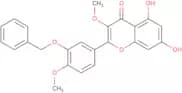
CAS:3'-Benzyloxy-5,7-dihydroxy-3,4'-dimethoxyflavone is a synthetic flavone derivative, which is primarily obtained through targeted chemical synthesis in laboratory settings. This compound belongs to a broader class of polyphenolic flavonoids, which are known for their potential bioactive properties.Formula:C24H20O7Purity:Min. 95%Molecular weight:420.41 g/molEupatorin - 98%
CAS:Eupatorin - 98% is a high-purity flavonoid compound, which is extracted primarily from various plant species such as Eupatorium. This compound is renowned for its bioactive properties, engaging in numerous biochemical interactions that contribute to its therapeutic potentials. Eupatorin operates through multiple biochemical pathways as an inhibitor of specific enzymes like cytochrome P450s and as a modulator of cellular signaling pathways. This enables it to exert anti-inflammatory, anticancer, and antioxidant effects, making it a valuable subject of study in pharmaceutical and clinical research.Formula:C18H16O7Purity:Min. 95%Color and Shape:White PowderMolecular weight:344.32 g/molTexasin 7-O-glucoside
CAS:Texasin 7-O-glucoside is a flavonoid glycoside, which is a plant-derived compound with significant antioxidant properties. This glycoside is sourced primarily from plants, where it naturally occurs as a secondary metabolite. It is composed of the flavonoid backbone, texasetin, conjugated with a glucose molecule at the 7-O position, enhancing its solubility and bioavailability in biological systems.
Formula:C22H22O10Purity:Min. 95%Molecular weight:446.4 g/molApigenin-7-diglucuronide
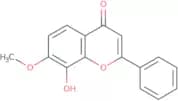
CAS:Apigenin-7-diglucuronide is a naturally occurring flavonoid derivative compound, which is primarily derived from various plant sources such as parsley, chamomile, and celery. It represents a glucuronidation product of apigenin, a process involving enzymatic attachment of glucuronic acid to the molecule, enhancing its water solubility and bioavailability.Formula:C27H26O17Purity:Min. 95 Area-%Color and Shape:PowderMolecular weight:622.49 g/mol8-Hydroxy-7-methoxyflavone
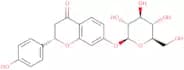
CAS:8-Hydroxy-7-methoxyflavone is a naturally occurring flavonoid compound, which is isolated from various plant sources known for their bioactive properties. Flavonoids are a diverse group of phytonutrients found in many fruits, vegetables, and other plants, and are well-studied for their roles in plant pigmentation and health benefits.Formula:C16H12O4Purity:Min. 95%Color and Shape:White PowderMolecular weight:268.26 g/molLiquiritin apioside
CAS:Liquiritin apioside is a flavonoid glycoside, which is predominantly derived from the root of Glycyrrhiza uralensis, commonly known as licorice. This compound acts primarily through its anti-inflammatory and antioxidant properties, which involve the modulation of various cellular pathways. Specifically, it influences the activity of inflammatory cytokines and oxidative stress markers, potentially inhibiting pathways such as nuclear factor-kappa B (NF-κB).
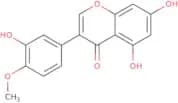
Formula:C26H30O13Purity:Min. 95%Color and Shape:White PowderMolecular weight:550.51 g/molPratensein
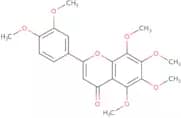
CAS:Pratensein is an isoflavone compound that is derived primarily from plants such as red clover (Trifolium pratense). This natural product belongs to the class of phytochemicals known for their diverse biological activities. Pratensein is sourced through the extraction and purification processes that involve isolating the bioactive components from plant materials rich in flavonoids.Formula:C16H12O6Purity:Min. 95%Color and Shape:PowderMolecular weight:300.26 g/mol3',4',5,6,7,8-Hexamethoxyflavone
CAS:3',4',5,6,7,8-Hexamethoxyflavone is a polymethoxylated flavone, which is a type of specialized chemical compound known as a flavonoid. It naturally occurs in certain plants, particularly those within the citrus family, serving as a secondary metabolite. Polymethoxylated flavones like this one are of interest due to their potential interaction with various biological pathways.Formula:C21H22O8Purity:Min. 98 Area-%Color and Shape:PowderMolecular weight:402.39 g/molOnonin
CAS:Ononin is an isoflavonoid glycoside, which is derived from various plant sources, including species of the genus Ononis. It is primarily sourced from the roots and aerial parts of these plants, where it occurs as a natural constituent. The mode of action of Ononin involves its hydrolysis to form its aglycone, formononetin, which is known to exhibit estrogenic activity due to its structural similarity to estrogenic compounds.
Formula:C22H22O9Purity:Min. 95%Color and Shape:White PowderMolecular weight:430.4 g/molAcicerone
CAS:Please enquire for more information about Acicerone including the price, delivery time and more detailed product information at the technical inquiry form on this pageFormula:C17H12O6Purity:Min. 95%Molecular weight:312.27 g/molWogonoside
CAS:Wogonoside is a naturally occurring flavonoid glycoside, which is derived primarily from Scutellaria baicalensis, a traditional Chinese medicinal herb. It functions through its ability to modulate various biochemical pathways, demonstrating significant anti-inflammatory and anticancer properties. Wogonoside exerts its effects by inhibiting key enzymes and signaling pathways involved in inflammation, such as nuclear factor-kappa B (NF-κB), and inducing apoptosis in cancer cells through the activation of caspases and modulation of apoptosis-related proteins.Formula:C22H20O11Purity:Min. 95%Color and Shape:PowderMolecular weight:460.39 g/mol3-Hydroxy-7,8-dimethoxyflavone
CAS:3-Hydroxy-7,8-dimethoxyflavone is a synthetic flavonoid derivative, which is structurally sourced from the broader class of naturally occurring flavonoids found in various plants. It functions primarily as a potent and selective ligand for the TrkB receptor, a receptor for brain-derived neurotrophic factor (BDNF). This interaction mimics the effects of BDNF, promoting neuronal survival, synaptic plasticity, and neurogenesis, thereby facilitating neuroprotective and neurorestorative processes.
Formula:C17H14O5Purity:Min. 95%Molecular weight:298.29 g/mol3-Hydroxy-7,2',3'-trimethoxyflavone
CAS:3-Hydroxy-7,2',3'-trimethoxyflavone is a naturally occurring flavonoid, which is a type of polyphenolic compound commonly found in plants. These compounds are typically sourced from various plant species where they are known to contribute to pigmentation and offer protective functions.Formula:C18H16O6Purity:Min. 95%Molecular weight:328.32 g/molNeoliquiritin
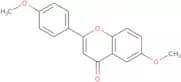
CAS:Neoliquiritin is a flavonoid compound, which is derived from the root of the licorice plant, Glycyrrhiza glabra. This compound exhibits significant antioxidant properties through its ability to scavenge free radicals, thereby reducing oxidative stress within biological systems. Neoliquiritin is primarily utilized in scientific research to explore its potential therapeutic effects, particularly its anti-inflammatory and antioxidant activities. Its mode of action involves modulation of various cellular signaling pathways associated with inflammation and oxidative damage, making it a subject of interest in studies related to chronic diseases and skin conditions. Researchers investigate its potential in mitigating oxidative stress-related cellular damage, offering insights into its possible applications in pharmacology and dermatology.Formula:C21H22O9Purity:Min. 95%Color and Shape:PowderMolecular weight:418.39 g/mol6,4'-Dimethoxyflavone
CAS:6,4'-Dimethoxyflavone is a naturally occurring flavone, which is a type of polyphenolic compound typically found in various plants. It is derived from natural sources such as certain species of citrus fruits and other flavonoid-rich plants. The compound is characterized by the presence of two methoxy groups attached to its flavone backbone.
Formula:C17H14O4Purity:Min. 95%Molecular weight:282.29 g/molLuteolin 6,8-di-C-glucoside
CAS:Luteolin 6,8-di-C-glucoside is a bioflavonoid compound, which is naturally derived from various plant sources, including many medicinal herbs and dietary plants. As a type of flavone glycoside, Luteolin 6,8-di-C-glucoside exhibits significant biochemical interest due to its incorporation of two glucose molecules directly attached to the luteolin backbone.
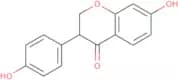
Formula:C27H30O16Purity:Min. 95%Color and Shape:PowderMolecular weight:610.52 g/molDihydro daidzein
CAS:Dihydro daidzein is an isoflavonoid derivative, which is a naturally occurring compound primarily sourced from the metabolic biotransformation of daidzein, a soy isoflavone. This metabolite is generated through the fermentation process by intestinal microbiota, highlighting its origin from dietary sources, particularly soy products.Formula:C15H12O4Purity:Min. 95%Color and Shape:PowderMolecular weight:256.25 g/molEupatorin 5-methyl ether
CAS:Eupatorin 5-methyl ether is a bioactive compound, which is a naturally occurring flavonoid found in certain plant species. This compound is derived from various plants, including those in the Asteraceae family. Eupatorin 5-methyl ether functions primarily through modulating various biochemical pathways, exhibiting anti-inflammatory, antioxidant, and anticancer activities.Formula:C19H18O7Purity:Min. 95%Color and Shape:PowderMolecular weight:358.34 g/mol4'-Hydroxyflavanone
CAS:4'-Hydroxyflavanone is a naturally occurring flavonoid compound, which is derived from plant sources, particularly citrus fruits and other types of vegetation. The compound is characterized by its phenolic structure, which plays a significant role in its biological activity. 4'-Hydroxyflavanone exhibits its mode of action primarily through antioxidant activity, which involves scavenging reactive oxygen species and thus protecting cells from oxidative stress.Formula:C15H12O3Purity:Min. 95%Color and Shape:PowderMolecular weight:240.25 g/mol8-O-Methylretusin
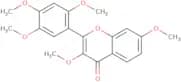
CAS:8-O-Methylretusin is a naturally occurring O-methylated flavonoid, which is derived from various plant sources. This compound is notable for its potential bioactive properties, including antioxidative, anti-inflammatory, and anticancer activities. The mode of action of 8-O-Methylretusin primarily involves modulation of cellular signaling pathways, such as the inhibition of reactive oxygen species and modulation of key transcription factors that regulate inflammatory and apoptotic processes.Formula:C17H14O5Purity:Min. 95%Molecular weight:298.29 g/mol3,7,2',4',5'-Pentamethoxyflavone
CAS:3,7,2',4',5'-Pentamethoxyflavone is a naturally occurring flavonoid compound, which is a type of polyphenolic product. It is commonly found in various plant species, serving potential protective and adaptive functions within these organisms. The mode of action of 3,7,2',4',5'-Pentamethoxyflavone involves interaction with multiple biological pathways, including modulation of enzyme activity and influence over cellular signaling pathways. Its biochemical interactions often result in antioxidant, anti-inflammatory, and possible antiproliferative effects.Formula:C20H20O7Purity:Min. 95%Molecular weight:372.37 g/molApigenin-7-O-glucronide
CAS:Apigenin-7-O-glucronide is a flavonoid derivative, which is a bioactive compound found naturally in various plants, particularly in those used medicinally or as nutritional supplements. Its source includes a variety of plant species, where it exists as part of the plant's secondary metabolites, often contributing to the plant's defense mechanisms.Formula:C21H18O11Purity:Min. 98 Area-%Color and Shape:PowderMolecular weight:446.36 g/molKaempferol 3-b-glucopyranoside
CAS:Kaempferol 3-b-glucopyranoside is a flavonoid glycoside, which is a compound typically isolated from a variety of plants, including tea, broccoli, and fruits such as apples and grapes. It represents a crucial category of secondary metabolites prevalent in the plant kingdom, often serving roles in plant defense and pigmentation. The mode of action of Kaempferol 3-b-glucopyranoside is primarily attributed to its antioxidant properties, effectively scavenging free radicals and thereby mitigating oxidative stress. Furthermore, it is known to modulate various cellular signaling pathways, including those related to apoptosis and inflammation, by influencing kinase activity and gene expression.
Formula:C21H20O11Purity:Min. 95%Color and Shape:PowderMolecular weight:448.38 g/molDihydrodaidzein-7,4'-dimethylether
CAS:Dihydrodaidzein-7,4'-dimethylether is a synthetic compound that falls under the category of isoflavone derivatives. Isoflavones are naturally occurring compounds typically sourced from soybeans and other legumes. Their structural similarity to estrogen allows them to exert estrogenic or anti-estrogenic effects, depending on the context and biological system.
Formula:C17H16O4Purity:Min. 95%Color and Shape:PowderMolecular weight:284.31 g/molOroxylin A
CAS:Oroxylin A is a natural flavonoid compound, which is derived from the root of Scutellaria baicalensis, commonly known as Baikal skullcap. It is primarily recognized for its bioactive properties, attributed to its modulation of various biochemical pathways. Oroxylin A acts by inhibiting the activity of certain enzymes, such as cyclooxygenase, and influencing signaling pathways like NF-kB, which are integral to inflammatory responses. It also exhibits potent neuroprotective effects by interacting with GABA_A receptors, thereby influencing neurotransmission.Formula:C16H12O5Purity:Min. 98 Area-%Color and Shape:PowderMolecular weight:284.26 g/molHerbacetin-8-glucoside-3-sophoroside
CAS:Herbacetin-8-glucoside-3-sophoroside is a flavonoid glycoside derivative, which is a bioactive compound commonly found in plant sources, particularly within the flavonoid subclass. This compound is notable for its multifunctional biological activities and potential health benefits. It is primarily sourced from plant materials, where it can be extracted and isolated for further study and application.Formula:C33H40O22Purity:Min. 95%Molecular weight:788.66 g/mol7,2'-Dimethoxy-4'-hydroxyisoflavone
CAS:7,2'-Dimethoxy-4'-hydroxyisoflavone is a naturally occurring isoflavone, which is a type of phytochemical commonly found in various plants. Isoflavones are known for their structural similarity to estrogens and their presence in legumes like soy. The source of 7,2'-Dimethoxy-4'-hydroxyisoflavone is primarily plant-based, particularly from species known for high isoflavone content.
Formula:C17H14O5Purity:Min. 95%Molecular weight:298.29 g/molNeoschaftoside
CAS:Neoschaftoside is a naturally occurring bioactive compound, which is an acylated flavonoid C-glycoside. It is primarily sourced from various plant species, including members of the Poaceae and Fabaceae families. The compound functions through its antioxidant and anti-inflammatory properties, interacting with cellular pathways to mitigate oxidative stress and modulate immune responses. These actions make neoschaftoside a compound of interest in pharmacological research, particularly in the study of chronic diseases where inflammation and oxidative damage are key pathological features. Its applications extend to potential therapeutic development in areas such as cardiovascular health, neuroprotection, and metabolic disorders. The ongoing investigation into its modes of action and bioavailability continues to reveal insights into its efficacy and potential as a natural therapeutic agent.Formula:C26H28O14Purity:Min. 95%Molecular weight:564.49 g/mol3,2',4',5',6-Pentahydroxyflavone
CAS:3,2',4',5',6-Pentahydroxyflavone is a flavonoid compound, often studied for its intricate chemical properties. It is derived from various plant sources, where it occurs naturally as a secondary metabolite. As a flavonoid, it is notable for its polyphenolic structure, contributing to its role as an antioxidant. The mode of action involves neutralizing free radicals and chelating metal ions, thereby reducing oxidative stress within biological systems.Formula:C15H10O7Purity:Min. 95%Color and Shape:PowderMolecular weight:302.24 g/mol