Benzimidazole and Imidazole Derivatives
Benzimidazole is a compound consisting of a benzene ring fused to an imidazole ring, a five-membered structure containing two nitrogen atoms. Benzimidazole derivatives, such as albendazole, are known for their antiparasitic and antifungal activity, used in the treatment of parasitic infections and certain parasitic diseases in animals and humans. Imidazole, on the other hand, is a five-membered structure with two nitrogen atoms found in various biologically active compounds. Imidazole derivatives, such as metronidazole, have antimicrobial and antiparasitic properties. These compounds are also used in the pharmaceutical industry for treating bacterial infections, parasitic diseases, and some fungal infections, as well as in organic chemistry as catalysts.
At CymitQuimica, we offer high-purity benzimidazoles and imidazoles for research in medicinal chemistry, pharmacology, and biotechnology.
Found 10354 products of "Benzimidazole and Imidazole Derivatives"
Sort by
Purity (%)
0
100
|
0
|
50
|
90
|
95
|
100
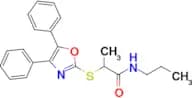
2-((4,5-Diphenyloxazol-2-yl)thio)-N-propylpropanamide
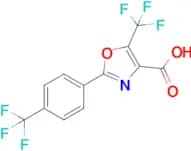
CAS:Purity:97.0%Molecular weight:366.48001098632815-(Trifluoromethyl)-2-(4-trifluoromethyl)phenyl-oxazole-4-carboxylic acid
CAS:Formula:C12H5F6NO3Purity:95.0%Molecular weight:325.166N-Methyl-1-(oxazol-2-yl)methanamine
CAS:Formula:C5H8N2OPurity:95.0%Color and Shape:LiquidMolecular weight:112.132N-[3-(1H-imidazol-1-yl)propyl]-4,6-dimethyl-1,3-benzothiazol-2-amine
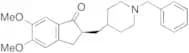
CAS:Purity:95.0%Molecular weight:286.3999938964844(-)-Donepezil
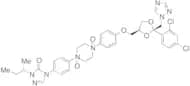
CAS:Controlled Product<p>Applications (-)-Donepezil is an isomer of Donepezil (D531750), a nootropic, acting as an inhibitor of acetylcholinesterase.<br>References Ohnishi, A., et al.: J. Clin. Pharmacol., 33, 1086 (1993), Galli, A., et al.: Eur. J. Pharmacol., 270, 189 (1994)<br></p>Formula:C24H29NO3Color and Shape:NeatMolecular weight:379.49Itraconazole N,N-Dioxide
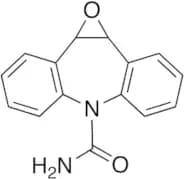
Controlled Product<p>Stability Hygroscopic<br>Applications Itraconazole N,N-Dioxide is a derivative of Itraconazole (I937500). Itraconazole is an orally active antimycotic structurally related to Ketoconazole. Antifungal. It is a COVID19-related research product.<br>References Espinel-Ingroff, A., et al.: Antimicrob. Agents Chemother., 26, 5 (1984), Heykants, J., et al.: Mycoses, 32, Suppl 1, 67 (1989), Sugar, A.M.,et al.: Curr. Clin. Top. Infect. Dis., 13, 74 (1993),<br></p>Formula:C35H38Cl2N8O6Color and Shape:NeatMolecular weight:737.63Carbamazepine 10,11-Epoxide
CAS:<p>Applications A metabolite of Carbamazepine (C175840).Representative lots contained 1-2% carbamazepine by HPLC.<br>References Bellucci, G., et al.: J. Med. Chem., 30, 768 (1987), Johannessen, S., et al.: Ther. Drug. Monit., 27, 710 (2005), Bialer, M., et al.: Expert Opin. Invest. Drugs, 15, 637 (2006), Williams, J., et al.: J. Clin. Pharmacol., 46, 258 (2006),<br></p>Formula:C15H12N2O2Purity:>97% by HPLCColor and Shape:NeatMolecular weight:252.275-Hydroxy Omeprazole-d3 Sodium Salt
CAS:Controlled ProductFormula:C17H15D3N3NaO4SColor and Shape:White To Light YellowMolecular weight:386.423-Methyl-4-(2,2,2-trifluoroethoxy)-2-pyridinemethanol
CAS:Controlled ProductFormula:C9H10F3NO2Color and Shape:Light Beige To Light BrownMolecular weight:221.071-(4-Chloro-2-(2-fluorobenzoyl)phenyl)-2-methyl-1H-imidazole-5-carboxylic Acid
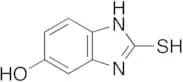
CAS:Controlled Product<p>Applications 1-(4-Chloro-2-(2-fluorobenzoyl)phenyl)-2-methyl-1H-imidazole-5-carboxylic Acid is a metalobilite of Midazolam(M343000) which is a anesthetic; anticonvulsant; sedative; hypnotic. Positive allosteric modulator of the GABAA receptor. Neuroprotective & Neuroresearch products.<br>References Dundee, J. W., et al.: Drugs, 28, 519 (1984), Lahat, E., et al.: Br. Med. J., 321, 83 (2000),<br></p>Formula:C18H12ClFN2O3Color and Shape:NeatMolecular weight:358.756-Hydroxy-2-mercaptobenzimidazole
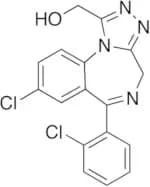
CAS:Controlled ProductFormula:C7H6N2OSColor and Shape:NeatMolecular weight:166.201'-Hydroxy Triazolam
CAS:Controlled Product<p>Applications A metabolite of Triazolam (T767380(M)), which is a sedative; a controlled substance (depressant).<br>References Boxenbaum, H., et al.: J. Pharm. Pharm. Sci., 2, 47 (1999), Perloff, M., et al.: J. Pharmacol. Exp. Ther., 292, 618 (2000), Patki, K., et al.: Drug Metab. Dispos., 31, 938 (2003),<br></p>Formula:C17H12Cl2N4OColor and Shape:Light GreenMolecular weight:359.213-Phenyl-2-tetrazol-1-yl-propionic acid
CAS:Formula:C10H10N4O2Purity:95.0%Color and Shape:SolidMolecular weight:218.2164-Methyl Mebendazole
CAS:Controlled Product<p>Applications Mebendazole (M200500) related compound as anthelmintic agent.<br>References Raeymaekers, A.H.M., et al.: Arzneim.-Forsch., 28, 586 (1978),<br></p>Formula:C17H15N3O3Color and Shape:NeatMolecular weight:309.32Midazolam 2-Oxide
CAS:Controlled Product<p>Applications A metabolite of Midazolam (M343000).<br></p>Formula:C18H13ClFN3OColor and Shape:NeatMolecular weight:341.77Metronidazole-d4
CAS:Controlled Product<p>Applications Metronidazole-d4 is a labelled analog of Metronidazole (M338880). Used as an antibacterial in the treatment of rosacea. Antiprotozoal (trichomonas). A potential human carcinogen.<br>References Carballo, M., et al.: J. App. Toxicol., 29, 248 (2009), Leitsch, D., et al.: Mol. Microbiol., 72, 518 (2009), Sanderson, H., et al.: Toxicol. Lett., 187, 84 (2009),<br></p>Formula:C62H4H5N3O3Color and Shape:Light YellowMolecular weight:175.18Isobutylsuccinic Acid
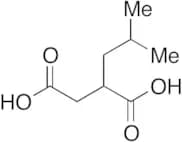
CAS:Controlled Product<p>Applications Isobutylsuccinic Acid was used to synthesize succinimide derivatives as inhibitors of human leukocyte elastase, cathepsin G and proteinase 3.<br>References Groutas, W., et al.: Bioorg. Med. Chem., 3, 375 (1995);<br></p>Formula:C8H14O4Color and Shape:NeatMolecular weight:174.19Ilaprazole
CAS:Controlled Product<p>Applications Ilaprazole is a proton pump inhibitor (PPI) used in the treatment of dyspepsia, peptic ulcer disease (PUD), gastroesophageal reflux disease (GORD/GERD) and duodenal ulcer.<br>References Cao, S., et al.: Acta Pharmacol. Sin., 33, 1095 (2012); Wang, L., et al.: J. Clin. Gastroenterol., 45, 322 (2011)<br></p>Formula:C19H18N4O2SColor and Shape:NeatMolecular weight:366.44Omeprazole-d3 (benzimidazole-4,6,7-d3)
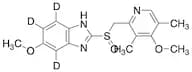
CAS:Controlled Product<p>Applications Omeprazole-d3 (benzimidazole-4,6,7-d3) (CAS# 934293-92-2) is a useful isotopically labeled research compound.<br></p>Formula:C17H16D3N3O3SColor and Shape:Light BrownMolecular weight:348.445-fluoro-2-(2-pyrrolidinyl)-1H-benzimidazole dihydrochloride
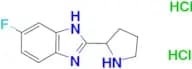
CAS:Purity:95.0%Molecular weight:278.14999389648444-Nitro-2,3-lutidine N-Oxide
CAS:Controlled Product<p>Applications Nitropyridine oxide derivatives show carcinogenicity and mutagenicity.<br>References Nagao, M., et al.: Cancer Res., 32, 2369 (1972),<br></p>Formula:C7H8N2O3Color and Shape:NeatMolecular weight:168.15N-Desmethyl,-N-nitroso-promethazine
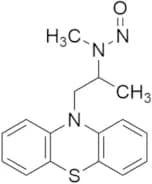
CAS:Controlled ProductFormula:C16H17N3OSColor and Shape:NeatMolecular weight:299.395-Methoxy-2-[[(4-Chloro-3,5-dimethyl-2-pyridinyl)methyl]sulfinyl]-5-methoxy-1H-benzimidazole
CAS:<p>5-Methoxy-2-[(4-chloro-3,5-dimethyl-2-pyridinyl)methyl]sulfinyl]-5-methoxy-1H benzimidazole is a synthetic drug product. It has been used as a positive control in metabolism studies and as an impurity standard. 5-Methoxy 2-[(4-chloro 3,5 dimethyl 2 pyridinyl)methyl]sulfinyl]-5 methoxy 1H benzimidazole is also a metabolite of the active pharmaceutical ingredient (API) which is used to develop drugs. This chemical is synthesized by custom synthesis and can be obtained at high purity levels. The metabolite of this compound is 5 methoxy 2-[(4 chloro 3,5 dimethyl 2 pyridinyl)methyl]sulfonyl]-5 methoxy 1H benzimidazole.</p>Formula:C16H16ClN3O2SPurity:Min. 95%Color and Shape:PowderMolecular weight:349.84 g/molDi-2-thienylmethanone
CAS:<p>Di-2-thienylmethanone is a pyrazole with an activation energy of about 10.5 kcal/mol. It has been found to be toxic and can cause cell lysis. This molecule has been used in the synthesis of a number of drugs, including thiopental, a barbiturate that is used as an anaesthetic. Di-2-thienylmethanone is also the precursor for the synthesis of fluoroquinolones, which are potent antibacterial agents. The Friedel-Crafts reaction is one way this molecule is synthesized, and it involves the addition of an alkyl halide to an unsaturated double bond. This reaction is named after Charles Friedel and James Crafts who first discovered it in 1877.</p>Formula:C9H6OS2Purity:Min. 95%Color and Shape:White PowderMolecular weight:194.28 g/mol5-Methoxy-2-[[(3,5-dimethyl-2-pyridinyl)methyl]sulphinyl]-1H-benzimidazole
CAS:<p>5-Methoxy-2-[[(3,5-dimethyl-2-pyridinyl)methyl]sulphinyl]-1H-benzimidazole is a natural product. It is an impurity in the drug development process and may be present as an analytical marker for impurities. 5-Methoxy-2-[(3,5-dimethylpyridinium)methyl]sulfinyl]-1Hbenzimidazole is used as a pharmacopoeia standard and can be synthesized on request.</p>Formula:C16H17N3O2SPurity:Min. 95%Color and Shape:PowderMolecular weight:315.39 g/molRabeprazole Impurity 2
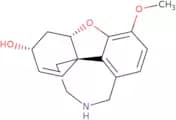
CAS:<p>Rabeprazole Impurity 2 is a research and development impurity standard that is used for qualitative analysis. It can be custom synthesized to meet specific needs, and it can also be used in drug product synthesis. Rabeprazole Impurity 2 is a high purity synthetic compound that has been pharmacopoeia-qualified. It can also be used as a metabolite or analytical standard, and it has been studied for its metabolism studies with HPLC-MS. Rabeprazole Impurity 2 has CAS No. 1807988-36-8.</p>Formula:C18H19N3O4Purity:Min. 95%Molecular weight:341.36 g/molN-Desmethyl galanthamine
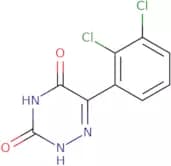
CAS:Controlled Product<p>N-Desmethyl galanthamine is a plant alkaloid that is found in the Huperzia serrata plant. It has been shown to have cholinergic activity and calcium binding properties. N-Desmethyl galanthamine inhibits acetylcholinesterase, an enzyme responsible for the breakdown of acetylcholine, which is a neurotransmitter. This inhibition leads to increased levels of acetylcholine, which results in increased neuron stimulation and improved memory function. N-Desmethyl galanthamine also binds to β2 nicotinic receptor sites and blocks the binding of nicotine, leading to decreased nicotine dependence.</p>Formula:C16H19NO3Purity:Min. 95%Molecular weight:273.33 g/mol6-(2,3-Dichlorophenyl)-1,2,4-triazine-3,5(2H,4H)-dione
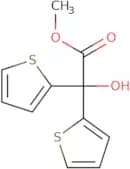
CAS:<p>6-(2,3-Dichlorophenyl)-1,2,4-triazine-3,5(2H,4H)-dione is a chlorinating agent that converts alcohols to alkyl chlorides. It is used for the conversion of diazotizable aromatic compounds to diazo compounds. This compound has been shown to be neuroprotective in animal models and provides protection against glutamate excitotoxicity. 6-(2,3-Dichlorophenyl)-1,2,4-triazine-3,5(2H,4H)-dione also reacts with nitrite ions to form the corresponding nitroso derivatives. These derivatives can cause DNA damage and are mutagenic. 6-(2,3-Dichlorophenyl)-1,2,4-triazine-3,5(2H,4H)-dione has been shown to react with aminoguanidine to produce a chromat</p>Formula:C9H5Cl2N3O2Purity:Min. 95%Color and Shape:PowderMolecular weight:258.06 g/molMethyl 2,2-dithienylglycolate
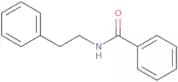
CAS:<p>Intermediate for tiotropium bromide synthesis</p>Formula:C11H10O3S2Purity:Min. 95%Color and Shape:White PowderMolecular weight:254.33 g/molN-(2-Phenethyl)benzamide
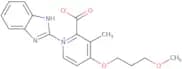
CAS:<p>N-(2-Phenethyl)benzamide (NPEB) is a molecule that belongs to the group of reactive molecules. It has been shown to be toxic to gram-positive bacteria, such as Staphylococcus aureus and Bacillus subtilis, but not gram-negative bacteria such as Escherichia coli. NPEB also has been shown to have locomotor activity in animals, which may be due to its ability to inhibit the mitochondrial electron transport chain and inhibit ATP production. NPEB's biological properties are well characterized. FTIR spectroscopy showed that this molecule has an amide functional group and is a small molecule with a molecular weight of 176.4 g/mol. This molecule was also found to be able to bind to mitochondria in animals.</p>Formula:C15H15NOPurity:Min. 97 Area-%Color and Shape:PowderMolecular weight:225.29 g/mol2-[[[(4-Methoxypropoxy)-3-methyl-2-pyridinyl]methyl]sulfonyl]-1H-benzimidazole
CAS:<p>2-[[[(4-Methoxypropoxy)-3-methyl-2-pyridinyl]methyl]sulfonyl]-1H-benzimidazole is a protonated sulfonamide that is used as an analytical method to detect the presence of other drugs in human liver tissue. It has been shown to inhibit the activity of cytochrome P450 3A4 (CYP3A4), one of the enzymes responsible for metabolizing many drugs. Bromoenol lactone and powder diffraction spectrum are two additional analytical methods that can be used to detect 2-[([(4-methoxypropoxy)-3-methyl-2-pyridinyl]methyl]sulfonyl]-1H-benzimidazole.</p>Formula:C18H21N3O4SPurity:Min. 95%Color and Shape:White/Off-White SolidMolecular weight:375.44 g/mol2-(3-(1-Benzylpiperidin-4-yl)-2-oxopropyl)-4,5-dimethoxybenzoic acid sodium salt
<p>2-(3-(1-Benzylpiperidin-4-yl)-2-oxopropyl)-4,5-dimethoxybenzoic acid sodium salt is a white to off-white crystalline powder. It is soluble in water and sparingly soluble in alcohol. This product is used as an analytical standard and has been found to be a metabolite of the drug clozapine. 2-(3-(1-Benzylpiperidin-4-yl)-2-oxopropyl)-4,5-dimethoxybenzoic acid sodium salt has also been found to be an impurity in the drug product lamotrigine.</p>Formula:C24H29NO5•NaPurity:Min. 95%Molecular weight:434.49 g/mol5,6-Dimethoxy-2-(4-piperidinyl)methyleneindan-1-one (donepezil impurity)
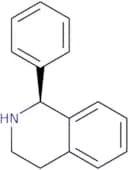
CAS:<p>5,6-Dimethoxy-2-(4-piperidinyl)methyleneindan-1-one (donepezil impurity) is an analytical standard used as a reference in HPLC assays for donepezil. It is also a metabolite of donepezil and has been found to have pharmacological activity similar to that of the parent compound. This impurity is present in donepezil drug products at levels up to 0.5%.</p>Formula:C17H21NO3Purity:Min. 95%Molecular weight:287.35 g/mol(1S)-1-Phenyl-1,2,3,4-tetrahydroisoquinoline
CAS:<p>(1S)-1-Phenyl-1,2,3,4-tetrahydroisoquinoline is a drug used to treat depression. It is an antidepressant drug that inhibits the reuptake of serotonin and norepinephrine in the brain by blocking their transport into the nerve cells. The drug acts as a weak inhibitor of monoamine oxidase (MAO). It also has an effect on bladder function. This compound is synthesized from 1-phenyl-2,5-dihydrothiazole by way of a sequence of reactions that includes the formation of an amine salt via reaction with phosphorus pentoxide and chloroacetic acid followed by conversion to the chloride with thionyl chloride.</p>Formula:C15H15NPurity:Min. 95%Color and Shape:White PowderMolecular weight:209.29 g/mol2-[[[3-Methyl-4-(methylthio)-2-pyridinyl]methyl]sulfinyl]-1H-benzimidazole
CAS:<p>2-[[[3-Methyl-4-(methylthio)-2-pyridinyl]methyl]sulfinyl]-1H-benzimidazole is a synthetic, nonsteroidal anti-inflammatory drug. It is soluble in methanol and ethanol, not soluble in water. The impurity standard of 2-[[[3-Methyl-4-(methylthio)-2-pyridinyl]methyl]sulfinyl]-1H-benzimidazole is 3-[2-[(3,4,5-trimethoxyphenyl)amino]-1H-benzimidazolium methyl sulfate].</p>Formula:C15H15N3OS2Purity:Min. 95%Molecular weight:317.43 g/molOmeprazole impurity F and G
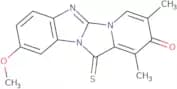
CAS:<p>Omeprazole is a proton pump inhibitor that inhibits the H+/K+-ATPase enzyme in gastric parietal cells. Omeprazole impurity F and G are metabolites of omeprazole. Omeprazole impurity F is a metabolite of omeprazole that forms by oxidation of the methylthio group in omeprazole to form a sulfoxide. Omeprazole impurity G is formed by hydrolysis of the methylthio group in omeprazole to form an alcohol. The purity of this product is high and can be custom synthesized based on customer's needs. It is also available as an HPLC standard or as an API impurity for use in metabolism studies.</p>Formula:C16H13N3O2SPurity:Min. 95%Color and Shape:Red PowderMolecular weight:311.36 g/molLansoprazole N-oxide
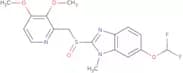
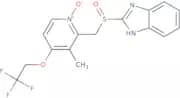
CAS:<p>Lansoprazole N-oxide is a prodrug that is converted to lansoprazole sulfone in vivo. Lansoprazole N-oxide is used as a diluent in chromatographic experiments. It has been shown to be more sensitive than the parent compound, lansoprazole, for the diagnosis of reflux oesophagitis. Lansoprazole N-oxide also has a validation wavelength of 240 nm and can be detected by liquid chromatography. The active form of lansoprazole, lansoprazole sulfone, can be detected by gas chromatography mass spectrometry (GCMS).</p>Formula:C16H14F3N3O3SPurity:Min. 95%Color and Shape:White PowderMolecular weight:385.36 g/molCarbendazim
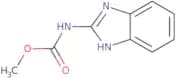
CAS:<p>Carbendazim is a fungicide that inhibits the growth of fungi and bacteria. It has been shown to be potent inducers of polymerase chain reaction (PCR) amplification, with a rate constant of 0.0103 per minute. Carbendazim also has a significant effect on electrochemical impedance spectroscopy (EIS). The EIS analysis was used to compare carbendazim-treated cells with untreated cells, which showed that carbendazim causes an increase in the resistance across the cell membrane. This research suggests that carbendazim may be genotoxic, as it increased the amount of DNA damage observed in wild-type strains and altered the optical properties of DNA. Carbendazim is also an effective inhibitor of nitrite ion oxidation and colloidal gold deposition, which has led to its use as a water vapor control agent for plants.</p>Formula:C9H9N3O2Purity:Min. 95%Color and Shape:PowderMolecular weight:191.19 g/molN-[5-Amino-6-(2,3-dichlorophenyl)-1,2,4-triazin-3-yl]-2,3-dichlorobenzamide
CAS:<p>N-[5-Amino-6-(2,3-dichlorophenyl)-1,2,4-triazin-3-yl]-2,3-dichlorobenzamide is a pharmaceutical dosage form that is titrated to achieve the desired therapeutic effect. It is used to treat epilepsy and bipolar disorder. Lamotrigine binds to sodium channels in nerve cells and blocks their opening. This prevents the influx of sodium ions that are necessary for neuronal transmission. Lamotrigine has been shown to have an anticonvulsant effect by reducing the frequency of seizures in patients with epilepsy.</p>Formula:C16H9Cl4N5OPurity:Min. 95%Color and Shape:White Off-White PowderMolecular weight:429.09 g/molAlbendazole sulfoxide
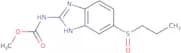
CAS:<p>Albendazole sulfoxide is a sulfoxide of albendazole. The molecular docking analysis of the two molecules showed that the sulfoxide group is located in the same position as the hydroxyl group on albendazole. It has been shown that this replacement of hydroxyl with a sulfoxide group increases the solubility and stability of albendazole, which may be due to hydrogen bonding interactions between these groups. Albendazole sulfoxide has been shown to be an effective treatment for infections caused by parasites such as helminths. However, it should not be used in combination with drugs that are metabolized by cytochrome P450 enzymes because it can inhibit their activity.</p>Formula:C12H15N3O3SPurity:Min. 97 Area-%Color and Shape:White PowderMolecular weight:281.33 g/molPantoprazole sodium hydrate - Mixture of impurities D and F
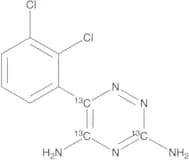
CAS:<p>Pantoprazole sodium hydrate is a custom synthesis that is used as a drug product. The CAS number for this compound is 624742-53-6. This compound has the following impurities: D and F. Pantoprazole sodium hydrate has been shown to be metabolized in vitro by human liver microsomes to its metabolites, including the following: (1) pantoprazol acid, (2) 4-hydroxypantoprazol acid, (3) 4-hydroxyisoxazole acid, and (4) 5-(4-hydroxyphenyl)-2H-1,2-benzoxazin-3(4H)-one. The metabolite 4-hydroxypantoprazol acid has been found to be pharmacologically active in animal models of gastric ulceration and healing.</p>Formula:C17H17F2N3O4SPurity:Min. 95%Color and Shape:Off-white to yellow powder.Molecular weight:397.4 g/mol6-(2,4-Dichlorophenyl)-1,2,4-triazine-3,5-diamine
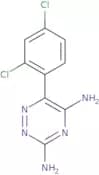
CAS:<p>6-(2,4-Dichlorophenyl)-1,2,4-triazine-3,5-diamine is a metabolite that can be found in the urine and blood of humans. It has been shown to have cytotoxic effects on human lymphocytes and erythrocytes. 6-(2,4-Dichlorophenyl)-1,2,4-triazine-3,5-diamine is used as an impurity standard for HPLC analysis and as a reference compound for pharmacopoeia. This chemical is also used in the synthesis of some drugs. 6-(2,4-Dichlorophenyl)-1,2,4-triazine-3,5-diamine is not listed in any pharmacopoeia or natural product database.</p>Formula:C9H7Cl2N5Purity:Min. 95%Color and Shape:White PowderMolecular weight:256.09 g/mol10,11-Dihydroxy-d10 Carbamazepine
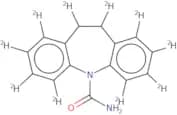
Controlled Product<p>10,11-Dihydroxy-d10 Carbamazepine is a drug product that is used as an analytical reference standard. It is natural and synthetic impurity in the API (active pharmaceutical ingredient) Carbamazepine. The CAS number for 10,11-Dihydroxy-d10 Carbamazepine is 513-81-5. This compound has been synthesized by custom synthesis and is an impurity standard for HPLC analysis of carbamazepine. 10,11-Dihydroxy-d10 Carbamazepine is also a research and development chemical for the drug development industry. It has been classified as a niche chemical due to its high purity and pharmacopoeia grade.</p>Purity:Min. 95%


![N-[3-(1H-imidazol-1-yl)propyl]-4,6-dimethyl-1,3-benzothiazol-2-amine](/_next/image/?url=https%3A%2Fstatic.cymitquimica.com%2Fproducts%2F10%2Fthumb-webp%2FF495855.webp&w=3840&q=75)










![5-Methoxy-2-[[(4-Chloro-3,5-dimethyl-2-pyridinyl)methyl]sulfinyl]-5-methoxy-1H-benzimidazole](/_next/image/?url=https%3A%2Fstatic.cymitquimica.com%2Fproducts%2F3D%2Fthumb-webp%2FIM57916.webp&w=3840&q=75)


![5-Methoxy-2-[[(3,5-dimethyl-2-pyridinyl)methyl]sulphinyl]-1H-benzimidazole](/_next/image/?url=https%3A%2Fstatic.cymitquimica.com%2Fproducts%2F3D%2Fthumb-webp%2FIM57917.webp&w=3840&q=75)
![2-[[[(4-Methoxypropoxy)-3-methyl-2-pyridinyl]methyl]sulfonyl]-1H-benzimidazole](/_next/image/?url=https%3A%2Fstatic.cymitquimica.com%2Fproducts%2F3D%2Fthumb-webp%2FIM57866.webp&w=3840&q=75)


![2-[[[3-Methyl-4-(methylthio)-2-pyridinyl]methyl]sulfinyl]-1H-benzimidazole](/_next/image/?url=https%3A%2Fstatic.cymitquimica.com%2Fproducts%2F3D%2Fthumb-webp%2FIM21229.webp&w=3840&q=75)
![N-[5-Amino-6-(2,3-dichlorophenyl)-1,2,4-triazin-3-yl]-2,3-dichlorobenzamide](/_next/image/?url=https%3A%2Fstatic.cymitquimica.com%2Fproducts%2F3D%2Fthumb-webp%2FIA58055.webp&w=3840&q=75)