Salts and Derivatives of Active Pharmaceutical Ingredients (API)
The salts of Active Pharmaceutical Ingredients (APIs) are compounds formed by the reaction of an acid with a base, resulting in an ionic equilibrium. These salts often improve the solubility and stability of APIs, facilitating their absorption in the body. API derivatives are chemical variants of an active ingredient that may have enhanced or modified properties to optimise therapeutic efficacy. API salts are used in the formulation of oral, injectable, and topical medications. Additionally, API derivatives can improve the pharmacokinetics of drugs, such as enabling controlled release of active substances.
At CymitQuimica, we provide API salts and derivatives with the necessary purity and quality for research and pharmaceutical formulation development.
Found 79450 products of "Salts and Derivatives of Active Pharmaceutical Ingredients (API)"
Sort by
Purity (%)
0
100
|
0
|
50
|
90
|
95
|
100
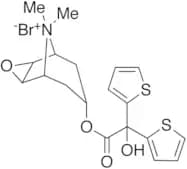
Tiotropium Bromide
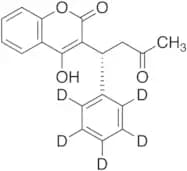
CAS:Formula:C19H22NO4S2·BrColor and Shape:White To Off-WhiteMolecular weight:472.42R-(+)-Warfarin-d5
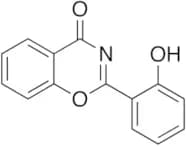
CAS:Controlled Product<p>Applications R-(+)-Warfarin-d5 is the isotope labelled analog of R-(+)-Warfarin, an enantiomer of Warfarin (W498500). Coumarin anticoagulant.<br> Not a dangerous good if item is equal to or less than 1g/ml and there is less than 100g/ml in the package<br>References Hagan, E.C., et al.: J. Am. Pharm. Assoc. Sci. Ed., 42, 379 (1953), Bell, R.G., et al.: Biochemistry, 11, 1959 (1972), Valente, J.E., et al.: J. Med. Chem., 20, 1489 (1977), Back, N., et al.: Pharmacol. Res. Commun., 10, 445, (1978), Babhair, S.A., et al.: Anal. Profiles Drug Subs., 14, 423 (1985), Takahashi, H., et al.: Echizen, Clin. Pharmacokinet., 40, 587 (2001),<br></p>Formula:C192H5H11O4Color and Shape:White To Off-WhiteMolecular weight:313.3592-(2-Hydroxyphenyl)-4H-1,3-benzoxazin-4-one
CAS:Controlled Product<p>Applications Intermediate in the production of Deferasirox.<br></p>Formula:C14H9NO3Color and Shape:NeatMolecular weight:239.232-(2-Aminoethylamino)ethanol
CAS:Controlled Product<p>Applications 2-(2-Aminoethylamino)ethanol is a reagent used in the synthesis of various pharmacologically active compounds and functional groups. Its used in the synthesis of antitumor anthracene-diones and antitumor DNA intercalators. More recently used in the synthesis of ionic liquids with various thermal, dielectric and catalytic properties.<br> Not a dangerous good if item is equal to or less than 1g/ml and there is less than 100g/ml in the package<br>References Bair, K. et al.: J. Med. Chem., 33, 2385 (1990); Krapcho, A. et al.: J. Med. Chem., 37, 828 (1994); Karadag, A. et al.: J. Mol. Liq., 177, 369 (2013);<br></p>Formula:C4H12N2OColor and Shape:NeatMolecular weight:104.15096-Hydroxy Warfarin β-D-Glucuronide D Disodium Salt Hydrate
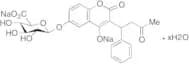
CAS:Controlled Product<p>Applications 6-Hydroxy Warfarin β-D-Glucuronide Disodium Salt Hydrate, is a metabolite of Warfarin (W498500) in humans.<br>References Barbato, F., et al.: J. Pharm. Sci., 86, 225 (1997), Kavana, M., et al.: Biochemistry, 42, 10238 (2003), Franco, A., et al.: Environ. Toxicol. Chem., 28, 458 (2009),<br></p>Formula:C25H22Na2O11•xH2OColor and Shape:NeatMolecular weight:544.421802Bimatoprost-d5
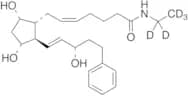
CAS:Controlled Product<p>Applications Labelled Bimatoprost (B386800). Bimatoprost is an antiglaucoma agent. Bimatoprost is an synthetic prostamide; structurally related to prostaglandin F2α.<br>References Brandt, J.D., et al.: Ophthalmology, 108, 1023 (2001), Woodward, D.F., et al.: J. Pharmacol. Exp. Ther., 305, 772 (2003), Quinones, R., et al.: J. Ocul. Pharmacol. Ther., 20, 115 (2004),<br></p>Formula:C25H32D5NO4Color and Shape:NeatMolecular weight:420.6Selexipag
CAS:Controlled Product<p>Applications Selexipag is an orally available, highly selective, long-acting prostacyclin (IP) receptor agonist prodrug. It is a potential drug for the treatment of various vascular disorders such as pulmonary arterial hypertension and arteriosclerosis obliterans.<br>References Kuwano, K., et al.: J. Pharm. Exp. Ther., 322, 1181 (2007);<br></p>Formula:C26H32N4O4SColor and Shape:Light YellowMolecular weight:496.624-Chlorobenzal Chloride
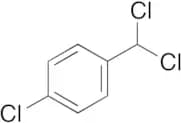
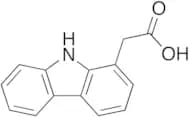
CAS:<p>Applications 4-Chlorobenzal Chloride is an impurity that is formed in the synthesis of Benoxaprofen (B165300); a non-steroidal anti-inflammatory ophthalmic agent.<br> Not a dangerous good if item is equal to or less than 1g/ml and there is less than 100g/ml in the package<br>References Cockerill, A.F., et al.: J. Chromatogr., 129, 339 (1976); Mathur, K., et al.: Bioorg. Med. Chem., 11, 1915 (2003); Zhao, M., et al.: Bioorg. Med. Chem., 15, 2815 (2007); Roy, K., et al.: Eur. J. Med. Chem., 44, 2913 (2009)<br></p>Formula:C7H5Cl3Color and Shape:NeatMolecular weight:195.472-(9H-Carbazol-1-yl)acetic Acid
CAS:Controlled ProductFormula:C14H11NO2Color and Shape:NeatMolecular weight:225.243