Monosaccharides
Subcategories of "Monosaccharides"
- Alloses(11 products)
- Arabinoses(21 products)
- Erythroses(11 products)
- Fructoses(9 products)
- Fucoses(36 products)
- Galactosamine(41 products)
- Galactose(261 products)
- Glucoses(365 products)
- Glucuronic Acids(52 products)
- Glyco-substrates for Enzyme(78 products)
- Guloses(6 products)
- Idoses(4 products)
- Inositols(15 products)
- Lyxoses(4 products)
- Mannoses(65 products)
- O-Glycans(48 products)
- Psicoses(3 products)
- Rhamnoses(10 products)
- Riboses(61 products)
- Sialic Acids(100 products)
- Sorboses(4 products)
- Sugars(173 products)
- Tagatoses(4 products)
- Taloses(8 products)
- Xyloses(20 products)
Found 6088 products of "Monosaccharides"
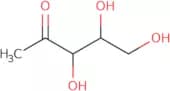
1-Deoxy-D-ribulose - 1.0M Aqueous solution
CAS:1-Deoxy-D-ribulose is a ribose sugar that has been modified by the removal of one of the hydroxyl groups. It has a variety of uses, including as a flavouring agent in food and beverages and as an intermediate in the production of other chemicals. The flavour profile varies depending on its source, but can include caramel, toffee, chocolate, dried fruit or molasses flavours.Formula:C5H10O4Purity:Min. 95%Color and Shape:PowderMolecular weight:134.13 g/mol4-Methoxyphenyl 2-azido-4,6-O-benzylidene-2-deoxy-b-D-galactopyranose
CAS:4-Methoxyphenyl 2-azido-4,6-O-benzylidene-2-deoxy-b-D-galactopyranose is a synthetic sugar that has been modified with the Click reaction. It is a water soluble white solid and can be used in the synthesis of glycosides. 4MPAPGAL is a complex carbohydrate that can be used to modify saccharides or oligosaccharides. It has been shown to bind to proteins and other biomolecules with high affinity.Formula:C20H21N3O6Purity:Min. 95%Molecular weight:399.4 g/mol1,2,3-Tri-O-benzoyl-4-deoxy-a-L-fucopyranose
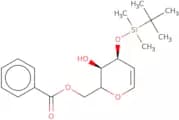
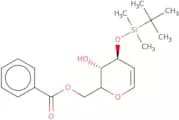
CAS:1,2,3-Tri-O-benzoyl-4-deoxy-a-L-fucopyranose is a carbohydrate that belongs to the group of oligosaccharides. It is a sugar that contains three benzoyl groups and one deoxyhexopyranose. This product can be custom synthesized and has high purity with no detectable impurities. 1,2,3-Tri-O-benzoyl-4-deoxy-a-L-fucopyranose can be used in the synthesis of glycoproteins and other complex carbohydrates by methylation and glycosylation methods. The product also has click modification capability.Formula:C27H24O7Purity:Min. 95%Molecular weight:460.48 g/mol6-O-Benzoyl-3-O-tert-butyldimethylsilyl-D-glucal
6-O-Benzoyl-3-O-tert-butyldimethylsilyl-D-glucal is a custom synthesis that is used in the modification of monosaccharides and oligosaccharides. It is a synthetic molecule that has been modified with fluorination, methylation, and click chemistry. This product is a saccharide with a CAS number.
Formula:C19H28O5SiPurity:Min. 95%Molecular weight:364.51 g/molMethyl (methyl 3-deoxy-D-arabino-hept-2-ulopyranosid)onate
CAS:Methyl 3-deoxy-D-arabino-hept-2-ulopyranosid)onate is a custom synthesis of methylation, click modification, and oligosaccharide. It is an oligosaccharide that contains a saccharide linked to a monosaccharide. Methyl 3-deoxy-D-arabino-hept-2-ulopyranosid)onate is used in the synthesis of polysaccharides and complex carbohydrates. This product is characterized by high purity and low cost, making it ideal for research purposes.Formula:C9H16O7Purity:Min. 95%Molecular weight:236.22 g/molRhein 1-D-glucuronide
CAS:Rhein 1-D-glucuronide is a synthetic sugar that can be used in the synthesis of complex carbohydrates. It is a monosaccharide that has been modified with fluorination and has been shown to have high purity. Rhein 1-D-glucuronide is a methylated form of rhein, which is an oligosaccharide or polysaccharide found in plants. The modification of rhein 1-D-glucuronide allows for an increased resistance to hydrolysis by esterases or glucuronidases, allowing for its use as a synthetic intermediate in the production of saccharides.Purity:Min. 95%Momordicoside G
CAS:Momordicoside G is a plant-derived compound that belongs to the group of monoterpenoids. It has been shown to stimulate cell growth and differentiation in vitro by binding to epidermal growth factor (EGF) and colony-stimulating factor (CSF) receptors. Momordicoside G has also been shown to inhibit pentobarbital sodium-induced lung cell lysis, which may be due to its ability to induce synthesis of fatty acids. This molecule has been found in a variety of model organisms, including bacteria and yeast. The fluorescence emission spectrum of momordicoside G has been reported and it was shown that this molecule binds to DNA polymerase. Studies have also shown that momordicoside G can inhibit RNA extraction from lung fibroblasts, which may be due to its ability to bind with RNA polymerase II.Formula:C37H60O8Purity:Min. 95%Molecular weight:632.87 g/molD-Glucose 2-phosphate
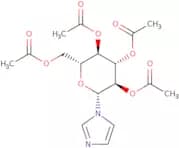
CAS:D-Glucose 2-phosphate (D-G6P) is a glycolysis intermediate that is generated by the enzyme phosphoglucose isomerase. It is necessary for the synthesis of glycogen and starch, as well as for the formation of glucose 6-phosphate in glycolysis. D-G6P has been shown to be an important substrate for enzymes involved in phosphate transfer. D-G6P also plays a role in mitochondrial function, as it can be converted to ATP by the enzyme pyruvate kinase. D-G6P has been shown to alter physiological effects in wild type strains of yeast and plants, as well as having disease activity against human serum.Formula:C6H13O9PPurity:Min. 95 Area-%Color and Shape:PowderMolecular weight:260.14 g/mol1-(2,3,4,6-Tetra-O-acetyl-b-D-glucopyranosyl)imidazole
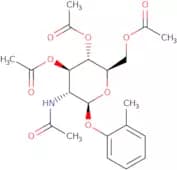
CAS:1-(2,3,4,6-Tetra-O-acetyl-b-D-glucopyranosyl)imidazole (1A2G) is an acidic sugar that is found in plants from the genus Desmodium. It is a component of the biomass and has been shown to have anti-inflammatory properties. 1A2G can be extracted from plants such as Centrosema, Pueraria and Phaseolus edulis, which are commonly grown in tropical regions. This sugar can be used as a nutrient or as a treatment for diseases such as diabetes mellitus or cancer.Purity:Min. 95%2-Methylphenyl 2-acetamido-3,4,6-tri-O-acetyl-2-deoxy-b-D-glucopyranoside
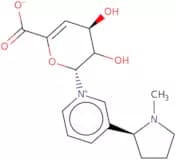
CAS:2-Methylphenyl 2-acetamido-3,4,6-tri-O-acetyl-2-deoxy-b-D-glucopyranoside is a high purity custom synthesis that has undergone a click modification (a reaction in which an azide group is transferred from an alkyne group to an electron rich atom such as nitrogen). The product has been fluorinated and modified with the addition of a saccharide group. This complex carbohydrate can be used in the synthesis of oligosaccharides or polysaccharides. It is also used as a sugar substitute.Formula:C21H27NO9Purity:Min. 95%Molecular weight:437.44 g/molNicotine-N-(4-deoxy-4,5-didehydro)-b-D-glucuronide
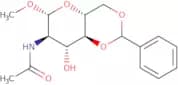
CAS:Nicotine-N-(4-deoxy-4,5-didehydro)-b-D-glucuronide is a synthetic glycosylated nicotine derivative. It is a white to slightly yellow powder that is soluble in water and alcohol. Nicotine-N-(4-deoxy-4,5-didehydro)-b-D-glucuronide has been shown to be effective against methicillin resistant Staphylococcus aureus (MRSA) and Clostridium perfringens, although is not active against acid fast bacteria such as Mycobacterium tuberculosis or Mycobacterium avium complex. This product has been custom synthesized with the goal of providing high purity and modification.Formula:C16H20N2O5Purity:Min. 95%Molecular weight:320.34 g/molMethyl 2-acetamido-4,6-O-benzylidene-2-deoxy-b-D-glucopyranoside
CAS:Methyl 2-acetamido-4,6-O-benzylidene-2-deoxy-b-D-glucopyranoside is a custom synthesis of an oligosaccharide that can be modified with methylation, glycosylation, or fluorination. It is a complex carbohydrate that has been synthesized using a click modification and high purity. This product is available for purchase as a white to off white powder.Formula:C16H21NO6Purity:Min. 95%Molecular weight:323.34 g/mol3-[(2,3,4,6-Tetra-O-acetyl-b-D-glucopyranosyl)thio]-propanoic acid
CAS:3-[(2,3,4,6-Tetra-O-acetyl-b-D-glucopyranosyl)thio]-propanoic acid is a modification of an oligosaccharide. It is a complex carbohydrate that has been modified with methylation and glycosylation. This product is synthesized from the raw material, which is a high purity monosaccharide or polysaccharide. 3-[(2,3,4,6-Tetra-O-acetyl-b-D-glucopyranosyl)thio]-propanoic acid has CAS No. 325410 2 and Mw of 835.5 g/mol. The molecular weight and purity are determined by high performance liquid chromatography (HPLC). The product is soluble in water and ethanol.Formula:C17H24O11SPurity:Min. 95%Molecular weight:436.43 g/molBromo-2-tetraacetyl galactose
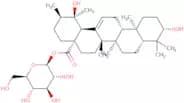
Bromo-2-tetraacetyl galactose is a glycosylation agent that is used for the post-translational modification of proteins. It can be applied to many types of polysaccharides such as saccharide, oligosaccharide, and glycoconjugates. Bromo-2-tetraacetyl galactose has been shown to be an effective methylation agent and can be used in click chemistry. This product has a CAS number and is custom synthesized for high purity.Purity:Min. 95%Pomolic acid 28-O-b-D-glucopyranosyl ester
CAS:Pomolic acid is a saponin isolated from the ethanol extract of Astragalus membranaceus. Pomolic acid has a nitrite reductase inhibitory effect and inhibits cell proliferation in certain cells, such as those found in the pancreas. The chemical structure of pomolic acid and its derivatives are similar to those of steroid glycosides and steroid alkaloids. It also has the ability to disrupt DNA replication and reduce insulin resistance. The use of pomolic acid in Chinese medicine formulas is reported to be effective for treating diabetes mellitus type 2, hyperlipidemia, and obesity.Purity:Min. 95%Methyl (phenyl 2-O-benzoyl-3-O-benzyl-1-thio-a-L-idopyranosyluronate)
CAS:Methyl (phenyl 2-O-benzoyl-3-O-benzyl-1-thio-a-L-idopyranosyluronate) is a custom synthesis, which has been modified with fluorination, methylation and click modification. This product is a monosaccharide or oligosaccharide that can be used as a synthetic building block for the production of saccharides and polysaccharides in glycosylation reactions. Methyl (phenyl 2-O-benzoyl-3-O-benzyl-1-thio-a-L-idopyranosyluronate) is also a carbohydrate that contains an oxygen atom in the form of an ether bond to one of its hydroxyl groups. It has been shown to have antiinflammatory effects by inhibiting prostaglandin synthesis.Formula:C27H26O7SPurity:Min. 95%Molecular weight:494.56 g/mol3,4,6-Tri-O-acetyl-2-deoxy-2-phthalimido-a-D-glucopyranosyl fluoride
CAS:3,4,6-Tri-O-acetyl-2-deoxy-2-phthalimido-a-D-glucopyranosyl fluoride is a synthetic saccharide that has been modified with the Click chemistry. It is an acetylated derivative of 2,3,4,6-trihydroxybenzoic acid and was prepared by the fluorination of 3,4,6-trihydroxybenzoic acid followed by glycosylation with 4-(N-(1-(ethoxycarbonyl)ethyl)amino)-benzeneboronic acid. The product is a white to off white powder that is soluble in water and low solvents. The purity of this product is >98% as determined by HPLC analysis.Formula:C20H20FNO9Purity:Min. 95%Molecular weight:437.37 g/mol2-Hydroxyestradiol-17-O-b-D-glucuronide
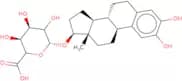
CAS:2-Hydroxyestradiol-17-O-b-D-glucuronide is a custom synthesis of an oligosaccharide and polysaccharide. It is modified with methylation, glycosylation, and carbamylation, and fluorinated to produce a high purity product. This product can be synthesized with a click modification or glycosylation, but is not available for purchase as a monosaccharide.Formula:C24H32O9Purity:Min. 95%Molecular weight:464.51 g/mol3-Deoxy-D-[UL-13C6]fructose
3-Deoxy-D-[UL-13C6]fructose is a high purity, custom synthesis, modification, and fluorination of a methylated oligosaccharide. It is a synthetic molecule that can be used to study the methylation of complex carbohydrates. 3-Deoxy-D-[UL-13C6]fructose can be used as an intermediate in the synthesis of other sugar molecules. The structure is shown below:Purity:Min. 95%1,2,3,4,6-Penta-O-pivaloyl-b-D-glucopyranose
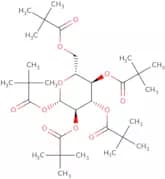
CAS:1,2,3,4,6-Penta-O-pivaloyl-b-D-glucopyranose is a glycosylation that is used in the synthesis of complex carbohydrates. This product can be custom synthesized to meet your needs. It is also available in high purity and with a CAS No. of 81058-26-6.Formula:C31H52O11Purity:Min. 95%Molecular weight:600.74 g/mol6-O-Benzyl-2,3:4,5-di-O-cyclohexylidene-D-myo-inositol
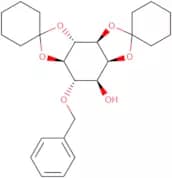
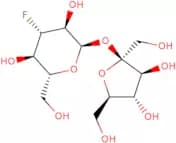
CAS:6-O-Benzyl-2,3:4,5-di-O-cyclohexylidene-D-myo-inositol is a complex carbohydrate that is synthesized from 6-O-benzyl-2,3:4,5-di-O-(cyclohexylidene)-D-myo-[1]-inositol. It can be used in the synthesis of glycosylations and other modifications. This product has been custom synthesized to high purity and is available for purchase.Formula:C26H34O6Purity:Min. 95%Molecular weight:442.54 g/mol3-Deoxy-3-fluorosucrose
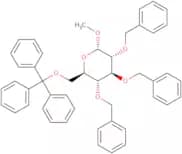
CAS:3-Deoxy-3-fluorosucrose is a noncompetitive inhibitor of leuconostoc mesenteroides glucosyltransferases. It inhibits the enzyme by binding to the active site and preventing the transfer of glucose from the sugar transport to the acceptor. 3-Deoxy-3-fluorosucrose has been shown to inhibit the synthesis of pro-inflammatory cytokines, such as TNF-α and IL1β, in vitro. This inhibition is thought to be due to its ability to inhibit sugar transport and thus prevent glycosylation reactions that are required for protein synthesis.Formula:C12H21FO10Purity:Min. 95%Molecular weight:344.29 g/molMethyl 2,3,4-tri-O-benzyl-6-O-trityl-a-D-glucopyranoside
CAS:Methyl 2,3,4-tri-O-benzyl-6-O-trityl-a-D-glucopyranoside is a modification of the sugar molecule. This modification process is completed by reacting the sugar with a derivative of benzyl alcohol. The result is an increase in the number of functional groups on the sugar molecule and a change in its physical properties. Methyl 2,3,4-tri-O-benzyl-6-O-trityl-a -D glucopyranoside has been used in the synthesis of oligosaccharides and polysaccharides. Methyl 2,3,4 -tri -O -benzyl -6 -O -trityl--a D glucopyranoside is an organic compound that belongs to the class of carbohydrates. It is a white powder that contains water solubility and has a melting point of about 145°C. MethylFormula:C47H46O6Purity:Min. 95%Molecular weight:706.89 g/molPhenyl 2-deoxy-2-trichloroacetamido-b-D-thiogalactopyranoside
Phenyl 2-deoxy-2-trichloroacetamido-b-D-thiogalactopyranoside is a custom synthesis that is a complex carbohydrate. It is an oligosaccharide that has CAS No. and is a polysaccharide with Modification, saccharide, Methylation, and Glycosylation. Phenyl 2-deoxy-2-trichloroacetamido-b-D-thiogalactopyranoside has high purity and fluorination which makes it a Synthetic.
Purity:Min. 95%Methyl 6-[methyl-2,3,4-tri-O-acetyl-b-D-glucuronato]mycophenolate
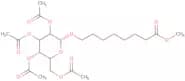
CAS:Methyl 6-[methyl-2,3,4-tri-O-acetyl-b-D-glucuronato]mycophenolate is a synthetic glycosylation reagent. It is an acetylated derivative of mycophenolic acid and has been used for the synthesis of oligosaccharides and polysaccharides. Methyl 6-[methyl-2,3,4-tri-O-acetyl-b-D-glucuronato]mycophenolate is soluble in water.Formula:C30H36O15Purity:Min. 95%Molecular weight:636.6 g/mol8-Methoxycarbonyloctanoyl 2,3,4,6-tetra-O-acetyl-b-D-galactopyranoside
CAS:8-Methoxycarbonyloctanoyl 2,3,4,6-tetra-O-acetyl-b-D-galactopyranoside is a carbohydrate which is synthesized by the reaction of 8-methoxycarbonyloctanoic acid and D-galactose. It is an oligosaccharide that has been modified with fluorine on the C2 position of the sugar ring. This product can be used as an analytical reagent for saccharides and carbohydrates.Formula:C23H36O12Purity:Min. 95%Molecular weight:504.52 g/mol1-(2,3,5-Tri-O-acetyl-b-D-ribofuranosyl)-1,2,4-triazole-3-carboxylic acid methyl ester
CAS:1-(2,3,5-Tri-O-acetyl-b-D-ribofuranosyl)-1,2,4-triazole-3-carboxylic acid methyl ester is a synthetic carbohydrate that has been modified with fluorine. It is an off white solid that has a molecular formula of C6H8O6 and a molecular weight of 252.1 g/mol. This compound is soluble in water and sparingly soluble in alcohol. 1-(2,3,5-Tri-O-acetyl-b-D-ribofuranosyl)-1,2,4-triazole-3-carboxylic acid methyl ester has been shown to possess antiviral activity against HIV as well as cytotoxicity to cancer cells.Formula:C15H19N3O9Purity:Min. 95%Molecular weight:385.33 g/mol3,5-Di-O-p-chlorobenzoyl-2-deoxy-2-fluoro-2-C-methyl-D-ribofurano-1,4-lactone
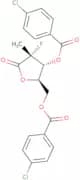
CAS:3,5-Di-O-p-chlorobenzoyl-2-deoxy-2-fluoro-2-C-methyl-D-ribofurano-1,4-lactone is a synthetic sugar molecule that has been modified with fluorination. This sugar is a monosaccharide and its synthesis has been customised to your requirements. 3,5-Di-O-p-chlorobenzoyl--2 deoxy 2 fluoro 2 C methyl D ribofurano 1 4 lactone is available in high purity and can be synthesized with the click modification. It can also be modified with methylation or glycosylation.Formula:C20H17Cl2FO6Purity:Min. 95%Molecular weight:443.25 g/molOctyl D-galactofuranoside tetraacetate
CAS:Octyl D-galactofuranoside tetraacetate is a fluorinated monosaccharide that is synthesized from octyl galactopyranoside. It is a synthetic oligosaccharide with a molecular weight of 806. Octyl D-galactofuranoside tetraacetate has been modified for glycosylation, methylation, and click modification. The chemical name is 4-O-(2-deoxy-beta-D-glucopyranosyl)galactopyranose 1,2,3,4,6-pentaacetate and it has CAS No. 223412-29-1. This product can be custom synthesized to order in high purity as per the customer's requirements.Formula:C22H36O10Purity:Min. 95%Molecular weight:460.52 g/mol2,5-Anhydro-3-deoxy-6-O-DMT-D-ribo-hexonic acid methyl ester
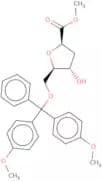
CAS:2,5-Anhydro-3-deoxy-6-O-DMT-D-ribo-hexonic acid methyl ester is a modification of the sugar ribose. It is an oligosaccharide that has been synthesized and modified with methylation, glycosylation, and fluorination. This modification resulted in its CAS number 184296-62-6. The chemical formula for this compound is C10H13NO4F2NaO8. 2,5-Anhydro-3,6 DMT -D ribo hexonic acid methyl ester is soluble in water and ethanol at pH 7.0 to 8.0 and shows no solubility at pH below 6 or above 10. The molecular weight of this compound is 586. The purity level of this compound is 99% or greater by HPLC analysis.Formula:C28H30O7Purity:Min. 95%Molecular weight:478.53 g/molD-Mannono-D-lactam
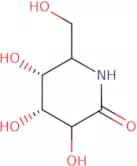
CAS:D-Mannono-D-lactam is a synthetic, sugar-based molecule. The compound is an antibiotic that inhibits bacterial growth by binding to the 50S ribosomal subunit of bacteria. It is active against a wide range of Gram-positive and Gram-negative bacteria, including methicillin resistant Staphylococcus aureus (MRSA), as well as Mycobacterium tuberculosis and Mycobacterium avium complex. D-Mannono-D-lactam has shown antiinflammatory properties, which may be due to its inhibition of prostaglandin synthesis.Formula:C6H11NO5Purity:Min. 95%Color and Shape:White SolidMolecular weight:177.16 g/mol2,3,4-Tri-O-benzoyl-a-L-fucopyranosyl trichloroacetimidate
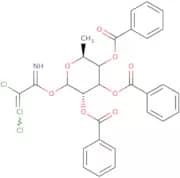
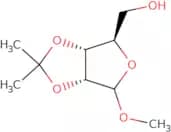
CAS:This compound is a custom synthesis that has been modified by fluorination and methylation. It has the structure of an oligosaccharide, with a saccharide at its core, and is composed of a glycosylated sugar. The saccharide consists of an acetimidate moiety attached to a benzoyl group. This compound can be used as part of a modification process for the production of polysaccharides or complex carbohydrates in order to create more efficient products.Formula:C29H24Cl3NO8Purity:Min. 95%Molecular weight:620.86 g/molMethyl 2,3-O-isopropylidene-D-ribofuranoside
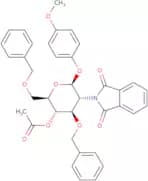
CAS:Methyl 2,3-O-isopropylidene-D-ribofuranoside is a nucleophile that reacts with amines to form a tetroxide intermediate. It has been shown to react with the cellular components of vesicular stomatitis virus and to have an interaction with malonic acid. This compound also reacts with osmium tetroxide in the presence of phosphite to produce a chloride ion and an osmate ester. Methyl 2,3-O-isopropylidene-D-ribofuranoside can be recycled by quaternization with sodium periodate, which yields methyl 3,5-dimethoxybenzoate.Formula:C9H16O5Purity:Min. 95%Color and Shape:Colorless PowderMolecular weight:204.2 g/mol4-Methoxyphenyl 4-O-Acetyl-3,6-di-O-benzyl-2-deoxy-2-phthalimido-b-D-glucopyranoside
CAS:4-Methoxyphenyl 4-O-acetyl-3,6-di-O-benzyl-2-deoxy-2-phthalimido--b-D--glucopyranoside is a synthetic carbohydrate that has been modified with fluorine. It has the chemical formula of C24H21F7NO8P and a molecular weight of 592.56. This compound is used for the synthesis of glycosides and as an intermediate for the synthesis of saccharides and oligosaccharides.Formula:C37H35NO9Purity:Min. 95%Molecular weight:637.68 g/mol3,5-Bis-O-(2,4-Dichlorobenzyl)-2-C-methyl-a-D-ribofuranose
3,5-Bis-O-(2,4-Dichlorobenzyl)-2-C-methyl-a-D-ribofuranose is a custom synthesis that can be modified by fluorination, methylation, and monosaccharide or oligosaccharide addition. This sugar has a molecular weight of 476.28 g/mol and CAS No. 94629-04-0. It is a polysaccharide that is glycosylated with sugar at carbons 1 and 2. 3,5-Bis-O-(2,4-Dichlorobenzyl)-2-C-methyl-a-D-ribofuranose is used as an intermediate in the synthesis of complex carbohydrates such as Glycogenin A (CAS No. 94629 04 0), which has been shown to have antihyperglycemic effects.Purity:Min. 95%1-O-tert-Butyldimethylsilyl 2-azido-2-deoxy-b-D-galactopyranoside
CAS:1-O-tert-Butyldimethylsilyl 2-azido-2-deoxy-b-D-galactopyranoside is a complex carbohydrate that can be modified to produce an oligosaccharide or polysaccharide. The modification of this glycosylated sugar can be done using methylation, click chemistry, or fluorination. This carbohydrate has been shown to have high purity and is suitable for use in any synthesis that requires saccharides.Formula:C12H25N3O5SiPurity:Min. 95%Molecular weight:319.43 g/mola-D-Galactopyranose 1,2-(methyl orthoacetate)
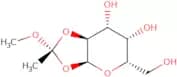
CAS:a-D-Galactopyranose 1,2-(methyl orthoacetate) is an oligosaccharide. It is a white to off-white crystalline solid with a sweet taste. This product can be used as a sugar substitute and is often used in the food industry.Formula:C9H16O7Purity:Min. 95%Molecular weight:236.22 g/molGlycerone phosphate hemimagnesium salt hydrate
CAS:Glycerone phosphate hemimagnesium salt hydrate is a substrate molecule that is used in the control analysis of dihydroxyacetone phosphate. Glycerone phosphate hemimagnesium salt hydrate is an optimum concentration for 3T3-L1 preadipocytes and has been shown to have an effect on energy metabolism. Glycerone phosphate hemimagnesium salt hydrate also has enzymatic activity, which can lead to neuronal death or skin cancer. This compound is a monosodium salt that can be found in cytosolic calcium, which is present in cells and helps regulate muscle contraction. Glycerone phosphate hemimagnesium salt hydrate can also be found in basic proteins that are vital for cell function.Formula:C3H5O6P·xH2OMgPurity:Min. 95 Area-%Color and Shape:PowderMolecular weight:180.19 g/mol5-O-Benzoyl-1,2-O-isopropylidene-a-D-xylofuranose
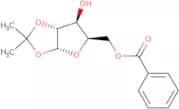
CAS:Ai Product Descriptions 50 CreativeFormula:C15H18O6Purity:Min. 95%Molecular weight:294.31 g/molTarenflurbil-acyl-b-D-glucuronide
CAS:Tarenflurbil-acyl-b-D-glucuronide is a custom synthesis that is a synthetic, high purity compound. This compound is an Oligosaccharide which is a complex carbohydrate that consists of two or more simple sugars linked together in a chain. It is synthesized by modifying the saccharide with Methylation and Glycosylation, Carbohydrates are polymers of sugar molecules. Tarenflurbil-acyl-b-D-glucuronide has been modified with Fluorination and Click chemistry to create an acylated derivative.Formula:C21H21F1O8Purity:Min. 95%Molecular weight:420.39 g/molMethyl 6-deoxy-2-O-methyl-a-D-galactopyranoside
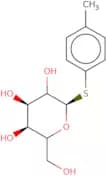
CAS:Methyl 6-deoxy-2-O-methyl-a-D-galactopyranoside is a custom synthesis that has been modified with fluorination, methylation and click chemistry. The product is a monosaccharide or oligosaccharide that is synthetic and can be used as a sugar or carbohydrate. It has CAS No. 59981-27-0 and can be found in Polysaccharides, Glycosylations, Carbohydrates, Complex Carbohydrates.Formula:C8H16O5Purity:Min. 95%Molecular weight:192.21 g/mol4-Toluoyl-α-D-thiomannopyranoside
CAS:The 4-Toluoyl-a-D-thiomannopyranoside is a six-membered ring with a hydrogen atom at the center. The structure of this molecule is composed of two chains, each of which has four atoms in their backbone. There are also two conformations to the molecule, one that can be observed as a chair conformation and one that can be seen as a boat conformation. In the chair conformation, there are three bonds that form from the central carbon atom to other carbons on the same chain. These bonds are called alpha bonds, and they connect in a linear fashion. In the boat conformation, these three bonds form an angle of 120 degrees with each other and have staggered geometry. The alpha bonds in this case form an angle of 180 degrees with each other.
Formula:C13H18O5SPurity:Min. 95%Molecular weight:286.35 g/mol2,4-Anhydro-3,5-O-[(S)-phenylmethylene]- D-lyxonic acid methyl ester
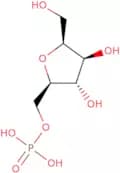
CAS:2,4-Anhydro-3,5-O-[(S)-phenylmethylene]- D-lyxonic acid methyl ester is a synthetic monosaccharide that has a fluorination modification. It is commonly used as a raw material in the synthesis of oligosaccharides and polysaccharides. This chemical can be synthesized using Click chemistry or methylation reactions. 2,4-Anhydro-3,5-O-[(S)-phenylmethylene]- D-lyxonic acid methyl ester is used in the production of complex carbohydrates with glycosylation and polysaccharide modifications. This chemical exhibits high purity and can be custom synthesized to meet specific needs.Formula:C13H14O5Purity:Min. 95%Molecular weight:250.25 g/mol2,5-Anhydro-D-glucitol-6-phosphate
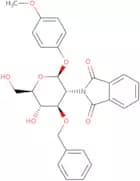
CAS:2,5-Anhydro-D-glucitol-6-phosphate is a phosphorylated derivative of D-glucitol 6 phosphate. It has been shown to be a major metabolic intermediate in the glycolytic pathway. 2,5-Anhydro-D-glucitol 6 phosphate is produced by the enzyme phosphofructokinase and hydrolyzed by the enzyme pyruvate kinase. The conversion of 2,5-anhydro -D-glucitol 6 phosphate to D -fructose 1 phosphate occurs at a rate that is dependent on the availability of oxygen. The activity of 2,5 anhydro -D-glucitol 6 phosphate in cells is also dependent on whether or not there are aerobic glycolytic enzymes present.Formula:C6H13O8PPurity:Min. 95%Molecular weight:244.14 g/mol4-Methoxyphenyl 3-O-benzyl-2-deoxy-2-phthalimido-b-D-glucopyranoside
CAS:4-Methoxyphenyl 3-O-benzyl-2-deoxy-2-phthalimido-b-D-glucopyranoside is an antiviral agent that inhibits the replication of papilloma virus and other viruses. It binds to the viral DNA at a site that is not affected by other antiviral agents, preventing the viral DNA from being copied into RNA. 4MPBG also induces coagulation and cell expression in human cells and has been shown to inhibit the production of amyloid beta (Aβ) in Alzheimer's disease. This drug is not active against organisms such as bacteria, yeast, or fungi. The drug was originally synthesized as a potential pharmaceutical for cancer treatment, but it did not exhibit any cytotoxic effects on cancer cells.Formula:C28H27NO8Purity:Min. 95%Molecular weight:505.52 g/molMethyl-2,3,6-tri-O-benzoyl-a-D-mannopyranose monohydrate
Methyl-2,3,6-tri-O-benzoyl-a-D-mannopyranose monohydrate is a carbohydrate compound with the formula CHO. It is an Oligosaccharide made of three α-(1→2) linked mannose residues and one α-(1→3) linked mannose residue. This modification has been shown to be important for glycosylation and polysaccharide synthesis. Methyl-2,3,6-tri-O-benzoyl-a-D-mannopyranose monohydrate has high purity and CAS No.Purity:Min. 95%Frucoste-proline
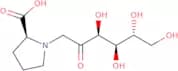
CAS:Frucoste-proline is a l-amino acid that is found in the leaves of tobacco plants. Frucoste-proline is synthesized by dehydration of L-proline, which is catalyzed by the enzyme tabacum l. Frucoste-proline can also be found in maltol and diazepine. The major function of frucoste-proline is to act as a cofactor for enzymes involved in the synthesis of aromatic compounds such as aldehydes and sulfides. This amino acid has been identified as an analytical marker for tobacco leaf, due to its low energy and high specificity.Purity:Min. 95%Ethyl a-D-fructofuranoside
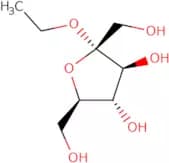
CAS:Ethyl a-D-fructofuranoside is a carbohydrate found in the roots of orientalis that has been shown to have anti-allergic effects. Ethyl a-D-fructofuranoside is extracted from the root of orientalis and purified by column chromatography. It inhibits histamine release and reduces inflammation in mouse skin tests. The structure of ethyl a-D-fructofuranoside was determined using nuclear magnetic resonance (NMR) spectroscopy, gas chromatography, and mass spectroscopy. The biosynthesis of this compound is unknown but it may be synthesized from sucrose or methanol extract with the help of an enzyme called verbascose synthase.Formula:C8H16O6Purity:Min. 95%Molecular weight:208.21 g/mol1,2,3,6-Tetra-O-acetyl-4-deoxy-4-fluoro-D-galactopyranose
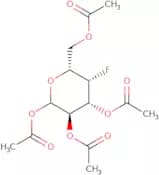
CAS:1,2,3,6-Tetra-O-acetyl-4-deoxy-4-fluoro-D-galactopyranose is a sugar that is used in the synthesis of complex carbohydrates. The chemical structure of this sugar is similar to that of glucose or lactose. This sugar can be produced by methylation and saccharide reactions with the use of a Click modification. It can also be synthesized from 3,6-diacetylpyranose. This product is available for custom synthesis and has high purity.Formula:C14H19FO9Purity:Min. 95%Molecular weight:350.29 g/molMethyl 2-deoxy-a-L-ribofuranoside
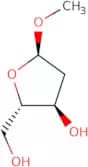
CAS:Methyl 2-deoxy-a-L-ribofuranoside is a modification of a monosaccharide. It is synthesized by reacting 2,3,4,6-tetra-O-methylglucose with sodium nitrite in the presence of hydrochloric acid. Methyl 2-deoxy-a-L-ribofuranoside is used to modify saccharides and polysaccharides.Formula:C6H12O4Purity:Min. 95%Molecular weight:148.16 g/molMixture of 1,2,3,5-Tetra-O-acetyl-D-arabinofuranose and 1,2,3,4-Tetra-O-acetyl-D-arabinopyranose
CAS:Tetra-O-acetyl-D-arabinose is an organic compound, a saccharide with the chemical formula C4H8O6. It is a white to off-white crystalline solid. Tetra-O-acetyl-D-arabinose is a protected form of arabinose that can be methylated and glycosylated to produce various other compounds. Tetra-O-acetyl-D-arabinose can also be modified by click chemistry or fluorination and it has been used as a synthetic intermediate for the synthesis of oligosaccharides.Formula:C13H18O9Purity:(%) Min. 95%Color and Shape:PowderMolecular weight:318.28 g/mol2-Acetamido-3,4,6-tri-O-acetyl-2-deoxy-a-D-glucopyranosyl-Fmoc asparagine
2-Acetamido-3,4,6-tri-O-acetyl-2-deoxy-a-D-glucopyranosyl -Fmoc asparagine is a custom synthesis. It is a high purity product. It is an oligosaccharide that has been modified with methylation and glycosylation. This product has been fluorinated, which makes it useful for click chemistry applications. It is a sugar with a complex carbohydrate structure that can be used in the production of polysaccharides and other carbohydrates.Formula:C33H37N3O13Purity:Min. 95%Molecular weight:683.66 g/mol1,5,6,7-Tetra-O-benzylvoglibose
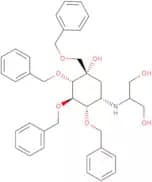
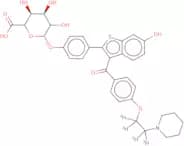
CAS:1,5,6,7-Tetra-O-benzylvoglibose is a naturally occurring pentose that is classified as an inhibitor of protein synthesis. It has been shown to inhibit the growth of tumor cells and may be useful in the treatment of cancer. 1,5,6,7-Tetra-O-benzylvoglibose binds to cation channels and blocks their activity. This prevents the influx of calcium ions into the cell which is required for cell division. 1,5,6,7-Tetra-O-benzylvoglibose also inhibits tumor metastases by inhibiting proliferation of myeloid derived suppressor cells (MDSCs). 1,5,6,7 Tetra-O-benzylvoglibose has been shown to inhibit growth factor signaling pathways in cardiac tissue and reduce the risk of cardiac disease development.Formula:C38H45NO7Purity:Min. 95%Molecular weight:627.77 g/molRaloxifene 6-D-glucuronide D4
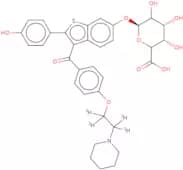
CAS:Controlled ProductRaloxifene 6-D-glucuronide D4 is a complex carbohydrate with a unique sugar modification. It is a custom synthesis that has been fluorinated, monosaccharide, and polysaccharide. It can be glycosylated and methylated as well. The desired purity level is high.
Formula:C34H31NO10SD4Purity:Min. 95%Molecular weight:653.73 g/molN-(b-D-Glucopyranosyl)-N'-[(2-methanethiosulfonyl)ethyl]urea
CAS:N-(b-D-Glucopyranosyl)-N'-[(2-methanethiosulfonyl)ethyl]urea is a synthetic, fluorinated glycosylamine that has been used for the synthesis of oligosaccharides and polysaccharides. The product is supplied in high purity and with a custom synthesis. It is also available for click modification to suit customer needs.Formula:C10H20N2O8S2Purity:Min. 95%Color and Shape:White to off-white solid.Molecular weight:360.4 g/mol1-Hydroxypyrene-d9
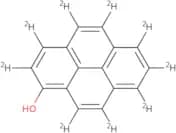
CAS:Controlled Product1-Hydroxypyrene-d9 is a genotoxic aromatic hydrocarbon that can be found in the environment as a byproduct of combustion and cigarette smoke. It has been shown to cause DNA damage through oxidative stress and genotoxicity. This compound can be used for the detection of naphthalene in bile samples and urine samples. 1-Hydroxypyrene-d9 also has potential use in cancer research as it can be used to detect oxidative damage to DNA in cells. It has been shown to have synchronous fluorescence with DNA, which makes it useful for quantification of DNA. 1-Hydroxypyrene-d9 is analysed using analytical methods such as fluorescence spectrometry, synchronous fluorescence, and sample preparation.Formula:C16HD9OPurity:Min. 95%Color and Shape:PowderMolecular weight:227.3 g/molN-(2-Deoxy-D-glucopyranosyl)-S-nitroso-N-acetyl-D,L-pencillamine
CAS:N-(2-Deoxy-D-glucopyranosyl)-S-nitroso-N-acetyl-D,L-pencillamine is a custom synthesis of an Oligosaccharide. It is an unmodified saccharide with a CAS No. 188849-82-3. The chemical formula for this compound is C12H14N2O9 and its molecular weight is 368.24 g/mol. This compound has been synthesized using the Click modification, methylation, and fluorination techniques. N-(2-Deoxy-D-glucopyranosyl)-S-nitroso-N acetyl D,L pencillamine has a purity level of 95% or greater. This product has not been glycosylated or carbamoylated and does not contain any sugar moieties.Formula:C13H23N3O8SPurity:Min. 95%Molecular weight:381.4 g/mol2-O-Benzyl-D-glucose
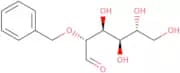
CAS:2-O-Benzyl-D-glucose is a disaccharide that is an intermediate in the synthesis of benzoic acid. It is benzylated with benzaldehyde and then reacted with sodium hydroxide to form 2-O-benzylidene-D-glucose. Spectroscopy has shown that this product has an anomeric proton at δH 7.1 to 7.4 and a pyranoside group at δH 4.2 to 4.6, which are characteristic of 2-O-benzylidene-D-glucose. The sugar's molecular formula is C9H12O5, and its molecular weight is 230. The sugar has been shown to be acylated with acetate or benzoic acid as well as undergo glycosidation reactions in the presence of sulfuric acid or sodium hydroxide.
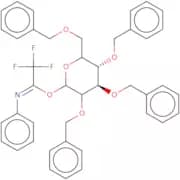
Formula:C13H18O6Purity:Min. 95%Molecular weight:270.28 g/mol2,3,4,6-Tetra-O-benzyl-D-galactopyranosyl N-phenyl trifluoroacetimidate
This product is a type of modification and has many uses in the industry. It is an oligosaccharide that is a carbohydrate and can be used as a complex carbohydrate. This product can also be synthesized, which is done by custom synthesis. The CAS Number for this product is 908-92-1, which means it has high purity. This product is also an oligosaccharide that is a carbohydrate and can be used as a complex carbohydrate. This product can also be synthesized, which is done by custom synthesis. The CAS Number for this product is 908-92-1, which means it has high purity.Formula:C42H40F3NO6Purity:Min. 95%Molecular weight:711.77 g/mol4-Methylphenyl 3,4,6-tri-O-acetyl-2-O-benzyl-b-D-thiogalactopyranoside
CAS:4-Methylphenyl 3,4,6-tri-O-acetyl-2-O-benzyl-b-D-thiogalactopyranoside is a synthetically produced saccharide typically used as a building block in oligo-saccharide synthesis.Formula:C26H30O8SPurity:Min. 95%Molecular weight:502.58 g/molBenzyl N-acetyl-6-O-benzyl-a-D-muramic acid methyl ester
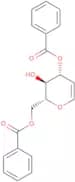
CAS:Benzyl N-acetyl-6-O-benzyl-a-D-muramic acid methyl ester is a synthetic glycosylation that is custom synthesized for the purpose of modifying glycoproteins. This compound can be used to add a fluorinated sugar to the glycan chain, which can help increase the drug's bioavailability. The synthesis of this compound is achieved through a click modification reaction.Formula:C26H33NO8Purity:Min. 95%Molecular weight:487.54 g/mol3,6-Di-O-benzoyl-D-glucal
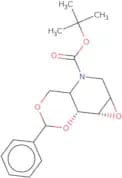
CAS:3,6-Di-O-benzoyl-D-glucal is a glycosylation reagent that can be used to modify proteins with oligosaccharides. It is a naturally occurring sugar that can be synthesized and modified for use in research. 3,6-Di-O-benzoyl-D-glucal has been shown to be effective in Click chemistry, which uses copper ions to produce reactive esters from alcohols and carboxylic acids. This reagent can also be used to fluorinate saccharides and sugars for high purity synthesis.Purity:Min. 95%2,3-Anhydro-4,6-O-benzylidene-N-Boc-1,5-deoxy-1,5-imino-D-glucitol
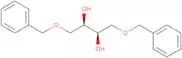
CAS:2,3-Anhydro-4,6-O-benzylidene-N-Boc-1,5-deoxy-1,5-imino-D-glucitol is a fluorinated monosaccharide that is synthesized by reacting 2,3-anhydro-4,6-(O)-benzylidene glucose with Boc anhydride in the presence of triethylamine. It is an oligosaccharide derived from D-(+)-glucose and consists of a 1,5 anhydro ring linked to a 1,5 imino sugar. 2,3 Anhydro 4,6 O benzylidene N Boc 1 5 deoxy 1 5 imino D glucitol has been used as a building block for glycosylation reactions and has been shown to be useful in click chemistry. This compound is also available in various purity levels.Formula:C18H23NO5Purity:Min. 95%Molecular weight:333.38 g/mol(+)-1,4-Di-O-benzyl-D-threitol
CAS:(+)-1,4-Di-O-benzyl-D-threitol is a carbohydrate which is an enantiomer of D-threitol. It has been used as a model membrane to investigate the interaction of divalent cations with the lipid bilayer. The (+) form of this compound has been shown to be catalytic in the desymmetrization of racemic mixtures of carbohydrates. This enantiomer can be readily chromatographically separated from its mirror image by chiral chromatography techniques.Formula:C18H22O4Purity:Min. 95%Molecular weight:302.36 g/molSulindac-acyl-b-D-glucuronide
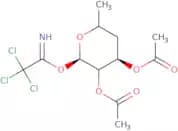
CAS:Sulindac-acyl-b-D-glucuronide is a high purity, custom synthesis, synthetic sugar. It is a complex carbohydrate that contains saccharide, oligosaccharides, and monosaccharides. The CAS number for this compound is 60018-36-2.Formula:C26H25FO9SPurity:Min. 95%Molecular weight:532.54 g/mol2,3-Di-O-acetyl-4,6-dideoxy-a-D-glucopyranosyl trichloroacetimidate
CAS:2,3-Di-O-acetyl-4,6-dideoxy-a-D-glucopyranosyl trichloroacetimidate is a synthetic fluorinated carbohydrate with a complex structure. It is used in the synthesis of oligosaccharides and polysaccharides. 2,3-Di-O-acetyl-4,6-dideoxy-a-D-glucopyranosyl trichloroacetimidate is also used for click modification reactions to modify the sugar moiety of glycans. This product can be custom synthesized to meet customer specifications.
2,3 Di O acetyl 4,6 dideoxy a D glucopyranosyl trichloroacetimidate is soluble in water and methanol. It has CAS No. 485809 - 87 - 8 and Molecular Formula C17H19ClO8N2O7. The purity level is > 98Formula:C12H16Cl3NO6Purity:Min. 95%Molecular weight:376.62 g/mol7,7a-Diepialexine
CAS:7,7a-Diepialexine is a molecule that has been shown to inhibit the replication of human immunodeficiency virus (HIV). This drug has been shown to inhibit the growth of bacteria in cell culture. It has been observed that 7,7a-diepialexine inhibits HIV integrase by binding to the enzyme's active site. In addition, this molecule inhibits cellular proliferation and induces apoptosis in animal models. 7,7a-Diepialexine is an enantiomer of 7,7b-diepialexine which is also a potent inhibitor of HIV integrase. The analytical method for separating these two enantiomers is not available at this time.Purity:Min. 95%Allyl 2-acetamido-2,6-dideoxy-6-fluoro-a-D-galactopyranoside
Allyl 2-acetamido-2,6-dideoxy-6-fluoro-a-D-galactopyranoside is a synthetic carbohydrate that has been modified with fluorination. It is a saccharide, which is a type of sugar. Allyl 2-acetamido-2,6-dideoxy-6-fluoro-a-D-galactopyranoside is an oligosaccharide and it belongs to the group of complex carbohydrates. This product can be custom synthesized and has high purity. It has been methylated and glycosylated. Click modification has also been performed on this product.Formula:C11H19FNO5Purity:Min. 95%Color and Shape:PowderMolecular weight:264.27 g/mol2-Amino-2-deoxy-D-xylose
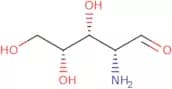
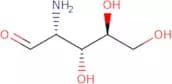
CAS:2-Amino-2-deoxy-D-xylose is a metal chelator that can be used in the treatment of infections caused by bacteria. It has been shown to have synergistic effects with metaperiodate, a compound that inhibits bacterial growth by blocking the synthesis of folic acid. 2-Amino-2-deoxy-D-xylose also chelates and removes heavy metals such as mercury and lead from the bloodstream and other tissues. In addition, this drug is an efficient method for producing amino function pyrimidine nucleosides, which are precursors to DNA and RNA synthesis. The metal chelate ring is formed through dehydration of a furanose molecule with a chloride ion. This leads to an advanced carbohydrate product that contains chlorine.
Purity:Min. 95%2,5-Anhydro-1-azido-1-deoxy-D-glucitol
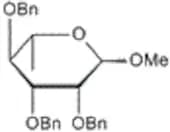
CAS:2,5-Anhydro-1-azido-1-deoxy-D-glucitol is a white to off-white crystalline powder with a molecular weight of 416.2 g/mol and an empirical formula of C6H14O7. The chemical structure is O-(2,5-anhydro-D-glucitol)N3. 2,5-Anhydro-1-azido-1-deoxy--D--glucitol can be modified with various functional groups to create different derivatives for specific applications. It is soluble in water, methanol and ethanol but not in ether or acetone. It also has the ability to form stable complexes with many metal ions due to its high charge density. 2,5--Anhydro--1--azido--1--deoxy--D--glucitol is used as a sugar donor when making glycosides by glycosylation reactions. It canFormula:C6H11N3O4Purity:Min. 95%Molecular weight:189.17 g/mol2,3,4-Tri-O-benzyl-b-L-arabinopyranose
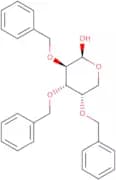
CAS:2,3,4-Tri-O-benzyl-b-L-arabinopyranose is a glycosylated monosaccharide that can be custom synthesized and fluorinated. It has been used in the methylation of saccharides to produce complex carbohydrates such as polysaccharides and oligosaccharides. The product is also capable of being modified, wherein it has been shown that click modification can be carried out on 2,3,4-Tri-O-benzyl-b-L-arabinopyranose. This modification is a convenient method for the introduction of both hydrophilic and hydrophobic groups on the molecule. Methylation: 2,3,4 Tri O benzyl b L arabinopyranose Glycosylation: 2,3,4 Tri O benzyl b L arabinopyranose Polysaccharide:Formula:C26H28O5Purity:Min. 95%Color and Shape:Yellow SolidMolecular weight:420.5 g/mol9-cis-Retinoyl b-D-glucuronide
CAS:Controlled Product9-cis-Retinoyl b-D-glucuronide is a complex carbohydrate that is synthesized by modification of an existing saccharide. It is synthesized through the use of click chemistry, which utilizes a copper catalyst to add fluorine and methyl groups to the sugar. The sugar is then glycosylated and carbamylated in order to produce the desired product. 9-cis-Retinoyl b-D-glucuronide has been shown to have high purity, as well as fluorescence properties when it is modified with fluorine groups.Formula:C26H36O8Purity:Min. 95%Molecular weight:476.56 g/molSulfamethoxazole b-D-glucuronide
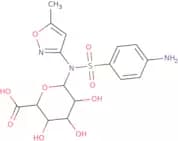
CAS:Sulfamethoxazole b-D-glucuronide is a microbial conjugate that is used to treat bacterial infections. It binds to microbial cell surfaces through covalent bonds, which prevents the synthesis of proteins and DNA, leading to cell death. Sulfamethoxazole b-D-glucuronide has been shown to be activated by the enzyme acetyltransferase in bacteria and may be used as an indicator for the presence of sulfonamide resistance. This antibiotic also has a high affinity for thyroxine and analytes such as acetaminophen and sulfate.Formula:C16H19N3O9SPurity:Min. 95%Molecular weight:429.41 g/mol6-O-Benzoyl-3-O-tert-butyldimethylsilyl-D-galactal
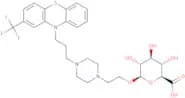
6-O-Benzoyl-3-O-tert-butyldimethylsilyl-D-galactal is a custom synthesis of 6-O-(benzoyloxy)-D-galactal. It is an oligosaccharide with an acetylated benzoyl group at the C2 position and a tertiary butyl dimethylsilyl (TBDMS) ether at the C3 position. It has a molecular weight of 523.02 g/mol and CAS No. 47782-51-6. 6-O-(Benzoyloxy)-D-galactal is used as a reagent for methylation chemistry, click chemistry, or carbohydrate chemistry. This product has high purity, which makes it suitable for complex carbohydrate analysis, such as saccharide analysis, polysaccharide analysis, and oligosaccharide analysis.Formula:C19H28O5SiPurity:Min. 95%Molecular weight:364.51 g/molFluphenazine b-D-glucuronide
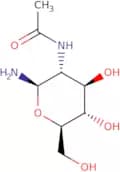
CAS:Controlled ProductFluphenazine is a phenothiazine antipsychotic agent that is metabolized by the liver to form fluphenazine b-D-glucuronide. This compound has been shown to have high yield and an electron affinity. Fluphenazine b-D-glucuronide is a primary alcohol with a phenolic hydroxyl group. It can be synthesized using immobilized enzyme, which is an electron donor, and an aliphatic substrate such as methanol. The reaction product is incubated for six hours before it undergoes glucuronidation.Formula:C28H34F3N3O7SPurity:Min. 95%Molecular weight:613.65 g/molN-(2-Amino-2-deoxy-beta-D-glucopyranosyl)acetamide
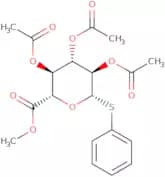
CAS:Etanercept is a recombinant protein that is used to treat ankylosing spondylitis and other inflammatory diseases. It is a TNF blocker that binds to soluble TNF receptors, preventing them from activating the TNF receptors on cells. Etanercept has been shown to be effective in both adults and children with these disease. Etanercept also has an immunogenicity of about 10%.Formula:C8H16N2O5Purity:Min. 95%Color and Shape:SolidMolecular weight:220.22 g/molMethyl (Phenyl 2,3,4-Tri-O-acetyl-1-thio-b-D-glucopyranosid)uronate
CAS:Methyl (Phenyl 2,3,4-Tri-O-acetyl-1-thio-b-D-glucopyranosid)uronate is a modified sugar that can be used as a building block to synthesize complex carbohydrates. It is an important intermediate for the synthesis of saccharides and oligosaccharides. This product is a white powder with a molecular weight of 594.87. Methyl (Phenyl 2,3,4-Tri-O-acetyl-1-thio-b-D-glucopyranosid)uronate has been assigned CAS No. 62812-42-4 and has been approved for use in food production.Formula:C19H22O9SPurity:Min. 95%Molecular weight:426.44 g/molRaloxifene 4'-D-glucuronide D4
Controlled ProductRaloxifene 4'-D-glucuronide D4 is an Oligosaccharide, Carbohydrate, complex carbohydrate. It is a Custom synthesis, Synthetic and it has a CAS No. It is also Monosaccharide, Methylation and Glycosylation. This product contains Fluorination and saccharide.Formula:C34H31NO10SD4Purity:Min. 95%Molecular weight:653.73 g/molUDP-a-D-Xylose disodium
CAS:UDP-a-D-Xylose disodium is a fluorinated synthetic monosaccharide that has been synthesized to produce an oligosaccharide. It is a complex carbohydrate with glycosylation and polysaccharide modifications, which can be modified by methylation or click chemistry. This product is usually used as a custom synthesis for research purposes.
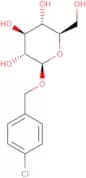
Purity:Min. 95%(4-Chlorophenyl)methyl-beta-D-glucopyranoside
CAS:4-Chlorophenyl)methyl-beta-D-glucopyranoside is a modified saccharide that is used as a synthetic building block in the synthesis of complex carbohydrates. It is also possible to use 4-chlorophenyl)methyl-beta-D-glucopyranoside as an intermediate in the synthesis of oligosaccharides. The compound has been shown to be stable under acidic conditions, making it useful for the modification of polysaccharides.Formula:C13H17ClO6Purity:Min. 95%Molecular weight:304.72 g/mol2-O-Benzyl-D-mannose
2-O-Benzyl-D-mannose is a monosaccharide that is glycosylated with glucose in the 2-position. It is also known as benzylmannoside and can be methylated at the C6 position or fluorinated at the C2 position. It has been shown to be synthetically modified with benzaldehyde, nitrobenzene, or thioacetamide. The CAS number for this compound is 51179-25-4.Purity:Min. 95%2-O-Methyl-a-D-N-glycoloylneuraminic acid
CAS:2-O-Methyl-a-D-N-glycoloylneuraminic acid (2OMG) is a synthetic sugar that is used as a monosaccharide. It can be used to modify the glycosylation of saccharides, such as mono-, oligo-, and polysaccharides. The chemical structure of 2OMG includes one sugar unit and one methyl group in the alpha position, which makes it useful for click chemistry. This product is available in high purity and has a CAS number of 14206-42-9.Formula:C12H21NO10Purity:Min. 95%Molecular weight:339.3 g/mol2-Naphthylmethyl 2-acetamido-2-deoxy-b-D-glucopyranoside
CAS:2-Naphthylmethyl 2-acetamido-2-deoxy-b-D-glucopyranoside is a synthetic, fluorinated monosaccharide. It is a custom synthesis that can be glycosylated and methylated to produce polysaccharides. It has been shown to inhibit cancer cell growth in vitro and in vivo by inhibiting protein synthesis.Formula:C19H23NO6Purity:Min. 95%Molecular weight:361.39 g/molMethyl 2-deoxy-2-fluoro-D-arabinofuranoside
CAS:Methyl 2-deoxy-2-fluoro-D-arabinofuranoside is a fluorinated sugar that is used as a building block for the synthesis of oligosaccharides and polysaccharides. It is also used in click chemistry to modify saccharides. This product has been purified to > 98% purity, and is available with custom synthesis.Formula:C6H11FO4Purity:Min. 95%Molecular weight:166.15 g/mol3-[(2,3,4,6-Tetra-O-acetyl-b-D-galactopyranosyl)thio]-propanoic acid
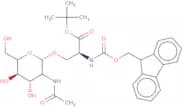
CAS:3-[(2,3,4,6-Tetra-O-acetyl-b-D-galactopyranosyl)thio]-propanoic acid is a modified carbohydrate with the chemical formula (C14H12O4S). It is an oligosaccharide composed of a saccharide and a sugar. The saccharide portion of 3-[(2,3,4,6-Tetra-O-acetyl-b-D-galactopyranosyl)thio]-propanoic acid is classified as a carbohydrate and has CAS number 79360-05-7. The sugar portion of 3-[(2,3,4,6-Tetra-O-acetyl-b-DFormula:C17H24O11SPurity:Min. 95%Molecular weight:436.43 g/mol2-Acetamido-2-deoxy-a-D-galactopyranosyl-(N-Fmoc)-L-serine tert-butyl ester
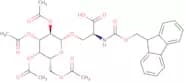
CAS:2-Acetamido-2-deoxy-a-D-galactopyranosyl-(N-Fmoc)-L-serine tert-butyl ester is an oligosaccharide that is used in the synthesis of complex carbohydrates. It can be modified at different positions with methyl or fluorine to produce a range of complex carbohydrate derivatives. The 2DG monosaccharide can be glycosylated at the 2 position with glucose, galactose, mannose, fucose, and sialic acid to form polysaccharides. The polymerization reaction produces polymers such as chitin and cellulose. 2DG is also known as DGlcNAc, which is a sugar that is found in glycosphingolipids such as gangliosides and cerebrosides. This modification protects cells from damage by reactive oxygen species and has anti-inflammatory properties.Formula:C30H38N2O10Purity:Min. 95%Molecular weight:586.63 g/mol2,3,4,6-Tetra-O-acetyl-b-D-galactopyranosyl-(N2-Fmoc)-L-serine
CAS:2,3,4,6-Tetra-O-acetyl-b-D-galactopyranosyl-(N2-Fmoc)-L-serine is a chemical compound. The molecular formula of this compound is C20H32O5 and the molecular weight is 376.429 g/mol. The chemical structure of this compound contains a tetra acetyl bDgalactopyranosyl residue linked to an N2 substituted Lserine residue.Formula:C32H35NO14Purity:Min. 95%Molecular weight:657.63 g/molN-Fmoc-O-(2,3,4,6-tetra-O-acetyl-b-D-galactopyranosyl)-L-tyrosine
This compound is a custom synthesis that is fluorinated, methylated, and acetylated. It contains a monosaccharide and oligosaccharide sugar with glycosylation at the reducing end of the sugar. The molecular weight of this compound is 812.14 g/mol. This compound has CAS number 725-36-6 and its name is N-Fmoc-O-(2,3,4,6-tetra-O-acetyl-b-D-galactopyranosyl)-L-tyrosine.Formula:C39H39NO14Purity:Min. 95%Molecular weight:733.71 g/molN-Acetylmuramic acid methyl ester
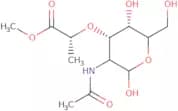
CAS:N-Acetylmuramic acid methyl ester is a methylated form of saccharides that are used in the synthesis of polysaccharides. It is synthesized by the addition of methanol to N-acetylmuramic acid, and can be used as a raw material for glycosylation reactions. This compound has been shown to have high purity and can be custom synthesized. The fluorination of this compound has been reported to improve its reactivity and stability.Formula:C12H21NO8Purity:Min. 95%Molecular weight:307.3 g/mol2,3,4-Tri-O-acetyl-b-L-fucopyranosyl azide
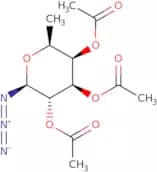
CAS:2,3,4-tri-O-acetyl-b-L-fucopyranosyl azide is a synthetic molecule that has been modified with fluorination, methylation, and acetylation. This compound is used for the synthesis of oligosaccharides and polysaccharides. It also can be used for glycosylation reactions to produce saccharides. The CAS number for this product is 95581-07-0.Formula:C12H17N3O7Purity:Min. 95%Color and Shape:Light (Or Pale) Yellow SolidMolecular weight:315.28 g/mol1-Amino-1-deoxy-D-glucitol hydrochloride
CAS:1-Amino-1-deoxy-D-glucitol hydrochloride (AMDG) is a compound that has been synthesized to inhibit the enzyme chondroitin sulfate. Chondroitin sulfate is an important component of cartilage and plays a role in the inflammatory response. It also inhibits the production of gamma-aminobutyric acid, which is an inhibitory neurotransmitter. AMDG can be used as a treatment for pain by inhibiting the transmission of pain signals through the nervous system. AMDG also has anti-inflammatory effects, which may be due to its ability to suppress prostaglandin synthesis.Purity:Min. 95%Pregnanediol 3a-O-b-D-glucuronide BSA conjugate
Pregnanediol 3a-O-b-D-glucuronide BSA conjugate is a complex carbohydrate, which is a synthetic glycosylation of the natural methylated pregna-3a,20-dienolide (pregnanediol) and the BSA carrier. The chemical modification of this compound has been accomplished by Click chemistry to form an oligosaccharide. This product can be utilized as a biomaterial for various applications in biotechnology, such as gene therapy and drug delivery. It can also be used to study its biological function in biological systems.Purity:Min. 95%2,6-Di-O-benzoyl-methyl-a-D-glucopyranoside
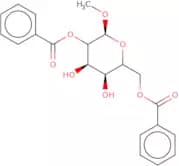
CAS:2,6-Di-O-benzoyl-methyl-a-D-glucopyranoside is a custom synthesis that is an oligosaccharide. It has a molecular weight of 590.17 g/mol and a formula weight of 594.22 g/mol. 2,6-Di-O-benzoyl-methyl-a-D-glucopyranoside has the following structure:Formula:C21H22O8Purity:Min. 95%Molecular weight:402.39 g/mol2-Amino-2-deoxy-L-arabinose hydrochloride
CAS:2-Amino-2-deoxy-L-arabinose hydrochloride is an amino sugar that is used in the synthesis of glycoproteins and polysaccharides. This compound has been shown to be a potential lead for novel anticancer agents, as it can inhibit the growth of tumor cells by impairing glycolysis. 2-Amino-2-deoxy-L-arabinose hydrochloride has also been used in click chemistry to modify proteins with alkyne groups.Formula:C5H11NO4·HClPurity:Min. 95%Molecular weight:185.61 g/mol5-Deoxy-1,2-O-isopropylidene-5-[(2R-pyridin-4-yl-pyrrolidine)-1-yl]-a-D-xylofuranose
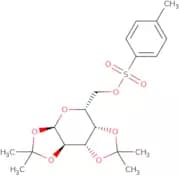
CAS:5-Deoxy-1,2-O-isopropylidene-5-[(2R-pyridin-4-yl-pyrrolidine)-1-yl]-a-D-xylofuranose is a synthetic sugar that can be custom synthesized. This sugar has been modified with fluorination and glycosylation. It is also methylated and has been modified by the addition of saccharide chains.Formula:C17H24N2O4Purity:Min. 95%Molecular weight:320.39 g/mol1,2:3,4-Di-O-isopropylidene-6-O-p-toluenesulfonyl-a-D-galactopyranose
CAS:1,2:3,4-Di-O-isopropylidene-6-O-p-toluenesulfonyl-a-D-galactopyranose is a liquid at room temperature. It has been shown to form gas at temperatures below -78°C and solid at higher temperatures. 1,2:3,4 Di-O-isopropylidene-6-O p toluenesulfonyl a D galactopyranose has been shown to have magnetic properties that can be used in a particle detector. The compound has also been studied using simulations and spectrometry. 1,2:3,4 Di-O-isopropylidene 6 O p toluenesulfonyl a D galactopyranose is an electron acceptor and an electron donor. It has been shown to have absorption bands in the range of 190 nm - 400 nm as well as inFormula:C19H26O8SPurity:Min. 95%Color and Shape:Brown PowderMolecular weight:414.47 g/molMethyl 2,3,4-tri-O-benzyl-L-rhamnopyranoside
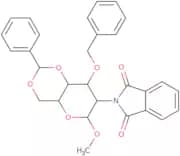
CAS:Methyl 2,3,4-tri-O-benzyl-L-rhamnopyranoside is a sugar that is used in the synthesis of oligosaccharides and saccharides. This compound has been shown to be an intermediate for the synthesis of benzylidene acetone phosphate, which can be used as a precursor for polymers that have potential use in biomedical applications.Formula:C28H32O5Purity:Min. 95%Molecular weight:448.55 g/molMethyl 3-O-benzyl-4,6-O-benzylidene-2-deoxy-2-phthalimido-b-D-glucopyranose
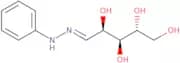
CAS:Methyl 3-O-benzyl-4,6-O-benzylidene-2-deoxy-2-phthalimido-b-D-glucopyranose is a synthetic chemical that is used in the modification of saccharides. It has been shown to be an efficient and economical way to introduce methyl groups into saccharide chains. This product is a white solid that is soluble in water, ethanol, and chloroform. Methyl 3-O-benzyl-4,6-O-benzylidene-2-deoxy -2 -phthalimido -b -D -glucopyranose has a molecular weight of 564.1 grams per mole and an empirical formula of C14H22N2O8P. It has CAS number 97276–96–5 and can be found under code XA0433.Formula:C29H27NO7Purity:Min. 95%Molecular weight:501.53 g/molD-Arabinose phenylhydrazone
CAS:D-Arabinose phenylhydrazone is a synthetic compound that is used in the study of stereoisomers. It has a D-arabinose and a phenylhydrazine group, which are connected through an amide linkage. D-Arabinose phenylhydrazone is structurally similar to the natural ligand for phosphatase, bovine serum albumin (BSA). This similarity allows it to be used as a substrate for BSA, and also as a ligand for phosphatase enzymes. The acidic functional groups on this molecule allow it to react with tissues and tissue samples that contain carboxylic acid groups. This makes it useful in the study of human urine and tissue samples from other mammals.Formula:C11H16N2O4Purity:Min. 95%Molecular weight:240.26 g/mol3,4-Di-O-benzyl-1,2-O-(1-methoxyethylidene)-b-L-rhamnopyranose
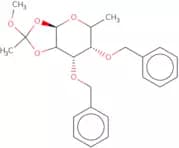
3,4-Di-O-benzyl-1,2-O-(1-methoxyethylidene)-b-L-rhamnopyranose is a custom synthesis of high purity. It is a sugar with click modification and fluorination. 3,4-Di-O-benzyl-1,2-O-(1-methoxyethylidene)-b-L-rhamnopyranose has been synthesized by glycosylation, methylation, and modification of the carbohydrate moiety. This product is an oligosaccharide or monosaccharide that belongs to the group of carbohydrates. 3,4-Di-O-benzyl 1,2 O-(1 methoxyethylidene) b L rhamnopyranose is also known as CAS No., which is a number assigned to chemicals for identification purposes.Formula:C23H28O6Purity:Min. 95%Molecular weight:400.48 g/mol




![3-[(2,3,4,6-Tetra-O-acetyl-b-D-glucopyranosyl)thio]-propanoic acid](/_next/image/?url=https%3A%2Fstatic.cymitquimica.com%2Fproducts%2F3D%2Fthumb-webp%2FMT01467.webp&w=3840&q=75)


![3-Deoxy-D-[UL-13C6]fructose](/_next/image/?url=https%3A%2Fstatic.cymitquimica.com%2Fproducts%2F3D%2Fthumb-webp%2FMD14754.webp&w=3840&q=75)
![Methyl 6-[methyl-2,3,4-tri-O-acetyl-b-D-glucuronato]mycophenolate](/_next/image/?url=https%3A%2Fstatic.cymitquimica.com%2Fproducts%2F3D%2Fthumb-webp%2FMM04556.webp&w=3840&q=75)



![2,4-Anhydro-3,5-O-[(S)-phenylmethylene]- D-lyxonic acid methyl ester](/_next/image/?url=https%3A%2Fstatic.cymitquimica.com%2Fproducts%2F3D%2Fthumb-webp%2FFA76878.webp&w=3840&q=75)


![N-(b-D-Glucopyranosyl)-N'-[(2-methanethiosulfonyl)ethyl]urea](/_next/image/?url=https%3A%2Fstatic.cymitquimica.com%2Fproducts%2F3D%2Fthumb-webp%2FMG07448.webp&w=3840&q=75)







![3-[(2,3,4,6-Tetra-O-acetyl-b-D-galactopyranosyl)thio]-propanoic acid](/_next/image/?url=https%3A%2Fstatic.cymitquimica.com%2Fproducts%2F3D%2Fthumb-webp%2FMT04253.webp&w=3840&q=75)


![5-Deoxy-1,2-O-isopropylidene-5-[(2R-pyridin-4-yl-pyrrolidine)-1-yl]-a-D-xylofuranose](/_next/image/?url=https%3A%2Fstatic.cymitquimica.com%2Fproducts%2F3D%2Fthumb-webp%2FMD07488.webp&w=3840&q=75)