Monosaccharides
Monosaccharides are the simplest form of carbohydrates and serve as fundamental building blocks for more complex sugars and polysaccharides. These single sugar molecules play critical roles in energy metabolism, cellular communication, and structural components of cells. In this section, you will find a wide variety of monosaccharides essential for research in biochemistry, molecular biology, and glycoscience. These compounds are crucial for studying metabolic pathways, glycosylation processes, and developing therapeutic agents. At CymitQuimica, we offer high-quality monosaccharides to support your research needs, ensuring precision and reliability in your scientific investigations.
Subcategories of "Monosaccharides"
- Alloses(11 products)
- Arabinoses(21 products)
- Erythroses(11 products)
- Fructoses(9 products)
- Fucoses(36 products)
- Galactosamine(41 products)
- Galactose(261 products)
- Glucoses(365 products)
- Glucuronic Acids(51 products)
- Glyco-substrates for Enzyme(77 products)
- Guloses(6 products)
- Idoses(4 products)
- Inositols(15 products)
- Lyxoses(4 products)
- Mannoses(65 products)
- O-Glycans(48 products)
- Psicoses(3 products)
- Rhamnoses(10 products)
- Riboses(61 products)
- Sialic Acids(100 products)
- Sorboses(4 products)
- Sugars(173 products)
- Tagatoses(4 products)
- Taloses(8 products)
- Xyloses(20 products)
Show 17 more subcategories
Found 6088 products of "Monosaccharides"
Sort by
Purity (%)
0
100
|
0
|
50
|
90
|
95
|
100
4-Fluorophenyl 2-acetamido-3,4,6-tri-O-acetyl-2-deoxy-b-D-glucopyranoside
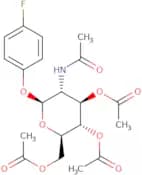
CAS:<p>4-Fluorophenyl 2-acetamido-3,4,6-tri-O-acetyl-2-deoxy-b-D-glucopyranoside is a custom synthesis of an Oligosaccharide, Monosaccharide and Fluorination. It is a water soluble white powder with high purity.</p>Formula:C20H24FNO9Purity:Min. 95%Molecular weight:441.4 g/molPhenyl 2,3,4,6-tetra-O-benzyl-a-D-thiomannopyranoside
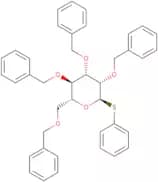
CAS:<p>Phenyl 2,3,4,6-tetra-O-benzyl-a-D-thiomannopyranoside is a custom synthesis that can be used as a sugar in glycosylation reactions. It is an Oligosaccharide with a sugar at the nonreducing terminus and can be modified to include fluorination. It is also a Fluorination agent and has been shown to methylate sugars.</p>Formula:C40H40O5SPurity:Min. 95%Molecular weight:632.81 g/molEthyl 2-acetamido-3,4,6-tri-O-acetyl-2-deoxy-D-thiogalactopyranoside
<p>Ethyl 2-acetamido-3,4,6-tri-O-acetyl-2-deoxy-D-thiogalactopyranoside is a custom synthesis of an oligosaccharide. It has a CAS No. and is a high purity synthetic product. Ethyl 2-acetamido-3,4,6-tri-O-acetyl-2-deoxy -D thiogalactopyranoside consists of monosaccharides with a sugar backbone that has been modified by fluorination and methylation for increased stability. The modification of the sugar backbone makes it resistant to degradation by enzymes in the human body, so it can be used as an oral drug. This product is also soluble in water and alcohol, making it useful in pharmaceutical applications.</p>Purity:Min. 95%5-O-Benzoyl-4-benzoyloxymethyl-1,2-O-isopropylidene-a-D-xylofuranose
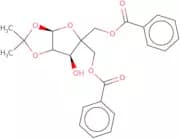
<p>5-O-Benzoyl-4-benzoyloxymethyl-1,2-O-isopropylidene-a-D-xylofuranose is a synthetic monosaccharide that has been modified by fluorination and glycosylation. The chemical formula is C14H10F6O8. It can be custom synthesized to order, and it is available in high purity.</p>Formula:C23H24O8Purity:Min. 95%Molecular weight:428.44 g/mol1,3,4,6-Tetra-O-acetyl-2-deoxy-2-N-phthalimido-a-D-glucopyranose
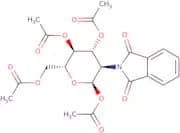
CAS:<p>1,3,4,6-Tetra-O-acetyl-2-deoxy-2-N-phthalimido-a-D-glucopyranose is a synthetic carbohydrate with a high purity and custom synthesis. This compound is a sugar that can be modified to glycosylation or methylation for the desired application. It is used as a building block for the synthesis of oligosaccharides, monosaccharides, and complex carbohydrates.</p>Formula:C22H23NO11Purity:Min. 95%Molecular weight:477.42 g/mol1-O-(5-Carboxy-N-phenyl-2-(1H)-pyridone)-D-glucuronide
<p>1-O-(5-Carboxy-N-phenyl-2-(1H)-pyridone)-D-glucuronide is a modification of Oligosaccharide, Carbohydrate. It's CAS No. is 61877-69-8 and it has a molecular weight of 398.7 g/mol. The purity of this product is >99%. This product can be custom synthesized and has a glycosylation and methylation level of 100%. 1-O-(5-Carboxy-N-phenyl-2-(1H)-pyridone)-D-glucuronide is soluble in water and insoluble in oils, fats, ethers, chloroform and benzene. It is also resistant to acid hydrolysis.</p>Formula:C18H17NO9Purity:Min. 95%Molecular weight:391.33 g/molADP-4-deoxy-D-glucose
<p>ADP-4-deoxy-D-glucose is a carbohydrate derivative that has been modified with fluorination. ADP-4 is a methylated, custom synthesized oligosaccharide that contains saccharide and polysaccharide chains. It is not commercially available and must be custom synthesized. The modification of the sugar to ADP-4 involves the addition of one or more atoms of fluorine and may be accomplished by click chemistry. This product has high purity and can be used as a research reagent in the synthesis of complex carbohydrates.</p>Purity:Min. 95%2-Methoxycarbonylphenyl 2,3,4,6-tetra-O-acetyl-b-D-glucopyranoside
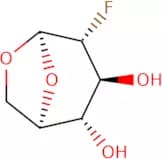
CAS:<p>2-Methoxycarbonylphenyl 2,3,4,6-tetra-O-acetyl-β-D-glucopyranoside is a high purity and custom synthesis sugar that can be fluorinated and glycosylated. This molecule has been modified with methyl groups and is an oligosaccharide. It is a complex carbohydrate with saccharide units, which are monosaccharides or polysaccharides. CAS No. 7791-66-4</p>Formula:C22H26O12Purity:Min. 95%Molecular weight:482.43 g/mol1,6-Anhydro-2-deoxy-2-fluoro-b-D-glucopyranose
CAS:<p>1,6-Anhydro-2-deoxy-2-fluoro-b-D-glucopyranose is an analogue of 4-deoxy-4-fluoro-d-glucose that has been synthesized and characterised for the first time. The fluorine atoms on the sugar ring are replaced by hydrogen fluoride. 1,6-Anhydro-2,2,4,4,-tetraacetic acid is a dianhydride that can react with 1,6-anhydro 2,2,4,4,-tetraacetic acid to form an ester (1,6:1) or ether (1:1). It can be hydrolyzed by acids to form hydrogen fluoride and glycosyl.</p>Formula:C6H9FO4Purity:Min. 95%Molecular weight:164.13 g/molD-Gluconic acid - 45-50% in water
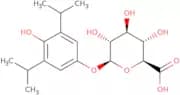
CAS:<p>D-Gluconic acid is a white or colorless crystalline powder that is soluble in water. It has a molecular weight of 144.1 g/mol and its chemical formula is C6H12O7. D-Gluconic acid can be used as an antimicrobial agent, which inhibits the growth of bacteria by disrupting the formation of cell walls and inhibiting protein synthesis. It also has biochemical properties such as glycol ether, wild-type strain, and enzyme activities. D-Gluconic acid is often used as an additive to food products to improve flavor, stability, and shelf life.</p>Formula:C6H12O7Purity:Min. 95%Color and Shape:PowderMolecular weight:196.16 g/mol4-Hydroxypropofol-4-O-b-D-glucuronide
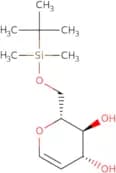
CAS:<p>4-Hydroxypropofol-4-O-b-D-glucuronide (HPG) is a synthetic carbohydrate with a 4,5-dihydroxypropyl group at C2 and an O-glycosidic bond between the hydroxyl group at C1 and the b position of a glucuronic acid. HPG is used in the synthesis of complex carbohydrates and saccharides. It can be methylated in order to produce 5,6-dimethoxycarbonyloxypropyl glycosides or glycosylated to produce mannosides. HPG has been synthesized by click modification from 4,5-dihydroxypropionic acid.</p>Formula:C18H26O8Purity:Min. 95%Molecular weight:370.4 g/mol6-O-tert-Butyldimethylsilyl-D-glucal
CAS:<p>6-O-tert-Butyldimethylsilyl-D-glucal is a glycosyl compound that is produced from the reaction of ethyl diazoacetate and cyclopropanes. This process can be catalyzed by metal catalysts, such as palladium. The use of bromides in this reaction allows for the production of unsaturated compounds. This compound has been shown to undergo cyclopropanation with alkenes, leading to the synthesis of cyclopropanes. 6-O-tert-Butyldimethylsilyl-D-glucal is used as a precursor to other compounds, such as polymers and pharmaceuticals.</p>Purity:Min. 95%1,2,3-Tri-O-Acetyl-5-deoxy-D-ribose
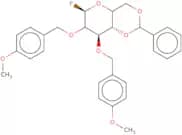
CAS:<p>1,2,3-Tri-O-acetyl-5-deoxy-D-ribose is an efficient and environmentally benign method for the synthesis of acyclic acetals. The condensation process involves the use of a chloroformate to introduce the carbonyl group into a hydroxyl group on the sugar. This reaction can be carried out in an organic solvent or water as well. The reaction rate is fast due to a high nucleophilicity of the chloride ion. The product can then be converted into an amide by reacting it with ammonia in a basic medium. This reaction results in a high yield and is useful for recycling acetonitrile that would otherwise be released into the environment.</p>Formula:C11H16O7Purity:Min. 95%Molecular weight:260.24 g/mol4,6-O-Benzylidene-2,3-di-O-(4-methoxybenzyl)-a-D-galactopyranosyl fluoride
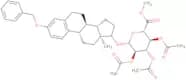
<p>4,6-O-Benzylidene-2,3-di-O-(4-methoxybenzyl)-a-D-galactopyranosyl fluoride is a glycosylation reagent that is used in the synthesis of complex carbohydrates. This product is a fluorinated sugar with a CAS number and a high purity. It can be custom synthesized to order.</p>Formula:C29H31FO7Purity:Min. 95%Molecular weight:510.55 g/mol17b-Estradiol 3-O-benzyl 17-(2,3,4-tri-O-acetyl-b-D-glucuronide methyl ester)
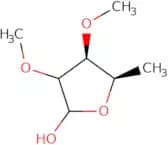
CAS:<p>17b-Estradiol 3-O-benzyl 17-(2,3,4-tri-O-acetyl-b-D-glucuronide methyl ester) is a modification of estradiol with an attached sugar. It is synthesized from the carbohydrate complex oligosaccharide. The synthesis starts by attaching an acetyl group to the sugar at the 3 position and then reacting it with benzyl alcohol to form a glycosidic linkage. The synthesis ends with a fluorination and saccharide cleavage.</p>Formula:C38H46O11Purity:Min. 95%Molecular weight:678.77 g/mol5-Deoxy-3,4-di-O-methyl-D-ribose
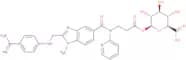
<p>5-Deoxy-3,4-di-O-methyl-D-ribose is a fluorinated monosaccharide that has been synthesized from D-ribose and 5-deoxyadenosine. It can be found in glycosylated polysaccharides or as the methylated derivative. This product is custom synthesized for research purposes, and is not intended for use in humans. It is available in high purity, with a CAS number of 6042-92-0.</p>Purity:Min. 95%Dabigatran acyl-b-D-glucuronide
CAS:<p>Dabigatran acyl-b-D-glucuronide is a synthetic, high purity, high quality carbohydrate that has been modified by fluorination and methylation. It is an oligosaccharide with a glycosylation site at the reducing end of the sugar. Dabigatran acyl-b-D-glucuronide is a carbohydrate that can be synthesized in custom amounts for research purposes.</p>Formula:C31H33N7O9Purity:Min. 95%Molecular weight:647.64 g/molRamiprilat-D5 acyl-b-D-glucuronide
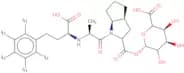
Controlled Product<p>Ramiprilat-D5 acyl-b-D-glucuronide is a synthetic, fluorinated, complex carbohydrate. It is a monosaccharide sugar that has been modified by methylation and Click chemistry to produce an elegant compound with a diverse range of applications. Ramiprilat-D5 acyl-b-D-glucuronide is synthesized in high purity, making it an ideal candidate for use in research. This molecule has been shown to be effective as a fluoroquinolone antibiotic against bacterial strains such as Mycobacterium tuberculosis, Mycobacterium avium complex, and Clostridium perfringens.</p>Formula:C27H31D5N2O11Purity:Min. 95%Molecular weight:569.61 g/mol4-(Hydroxymethyl)-1,2-O-isopropylidene-3-O-benzyl-β-L-threo-pentofuranose
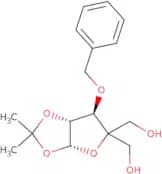
CAS:<p>4-(Hydroxymethyl)-1,2-O-isopropylidene-3-O-benzyl-beta-L-threo-pentofuranose is a synthetic fluorinated monosaccharide that can be used to produce oligosaccharides and polysaccharides. It is a custom synthesis that can be modified with methylation or click chemistry. This product has been shown to bind to proteins via glycosylation, which may be useful for protein analysis. 4-(Hydroxymethyl)-1,2-O-isopropylidene-3-O-benzyl-beta-L-threo pentofuranose is CAS No. 72261 44 00 and has a purity of >99%.</p>Formula:C16H22O6Purity:Min. 95%Molecular weight:310.34 g/mol2-Deoxy-1,3:4,5-di-O-isopropylidene-2-oxamoylamino-D-mannitol
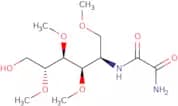
CAS:<p>2-Deoxy-1,3:4,5-di-O-isopropylidene-2-oxamoylamino-D-mannitol is a synthetic glycosylation building block that has been fluorinated and custom synthesized. It is used for the synthesis of oligosaccharides and polysaccharides. This product is also used for click modification and complex carbohydrate modification. 2-Deoxy-1,3:4,5-di-O-isopropylidene-2-oxamoylamino D mannitol has a CAS number of 128741–75–3.</p>Formula:C14H24N2O7Purity:Min. 95%Molecular weight:332.35 g/mol2-Aminoethyl 2,3,4,6-tetra-O-acetyl-β-D-mannopyranoside HCl
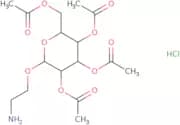
CAS:<p>2-Aminoethyl 2,3,4,6-tetra-O-acetyl-beta-D-mannopyranoside HCl is a synthetic compound that contains a glycosylation and fluorination. This product is a custom synthesis and is available in high purity. It has been modified with methylation and click chemistry.</p>Formula:C16H25NO10·HClPurity:Min. 95%Color and Shape:SolidMolecular weight:427.83 g/molVitamin D2 b-D-glucuronide sodium salt
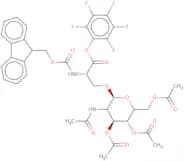
CAS:<p>Vitamin D2 b-D-glucuronide sodium salt is a custom synthesis, modification, and fluorination of vitamin D2. The monosaccharide is methylated, then it is modified with a click chemistry to create the sugar. This sugar is then glycosylated with a polysaccharide, which results in the final product. It has CAS No. 85701-30-0 and has properties as both a saccharide and carbohydrate.</p>Formula:C34H51NaO7Purity:Min. 95%Molecular weight:594.75 g/mol2-Acetamido-3,4,6-tri-O-acetyl-2-deoxy-a-D-galactopyranosyl-(N-Fmoc)-L-serine pentafluorophenyl ester
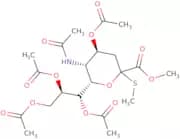
CAS:<p>The 2-acetamido-3,4,6-tri-O-acetyl-2-deoxy-a-D-galactopyranosyl-(N-Fmoc)-L-serine pentafluorophenyl ester is a synthetic sugar that has been modified using the Click chemistry. It is a complex carbohydrate that can be used in the synthesis of oligosaccharides and polysaccharides. This product is custom synthesized to order and has high purity. The 2AA3TA2DO6TFA2DGA2DGAPFPE2SAR2LSE5 is an oligosaccharide with a monosaccharide at the reducing end and methylated at the nonreducing end. The 2AA3TA2DO6TFA2DGA2DGAPFPE2SAR2LSE5 has been fluorinated at the saccharide position on the nonreducing end</p>Formula:C38F5H35N2O13Purity:Min. 95%Molecular weight:822.69 g/molMethyl 4,7,8,9-tetra-O-acetyl-2-thio-N-acetyl-a-D-neuraminic acid methyl ester
CAS:<p>Methyl 4,7,8,9-tetra-O-acetyl-2-thio-N-acetyl-a-D-neuraminic acid methyl ester is a fluorescent analog of sialic acid. It is a water soluble compound that can be used in the modification of proteins and glycoproteins. This product is synthesized by methylation and fluorination of the C4 hydroxyl group of a sialic acid. This process leads to a high degree of purity as well as the desired chemical modifications. The modification of saccharides with this product has many applications in research and industrial settings.</p>Formula:C21H31NO12SPurity:Min. 95%Molecular weight:521.54 g/mol2-Acetamido-2-deoxy-3,4,6-tri-O-acetyl-b-D-galactopyranosyl)-L-threonine
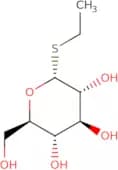
<p>2-Acetamido-2-deoxy-3,4,6-tri-O-acetyl-b-D-galactopyranosyl)-L-threonine is a custom synthesis. It is modified with fluorination and methylation. This product is an oligosaccharide with saccharide, CAS No., and polysaccharide. It has glycosylation and sugar which are carbohydrates. The complex carbohydrate can be found in a variety of sources such as corn syrup, honey, molasses, soybean oil, etc.</p>Purity:Min. 95%Ethyl a-D-thioglucopyranoside
CAS:<p>Ethyl a-D-thioglucopyranoside is an organic compound that is used as a precursor in the synthesis of complex sugars. Ethyl a-D-thioglucopyranoside is an oligosaccharide that contains a methylated and glycosylated sugar. The glycosidic bond in this product can be modified by fluorination to give ethyl 2,3,4,5-tetrafluorothioglucopyranoside.</p>Formula:C8H16O5SPurity:Min. 95%Molecular weight:224.28 g/molN1-b-D-Galactopyranosylamino-guanidine HNO3
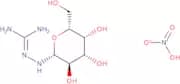
CAS:<p>N1-b-D-Galactopyranosylamino-guanidine HNO3 is a synthetic compound that has been modified by methylesterification and glycosylation. It can be used for the preparation of saccharides, polysaccharides, oligosaccharides, and custom synthesis. The CAS No. 109853-86-3 is 109853-86-3.</p>Formula:C7H16N4O5·HNO3Purity:Min. 95%Molecular weight:299.24 g/mol2-Amino-a-D-ribofurano[1',2':4,5]oxazoline
CAS:<p>2-Amino-a-D-ribofurano[1',2':4,5]oxazoline is a modified ribose analogue</p>Formula:C5H10N2O4Purity:Min. 95%Molecular weight:162.2 g/mol1-Pyrenyl-2,3,4-tri-O-acetyl-b-D-glucuronide methyl ester
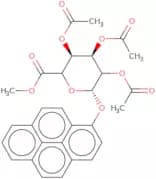
<p>1-Pyrenyl-2,3,4-tri-O-acetyl-b-D-glucuronide methyl ester is a custom synthesis product that can be used to modify oligosaccharides and polysaccharides. This product is a fluorinated sugar that has been modified with acetyl groups at the 1 and 4 positions of the pyrene ring. It is an Oligosaccharide, Polysaccharide, saccharide, Carbohydrate and Monosaccharide. The complex carbohydrate modification provides high purity and high quality. The 1-Pyrenyl-2,3,4-tri-O-acetyl-b-D-glucuronide methyl ester is useful in Click chemistry applications as well as in other chemical reactions such as polymerization and condensation reactions.</p>Formula:C29H26O10Purity:Min. 95%Molecular weight:534.51 g/molMethyl 2,3,4-tri-O-acetyl-6-O-trityl-a-D-glucopyranoside
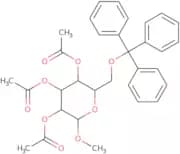
CAS:<p>Methyl 2,3,4-tri-O-acetyl-6-O-trityl-a-D-glucopyranoside is a custom synthesis. It is a monosaccharide that has been modified with fluorination and methylation. This chemical is soluble in water and is used as an intermediate for the synthesis of oligosaccharides and polysaccharides.</p>Formula:C32H34O9Purity:Min. 95%Molecular weight:562.62 g/mol4'-Hydroxypropranolol-4'-O-b-D-glucuronide
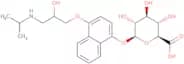
CAS:<p>Propranolol is a drug that belongs to the class of beta blockers, which are used to control high blood pressure in women and neonates. Propranolol is metabolized by glucuronidation and hydroxylation into 4'-hydroxypropranolol-4'-O-b-D-glucuronide. The hydroxy group on propranolol is metabolized by hydroxylation in the liver. This metabolic pathway leads to the formation of 4'-hydroxypropranolol-4'-O-b-D-glucuronide, which is excreted through urine samples and plasma concentrations. The hydroxy group on propranolol is also metabolized by glucuronidation, leading to the formation of low bioavailability of propranolol in humans. Propranolol has been shown to inhibit platelet aggregation at higher doses, but its effects on platelet aggregation are not predictable at lower doses.</p>Formula:C22H29NO9Purity:Min. 95%Molecular weight:451.47 g/molC24:1 b-D-Galactosyl ceramide
CAS:<p>C24:1 b-D-Galactosyl ceramide is a fatty acid that is found in mammalian cells. It is one of the major components of cerebrosides and gangliosides, which are important in the development and function of the brain. C24:1 b-D-Galactosyl ceramide has been shown to be an essential component of leukocytes, which are blood cells that help fight infection. The fatty acid composition of this molecule can be used as a marker for diagnosis and research on neurological disorders such as Alzheimer's disease or Parkinson's disease.</p>Formula:C48H91NO8Purity:Min. 95%Molecular weight:810.24 g/mol4-Formylphenyl 2,3,4,6-tetra-O-acetyl-b-D-glucopyranoside
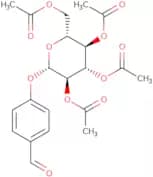
CAS:<p>4-Formylphenyl 2,3,4,6-tetra-O-acetyl-b-D-glucopyranoside is a custom synthesis that is modified with fluorine, methylated and acetylated. This compound has CAS No. 31873-42-4 and is a monosaccharide. It also can be used to synthesize oligosaccharides and polysaccharides. 4-Formylphenyl 2,3,4,6-tetra-O-acetyl-b-D-glucopyranoside is an example of a carbohydrate that has been glycosylated and modified with click chemistry.</p>Formula:C21H24O11Purity:Min. 95%Molecular weight:452.4 g/molAstragaloside II
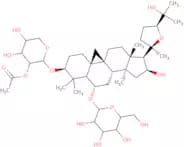
CAS:<p>Astragaloside II is a natural compound that has been shown to have anti-inflammatory effects in vitro and in vivo. Astragaloside II inhibits the production of inflammatory mediators by inhibiting phosphodiesterase and cyclooxygenase pathways. It also has a matrix effect on the cells, which may be due to its ability to activate protein kinase C. This compound also has an analytical method, which consists of HPLC with UV detection at 210 nm.</p>Formula:C43H70O15Purity:Min. 95%Color and Shape:White To Off-White SolidMolecular weight:827.01 g/molFructose-isoleucine
CAS:<p>Fructose-isoleucine is a flavoring agent that is used in the food industry. It has an acrid taste and a sweet aftertaste. Fructose-isoleucine is typically used in the production of chewing gum, candy, and baked goods. This product can be found in two forms: as a white powder or as a clear liquid. The flavoring agent reacts with acetonitrile to form reaction products that are chromatographically separated by reversed phase HPLC. The desired product can then be isolated by elution from the column with methanol and characterized using various analytical methods. In addition to this use, fructose-isoleucine has been shown to have anti-inflammatory properties due to its ability to inhibit prostaglandin synthesis.<br>Fructose-isoleucine can also be found in tobacco leaves where it serves as an amide precursor for 5-hydroxymethylfurfural (HMF). HMF is a</p>Formula:C12H23NO7Purity:Min. 95%Molecular weight:293.31 g/mol2,4,7,8,9-Penta-O-acetyl-N-acetyl-3-fluoro-D-neuraminic acid methyl ester
CAS:<p>Cell-permeable sialic acid analog</p>Formula:C22H30FNO14Purity:Min. 95%Color and Shape:White Off-White PowderMolecular weight:551.47 g/molEthyl 2,3,4,6-tetra-O-(4-methoxybenzyl)-b-D-thiogalactopyranoside S-oxide
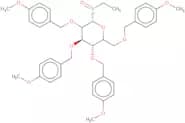
<p>Ethyl 2,3,4,6-tetra-O-(4-methoxybenzyl)-b-D-thiogalactopyranoside S-oxide is a custom synthesis product. It is an oligosaccharide with a saccharide structure that has been modified to include fluorine atoms. This modification makes the molecule more stable and resistant to degradation by enzymes. Ethyl 2,3,4,6-tetra-O-(4-methoxybenzyl)-b-D-thiogalactopyranoside S-oxide is a complex carbohydrate that can be used as an ingredient in food products or as a pharmaceutical agent for the treatment of cancer and other diseases.</p>Formula:C40H48O10SPurity:Min. 95%Molecular weight:720.87 g/molMethyl 2,3,6-tri-O-benzyl-a-D-glucopyranoside
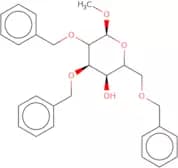
CAS:<p>Methyl 2,3,6-tri-O-benzyl-a-D-glucopyranoside is a reductive amine that can be used as an inhibitor of enzymes. The compound has been shown to inhibit the enzyme formate dehydrogenase. In addition, it has been found to inhibit other enzymes such as primary amines and reductive amination. Methyl 2,3,6-tri-O-benzyl-a-D-glucopyranoside is also a potential inhibitor of coupling reactions and anti HIV activity.</p>Formula:C28H32O6Purity:Min. 95%Molecular weight:464.22 g/mol2-Isobutyramido guanosine 2',3',5'-tris(isobutanoate)
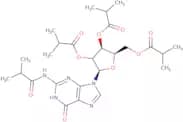
CAS:<p>2-Isobutyramido guanosine 2',3',5'-tris(isobutanoate) is an oligosaccharide, which is a type of carbohydrate. The structure of this compound is composed of a sugar, the monosaccharide saccharide and the complex carbohydrate. This compound is synthesized by a click modification and fluorination reaction using 2-amino-2-deoxy-D-ribose as the starting material. The product contains glycosylation and methylation modifications.</p>Formula:C26H37N5O9Purity:Min. 95%Molecular weight:563.6 g/mol(D-Glycero-a-D-manno-heptopyranosyl)-dihydrogenphosphate cyclohexylammonium salt
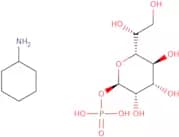
CAS:<p>The D-Glycero-a-D-manno-heptopyranosyl)-dihydrogenphosphate cyclohexylammonium salt, also known as Glyceroheptaose, is a complex carbohydrate. It is a white powder that can be used in the modification of polysaccharides, oligosaccharides, and saccharides. The CAS number for this substance is 359435-45-3.</p>Formula:C7H15O10P·C6H13NPurity:Min. 95%Molecular weight:389.34 g/mol5-Deoxy-D-lyxono-1,4-lactone
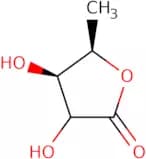
CAS:<p>5-Deoxy-D-lyxono-1,4-lactone is an oligosaccharide that is a sugar derivative. It has been synthesized by the introduction of fluorine at the C2 position of glucopyranose with methylation at the C3 position and glycosylation at the C6 position. 5-Deoxy-D-lyxono-1,4-lactone has been shown to be useful in protein labeling and detection.</p>Formula:C5H8O4Purity:Min. 95%Molecular weight:132.12 g/molPent-4-enyl-D-glucopyranoside
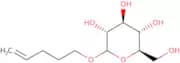
CAS:<p>Pent-4-enyl-D-glucopyranoside is a kind of compound that reacts with acetonitrile to form sodium methoxide. The reaction of the sodium methoxide with the acetonitrile will produce 2-chlorobenzoic acid and conformation. The result of this reaction is the stereospecifically, which is a pyranose ring.</p>Formula:C11H20O6Purity:Min. 95%Molecular weight:248.27 g/molMethyl L-rhamnopyranoside
CAS:<p>Methyl L-rhamnopyranoside is a sugar that is the product of the reaction between l-rhamnose and acetone. This compound has been used as a chiral building block for the synthesis of other sugars, such as D-arabinose and D-lyxose. The yield of this reaction depends on the concentration of potassium thioacetate and temperature. This compound can be obtained in two forms: (1) anomeric form, which is an intermediate in the synthesis of carbohydrates and (2) crystalline form, which is a white solid with melting point at 157.3°C. The anomeric form has a stereogenic center at carbon atom 3, whereas the crystalline form does not have any stereogenic centers. Methyl L-rhamnopyranoside also reacts with chlorination reagents to produce chlorinated derivatives, such as 2-chloro-3-(3′,4′-dimeth</p>Formula:C7H14O5Purity:Min. 95%Color and Shape:PowderMolecular weight:178.18 g/mol1,2:3,5-Di-O-isopropylidene-a-D-apiose
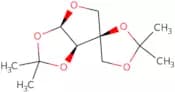
CAS:<p>1,2:3,5-Di-O-isopropylidene-a-D-apiose is a monosaccharide that is synthesized from D-apiose by methylation of the C1 hydroxyl group with formaldehyde and sodium methoxide in methanol. This carbohydrate has been shown to be a good substrate for glycosylation reactions and click chemistry.<br> 1,2:3,5-Di-O-isopropylidene-a-D-apiose is a white powder that can be dissolved in water or ethanol. It has no odor and is stable at pH 2 to pH 10. The compound does not react with other carbohydrates or proteins under normal conditions.</p>Formula:C11H18O5Purity:Min. 95%Color and Shape:PowderMolecular weight:230.26 g/mol3-Hydroxymethyl mefenamic acid acyl b-D-glucuronide
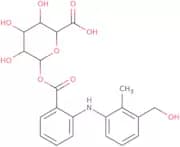
CAS:<p>3-Hydroxymethyl mefenamic acid acyl b-D-glucuronide is a Carbohydrate, Modification, saccharide, Oligosaccharide with CAS No. 152832-29-6. This compound has the following structure:</p>Formula:C21H23NO9Purity:Min. 95%Molecular weight:433.41 g/mol1,2-Dipalmitoyl-3-(N-palmitoyl-6'-amino-6'-deoxy-a-D-glucosyl)-sn-glycerol
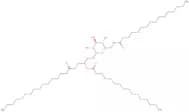
CAS:<p>Dipalmitoyl-3-(N-palmitoyl-6'-amino-6'-deoxy-a-D-glucosyl)-sn-glycerol is a marine glycoglycerolipid that has been shown to have potent inhibitory activity against human and bacterial enzymes. This molecule was synthesized using multistep, stereoselective synthetic methods. It is a lipid molecule with two domains: the first domain is palmitic acid and the second domain is a glycosylated amino acid. The first domain has been shown to inhibit human and bacterial enzyme activity.</p>Formula:C57H109NO10Purity:Min. 95%Molecular weight:968.48 g/molBenzyl 5-amino-5-deoxy-2,3-O-isopropylidene-a-D-mannofuranoside
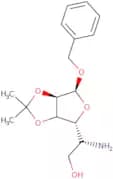
CAS:<p>Benzyl 5-amino-5-deoxy-2,3-O-isopropylidene-a-D-mannofuranoside is custom synthesized to order and can be modified with Click chemistry. It can be fluorinated or glycosylated. It is a sugar that has been synthesized from a monosaccharide and saccharide. The CAS number for this compound is 91364-19-1. This compound is an oligosaccharide and complex carbohydrate.</p>Formula:C16H23NO5Purity:Min. 95%Molecular weight:309.36 g/mol2,3,4-Tri-O-benzoyl-a-D-glucuronide methyl ester trichloroacetimidate
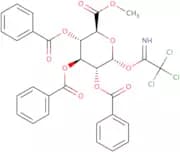
CAS:<p>2,3,4-Tri-O-benzoyl-a-D-glucuronide methyl ester trichloroacetimidate is a custom synthesis. It is a modification of the original molecule that is fluorinated, methylated and modified with a trichloroacetimidate group. This compound can be used to synthesize oligosaccharides and polysaccharides. It has high purity and is available in large quantities.</p>Formula:C30H24Cl3NO10Purity:Min. 95%Color and Shape:PowderMolecular weight:664.87 g/mol1,2,3,6-Tetra-O-benzoyl-5-thio-D-glucopyranose
<p>1,2,3,6-Tetra-O-benzoyl-5-thio-D-glucopyranose is a monosaccharide that can be synthesized by the methylation of 1,2,3,6-tetra-O-(benzoyl) D-glucopyranose. The synthesis of this compound is accomplished by a click modification and the use of a fluoroquinolone to modify the sugar at C1. This compound has been shown to be an excellent substrate for polysaccharide and saccharide synthesis as well as fluorination. Purity levels are high with this product.</p>Purity:Min. 95%2-Deoxy-D-ribose diethyl thioacetal
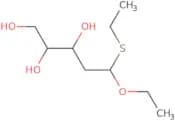
CAS:<p>2-Deoxy-D-ribose diethyl thioacetal is a synthetic, fluorinated carbohydrate that is used in the modification of saccharides and oligosaccharides. It is a complex carbohydrate that has been synthesized from D-ribose and diethyl thioacetal. Fluorination of 2-deoxy-D-ribose diethyl thioacetal has been shown to lead to glycosylation reactions with glycosyl acceptors. Click chemistry reactions have been used to modify this compound with methyl groups. This product has a high purity and can be custom synthesized by request.</p>Formula:C9H20O3S2Purity:Min. 95%Molecular weight:240.39 g/mol





![2-Amino-a-D-ribofurano[1',2':4,5]oxazoline](/_next/image/?url=https%3A%2Fstatic.cymitquimica.com%2Fproducts%2F3D%2Fthumb-webp%2FMA01170.webp&w=3840&q=75)