Monosaccharides
Monosaccharides are the simplest form of carbohydrates and serve as fundamental building blocks for more complex sugars and polysaccharides. These single sugar molecules play critical roles in energy metabolism, cellular communication, and structural components of cells. In this section, you will find a wide variety of monosaccharides essential for research in biochemistry, molecular biology, and glycoscience. These compounds are crucial for studying metabolic pathways, glycosylation processes, and developing therapeutic agents. At CymitQuimica, we offer high-quality monosaccharides to support your research needs, ensuring precision and reliability in your scientific investigations.
Subcategories of "Monosaccharides"
- Alloses(11 products)
- Arabinoses(21 products)
- Erythroses(11 products)
- Fructoses(9 products)
- Fucoses(36 products)
- Galactosamine(41 products)
- Galactose(261 products)
- Glucoses(365 products)
- Glucuronic Acids(51 products)
- Glyco-substrates for Enzyme(77 products)
- Guloses(6 products)
- Idoses(4 products)
- Inositols(15 products)
- Lyxoses(4 products)
- Mannoses(65 products)
- O-Glycans(48 products)
- Psicoses(3 products)
- Rhamnoses(10 products)
- Riboses(61 products)
- Sialic Acids(100 products)
- Sorboses(4 products)
- Sugars(173 products)
- Tagatoses(4 products)
- Taloses(8 products)
- Xyloses(20 products)
Show 17 more subcategories
Found 6088 products of "Monosaccharides"
Sort by
Purity (%)
0
100
|
0
|
50
|
90
|
95
|
100
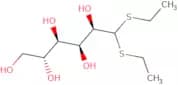
D-Glucose diethyl mercaptal
CAS:<p>D-Glucose diethyl mercaptal is a homogeneous catalyst that can be used to acetylate galactitol to produce D-arabinose. It acts as an efficient and selective catalyst for the reaction of nitrous acid with hydrochloric acid, which produces acetyl chloride. Acetyl chloride is a reactive compound that can be used in the synthesis of many other compounds. <br>D-Glucose diethyl mercaptal has been used in chromatographic methods to separate d-arabinose from L-arabinose. The ring-opening polymerization of D-glucopyranose by mercaptals leads to the formation of polyols, which are useful materials for the production of plastics and rubber products. Chloride ions are required for this reaction, while hydrogen chloride is produced as a byproduct.</p>Formula:C10H22O5S2Purity:Min. 95%Molecular weight:286.41 g/mol2,6-Di-O-acetyl-3,4-di-O-benzyl-a-D-mannopyranosyl trichloroactimidate
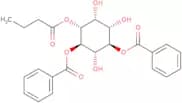
CAS:<p>2,6-Di-O-acetyl-3,4-di-O-benzyl-a-D-mannopyranosyl trichloroactimidate is a synthetic, glycosylate sugar that can be used in the synthesis of oligosaccharides and polysaccharides. This molecule has been fluorinated to increase its lipophilicity and stability. It has been modified with methyl groups to improve its reactivity with other molecules. The purity of 2,6-Di-O-acetyl-3,4-di-O-benzyl-a-D-mannopyranosyl trichloroactimidate is greater than 98%.</p>Formula:C26H28Cl3NO8Purity:Min. 95%Molecular weight:588.86 g/mol1D-1-O-Butyryl-4,6-O-dibenzoyl-myo-inositol
CAS:<p>1D-1-O-Butyryl-4,6-O-dibenzoyl-myo-inositol is an oligosaccharide that has been modified with fluoride. It is a custom synthesis of a complex carbohydrate and its CAS number is 153265-90-8. 1D-1-O-Butyryl-4,6-O-dibenzoyl-myo-inositol is used in the synthesis of saccharides and polysaccharides.</p>Formula:C24H26O9Purity:Min. 95%Molecular weight:458.46 g/molAmitriptilyne N-b-D-glucuronide
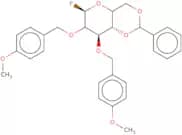
<p>Amitriptilyne N-b-D-glucuronide is a fluorinated, monosaccharide that is used in synthetic oligosaccharides and polysaccharides. This product can be custom synthesized to meet customer specifications. Amitriptilyne N-b-D-glucuronide is an oligosaccharide with a complex carbohydrate structure. It can be modified by glycosylation, methylation, and click chemistry. The CAS number for this product is 122470-06-8. The sugar content of this product ranges from 98% to 99%. The purity of this product is greater than 99%.</p>Purity:Min. 95%4,6-O-Benzylidene-2,3-di-O-(4-methoxybenzyl)-a-D-galactopyranosyl fluoride
<p>4,6-O-Benzylidene-2,3-di-O-(4-methoxybenzyl)-a-D-galactopyranosyl fluoride is a glycosylation reagent that is used in the synthesis of complex carbohydrates. This product is a fluorinated sugar with a CAS number and a high purity. It can be custom synthesized to order.</p>Formula:C29H31FO7Purity:Min. 95%Molecular weight:510.55 g/mol(2S- trans) -4- Hydroxy- N- methyl 2- pyrrolidinecarboxami de
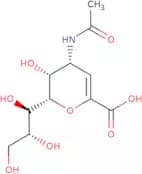
CAS:<p>(2S- trans)-4-Hydroxy-N-methyl 2-pyrrolidinecarboxamide is a modification of the sugar molecule. It is a complex carbohydrate that belongs to the group of oligosaccharides. It has CAS number 143035-54-5 and can be synthesized in high purity with a glycosylation process. This chemical can also be fluorinated and saccharide substituted to create a wide range of products with different properties.</p>Purity:Min. 95%4-Acetamido-2,6-anhydro-3,4-dideoxy-D-glycero-D-galactonon-2-enonic acid
CAS:<p>The product is a custom-made synthetic sugar. It is Fluorinated and Methylated. The product has been synthesized for glycosylation, methylation, and click modification. The product can be used in the synthesis of complex carbohydrates.</p>Formula:C11H17NO8Purity:Min. 95%Molecular weight:291.25 g/molMethyl 3-O-benzyl-2-deoxy-D-arabinopyranoside
<p>Methyl 3-O-benzyl-2-deoxy-D-arabinopyranoside is a custom synthesis that belongs to the class of complex carbohydrates. It can be used as a modification of saccharides and polysaccharides, in addition to being methylated and glycosylated. This product is also fluorinated for use in click chemistry. Methyl 3-O-benzyl-2-deoxy-D-arabinopyranoside has high purity, which makes it suitable for use in pharmaceuticals, biochemistry, and other research applications.</p>Formula:C13H18O4Purity:Min. 95%Molecular weight:238.28 g/molN-{[4-(Hydroxyamino)phenyl]sulfonyl}-N-[2-(2-naphthyloxy)ethyl]-b-D-glucopyranosylamine
CAS:<p>N-{[4-(Hydroxyamino)phenyl]sulfonyl}-N-[2-(2-naphthyloxy)ethyl]-b-D-glucopyranosylamine is a small molecule that inhibits the activity of oncoproteins by binding to lysine residues. It has been shown to inhibit the growth of tumor cells in vitro and in vivo, suggesting that it may be useful for anti-cancer therapy. The binding of this compound to lysine residues is specific and does not interfere with protein synthesis or other cellular processes.</p>Formula:C24H28N2O9SPurity:Min. 95%Molecular weight:520.55 g/molMethyl 5-aldo-2,3-O-isopropylidene-D-ribofuranoside
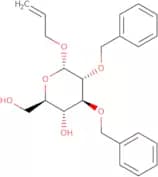
<p>Methyl 5-aldo-2,3-O-isopropylidene-D-ribofuranoside is a custom synthesis product. It is an oligo and polysaccharide with a complex carbohydrate structure. This product has high purity and is modified by fluorination. It has been modified to form a monosaccharide sugar.</p>Purity:Min. 95%Allyl 2,3-di-O-benzyl-a-D-glucopyranoside
CAS:<p>Allyl 2,3-di-O-benzyl-a-D-glucopyranoside is a plant growth regulator that stimulates callus formation. It belongs to the group of auxins and has been shown to promote callus growth in Arabidopsis thaliana cultivars, such as glaberrima and kinetin. This compound has also been shown to stimulate the formation of calli from coconut explants.</p>Formula:C23H28O6Purity:Min. 95%Molecular weight:400.46 g/mol(2S, 4S, 4'R) [4,4'-bi-1,3-dioxolane]-2-methanol-2,2'-dimethyl
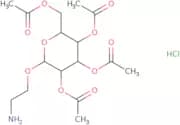
CAS:<p>2,4-Dioxolane is a synthetic compound with the molecular formula (2S, 4S, 4'R) [4,4'-bi-1,3-dioxolane]-2-methanol-2,2'-dimethyl. It was first synthesized in 1963 by C. L. Hedrick and coworkers at Eli Lilly and Company as a potential drug for the treatment of schizophrenia. The chemical structure of 2,4-dioxolane consists of two oxetanes linked together with an ether bond. In this molecule both hydroxyl groups are on the same side of the carbon chain.</p>Formula:C9H16O5Purity:Min. 95%Molecular weight:204.22 g/mol2-Aminoethyl 2,3,4,6-tetra-O-acetyl-β-D-mannopyranoside HCl
CAS:<p>2-Aminoethyl 2,3,4,6-tetra-O-acetyl-beta-D-mannopyranoside HCl is a synthetic compound that contains a glycosylation and fluorination. This product is a custom synthesis and is available in high purity. It has been modified with methylation and click chemistry.</p>Formula:C16H25NO10·HClPurity:Min. 95%Color and Shape:SolidMolecular weight:427.83 g/mol6-O-Benzoyl-D-glucal
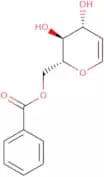
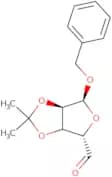
CAS:<p>6-O-Benzoyl-D-glucal is a bromide that is an arbutin derivative. It is used as an anti-inflammatory, antiallergic, and analgesic agent. 6-O-Benzoyl-D-glucal is also a glucoside that has been shown to have substituents and elimination reactions with phenols. In the leaves of proteaceae plants, it acts as a substituent in esters and glycosides, which are eliminated during the metabolism of those compounds. 6-O-Benzoyl-D-glucal can be synthesized from glucose by oxidation of the phenolic hydroxyl groups with potassium permanganate or chromium trioxide.</p>Purity:Min. 95%Benzyl 5-Aldo-2,3-O-isopropylidene-a-D-mannopentenofuranoside
CAS:<p>Benzyl 5-Aldo-2,3-O-isopropylidene-a-D-mannopentenofuranoside is a synthetic carbohydrate that is a modification of the saccharide mannose. This product contains a methylated benzyl group and an acetal linkage to the D-mannopentenofuranose. The fluorination of the C5 position on this sugar provides an additional level of stability to this molecule. This product is custom synthesized and can be modified according to customers' specifications. It has been shown to be stable in water at pH levels between 2 and 12 and can be stored at room temperature for up to two years without degradation.</p>Formula:C15H18O5Purity:Min. 95%Molecular weight:278.3 g/molD-Myo-inositol-1,3,4,5-tetraphosphate
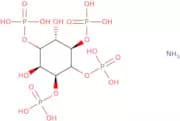
CAS:<p>D-myo-inositol-1,3,4,5-tetraphosphate (IP4) is a molecule that is involved in the regulation of cell metabolism and signal transduction. It is synthesized from myo-inositol by the enzyme inositol monophosphatase and hydrolyzed by inositol hexaphosphate kinase to form D-myo-inositol. IP4 can bind to receptors which span the plasma membrane and interact with intracellular Ca2+ channels. This binding results in an increase of cytosolic Ca2+ levels, which may be due to IP4’s ability to activate phosphatidylinositol turnover. IP4 is also involved in the regulation of neuronal death and infectious diseases such as HIV.</p>Purity:Min. 95%Vitamin D2 b-D-glucuronide sodium salt
CAS:<p>Vitamin D2 b-D-glucuronide sodium salt is a custom synthesis, modification, and fluorination of vitamin D2. The monosaccharide is methylated, then it is modified with a click chemistry to create the sugar. This sugar is then glycosylated with a polysaccharide, which results in the final product. It has CAS No. 85701-30-0 and has properties as both a saccharide and carbohydrate.</p>Formula:C34H51NaO7Purity:Min. 95%Molecular weight:594.75 g/mol3,4,6-Tri-O-acetyl-2-deoxy-2-phthalimido-b-D-glucopyranosyl azide
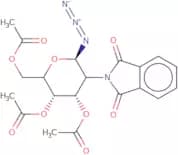
CAS:<p>3,4,6-Tri-O-acetyl-2-deoxy-2-phthalimido-b-D-glucopyranosyl azide is a carbohydrate that has been modified by acetylation and fluorination. Carbohydrates are saccharides and oligosaccharides that have the general formula (CH2O)n. 3,4,6-Tri-O-acetyl-2-deoxy-2-phthalimido b -D -glucopyranosyl azide is an example of a high purity custom synthesis glycosylation product. This modification is a methylation reaction in which the hydroxymethyl group of the sugar alcohol reacts with methanol to produce methyl alcohol. The methyl group then reacts with an organic acid to yield the desired product.</p>Formula:C20H20N4O9Purity:Min. 95%Molecular weight:460.39 g/mol4-Iodophenyl 2-acetamido-2-deoxy-b-D-glucopyranoside
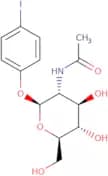
CAS:<p>4-Iodophenyl 2-acetamido-2-deoxy-b-D-glucopyranoside is a modification of an oligosaccharide. It is synthesized using custom chemistry and purified to high purity. This compound is a monosaccharide that is methylated and glycosylated. CAS No. 38229-81-1</p>Formula:C14H18INO6Purity:Min. 95%Molecular weight:423.2 g/mol4-Methylphenyl 2,3,4-tri-O-benzyl-b-D-thioglucopyranoside
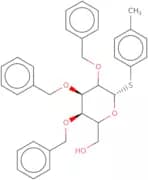
CAS:<p>4-Methylphenyl 2,3,4-tri-O-benzyl-b-D-thioglucopyranoside is a custom synthesis of a fluorinated glycoside that is used as an intermediate for the production of saccharides. This compound has been modified by methylation, monosaccharide, and click chemistry. It is available in high purity and has undergone extensive purification to remove impurities.</p>Formula:C34H36O5SPurity:Min. 95%Molecular weight:556.71 g/mol2,6-Anhydro-3-deoxy-D-lyxo-hept-2-enonimidamide monohydrochloride
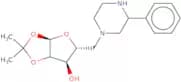
CAS:<p>2,6-Anhydro-3-deoxy-D-lyxo-hept-2-enonimidamide monohydrochloride is a fluorinated sugar that has been custom synthesized to be used as a glycosylation or polysaccharide modification. It has been methylated and click modified to increase its purity. 2,6-Anhydro-3-deoxy-D-lyxo-hept-2-enonimidamide monohydrochloride is also known by the CAS number 180336-29-2.</p>Formula:C7H12N2O4·HClPurity:Min. 95%Molecular weight:224.64 g/mol5-Deoxy-1,2-O-isopropylidene-5-(3-phenylpiperizin-1-yl)-a-D-xylofuranose
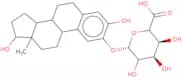
CAS:<p>5-Deoxy-1,2-O-isopropylidene-5-(3-phenylpiperizin-1-yl)-a-D-xylofuranose is a methylated and fluorinated sugar that was synthesized by the click reaction. The synthesis of this compound required the use of an oligosaccharide coupled with a polysaccharide for the attachment of the piperazine moiety. This product has been shown to be stable in water and other solvents. 5DIOXFURANOSE is a white to off white crystalline powder that appears as needle crystals. It is soluble in water, methanol, ethanol, acetonitrile, acetone and chloroform.</p>Formula:C18H26N2O5Purity:Min. 95%Molecular weight:334.32 g/mol2-Hydroxyestradiol-2-O-b-D-glucuronide
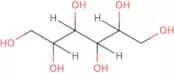
CAS:<p>2-Hydroxyestradiol-2-O-b-D-glucuronide is a modified oligosaccharide that has been synthesized by custom synthesis. It can be used in the modification of other carbohydrates, and as a monosaccharide or methylated glycosylated saccharide. 2-Hydroxyestradiol-2-O-b-D-glucuronide is also an effective inhibitor for bacterial growth, which may be due to its ability to inhibit the synthesis of cellular constituents such as lipids and proteins.</p>Formula:C24H32O9Purity:Min. 95%Molecular weight:464.51 g/molDulcitol
CAS:<p>Dulcitol is a sugar alcohol that is used in the food industry and as an alternative to sucrose. Dulcitol can be found in wastewater treatment and has been shown to be an inhibitor of wild-type strains of Escherichia coli and Bacteroides fragilis. It also inhibits the growth of Gram-positive bacteria, such as Staphylococcus aureus, by inhibiting their ability to synthesize DNA. Dulcitol is metabolized through a number of metabolic transformations, including hydrolysis by esterases or glucuronidases, oxidation by cytochrome P450 enzymes, reduction by glutathione reductase, or conjugation with glucuronic acid. Dulcitol can also inhibit the activity of certain enzymes such as protein kinase C (PKC).</p>Formula:C6H14O6Purity:Min. 99.0 Area-%Molecular weight:182.17 g/molRef: 3D-D-9500
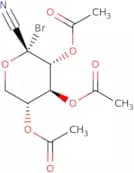
1kgTo inquire5kgTo inquire10kgTo inquire25kgTo inquire2500gTo inquire-Unit-kgkgTo inquire2,3,4-Tri-O-acetyl-1-cyano-a-D-xylopyranosyl bromide
CAS:<p>2,3,4-Tri-O-acetyl-1-cyano-a-D-xylopyranosyl bromide is a custom synthesis of a sugar. It is fluorinated, methylated, and acetylated. 2,3,4-Tri-O-acetyl-1-cyano-a-D-xylopyranosyl bromide can be used for the modification of glycosides and oligosaccharides as well as for the synthesis of saccharides and polysaccharides. This product is CAS No. 8349743 -2.</p>Formula:C12H14BrNO7Purity:Min. 95%Molecular weight:364.15 g/molPenta-O-acetyl-a-L-idopyranose
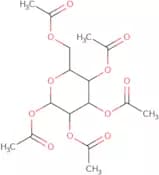
CAS:<p>Penta-O-acetyl-a-L-idopyranose is a monosaccharide that is synthesized from D-glucose and acetic anhydride. It has been modified with methylation, fluorination, and saccharide modification. Penta-O-acetyl-a-L-idopyranose is soluble in water, methanol, ethanol, and acetone. This compound has been shown to be useful for glycosylation reactions as well as click chemistry. CAS No. 16299-15-3.</p>Formula:C16H22O11Purity:Min. 95%Color and Shape:PowderMolecular weight:390.34 g/molFenirofibrate O-b-D-glucuronide
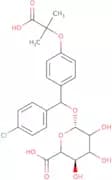
CAS:<p>Fenirofibrate O-b-D-glucuronide is a custom synthesis of saccharides. It is a fluorinated, methylated and monosaccharide modification of fenofibrate. Fenirofibrate O-b-D-glucuronide is also known as CAS No. 168844-26-6.</p>Formula:C23H25ClO10Purity:Min. 95%Molecular weight:496.9 g/mol2,3-Di-O-benzyl-5-O-tert-butyldimethylsilyl-D-xylofuranose
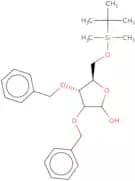
<p>2,3-Di-O-benzyl-5-O-tert-butyldimethylsilyl-D-xylofuranose is a custom synthesis of an oligosaccharide. The modification of this product is fluorination. The product has a purity of 99% and the CAS number is 125548-81-1. This product is soluble in water and ethanol. It has a molecular weight of 600. The monosaccharides found in this product are xylose, glucose, and galactose in the ratio 2:2:1. This product can be used as a sugar substitute or as a reagent for the structural analysis of complex carbohydrates.</p>Formula:C25H36O5SiPurity:Min. 95%Molecular weight:444.65 g/mol4-Formylphenyl 2,3,4,6-tetra-O-acetyl-b-D-glucopyranoside
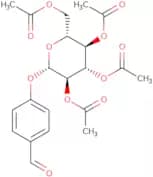
CAS:<p>4-Formylphenyl 2,3,4,6-tetra-O-acetyl-b-D-glucopyranoside is a custom synthesis that is modified with fluorine, methylated and acetylated. This compound has CAS No. 31873-42-4 and is a monosaccharide. It also can be used to synthesize oligosaccharides and polysaccharides. 4-Formylphenyl 2,3,4,6-tetra-O-acetyl-b-D-glucopyranoside is an example of a carbohydrate that has been glycosylated and modified with click chemistry.</p>Formula:C21H24O11Purity:Min. 95%Molecular weight:452.4 g/molMethyl 3-O-allyl-4,6-O-benzylidene-a-D-mannopyranoside
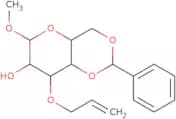
CAS:<p>Methyl 3-O-allyl-4,6-O-benzylidene-a-D-mannopyranoside is a glycosylation agent that is used in the synthesis of complex carbohydrates. It has been used to synthesize a sugar chain with a high purity and can be modified with methylation and fluorination. Methyl 3-O-allyl-4,6-O-benzylidene-a-D mannopyranoside has been shown to have good solubility in organic solvents. This product is custom synthesized and can be ordered in any quantity.</p>Formula:C17H22O6Purity:Min. 95%Molecular weight:322.35 g/molL-Noviose
CAS:<p>L-Noviose is a glycopeptide antibiotic that has been modified to increase its stability and bioavailability. The modifications have led to an increase in the activity of L-Noviose against gram-negative bacteria, including strains resistant to other antibiotics. This drug also inhibits bacterial biosynthesis by binding to the 30S ribosomal subunit and preventing the initiation of protein synthesis. L-Noviose is used clinically for the treatment of infections caused by Actinomyces, Enterobacter, Erysipelothrix, Haemophilus, Klebsiella, Proteus mirabilis, Pseudomonas aeruginosa and Staphylococcus aureus. The biological function of L-Noviose is to inhibit bacterial protein synthesis by binding to the 30S ribosomal subunit.</p>Purity:Min. 95%Astragaloside II
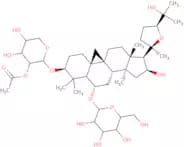
CAS:<p>Astragaloside II is a natural compound that has been shown to have anti-inflammatory effects in vitro and in vivo. Astragaloside II inhibits the production of inflammatory mediators by inhibiting phosphodiesterase and cyclooxygenase pathways. It also has a matrix effect on the cells, which may be due to its ability to activate protein kinase C. This compound also has an analytical method, which consists of HPLC with UV detection at 210 nm.</p>Formula:C43H70O15Purity:Min. 95%Color and Shape:White To Off-White SolidMolecular weight:827.01 g/mol(D-Glycero-a-D-manno-heptopyranosyl)-dihydrogenphosphate cyclohexylammonium salt
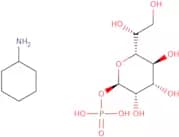
CAS:<p>The D-Glycero-a-D-manno-heptopyranosyl)-dihydrogenphosphate cyclohexylammonium salt, also known as Glyceroheptaose, is a complex carbohydrate. It is a white powder that can be used in the modification of polysaccharides, oligosaccharides, and saccharides. The CAS number for this substance is 359435-45-3.</p>Formula:C7H15O10P·C6H13NPurity:Min. 95%Molecular weight:389.34 g/mol3,4,6-Tri-O-benzyl-2-deoxy-D-glucono-1,5-lactone
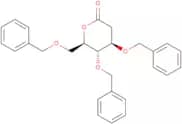
CAS:<p>3,4,6-Tri-O-benzyl-2-deoxy-D-glucono-1,5-lactone is a carbohydrate that inhibits the enzyme sglt2. It is an activator of glycoconjugates and has been shown to be effective against certain cancers. 3,4,6-Tri-O-benzyl-2-deoxy-D-glucono-1,5-lactone has been shown to inhibit the growth of cancer cells in vitro and in vivo. This compound also inhibits lactate production by inhibiting the enzyme lactate dehydrogenase (LDH).</p>Purity:Min. 95%1,2,3,4-Tetra-O-acetyl-a-L-rhamnopyranose
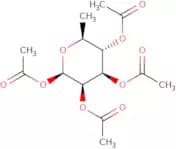
CAS:<p>1,2,3,4-Tetra-O-acetyl-a-L-rhamnopyranose is a modified carbohydrate with the general structure of an oligosaccharide. It is a synthetic compound that has been modified with methylation and glycosylation. The purity of this product is high and it can be synthesized to order. This product has a CAS number of 27821-11-0 and can be found in the Carbohydrate section.</p>Formula:C14H20O9Purity:Min. 95%Molecular weight:332.3 g/mol1,3,5-Tri-O-benzoyl-2-O-(trifluoromethanesulfonyl)-a-D-ribofuranose
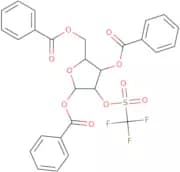
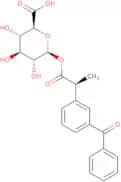
CAS:<p>1,3,5-Tri-O-benzoyl-2-O-(trifluoromethanesulfonyl)-a-D-ribofuranose is a nucleoside that is phosphorylated by the enzyme deoxycytidine kinase to form 1,3,5-tri-O-benzoyl-2'-O-(trifluoromethanesulfonyl)-a-[D]ribofuranosyl phosphate. This compound has been shown to activate immune cells in vitro and in vivo. The activation of immune cells may be due to its ability to inhibit the expression of enzymes that are required for DNA synthesis. 1,3,5-Tri-O-benzoyl-2'-O-(trifluoromethanesulfonyl)-a-[D]ribofuranosyl phosphate also inhibits the expression of enzymes involved in DNA replication and cell proliferation.</p>Formula:C27H21F3O10SPurity:Min. 95%Color and Shape:PowderMolecular weight:594.51 g/mol(S)-Ketoprofen b-D-glucuronide
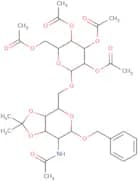
CAS:<p>(S)-Ketoprofen metabolite. Soluble in DMSO and methanol</p>Formula:C22H22O9Purity:Min. 95%Color and Shape:Off-White To Light (Or Pale) Yellow SolidMolecular weight:430.4 g/mol2-(Acetylamino)-1-O-benzyl-2-deoxy-3,4-O-isopropylidene-6-O-(2,3,4,6-tetra-O-acetyl-b-D-galactopyranosyl)-D-galactopyranoside
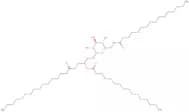
CAS:<p>The chemical name of this compound is 2-(Acetylamino)-1-O-benzyl-2-deoxy-3,4-O-isopropylidene-6-O-(2,3,4,6-tetra-O-acetylbDgalactopyranosyl)-Dgalactopyranoside. It is a synthetic compound and its molecular formula is C17H22N2O8. The molecular weight of this compound is 412.46 g/mol. CAS No. 352273-66-6</p>Formula:C32H43NO15Purity:Min. 95%Molecular weight:681.68 g/mol1,2-Dipalmitoyl-3-(N-palmitoyl-6'-amino-6'-deoxy-a-D-glucosyl)-sn-glycerol
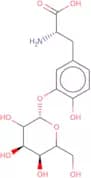
CAS:<p>Dipalmitoyl-3-(N-palmitoyl-6'-amino-6'-deoxy-a-D-glucosyl)-sn-glycerol is a marine glycoglycerolipid that has been shown to have potent inhibitory activity against human and bacterial enzymes. This molecule was synthesized using multistep, stereoselective synthetic methods. It is a lipid molecule with two domains: the first domain is palmitic acid and the second domain is a glycosylated amino acid. The first domain has been shown to inhibit human and bacterial enzyme activity.</p>Formula:C57H109NO10Purity:Min. 95%Molecular weight:968.48 g/mol3'-O-(b-D-Glucopyranosyl)-L-DOPA
Controlled Product<p>3'-O-(b-D-Glucopyranosyl)-L-DOPA is a modification of L-DOPA. It is an oligosaccharide that is a complex carbohydrate. 3'-O-(b-D-Glucopyranosyl)-L-DOPA has been synthesized and purified to high purity, with CAS No. 85825-69-7. This compound can be methylated and glycosylated, and it can form polysaccharides (sugar). 3'-O-(b-D-Glucopyranosyl)-L-DOPA can also be fluorinated, which may inhibit the enzyme bromelain that breaks down this compound in the gastrointestinal tract.</p>Formula:C15H21NO9Purity:Min. 95%Molecular weight:359.33 g/mol2-Imino-2-methoxyethyl-1-deoxy-1-thio-a-D-mannopyranoside
CAS:<p>2-Imino-2-methoxyethyl-1-deoxy-1-thio-a-D-mannopyranoside is a carbohydrate that belongs to the group of sugar. It can be custom synthesized and is available in high purity. This compound has been fluorinated and methylated, which means it has been modified with fluorine and methyl groups respectively. Click modification refers to a type of chemical modification to a molecule that occurs through the addition of a thiol group at the alpha carbon of an alcohol or amine group. 2-Imino-2-methoxyethyl-1-deoxy-1-thio-a-Dmannopyranoside can be glycosylated, which means it is able to undergo the process of glycosylation by transferring its saccharide unit onto another saccharide.</p>Formula:C9H17NO6SPurity:Min. 95%Molecular weight:267.3 g/molValienamine HCl
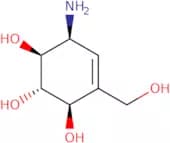
CAS:<p>Glucosidase Inhibitor</p>Formula:C7H13NO4Purity:Min. 95%Color and Shape:White to off-white solid.Molecular weight:175.18 g/mol1,2:4,5-Di-O-isopropylidene-b-L-erythro-2,3-hexodiulo-2,6-pyranose
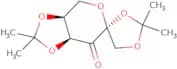
CAS:<p>1,2:4,5-Di-O-isopropylidene-b-L-erythro-2,3-hexodiulo-2,6-pyranose is a sugar that can be found in the human body. It has been shown to have a high level of hydrogen bonding and can be used as an energy source by replicon cells. It is also an enantiomer of 1,2:4,5:8,9-di-O-isopropylidene-b-(D)-threo--2,3--hexodiulo--2,6--pyranose. This molecule has been shown to inhibit the growth of herpes simplex virus in vitro and in vivo and has been investigated for its potential use as an antiherpes agent. 1,2:4,5:8,9 Di--O--isopropylidene--b-(D)--threo--2</p>Formula:C12H18O6Purity:Min. 95%Molecular weight:258.27 g/mol2,3,4-Tri-O-benzoyl-a-D-glucuronide methyl ester trichloroacetimidate
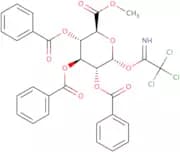
CAS:<p>2,3,4-Tri-O-benzoyl-a-D-glucuronide methyl ester trichloroacetimidate is a custom synthesis. It is a modification of the original molecule that is fluorinated, methylated and modified with a trichloroacetimidate group. This compound can be used to synthesize oligosaccharides and polysaccharides. It has high purity and is available in large quantities.</p>Formula:C30H24Cl3NO10Purity:Min. 95%Color and Shape:PowderMolecular weight:664.87 g/molb-L-Rhamnopyranosyl nitromethane
CAS:<p>b-L-Rhamnopyranosyl nitromethane is a synthetic oligosaccharide that has been custom synthesized and modified with methyl groups. This compound is an important building block for the synthesis of complex carbohydrates and glycosides, as well as for the modification of saccharides. Click chemistry is used to modify this product, which employs copper(II) acetate and azide salts to form a single covalent bond between two molecules.</p>Formula:C7H13NO6Purity:Min. 95%Molecular weight:207.18 g/molMethyl-3,5-O-isopropylidine-D-xylofuranose
CAS:<p>Methyl-3,5-O-isopropylidine-D-xylofuranose is an oligosaccharide that is synthesized in the laboratory. It is a complex carbohydrate with many glycosylation and polysaccharide chains. This compound can be used in the synthesis of various other compounds and has been shown to have high purity. Methyl-3,5-O-isopropylidine-D-xylofuranose has CAS No. 112245-59-7 and fluorination properties.</p>Formula:C9H16O5Purity:Min. 95%Molecular weight:204.22 g/mol2-Amino-1-methyl-6-phenylimidazo[4,5-b]pyridine N-b-D-glucuronide
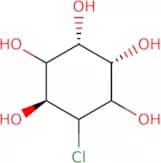
CAS:<p>2-Amino-1-methyl-6-phenylimidazo[4,5-b]pyridine N-b-D-glucuronide is a synthetic glycosylate that contains an aminomethyl group at the C2 position. It is used as a precursor to generate saccharides bearing the 1,5-anhydro sugar moiety. 2-Amino-1-methyl-6-phenylimidazo[4,5-b]pyridine N-b-D-glucuronide has been shown to react with glucose and other sugars in vivo to form oligosaccharides and polysaccharides respectively. This modified sugar can be used for click chemistry reactions such as labeling proteins, detecting protein modifications, or studying protein interactions. 2AMPI has been shown to have high purity (>99%) and is available for custom synthesis. CAS No.: 133084 - 70 - 5</p>Formula:C19H20N4O6Purity:Min. 95%Molecular weight:400.39 g/mol1-Chloro-1-deoxy-scyllo-inositol
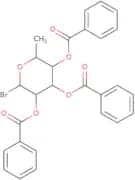
<p>1-Chloro-1-deoxy-scyllo-inositol is a molecule that can be transported by the transporter symporter. It has been shown to interact with hydrophobic interactions, and this interaction is stereospecific. This molecule is also a ligand which interacts with other molecules through hydrophobic interactions. Furthermore, it has been shown in microscopy studies to have a transporters morphology.</p>Formula:C6H11ClO5Purity:Min. 95%Molecular weight:198.6 g/mola-L-Rhamnopyranosyl bromide tribenzoate
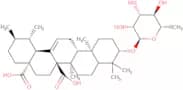
CAS:<p>a-L-Rhamnopyranosyl bromide tribenzoate is a methylated saccharide that can be used in the synthesis of oligosaccharides and polysaccharides. It is a fluorinated compound, which can be used in click chemistry and has been shown to have anti-inflammatory properties. a-L-Rhamnopyranosyl bromide tribenzoate has been shown to inhibit the growth of cancer cells by inhibiting protein synthesis. This methylation product is water soluble and is available as a white powder at high purity. It can also be used in glycosylation reactions as well as custom syntheses.</p>Purity:Min. 95%Quinovic acid 3-O-a-L-rhamnopyranoside
CAS:<p>Quinovic acid 3-O-a-L-rhamnopyranoside is a saponin that belongs to the group of steroid alkaloids and glycosides. It has been used in traditional Chinese medicine for the treatment of menopausal symptoms. The chemical structure of quinovic acid 3-O-a-L-rhamnopyranoside has been identified as fukinolic acid, which is an active chemical constituent. Pharmacological studies have shown that this saponin has antiinflammatory and antidiabetic activities, and inhibits the enzymes related to hormone synthesis.</p>Purity:Min. 95%





![N-{[4-(Hydroxyamino)phenyl]sulfonyl}-N-[2-(2-naphthyloxy)ethyl]-b-D-glucopyranosylamine](/_next/image/?url=https%3A%2Fstatic.cymitquimica.com%2Fproducts%2F3D%2Fthumb-webp%2FMN176336.webp&w=3840&q=75)
![(2S, 4S, 4'R) [4,4'-bi-1,3-dioxolane]-2-methanol-2,2'-dimethyl](/_next/image/?url=https%3A%2Fstatic.cymitquimica.com%2Fproducts%2F3D%2Fthumb-webp%2FMM44925.webp&w=3840&q=75)



![2-Amino-1-methyl-6-phenylimidazo[4,5-b]pyridine N-b-D-glucuronide](/_next/image/?url=https%3A%2Fstatic.cymitquimica.com%2Fproducts%2F3D%2Fthumb-webp%2FMA16593.webp&w=3840&q=75)