Monosaccharides
Subcategories of "Monosaccharides"
- Alloses(11 products)
- Arabinoses(21 products)
- Erythroses(11 products)
- Fructoses(9 products)
- Fucoses(36 products)
- Galactosamine(41 products)
- Galactose(262 products)
- Glucoses(365 products)
- Glucuronic Acids(52 products)
- Glyco-substrates for Enzyme(78 products)
- Guloses(6 products)
- Idoses(4 products)
- Inositols(15 products)
- Lyxoses(4 products)
- Mannoses(65 products)
- O-Glycans(48 products)
- Psicoses(3 products)
- Rhamnoses(10 products)
- Riboses(61 products)
- Sialic Acids(100 products)
- Sorboses(4 products)
- Sugars(173 products)
- Tagatoses(4 products)
- Taloses(8 products)
- Xyloses(20 products)
Found 6089 products of "Monosaccharides"
3-O-Benzyl-1-thiophenyl-L-iduronic acid
3-O-Benzyl-1-thiophenyl-L-iduronic acid is a modification of the carbohydrate, complex carbohydrate, and sugar. It is synthesized by custom synthesis and has been shown to be highly pure with a CAS No. This product is also a monosaccharide that can be methylated or glycosylated. The main function of 3-O-Benzyl-1-thiophenyl-L-iduronic acid is to function as a saccharide in polysaccharides, sugars, and glycosides.Purity:Min. 95%(R)-1,4-Anhydro-2-O-(2,4-dimethoxybenzoyl)-3,5-O-(1,1,3,3- tetraisopropyldisiloxane-1,3-diyl)-4-sulfinyl-D-ribitol
CAS:(R)-1,4-Anhydro-2-O-(2,4-dimethoxybenzoyl)-3,5-O-(1,1,3,3- tetraisopropyldisiloxane-1,3-diyl)-4-sulfinyl-D-ribitol is a synthetic carbohydrate. It is a monosaccharide that has been modified with methylation and fluorination. The compound is used in the synthesis of oligosaccharides and polysaccharides. (R)-1,4-Anhydro-2-O-(2,4-dimethoxybenzoyl)-3,5--O-(1,1,3,3--tetraisopropyldisiloxane) -D ribitol has been found to be an active ingredient in pharmaceutical products.Purity:Min. 95%L-Arabinose - Syrup
CAS:L-arabinose is a monosaccharide that is found in many plants, but not in humans. It is metabolized by the liver to produce L-arabinose-1-phosphate and L-ribulose-1,5-bisphosphate. L-Arabinose syrup is used for the treatment of bacterial infections such as escherichia coli or listeria monocytogenes.Formula:C5H10O5Purity:Min. 95%Molecular weight:150.13 g/mol(2R, 3S, 4S) -4- (Azidomethyl) - 3- fluoro- 1- (phenylmethyl) -2- azetidinecarboxylic acid methyl ester
CAS:(2R, 3S, 4S) -4- (Azidomethyl) - 3- fluoro- 1- (phenylmethyl) -2- azetidinecarboxylic acid methyl ester is a synthetic saccharide which is used in the synthesis of oligosaccharides and monosaccharides. It has been shown to be useful for glycosylation reactions and click chemistry. This compound is also fluorinated and has a purity of 98%.Formula:C13H15FN4O2Purity:Min. 95%Molecular weight:278.28 g/mol2, 4- Anhydro- N-benzyl-3,5-O-[(R)-benzylidene]- 6-deoxy-D- mannonamide
2, 4-Anhydro-N-benzyl-3,5-O-[(R)-benzylidene]-6-deoxy-D-mannonamide is a sugar. It has high purity and can be custom synthesized to suit your needs. This sugar can be modified with a click modification or fluorination. It can also be glycosylated or methylated for your desired outcome. The CAS number for this sugar is 29098-86-2. The molecular weight of this sugar is 359.8 g/mol and the chemical formula is C14H27NO4. The Oligosaccharide content for this sugar is between 1% and 10%. The Monosaccharide content for this sugar is between 100% and 90%. This product has been classified as complex carbohydrate by the IUPAC nomenclature system.Purity:Min. 95%2,3-O-Isopropylidene-5-O-triphenylmethyl-D- ribonic acid γ-lactone
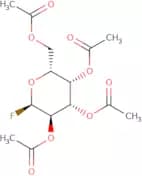
2,3-O-Isopropylidene-5-O-triphenylmethyl-D-ribonic acid gamma-lactone is a modified and synthetic oligosaccharide. It is also known as 2,3:5,6:7,8:5',6'-O-isopropylidene-D-riboaldonic acid gamma lactone or 2,3:5,6:7,8:5',6'-0-(2,2,2,-trimethyl)propane. It is an important precursor for the synthesis of complex carbohydrates such as polysaccharides and glycosylation reactions. This product can be used in research on carbohydrate chemistry and in pharmaceuticals. 1. 2. 3. 4. 5. 6. 7.Purity:Min. 95%2,3,4,6-Tetra-O-acetyl-a-D-galactopyranosyl fluoride
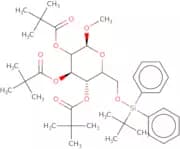
CAS:2,3,4,6-Tetra-O-acetyl-a-D-galactopyranosyl fluoride is a custom synthesis of Monosaccharide, Oligosaccharide and Polysaccharides. The product can be modified by Fluorination, Methylation and Click modification. It has CAS No. 4163-44-4. It is used as a Modification in saccharides and Carbohydrates.Formula:C14H19O9FPurity:Min. 95%Color and Shape:PowderMolecular weight:350.29 g/molMethyl 6-O-tert-butyldiphenylsilyl-2,3,4-tri-O-pivaloyl-a-D-galactopyranoside
Methyl 6-O-tert-butyldiphenylsilyl-2,3,4-tri-O-pivaloyl-a-D-galactopyranoside is a high purity custom synthesis sugar. The methyl group on the sugar prevents it from being hydrolyzed by esterases and glucuronidases. This product can be used in glycosylation and sialylation reactions to create saccharides with a modified oligosaccharide. This product is synthesized in lab conditions, which includes fluorination, glycosylation, methylation, and modification steps. It has CAS number 1314897-28-5 and molecular weight of 454. Methyl 6-O-tert-butyldiphenylsilyl -2,3,4 -tri - O -pivaloyl -a - D -galactopyranoside is an oligosaccharFormula:C38H56O9SiPurity:Min. 95%Molecular weight:684.95 g/molD-Arabinose
CAS:The aldopentose D-arabinose also known as aloinose, Aloe sugar, pectinose (Collins, 2006), is not as common in nature as its enantiomer L-arabinose. D-arabinose is a component of the polysaccharide in Aloe (Haynes, 1963) and is present in the unripe (green) tomato (Lycopersicon esculentum) (Chandra, 2009). The major cell wall carbohydrate of Corynebacterineae (a bacterial group that includes tuberculosis, leprosy and diphtheriae) is an arabinogalactan, a branched polysaccharide that is essential for the physiology of these bacteria. The arabinogalactan complex is often referred to as mycolyl-arabinogalactan-peptidoglycan complex. As arabinogalactan is made up of D-arabinofuranosyl and D-galactofuranosyl residues, a complete understanding of their biosynthethic pathways could provide suitable targets for new chemotherapeutics (Meniche, 2008).Formula:C5H10O5Purity:Min. 99 Area-%Color and Shape:PowderMolecular weight:150.13 g/mol(2S,3R,4S)-2-(Benzoyloxy)methyl-3,4,N-tri-O-benzoyl-5-methyl-pyrrolidine-3,4-diol
(2S,3R,4S)-2-(Benzoyloxy)methyl-3,4,N-tri-O-benzoyl-5-methyl-pyrrolidine-3,4-diol is a high purity synthetic carbohydrate that is custom synthesized to your specifications. It can be used for saccharide and oligosaccharide modification or glycosylation. (2S,3R,4S)-2-(Benzoyloxy)methyl-3,4,N-tri-O-benzoyl-5-methyl-pyrrolidine-3,4-diol is prepared from benzoyl chloride and 3'-chloroacetyl chloride in the presence of triethylamine. This product is available for methylation and click chemistry modification.Purity:Min. 95%3,4,6-Tri-O-benzyl-b-D-galactopyranoside
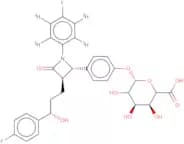
3,4,6-Tri-O-benzyl-b-D-galactopyranoside is a synthetic glycosylation of a monosaccharide with a polysaccharide. This compound is modified by fluorination as well as other chemical reactions to synthesize an Oligosaccharide. The product is custom synthesized for research purposes and can be ordered in high purity, which can be verified with the CAS number.Purity:Min. 95%Ezetimibe-D-glucuronide D4
CAS:Controlled ProductEzetimibe-D-glucuronide D4 is a deuterated version of the active molecule, ezetimibe. It is a white to off-white crystalline powder with a molecular weight of 592.1 Da and an empirical formula of C31H41NO7F2·C6H8O7. It is soluble in ethanol and water, and insoluble in ether or chloroform.Formula:C30H25D4F2NO9Purity:Min. 85 Area-%Color and Shape:White Off-White PowderMolecular weight:589.57 g/mol2-C-Azidomethyl- 2, 3:5, 6- di-O-isopropylidene)-D- mannose
2-C-Azidomethyl-2,3:5,6-di-O-isopropylidene)-D-mannose (2CAM) is a custom synthesis that is created by modifying the natural sugar D-mannose. The modification of this sugar yields 2CAM, which is a fluorinated and methylated compound. The monosaccharide in 2CAM is an alpha anomeric structure with a 6 carbon chain. This chemical can be synthesized from D-mannose through the addition of an azide group to the C4 hydroxyl group on the mannose ring. This modification to the natural sugar leads to a complex carbohydrate that exhibits saccharide properties as well as glycosylation properties. 2CAM has been shown to have inhibitory effects against bacterial pathogens such as Mycobacterium tuberculosis and Clostridium perfringens, which are both gram negative bacteria. In contrast,Purity:Min. 95%1,2-O-Cyclohexylidene-a-D-glucofuranose
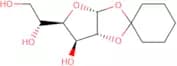
CAS:1,2-O-Cyclohexylidene-a-D-glucofuranose is a fluorinated cyclic monosaccharide. It is a synthetic oligosaccharide that belongs to the class of complex carbohydrates. This product has been modified by glycosylation, methylation, and click chemistry. The chemical name for this compound is 1,2:6,7-di-O-isopropylidene-α-D-glucofuranose. This product has not been evaluated by the U.S. Food and Drug Administration (FDA) so it should be used in laboratory research only.Formula:C12H20O6Purity:Min. 95%Color and Shape:PowderMolecular weight:260.28 g/mol1-Deoxy- 3- C- methyl- 3, 4- O-isopropylidene -D- psicofuranose
1-Deoxy-3-C-methyl-3,4-O-isopropylidene -D-psicofuranose is a synthetic monosaccharide that contains an OCH2CH2O group at the 3 position. It is also known as 3,4-dimethylpyranose. 1-Deoxy -3 C methyl -3, 4 O isopropylidene -D psicofuranose can be used for the synthesis of polysaccharides and glycosides with various sugar donors.Purity:Min. 95%Methyl 2,4-Di-O-acetyl-3-deoxy-3-fluoro-b-D-xylopyranoside
CAS:Methyl 2,4-Di-O-acetyl-3-deoxy-3-fluoro-b-D-xylopyranoside is a synthetic, fluorinated glycosylation product. It is used in the synthesis of complex carbohydrates, and has been shown to be useful for click modification. This product has been custom synthesized by our company, and can be ordered in high purity.Formula:C10H15FO6Purity:Min. 95%Molecular weight:250.22 g/mol2-Azido-2-deoxy-3,4:5,6-di-O-isopropylidene-L-gulonic acid methyl ester
This product is a custom synthesized and modified monosaccharide. It is an oligosaccharide, which is made up of two or more sugars that are linked together by glycosidic bonds. The sugar in this product is a glycosylation, which is a type of sugar that has been modified by adding a new chemical group to it. This modification can be done by fluorination, methylation, or click modification. This product also contains a saccharide, which is a large carbohydrate molecule that consists of many sugar molecules. This type of carbohydrate can be either polysaccharides or complex carbohydrates. This product has high purity and CAS number (CAS No.).Purity:Min. 95%Ethyl 2-O-benzyl-4,6-O-benzylidene-b-D-thioglucopyranoside
Ethyl 2-O-benzyl-4,6-O-benzylidene-b-D-thioglucopyranoside is a custom synthesis of a monosaccharide. It consists of an ethoxy group at the 4th position and a benzyl group at the 6th position on the ring. The compound has been fluorinated, methylated, and modified with click chemistry to make it more stable. This product is a synthetic oligosaccharide that has been glycosylated and modified with saccharide chains. It is used as a complex carbohydrate for dietary supplements.Purity:Min. 95%Streptozocin
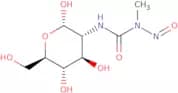
CAS:A toxic glucosamine derivative, widely used for the induction of diabetes in experimental animals. The compound enters the pancreatic β cells in Langerhans islets via glucose transporter GLUT2. It has the ability to alkylate DNA and trigger the production of ROS and nitric oxide, which contribute to DNA and mitochondrial damage. Moreover, streptozocin inhibits N-acetyl-β-D-glucosaminidase and disrupts O-GlcNAc cycling. This molecule has also been used as antimicrobial compound and chemotherapeutic agent for some types of pancreatic cancer.Formula:C8H15N3O7Purity:Min. 98 Area-%Color and Shape:Off-White PowderMolecular weight:265.2 g/mol2, 4- Anhydro- 6- deoxy- L- mannonic acid methyl ester
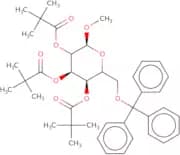
CAS:2, 4-Anhydro-6-deoxy-L-mannonic acid methyl ester is a modified oligosaccharide that is synthesized from D-mannose. This compound can be used as a building block for the synthesis of complex carbohydrates and glycosides. It can also be used for the fluorination of saccharides and glucose derivatives. 2,4-Anhydro-6-deoxy-L-mannonic acid methyl ester is an important intermediate in the production of fluoroquinolones and other pharmaceuticals. It is also a precursor to antihistamines, antiarrhythmics, antibiotics, anticancer drugs, and antimalarial drugs.Formula:C7H12O5Purity:Min. 95%Molecular weight:176.17 g/molMethyl 2,3,4-tri-O-pivaloyl-6-O-trityl-a-D-mannopyranoside
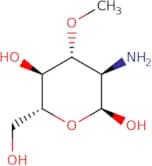
Methyl 2,3,4-tri-O-pivaloyl-6-O-trityl-a-D-mannopyranoside is a custom synthesis of a complex carbohydrate. It is an Oligosaccharide that has been modified with saccharide Methylation and glycosylation. This product is also fluorinated and Click modified. The CAS number for this product is [[Category:Chemical compounds]]Formula:C41H52O9Purity:Min. 95%Molecular weight:688.87 g/mol2-Amino- 2- deoxy- 3- O- methyl-D- glucose
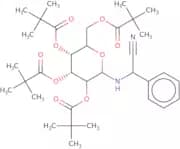
CAS:2-Amino-2-deoxy-3-O-methyl-D-glucose is a modified sugar that has been synthesized by the methylation of D-glucose. This product is often used as a building block in glycosylation, which is the process of adding sugars to proteins or polysaccharides. The modification of this carbohydrate makes it resistant to hydrolysis and oxidation reactions, making it suitable for use in pharmaceuticals and other applications. 2-Amino-2-deoxy-3-O-methyl-D-glucose can be fluorinated to produce 2-(Fluoro)amino 2 deoxy 3 O methyl D glucose, which has been shown to have antihypertensive effects in rats with high blood pressure. This product can also be modified with click chemistry to produce 2-[(Azidomethyl)amino]-2 deoxy 3 O methyl D glucose, which can be usedFormula:C7H15NO5Purity:Min. 95%Molecular weight:193.2 g/molN-(2'-Phenylacetonitrile)-2,3,4,6-tetra-O-pivaloyl-D-glucopyranoside
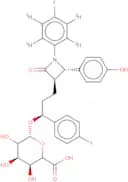
CAS:N-(2'-Phenylacetonitrile)-2,3,4,6-tetra-O-pivaloyl-D-glucopyranoside is a synthetic glycosyl compound that has been modified with fluorine. The compound has been shown to be effective in the methylation of saccharides and oligosaccharides. It can be used for modification of polysaccharides and carbohydrates by Click chemistry. This product is offered as a custom synthesis and can be ordered in high purity.Formula:C34H50N2O9Purity:Min. 95%Molecular weight:630.77 g/molEzetimibe hydroxy-D-glucuronide D4
Controlled ProductEzetimibe hydroxy-D-glucuronide D4 is a synthetic glycosylation product, which belongs to the category of oligosaccharides. It is a sugar that has been modified through fluorination and methylation. This product is soluble in water and has a purity of greater than 99% (based on HPLC analysis). Ezetimibe hydroxy-D-glucuronide D4 is a white, crystalline powder with a molecular weight of 586.2 g/mol and CAS number 144479-19-5.Formula:C30H25D4F2NO9Purity:Min. 95%Molecular weight:589.57 g/mol4-Deoxy-D-glucose
CAS:4-Deoxy-D-glucose is a neutral, odorless chemical that is used in the synthesis of glycosides. It has a hydroxy group and a methyl group attached to the 4th carbon atom. The hydroxy group on the 4th carbon atom can act as a nucleophile and react with electrophilic groups such as ketones or alcohols. This reaction mechanism leads to the formation of sugar products called methyl glycosides. There are many side effects associated with this chemical, including allergic reactions, which can be due to its structural similarity to glucose. The optimum pH for this chemical is 7.4, which makes it an acid-stable molecule. 4-Deoxy-D-glucose is found in nature and is biosynthesized by plants and animals in order to produce blood group antigens (ABO system). It also plays an important role in the ternary complex that regulates cell division in bacteria.Formula:C6H12O5Purity:Min. 98 Area-%Color and Shape:PowderMolecular weight:164.16 g/mol1,4-Dideoxy-1,4-imino-D-mannitol HCl
CAS:1,4-Dideoxy-1,4-imino-D-mannitol HCl is a custom synthesis, modification and fluorination of mannitol. This compound is synthesized by the click modification of a monosaccharide and oligosaccharide. It is a saccharide with an average molecular weight of 584.45 g/mol. 1,4-Dideoxy-1,4-imino-D-mannitol HCl has been used to study glycosylation and sugar binding in carbohydrate research. CAS No.: 114976-76-0Formula:C6H13NO4·HClPurity:Min. 95%Color and Shape:PowderMolecular weight:199.63 g/mol(2R, 3R, 4R, 5S) -3,4-Dihydroxy-2, 5- pyrrolidinedimethano l
CAS:(2R, 3R, 4R, 5S) -3,4-Dihydroxy-2, 5- pyrrolidinedimethanol is an organic compound that is a modification of the sugar erythrose. It has been synthesized from 2,3,4,5-tetrahydroxybenzaldehyde and 2-fluoro-1-(trifluoromethyl)benzene. The compound has been used for the preparation of oligosaccharides and polysaccharides. It is also used as a raw material for the synthesis of complex carbohydrate compounds and saccharide derivatives. (2R, 3R, 4R, 5S) -3,4-Dihydroxy-2, 5- pyrrolidinedimethanol is used in the production of fluorinated saccharides.Purity:Min. 95%2,4,7,8,9-Pentaacetyl-N- [(2- propyn- 1- yloxy) carbonyl] - b- neuraminic acid methyl ester
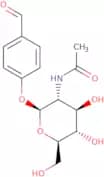
CAS:2,4,7,8,9-Pentaacetyl-N-[(2-propen-1-yloxy)carbonyl]-b-neuraminic acid methyl ester is a Glycosylation reagent that is used in the synthesis of oligosaccharide and polysaccharide. The product can be modified to produce Click modifications and complex carbohydrates. It has been shown to have high purity and can be custom synthesized.Formula:C24H31NO15Purity:Min. 95%Molecular weight:573.5 g/mol4-Formylphenyl 2-acetamido-2-deoxy-b-D-glucopyranoside
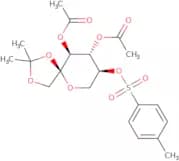
CAS:This product is a custom synthesis of a complex carbohydrate. It has the CAS number 135608-48-9, and is a fluorinated saccharide with an acetamide group in the 4-position. It is synthesized from 2,3-dihydroxybenzoic acid and methyl bromoacetate, which are reacted to form the mesylate ester. This product can be modified by methylation or glycosylation to produce desired derivatives. The purity of this compound is high, with no contaminants detected.Formula:C15H19NO7Purity:Min. 95%Color and Shape:PowderMolecular weight:325.31 g/mol3,4-Di-O-acetyl-1,2-O-isopropylidene-5-O-p-toluenesulfonyl-a-L-sorbopyranose
CAS:3,4-Di-O-acetyl-1,2-O-isopropylidene-5-O-p-toluenesulfonyl-a-L-sorbopyranose is a fluorinated glycosylation product with a synthetic route. It is a high purity custom synthesis and can be modified according to customer needs. 3,4-Di-O-acetyl-1,2-O isopropylidene -5 O p toluenesulfonyl A L sorbopyranose has been used in the synthesis of oligosaccharides and saccharides.Formula:C20H26O10SPurity:Min. 95%Molecular weight:458.48 g/molD-Gluconic acid copper (II) salt
CAS:D-Gluconic acid copper (II) salt is a copper complex that has been shown to have an effect on iron homeostasis and fatty acid metabolism. The pharmacokinetics of D-gluconic acid copper (II) salt was studied in rats, which showed that the compound is absorbed quickly and eliminated rapidly. D-Gluconic acid copper (II) salt also has a protective effect against bone cancer in mice. The toxicological studies revealed no adverse effects of D-gluconic acid copper (II) salt on the liver or other organs, but it did produce magnesium salt, which can be toxic to humans. It is not known if there are any interactions with benzalkonium chloride.
Formula:C6H11O7CuColor and Shape:Blue PowderMolecular weight:226.93 g/molMethyl 4,6-O-benzylidene-2,3-di-O-benzyl-a-D-glucopyranoside
CAS:Methyl 4,6-O-benzylidene-2,3-di-O-benzyl-a-D-glucopyranoside is a synthetic compound that is used as an intermediate in the production of other chemicals. The compound has been shown to be resistant to methylation and glycosylation. It has also been modified with a click chemistry reaction and fluorinated. Methyl 4,6-O-benzylidene-2,3-di-O-benzyl-a-D -glucopyranoside is a carbohydrate with a molecular formula of C12H24O14 and a molecular weight of 594.8 g/mol.Formula:C28H30O6Purity:Min. 95%Color and Shape:White PowderMolecular weight:462.53 g/mol3-Azidopropyl 2-acetamido-2-deoxy-3,4,6-tri-O-acetyl-b-D-glucopyranoside
3-Azidopropyl 2-acetamido-2-deoxy-3,4,6-tri-O-acetyl-b-D-glucopyranoside is a synthetic carbohydrate. It is a modification of the natural saccharide 3,4,6 tri O acetyl b D glucopyranoside. The modification in this case is the addition of an azide group to one of the hydroxyl groups on the sugar. This product has a CAS number and can be custom synthesized to meet your specific needs. It is available in high purity and can be modified by methylation or glycosylation.Purity:Min. 95%2-Amino- 2- deoxy- 3, 4, 6- tri- O- methyl-D- glucose
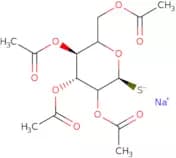
CAS:2-Amino-2-deoxy-3,4,6-tri-O-methyl-D-glucose is a carbohydrate that has been synthesized by the modification of an existing sugar. This product can be used as a building block in the synthesis of oligosaccharides, which are sugar chains composed of 2 to 10 sugar molecules. The fluorination reaction occurs at the primary hydroxyl group and yields a more stable molecule. This product can be custom synthesized to meet your needs. It is also available in high purity and with a high degree of methylation and glycosylation.Formula:C9H19NO5Purity:Min. 95%Molecular weight:221.25 g/mol2,3,4,6-Tetra-O-acetyl-b-D-thiogalactopyranose sodium salt
CAS:2,3,4,6-Tetra-O-acetyl-β-D-thiogalactopyranose sodium salt is a high purity custom synthesis sugar with a click modification. The fluorination and glycosylation are carried out to give the desired product. It has CAS No. 73962-00-2 and is a synthetic carbohydrate that can be used in oligosaccharides, monosaccharides, saccharide and complex carbohydrates.
Formula:C14H19O9SNaPurity:Min. 95%Molecular weight:386.35 g/mol(3S, 4S, 5R) -3, 4- Dihydroxy- 5- (hydroxymethyl) -L- proline
(3S, 4S, 5R) -3, 4- Dihydroxy- 5- (hydroxymethyl) -L- proline is a custom synthesis. It is a fluorinated, methylated, and modified monosaccharide with a polysaccharide sugar attached to a glycosylation site. The CAS number for this compound is not available.Purity:Min. 95%2-O-Benzyl-3,4-O-benzylidene-2-C-methyl-D-arabino-1.5-lactone
2-O-Benzyl-3,4-O-benzylidene-2-C-methyl-D-arabino-1.5lactone is a fluorinated monosaccharide that is synthesized by the glycosylation of 1,5 D arabinofuranose. It has been used for the synthesis of oligosaccharides and polysaccharides with a variety of sugar modifications. This product is available in high purity and can be custom synthesized to meet your needs.Purity:Min. 95%4,6-O-Isopropylidene-D-mannopyranose
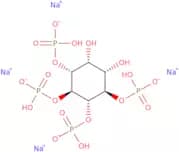
4,6-O-Isopropylidene-D-mannopyranose is a custom synthesis of a polysaccharide that has been modified with fluorination, methylation, and click modification. This product can be used in the synthesis of oligosaccharides or saccharides. It may also be used in glycosylation reactions to produce complex carbohydrates.Purity:Min. 95%D-myo-Inositol 1,4,5,6-tetraphosphate sodium salt
CAS:D-myo-Inositol 1,4,5,6-tetraphosphate sodium salt is a colony-stimulating factor that is involved in the regulation of metabolism and growth. It has been shown to increase the number of blood cells in rats with myeloid leukemia by acting on stem cells. D-myo-Inositol 1,4,5,6-tetraphosphate sodium salt binds to stem cell factor receptors on cell membranes to activate the receptor activity and initiate protein synthesis. This leads to increased production of hematopoietic cells and monoclonal antibodies. D-myo-Inositol 1,4,5,6-tetraphosphate sodium salt also stimulates erythropoiesis by regulating red blood cell production through its interaction with epidermal growth factor (EGF).
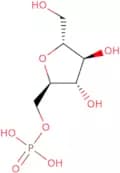
Formula:C6H12O18P4Na4Purity:Min. 95%Color and Shape:PowderMolecular weight:588 g/molD-[UL-13C6]Fructose 6-phosphate disodium salt hydrate
CAS:D-[UL-13C6]Fructose 6-phosphate disodium salt hydrate is a compound that inhibits sperm motility by binding to the transmembrane proteins of the plasma membrane. This inhibition leads to an increase in spermatozoa's mitochondrial transmembrane potential, which is necessary for fertilization. D-[UL-13C6]Fructose 6-phosphate disodium salt hydrate also has been shown to significantly increase the fertility of cryopreserved semen samples and can be used as an extender for animal spermatozoa.Formula:C6H11Na2O9P•(H2O)xPurity:Min. 95 Area-%Color and Shape:PowderMolecular weight:310.1 g/mol2- C- Methyl- 3, 4- O- isopropylidene -L- arabinonic acid d- lactone
2-C-Methyl-3,4-O-isopropylidene-L-arabinonic acid d-lactone is a synthetic chemical compound that has been shown to inhibit the growth of bacteria. This compound has been shown to inhibit the growth of bacteria by inhibiting ribulose bisphosphate carboxylase activity and causing cell death. It also inhibits glycosylation reactions in bacteria. 2-C-Methyl-3,4-O-isopropylidene -L-arabinonic acid d -lactone is an oligosaccharide with a complex carbohydrate structure. It contains saccharides and monosaccharides with a methylated C2’ position on the glucose moiety. 2CMOA has a molecular weight of 516.Purity:Min. 95%2,5-Anhydro-D-mannitol-1-phosphate barium salt hydrate
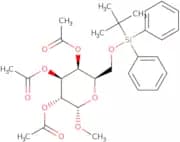
CAS:2,5-Anhydro-D-mannitol-1-phosphate barium salt hydrate is a fluorinated synthetic oligosaccharide. It is a complex carbohydrate that can be modified with the addition of methyl groups or click chemistry. This product is CAS No. 352000-02-3 and has been synthesized with glycosylation and polysaccharide modifications. The chemical formula for this product is C6H14O7P2Ba.Formula:C6H11BaO8P·H2OPurity:Min. 95%Molecular weight:397.46 g/molMethyl 2,3,4-tri-O-acetyl-6-O-tert-butyldiphenylsilyl-a-D-galactopyranoside
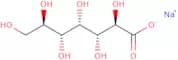
CAS:Methyl 2,3,4-tri-O-acetyl-6-O-tert-butyldiphenylsilyl a-D-galactopyranoside is an oligosaccharide that has been modified with methylation, glycosylation and fluorination. It is an important compound in carbohydrate chemistry. The oligosaccharide is synthesized by the condensation of 3 molecules of galactose with 1 molecule of mannose to form a disaccharide. This product is manufactured by custom synthesis and has been purified to high purity.Formula:C29H38O9SiPurity:Min. 95%Molecular weight:558.71 g/mola-D-Glucoheptonic acid sodium salt dihydrate
CAS:a-D-Glucoheptonic acid sodium salt dihydrate is a diagnostic agent that can be used to diagnose myocardial infarct. It is a glycol ether with a molecular weight of 168, which is used in the preparation of diagnostic agents for the detection of cardiac lesions. The compound is also used as an excipient in pharmaceutical preparations. In addition, it has been shown to have anti-inflammatory properties due to its ability to inhibit prostaglandin synthesis.Formula:C7H13O8NaPurity:Min. 95%Color and Shape:White Off-White PowderMolecular weight:248.16 g/molN-(2-Furylacetonitrile)-2,3,4,6-tetra-O-pivaloyl-b-D-glucopyranoside
The compound is a custom synthesis. It is a polysaccharide that has been modified by methylation and glycosylation, as well as being click-modified at the C6 position. The compound is a complex carbohydrate with an Oligosaccharide in the center. The CAS number for this compound isFormula:C32H48N2O10Purity:Min. 95%Molecular weight:620.73 g/mol(2S, 3R, 4R, 5R, 6R) -2-Ethyl- 6- (hydroxymethyl) -3, 4, 5- piperidinetriol
(2S, 3R, 4R, 5R, 6R) -2-Ethyl- 6- (hydroxymethyl) -3, 4, 5- piperidinetriol is a synthetic monosaccharide that is modified with fluorine. The physicochemical properties of this chemical compound are:Purity:Min. 95%1,2,3,4-Tetra-O-acetyl-β-D-xylopyranose
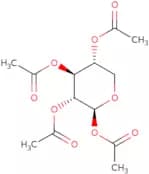
CAS:1,2,3,4-Tetra-O-acetyl-b-D-xylopyranose is a sugar that is used as a regulatory agent in the synthesis of other sugars. It has been shown to inhibit the activity of lipolytic enzymes in vitro and may be useful for controlling obesity. 1,2,3,4-Tetra-O-acetyl-b-D-xylopyranose is also able to disrupt the structure of bacterial membranes and has been shown to have an inhibitory effect on p. aeruginosa. The element analysis indicates that this compound contains carbon, hydrogen, oxygen, and nitrogen.Formula:C13H18O9Purity:Min. 95%Color and Shape:PowderMolecular weight:318.28 g/molD-Mannose
CAS:Used to differentiate microorganisms based on their metabolic properties.Formula:C6H12O6Purity:Min. 99.5 Area-%Molecular weight:180.16 g/molRef: 3D-M-1000
-Unit-kgkgTo inquire1kgTo inquire5kgTo inquire50gTo inquire500gTo inquire2500gTo inquireCharantoside
Charantoside is a natural flavone glycoside that belongs to the group of c-glycosides. It has significant anti-inflammatory activity, inhibiting tumor necrosis factor-α (TNF-α) and matrix metalloproteinase-7 (MMP-7), which are proinflammatory cytokines. Charantoside also has anti-diabetic properties, as it inhibits glucose uptake and stimulates insulin release from pancreatic β cells in vitro. Charantoside is found in plants of the Cucurbitaceae family, such as cucumber and pumpkin. This compound can be detected by fingerprinting techniques and was found to have been present in at least two plant families. Charantoside has been shown to inhibit TNF-α production in vivo studies conducted on mice.Purity:Min. 95%4-O-Allyl-3,6-di-O-tert-butyldimethylsilyl-D-glucal
4-O-Allyl-3,6-di-O-tert-butyldimethylsilyl-D-glucal is a custom synthesis of an oligosaccharide. It has been modified with fluorination, methylation, and click chemistry. 4-O-Allyl-3,6-di-O-tert-butyldimethylsilyl-D-glucal has been shown to be a high purity product that can be used in glycosylation reactions. This compound is very reactive and can be used in the synthesis of complex carbohydrates such as saccharides and polysaccharides.Purity:Min. 95%


![2, 4- Anhydro- N-benzyl-3,5-O-[(R)-benzylidene]- 6-deoxy-D- mannonamide](/_next/image/?url=https%3A%2Fstatic.cymitquimica.com%2Fproducts%2F3D%2Fthumb-webp%2FMA163977.webp&w=3840&q=75)







![2,4,7,8,9-Pentaacetyl-N- [(2- propyn- 1- yloxy) carbonyl] - b- neuraminic acid methyl ester](/_next/image/?url=https%3A%2Fstatic.cymitquimica.com%2Fproducts%2F3D%2Fthumb-webp%2FMP168633.webp&w=3840&q=75)



![D-[UL-13C6]Fructose 6-phosphate disodium salt hydrate](/_next/image/?url=https%3A%2Fstatic.cymitquimica.com%2Fproducts%2F3D%2Fthumb-webp%2FMF167754.webp&w=3840&q=75)