Peptides
Peptides are short chains of amino acids linked by peptide bonds, serving as important biological molecules that play key roles in cellular processes. They function as hormones, neurotransmitters, and signaling molecules, and are widely used in therapeutic and diagnostic applications. Peptides are also crucial in research for studying protein interactions, enzyme activities, and cell signaling pathways. At CymitQuimica, we provide a diverse selection of high-quality peptides to support your research and development needs in biotechnology and pharmaceuticals.
Subcategories of "Peptides"
Found 30318 products of "Peptides"
Sort by
Purity (%)
0
100
|
0
|
50
|
90
|
95
|
100
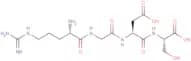
Arg-Gly-Asp-Ser
CAS:Arg-Gly-Asp-Ser (RGDS peptide) is a conserved tetrapeptide sequence found in fibronectin, and the von Willebrand factor.Formula:C15H27N7O8Purity:98.29%Color and Shape:SolidMolecular weight:433.42L-Carnosine
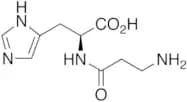
CAS:Controlled Product<p>Applications L-Carnosine is a naturally-occurring histidine-containing compound and the biological role of this dipeptide is to act as cytosolic buffering agents. Other roles ascribed to L-Carnosine include actions as neurotransmitters, modulation of enzymic activities and chelation of heavy metals.<br>References Quinn, P.J., et al.: Mol. Aspects. Med., 13, 379 (1992); Aruoma, O.I., et al.: Biochem. J., 264, 863 (1989);<br></p>Formula:C9H14N4O3Color and Shape:NeatMolecular weight:226.23Fmoc-His-OH
CAS:Fmoc-His-OH (FMOC-L-Histidine) is a histidine derivative and a common material for peptide synthesis.Formula:C21H19N3O4Purity:98.38% - 99.82%Color and Shape:SolidMolecular weight:377.39Lactoferrin
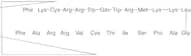
CAS:Controlled Product<p>Applications Lactoferrin is a multifunctional protein of transferin family. A glycoprotein present in various secretions including milk, saliva and tears. Antiviral agent, it binds to liproproteins of cell membranes dispersing virus molecules from host cells.<br>References Sánchez L. et al.: Arch. Dis. CHild., 67, 657 (1992); Harmsen MC. et al.: J. Infect. Dis., 172, 380 (1995);<br></p>Formula:C141H224N46O29S3Color and Shape:NeatMolecular weight:3123.8Nisin
CAS:Nisin A: a lantibiotic peptide made by L. lactis, contains unique amino acids like lanthionine, and fights bacteria.Formula:C143H230N42O37S7Purity:98%Color and Shape:SolidMolecular weight:3354.07D,L-Homoglutamine
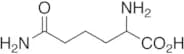
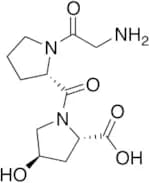
CAS:Controlled Product<p>Applications Glutamine analog.<br>References Hellberg, S., et al.: J. Med. Chem., 30, 1126 (1987), Blondelle, S., et al.: Antimicrob. Agents Chemother., 38, 2280 (1994), Jiracek, J., et al.: J. Biol. Chem., 270, 21701(1995),<br></p>Formula:C12H24N2O6Color and Shape:NeatMolecular weight:292.329H-Gly-Pro-Hyp-OH
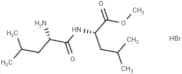
CAS:Controlled ProductFormula:C12H19N3O5Color and Shape:White To Off-WhiteMolecular weight:285.3H-Leu-Leu-OMe HBr
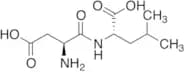
CAS:H-Leu-Leu-OMe HBr (L-Leucyl-L-Leucine methyl ester HBr) is a dipeptide condensation of L-Leucine methyl ester, a peptide that is toxic to natural killer T-cellsFormula:C13H27BrN2O3Purity:98.15%Color and Shape:SolidMolecular weight:339.27H-Asp-Leu-OH
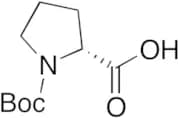
CAS:Controlled Product<p>Stability Hygroscopic<br>Applications H-Asp-Leu-OH (cas# 3062-14-4) is a useful research chemical.<br></p>Formula:C10H18N2O5Color and Shape:NeatMolecular weight:246.26tert-Butoxycarbonyl-D-proline
CAS:Controlled Product<p>Applications tert-Butoxycarbonyl-D-proline is Boc protected D-proline (P755990). It is used to prepare trichostatin A and trapoxin B analogs as histone deacetylase inhibitors. It is also used to prepare potent and selective nonpeptide inhibitors of caspases 3 and 7.<br>References Jung, M., et al.: Bioorg. Med. Chem. Lett., 7, 1655 (1997); Lee, D., et al.: J. Med. Chem,, 44, 2015 (2001)<br></p>Formula:C10H17NO4Color and Shape:NeatMolecular weight:215.25N-Boc-γ-aminobutyric Acid
CAS:Controlled ProductFormula:C9H17NO4Color and Shape:Off-WhiteMolecular weight:203.24N-(2-Aminoethyl)-2-[phenyl(phenylmethyl)amino]acetamide
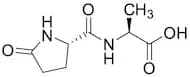
CAS:Controlled Product<p>Stability Hygroscopic<br>Applications This compound is an impurity in the synthesis of Antazoline (A678405) which acts as a histamine H1 receptor blocker, functioning as an antihistamine pharmaceutical.<br>References Constanti, A. et al.: Brit. J. Pharmacol. 58, 583 (1976);<br></p>Formula:C17H21N3OColor and Shape:NeatMolecular weight:283.37L-Pyroglutamyl-L-alanine
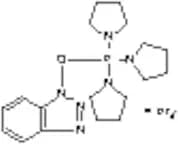
CAS:Controlled ProductFormula:C8H12N2O4Color and Shape:NeatMolecular weight:200.192Benzotriazol-1-yl-oxytripyrrolidinphosphonium Hexafluorophosphate
CAS:Controlled Product<p>Applications Benzotriazol-1-yl-oxytripyrrolidinphosphonium Hexafluorophosphate (cas# 128625-52-5) is a compound useful in organic synthesis.<br></p>Formula:C18H28N6OP·F6PColor and Shape:NeatMolecular weight:520.39n-Octyl-oligo-oxyethylene
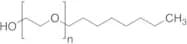
CAS:Controlled Product<p>Applications n-Octyl-oligo-oxyethylene is a detergent for useful solubilization, purification and crystallization of proteins.<br> Not a dangerous good if item is equal to or less than 1g/ml and there is less than 100g/ml in the package<br></p>Formula:(C2H4O)nC8H18OColor and Shape:NeatMolecular weight:n(44.05)+(130.23)MG 132
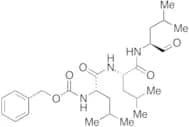
CAS:<p>Stability Hygroscopic<br>Applications MG 132 is a potent, membrane-permeable proteasome inhibitor. It induces neurite outgrowth in PC12 cells. Neuroprotective product.<br>References Lee, D., et al.: Trends in Cell Biol., 8, 397 (1998); Tsubuki, S., et al.: J. Biochem., 119., 572 (1996); Grimm, L., et al.: EMBO J., 15, 3835 (1996)<br></p>Formula:C26H41N3O5Color and Shape:NeatMolecular weight:475.62Z-VAL-MET-OH
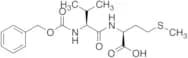
CAS:Controlled Product<p>Applications Z-VAL-MET-OH (cas# 108543-82-4) is a useful research chemical.<br></p>Formula:C18H26N2O5SColor and Shape:White To Off-WhiteMolecular weight:382.474N-tert-Boc-L-alanine
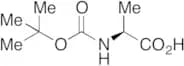
CAS:Controlled Product<p>Applications N-tert-Boc-L-alanine is the protected form of L-Alanine (A481500), a non-essential amino acid that can be found naturally in the human body and is obtained by our diet.<br>References Anderson, H., et al.: J. Nutr., 99, 82 (1969)<br></p>Formula:C8H15NO4Color and Shape:NeatMolecular weight:189.21H-Ala-Asp-OH
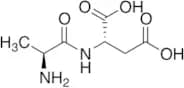
CAS:Controlled Product<p>Stability Hygroscopic<br>Applications H-ALA-ASP-OH (cas# 20727-65-5) is a useful research chemical.<br></p>Formula:C7H12N2O5Color and Shape:NeatMolecular weight:204.18Poly(ethylene Glycol) ~200
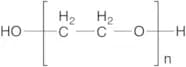
CAS:Controlled Product<p>Applications Poly(ethylene Glycol) molecules of an average molecular mass of 200. Poly(ethylene Glycol) is used in various applications from industrial chemistry to biological chemistry. Recent research has shown PEG maintains the ability to aid the spinal cord injury recovery process, helping the nerve impulse conduction process in animals. In rats, it has been shown to aid in the repair of severed sciatic axons, helping with nerve damage recovery. It is industrially produced as a lubricating substance for various surfaces to reduce friction. PEG is also used in the preparation of vesicle transport systems in with application towards diagnostic procedures or drug delivery methods.<br>References Borgens, R. et al.: J. Neurosci. Res., 66, 1179 (2001); Stavisky, R. et al.: Neurosci. Lett., 376, 98 (2005); Nalam, P. et al.: Tribiol. Lett., 37, 541 (2010); Steinmetz, N. et al.: J. Am. Chem. Soc., 131, 17093 (2009); Li, X. et al.: J. Am. Chem. Soc., 133, 11147 (2011); Li, L. et al.: Int. J. Pharm., 447, 192 (2013);<br></p>Formula:H2O(C2H4O)nColor and Shape:ColourlessMolecular weight:62.07





![N-(2-Aminoethyl)-2-[phenyl(phenylmethyl)amino]acetamide](/_next/image/?url=https%3A%2Fstatic.cymitquimica.com%2Fproducts%2FTR%2Fthumb-webp%2FA609260.webp&w=3840&q=75)