Peptides
Peptides are short chains of amino acids linked by peptide bonds, serving as important biological molecules that play key roles in cellular processes. They function as hormones, neurotransmitters, and signaling molecules, and are widely used in therapeutic and diagnostic applications. Peptides are also crucial in research for studying protein interactions, enzyme activities, and cell signaling pathways. At CymitQuimica, we provide a diverse selection of high-quality peptides to support your research and development needs in biotechnology and pharmaceuticals.
Subcategories of "Peptides"
Found 30478 products of "Peptides"
Sort by
Purity (%)
0
100
|
0
|
50
|
90
|
95
|
100
H-Glu{Glu[Cyclo(Arg-Gly-Asp-D-Phe-Lys)]2}2
<p>H-Glu{Glu[Cyclo(Arg-Gly-Asp-D-Phe-Lys)]2}2 is a tetrameric peptide that has been shown to have a broad spectrum of biological activity. This peptide may be involved in the regulation of cell growth and proliferation, which may contribute to its anti-inflammatory effects. H-Glu{Glu[Cyclo(Arg-Gly-Asp-D-Phe-Lys)]2}2 also inhibits the production of nitric oxide, which may contribute to its antimicrobial properties against bacteria and fungi.</p>Formula:C123H179N39O34Purity:Min. 95%Molecular weight:2,748.04 g/molMeO-Suc-Arg-Pro-Tyr-pNA
<p>MeO-Suc-Arg-Pro-Tyr-pNA is a peptide that is used as an enzyme substrate for chymotrypsin and other proteases. It contains the amino acid sequence of methoxy (MeO), succinyl (Suc), arginine (Arg), proline (Pro), tyrosine (Tyr) and p-nitroanilide (pNA). The MeO group on the N-terminus is important for inhibiting proteolysis by chymotrypsin. This peptide is also a substrate for chymotrypsin-like enzymes.</p>Formula:C31H40N8O9Purity:Min. 95%Molecular weight:668.71 g/molH-Glu(Leu-OH)-OH
CAS:<p>H-Glu(Leu-OH)-OH is a postprandial plasma metabolite that is produced by the hydrolysis of proteins and peptides. The profile of H-Glu(Leu-OH)-OH in plasma can be used to characterize the metabolism of these compounds and has been found to be useful for the diagnosis of metabolic disorders. H-Glu(Leu-OH)-OH levels are increased in patients with metabolic syndrome, obesity, diabetes mellitus type 2, chronic kidney disease, and cancer. This metabolite can also be used as an indicator for bacterial enzyme activity in the gut. H-Glu(Leu-OH)-OH levels are correlated with glutamate and sodium hydroxide solution levels in plasma or urine samples. H-Glu(Leu-OH)-OH may play a role in the pathogenesis of cancer due to its ability to inhibit DNA synthesis and protein synthesis.</p>Formula:C11H20N2O5Purity:Min. 95 Area-%Color and Shape:PowderMolecular weight:260.29 g/molSuc-Ala-Ala-Ala-AMC
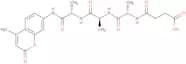
CAS:<p>Suc-Ala-Ala-Ala-AMC is a fluorogenic substrate that can be used to measure the activity of serine proteases. Suc-Ala-Ala-Ala-AMC has been shown to have high values in mammalian tissue. It also has high activity against many bacteria and fungi, as well as proteolytic enzymes such as collagenase and matrix metalloproteinase. This substrate is activated by phorbol esters and has an optimum pH of 5.5. Suc-Ala-Ala-Ala AMC is a model protein for determining the antibacterial efficacy of various antibiotics.</p>Formula:C23H28N4O8Purity:Min. 95%Color and Shape:PowderMolecular weight:488.49 g/molAc-Lys-AMC acetate salt
CAS:<p>Ac-Lys-AMC acetate salt is a fine chemical that is used as a building block in biological research. It is a versatile building block that can be used in the synthesis of complex compounds, and as a reaction component for the production of useful intermediates. Ac-Lys-AMC acetate salt is also used as a reagent in the detection of nucleic acids.</p>Formula:C18H23N3O4•C2H4O2Purity:Min. 98 Area-%Color and Shape:PowderMolecular weight:405.44 g/molH-Ala-Ala-NH2·HCl
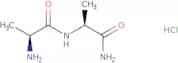
CAS:<p>H-Ala-Ala-NH2·HCl is a chiral liquid reagent that can be used in the determination of enantiomeric purity by chiral chromatography. It is also used as an amide, intramolecular hydrogen, hydroxyalkyl and aralkyl reagent. H-Ala-Ala-NH2·HCl is produced from alanine, which has been treated with fluorine gas to produce an optically active compound. This compound is then reacted with hydrochloric acid to yield the desired product.</p>Formula:C6H13N3O2·HClPurity:Min. 95 Area-%Color and Shape:White Off-White PowderMolecular weight:195.65 g/molFmoc-Val-Gly-OH
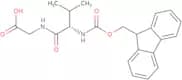
CAS:<p>Fmoc-Val-Gly-OH is a Research Chemical that is commonly used in the field of efficient synthesis. It is an amino acyl compound that can be utilized for the synthesis of various molecules. Fmoc-Val-Gly-OH is known for its high efficiency and reliability in producing desired results. It can be easily analyzed using spectrometry techniques, allowing researchers to accurately determine its composition and purity. This versatile compound can react with azides, alcohols, and other compounds to create new chemical entities. With its efficient properties, Fmoc-Val-Gly-OH is an essential tool for scientists and researchers in their quest for innovative discoveries.</p>Formula:C22H24N2O5Purity:Min. 95%Molecular weight:396.44 g/molIDE Inhibitor 6bK
<p>The enzyme inhibitor 6bK is a peptide that inhibits the activity of insulin. It has been shown to inhibit the synthesis of protein, DNA, and RNA in cells. This inhibition has led to cell death by apoptosis. 6bK has also been shown to have anti-inflammatory effects.</p>Formula:C41H55N7O7Purity:Min. 95%Molecular weight:757.94 g/molAc-Ala-Ala-OH
CAS:<p>Ac-Ala-Ala-OH is a compound that has been shown to bind to the receptor molecule, and is stable in the presence of proton. It also forms stable complexes with amide and teicoplanin. Ac-Ala-Ala-OH has a carbonyl group, which can be detected by magnetic resonance spectroscopy (MRS) at 1.8 ppm. The compound also has an nmr spectrum in which it can be seen that the trifluoroacetic acid does not affect the binding experiments. Ac-Ala-Ala-OH is used for binding experiments because it binds specifically to the receptor molecule and has a number of other properties that make it useful for research purposes.</p>Formula:C8H14N2O4Purity:Min. 95%Color and Shape:PowderMolecular weight:202.21 g/molH-Gly-Arg-AMC hydrochloride salt
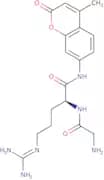
CAS:<p>H-Gly-Arg-AMC hydrochloride salt is a substrate for the enzymes cathepsins B, H, and L. This compound has been used to measure protease activity in cell culture and as a diagnostic substrate for peptidases. The enzyme reaction can be monitored by measuring changes in the fluorescence of the product at 340 nm. The pH optimum for this enzyme is 7.4.</p>Formula:C18H24N6O4•HClPurity:Min. 98 Area-%Color and Shape:PowderMolecular weight:424.88 g/mol(Sar 1,Ala8)-Angiotensin II
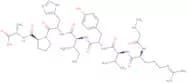
CAS:<p>Angiotensin II is a peptide hormone that is involved in the regulation of blood pressure and fluid and electrolyte balance. It also acts as a vasoconstrictor by binding to angiotensin receptors on vascular smooth muscle cells. Angiotensin II is produced from angiotensin I by the action of renin. The high-resolution linear reformulating (HRLR) technique is used to estimate the spectrum and parameters of this molecule. This technique uses iterative methods for estimating the frequency response function and parameters for each frequency, including nonlinear ones. HRLR has been shown to be an accurate estimator with a frequency range from 0 to 10 kHz, which has not been achieved with other techniques.</p>Formula:C43H67N13O10Purity:Min. 95 Area-%Color and Shape:PowderMolecular weight:926.07 g/molGhrelin trifluoroacetate
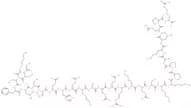
CAS:<p>Ghrelin is a peptide hormone that regulates appetite and has been shown to have potent anti-cachectic effects in animal models. It is thought to be an important regulator of body weight, insulin resistance, and metabolism. Ghrelin is synthesized in the stomach and released into the bloodstream when the stomach is empty. Ghrelin binds to ghrelin receptors in the hypothalamus, which stimulate growth hormone release from the pituitary gland. This hormone also binds to other cells in the hypothalamus, such as neurons that produce orexin, which may account for its effects on sleep patterns. Ghrelin has been shown to inhibit tumor growth by suppressing angiogenesis and inducing apoptosis. The molecular weight of ghrelin is 3497 Da. The sequence of ghrelin consists of 28 amino acids: Gly-Ser-Ser(octanoyl)-Phe-Leu-Ser-Pro-Glu-His-Gln-Lys-Ala</p>Formula:C147H245N45O42•(C2HO2F3)xPurity:Min. 95 Area-%Color and Shape:PowderMolecular weight:3,314.8 g/molH-Ile-Val-OH
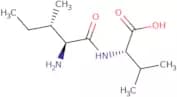
CAS:<p>H-Ile-Val-OH is an inhibitor of the enzyme catalysis in cancer cells. The mechanism of inhibition is likely to be competitive with respect to the substrate and reversible by addition of exogenous substrate. The IC50 values for H-Ile-Val-OH were determined in uptake assays and found to be around 100 μM. The IC50 values for H-Ile-Val-OH were also determined in x-ray diffraction data and found to be around 10 μM. H-Ile-Val-OH has been shown to inhibit squamous carcinoma cell growth, which may be due to its ability to inhibit protein synthesis.</p>Formula:C11H22N2O3Purity:Min. 95%Molecular weight:230.3 g/molH-Glu(Gln-OH)-OH
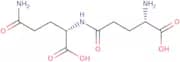
CAS:<p>Glutamate is a nonessential amino acid that is an important neurotransmitter in the central nervous system. It is found in many foods and can be synthesized by the body from other amino acids. Glutamate is also an excitatory neurotransmitter that binds to glutamate receptors, causing depolarization of the postsynaptic cell. This leads to increased intracellular calcium levels and eventually to neuronal death. Glutamate can be taken up by cells through both facilitated diffusion and active transport and converted into glutamine by glutaminase. The uptake of glutamate into cells may have clinical relevance in diseases such as hepatic steatosis, schizophrenia, or Alzheimer's disease.<br>Glu(Gln-OH)-OH (HGG) is a synthetic compound that has been shown to inhibit enzymes involved in the shikimate pathway, which converts chorismate into aromatic amino acids such as phenylalanine, tyrosine, and tryptophan. HGG has been</p>Formula:C10H17N3O6Purity:Min. 95%Color and Shape:White PowderMolecular weight:275.26 g/molFmoc-Cys(Dpm)-OH
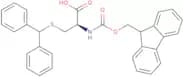
CAS:<p>Fmoc-Cys(Dpm)-OH is a chemical that belongs to the group of reaction components. It is a high quality reagent for research and development and can be used as a building block in the synthesis of other fine chemicals. Fmoc-Cys(Dpm)-OH is also an intermediate for the synthesis of complex compounds such as peptides, proteins, and antibiotics. This compound has a broad range of applications in biomedicine, organic chemistry, and pharmaceuticals.</p>Formula:C31H27NO4SPurity:Min. 95%Color and Shape:White SolidMolecular weight:509.62 g/molMeOSuc-Ala-Phe-Lys-AMC trifluoroacetate salt
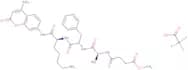
CAS:<p>MeOSuc-Ala-Phe-Lys-AMC is a compound that has a destabilizing effect on the vascular wall, due to its ability to inhibit proteolytic activity. It is also able to reduce the level of angiogenic factors, and thus has an anti-angiogenic effect. MeOSuc-Ala-Phe-Lys-AMC has been shown to have a macroscopic effect on vessels in tissue culture, and this can be observed through leucocyte migration. MeOSuc-Ala-Phe-Lys-AMC has also been shown to cause haemorrhagic changes in microvessels and muscle cells. This compound is also able to inhibit placental growth factor and muscle cell proliferation, as well as reducing the number of microvessels in the placenta.</p>Formula:C33H41N5O8•C2HF3O2Purity:Min. 95 Area-%Color and Shape:PowderMolecular weight:749.73 g/molH-Glu-Thr-OH
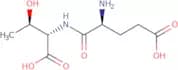
CAS:<p>H-Glu-Thr-OH is a molecule that belongs to the group of aminoglycosides. It is a broad spectrum antibiotic that inhibits bacterial protein synthesis by binding to the 30S ribosomal subunit. H-Glu-Thr-OH has been shown to be effective against various bacteria, including those that are resistant to other antibiotics such as penicillin and erythromycin. This drug has also been shown to be effective against cancer cells in vitro. H-Glu-Thr-OH is a potent inhibitor of inflammatory bowel disease, which may be due to its ability to inhibit the production of proinflammatory cytokines such as tumor necrosis factor alpha (TNFα). The drug also has an insulin sensitizing effect in type 2 diabetes mellitus patients, which may be due to its ability to enhance glucose uptake into skeletal muscle cells and adipocytes.</p>Formula:C9H16N2O6Purity:Min. 98 Area-%Color and Shape:PowderMolecular weight:248.23 g/mol(Des-Glu22)-Amyloid β-Protein (1-42) trifluoroacetate
CAS:<p>The E22delta (Osaka mutation) mutation of Amyloid β promotes β-sheet transformation.</p>Formula:C198H304N54O57SPurity:Min. 95 Area-%Color and Shape:PowderMolecular weight:4,384.93 g/molNeuropeptide W-23 (human)
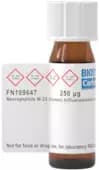
CAS:<p>Neuropeptide W-23 (human) is an antibody that recognizes the neuropeptide receptor, specifically the Neuropeptide Y receptor 1. The antibody binds to the Npy1 receptor and inhibits its activity. Neuropeptide W-23 (human) can be used as a research tool in cell biology and pharmacology studies.</p>Formula:C119H183N35O28SPurity:Min. 95%Molecular weight:2,584.01 g/molS-Methyl-L-thiocitrulline acetate salt
CAS:Controlled Product<p>S-Methyl-L-thiocitrulline acetate salt (SMTSA) is an inhibitor of the enzyme cyclase that inhibits the production of 5-hydroxytryptamine (5-HT) in the gastrointestinal tract. SMTSA has been shown to reduce 5-HT concentrations in mesenteric vessels and inhibit the physiological effects of 5-HT in rats. This drug also inhibits dopamine release from synaptosomes, which may be due to its ability to act as a competitive inhibitor of ester hydrochloride, dinucleotide phosphate, and cyclase. In addition, this drug has been shown to have a cytotoxic effect on cardiac myocytes by causing calcium influx into the cytosol and inhibiting ryanodine receptor channels.</p>Formula:C7H15N3O2SPurity:Min. 95%Color and Shape:PowderMolecular weight:205.28 g/molAc-Met-Ala-Ser-OH
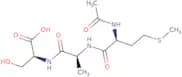
CAS:<p>Ac-Met-Ala-Ser-OH is a fine chemical that can be used as a building block in the synthesis of other compounds. It is also a reagent and speciality chemical, which are substances that are not typically found in everyday life but have specific uses. Ac-Met-Ala-Ser-OH is an intermediate chemical, meaning it is used to make something else, and can be used as a scaffold for developing new compounds. Ac-Met-Ala-Ser-OH has CAS number 149151-19-9.</p>Formula:C13H23N3O6SPurity:Min. 95%Color and Shape:PowderMolecular weight:349.4 g/molSDF-1α (human) trifluoroacetate salt
CAS:<p>Please enquire for more information about SDF-1alpha (human) trifluoroacetate salt including the price, delivery time and more detailed product information at the technical inquiry form on this page</p>Formula:C356H578N106O93S4Purity:Min. 95%Molecular weight:7,959.32 g/molBoc-Gly-Arg-Arg-AMC acetate salt
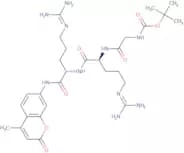
CAS:<p>Boc-Gly-Arg-Arg-AMC acetate salt is a protease inhibitor that inhibits the activity of serine proteases. This protein is a potent and selective inhibitor of the NS3 protease from hepatitis C virus, which is responsible for the cleavage of polyproteins into mature proteins. Boc-Gly-Arg-Arg-AMC acetate salt has been shown to be effective in transfection experiments and polymerase chain reaction, as well as in inhibiting the activity of soybean trypsin and mammalian tissue proteases.</p>Formula:C29H44N10O7•(C2H4O2)xPurity:Min. 98 Area-%Color and Shape:PowderMolecular weight:644.72 g/molH-Val-Gly-Ser-Glu-OH
CAS:<p>H-Val-Gly-Ser-Glu-OH is a model system for the study of uptake and distribution of fluorescently labeled peptides. It is made up of four amino acids that are found in various proteins, and also have been shown to be potent inducers of inflammation. H-Val-Gly-Ser-Glu-OH has an acidic side chain and can be cleaved by proteases, which may account for its ability to enhance cell proliferation. H-Val-Gly-Ser-Glu-OH is localized to the epidermal growth factor receptor (EGFR) on the surface membrane of cells and shows chemotactic activity towards hl60 cells, which are human promyelocytic leukemia cells. This peptide also increases light emission from hl60 cells when cultured with monoclonal antibodies against EGFR.</p>Formula:C15H26N4O8Purity:Min. 95%Color and Shape:PowderMolecular weight:390.39 g/molMca-APK(DNP)-OH Trifluoroacetate
<p>Fluorescent substrate for angiotensin-converting enzyme 2</p>Formula:C32H36N6O12Purity:Min. 98 Area-%Molecular weight:696.66 g/molH-Glu[Cyclo(Arg-Gly-Asp-D-Phe-Lys)]2
<p>H-Glu[Cyclo(Arg-Gly-Asp-D-Phe-Lys)]2 is a peptide that is used as a targeting agent for tumor imaging. It has been shown to be an effective imaging agent for tumors by binding to the RGD sequence in the extracellular matrix of the tumor. This peptide can be derivatized with fluorochromes and other functional groups for use as a contrast agent or as a labeling reagent. H-Glu[Cyclo(Arg-Gly-Asp-D-Phe-Lys)]2 has also been shown to inhibit angiogenesis and induce apoptosis, which may be due to its ability to bind to integrin receptors on endothelial cells and block their proliferation.</p>Formula:C59H87N19O16Purity:Min. 95%Molecular weight:1,318.47 g/molTentaGel® S NH2 Resin (130 um)
<p>This resin is for use in combinatorial chemistry.<br>TentaGel is a gelatinous resin and an important support for solid phase synthesis. TentaGel resins are constructed with a backbone of low crosslinked polystyrene grafted with polyoxyethylene (polyethylene glycol) as shown below. The typical chain length of POE (n) is approximately 68 ethylene oxide units or an average MW of 3000. This long chain creates a spacer that effectively separates the reactive site (X) from the crosslinked backbone matrix. Particle size 130 µm; capacity: 0.2-0.35 meq/g<br>Substitution Functional Group: -O-CH2-CH2-NH2</p>Purity:Min. 95%Glutathione disulfide (GSSG) methyl ester
<p>Glutathione Disulfide (GSSG) Methyl Ester is a reactive molecule that is formed by the oxidation of glutathione. It is used in studies on oxidative stress and its role in tumorigenesis. GSSG Methyl Ester has been shown to bind to DNA and inhibit transcription. GSSG Methyl Ester is also used as a fluorescent probe for measuring intracellular glutathione levels. This compound has also been shown to have antioxidant properties, which may be due to its ability to scavenge reactive oxygen species and reduce cellular damage.</p>Formula:C24H40N6O12S2Purity:Min. 95%Molecular weight:668.75 g/mol(Asp-Glu-Val-Asp)2-Rh110
<p>(Asp-Glu-Val-Asp)2-Rh110 is a peptide substrate for caspase 3 and 7. It has been shown to be an effective inhibitor of peptidyl prolyl cis, trans isomerase (PPIase) in vitro and in vivo, which may lead to a possible therapeutic target for the treatment of neurodegenerative disorders.</p>Formula:C72H78N10O27Purity:Min. 95%Molecular weight:1,515.48 g/molAF488 Maleimide
<p>Please enquire for more information about AF488 Maleimide including the price, delivery time and more detailed product information at the technical inquiry form on this page</p>Purity:Min. 95%AF488 DBCO
CAS:<p>AF488 DBCO is a water-soluble, green-fluorescent probe for copper-less detection of azide-tagged biomolecules. This probe is water-soluble and its fluorescence is pH independent over a wide pH range. The brightness and photostability of blue dyes are best suited to direct imaging of low-abundance targets.</p>Formula:C39H28N4O11S2Purity:Min. 95%Color and Shape:PowderMolecular weight:792.8 g/molAF488 NHS Ester
CAS:<p>Please enquire for more information about AF488 NHS Ester including the price, delivery time and more detailed product information at the technical inquiry form on this page</p>Formula:C25H17N3O13S2Purity:Min. 95%Molecular weight:631.5 g/molSomatostatin-28
CAS:<p>Somatostatin-28 is the 28 amino acid isoform of somatostatin and has similar activity to the 14 amino acid isoform. While the 14 amino acid form mainly acts in the brain, somatostatin-28 mainly operates in the gastrointestinal tract. Somatostatin is a peptide hormone that is widely expressed throughout the body for example in the gastrointestinal (GI) tract, hypothalamus, pancreas and the central nervous system. It has been found to inhibit pituitary growth hormone release as well as endocrine, pancreatic and GI secretions. In the central nervous system somatostatin plays a role in neurotransmission modification and it has also demonstrated to be effective against a number of cancers such as squamous carcinoma.</p>Formula:C137H207N41O39S3Purity:Min. 95%Molecular weight:3,148.62 g/molLeu-Enkephalin acetate
CAS:<p>Leu-Enkephalin is an endogenous opioid peptide that has been shown to produce analgesia, anti-inflammatory effects, and changes in locomotor activity. Leu-enkephalin binds to the kappa opioid receptor, which is found in high concentrations in the caudate putamen and hippocampal formation. The enkephalins are a family of basic proteins with two amino acids linked by a single amide bond. They are peptide hormones that act as neurotransmitters in the central nervous system and peripheral nervous system. Leu-enkephalin is a drug candidate for treatment of infectious diseases such as HIV and malaria. In addition, leu-enkephalin has been shown to have side effect profiles that are less severe than morphine or methadone.</p>Formula:C28H37N5O7·C2H4O2Purity:Min. 95%Color and Shape:PowderMolecular weight:554.64 g/molFmoc-D-Leu-Wang Resin (100-200 mesh) 1% DVB
<p>Fmoc-D-Leu-Wang Resin (100-200 mesh) is a research tool that is an activator, ligand, and receptor. It is used in the study of cell biology, antibody production, ion channels, and protein interactions. Fmoc-D-Leu-Wang Resin (100-200 mesh) can be used to make peptides or as a pharmacological inhibitor. This product is high purity and has CAS No.</p>Purity:Min. 95%Nesfatin-1 (30-59) (Human)
<p>Nesfatin-1 (30-59) is a peptide that is isolated from the brain and has been shown to have the ability to regulate feeding behavior. It is thought to be involved in the regulation of appetite and body weight. Nesfatin-1 (30-59) has been shown to inhibit ghrelin secretion, which is a hormone involved in hunger and satiety. This peptide also appears to stimulate insulin secretion by pancreatic beta cells, which may contribute to its anti-diabetic effects.</p>Formula:C167H263N41O54Purity:Min. 95%Molecular weight:3,709.2 g/molCys-TAT (49-57)
<p>Cys- Modified HIV TAT Sequence 49-57, a derivatizable cell-penetrating peptide (CPP) for click chemistry. Product available as a Trifluoroacetate Salt</p>Formula:C56H112N32O11SPurity:Min. 95%Molecular weight:1,441.79 g/molClickable-TAT Azide (49-57)
<p>Modified HIV TAT Sequence 49-57 for Click Chemistry. Product available as a trifluoroacetate salt</p>Formula:C58H114N34O11Purity:Min. 95%Molecular weight:1,463.78 g/molH-DCP-OH
<p>Peptide H-DCP-OH is a Research Peptide with significant interest within the field academic and medical research. This peptide is available for purchase at Cymit Quimica in multiple sizes and with a specification of your choice.</p>HsTX1
<p>HsTX1 is a peptide toxin obtained from the venom of the scorpion Heterometrus spinnifer. It blocks potassium channels and inhibits the activity of Kv1.3 channels, which are responsible for neuronal repolarization and firing. This peptide is also a blocker of voltage-gated sodium channels, but has no effect on calcium channels. HsTX1 is used in medical research as a tool to study ion channel function.</p>Formula:C149H246N54O46S9Purity:Min. 95%Molecular weight:3,818.53 g/molCALCRL Blocking Peptide
<p>A synthetic peptide for use as a blocking control in assays to test for specificity of CALCRL antibody, catalog no. 70R-6003</p>Purity:Min. 95%TRPM4 Blocking Peptide
<p>A synthetic peptide for use as a blocking control in assays to test for specificity of TRPM4 antibody, catalog no. 70R-5157</p>Purity:Min. 95%SLC12A8 Blocking Peptide
<p>A synthetic peptide for use as a blocking control in assays to test for specificity of SLC12A8 antibody, catalog no. 70R-6803</p>TREM2 Blocking Peptide
<p>A synthetic peptide for use as a blocking control in assays to test for specificity of TREM2 antibody, catalog no. 70R-4485</p>Purity:Min. 95%BTN2A1 Blocking Peptide
<p>A synthetic peptide for use as a blocking control in assays to test for specificity of BTN2A1 antibody, catalog no. 70R-7238</p>Purity:Min. 95%Myelin PLP (180-199)
<p>Myelin PLP (180-199) is a peptide that has been shown to be immunogenic and biochemically active. It belongs to the group of peptides and biochemicals, which are organic compounds of high molecular weight. Myelin PLP (180-199) is an immunogenic compound that can be used as a vaccine adjuvant. It also has been shown to have anti-inflammatory activities, which may be due to its ability to inhibit prostaglandin synthesis.</p>Formula:C92H144N23O30SPurity:Min. 95%Molecular weight:2,084.37 g/molCBP tag Blocking Peptide
<p>A synthetic peptide for use as a blocking control in assays to test for specificity of CBP tag antibody, catalog no. 70R-12226</p>Purity:Min. 95%H-Gln-2-ClTrt-Resin (100-200 mesh) 1% DVB
<p>H-Gln-2-ClTrt-Resin (100-200 mesh) 1% DVB is a resin that is used in peptide synthesis. It is an amine-thiol resin with a DVB backbone and HCl groups on the secondary amines. This resin can be used as a building block for peptide synthesis, and it has been used to synthesize peptides containing an N-terminal thiol group.</p>Purity:Min. 95%Serum Amyloid A protein
<p>Serum Amyloid A protein is a custom research peptide; min purity 95%, TFA salt. For different specs please use the Peptide Quote Tool</p>H-Pro-Ile-OH
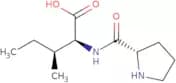
CAS:<p>H-Pro-Ile-OH is an amino acid that is found in the mitochondria of cells. It is a prodrug that binds to angiotensin and blocks its conversion to angiotensin II, which has been shown to have blood pressure lowering effects. H-Pro-Ile-OH has been shown to be a competitive inhibitor of oligopeptidase, with a half maximal inhibitory concentration (IC50) of 0.5 mM, and has also been shown to have antihypertensive properties.</p>Formula:C11H20N2O3Purity:Min. 95%Color and Shape:PowderMolecular weight:228.29 g/mol
![H-Glu{Glu[Cyclo(Arg-Gly-Asp-D-Phe-Lys)]2}2](/_next/image/?url=https%3A%2Fstatic.cymitquimica.com%2Fproducts%2F3D%2Fthumb-webp%2FPCI-3975-PI.webp&w=3840&q=75)








![H-Glu[Cyclo(Arg-Gly-Asp-D-Phe-Lys)]2](/_next/image/?url=https%3A%2Fstatic.cymitquimica.com%2Fproducts%2F3D%2Fthumb-webp%2FPCI-3904-PI.webp&w=3840&q=75)