Enzyme Modulators
Subcategories of "Enzyme Modulators"
Found 693 products of "Enzyme Modulators"
HER-2 substrate peptide
Human epidermal growth factor receptor 2 (HER-2)/epidermal growth factor receptor-2 (ErbB-2), is a key receptor linked to metastasis in tumours. The oncogenic ErbB-2 receptor has intrinsic receptor tyrosine kinase (RTK) activity. The receptor is activated by ligand binding which induces receptor dimerization. These RTK complexes can activate mitogen-activated protein kinase (MAPK) and phosphoinositol 3'-kinase (PI3K)/Akt pathways. This peptide has been identified as a substrate for HER-2/ErbB-2 as it is phosphorylated upon receptor activation and therefore acts as a marker for receptor activation in kinases assays.
Purity:Min. 95%Molecular weight:1,836.14 g/molRef: 3D-CRB1000259
Discontinued productLY 2874455
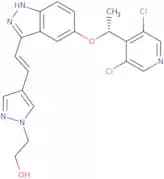
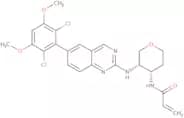
CAS:Inhibitor of FGFR kinase
Formula:C21H19Cl2N5O2Purity:(%) Min. 98%Molecular weight:443.09158PKI 587
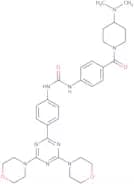
CAS:PI3K/mTOR kinase inhibitor; anti-neoplastic
Formula:C32H41N9O4Purity:Min. 95%Color and Shape:White To Off-White SolidMolecular weight:615.73 g/molGlasstide
A protein kinase G selective substrate for use in kinases assays, with a preference for PKG Ialpha over PKG II. PKG is a serine/threonine-specific protein kinase activated by cyclin guanosine monophosphate (cGMP). PKG is involved in several signalling pathways including: smooth muscle relaxation, platelet function, cell division, nucleic acid synthesis and sperm metabolism.
Purity:Min. 95%Molecular weight:901.5 g/mol(S)-(-)-Blebbistatin
CAS:Inhibitor of myosin?II?specific ATPase which blocks the myosin heads in an actin-detached state, disrupts contractility of myosin-actin filaments and stabilizes super-relaxed state of muscle fibres. It inhibits skeletal muscle myosin, non-muscle myosin II and heart muscle myosin.
Formula:C18H16N2O2Purity:Min. 98 Area-%Color and Shape:Yellow PowderMolecular weight:292.3 g/molRuxolitinib
CAS:Ruxolitinib is a janus tyrosine kinase inhibitor active specifically on sub-types JAK1 and JAK2 with IC50 values in the nanomolar range. JAK1 and JAK2 are kinases involved in the regulation of hematopoiesis. Clinically applied to the treatment of intermediate and high-risk myelofibrosis, ruxolitinib is usually well tolerated by patients.
Formula:C17H18N6Purity:Min. 95%Color and Shape:White PowderMolecular weight:306.37 g/molPhosphorylated EGFR peptide substrate
Phosphorylated EGFR peptide substrate.
Purity:Min. 95%Molecular weight:1,700.8 g/mol740 Y-P
Cell permeable peptide which is able to activate phosphoinositide 3- kinase, for which it binds with high affinity to the p85 subunit. 740 Y-P also has mitogenic activity as it is able to induce mitosis in muscle cells, and promotes cell survival in neurones. PI 3- kinase's are a family of enzymes involved in many cellular pathways including cell proliferation, growth, differentiation, survival, motility, and intracellular trafficking. PI 3 Kinases are therefore also involved in many cancers.
Purity:Min. 95%Color and Shape:PowderMolecular weight:3,268.6 g/molTofacitinib citrate
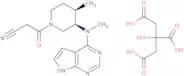
CAS:Inhibits Jak kinases; immunosuppressive; anti-inflammatory
Formula:C16H20N6O·C6H8O7Purity:Min. 98 Area-%Color and Shape:White PowderMolecular weight:504.49 g/molNafamostat mesylate - Bio-X ™
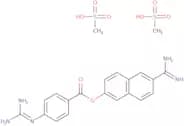
CAS:Nafamostat is a broad-spectrum serine protease inhibitor produced by chemical synthesis. Nafamostat is effective through its antioxidant and anti-inflammatory activity. This drug is involved in inhibiting various enzyme systems such as coagulation and fibrinolytic systems.
Formula:C19H17N5O2•(CH4O3S)2Purity:Min. 95%Color and Shape:PowderMolecular weight:539.58 g/molDO 264
CAS:Inhibits lysophosphatidylserine hydrolysis by the integral membrane serine hydrolase ABHD12 (IC50 = 1.3 µM). Raised levels of lysophosphatidylserine were observed in mouse brain in vivo and in primary human macrophages. DO 264 had proinflammatory effects, following infection with lymphocytic choriomeningitis virus (LCV) clone 13 in mice, resulting in severe inflammatory lung damage.
Formula:C23H20Cl2F3N5O2SPurity:Min. 95%Color and Shape:White/Off-White SolidMolecular weight:558.4 g/molAutocamtide-3 Derived Inhibitory Peptide(AC3 - I)
Autocamtide-3-related inhibitory peptide is a calmodulin-dependent protein kinase II (CaMKII) inhibitor. AC3-I is derived from Autocamtide-3, a substrate for CaMKII, with the Thr-9 phosphorylation site substituted with Ala.CAMK represents a class of Ca2+/calmodulin-dependent protein kinase enzymes. CAMKs are activated by increases in the concentration of intracellular calcium ions (Ca2+) and transfers phosphates from ATP to defined serine or threonine residues in other proteins. Activated CAMK is involved in the phosphorylation of transcription factors and therefore, in the regulation of expression of responding genes.
Purity:Min. 95%Color and Shape:PowderMolecular weight:1,688 g/molAtorvastatin calcium
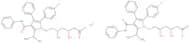
CAS:HMG-CoA reductase inhibitor; anti-hypercholesterolemia agent
Formula:C66H68CaF2N4O10Purity:Min. 97 Area-%Color and Shape:White PowderMolecular weight:1,155.34 g/molParecoxib sodium salt - Bio-X ™
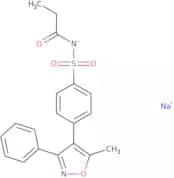
CAS:Controlled ProductParecoxib is a COX-2 inhibitor and belongs to the group of pharmacological agents. It is a prodrug of valdecoxib that is used for the treatment of osteoarthritis and rheumatoid arthritis, as well as other conditions where the reduction in pain and inflammation are desired.
Formula:C19H17N2NaO4SPurity:Min. 95%Color and Shape:PowderMolecular weight:392.41 g/mol(S)-Lisinopril - Bio-X ™
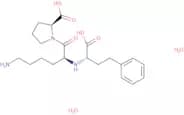
CAS:Lisinopril is a drug that belongs to the group of angiotensin converting enzyme (ACE) inhibitors. It is used to treat hypertension, heart failure and myocardial infarction. Lisinopril binds to the active site of the ACE enzyme, preventing it from converting angiotensin I into angiotensin II.Formula:C21H31N3O5Purity:Min. 95%Color and Shape:PowderMolecular weight:405.49 g/molCyclosporin A - Bio-X ™
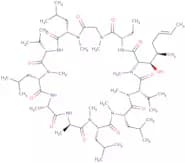
CAS:Cyclosporin A (CsA) is a cyclic undecapeptide that is extracted from the fungus Tolypocladium inflatum. CsA is used as an immunosuppressive drug to prevent rejection of transplanted organs and to treat autoimmune diseases such as rheumatoid arthritis and psoriasis. CsA works by binding to a protein called cyclophilin D, which is a component of the enzyme calcineurin. Calcineurin is an important enzyme involved in the activation of immune cells, and by binding to cyclophilin D, CsA inhibits its activity. This leads to the inhibition of T-cell activation and the suppression of the immune response. Cyclosporin A has has been rpeorted to exhibit some nephrotoxicity, hypertension and also increases the risk of infections and tumors when used in transplantation
Formula:C62H111N11O12Purity:Min. 95%Color and Shape:White PowderMolecular weight:1,202.61 g/molGSK 626616
CAS:Potent inhibitor of dual specificity tyrosine-phosphorylation-regulated kinase 3 (DYRK3) with IC50 value of 0.7 nM. Elevates hemoglobin and platelet levels in anemic mice.
Formula:C18H10Cl2N4OSPurity:Min. 98 Area-%Color and Shape:PowderMolecular weight:401.27 g/molRef: 3D-BG166664
Discontinued productBLU 554
CAS:A potent and selective covalent inhibitor of fibroblast growth factor receptor 4 (FGFR4). This receptor tyrosine kinase activates an oncogenic driver in hepatocellular carcinoma, the fibroblast growth factor 19 (FGF19). The FGFR4 inhibitor is therefore a promising candidate for the treatment of advanced liver cancer.
Formula:C24H24Cl2N4O4Purity:Min. 95%Color and Shape:White PowderMolecular weight:503.38 g/molRef: 3D-BB160379
Discontinued productTAS 6417 hydrochloride
CAS:TAS 6417 hydrochloride is a small-molecule inhibitor, which is synthesized via chemical processes in pharmaceutical research. It functions primarily as a potent and selective inhibitor of specific mutant forms of the epidermal growth factor receptor (EGFR). By targeting these EGFR mutations, TAS 6417 hydrochloride disrupts the signaling pathways that are crucial for the proliferation and survival of cancer cells.
Formula:C23H20N6O·HClPurity:Min. 95%Molecular weight:432.91 g/molRef: 3D-BT171643
Discontinued product