Chromogenic Substrates
Chromogenic substrates are compounds that produce a visible color change when acted upon by specific enzymes. These substrates are widely used in diagnostic assays, biochemical research, and enzyme-linked immunosorbent assays (ELISAs) to detect and quantify enzyme activity. The color change allows for easy and rapid visual identification of enzyme reactions, making chromogenic substrates essential tools in laboratory analysis. At CymitQuimica, we provide a diverse selection of high-quality chromogenic substrates to support your research and diagnostic applications.
Found 712 products of "Chromogenic Substrates"
Sort by
Purity (%)
0
100
|
0
|
50
|
90
|
95
|
100
Aldol® 457 β-D-galactopyranoside, Biosynth Patent: EP 2427431 and US 8940909
CAS:Aldol 457 Beta-D-galactopyranoside is a chromogenic substrate for beta-galactosidase, which is an enzyme that catalyzes the hydrolysis of the terminal galactose residue in D-galactose to form D-galactitol and D-glucose. Aldol 457 Beta-D-galactopyranoside is used as a reagent for the detection of beta-galactosidase activity in biological samples, such as cultured cells or tissues, and has been shown to be a ligand in binding studies with Galectin 1. This product is also used in diagnostic applications such as food testing, culture media, fluorogenic substrates, environmental testing and more.Formula:C24H28N2O8Purity:Min. 95.0 Area-%Molecular weight:472.49 g/mol4-Nitrophenyl 2,3,4-tri-O-acetyl-b-D-glucuronide methyl ester
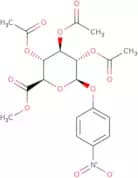
CAS:4-Nitrophenyl 2,3,4-tri-O-acetyl-b-D-glucuronide methyl ester is a fluorescent substrate for the beta-glucuronidase enzyme. It can be used to detect the presence of this enzyme in bacteria and other microorganisms by means of fluorometric or colorimetric assays. It has been shown to have an excellent stability in a variety of culture media and food testing applications. This product is available in high purity and quality, with a CAS number of 18472-49-6.Purity:Min. 95%Molecular weight:455.37 g/mol5-Bromo-4-chloro-3-indoxyl nonanoate
CAS:5-Bromo-4-chloro-3-indoxyl nonanoate (5BCNI) is a chromogenic substrate for the detection of alkaline phosphatase. It is soluble in most organic solvents and is stable at room temperature for up to 30 days. 5BCNI has been shown to be a high quality, sensitive and specific substrate for the detection of alkaline phosphatase in culture media, diagnostics, conjugates, environmental testing and chemiluminescence. It has also been used as an enzyme substrate in bioluminescence studies. The CAS number for 5BCNI is 133950-77-3.Formula:C17H21BrClNO2Molecular weight:386.72 g/mol4-Nitrophenyl phosphate potassium salt
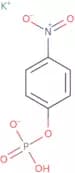
CAS:<p>4-Nitrophenyl phosphate potassium salt is a high quality, non-radioactive chemiluminescence substrate that is used in the detection of oxidase activity. This product can be used to measure the activity of peroxidase and catalase enzymes, as well as the accumulation of hydrogen peroxide. It also has been shown to be a ligand for some sulfhydryl groups and an inhibitor of phosphatases. 4-Nitrophenyl phosphate potassium salt has been tested for its ability to inhibit bacterial growth and fluorescence by staining cells. This product has also been shown to have bioluminescent properties and can be used for diagnostics or culture media.</p>Purity:Min. 95%Molecular weight:257.18 g/mol4-Nitrophenyl 2-O-(b-L-fucopyranosyl)-b-D-galactopyranoside
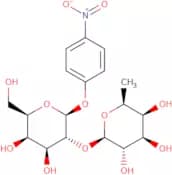
CAS:4-Nitrophenyl 2-O-(b-L-fucopyranosyl)-b-D-galactopyranoside is a high-quality chromogenic substrate with excellent sensitivity specifically designed for enzymes' activity detection. This pNP substrate enables rapid, accurate, and measurable colorimetric visualization of enzymatic hydrolysis reactions. Researchers can easily and effectively monitor the release of 4-nitrophenol as a yellow product under laboratory conditions, allowing for convenient comparative analysis and identification of enzyme levels in various samples.Purity:Min. 95%Color and Shape:White SolidMolecular weight:447.39 g/mol4-Chloro-2-nitrophenyl b-D-galactopyranoside
4-Chloro-2-nitrophenyl b-D-galactopyranoside is a fluorogenic substrate that is used in diagnostic testing, such as food and environmental testing. 4-Chloro-2-nitrophenyl b-D-galactopyranoside is an enzyme substrate that can be used to measure the activity of beta galactosidase. This substrate is also chromogenic, which means that it will change color when exposed to the enzyme. 4CNPGalA has been shown to be an excellent ligand for beta galactosidase and can be used in conjugation reactions with other molecules.Purity:Min. 95%Molecular weight:335.69 g/mol1-Naphthyl 2-acetamido-2-deoxy-b-D-glucopyranoside
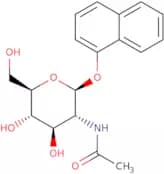
CAS:<p>1-Naphthyl 2-acetamido-2-deoxy-b-D-glucopyranoside is a chromogenic substrate commonly used to assay the activity of enzymes that cleave N-acetyl-beta-D-glucosaminide, such as beta-N-acetylglucosaminidase. Upon cleavage by the enzyme of interest, the substrate releases a yellow-colored 1-naphthylamine, which can be measured spectrophotometrically. This substrate is widely used in biomedical research and drug discovery for studying lysosomal storage disorders, bacterial infections, and neurological diseases.</p>Purity:Min. 95%Molecular weight:347.36 g/mol4-Nitrophenyl 2-acetamido-2-deoxy-6-O-trityl-b-D-glucopyranoside
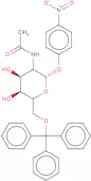
4-Nitrophenyl 2-acetamido-2-deoxy-6-O-trityl-b-D-glucopyranoside offers unmatched versatility as a chromogenic pNP substrate for detecting b-D-glucopyranosidase activity. The substrate is specifically designed to produce a yellow 4-nitrophenol product upon enzyme hydrolysis, which can be measured using absorbance spectroscopy. The unique tritylated glucopyranoside group ensures improved compound stability and selectivity while providing ease of handling. This versatile substrate is ideal for a broad range of biochemical, research, and diagnostic applications.Purity:Min. 95%Molecular weight:584.62 g/mol4-Nitrophenyl 2,4,6-tri-O-acetyl-3-O-(2,3,4,6-tetra-O-acetyl-b-D-glucopyranosyl)-b-D-glucopyranoside
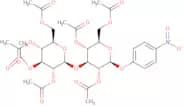
CAS:4-Nitrophenyl 2,4,6-tri-O-acetyl-3-O-(2,3,4,6-tetra-O-acetyl-β-D-glucopyranosyl)-β-D-glucopyranoside is an advanced bifunctional chromogenic pNP substrate specifically tailored for the simultaneous detection and quantification of multiple glycosidase enzymes. This dual-action substrate undergoes cleavage by two separate enzymatic reactions, which increases the range and sensitivity of detection. The resulting 4-Nitrophenol release can be easily measured spectrophotometrically, providing rapid and reliable enzyme analysis for advanced enzymology studies, enabling new discoveries in biochemistry and biotechnology.Purity:Min. 95%Molecular weight:757.65 g/molAldol® 496 acetate, Biosynth Patent: EP 2427431 and US 8940909
CAS:Aldol 496 acetate is a chromogenic substrate for the enzyme Aldolase. It is also used as a ligand to detect the presence of Aldolase in biological fluids and tissues. This product is designed for Food testing, Diagnostics, Chromogenic substrate, Staining, Enzyme substrate, Bioluminescence, Fluorogenic substrate, Chemiluminescence, and Culture media. Aldol 496 acetate is an organic chemical with high purity and high quality.Formula:C27H24N2O4Purity:Min. 95.0 Area-%Molecular weight:440.49 g/mol4-Nitrophenyl 2,4,6-tri-O-acetyl-3-O (2,3,4,6-tetra-O-acetyl-b-D-glucopyranosyl)-a-D-glucopyranoside
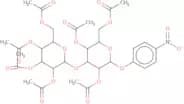
<p>4-Nitrophenyl 2,4,6-tri-O-acetyl-3-O (2,3,4,6-tetra-O-acetyl-b-D-glucopyranosyl)-a-D-glucopyranoside is a chemiluminescent substrate that can be used for the detection of aminoglycosides in biological fluids. It is a high purity and high quality product with CAS No. 482743. The product has been tested for safety and purity using culture media and environmental testing. This product may be used as a bioluminescence substrate to detect the presence of aminoglycosides in samples such as urine, serum or plasma. 4NTPAGDG is also useful as a fluorogenic substrate for diagnostics and enzyme substrates for food testing.</p>Purity:Min. 95%Molecular weight:757.65 g/molPhosphoric acid, mono(4-nitrophenyl) ester
CAS:Phosphoric acid, mono(4-nitrophenyl) ester is an inhibitor that binds to the human serum albumin (HSA), thereby preventing it from binding to the transcriptional regulatory protein. This leads to a decrease in the activity of this protein and consequently less inhibition of gene expression. The structural analysis of this inhibitor has shown that it forms hydrogen bonding interactions with basic proteins, while its reactivity is mainly dependent on Michaelis–Menten kinetics. The inhibitor also inhibits enzyme activities by binding to their active sites, reducing the enzyme's ability to catalyze reactions.Formula:C6H6NO6PMolecular weight:219.09 g/molRef: 3D-P-6460
1kgTo inquire50gTo inquire100gTo inquire250gTo inquire500gTo inquire-Unit-kgkgTo inquireN-(4-Nitrophenyl)-D-glucopyranosylamine
<p>N-(4-Nitrophenyl)-D-glucopyranosylamine is a conjugate that is used in food testing, environmental testing, and diagnostics. It is a fluorogenic substrate that reacts with the enzyme glucose oxidase to produce a yellow color. This product has high purity and quality and CAS No. 553-03-6. It also has bioluminescence properties.</p>Purity:Min. 95%4-Nitrophenyl 2-acetamido-3-O-(2-acetamido-3,4,6-tri-O-acetyl-b-D-glucopyranosyl)-4,6-di-O-acetyl-2-deoxy-a-D-galactopyranoside
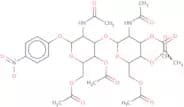
4-Nitrophenyl 2-acetamido-3-O-(2-acetamido-3,4,6-tri-O-acetyl-b-D-glucopyranosyl)-4,6-di-O-acetyl-2deoxy--aDgalactopyranoside is a substrate for enzymes such as beta galactosidase and alpha amylase. It can be used for the detection of these enzymes in biological samples, including culture media and body fluids. 4NPAG has also been used as a chromogenic substrate to measure the activity of NADH oxidase in neutrophils. 4NPAG is fluorescent in aqueous solution and can be used to detect bioluminescence reactions.Purity:Min. 95%Molecular weight:755.68 g/mol4-Nitrophenyl 2-acetamido-3-O-(3,4,6-tri-O-acetyl-2-deoxy-2-phthalimido-b-D-glucopyranosyl)-2-deoxy-a-D-galactopyranoside
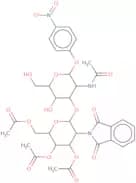
4-Nitrophenyl 2-acetamido-3-O-(3,4,6-tri-O-acetyl-2-deoxy-2-phthalimido-b-D-glucopyranosyl)-2-deoxy -a -D -galactopyranoside is a Fluorogenic substrate that is used in the detection of beta glucuronidase activity. It can be used for food testing, staining, environmental testing and chromogenic substrate for diagnostic purposes. It has a CAS number of 184840–55–9 and is available in high purity and quality. 4NPPAG is an enzyme substrate that is used to measure the amount of beta glucuronidase activity in culture media by chemiluminescence or bioluminescence.Purity:Min. 95%Molecular weight:759.67 g/mol6-Bromo-2-naphthalenyl-b-D-mannopyranoside
CAS:<p>6-Bromo-2-naphthalenyl-b-D-mannopyranoside is a boronic acid that is used as a universal substrate for the detection of peroxidase activity. This product has been shown to be stable in most culture media and can be used to detect peroxidase activity in food, environmental, and other biological samples. 6-Bromo-2-naphthalenyl-b-D-mannopyranoside also has high purity and is conjugated with various fluorophores for use in chemiluminescence and bioluminescence assays.</p>Formula:C16H17BrO6Purity:Min. 95%Molecular weight:385.21 g/mol4-Nitrophenyl b-D-celloheptaoside
CAS:Chromogenic substrate targeting cellulasePurity:Min. 95%Molecular weight:1,274.09 g/molAldol® 484 acetate, Biosynth Patent: EP 2427431 and US 8940909
CAS:Controlled ProductAldol® 484 acetate is a chromogenic substrate for carboxylesterases yielding a red precipitate. In contrast to classical indoxyl substrates, Aldol substrates work not only under aerobic but also under anaerobic conditionsFormula:C22H16ClFN2O3Purity:Min. 95.0 Area-%Molecular weight:410.83 g/mol2,4-Dinitrophenyl 2-deoxy-2-fluoro-b-D-xylopyranoside
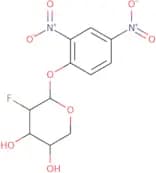
CAS:<p>2,4-Dinitrophenyl 2-deoxy-2-fluoro-b-D-xylopyranoside (DNFX) is a transglycosylation reagent that can be used to inactivate enzymes that catalyze the synthesis of xylosides. DNFX undergoes a covalent reaction with these enzymes and inhibits them by binding to the active site. DNFX catalyses the reaction between xylose and nucleophiles such as hydroxide ions, thiols, or amines. DNFX also has a catalytic effect on electrospray ionization and can be used for the detection of nucleophile activity.</p>Purity:Min. 95%Color and Shape:White PowderMolecular weight:318.21 g/mol2-Nitrophenyl 2,2',3,3',4'-penta-O-acetyl-b-D-xylobioside
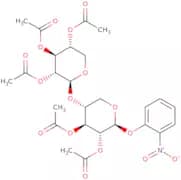
CAS:<p>2-Nitrophenyl 2,2',3,3',4'-penta-O-acetyl-b-D-xylobioside is an oligosaccharide that is used as a substrate for the transport of nucleic acid molecules. It can be used to study the function of membrane transport proteins and their homologues. This compound has been shown to inhibit the growth of corynebacterium glutamicum and trisaccharide emissions.</p>Purity:Min. 95%Molecular weight:613.52 g/mol