GPCR / proteína G
Los inhibidores de GPCR/proteínas G son compuestos que se dirigen a los receptores acoplados a proteínas G (GPCR) y a las proteínas G asociadas, que desempeñan roles cruciales en la transmisión de señales desde el exterior hacia el interior de las células. Estos inhibidores son esenciales para estudiar las vías de señalización mediadas por los GPCR, que están involucradas en numerosos procesos fisiológicos, incluyendo la percepción sensorial, la respuesta inmunitaria y la neurotransmisión. Los inhibidores de GPCR también son importantes en el desarrollo de fármacos, ya que muchos agentes terapéuticos tienen como objetivo estos receptores. En CymitQuimica, ofrecemos una amplia gama de inhibidores de GPCR/proteínas G de alta calidad para apoyar su investigación en farmacología, biología celular y campos relacionados.
Subcategorías de "GPCR / proteína G"
- Receptor 5-HT(1.025 productos)
- Receptor de adenosina(248 productos)
- Receptor adrenérgico(2.994 productos)
- Receptor de bombesina(35 productos)
- Receptor de bradicinina(61 productos)
- CXCR(154 productos)
- CaSR(34 productos)
- Receptor de cannabinoides(216 productos)
- Colecistoquinina(1 productos)
- Receptor de dopamina(445 productos)
- Receptor de endotelina(86 productos)
- Receptor GNRH(84 productos)
- GPCR19(33 productos)
- GRK(33 productos)
- GTPasa(22 productos)
- Receptor de glucagón(191 productos)
- Hedgehog / Smoothened(49 productos)
- Receptor de histamina(385 productos)
- Receptor LPA(21 productos)
- Receptor de melatonina(26 productos)
- Receptor de OX(41 productos)
- Receptor de opioides(325 productos)
- PAFR(14 productos)
- PKA(59 productos)
- Receptor S1P(17 productos)
- SGLT(31 productos)
- Receptor sigma(46 productos)
Mostrar 19 subcategorías más
Se han encontrado 5963 productos de "GPCR / proteína G"
Ordenar por
Pureza (%)
0
100
|
0
|
50
|
90
|
95
|
100
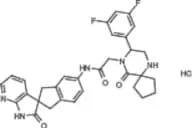
MK-3207 Hydrochloride
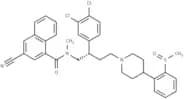
CAS:MK-3207 Hydrochloride (MK-3207 HCl) is a potent CGRP receptor antagonist with IC50 and Kiof 0.12 nM and 0.022 nM, highly selective versus human AM1, AM2, CTR, and AMY3. Phase 2.Fórmula:C31H30ClF2N5O3Pureza:98.19%Forma y color:SolidPeso molecular:594.059-Methyl-β-carboline
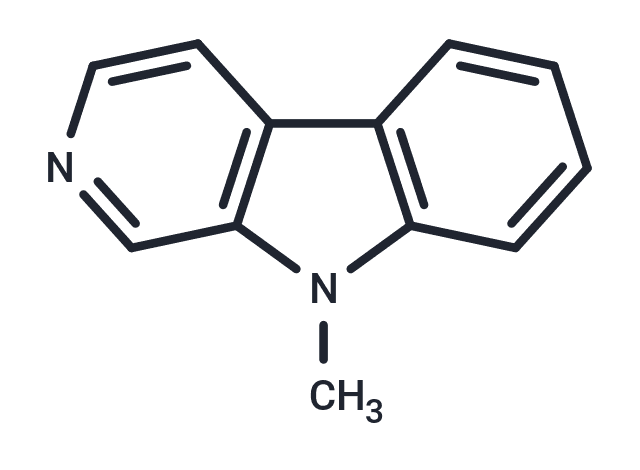
CAS:9-Methyl-β-carboline is a cognitive enhancer with neuroprotective, neurorestorative, and anti-inflammatory properties. Its behavioral effects may be linked to hippocampal dopamine levels and the stimulation of dendritic and synaptic proliferation.Fórmula:C12H10N2Forma y color:SolidPeso molecular:182.221ONO-8809
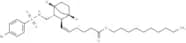
CAS:ONO-8809: Thromboxane A2 antagonist, reduces airway hyperresponse, macrophage accumulation, and MMP-9 in SHRSP brains.Fórmula:C30H46BrNO4SPureza:98%Forma y color:SolidPeso molecular:596.66TAAR1 agonist 3
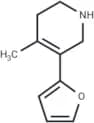
CAS:TAAR1 agonist 3 is a potent agonist of Trace Amine-Associated Receptor 1 (TAAR1) with a pEC50 value of 7.6. Additionally, it acts as a full agonist at the α2AR with a pEC50 of 6. TAAR1 agonist 3 is utilized in the research of neuropsychiatric disorders.Fórmula:C10H13NOForma y color:SolidPeso molecular:163.22ZD6021
CAS:ZD6021 is an antagonist of neurokinin 1 receptor.Fórmula:C35H35Cl2N3O2SPureza:98%Forma y color:SolidPeso molecular:632.64YGZ-331
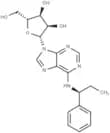
CAS:YGZ-331, a sedative hypnotic, acts by elevating GABA levels as a derivative of the adenosine nucleoside NGBA. It functions through activating A1R and A2aR, and inhibiting the phosphorylation of CaMKII (pCaMKII), thereby exerting its calming effects. Additionally, YGZ-331 reduces spontaneous motor activity in mice.Fórmula:C19H23N5O4Forma y color:SolidPeso molecular:385.42RXFP1 receptor agonist-10
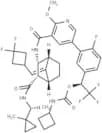
CAS:RXFP1 receptor agonist-10 (Compound 188) is an RXFP1 receptor agonist with an EC50 of 0.5 nM. It is useful for research into heart failure.Fórmula:C39H44F6N4O5Forma y color:SolidPeso molecular:762.78LAB687
CAS:LAB687 (Compound 2a) is an inhibitor of microsomal triglyceride transfer protein (MTP) with an IC50 of 0.9 nM for inhibiting the secretion of apolipoprotein B (apoB) in HepG2 cells. Additionally, LAB687 acts as a Smoothened (Smo) antagonist, exhibiting IC50 values of 2.48 μM and 3.42 μM for mouse and human Smo receptors, respectively. This compound is effective in reducing triglyceride and low-density lipoprotein cholesterol (LDL-C) levels and in inhibiting the Hedgehog signaling pathway.Fórmula:C26H23F3N2O3Forma y color:SolidPeso molecular:468.47SS-RJW100
SS-RJW100 is an enantiomer of RJW100 targeting LRH-1, SF-1, enhances Tif2 interaction, and disrupts LRH-1 networks with lowered stability.Fórmula:C28H34OForma y color:SolidPeso molecular:386.57GLP-1R modulator-1
CAS:GLP-1R modulator-1 (Compound 384) is a potent and orally active selective agonist of the glucagon-like peptide-1 receptor (GLP-1R). It activates G protein-coupled signaling, leading to increased intracellular cAMP levels, enhanced insulin secretion, delayed gastric emptying, and reduced appetite. GLP-1R modulator-1 holds potential for research in type 2 diabetes, obesity, and non-alcoholic steatohepatitis (NASH).Fórmula:C41H38ClFN6O4Forma y color:SolidPeso molecular:733.235-HT2A/5-HT2C inverse agonist 1
CAS:5-HT2A/5-HT2C inverse agonist 1 serves as a dual and potent inverse agonist for the 5-HT2A and 5-HT2C receptors, with hERG inhibition properties that mitigate cardiovascular risks. Demonstrating significant antipsychotic efficacy in the MK-801-induced mouse model, this compound holds potential for psychosis research.Fórmula:C24H35N5O2Forma y color:SolidPeso molecular:425.57Metrazoline
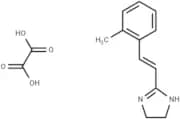
CAS:Metrazoline (o-Methyl-tracizoline) acts as a ligand for adrenergic receptors (low affinity) and imidazoline I2 receptors.
Fórmula:C14H16N2O4Forma y color:SolidPeso molecular:276.288Diosuxentan
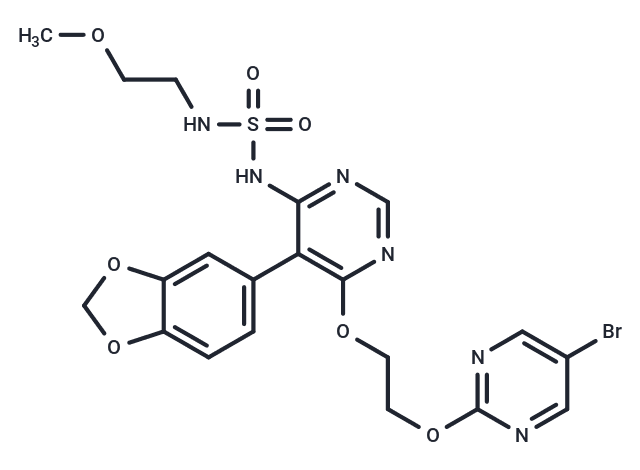
CAS:Diosuxentan is an inhibitor of ETA and is utilized in research pertaining to cardiovascular, renal, and neuronal inflammatory diseases.Fórmula:C20H21BrN6O7SForma y color:SolidPeso molecular:569.39SB 243213 dihydrochloride
CAS:SB 243213 dihydrochloride is an orally active, selective and high-affinity antagonist of 5-hydroxytryptamine (5-HT)2C receptor(pKi of 9.37 and a pKb of 9.8 forFórmula:C22H21Cl2F3N4O2Pureza:98%Forma y color:SolidPeso molecular:501.33SST1 receptor antagonist-1
CAS:SST1 receptor antagonist-1 (Compound 23) is a selective antagonist of the somatostatin receptor 1 (SST1), showing a pKd of 9.11 for rSST1 and 8.79 for hSST1. This compound is applicable in research related to retinal and endocrine dysfunction, cancer, and neuropsychiatric disorders.Fórmula:C29H31F2N3O2Forma y color:SolidPeso molecular:491.57Spns2-IN-3
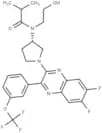
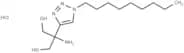
CAS:Spns2-IN-3 (compound 510) is an SPNS2 inhibitor with an IC50 value of 1.2 μM for hSPNS2. It is applicable in research on autoimmune diseases such as multiple sclerosis (MS) and inflammatory bowel disease (IBD), as well as fibrosis, muscle atrophy, metastasis, acute lung injury, rheumatoid arthritis, colitis, Alzheimer's disease, and other conditions linked to SPNS2 activity.Fórmula:C25H25F5N4O3Forma y color:SolidPeso molecular:524.48GPR183 inverse agonist-1
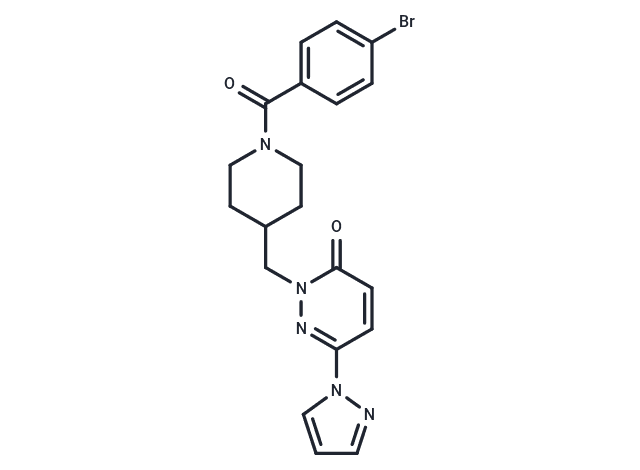
CAS:GPR183 inverse agonist-1 (Compound 78) is an inverse agonist of GPR183. It inhibits GPR183-mediated Gi activation and β-arrestin2 recruitment while blocking PBMC migration. This compound is utilized in research concerning inflammation, autoimmune, and cancer-related diseases.Fórmula:C20H20BrN5O2Forma y color:SolidPeso molecular:442.31KARI 201 hydrochloride
CAS:KARI 201 hydrochloride is a selective, brain-penetrant, competitive inhibitor of acid sphingomyelinase (ASM) with an IC50 of 338.3 nM. It also acts as an agonist for the growth hormone-releasing peptide receptor (ghrelin receptor). Additionally, KARI 201 hydrochloride can enhance the neuropathological features of Alzheimer's disease.Fórmula:C14H29ClN4O2Forma y color:SolidPeso molecular:320.86LRH-1 modulator-1
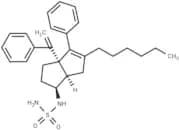
CAS:LRH-1 modulator-1: potent agonist, boosts IL-10, reduces IL-1b/TNFa, anti-inflammatory in gut.Fórmula:C28H36N2O2SForma y color:SolidPeso molecular:464.66ATX inhibitor 27
CAS:ATX inhibitor 27 (Compound 31) is an ATX inhibitor. It demonstrates IC50 values of 13 nM against human autotaxin (hATX) and 23 nM against lysophosphatidylcholine (LPC). By inhibiting the ATX enzyme, ATX inhibitor 27 reduces LPA levels in the body. This compound is applicable in research related to ATX-LPA-associated conditions such as inflammation, neurodegenerative disorders, and cancer.Fórmula:C26H26ClN5O3Forma y color:SolidPeso molecular:491.97