Apoptosis
Apoptosis inhibitors are compounds that prevent or delay the process of programmed cell death, known as apoptosis. These inhibitors are vital in studying cell survival mechanisms and are used to investigate diseases where apoptosis is dysregulated, such as cancer, neurodegenerative disorders, and autoimmune diseases. By modulating apoptosis, these inhibitors can help in the development of therapies aimed at controlling cell death. At CymitQuimica, we provide a comprehensive selection of high-quality apoptosis inhibitors to support your research in cell biology, oncology, and related fields.
Subcategories of "Apoptosis"
- ASK(9 products)
- BCL(6 products)
- Caspase(151 products)
- FOXO1(2 products)
- IAP(67 products)
- Mdm2(12 products)
- PD-1/PD-L1(106 products)
- PDK(9 products)
- PERK(26 products)
- Serine/threonin kinase(18 products)
- Survivin(14 products)
- TNF(59 products)
- c-RET(61 products)
- p53(63 products)
Show 6 more subcategories
Found 6041 products of "Apoptosis"
Sort by
Purity (%)
0
100
|
0
|
50
|
90
|
95
|
100
PI3K/VEGFR2-IN-1
CAS:PI3K/VEGFR2-IN-1 is a potent dual inhibitor targeting both PI3K and VEGFR2 with IC50 values of 2.21 μM for PI3K and 68 μM for VEGFR2, respectively.Formula:C17H14ClN3OSPurity:98%Color and Shape:SolidMolecular weight:343.83RIP2 kinase inhibitor 2
CAS:RIP2 kinase inhibitor 2 is a receptor-interacting protein-2 kinase inhibitor.Formula:C21H28N4O4SPurity:98%Color and Shape:SolidMolecular weight:432.54Prostaglandin A1
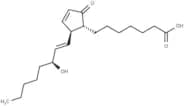
CAS:Prostaglandin A1, a dehydration derivative of Prostaglandin E1, demonstrates inhibitory effects on tumor growth, inflammation, virus replication, platelet aggregation, and excitotoxin-induced neuron apoptosis [1].Formula:C20H32O4Color and Shape:SolidMolecular weight:336.472Ferroptocide
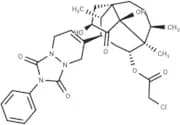
CAS:Ferroptocide is a thioredoxin inhibitor that induces iron death in cancer cells and can be used in breast cancer research.Formula:C30H36ClN3O7Color and Shape:SolidMolecular weight:586.08WEHI-345 analog
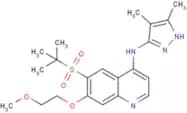
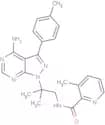
CAS:WEHI-345 analog is an Src inhibitor.Formula:C23H25N7OPurity:98%Color and Shape:SolidMolecular weight:415.49Tubulin polymerization-IN-56
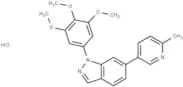
CAS:Tubulin Polymerization-IN-56 (compound 8l), an indazole derivative, potently inhibits tubulin polymerization by targeting the colchicine site, which inducesFormula:C22H22ClN3O3Color and Shape:SolidMolecular weight:411.88(+)-Apogossypol
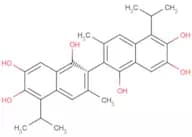
CAS:(+)-Apogossypol is an antagonist of pan-BCL-2. (+)-Apogossypol binds to Mcl-1(Bcl-2 and Bcl-xL with EC50s of 2.6, 2.8 and 3.69 μM, respectively).Formula:C28H30O6Purity:98%Color and Shape:SolidMolecular weight:462.53GSK2245035
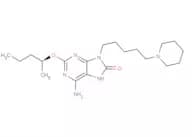
CAS:GSK2245035: selective nasal TLR7 agonist, boosts Type-1 IFN (pEC50: 9.3 IFNα, 6.5 TFNα), curbs Th2 cytokines in blood cultures.Formula:C20H34N6O2Color and Shape:SolidMolecular weight:390.52Fasnall benzenesulfonate
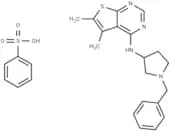
CAS:Fasnall, a fatty acid synthase (FASN) inhibitor, exhibits an IC50 of 3.71 μM against the human recombinant enzyme. It halts tritiated acetate incorporation into lipids (IC50= 5.84 μM), boosts ceramide levels, and triggers lipid droplet formation in BT474 HER2+ breast cancer cells. Demonstrating antiproliferative effects on various breast cancer cell lines, including non-tumorigenic MCF-10A and tumorigenic MCF-7, MDA-MB-468, BT474, and SK-BR-3, its efficacy is directly linked to FASN expression in vitro. In murine models of HER2+ breast cancer, particularly the MMTV-Neu model, Fasnall significantly reduces tumor volume and extends survival. Furthermore, it enhances the efficacy of carboplatin in vivo, bolstering the objective response rate of stable disease from 25% with carboplatin alone to 88% when paired with Fasnall.Formula:C19H22N4SC6H6O3SColor and Shape:SolidMolecular weight:496.6Ethylene glycol dimethacrylate
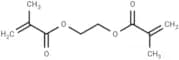
CAS:Ethylene glycol dimethacrylate, a methacrylate monomer, demonstrates cytotoxic and genotoxic impacts on human gingival fibroblasts (HGFs), elevatingFormula:C10H14O4Purity:98%Color and Shape:SolidMolecular weight:198.22AAPK-25
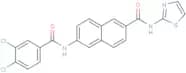
CAS:AAPK-25, a dual Aurora/PLK inhibitor, disrupts mitosis, induces apoptosis, and has antitumor properties.Formula:C21H13Cl2N3O2SPurity:97.05%Color and Shape:SolidMolecular weight:442.32Ref: TM-T10215
1mg57.00€5mg125.00€10mg182.00€25mg329.00€50mg495.00€100mg718.00€1mL*10mM (DMSO)138.00€IM156
CAS:IM156, a Metformin derivative, activates AMPK, enhances cognition in aging animals, and inhibits OXPHOS in solid tumor research.Formula:C13H16F3N5OPurity:99.67%Color and Shape:SolidMolecular weight:315.29C 87
CAS:C 87: Small-molecule TNF-α inhibitor, binds TNFα, inhibits cytotoxicity with IC50 of 8.73 μM, blocks signaling.Formula:C24H15ClN6O3SPurity:≥98%Color and Shape:SolidMolecular weight:502.93PRMT6-IN-3
CAS:PRMT6-IN-3 is a selective PRMT6 inhibitor with an IC50 value of 192 nM.PRMT6-IN-3 has anticancer activity and induces apoptosis in cancer cells.Formula:C19H26N4O2SPurity:98.12%Color and Shape:SolidMolecular weight:374.5GSK-2245035 maleate
CAS:GSK-2245035 maleate is a selective Toll-like receptor 7 (TLR7) agonist with preferential Type-1 interferon (IFN)-stimulating properties.Formula:C24H38N6O6Color and Shape:SolidMolecular weight:506.6D359-0396
CAS:D359-0396 is an orally active NLRP3 inflammasome inhibitor that mitigates pyroptosis and reduces IL-1β release in macrophages by inhibiting the oligomerizationFormula:C24H24N4O2Purity:98%Color and Shape:SolidMolecular weight:400.47TMX-2164
CAS:TMX-2164: strong, irreversible BCL6 inhibitor, IC50=152 nM, long-lasting action, inhibits cell proliferation.Formula:C25H24ClFN6O6SColor and Shape:SolidMolecular weight:591.01AMRI-59
CAS:AMRI-59 is a potent inhibitor of PrxI with anti-tumor activity.Formula:C25H27N3O2Purity:99.79%Color and Shape:SolidMolecular weight:401.5Ref: TM-T26623
1mg115.00€5mg249.00€10mg368.00€25mg562.00€50mg787.00€100mg1,054.00€500mg2,118.00€1mL*10mM (DMSO)274.00€Met-F-AEA
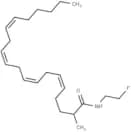
CAS:Met-F-AEA is a metabolically stable analogue of anandamine that exhibits antitumor activity by inhibiting cell growth through the activation of apoptosis [1].Formula:C23H38FNOColor and Shape:SolidMolecular weight:363.561JAB-2485
CAS:JAB-2485 is a highly potent and selective inhibitor of Aurora kinase A (AURKA), boasting an IC 50 of 0.33 nM, and demonstrates approximately 1700-fold selectivity for AURKA over AURKB. It induces cell cycle arrest and apoptosis, making it a valuable compound for cancer research [1].Formula:C25H28ClF2N5O2Molecular weight:503.97