Apoptosis
Apoptosis inhibitors are compounds that prevent or delay the process of programmed cell death, known as apoptosis. These inhibitors are vital in studying cell survival mechanisms and are used to investigate diseases where apoptosis is dysregulated, such as cancer, neurodegenerative disorders, and autoimmune diseases. By modulating apoptosis, these inhibitors can help in the development of therapies aimed at controlling cell death. At CymitQuimica, we provide a comprehensive selection of high-quality apoptosis inhibitors to support your research in cell biology, oncology, and related fields.
Subcategories of "Apoptosis"
- ASK(9 products)
- BCL(11 products)
- Caspase(141 products)
- FOXO1(3 products)
- IAP(66 products)
- Mdm2(12 products)
- PD-1/PD-L1(138 products)
- PDK(9 products)
- PERK(25 products)
- Serine/threonin kinase(14 products)
- Survivin(14 products)
- TNF(92 products)
- c-RET(55 products)
- p53(63 products)
Show 6 more subcategories
Found 5865 products of "Apoptosis"
Sort by
Purity (%)
0
100
|
0
|
50
|
90
|
95
|
100
DETD-35
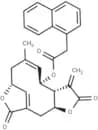
CAS:<p>DETD-35 is a promising chemical compound in anti-melanoma therapy, functioning as an inhibitor of the MEK-ERK, Akt, and STAT3 signaling pathways. It enhances cancer cell apoptosis (Apoptosis) and diminishes resistance to Vemurafenib in cancer cells. The compound exhibits IC 50 values of 2.7, 6.0, 3.9, 3.1, and 2.5 μM against melanoma cell lines B16-F10, MeWo, SK-MEL-2, A2058c, and A375c, respectively. DETD-35 offers significant potential for advancing research in melanoma treatment strategies.</p>Formula:C27H24O6Color and Shape:SolidMolecular weight:444.48Cyy-272
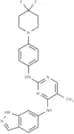
CAS:<p>Cyy-272 is an orally active JNK inhibitor with IC50 values of 1.25, 1.07, and 1.24 μM against JNK1, JNK2, and JNK3, respectively. It exerts anti-inflammatory effects by inhibiting the phosphorylation of JNK, thereby alleviating acute lung injury (ALI) induced by lipopolysaccharide (LPS). Moreover, Cyy-272 significantly reduces inflammation in cardiomyocytes and cardiac tissues caused by high lipid concentrations, further mitigating resultant cardiac hypertrophy, fibrosis, and apoptosis. Cyy-272 is utilized in the study of obesity-related myocarditis.</p>Formula:C23H23F2N7Color and Shape:SolidMolecular weight:435.47Ref: TM-T200453
Discontinued productCHMFL-48
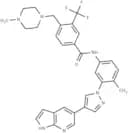
CAS:<p>CHMFL-48, an orally active inhibitor of BCR-ABL kinase, demonstrates efficacy against both the wild-type (wt) and various imatinib-resistant mutants. It exhibits potent inhibitory activity, with IC 50 values of 1 nM for the ABL wild-type and 0.8 nM for the ABL T315I mutant. CHMFL-48 operates by inhibiting the autophosphorylation of both wild-type and mutant BCR-ABL, affecting downstream signaling mediators including STAT5 and CRKL. This disruption leads to cell cycle arrest and triggers apoptosis. Given its properties, CHMFL-48 is a promising candidate for research on chronic myeloid leukemia (CML).</p>Formula:C31H30F3N7OColor and Shape:SolidMolecular weight:573.61IHMT-MST1-39
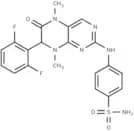
CAS:<p>IHMT-MST1-39 is an orally effective MST kinase inhibitor with IC50 values of 42 nM for MST1 and 109 nM for MST2. It activates the AMPK signaling pathway in hepatocytes and inhibits apoptosis in pancreatic β cells. Additionally, IHMT-MST1-39 improves type 1 diabetes in mice induced by Streptozotocin.</p>Formula:C20H18F2N6O3SColor and Shape:SolidMolecular weight:460.46Ref: TM-T200512
Discontinued productTaltobulin
CAS:<p>Taltobulin (HTI-286) is a synthetic analog of the tripeptide cysteine, a microtubule protein inhibitor that inhibits liver tumor cell proliferation in vitro and tumor growth in vivo.Taltobulin is cytotoxic, induces mitotic arrest and apoptosis, and may be used in the study of breast cancer and microtubule tissue-related diseases.</p>Formula:C27H43N3O4Purity:99.86%Color and Shape:SolidMolecular weight:473.65