Apoptosis
Apoptosis inhibitors are compounds that prevent or delay the process of programmed cell death, known as apoptosis. These inhibitors are vital in studying cell survival mechanisms and are used to investigate diseases where apoptosis is dysregulated, such as cancer, neurodegenerative disorders, and autoimmune diseases. By modulating apoptosis, these inhibitors can help in the development of therapies aimed at controlling cell death. At CymitQuimica, we provide a comprehensive selection of high-quality apoptosis inhibitors to support your research in cell biology, oncology, and related fields.
Subcategories of "Apoptosis"
- ASK(9 products)
- BCL(11 products)
- Caspase(144 products)
- FOXO1(3 products)
- IAP(67 products)
- Mdm2(12 products)
- PD-1/PD-L1(139 products)
- PDK(9 products)
- PERK(26 products)
- Serine/threonin kinase(18 products)
- Survivin(14 products)
- TNF(91 products)
- c-RET(61 products)
- p53(63 products)
Show 6 more subcategories
Found 6039 products of "Apoptosis"
Sort by
Purity (%)
0
100
|
0
|
50
|
90
|
95
|
100
Mcl-1 inhibitor 21
CAS:Mcl-1 inhibitor21 (Example 1-36) is an Mcl-1 inhibitor with an IC50 of 328 nM. It exhibits pro-apoptotic and anti-proliferative activity against SUDHL5 and SUDHL10 cell lines, making it applicable for cancer research.Formula:C32H33N3O4Color and Shape:SolidMolecular weight:523.622ISR modulator-1
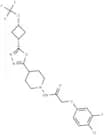
CAS:ISR Modulator-1 (Compound 212) acts as a regulator for the integrated stress response pathway (ISR).Formula:C20H21ClF4N4O4Color and Shape:SolidMolecular weight:492.85ADAR1-IN-1
CAS:ADAR1-IN-1 is a potent ADAR1 inhibitor. It significantly suppresses the proliferation of DU-145 cells (IC50 = 1.11 μM), inhibits colony formation, migration, and invasion, and induces cell cycle arrest and apoptosis. ADAR1-IN-1 effectively and safely impedes tumor growth and can be utilized in prostate cancer (PCa) research.Formula:C17H15F4N5O6SColor and Shape:SolidMolecular weight:493.39RIPK1-IN-24
CAS:RIPK1-IN-24 is an inhibitor of receptor-interacting protein kinase 1 (RIPK1) with an IC50 of 1.3 μM. It is utilized in research on inflammatory diseases.Formula:C26H21FN6O2Color and Shape:SolidMolecular weight:468.48MGD-22
CAS:MGD-22 is a molecular glue and orally active degrader of IKZF1/2/3, with DC50 values of 8.33 nM, 9.91 nM, and 5.74 nM, respectively. It exhibits strong anti-proliferative activity against various hematological cancer cells and induces cell apoptosis (apoptosis). MGD-22 demonstrates significant anti-tumor efficacy in mice with NCI-H929 or WSU-DLCL-2 xenografts. This compound is useful for researching blood cancers, including multiple myeloma (MM), acute myeloid leukemia (AML), and diffuse large B-cell lymphoma (DLBCL).Formula:C33H35N7O3Color and Shape:SolidMolecular weight:577.68CDK2/9-IN-1
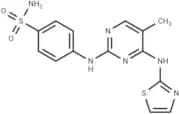
CAS:CDK2/9-IN-1 (compound 20a) is an orally active dual inhibitor of CDK2 and CDK9, with IC50 values of 0.004 μM and 0.009 μM for CDK2 and CDK9, respectively. It induces apoptosis by regulating G2/M cell cycle arrest and exhibits antitumor activity.Formula:C14H14N6O2S2Color and Shape:SolidMolecular weight:362.43DHU-Se1
DHU-Se1: potent anti-inflammatory, releases reactive selenium from macrophages, inhibits iNOS/TNF-α, blocks M0 to M1 polarization.Formula:C23H23N3OSSeColor and Shape:SolidMolecular weight:468.47Thalidomide-Piperazine-PEG1-NH2
CAS:Thalidomide-Piperazine-PEG1-NH2 is a synthetic E3 ligase ligand-linker conjugate, featuring a cereblon ligand based on Thalidomide and a single linker.Formula:C21H27N5O5Molecular weight:429.47Tubulin polymerization-IN-61
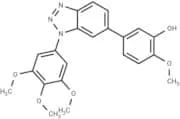
CAS:Tubulin polymerization-IN-61 (Compound 9a), a tubulin polymerization inhibitor, disrupts the microtubule skeleton, arrests the cell cycle at the G2/M phase, induces Apoptosis, and impedes cancer cell migration and colony formation. This compound demonstrates antitumor efficacy in vivo within the 4T1 xenograft model [1].Formula:C22H21N3O5Color and Shape:SolidMolecular weight:407.42MC3629
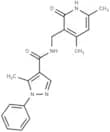
CAS:MC3629, an inhibitor of the histone methyltransferase (EZH2), exhibits antitumor activity. This compound effectively inhibits the proliferation and self-renewal of SHH MB cancer cells while inducing cell apoptosis (apoptosis). MC3629 is also useful in research on tumor aggressiveness and resistance.Formula:C19H20N4O2Color and Shape:SolidMolecular weight:336.39DAPK1-IN-1
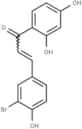
CAS:DAPK1-IN-1 (compound 10) is an inhibitor of Death-associated protein kinase 1 (DAPK1), with a dissociation constant (Kd) of 0.63 μM. It is utilized in the study of Alzheimer's disease.Formula:C15H11BrO4Color and Shape:SolidMolecular weight:335.15Silvestrol
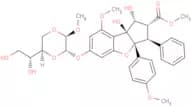
CAS:Silvestrol is a eukaryotic translation initiation factor 4A inhibitor. Silvestrol causes autophagy and caspase-mediated apoptosis.Formula:C34H38O13Purity:98%Color and Shape:SolidMolecular weight:654.66XSJ05
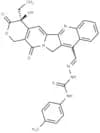
CAS:XSJ05, a derivative of camptothecin (CPT), exhibits anti-cancer activity by inhibiting topoisomerase I (Topo I). This compound induces DNA double-strand breaks, leading to DNA damage. Furthermore, XSJ05 stifles the growth of colorectal cancer (CRC), halts the cell cycle in the G2/M phase, and induces apoptosis.Formula:C29H25N5O4SColor and Shape:SolidMolecular weight:539.60VDX-111
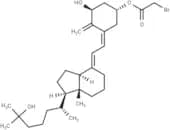
CAS:<p>VDX-111, an analog of vitamin D, exhibits cytotoxicity in ovarian cancer cells by upregulating the RIPK1/RIPK3 pathway and inducing necroptosis. It also promotes the expression of cytokines and demonstrates antitumor activity in a mouse model [1].</p>Formula:C29H45BrO4Color and Shape:SolidMolecular weight:537.57NA-17
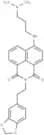
CAS:<p>NA-17 is a naphthalimide compound with antitumor activity and exhibits lower toxicity to normal cells such as HL-7702 and WI-38. It demonstrates p53-dependent inhibition selectivity in various NSCLC cells, inducing the accumulation of active p53 in the mitochondria and nuclei of these cells. NA-17 causes cell cycle arrest in the G1 phase and promotes apoptosis and cell death.</p>Formula:C26H27N3O4Color and Shape:SolidMolecular weight:445.51XIAP/cIAP1 antagonist-1
<p>Potent oral XIAP/cIAP1 inhibitor with EC50s: XIAP 5.1 nM, cIAP1 0.32 nM; curbs tumor growth in vivo.</p>Color and Shape:SolidMicrotubule inhibitor 2
Microtubule inhibitor 2: potent, selective, oral, induces ferroptosis, strong antitumor effect.Formula:C20H23NO7Color and Shape:SolidMolecular weight:389.4HL001
CAS:HL001 is an orally active small molecule inhibitor of cyclophilin A (CypA) and a receptor antagonist of lysophosphatidic acid 1 (LPA1). It induces cell cycle arrest and apoptosis in tumor cells via p53. By downregulating G3BP1, HL001 promotes reactive oxygen species production and DNA damage to stabilize p53. It disrupts the interaction between MDM2 and p53-72R in a CypA-dependent manner. HL001 exhibits antitumor activity and can also be used in research on pulmonary fibrosis.Formula:C21H16N2O4Color and Shape:SolidMolecular weight:360.363TBC-1
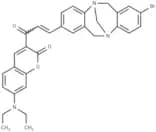
CAS:<p>TBC-1 is a chlorophyll-a derivative that acts as a photosensitizer for photodynamic therapy (PDT). It efficiently generates type I ROS and targets the endoplasmic reticulum. TBC-1 demonstrates in vitro biocompatibility and PDT effectiveness under both normoxic and hypoxic conditions.</p>Formula:C31H28BrN3O3Color and Shape:SolidMolecular weight:570.476ZSH-512
CAS:<p>ZSH-512 is a potent inhibitor of RARγ with antiproliferative properties. It induces apoptosis and reduces the expression of CD133, NANOG, SOX2, and EPCAM proteins. ZSH-512 exhibits anticancer activity and shows potential for colorectal cancer research.</p>Formula:C20H21N3O3SColor and Shape:SolidMolecular weight:383.464