Apoptosis
Apoptosis inhibitors are compounds that prevent or delay the process of programmed cell death, known as apoptosis. These inhibitors are vital in studying cell survival mechanisms and are used to investigate diseases where apoptosis is dysregulated, such as cancer, neurodegenerative disorders, and autoimmune diseases. By modulating apoptosis, these inhibitors can help in the development of therapies aimed at controlling cell death. At CymitQuimica, we provide a comprehensive selection of high-quality apoptosis inhibitors to support your research in cell biology, oncology, and related fields.
Subcategories of "Apoptosis"
- ASK(9 products)
- BCL(1 products)
- Caspase(154 products)
- FOXO1(2 products)
- IAP(67 products)
- Mdm2(12 products)
- PD-1/PD-L1(126 products)
- PDK(9 products)
- PERK(23 products)
- Serine/threonin kinase(17 products)
- Survivin(14 products)
- TNF(91 products)
- c-RET(61 products)
- p53(63 products)
Show 6 more subcategories
Found 6168 products of "Apoptosis"
Sort by
Purity (%)
0
100
|
0
|
50
|
90
|
95
|
100
RET-IN-26
RET-IN-26 (compound D5) is a kinase inhibitor that selectively targets the RET protein with an IC50 value of 0.33 μM [1].Color and Shape:Odour SolidPamlectabart
Pamlectabart is a humanised antibody targeting TNFRSF17/BCMA, (ADC) Pamlectabart tismanitin multiple myeloma.Purity:95%Color and Shape:LiquidMolecular weight:145.20 kDaPhotosensitizer-5
Photosensitizer-5, a photodynamic agent, exhibits cytotoxicity towards HeLa and HepG2 cells, with IC50 values of 10.4 nM and 6.9 nM, respectively. It induces cell death through lipid peroxidation via an iron-independent ferroptosis pathway. Additionally, Photosensitizer-5 displays antitumor activity in HeLa-tumor-bearing mice.Formula:C35H26BF2IN4O2Color and Shape:SolidMolecular weight:710.32Thalidomide 4'-oxyacetamide-alkyl-C2-amine HCl
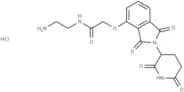
CAS:Thalidomide 4'-oxyacetamide-alkyl-C2-amine HCl is an E3 ligase ligand-linker conjugate containing the E3 ubiquitin ligase cereblon (CRBN) and linker.Formula:C17H19ClN4O6Purity:99.78%Color and Shape:SolidMolecular weight:410.81PPIA-IN-1
PPIA-IN-1 (Compound 20b) is an inhibitor of peptidyl-prolyl isomerase A (PPIA) with a KD of 0.52 μM. It demonstrates antiproliferative activity across various cancer cell lines, including an IC50 of 0.69 μM in HCT116 cells, induces cell cycle arrest at the G0/G1 phase, and exhibits antimetastatic effects in HCT116 cells. PPIA-IN-1 elevates ROS levels, causing DNA damage, ER stress, and mitochondrial dysfunction, and induces apoptosis in HCT116 cells via the MAPK pathway. Additionally, PPIA-IN-1 shows antitumor activity in a CT26 xenograft mouse model.Formula:C23H21Cl2FN4O7Color and Shape:SolidMolecular weight:555.34HDAC3-IN-6
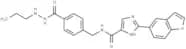
HDAC3-IN-6 (Compound SC26) is a selective HDAC3 inhibitor with an IC50 of 53 nM. It induces PD-L1 expression in a dose-dependent manner and leads to significant apoptosis and reactive oxygen species (ROS) production. HDAC3-IN-6 exhibits strong antitumor efficacy against colorectal cancer.Formula:C23H23N5O3Color and Shape:SolidMolecular weight:417.46Ferroptosis-IN-16
Ferroptosis-IN-16 (Compound 13l) acts as a specific inhibitor of ferroptosis, demonstrating EC50 values of 0.7 nM in ES-2 cells and 0.9 nM in LX-2 cells. It effectively alleviates acute liver injury induced by Acetaminophen in mouse models and shows excellent metabolic stability in mouse liver microsomes.Formula:C26H23N5OColor and Shape:SolidMolecular weight:421.49Mangafodipir trisodium
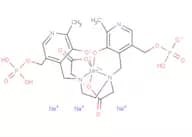
CAS:Mangafodipir trisodium can enhance contrast in magnetic resonance imaging (MRI) of the liver, is a contrast agent delivered intravenously.Formula:C22H27MnN4Na3O14P2Purity:98%Color and Shape:SolidMolecular weight:757.32DB0614
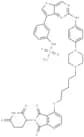
CAS:DB0614 degrades 26 kinases including AAK1 and CDK6, targeting aberrant activity in disease research.Formula:C41H42N8O7S2Color and Shape:SolidMolecular weight:822.95Apoptosis inducer 33
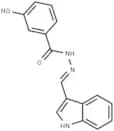
Apoptosisinducer 33 (compound H2) is a hydrazone derivative. It exhibits antioxidant and antimicrobial properties, capable of inhibiting the growth of Staphylococcus aureus, Escherichia coli, and Candida albicans. Additionally, Apoptosisinducer 33 can suppress tumor cell proliferation and induce apoptosis (apoptosis), making it useful for tumor research.Formula:C16H13N3O2Color and Shape:SolidMolecular weight:279.293Diazepinomicin
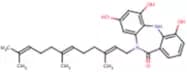
CAS:Diazepinomicin, from Micromonospora, blocks EGF-Ras-ERK pathway and induces apoptosis; an anti-tumor agent for K-Ras mutants.Formula:C28H34N2O4Purity:98%Color and Shape:SolidMolecular weight:462.58Satratoxin G
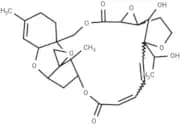
CAS:Satratoxin G, from Stachybotrys chartarum, triggers apoptosis in nasal and brain OSNs.Formula:C29H36O10Color and Shape:SolidMolecular weight:544.597AZD5582 dihydrochloride
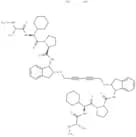
CAS:Dimeric Smac mimetic inhibits XIAP, cIAP1/2 (IC50: 15/15/21 nM); binds BIR3 domain; degrades cIAPs; induces apoptosis in cancer cells; shrinks tumors in mice.Formula:C58H80Cl2N8O8Color and Shape:SolidMolecular weight:1088.232,2'-Dihydroxy chalcone
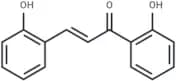
CAS:2,2'-Dihydroxy chalcone inhibits β-glucuronidase (IC50=1.6 μM) and lysozyme (IC50=1.4 μM), and fights E. coli, S. fowleri, S. albicans, S. aureus.Formula:C15H12O3Purity:99.70%Color and Shape:SolidMolecular weight:240.25UCM-1336
CAS:UCM-1336 (3,3′-(Octylimino)bis[N-phenylpropanamide]) is a potent ICMT inhibitor with an IC50 of 2 μM which is selective against the other enzymes involved inFormula:C26H37N3O2Purity:98.86%Color and Shape:SolidMolecular weight:423.59YCH3124
YCH3124 (compound Z33) is an inhibitor of USP7, exhibiting anti-tumor activity with an IC50 value of 41.9 nM. This compound demonstrates substantial in vitro anti-proliferative effects on various tumor cells, including LNCaP (IC50= 3.6 nM) and CHP-212 (IC50=9.9 nM). Moreover, YCH3124 induces apoptosis in CHP-212 cells by disrupting the cell cycle process during the G1 phase.Formula:C30H34N4O5Color and Shape:SolidMolecular weight:530.61ChoKα inhibitor-3
ChoKα Inhibitor-3, a sulfur-containing choline kinase inhibitor, effectively inhibits HChoK α1 with an IC50 value of 0.66 μM and possesses the capability toFormula:C50H54Br2Cl2N4S2Color and Shape:SolidMolecular weight:1005.83Nrf2 activator 19
Nrf2 activator 19 is a compound capable of crossing the blood-brain barrier and acts as an NRF2/HO-1 activator, offering potent antioxidant and neuroprotective effects. It effectively reduces brain damage and minimizes the accumulation of Reactive Oxygen Species (ROS). Additionally, Nrf2 activator 19 inhibits neuronal apoptosis, aiding in the recovery of neural function and motor skills. It has demonstrated significant potential in ischemic stroke research.Color and Shape:Odour SolidVK-28
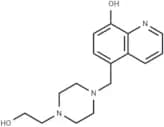
CAS:VK-28 is a brain permeable iron chelator with neuroprotection. VK-28 inhibits basal as well as iron-induced mitochondrial lipid peroxidation.Formula:C16H21N3O2Purity:99.87%Color and Shape:SolidMolecular weight:287.36Ref: TM-T9956
1mg109.00€5mg235.00€10mg349.00€25mg532.00€50mg745.00€100mg999.00€200mg1,333.00€1mL*10mM (DMSO)225.00€FF2039
FF2039 (compound 1j) is a PROTAC degrader specifically targeting HDAC1, HDAC6, and various subtypes of class I, IIa, and IIb HDACs. It induces cell cycle arrest and apoptosis, showing significant antiproliferative activity against both hematological and solid tumor cell lines. The IC50 values for FF2039 against HDAC1, HDAC2, HDAC4, and HDAC6 are 1.03, 2.15, 12.4, and 0.053 μM, respectively. FF2039 exhibits antiproliferative effects on solid tumors such as MM.1S, MDA-MB-231, and U-87MG, with EC50 values of 2.8, 28, and 30 μM, respectively.Formula:C43H56Cl3N5O6Color and Shape:SolidMolecular weight:845.29