Apoptosis
Apoptosis inhibitors are compounds that prevent or delay the process of programmed cell death, known as apoptosis. These inhibitors are vital in studying cell survival mechanisms and are used to investigate diseases where apoptosis is dysregulated, such as cancer, neurodegenerative disorders, and autoimmune diseases. By modulating apoptosis, these inhibitors can help in the development of therapies aimed at controlling cell death. At CymitQuimica, we provide a comprehensive selection of high-quality apoptosis inhibitors to support your research in cell biology, oncology, and related fields.
Subcategories of "Apoptosis"
- ASK(9 products)
- BCL(1 products)
- Caspase(154 products)
- FOXO1(2 products)
- IAP(67 products)
- Mdm2(12 products)
- PD-1/PD-L1(126 products)
- PDK(9 products)
- PERK(23 products)
- Serine/threonin kinase(17 products)
- Survivin(14 products)
- TNF(91 products)
- c-RET(61 products)
- p53(63 products)
Show 6 more subcategories
Found 6170 products of "Apoptosis"
Sort by
Purity (%)
0
100
|
0
|
50
|
90
|
95
|
100
Caspase-3/7 activator 1
Caspase-3/7 activator 1 is an effective activator of Caspase-3/7 that exhibits tumor-selective, antiproliferative activity and high apoptosis (Apoptosis) induction capability.Formula:C26H28N2O5Molecular weight:448.19982IBI-325
IBI-325 is a humanized monoclonal antibody inhibitor targeting CD73. It completely inhibits CD73 enzymatic activity without causing a hook effect. IBI-325 can reverse adenosine monophosphate-mediated immunosuppression and significantly inhibits T cell proliferation and the release of cytokines (IL-2, IFN-γ, and TNF-α). In both hPBMC-reconstituted mouse models and hCD73 knock-in mouse models, IBI-325 demonstrates potent antitumor activity. This compound is applicable for cancer immunotherapy research.Color and Shape:Odour LiquidThujopsene
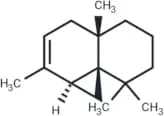
CAS:Thujopsene, a sesquiterpene found in T. dolabrata, exhibits a wide range of biological activities. It inhibits Na+/K+-ATPase and cytochrome P450 (CYP) isoform CYP2B6 with IC50 values of 25.9 µg/ml and Ki of 0.8 µM, respectively. Additionally, thujopsene demonstrates antimicrobial efficacy against both Gram-positive and Gram-negative bacteria, such as S. aureus, M. luteus, and S. typhimurium, with MICs ranging from 25-50 µg/ml. It also suppresses antigen-induced β-hexosaminidase release in IgE-sensitized RBL-2H3 mast cells (IC50= 25.1 µM) and shows cytotoxicity against A549 non-small cell lung cancer cells with an LC50 of 35.27 µg/ml. Furthermore, thujopsene causes mortality in mites D. farinae and T. putrescentiae, with LC50s of 9.82 and 10.92 µg/cm2, respectively.Formula:C15H24Color and Shape:SolidMolecular weight:204.35Mcl-1 inhibitor 3
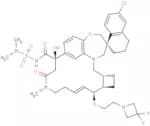
CAS:Mcl-1 inhibitor 3 shows good pharmacokinetic properties and excellent in vivo efficacy without toxicity.Mcl-1 inhibitor 3 is a highly potent and orally activateFormula:C40H52ClF2N5O7SPurity:98%Color and Shape:SolidMolecular weight:820.39ACP-0052
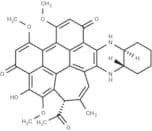
CAS:ACP-0052(SL-052, ACP-SL-052) is a photosensitizer based on hypoclintin that may be used in the treatment of prostate cancer.Formula:C35H32N2O7Color and Shape:SolidMolecular weight:592.648c-MYC/BCL2 ligand 1 iodide
c-MYC/BCL2 ligand 1 iodide is a dual-target ligand that specifically interacts with the G-quadruplex (G4) regions of the c-MYC and Bcl-2 promoters, exhibiting Kd values of 0.90 μM for c-MYCG4 and 0.56 μM for Bcl-2G4. It works by binding to these G4-forming sequences to inhibit transcription of the c-MYC and Bcl-2 genes, leading to reduced protein expression. This compound effectively suppresses MCF-7 cell proliferation and migration, induces G1 phase cell cycle arrest, and triggers apoptosis. Additionally, it significantly hampers tumor growth in the 4T1 homogenous model with negligible toxicity. c-MYC/BCL2 ligand 1 iodide is applicable in breast cancer research.Color and Shape:Odour SolidMPP hydrochloride
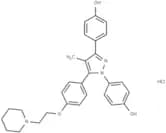
MPP hydrochloride is a selective estrogen receptor (ERR) modulator.Formula:C29H32ClN3O3Purity:99.75% - 99.90%Color and Shape:SolidMolecular weight:506.04Ref: TM-T21897L
1mg50.00€5mg99.00€10mg160.00€25mg313.00€50mg528.00€100mg707.00€200mg973.00€1mL*10mM (DMSO)110.00€GDC-0152-acetamide
GDC-0152-acetamide is a pan-antagonist of apoptosis inhibiting proteins (IAPs). It induces the autoubiquitination and subsequent degradation of cIAP1/2, activates the non-canonical NF-κB pathway, and promotes the secretion of TNF-α, leading to apoptosis in tumor cells. GDC-0152-acetamide holds potential for research in ERα-positive breast cancer.Color and Shape:Odour SolidFLT3/IRAK4-IN-1
FLT3/IRAK4-IN-1 is a selective inhibitor of FLT3 and IRAK4, exhibiting significant activity against FLT3-WT (IC50= 1.95 nM), FLT3-D835Y (IC50= 3.22 nM), and IRAK4 (IC50= 53.72 nM). It demonstrates low cytotoxicity towards normal bone marrow cells, effectively promotes apoptosis, and has potential to overcome resistance. FLT3/IRAK4-IN-1 can be utilized in studies of acute myeloid leukemia (AML).Color and Shape:Odour SolidDiafenthiuron
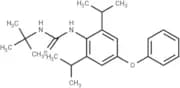
CAS:Diafenthiuron is a widely utilized thiourea-based pesticide that effectively hinders mitochondrial activity in insect pests.Formula:C23H32N2OSColor and Shape:SolidMolecular weight:384.58Perfluorodecanoic acid
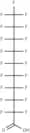
CAS:Perfluorodecanoic acid is a biochemical.Formula:C10HF19O2Color and Shape:Physical Description Liquid (Ntp 1992)Molecular weight:514.08BRD4/FKBP12 degrader-2
BRD4/FKBP12 degrader-2 (a1d) is a BRD4/FKBP12 degrader with anticancer activity.Color and Shape:Odour SolidFASN/SCD-IN-1
FASN/SCD-IN-1 is a Silybin derivative and an orally active inhibitor of fatty acid synthase (FASN) and stearoyl-CoA desaturase (SCD). In vitro, FASN/SCD-IN-1 demonstrates the ability to inhibit lipid deposition, reduce the transcription levels of FASN and SCD, and exhibits antioxidant, anti-inflammatory, and antifibrotic activities. It shows significant hepatoprotective effects in rat models of acute liver injury and improves pathological features such as steatosis, inflammation, and fibrosis in a mouse model of myeloproliferative-associated steatohepatitis (MASH). FASN/SCD-IN-1 can be used for MASH research.Color and Shape:Odour SolidBiotin-DEVD-CHO TFA
Biotin-DEVD-CHO (TFA) is the biotin-conjugated form of the caspase-3 and caspase-7 inhibitor Ac-DEVD-CHO. It can be utilized for affinity purification of active caspase-3, -6, -7, and -8 and is also applicable for in vitro detection of active caspase-3.Color and Shape:Odour Solid[Ru(DIP)2TAP]Cl2
[Ru(DIP)2TAP]Cl2, a Ruthenium(II) polypyridyl compound, serves as a photosensitizer and is utilized in photodynamic therapy (PDT) research.Color and Shape:Odour SolidVCP/p97 IN-3
VCP/p97 IN-3 is an allosteric inhibitor of VCP/p97. It exhibits inhibitory activity against VCP, with an IC50 of 9 nM, and shows IC50 values of 12 nM (N660K) and 19 nM (V474A/D649A) for mutant VCP proteins. VCP/p97 IN-3 increases the levels of K48 ubiquitination and caspase-3. It activates endoplasmic reticulum stress and the unfolded protein response (UPR). In a subcutaneous xenograft mouse model with RPMI-8226 cells, VCP/p97 IN-3 suppresses tumor growth. This compound is applicable for research in multiple myeloma.Color and Shape:Odour SolidThymocartin
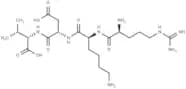
CAS:Thymocartin (RGH 0206) is a fragment 32-35 of the naturally occurring thymic factor (thymopoietin).Thymocartin is used in the study of immunodeficiency diseasesFormula:C21H40N8O7Purity:98%Color and Shape:SolidMolecular weight:516.59MST3-IN-1
MST3-IN-1 is a selective and orally active MST3 inhibitor with an IC50 of 122.4 nM. It exhibits antiproliferative activity in HepG2 cells, effectively induces apoptosis, and causes cell cycle arrest at the G2/M phase. In HepG2 xenograft mouse models, MST3-IN-1 significantly suppresses tumor growth, making it useful for liver cancer research.Color and Shape:Odour SolidFKBP12 ligand-2
FKBP12 ligand-2 (compound d) is a high-affinity ligand that targets FKBP12. This compound is utilized to selectively enhance the binding of heterobifunctional molecules to BRD4, facilitating the intracellular accumulation of drugs through the "CellTrap" effect. It forms a ternary complex of FKBP12-ligand-BRD4, which inhibits BRD4, suppresses the expression of BRD4 target genes such as MYC, and induces tumor cell death. FKBP12 ligand-2 is applicable in selective cancer research based on the differential levels of presenter proteins within cells.Color and Shape:Odour Solid