Apoptosis
Apoptosis inhibitors are compounds that prevent or delay the process of programmed cell death, known as apoptosis. These inhibitors are vital in studying cell survival mechanisms and are used to investigate diseases where apoptosis is dysregulated, such as cancer, neurodegenerative disorders, and autoimmune diseases. By modulating apoptosis, these inhibitors can help in the development of therapies aimed at controlling cell death. At CymitQuimica, we provide a comprehensive selection of high-quality apoptosis inhibitors to support your research in cell biology, oncology, and related fields.
Subcategories of "Apoptosis"
- ASK(9 products)
- BCL(1 products)
- Caspase(154 products)
- FOXO1(2 products)
- IAP(67 products)
- Mdm2(12 products)
- PD-1/PD-L1(126 products)
- PDK(9 products)
- PERK(23 products)
- Serine/threonin kinase(17 products)
- Survivin(14 products)
- TNF(91 products)
- c-RET(61 products)
- p53(63 products)
Show 6 more subcategories
Found 6170 products of "Apoptosis"
Sort by
Purity (%)
0
100
|
0
|
50
|
90
|
95
|
100
P53/TLR2 modulator-1
P53/TLR2 modulator-1 (Compound Z9) is an agent that targets both the P53 pathway and TLR2, exhibiting radioprotective properties. It mitigates apoptosis by inhibiting radiation-induced expression of P53 and Bax. Concurrently, it enhances the TLR2 pathway by upregulating downstream proteins MyD88 and P65, which promotes secretion of cytokines like IL-6, providing radioprotective effects. P53/TLR2 modulator-1 shows significant radioprotective activity in AHH-1 and HUVECs cells, enhances survival rates in C57BL/6J mice exposed to lethal radiation doses, and alleviates radiation-induced damage to their hematopoietic system, intestinal villi, and spleen. It is applicable for research on radiation-related diseases.Color and Shape:Odour SolidCXCR4-IN-2
CXCR4-IN-2 (compound A1), a potent bifunctional fluorinated small molecule, inhibits CXCR4 and exhibits anticancer properties by exerting cytotoxicity (IC 50:Formula:C21H20F6N4SPurity:98%Color and Shape:SolidMolecular weight:474.47CAY10726
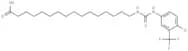
CAS:CAY10726, an arylurea fatty acid, cuts ATP by 28% and promotes apoptosis in breast cancer cells by depleting mitochondrial lipids.Formula:C24H36ClF3N2O3Color and Shape:SolidMolecular weight:493MD-222
CAS:MD-222: a first-in-class, highly potent PROTAC that degrades MDM2, activates p53, and exhibits anticancer properties.Formula:C48H47Cl2FN6O6Color and Shape:SolidMolecular weight:893.84anti-TNBC agent-8
Anti-TNBC agent-8 (Compound TP2) is a photodynamic therapeutic compound that targets mitochondrial DNA G-quadruplexes (mtG4). Under white light exposure, it exhibits an IC50 of 0.42 μM against 4T1 cells. Anti-TNBC agent-8 tightly binds to mtG4, leading to the production of substantial reactive oxygen species (ROS) under illumination. This results in the loss of mitochondrial membrane potential (MMP), reduced ATP production, elevated ROS levels, and significant apoptosis in triple-negative breast cancer (TNBC) cells, thus demonstrating its tumor growth inhibitory activity. Anti-TNBC agent-8 is applicable for research in TNBC.Color and Shape:Odour SolidChoKα inhibitor-5
ChoKα Inhibitor-5, a sulfur-containing choline kinase inhibitor, effectively inhibits HChoKα1 with an IC50 value of 0.64 μM and induces apoptosis.Formula:C54H68Br2N4S4Color and Shape:SolidMolecular weight:1061.21LZ-07
LZ-07 is an IRAK4 PROTAC degrader (DC50 = 1.14 nM), that, upon degradation of IRAK4, significantly inhibits the expression of cytokines such as IL-6, IL-1β, TNF-α, and IL-10. It is applicable in research related to autoimmune diseases.Color and Shape:Odour SolidRIPK2-IN-2
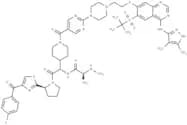
CAS:RIPK2-IN-2, a RIP2 kinase PROTAC inhibitor, blocks proinflammatory signaling in autoinflammatory diseases.Formula:C53H65FN14O7S2Color and Shape:SolidMolecular weight:1093.3G-Glu-Val
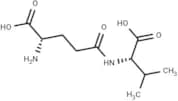
CAS:G-Glu-Val (γ-glutamyl-L-valine, H-Glu-Val -OH), a flavour-regulating dipeptide, is a major contributor to "mellow".
Formula:C10H18N2O5Color and Shape:SolidMolecular weight:246.26Anticancer agent 273
Anticanceragent 273 (Compound 9q) is an effective anticancer compound identified from matrine. It inhibits cancer cell proliferation, with an IC50 of 4.48 μM against HeLa cells. Anticanceragent 273 exerts its anticancer effects by modulating PI3K/AKT expression and activating activating transcription factor 4 (ATF4), which induces endoplasmic reticulum stress and triggers apoptosis. It holds potential for cancer research, including cervical cancer.Color and Shape:Odour SolidTG101209 analog 1
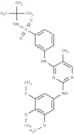
TG101209 analog 1 (Compound 8h) serves as an inhibitor of BUB1B, exhibiting an IC50 of 10.36 μM. It also possesses cytotoxic properties, demonstrated by an IC50 of 1.347 μM against Caki-1 cells, and can induce necrosis and apoptosis.Formula:C24H31N5O5SColor and Shape:SolidMolecular weight:501.598MAO-B-IN-30
CAS:MAO-B-IN-30 is a selective and potent MAO-B inhibitor that crosses the blood-brain barrier with antiproliferative activity and inhibits both MAO-A and MAO-B.MAO-B-IN-30 reduces the levels of TNF-alpha, IL-6, and NF-kB in organisms, and can be used to study Parkinson's-type neurological disorders.Formula:C15H10BrN3O2Purity:98.31%Color and Shape:SoildMolecular weight:344.16Thalidomide 4'-oxyacetamide-alkylC1-PEG3-alkylC3-amine
CAS:Cereblon ligand for PROTAC R&D; has E3 ligase, alkylC1-PEG3-alkylC3 linker, terminal amine. Part of Arvinas-licensed tool molecules.Formula:C25H35ClN4O9Color and Shape:SolidMolecular weight:571.02Thalidomide-Piperazine-Piperidine
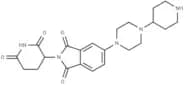
CAS:Thalidomide-based E3 ligase ligand linked to a PROTAC piperazine-piperidine chain.Formula:C22H27N5O4Color and Shape:SolidMolecular weight:425.489p38-α MAPK-IN-8
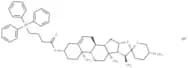
p38-α MAPK-IN-8 (Compound 13) is a lipophilic cationic derivative. It exhibits cytotoxicity toward various tumor cells, inducing cell cycle arrest and apoptosis, as well as increasing reactive oxygen species (ROS) production and causing mitochondrial membrane potential depolarization. Its antitumor activity may be related to the p38α MAPK pathway, making it a potential candidate for cancer research.Formula:C49H62BrO4PColor and Shape:SolidMolecular weight:825.892CYP51/PD-L1-IN-4
CYP51/PD-L1-IN-4 (compound 14a-2) is a potent dual-target inhibitor of CYP51/PD-L1, displaying IC50 values of 0.17 and 0.021 μM, respectively.Formula:C27H28N4O3Color and Shape:SolidMolecular weight:456.54XZ739
CAS:XZ739: Cereblon-based PROTAC, degrades BCL-XL (DC50 2.5 nM in MOLT-4, 16hr), induces caspase apoptosis.Formula:C65H76ClF3N8O12S3Color and Shape:SolidMolecular weight:1349.99MSU-42011
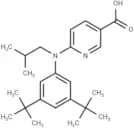
CAS:MSU-42011: oral RXR-like agonist, inhibits iNOS & p-ERK, antitumor in lung cancer model, effective preclinical treatment.Formula:C24H34N2O2Purity:99.6%Color and Shape:SoildMolecular weight:382.54Thalidomide-O-amido-PEG2-C2-NH2 hydrochloride
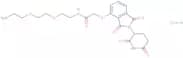
CAS:Thalidomide-based E3 ligase ligand with PEG2-C2 linker; used as an immunomodulatory cancer treatment.Formula:C21H27ClN4O8Purity:98.09%Color and Shape:SolidMolecular weight:498.914(±)-Enterodiol
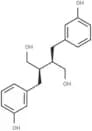
CAS:"(±)-Enterodiol, the racemate of Enterodiol, is metabolized from lignans found in whole-grain cereals, nuts, legumes, flaxseed, and vegetables by human intestinal bacteria. This compound exhibits apoptotic effects in colorectal cancer (CRC) cells and has been identified to possess anti-cancer activities [1] [2]."Formula:C18H22O4Color and Shape:SolidMolecular weight:302.36