Apoptosis
Apoptosis inhibitors are compounds that prevent or delay the process of programmed cell death, known as apoptosis. These inhibitors are vital in studying cell survival mechanisms and are used to investigate diseases where apoptosis is dysregulated, such as cancer, neurodegenerative disorders, and autoimmune diseases. By modulating apoptosis, these inhibitors can help in the development of therapies aimed at controlling cell death. At CymitQuimica, we provide a comprehensive selection of high-quality apoptosis inhibitors to support your research in cell biology, oncology, and related fields.
Subcategories of "Apoptosis"
- ASK(9 products)
- BCL(11 products)
- Caspase(144 products)
- FOXO1(3 products)
- IAP(67 products)
- Mdm2(12 products)
- PD-1/PD-L1(139 products)
- PDK(9 products)
- PERK(26 products)
- Serine/threonin kinase(18 products)
- Survivin(14 products)
- TNF(93 products)
- c-RET(62 products)
- p53(63 products)
Show 6 more subcategories
Found 6064 products of "Apoptosis"
Sort by
Purity (%)
0
100
|
0
|
50
|
90
|
95
|
100
TAS-117
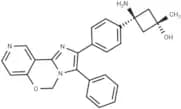
CAS:TAS-117, a PKB/Akt inhibitor, is used potentially for the treatment of solid tumors.Formula:C26H24N4O2Color and Shape:SolidMolecular weight:424.49MEDI-7352
MEDI-7352 is a human bispecific antibody targeting NGF/bNGF and TNF. It can be utilized in research focused on osteoarthritis (OA) pain.Color and Shape:Odour LiquidMRIA9
CAS:MRIA9 inhibits SIK1/2/3 & PAK2/3 with IC50: SIK1 (516 nM), SIK2 (180 nM), SIK3 (127 nM); ATP-competitive.Formula:C24H22ClFN6O3Color and Shape:SolidMolecular weight:496.92Bim BH3, Peptide IV
CAS:<p>This Bim peptide belongs to the pro-apoptotic group of the Bcl-2 family of proteins.</p>Formula:C145H222N44O41SPurity:98%Color and Shape:SolidMolecular weight:3269.65Bcl-2-IN-4
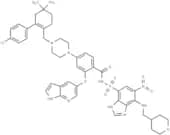
CAS:Bcl-2-IN-4: potent, selective, oral Bcl-2 inhibitor with 1.5 nM IC50, >200x selectivity over Bcl-xL.Formula:C46H50ClN9O7SColor and Shape:SolidMolecular weight:908.46PDE4D inhibitor 1
PDE4-IN-1 is a PDE4 inhibitor characterized by high potency (IC50: 8.6 nM) and superior selectivity over other PDE subtypes. This compound inhibits the release of inflammatory cytokines and chemokines. Additionally, PDE4-IN-1 significantly restores the damaged cAMP-CREB signaling pathway, inhibits proliferation, and promotes differentiation to reverse psoriasis formation.Color and Shape:Odour SolidFludarabine triphosphate
CAS:Fludarabine triphosphate inhibits key enzymes, causing cell death.Formula:C10H15FN5O13P3Color and Shape:SolidMolecular weight:525.17MY-943
MY-943, a potent inhibitor of tubulin polymerization and LSD1, exhibits anticancer properties by inducing G2/M phase arrest, promoting apoptosis, andFormula:C30H36N4O6S2Color and Shape:SolidMolecular weight:612.763-Hydroxyterphenyllin
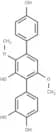
CAS:3-Hydroxyterphenyllin from A. candidus is a fungal compound with antioxidant, anticancer, antibacterial, and antiviral effects.Formula:C20H18O6Color and Shape:SolidMolecular weight:354.35LL-K9-3
CAS:LL-K9-3, a selective hydrophobic tagging technology (HyT)-based degrader, specifically targets the CDK9-cyclin T1 complex, displaying DC50 values of 589 nM forFormula:C31H49N5O6S3Color and Shape:SolidMolecular weight:683.94BODIPY FL thalidomide
CAS:BODIPY FL thalidomide is a fluorescent probe that binds human cereblon protein with high affinity, exhibiting a dissociation constant (Kd) of 3.6 nM [1].Formula:C37H43BF2N6O7Color and Shape:SolidMolecular weight:732.58fac-[Re(CO)3(L3)(H2O)][NO3]
Fac-[Re(CO)3(L3)(H2O)][NO3] (Compound 3), a rhenium(I) tricarbonyl aqua complex, acts as an anticancer agent through the induction of mitochondrial dysfunction.Formula:C25H17N6O8ReColor and Shape:SolidMolecular weight:715.64Thalidomide-Piperazine 5-fluoride hydrochloride
CAS:Thalidomide-Piperazine 5-fluoride hydrochloride, a derivative of the cereblon (CRBN) inhibitor Thalidomide, serves as a ligand for E3 ubiquitin ligase (Ligands for E3 Ligase), facilitating the synthesis of PROTACs [1].Formula:C17H18ClFN4O4Color and Shape:SolidMolecular weight:396.8PI3Kδ-IN-16
CAS:PI3Kδ-IN-16 is a selective and potent PI3Kδ inhibitor with anticancer and antiproliferative activity, induces cell cycle arrest and apoptosis.Formula:C22H26N6O2Purity:99.68%Color and Shape:SoildMolecular weight:406.48Beclin1-Bcl-2 interaction inhibitor 1
Beclin1-Bcl-2 Interaction Inhibitor 1 effectively disrupts the binding of Beclin 1 to Bcl-2, and is utilized in cancer and neurodegeneration research [1].Color and Shape:Odour SolidMcl-1 inhibitor 15
Mcl-1 Inhibitor 15 (Compound (Ra)-15), with a K i of 0.02 nM, is utilized in cancer research [1].Formula:C40H42ClFN6O4SColor and Shape:SolidMolecular weight:757.32CYP51/PD-L1-IN-3
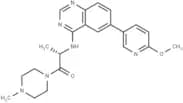
CYP51/PD-L1-IN-3 (compound L21), a quinazoline with antifungal properties, serves as a dual inhibitor targeting CYP51 (IC50: 0.205 μM) and PD-L1 (IC50: 0.039 μMFormula:C27H28N6O2Color and Shape:SolidMolecular weight:468.55XM-U-14
XM-U-14 is a selective PROTAC USP7 degrader that induces the degradation of USP7 in the RS4;11 cell line with a DC50 of 0.74 nM. This compound elevates the levels of p53 and p21, and significantly inhibits the growth of acute lymphoblastic leukemia (ALL) cells, with IC50 values of 0.5 nM in RS4;11 cells and 8.3 nM in Reh cells. Moreover, XM-U-14 induces apoptosis and cell cycle arrest, and effectively inhibits tumor growth.Color and Shape:Odour SolidHSP70-IN-6
HSP70-IN-6 (Compound JL-15) acts as an inhibitor of the Hsp70-Bim protein-protein interactions (PPI) with an IC50 value of 70 nM. It induces apoptosis in chronic myeloid leukemia (CML) cells with EC50 values of 0.43 μM (BV173), 0.88 μM (K562), and 0.19 μM (K562-R3).Color and Shape:Odour SolidNecroptosis-IN-4
Necroptosis-IN-4 is an effective inhibitor of necroptosis, specifically targeting RIP kinase 1 (RIPK1) without inhibitory activity against RIPK3. It exhibits weak inhibitory effects on VEGFR1/2 and PDGFR-α.Color and Shape:Odour Solid