Apoptosis
Apoptosis inhibitors are compounds that prevent or delay the process of programmed cell death, known as apoptosis. These inhibitors are vital in studying cell survival mechanisms and are used to investigate diseases where apoptosis is dysregulated, such as cancer, neurodegenerative disorders, and autoimmune diseases. By modulating apoptosis, these inhibitors can help in the development of therapies aimed at controlling cell death. At CymitQuimica, we provide a comprehensive selection of high-quality apoptosis inhibitors to support your research in cell biology, oncology, and related fields.
Subcategories of "Apoptosis"
- ASK(6 products)
- BCL(11 products)
- Caspase(127 products)
- FOXO1(3 products)
- IAP(65 products)
- Mdm2(12 products)
- PD-1/PD-L1(126 products)
- PDK(9 products)
- PERK(24 products)
- Serine/threonin kinase(15 products)
- Survivin(13 products)
- TNF(91 products)
- c-RET(51 products)
- p53(62 products)
Show 6 more subcategories
Found 5622 products of "Apoptosis"
Sort by
Purity (%)
0
100
|
0
|
50
|
90
|
95
|
100
SRE-II
<p>SRE-II, an amide derivative, serves as an activatable photosensitizer tailored for photodynamic cancer research, exhibiting diminished fluorescence and</p>Formula:C15H9ClINO2Purity:98%Color and Shape:SolidMolecular weight:397.59Tubulin/HDAC-IN-2
<p>Tubulin/HDAC-IN-2 (Compound II-19k) is a dual inhibitor targeting Tubulin and HDAC, exhibiting IC50 values of 0.403 μM for HDAC1, 0.591 μM for HDAC2, 3.552 μM</p>Formula:C21H19FN2O4Color and Shape:SolidMolecular weight:382.38ChoKα inhibitor-3
<p>ChoKα Inhibitor-3, a sulfur-containing choline kinase inhibitor, effectively inhibits HChoK α1 with an IC50 value of 0.66 μM and possesses the capability to</p>Formula:C50H54Br2Cl2N4S2Color and Shape:SolidMolecular weight:1005.83Thalidomide-O-amido-PEG1-(C1-PEG)2-C2-NH2
<p>Thalidomide-PEG conjugate for E3 ligase in PROTACs; has cereblon ligand and 3-unit PEG linker.</p>Formula:C27H35F3N4O11Purity:98%Color and Shape:SolidMolecular weight:648.58Thalidomide-NH-PEG7
Thalidomide-NH-PEG7, a chemical for creating PROTAC iRucaparib-AP6, selectively degrades PARP1 and is used in ADCs.Formula:C27H39N3O11Purity:98%Color and Shape:SolidMolecular weight:581.61Polyinosinic-polycytidylic acid potassium
CAS:Poly(I:C) potassium is a synthetic RNA analog, activates TLR3/RIG-I, used as a vaccine adjuvant, and induces apoptosis in cancer cells.Formula:(C10H13N4O8P)x·(C9H14N3O8P)x·xKColor and Shape:SolidPZ703b hydrochloride
PZ703b hydrochloride, a Bcl-xl PROTAC, triggers apoptosis and halts cancer growth; used in bladder cancer studies.Formula:C80H103Cl2F3N10O11S4Color and Shape:SolidMolecular weight:1636.9PRDX1-IN-2
<p>PRDX1-IN-2 (compound 15) is a selective inhibitor of the antioxidant enzyme Peroxiredoxin 1 (PRDX1) with an IC50 of 0.35 μM. It reduces mitochondrial membrane potential in SW620 cells, potentially due to increased ROS resulting from PRDX1 inhibition, leading to apoptosis. PRDX1-IN-2 is applicable in colorectal cancer research.</p>HDAC6-IN-16
<p>HDAC6-IN-16 (compound 5c), a quinazolin-4(3H)-one-based inhibitor of histone deacetylase 6 (HDAC6), demonstrates an anticancer effect by inhibiting colony</p>Formula:C23H19N3O3SPurity:98%Color and Shape:SolidMolecular weight:417.48NCA029
<p>NCA029 is a potent activator of human caseinolytic protease P (HsClpP) with an EC50 of 0.15 μM. It targets HsClpPP and triggers an ATF3-dependent integrated stress response, resulting in the death of colon cancer cells.</p>Formula:C22H20F3N3OMolecular weight:399.15585SB 699551
CAS:<p>SB 699551 is a selective 5-HT5A antagonist (Ki=6.31 nM) that enhances 5-HT neuronal function. It inhibits SERT (Ki=25.12 nM),inhibit breast cancer.</p>Formula:C34H45N3OPurity:99.83%Molecular weight:511.74Top1-IN-2
<p>Top1-IN-2 (Compound 1a) is an inhibitor of topoisomerase 1 (Top1). It suppresses the growth of P-gp drug-resistant tumor cells and induces apoptosis.</p>Color and Shape:Odour SolidLZFPN-90
LZFPN-90 (LZ90) is a dual-target compound aimed at NAMPT and PD-L1. It inhibits the interaction between PD-1/PD-L1 and NAMPT activity. LZFPN-90 suppresses cell growth in a NAMPT-dependent manner, blocking the cell cycle and subsequently inducing apoptosis. Additionally, LZFPN-90 exhibits target-dependent antitumor activity, impacting metabolic processes and the immune system.Formula:C33H36N8O2SMolecular weight:608.26819Humulone
<p>Humulone is a natural product and has a wide range of applications in life science related research.</p>Formula:C21H30O5Color and Shape:SolidMolecular weight:362.47HDAC-IN-77
HDAC-IN-77 (HL-5s), an HDAC inhibitor, has the capability to induce ferroptosis and suppress the Nrf2/HO-1 signaling pathway. This compound is utilized in cancer research.Formula:C22H26N4O2SColor and Shape:SolidMolecular weight:410.53MX106-4C
<p>MX106-4C is a survivin inhibitor that selectively targets ABCB1-positive colorectal cancer cells. It can work synergistically with Doxorubicin for enhanced anticancer effects or restore Doxorubicin sensitivity in drug-resistant ABCB1 cells.</p>Formula:C23H25BrN2O2Molecular weight:440.109948-hydroxy Efavirenz
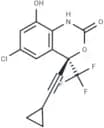
CAS:<p>8-hydroxy Efavirenz, a main efavirenz metabolite by CYP2B6, causes apoptosis in rat neurons at 0.01 μM.</p>Formula:C14H9ClF3NO3Color and Shape:SolidMolecular weight:331.68Apoptosis inducer 13
<p>Apoptosis Inducer 13 (Compound Ru4) promotes apoptosis in cancer cells while also suppressing their migration and invasion.</p>Formula:C59H54ClF6N8O4PRuPurity:98%Color and Shape:SolidMolecular weight:1220.6Sorafenib-d4
CAS:<p>Sorafenib D4 is deuterium-labeled Sorafenib, a multi-kinase inhibitor (Raf-1, B-Raf, VEGFR-3) with IC50s: 6, 20, 22 nM.</p>Formula:C21H16ClF3N4O3Purity:98%Color and Shape:SolidMolecular weight:468.85PROTAC PD-L1 degrader-1
<p>PROTACPD-L1 degrader-1 is a CRBN-based PD-L1-PROTAC degrader with significant PD-L1 protein degradation capacity. It demonstrates strong PD-L1 degradation activity in 4T1 cells, with a DC50 of 0.609 μM. This compound is applicable to breast cancer research.</p>