Apoptosis
Apoptosis inhibitors are compounds that prevent or delay the process of programmed cell death, known as apoptosis. These inhibitors are vital in studying cell survival mechanisms and are used to investigate diseases where apoptosis is dysregulated, such as cancer, neurodegenerative disorders, and autoimmune diseases. By modulating apoptosis, these inhibitors can help in the development of therapies aimed at controlling cell death. At CymitQuimica, we provide a comprehensive selection of high-quality apoptosis inhibitors to support your research in cell biology, oncology, and related fields.
Subcategories of "Apoptosis"
- ASK(9 products)
- BCL(11 products)
- Caspase(143 products)
- FOXO1(3 products)
- IAP(67 products)
- Mdm2(12 products)
- PD-1/PD-L1(139 products)
- PDK(9 products)
- PERK(25 products)
- Serine/threonin kinase(18 products)
- Survivin(14 products)
- TNF(90 products)
- c-RET(58 products)
- p53(63 products)
Show 6 more subcategories
Found 5990 products of "Apoptosis"
Sort by
Purity (%)
0
100
|
0
|
50
|
90
|
95
|
100
FKBP51-Hsp90-IN-2
CAS:FKBP51-Hsp90-IN-2 (Compound E08) functions as a selective inhibitor for the FKBP51 - Hsp90 protein-protein interaction, exhibiting IC 50 values of 0.4 µM for FKBP51 and 5 µM for FKBP52. Beyond its inhibitory actions, FKBP51-Hsp90-IN-2 enhances cellular energy metabolism and promotes neurite growth. This compound is utilized in the study of neurodegenerative diseases and cancer [1].Formula:C25H27N3O2SMolecular weight:433.57p53 Activator 8
CAS:p53 Activator 8 (compound 5), a potent p53 activator, exhibits significant anti-proliferative effects on MCF7 breast cancer cell lines, demonstrating an IC 50 value of 0.5 μM [1] [2].Formula:C15H17NO2SMolecular weight:275.37PKM2-IN-6
CAS:PKM2-IN-6 (compound 7d) is an orally active PKM2 inhibitor (IC50=23 nM) capable of inducing apoptosis and G2 cell cycle arrest. It reduces PKM1 and PKM2 expression at the mRNA level, exhibits antitumour activity, and is suitable for investigating triple-negative breast cancer (TNBC).Formula:C17H14N4OSPurity:99.83%Molecular weight:322.38MY-875
MY-875 inhibits microtubule formation, binds like colchicine (IC50: 0.92 μM), activates Hippo pathway, and induces apoptosis with anticancer properties.Formula:C21H25NO6Color and Shape:SolidMolecular weight:387.43YAP/TAZ-TEAD-IN-2
YAP/TAZ-TEAD-IN-2 (Compound 51) is a YAP/TAZ-TEAD inhibitor that disrupts the interaction between YAP/TAZ and TEAD. It inhibits the transcriptional activity of TEAD with an IC50 of 1.2 nM. Additionally, YAP/TAZ-TEAD-IN-2 suppresses the expression of target genes (Cyr61, CTGF, AXL, and Survivin) and the proliferation of breast cancer cells.Formula:C19H20N2O3SColor and Shape:SolidMolecular weight:356.44YW3-56 (hydrochloride) (technical grade)
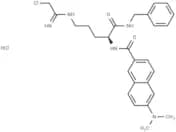
CAS:YW3-56: PAD2 & PAD4 inhibitor (IC50 = 0.5-5 μM), halts U2OS cell growth (IC50 ~2.5 μM), reduces S-180 & MDA-MB-231 tumor growth in mice.Formula:C27H33Cl2N5O2Color and Shape:SolidMolecular weight:530.49FLT3-IN-13
<p>FLT3-IN-13 inhibits topoisomerase II/FLT3 in leukemia with IC50 of 2.26 μM, causes G2/M arrest, and promotes apoptosis.</p>Formula:C20H14N4O2Color and Shape:SolidMolecular weight:342.35Antibacterial agent 254
CAS:Antibacterialagent 254 (Compound 2) is an antimicrobial agent capable of eradicating 7-day-old P. aeruginosa biofilms at a concentration of 50 μM without affecting bacterial growth. Additionally, Antibacterialagent 254 enhances the efficacy of Ciprofloxacin against P. aeruginosa and upregulates the expression of the matrix-degrading enzyme genes pelA, pslG, and eddA.Formula:C13H15NO4Molecular weight:249.26KIRA9
KIRA9 inhibits IRE1 with a 4.8 μM IC50, blocking ER-stress-induced mRNA decay and apoptosis by fully binding IRE1's ATP site.Formula:C27H27F3N6O3SColor and Shape:SolidMolecular weight:572.6L5-DA
<p>L5-DA, a G-quadruplex ligand, stabilizes G4s in HeLa cells, induces apoptosis, and is cytotoxic with an IC50 of 4.3 μM.</p>Formula:C32H34N6O2Color and Shape:SolidMolecular weight:534.65KIM-161
CAS:KIM-161 is a PIK3CA inhibitor. It demonstrates significant antiproliferative activity, with IC50 values of 1.428 and 1.562 µM against PI3KCA-mutant breast cancer cell lines MCF7 and T47D, respectively. KIM-161 induces apoptosis and cell cycle arrest by inhibiting the PI3K/AKT/mTOR signaling pathway, leading to ROS production. It is applicable for research on breast cancer and its PI3KCA-mutant subtypes.Formula:C27H25N3O3Color and Shape:SolidMolecular weight:439.51CDK-IN-9
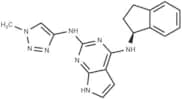
CDK-IN-9: A potent CDK inhibitor, gels to enhance CDK12/DDB1 binding, targets CDK2/E (IC50: 4 nM), induces apoptosis via dephosphorylation.Formula:C21H24N8SColor and Shape:SolidMolecular weight:420.53AKT-IN-3
CAS:AKT-IN-3: potent oral Akt inhibitor with low hERG blockage. IC50: 1.4-1.7 nM for Akt1-3. Inhibits AGC kinases like PKA, PKC.Formula:C23H23Cl2F2N5O3Purity:98%Color and Shape:SolidMolecular weight:526.36ST362
CAS:<p>ST362, an anticancer agent, acts by disrupting DNA repair and halting growth in prostate, colon, lung and breast cancer cells.</p>Formula:C25H21NO6SPurity:98%Color and Shape:SolidMolecular weight:463.5Elocalcitol
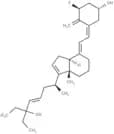
CAS:Elocalcitol is a calcitriol analog for inhibition of prostate cell growth.Formula:C29H43FO2Color and Shape:SolidMolecular weight:442.65MG-B-28
MG-B-28, a BTLA-HVEM inhibitor, demonstrates an IC50 value of 906 nM. It promotes T cell activation dose-dependently by inhibiting the interaction between BTLA and HVEM.Formula:C28H25N5O3Color and Shape:SolidMolecular weight:479.53Akt/NF-κB/JNK-IN-1
Akt/NF-κB/JNK-IN-1 (Compound 2i) is an inhibitor of Akt, NF-κB and JNK signalling pathways.Akt/NF-κB/JNK-IN-1 exhibits an inhibitory effect on nitric oxideFormula:C22H22N2O6Color and Shape:SolidMolecular weight:410.42t9,t11,c15-CLNA
CAS:t9,t11,c15-CLNA is an isomer of conjugated linolenic acid (CLNA) produced by Lactobacillus plantarum ZS2058. It exhibits key activities including anti-inflammatory and antioxidant effects, as well as enhancement of intestinal barrier function. The regulatory mechanisms of t9,t11,c15-CLNA involve the upregulation of tight junction proteins, the inhibition of pro-inflammatory cytokines (such as TNF-α, IL-6), and the activation of antioxidant enzymes (such as SOD, CAT). t9,t11,c15-CLNA can be utilized in research on inflammatory bowel disease (like colitis).Formula:C18H30O2Color and Shape:SolidMolecular weight:278.43LRRK2-IN-17
CAS:LRRK2-IN-17 is an orally active LRRK2 inhibitor with IC50 values of 3.5 nM for WT and 3.3 nM for G2019S, and it also inhibits RET kinase with an IC50 of 59 nM. LRRK2-IN-17 is utilized in research related to cancer and Parkinson's disease (PD).Formula:C18H18N8Color and Shape:SolidMolecular weight:346.39NCI-006
CAS:NCI-006, an LDH inhibitor, slows tumor growth and enhances pyruvate's role in mitochondrial metabolism.Formula:C31H24F2N4O4S3Color and Shape:SolidMolecular weight:650.74