Oligosaccharides
Oligosaccharides are carbohydrates composed of a small number of monosaccharide units linked by glycosidic bonds. These molecules play significant roles in various biological processes, including cell recognition, signaling, and immune responses. In this section, you will find a comprehensive selection of oligosaccharides essential for research in glycoscience, biochemistry, and molecular biology. These compounds are vital for studying complex carbohydrate structures, their functions, and their interactions with other biomolecules. At CymitQuimica, we provide high-quality oligosaccharides to support your research and development needs, ensuring accurate and reliable results in your experiments.
Subcategories of "Oligosaccharides"
- Aminoethyl Glycosides, Aminopropyl Glycosides(14 products)
- Asn Binding Glycans(33 products)
- Biotinated Oligosaccharides(13 products)
- Blood Groups and Lewis Antigens(11 products)
- Blood Type Oligosaccharides(13 products)
- Cellooligosaccharides(1 products)
- Cyclodextrins(183 products)
- Disaccharides(192 products)
- Epitope Oligosaccharides(19 products)
- Fructooligosaccharides(2 products)
- Functional Oligosaccharides(554 products)
- Functionalised Oligosaccharides(1 products)
- Galactosamine(41 products)
- Galactose(261 products)
- Galb(1-3)GalNAc(21 products)
- Ganglio-series(11 products)
- Globo- and Isoglobo-series(17 products)
- Glucosamine(128 products)
- Glucuronic Acids(51 products)
- Glycoproteins, Glycopeptides(59 products)
- Glycosaminoglycan(26 products)
- Human Milk Oligosaccharides(20 products)
- Labeled O-Glycans(9 products)
- Labeled Oligosaccharides(36 products)
- LacNAc(53 products)
- Lacto- and Neolacto-series(14 products)
- Lacto-N-biose(10 products)
- Lactooligosaccharides(7 products)
- Linker Attached Oligosaccharides(19 products)
- Maltooligosaccharides(6 products)
- Milk Oligosaccharides(31 products)
- N-Glycans(149 products)
- Natural Glycosides(177 products)
- Natural Oligosaccharides(103 products)
- O-Glycan(18 products)
- Oligosaccharide Building Blocks(7 products)
- Oligosaccharide Replacement(2 products)
- Oligosaccharides by Component Sugar(225 products)
- Oligoses(24 products)
- Other Oligosaccharides(14 products)
- PEG Oligomers(33 products)
- Phosphated Sugars(17 products)
- Protected Sugars(526 products)
- Reagents for Oligosaccharide Synthesis(254 products)
- Ser, Thr Binding Glycans(9 products)
- Sialylated Oligosaccharides(3 products)
- Sphingoglycolipids(42 products)
- Sugar Amino Acids, Sugar Peptides(20 products)
- Sugar Antigens(31 products)
- Sugar Building Blocks by Target Oligosaccharides(225 products)
- Sugar Conjugates(100 products)
- Sulfated Sugars(16 products)
- Tetrasaccharides(34 products)
- Trisaccharides and Above(95 products)
- Xylooligosaccharides(5 products)
Show 47 more subcategories
Found 2278 products of "Oligosaccharides"
Sort by
Purity (%)
0
100
|
0
|
50
|
90
|
95
|
100
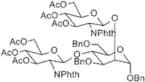
4,6-Di-O-(3,4,6-tri-O-acetyl-2-deoxy-2-phthalimido b-D-glucopyranosyl)-1,3-6-tri-O-benzyl-a-D-mannopyranoside
CAS:<p>4,6-Di-O-(3,4,6-tri-O-acetyl-2-deoxy-2-phthalimido b-D-glucopyranosyl)-1,3-6-tri-O-benzyl a -D -mannopyranoside is a carbohydrate that has been modified with fluorine. It is an oligosaccharide composed of three monosaccharides linked by glycosidic bonds. The modification of the carbohydrate with fluorine was achieved through a click chemistry reaction between the 4’ and 6’ position of the glucose moiety. This product is used in custom synthesis and high purity applications.</p>Formula:C67H68N2O24Purity:Min. 95%Molecular weight:1,285.26 g/molb-Lactosyl ureide dihydrate
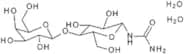
<p>b-Lactosyl ureide dihydrate is a white crystalline powder that is soluble in water. It has a molecular weight of 598.7 and was synthesized by the reaction of b-lactosyl chloride with urea. The compound has been used as a fluoro-protecting group for nucleophilic substitution reactions, and glycosylation reactions.</p>Formula:C13H24N2O11·2H2OPurity:Min. 95%Color and Shape:White/Off-White SolidMolecular weight:420.37 g/mol3'-Sialyl-N-acetyllactosamine-BSA
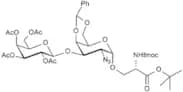
<p>3'-Sialyl-N-acetyllactosamine-BSA is an oligosaccharide that is a component of the glycosylation pathway. It is synthesized from 3'-sialyllactose and N-acetylglucosamine. This compound can be modified with fluorine, methylation, or click chemistry to yield novel derivatives for use in research.</p>Purity:Min. 95%Color and Shape:Powder3-O-(2,3,4,6-Tetra-O-acetyl-b-D-galactopyranosyl)-2-azido-4,6-O-benzylidene-2-deoxy-a-D-galactopyranosyl-Fmoc serine tert-butyl este r
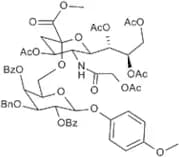
CAS:<p>Methylation of polysaccharides is the process of adding methyl groups to chemical compounds. This process can be achieved by using a variety of reagents. One type of reagent is a methyl donor, which is capable of transferring a methyl group to another molecule. The Methylation Kit contains various reagents that allow for the efficient and specific modification of polysaccharides, including carbohydrates, oligosaccharides, and saccharides. The kit includes two types of reagents: Methyl donors and Methyl acceptors. The kit also contains other additives such as solvents, buffers, and pH indicators. The 3-O-(2,3,4,6-Tetra-O-acetyl-b-D-galactopyranosyl)-2-azido-4,6-O-benzylidene-2-deoxy-a-D-galactopyranosyl Fmoc serine tert but</p>Formula:C49H56N4O18Purity:Min. 95%Molecular weight:988.99 g/mol4-Methoxyphenyl 2,4-di-O-benzoyl-3-O-benzyl-6-O-[methyl 5-(acetoxyacetamido)-4,7,8,9-tetra-O-acetyl-3,5-dideoxy-D-glycero-alpha-D-ga lacto-2-nonulopyranosylonate]-beta-D-galactopyranoside
<p>The methylation of a glycosylation is an organic chemistry technique that can be used to modify the chemical structure of a carbohydrate. A glycosylation is the reaction between an alcohol and a sugar, which produces a glycoside. The addition of methyl groups at specific positions on the sugar molecule can lead to improved properties such as increased stability, increased solubility, or increased uptake by cells. This process has been shown to produce compounds with more desirable pharmacological properties than their parent compounds. Click chemistry is a versatile and powerful method for modifying carbohydrates. It involves the use of copper-catalyzed azide-alkyne cycloaddition reactions to form carbon-nitrogen bonds in place of conventional amide linkages in peptides and proteins. Carbohydrates are modified using this method by attaching small molecules such as fluorine atoms onto one or more carbons in the carbohydrate structure. This process can be used to create novel sugars with improved properties including high purity, high stability</p>Formula:C56H61NO23Purity:Min. 95%Molecular weight:1,116.08 g/molTrifluoroacetamidopropyl b-D-lactose
<p>Trifluoroacetamidopropyl b-D-lactose is a modification of the sugar, b-D-lactose. It is synthesized by methylation and glycosylation. Trifluoroacetamidopropyl b-D-lactose has high purity and can be used as a monosaccharide or polysaccharide to make other carbohydrates. Trifluoroacetamidopropyl b-D-lactose can be modified by fluorination or saccharide modifications to produce other products. The CAS number for trifluoroacetamidopropyl b-D-lactose is 87890-36-6.</p>Purity:Min. 95%1,4-β-D-Glucosyl-D-mannobiose
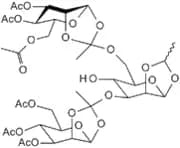
CAS:<p>1,4-β-D-Glucosyl-D-mannobiose is a specialized carbohydrate substrate, which is derived from complex polysaccharides typically found in plant cell walls. It acts as a substrate for endo-1,4-β-mannanase, an enzyme that cleaves specific glycosidic bonds within mannans. This substrate facilitates the investigation of enzymatic activity by allowing the measurement of endo-1,4-β-mannanase efficiency and specificity under controlled conditions.In biochemical enzyme assays, 1,4-β-D-Glucosyl-D-mannobiose serves as a critical component for quantifying mannanase activity. It enables researchers to study the enzyme's role in various biological processes, including polysaccharide degradation. Additionally, this product is invaluable in in vitro diagnostic analyses where precise enzyme activity assessment is crucial for understanding pathological states or the functionality of industrial enzyme preparations. Its applications extend to biotechnology research, where it aids in the formulation of enzyme-based solutions and optimization of enzymatic reactions in diverse biological and industrial contexts.</p>Formula:C18H32O16Purity:Min. 95%Molecular weight:504.4 g/mol3,6-Di-O-(3,4,6-tri-O-acetyl-b-D-mannopyranosylethylidyne)-1,2-O-ethylidene-b-D-mannopyranose
CAS:<p>3,6-Di-O-(3,4,6-tri-O-acetyl-b-D-mannopyranosylethylidyne)-1,2-O-ethylidene-b-D-mannopyranose is a synthetic glycoside that is used as an intermediate in the production of other compounds. It has been modified with fluorine to give it increased stability. This product is also known as 3,6:3',4',6'-di(1,2:1') ethylidene-.beta.-D-.mannopyranose and has CAS number 230963–26–5.</p>Formula:C37H52O23Purity:Min. 95%Molecular weight:864.79 g/molA1F Glycan, 2-AB labelled
<p>2-AB labelled A1F Glycan is a complex carbohydrate. It is custom synthesized and high purity. The CAS number for this compound is 12863-00-8.</p>Purity:Min. 95%3'3-a-L-Arabinofuranosyl-xylotetraose
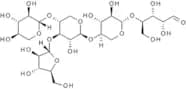
CAS:<p>3'3-a-L-Arabinofuranosyl-xylotetraose is a custom synthesis of an oligosaccharide. It is a polysaccharide that is modified by methylation, glycosylation and carbamoylation. This carbohydrate has been fluorinated at the 3'3 position. The monosaccharide composition of this molecule is erythrose, arabinose and xylose.</p>Formula:C25H42O21Purity:Min. 95 Area-%Color and Shape:White PowderMolecular weight:678.59 g/mol2-Acetamido-3-O-(2,3,4,6-tetra-O-acetyl-b-D-galactopyranosyl)-2-deoxy-D-glucopyranose
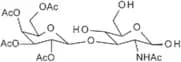
CAS:<p>2-Acetamido-3-O-(2,3,4,6-tetra-O-acetyl-b-D-galactopyranosyl)-2-deoxy-D-glucopyranose is a custom synthesis of an oligosaccharide. It is fluorinated at the 2 position and methylated on the 3 position. This glycosylation product has been shown to be resistant to degradation by enzymes that hydrolyze glycosidic bonds.</p>Formula:C22H33NO15Purity:Min. 95%Molecular weight:551.5 g/molBenzyl 2-acetamido-2-deoxy-4-O-(b-D-galactopyranosyl)-a-D-glucopyranoside
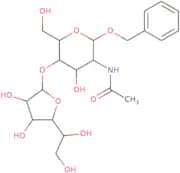
CAS:<p>Benzyl 2-acetamido-2-deoxy-4-O-(b-D-galactopyranosyl)-a-D-glucopyranoside is a custom synthesis, complex carbohydrate. It is an Oligosaccharide, Polysaccharide that has been modified and glycosylated. It has a CAS number of 81243-70-1. This product's purity is high and it is fluorinated. The product is synthetic and contains sugar.</p>Formula:C21H31NO11Purity:Min. 95%Molecular weight:473.47 g/molNeocarratetraose-41-O-sulfate sodium salt
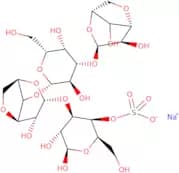
CAS:<p>Neocarratetraose-41-O-sulfate sodium salt is a high purity, synthetic oligosaccharide with a CAS number of 108321-78-4. It is an oligosaccharide that has been modified with methylation, saccharide, and Click modification. Neocarratetraose-41-O-sulfate sodium salt is used in the synthesis of complex carbohydrates and glycosylations. <br>Neocarratetraose-41-O-sulfate sodium salt is synthesized by reacting the sugar neocarratetraose with sulfuryl chloride to form the corresponding sulfonic acid chloride. The resulting compound is then treated with sodium hydroxide to produce its sodium salt form.</p>Formula:C24H37NaO22SPurity:Min. 95%Color and Shape:PowderMolecular weight:732.59 g/molNA4 N-Glycan
CAS:<p>NA4 is a n-glycan with an average molecular weight of about 3.5 kDa. NA4 is found in the blood and urine of human beings and other mammals, as well as in the milk from cows. It is a major component of mucus secreted by the respiratory tract, and it can be found in the outer layer of the skin. NA4 contains a single N-acetylglucosamine (NAG) residue at its reducing end.</p>Formula:C90H150N6O66Purity:Min. 95%Color and Shape:PowderMolecular weight:2,372.15 g/molGM1-Lysoganglioside sodium
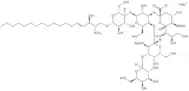
CAS:<p>GM1-Lysoganglioside (sodium salt) has the core tetrasaccharide structure (Galβ1,3GalNAcβ1,4Galβ1,4Glc) with sialic acid linked α2,3 to the inner galactose residue and sphingosine linked β to position 1 on the reducing terminal glucose residue (Ledeen, 2009). GM1 lysoganglioside has been shown that it is capable of binding amyloid-β proteins and can act as a seed for amyloid fibril formation, in early stages of Alzheimerâs disease (Chiricozzi, 2020).</p>Formula:C55H97N3O30·xNaPurity:Min. 95%Color and Shape:White PowderMolecular weight:1,280.36 g/molLacDiNAc dimer ethylazide
LacDiNAc dimer ethylazide is a modified form of LacdiNAc that has been iodinated. It is synthesized by the reaction of two molecules of LacdiNAc with ethylazide. The product has an average molecular weight of 2,000 and is the most highly purified synthetic carbohydrate available. It can be used in a wide range of applications, including click chemistry, glycosylation reactions, and fluorination synthesis.Formula:C34H57N7O21Purity:Min. 95%Molecular weight:899.85 g/molRhodionin
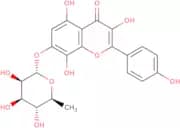
CAS:Rhodionin is a natural product that has been shown to be effective as a food preservative. It is produced through the extraction of usnic acid from Rhodiola rosea and has been used in the study of amyloid protein. Rhodionin is an extractant that has been shown to be able to control analysis of sodium citrate in food composition. The use of rhodionin for this purpose was found to be practical and effective, with no significant changes in the quality or quantity of citric acid. This extractant also shows promise as an analytical method for the detection of ganoderma lucidum, human liver cancer cells, and flavonol glycosides.Formula:C21H20O11Purity:Min. 95%Molecular weight:448.38 g/molGlycyl-lacto-N-neotetraose
<p>Glycyl-lacto-N-neotetraose is a complex carbohydrate that is custom synthesized and has high purity. It is an Oligosaccharide, Carbohydrate, and Polysaccharide that can be modified with methylation and glycosylation. This product can be used in the synthesis of other monosaccharides or saccharides to form complex carbohydrates. Glycyl-lacto-N-neotetraose is also fluorinated on one of its hydroxyl groups to produce an active water soluble compound for use in research.</p>Formula:C28H49N3O21Purity:Min. 95%Molecular weight:763.7 g/molBlood Group A tetrasaccharide type II
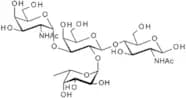
CAS:<p>A antigen tetrasaccharide Type I I, possible use in antiviral development</p>Formula:C28H48N2O20Purity:Min. 95%Color and Shape:PowderMolecular weight:732.68 g/mol2,3,6,2',3',4',6'-Hepta-O-acetyl-b-maltosyl azide
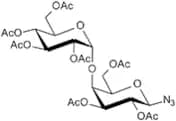
CAS:<p>2,3,6,2',3',4',6'-Hepta-O-acetyl-b-maltosyl azide is a glycosylation agent that can be used in organic synthesis. It is a custom synthesis and can be modified to meet the customer's needs. This product has a CAS number of 33012-49-6 and has high purity with a saccharide content of >99%.</p>Formula:C26H35N3O17Purity:Min. 95%Color and Shape:White PowderMolecular weight:661.57 g/mol