Oligosaccharides
Subcategories of "Oligosaccharides"
- Aminoethyl Glycosides, Aminopropyl Glycosides(14 products)
- Asn Binding Glycans(33 products)
- Biotinated Oligosaccharides(13 products)
- Blood Groups and Lewis Antigens(11 products)
- Blood Type Oligosaccharides(13 products)
- Cellooligosaccharides(1 products)
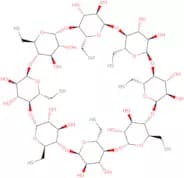
- Cyclodextrins(183 products)
- Disaccharides(190 products)
- Epitope Oligosaccharides(19 products)
- Fructooligosaccharides(2 products)
- Functional Oligosaccharides(556 products)
- Functionalised Oligosaccharides(1 products)
- Galactosamine(41 products)
- Galactose(261 products)
- Galb(1-3)GalNAc(21 products)
- Ganglio-series(11 products)
- Globo- and Isoglobo-series(17 products)
- Glucosamine(128 products)
- Glucuronic Acids(52 products)
- Glycoproteins, Glycopeptides(59 products)
- Glycosaminoglycan(26 products)
- Human Milk Oligosaccharides(22 products)
- Labeled O-Glycans(9 products)
- Labeled Oligosaccharides(36 products)
- LacNAc(53 products)
- Lacto- and Neolacto-series(14 products)
- Lacto-N-biose(10 products)
- Lactooligosaccharides(7 products)
- Linker Attached Oligosaccharides(19 products)
- Maltooligosaccharides(6 products)
- Milk Oligosaccharides(31 products)
- N-Glycans(149 products)
- Natural Glycosides(177 products)
- Natural Oligosaccharides(103 products)
- O-Glycan(18 products)
- Oligosaccharide Building Blocks(7 products)
- Oligosaccharide Replacement(2 products)
- Oligosaccharides by Component Sugar(225 products)
- Oligoses(24 products)
- Other Oligosaccharides(14 products)
- PEG Oligomers(33 products)
- Phosphated Sugars(17 products)
- Protected Sugars(526 products)
- Reagents for Oligosaccharide Synthesis(254 products)
- Ser, Thr Binding Glycans(9 products)
- Sialylated Oligosaccharides(3 products)
- Sphingoglycolipids(42 products)
- Sugar Amino Acids, Sugar Peptides(20 products)
- Sugar Antigens(31 products)
- Sugar Building Blocks by Target Oligosaccharides(225 products)
- Sugar Conjugates(100 products)
- Sulfated Sugars(16 products)
- Tetrasaccharides(34 products)
- Trisaccharides and Above(95 products)
- Xylooligosaccharides(5 products)
Found 2296 products of "Oligosaccharides"
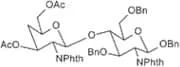
1,3,6-Tri-O-benzyl-4-O-(3,6-di-O-acetyl-2,4-dideoxy-2-phthalimido-b-D-glucopyranosyl)-2-deoxy-2-phthalimido-b-D-glucopyranoside
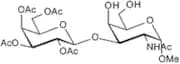
Methylated, saccharide-containing, polysaccharide-containing, carbohydrate-containing. CAS No.: 169800-74-1. Click modification: Click chemistry reaction with a reactive group on the saccharide or polysaccharide to form a bond with another molecule. Modification: The addition of one or more side chains to a saccharide or polysaccharide to produce a modified carbohydrate. Oligosaccharides: Carbohydrates that are composed of only two to ten monosaccharides. Glycosylation: The process in which a glycosyl group is transferred from an activated donor sugar to an acceptor molecule, forming glycosidic linkage (e.g., between sugars). High purity: The degree of chemical purity as expressed by the percent of impurities that may be present in the product (e.g., 99% pure). Carbohydrate: A class of organic compounds that includes sugars and starches and functionsFormula:C53H50N2O14Purity:Min. 95%Molecular weight:938.97 g/molMethyl 2-acetamido-2-deoxy-3-O-(2,3,4,6-tetra-O-acetyl-b-D-galactopyranosyl)-a-D-galactopyranoside
CAS:Methyl 2-acetamido-2-deoxy-3-O-(2,3,4,6-tetra-O-acetyl-b-D-galactopyranosyl)-a-D-galactopyranoside is a modified saccharide with a fluorinated methyl group. It is used as an intermediate for the synthesis of oligosaccharides and complex carbohydrates.Formula:C23H35NO15Purity:Min. 95%Molecular weight:565.52 g/molMethyl 4-O-[4,6-O-benzylidene)-b-D-galactopyranosyl] b-D-glucopyranoside
CAS:Methyl 4-O-[4,6-O-benzylidene)-b-D-galactopyranosyl] b-D-glucopyranoside is a synthetic sugar with a high purity and custom synthesis. It has been modified by fluorination, methylation, glycosylation, and click modification. This product can be used as a pharmaceutical ingredient for the treatment of tuberculosis.
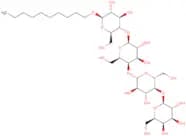
Formula:C20H28O11Purity:Min. 95%Molecular weight:444.43 g/molDecyl 4-O-b-D-lactopyranosyl-b-D-lactopyranoside
CAS:Decyl 4-O-b-D-lactopyranosyl-b-D-lactopyranoside is a high purity, custom synthesis, glycosylated oligosaccharide. It has been modified with Click chemistry to incorporate a fluorine atom on the sugar ring. This complex carbohydrate has a CAS No. of 1858224-00-6 and is synthesized by methylation and fluorination reactions. Decyl 4-O-b-D-lactopyranosyl-b-D-lactopyranoside can be used in biomedical research as a model for glycans and glycolipids, as well as in industrial applications such as food production.Formula:C34H62O21Purity:Min. 95%Molecular weight:806.84 g/molAllyl β-D-lactose
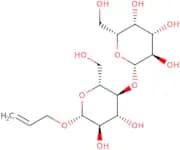
CAS:Allyl β-D-lactose is a disaccharide with an aliphatic alkene functional handle. This can be used as a functionalised monomer in the synthesis of glycopolymers.Formula:C15H26O11Purity:Min. 95 Area-%Color and Shape:PowderMolecular weight:382.36 g/mol1,3:1,4-b-Glucotetraose (A)
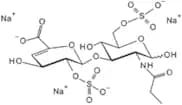
CAS:1,3:1,4-B-glucotetraose (A) is a high purity and custom synthesis of Oligosaccharide. It is an oligosaccharide sugar derived from glucose. The chemical structure contains an alpha-(1,4)-linked 1,4-alpha-D-glucopyranosyl residue with a glycosylation at the 3 position. 1,3:1,4-B-glucotetraose (A) is synthesized by methylation of 1,3:1,4-B-glucotetraose (B), followed by fluorination and then click modification. This compound has CAS No. 58484-04-1 and can be used in applications such as Fluorination or Click Modification.Formula:C24H42O21Purity:Min. 95%Molecular weight:666.58 g/molHeparin disaccharide I-P trisodium salt
CAS:Heparin disaccharide I-P trisodium salt is a synthetic, highly pure, custom-synthesized heparin derivative with a unique sequence of saccharides. It has been fluorinated and methylated to increase its stability and resistance to degradation by enzymes. Heparin disaccharide I-P trisodium salt is glycosylated, which increases its solubility in water and reduces the risk of precipitation. This product is also modified using click chemistry to introduce an oligosaccharide at one end of the molecule.Formula:C15H20NO17S2Na3Purity:Min. 95%Color and Shape:White To Off-White SolidMolecular weight:619.42 g/mol8-Methoxycarbonyl-3-benzyl-3',4',6',6-tetra-O-acetyl-N,N'-diacetyl-b-chitobioside
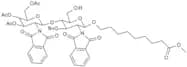
CAS:8-Methoxycarbonyl-3-benzyl-3',4',6',6-tetra-O-acetyl-N,N'-diacetyl b-chitobioside is a synthetic product that belongs to the class of glycosides. This compound has been modified by the incorporation of methyl and fluorine atoms. It is used as an intermediate in the synthesis of oligosaccharides and saccharides for use in biotechnology research.Formula:C39H58N2O16Purity:Min. 95%Molecular weight:810.88 g/mol8-Methoxycarbonyloctyl-3-O-benzyl-2,2'-dideoxy-2,2'-diphthalimido-3',4',6-tri-O-acetyl-b-cellobiose
CAS:8-Methoxycarbonyloctyl-3-O-benzyl-2,2'-dideoxy-2,2'-diphthalimido-3',4',6-tri-O-acetyl-b -cellobiose is a cellobiose with an 8 methoxycarbonyl group at the C8 position. It can be used in the synthesis of oligosaccharides and polysaccharides. The compound has been synthesized by methylation, click modification, and fluorination. The CAS number is 106445-30-1. 8MCOBBIOSE has a purity of > 98% and may have a white to off white powder appearance.Formula:C51H58N2O18Purity:Min. 95%Molecular weight:987.01 g/molMaltotetraose-APD-HSA
Maltotetraose-APD-HSA is a complex carbohydrate with a high purity. Maltotetraose-APD-HSA is a synthetic oligosaccharide that has been modified by glycosylation, methylation, and fluorination. It is an alpha 1,4 linked maltotetraose that has been conjugated to HSA. Maltotetraose-APD-HSA has the CAS number 113789-04-8 and its molecular weight is 495.7 Da. Maltotetraose-APD-HSA can be found in the monosaccharides saccharide and carbohydrate categories.
Purity:Min. 95%1,2,3,6,2',3',6'-Hepta-O-acetyl-4'-O-(2-acetamido-3,4,6-tri-O-acetyl-2-deoxy-a-D-galactopyranosyl)-b-D-lactopyranoside
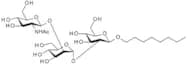
This is an oligosaccharide that has been modified with a fluorinated saccharide. It is a complex carbohydrate that has been synthesized through custom synthesis and is high purity with a CAS No. This monosaccharide has been methylated and glycosylated, and it can be used in the synthesis of polysaccharides.Purity:Min. 95%Octyl 2-acetamido-2-deoxy-b-D-glucopyranosyl-(1-2)-a-D-mannopyranosyl-(1-2)-b-D-glucopyranoside
CAS:Octyl 2-acetamido-2-deoxy-b-D-glucopyranosyl-(1-2)-a-D-mannopyranosyl-(1-2)-b-D-glucopyranoside is a custom synthetic sugar that is used in the synthesis of complex carbohydrates. This product has been fluorinated to give it a high level of purity and is available for purchase at CAS No. 1268248-67-4. Octyl 2 acetamido 2 deoxy b D glucopyranosyl (1 2) a D mannopyranosyl (1 2) b D glucopyranoside has been modified with methylation, Click modification, and glycosylation. It can be used in polysaccharide synthesis or glycosylation reactions to produce polysaccharides with different properties.Formula:C28H51NO16Purity:Min. 95%Molecular weight:657.7 g/mol2-Acetamido-6-O-(a-2-N-acetylneuraminyl)-2-deoxy-a-D-galactopyranose-sp-biotin
2-Acetamido-6-O-(a-2-N-acetylneuraminyl)-2-deoxy-a-D-galactopyranose (Neu5Ac) is a methylated saccharide that is synthesized by the enzyme glycosylase. The acetamido group on the sugar reacts with the amino group at position 6 of the sugar to form a Schiff base, which then undergoes an elimination reaction to generate 2,6-dideoxygalactose. This product can be modified using click chemistry or other modification techniques such as Glycosylation, High purity, Carbohydrate, sugar, Synthetic, Fluorination and more.Purity:Min. 95%Color and Shape:SolidSialyl-Lea-APD-HSA
Sialyl-Lea-APD-HSA is a methylated, saccharide polysaccharide that has been modified with Click chemistry. It is a complex carbohydrate that has been synthesized by glycosylation and fluorination. The CAS number for this product is 123456-78-9. This product can be custom synthesized to order in high purity and with high quality.Purity:Min. 95%Disialylated pentaose type I
Disialylated pentaose type I (DSI-1) is a disaccharide sugar that is synthesized in high purity by custom synthesis. It is a complex carbohydrate that consists of five monosaccharides: glucose, galactose, mannose, fucose and N-acetylneuraminic acid. DSI-1 has been shown to have glycosylation and methylation activity. This product has been modified with fluorination and saccharide modification, as well as Click chemistry. Disialylated pentaose type I is used in the pharmaceutical industry as an intermediate for the production of glycoconjugates and in the food industry to produce artificial sweeteners.
Formula:C42H67N3O32Na2Purity:Min. 95%Molecular weight:1,171.96 g/molGlycyl-lacto-N-tetraose
Glycyl-lacto-N-tetraose is an oligosaccharide that is modified with lactose. The structure of this carbohydrate is a glycosyl linkage between two glucose residues, plus a galactose residue at the non-reducing end of the chain. This sugar has been custom synthesized and purified to be free of other carbohydrates or contaminants. Glycyl-lacto-N-tetraose has a CAS number of 55719-02-1 and can be used in many applications including as a pharmaceutical ingredient, food additive, or cosmetic ingredient.Formula:C28H49N3O21Purity:Min. 95%Molecular weight:763.7 g/molN-Acetylneuraminyl-(a2-3)-D-galactopyranosyl-(b1-3)-D-N-acetylgalactosaminyl serine-biotin
N-Acetylneuraminyl-(a2-3)-D-galactopyranosyl-(b1-3)-D-N-acetylgalactosaminyl serine-biotin is a custom synthesis of complex carbohydrates. It is an oligosaccharide with a CAS number and has been modified with methylation, glycosylation, and click chemistry. The carbohydrate has a high purity and has been fluorinated for the purpose of making it synthetic.Formula:C36H58N4O23SPurity:Min. 95%Molecular weight:946.92 g/molHeparin disaccharide IV-H
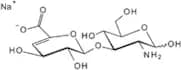
CAS:A modified heparin disaccharideFormula:C12H19NO10Purity:Min. 95%Molecular weight:337.28 g/molHuman urine oligosaccharides
This mixture contains some of the neutral and sialylated oligosaccharides found in human urine.Purity:Min. 95%Sialyl-dimeric Lex-nona-APD-HSA
Sialyl-dimeric Lex-nona-APD-HSA is a monosaccharide that belongs to the group of complex carbohydrates. It is a custom synthesis product, which has been synthesized by the methylation and glycosylation of a high purity oligosaccharide. The structural formula for this product is C14H30FNO6S2. This product is highly purified and has been fluorinated at one hydroxyl group. Sialyl-dimeric Lex-nona-APD-HSA has CAS No. 569078-29-4 and molecular weight of 432.5 g/mol.br>
br>
This product can be used as a synthetic sugar in various applications such as food, pharmaceuticals, cosmetics, and agrochemicals industries.br>
br>
The following are some properties of this compound:
1) Nonvolatile solids content: 98%Purity:Min. 95%Maltotetradecaose
CAS:1,4-glucotetradecaose derived from starch by hydrolysis and chromatographyFormula:C84H142O71Purity:Min. 95%Molecular weight:2,287.98 g/molNA2G1F N-Glycan
NA2G1F N-glycan is a modified glycopeptide that is synthesized from the monosaccharide chitin. It has been fluorinated to render it resistant to proteolytic degradation and has been glycosylated with sialic acid residues. NA2G1F N-glycan can be used for use in click chemistry, methylation, or glycosylation. The molecular weight of this product is between 5 and 50 kDa, with a purity of > 98%.Formula:C62H104N4O45Purity:Min. 95%Color and Shape:PowderMolecular weight:1,625.49 g/molMaltoeicosaose
Maltoeicosaose is a synthetic oligosaccharide that is synthesized by the glycosylation of maltose with a sugar. Maltoeicosaose can be custom synthesized for different applications, such as complex carbohydrate, glycosylation, polysaccharide, and click modification.Purity:Min. 95%GNA2 N-Glycan
GNA2 N-glycan is a custom-synthesized modified oligosaccharide that is a complex carbohydrate. It is a high purity, methylated and glycosylated polysaccharide sugar with fluorination. GNA2 N-glycan has CAS No. 1295-70-1 and is monosaccharide. It has a molecular weight of 266.Purity:Min. 95%N-Acetylneuraminyl-(a2-3)-D-galactopyranosyl-(b1-3)-[N-acetylneuraminyl-(a2-6)]-D-N-acetylgalactosaminyl serine-biotin
N-Acetylneuraminyl-(a2-3)-D-galactopyranosyl-(b1-3)-[N-acetylneuraminyl-(a2-6)]-D-N-acetylgalactosaminyl serine (NAGPS) is a synthetic saccharide that has been modified with biotin. It has an acetylated sugar at the terminal position of the glycan and is synthesized by a click chemistry reaction. NAGPS is an oligosaccharide that consists of a disaccharide and two monosaccharides. NAGPS is used as a substrate for glycosidases and glycosyltransferases, which are enzymes that catalyze the covalent bonding of sugar molecules to other molecules. The high purity of this product enables its use in applications such as protein immobilization, enzyme inhibition, and DNA sequencing.Purity:Min. 95%D-Galactopyranosyl-(b1-3)-[N-acetylneuraminyl-(a2-6)]-D-N-acetylgalactosaminyl serine-biotin
D-Galactopyranosyl-(b1-3)-[N-acetylneuraminyl-(a2-6)]-D-N-acetylgalactosaminyl serine-biotin is a Glycosylation, complex carbohydrate. It is a Methylation, Click modification, Polysaccharide. This product is Fluorinated.Purity:Min. 95%Glycyl-3'-fucosyllactose
Glycyl-3'-fucosyllactose is a synthetic, fluorinated polysaccharide that can be modified with glycosylation and methylation. It has the CAS No. of 12078-02-9 and is a high purity product.Formula:C20H36N2O15Purity:Min. 95%Molecular weight:544.5 g/mol4-Methoxyphenyl 4-O-[6-O-(methyl 5-acetamido-4,7,8,9-tetra-O-acetyl-3,5-dideoxy-D-glycero-a-D-galacto-2-nonulopyranosylonate)-2,3-di -O-benzyl-b-D-galactopyranosyl]-2,3,6-tri-O-benzyl-b-D-glucopyranoside
This is a custom synthesis of a polysaccharide.Formula:C74H85NO24Purity:Min. 95%Molecular weight:1,372.46 g/molDecasaccharide dp10
Decasaccharide dp10 is a complex carbohydrate that is made up of ten monosaccharides. It is a synthetic oligosaccharide that has been fluorinated and glycosylated. The decasaccharide has been synthesized using click chemistry and methylation, before being purified to produce a high-purity product. Decasaccharide dp10 can be used in the modification of complex carbohydrates, as well as for the synthesis of glycans with customized structures.Formula:C60H155N25O95S15Purity:Min. 95%Molecular weight:3,227.97 g/mol[UL-13C18]Maltotriose hydrate
Maltotriose hydrate is a synthetic glycosylation product that is synthesized by the fluorination of maltotriose. Maltotriose hydrate is a sugar with a 3-D structure that is similar to maltodextrin, but with one less glucose residue. Maltotriose hydrate can be used in the synthesis of oligosaccharides and polysaccharides and has been shown to have high purity. Maltotriose hydrate can be modified by a variety of reactions, such as methylation, monosaccharide modification, or click chemistry. It has an CAS number and can be custom synthesized for clients' needs.Formula:C18H32O16·xH2OPurity:Min. 95%Color and Shape:White SolidMolecular weight:522.3 g/molLacto-N-tetraose-a-APD-HSA
Lacto-N-tetraose-a-APD-HSA is a saccharide that is a methylated monosaccharide with an N-acetylgalactosamine residue. This product has been modified by the addition of an acetyl group to the 3' hydroxyl group. It is available in custom synthesis and can be used as a substrate for glycosylation or as an intermediate for fluoroquinolone modification. Lacto-N-tetraose-a-APD-HSA is also a high purity, synthetic product with CAS No. 129004-44-4.Purity:Min. 95%4-Methoxyphenyl 4-O-[3-O-(methyl 5-acetamido-4,7,8,9-tetra-O-acetyl-3,5-dideoxy-D-glycero-a-D-galacto-2-nonulopyranosylonate)-2,6-di -O-benzyl-b-D-galactopyranosyl]-2,3,6-tri-O-benzyl-b-D-glucopyranoside
4-Methoxyphenyl 4-O-[3-O-(methyl 5-acetamido-4,7,8,9-tetra-O-acetyl-3,5-dideoxy-D-glycero-a-D-galacto--2--nonulopyranosylonate)-2,6--di -O--benzyl b D galactopyranosyl]-2,3,6--tri -O benzyl b D glucopyranoside is a glycosylation product of the monosaccharide 4 methoxyphenol and 4 O-[3 O methyl 5 acetamido 4 7 8 9 tetra O acetyl 3 5 dideoxy D glycero 2 a D galacto 2 nonulopyranosylonate] 2 6 di O benzyl b D galactopyranoside. It has been modified by fluorination at the C1Formula:C74H85NO24Purity:Min. 95%Molecular weight:1,372.46 g/molLacto-N-fucopentaose II-BSA
Lacto-N-fucopentaose II-BSA is a glycosylation agent that is derived from the natural substrate N-acetylgalactosamine. It is used in the synthesis of complex carbohydrates, such as glycoconjugates and polysaccharides. Lacto-N-fucopentaose II-BSA can be modified with methyl groups or fluorine atoms to generate derivatives, which are useful for studying glycosylation reactions. The CAS number for this product is 46645-96-8. This product is synthesized using custom methods and has been purified to high purity levels.
Purity:Min. 95%NGA4F N-Glycan
CAS:NGA4F N-Glycan is a modification of the N-glycan structure. It is an oligosaccharide composed of a single monosaccharide, methylated and glycosylated to form a polysaccharide with sugar groups on every other carbon. This product can be custom synthesized by our chemists at your request.Formula:C72H120N6O50Purity:Min. 95%Molecular weight:1,869.73 g/mol3-(a-D-Rhamnopyranosyl)-D-glucose
3-(a-D-Rhamnopyranosyl)-D-glucose is a glycosylation product that is synthesized by the methylation of glucose. It is a complex carbohydrate with a high purity, CAS number and custom synthesis. 3-(a-D-Rhamnopyranosyl)-D-glucose has been modified by fluorination and click chemistry to produce a versatile reagent for glycosylation reactions.
Purity:Min. 95%Neoagarooctaose
CAS:Agarose is a polysaccharide found in red algae, typically Gelidium and Gracilaria. It is a strictly alternating polysaccharide of α-1,3 linked D-galactose and β-1,4 linked L-3,6 anhydrogalactose with occasional sulfation at position 6 of the anhydrogalactose residue. Agaro-oligosaccharides result from cleavage at galactose residues and neoagaro-oligosaccharides from cleavage at 3,6-anhydro residues. Neoagarooctaose is reported to have potential for novel cosmeceuticals.Formula:C48H74O37Purity:Min. 98 Area-%Color and Shape:White PowderMolecular weight:1,243.08 g/molL-Hexaguluronic acid hexasodium
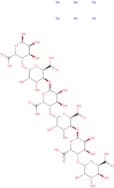
CAS:Please enquire for more information about L-Hexaguluronic acid hexasodium including the price, delivery time and more detailed product information at the technical inquiry form on this pageFormula:C36H50O37•Na6Purity:Min. 95%Molecular weight:1,212.7 g/molLipid IVa
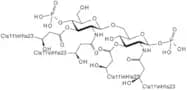
CAS:Lipid IVA is a tetra-acylated precursor molecule of lipid A which is a component of lipopolysaccharides (LPS) on the outer membrane of gram-negative bacteria. On the innate immune cells of hosts there are toll-like receptor 4 (TLR4) and MD-2 which recognize LPS. This recognition event ultimately leads to the activation of NFκB which in turn results in pro-inflammatory cytokine production. Studies have suggested lipid A in Escherichia coli to be an agonist for both mouse and human TLR4, while lipid IVA can induce species specific TLR4 responses. For example for horse and mouse TLR4 and MD-2, Lipid IVA is an agonist where as it is an antagonist for TLR4 and MD-2 in humans.Formula:C68H130N2O23P2Purity:One Main SpotColor and Shape:White PowderMolecular weight:1,405.7 g/molSucrose cocoate
CAS:Blend of sucrose esters with fatty acid esters from coconut oil used in Cosmetic industry applications.Purity:Min. 95%Trehalose 6-octanoate
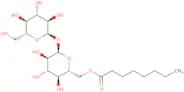
CAS:Trehalose 6-octanoate is a modified form of trehalose that has been synthesized and fluorinated. It is a monosaccharide, which means it is one of the simplest forms of sugar. Trehalose 6-octanoate is an oligosaccharide, which means it is a sugar molecule made up of several smaller sugar molecules. This sugar can be modified to include methyl groups, making it a polysaccharide. Polysaccharides are complex carbohydrates that can often be found in plants or animals. Trehalose 6-octanoate is used in the modification of proteins and lipids for the production of pharmaceuticals and other products.Formula:C20H36O12Purity:Min. 95%Molecular weight:468.49 g/molBlood group B trisaccharide 8-methoxycarbonyloctyl ester
CAS:8-methoxycarbonyl ester of Gal-a1-3(Fuc-a1-2)GalFormula:C28H50O17Purity:Min. 95%Color and Shape:PowderMolecular weight:658.69 g/mol6-deoxy-6-mercapto-gamma-cyclodextrin,octakis
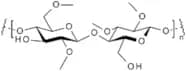
CAS:6-Deoxy-6-mercapto-gamma-cyclodextrin, octakis (Methyl 6DG) is a novel and unique sugar with two methyl groups on the C6 hydroxyl position. It has been synthesized from glucose by a click modification reaction and can be used as an alternative to 6DG for the production of oligosaccharides and polysaccharides. The high purity of Methyl 6DG makes it suitable for use in analytical research, such as fluorescence resonance energy transfer measurements.Formula:C48H80O32S8Purity:Min. 95%Molecular weight:1,425.66 g/molMethyl cellulose - viscosity 40000 cP
CAS:Cellulose derivative, food thickener and emulsifier, bulk forming laxative
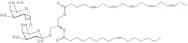
Purity:Min. 95%Color and Shape:PowderDigalactosyldiacylglycerol - 10mg/ml in Chloroform-Methanol
CAS:In plants and algae, the two main galactolipids, monogalactosyldiacyglycerol (MGDG) and digalactosyldiacyglycerol (DGDG), are synthesized by galactosyltransferases in the plastid envelope. They have been linked to the anti-inflammatory and cancer benefits of a green leafy vegetable diet in humans due to their ability to regulate the levels of free radicals like nitric oxide (NO)Formula:C51H84O15Purity:Min. 95%Color and Shape:PowderMolecular weight:937.2 g/molGT3-Oligosaccharide
GT3 oligosaccharide (free acid) is a disaccharide (Galβ1,4Glc) with three sialic acid residues (NeuAc) linked α2,8/α2,8/α2,3 to the galactose residue (Ledeen, 2009). The GT3 ganglioside is the carbohydrate moiety in the GT3 ganglioside, which is implicated in type 1 diabetes. GT3 ganglioside is expressed on pancreatic cells and is the target antigen of anti-GM3-antibodies, which contribute to the autoimmune destruction of pancreatic beta cells (Misasi, 1997). GT3 ganglioside is also abundant in lung tissues and the nervous system.Formula:C45H70N3O35Na3Purity:Min. 90%Color and Shape:PowderMolecular weight:1,282.01 g/mol1,2,4,6-Tetra-O-acetyl-3-O-(2,3,4,6-tetra-O-acetyl-a-D-galactopyranosyl)-D-galactopyranose
CAS:1,2,4,6-Tetra-O-acetyl-3-O-(2,3,4,6-tetra-O-acetyl-aDgalactopyranosyl)-Dgalactopyranose is a modified sugar that can be synthesized by the Click chemistry reaction. It has been used in the modification of saccharides and polysaccharides. This product is CAS No. 123809-61-0 and is available for custom synthesis. 1,2,4,6 tetra O acetyl 3 O-(2 3 4 6 tetra O acetyl a D galactopyranosyl) D galactopyranose is a high purity carbohydrate with glycosylation and fluorination.
END> END>Formula:C28H38O19Purity:Min. 95%Molecular weight:678.59 g/molD-Maltose monohydrate
CAS:Please enquire for more information about D-Maltose monohydrate including the price, delivery time and more detailed product information at the technical inquiry form on this pageFormula:C12H24O12Purity:Min. 98 Area-%Color and Shape:White PowderMolecular weight:360.31 g/molBlood Group H type II trisaccharide-PAA-biotin
Blood group antigen conjugated to spacer and biotinPurity:Min. 95 Area-%Color and Shape:PowderMolecular weight:586.6 g/mol2-Acetamido-3-O-(2-acetamido-2-deoxy-b-D-glucopyranosyl)-2-deoxy-D-galactopyranose
CAS:2-Acetamido-3-O-(2-acetamido-2-deoxy-b-D-glucopyranosyl)-2-deoxy-D-galactopyranose is a methylated, saccharide, Polysaccharide. It is a custom synthesis of a carbohydrate sugar. It is fluorinated to increase its bioavailability. 2 Acetamido 3 O 2 acetamido 2 deoxy b D glucopyranosyl 2 deoxy D galactopyranose has CAS No. 95673 98 6 and the molecular weight is 524.87 g/mol. It has a purity of >99% and comes in powder form.Formula:C16H28N2O11Purity:Min. 95%Color and Shape:White PowderMolecular weight:424.4 g/molChondroitin sulphate
CAS:Chondroitin sulphate is an inhibitor that has been extensively studied in human and animal models. This active agent has been shown to have a protein inhibitory effect on epithelial cells, as well as an inhibitory effect on cell growth in Chinese medicine and Chinese medicinal plants. Chondroitin sulphate has been found to exhibit inhibitory activity against endothelial cells, which may be due to its ability to inhibit the nuclear translocation of NF-κB. This compound can be detected by liquid chromatography and has been shown to have a significant inhibitory effect on the proliferation of HepG2 cells. Overall, chondroitin sulphate shows great potential for use in healthcare products aimed at regulating cell growth and inflammation.Purity:ReportedColor and Shape:Powder

![Methyl 4-O-[4,6-O-benzylidene)-b-D-galactopyranosyl] b-D-glucopyranoside](/_next/image/?url=https%3A%2Fstatic.cymitquimica.com%2Fproducts%2F3D%2Fthumb-webp%2FOM30780.webp&w=3840&q=75)





![N-Acetylneuraminyl-(a2-3)-D-galactopyranosyl-(b1-3)-[N-acetylneuraminyl-(a2-6)]-D-N-acetylgalactos…](/_next/image/?url=https%3A%2Fstatic.cymitquimica.com%2Fproducts%2F3D%2Fthumb-webp%2FOA15983.webp&w=3840&q=75)
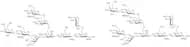
![D-Galactopyranosyl-(b1-3)-[N-acetylneuraminyl-(a2-6)]-D-N-acetylgalactosaminyl serine-biotin](/_next/image/?url=https%3A%2Fstatic.cymitquimica.com%2Fproducts%2F3D%2Fthumb-webp%2FOG15984.webp&w=3840&q=75)
![[UL-13C18]Maltotriose hydrate](/_next/image/?url=https%3A%2Fstatic.cymitquimica.com%2Fproducts%2F3D%2Fthumb-webp%2FOM45239.webp&w=3840&q=75)