Oligosaccharides
Subcategories of "Oligosaccharides"
- Aminoethyl Glycosides, Aminopropyl Glycosides(14 products)
- Asn Binding Glycans(33 products)
- Biotinated Oligosaccharides(13 products)
- Blood Groups and Lewis Antigens(11 products)
- Blood Type Oligosaccharides(13 products)
- Cellooligosaccharides(1 products)
- Cyclodextrins(183 products)
- Disaccharides(190 products)
- Epitope Oligosaccharides(19 products)
- Fructooligosaccharides(2 products)
- Functional Oligosaccharides(556 products)
- Functionalised Oligosaccharides(1 products)
- Galactosamine(41 products)
- Galactose(261 products)
- Galb(1-3)GalNAc(21 products)
- Ganglio-series(11 products)
- Globo- and Isoglobo-series(17 products)
- Glucosamine(128 products)
- Glucuronic Acids(52 products)
- Glycoproteins, Glycopeptides(59 products)
- Glycosaminoglycan(26 products)
- Human Milk Oligosaccharides(22 products)
- Labeled O-Glycans(9 products)
- Labeled Oligosaccharides(36 products)
- LacNAc(53 products)
- Lacto- and Neolacto-series(14 products)
- Lacto-N-biose(10 products)
- Lactooligosaccharides(7 products)
- Linker Attached Oligosaccharides(19 products)
- Maltooligosaccharides(6 products)
- Milk Oligosaccharides(31 products)
- N-Glycans(149 products)
- Natural Glycosides(177 products)
- Natural Oligosaccharides(103 products)
- O-Glycan(18 products)
- Oligosaccharide Building Blocks(7 products)
- Oligosaccharide Replacement(2 products)
- Oligosaccharides by Component Sugar(225 products)
- Oligoses(24 products)
- Other Oligosaccharides(14 products)
- PEG Oligomers(33 products)
- Phosphated Sugars(17 products)
- Protected Sugars(526 products)
- Reagents for Oligosaccharide Synthesis(254 products)
- Ser, Thr Binding Glycans(9 products)
- Sialylated Oligosaccharides(3 products)
- Sphingoglycolipids(42 products)
- Sugar Amino Acids, Sugar Peptides(20 products)
- Sugar Antigens(31 products)
- Sugar Building Blocks by Target Oligosaccharides(225 products)
- Sugar Conjugates(100 products)
- Sulfated Sugars(16 products)
- Tetrasaccharides(34 products)
- Trisaccharides and Above(95 products)
- Xylooligosaccharides(5 products)
Found 2306 products of "Oligosaccharides"
Blood group A type 4 linear trisaccharide-NGL
Useful oligosaccharide-lipid conjugate for raising antibodies.
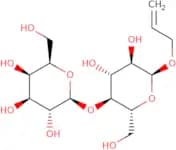
Purity:Min. 95%Allyl a-D-lactose
CAS:A functionalized carbohydrate that serves as a valuable precursor for the synthesis of complex glycoconjugates, oligosaccharides, and glycopolymers through reactions like glycosylation and click chemistry
Formula:C15H26O11Molecular weight:382.36 g/molRef: 3D-OA04448
Discontinued productHeparin disaccharide III-A disodium salt
CAS:Heparin disaccharide III-A is a synthetic heparin that is modified with the addition of a sugar molecule. Heparin disaccharide III-A disodium salt (HDS) is a high purity, custom synthesized product and has been fluorinated to improve its stability. HDS has been shown to be an effective inhibitor of glycosylation in bacteria cells, leading to decreased production of bacterial enzymes and proteins. It also inhibits protein synthesis by preventing the methylation of ribosomes and reducing the number of saccharides available for glycosylation. The HDS molecule is composed of two sugars: N-acetylglucosamine and D-glucuronic acid. This compound also has anti-inflammatory properties due to its ability to inhibit prostaglandin synthesis.
Formula:C14H19NO14SNa2Purity:Min. 95%Color and Shape:White PowderMolecular weight:503.34 g/molRef: 3D-OH28912
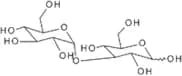
Discontinued productNigerose
CAS:Nigerose is a chemical compound that belongs to the group of oligosaccharides. It is a glycan with a basic structure and has inhibitory properties. Nigerose is an important intermediate in the synthesis of high-mannose-type oligosaccharides, which are used as vaccines against infectious diseases. Nigerose has been shown to be an inhibitor of glycosyltransferases and can be used for wastewater treatment. This compound reacts with water to produce hydrogen gas, which can be harnessed for energy production. Nigerose also reacts with base solution in a titration calorimetry experiment to produce heat, indicating that it has a basic structure.
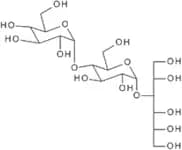
Formula:C12H22O11Purity:Min. 93 Area-%Color and Shape:White PowderMolecular weight:342.3 g/molMaltotriitol
CAS:Bulk sweetener; viscosity/bodying agent; humectant; cryoprotectant
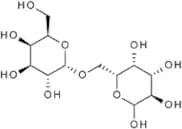
Formula:C18H34O16Purity:(%) Min. 95%Color and Shape:White PowderMolecular weight:506.45 g/mol6-O-(α-D-Galactopyranosyl)-D-galactopyranose
CAS:Used as enzyme substrates, analytical standards and for in vitro diagnostics
Formula:C12H22O11Purity:Min. 95%Color and Shape:PowderMolecular weight:342.3 g/molRef: 3D-OG45699
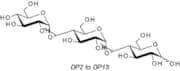
Discontinued productMaltodextrin oligosaccharides - DP2 to DP15
Produced from starch; white hygroscopic spray-dried powder; easily digestible
Purity:Min. 95%Color and Shape:White PowderRef: 3D-OM10274
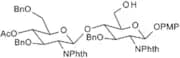
Discontinued product4-Methoxyphenyl 4-O-(4-O-acetyl-3,6-di-O-benzyl-2-deoxy-2-phthalimido-b-D-glucopyranosyl)-3-O-benzyl-2-deoxy-2-phthalimido-b-D-gluco pyranoside
4-Methoxyphenyl 4-O-(4-O-acetyl-3,6-di-O-benzyl-2-deoxy-2-phthalimido-b-D-glucopyranosyl)-3,6,2′,4′″triphosphate (4MPP) is a methylated saccharide. It can be modified with click chemistry and has been shown to inhibit the synthesis of glycogen in the liver. 4MPP is a high purity product that has been synthesized from naturally occurring carbohydrates. It is also fluorinated for use in research.
Formula:C58H54N2O15Purity:Min. 95%Molecular weight:1,019.05 g/molGalNAcb(1-3)Gala(1-3)Galb(1-4)Glc-b-pNP
GalNAcb(1-3)Gala(1-3)Galb(1-4)Glc-b-pNP is a synthetic glycoconjugate that is a glycosylated complex carbohydrate. It has been modified by Click chemistry and fluorination, and contains the monosaccharides galactose, galactosamine, glucose, and glucuronic acid. GalNAcb(1-3)Gala(1-3)Galb(1-4)Glc-b-pNP is used as a substrate for enzyme assays to study the activity of glycosyltransferases such as galactosyltransferase. This product can be used for research purposes in immunology, molecular biology, biochemistry and other fields.
Formula:C32H48N20O23Purity:Min. 95%Molecular weight:1,080.84 g/mol3-O-(b-D-Mannopyranosyl)-D-mannopyranose
CAS:Synthesized by the 4,6-O-benzylidene acetal-controlled method of CrichFormula:C12H22O11Purity:Min. 95%Color and Shape:PowderMolecular weight:342.3 g/molRef: 3D-OM10146
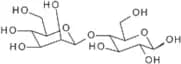
Discontinued product4-O-(β-D-Mannopyranosyl)-D-glucose
CAS:4-O-(b-D-Mannopyranosyl)-D-glucose is a metabolite of D-mannose. It is a bacterial metabolite produced by Streptococcus pneumoniae that has been shown to inhibit the growth of bacteria by binding to the 50S ribosomal subunit. 4-O-(b-D-Mannopyranosyl)-D-glucose inhibits bacterial growth by binding to DNA dependent RNA polymerase, thereby preventing transcription and replication. The high frequency of human activity has been shown using a patch clamp technique on human erythrocytes. This active form is metabolized through a number of metabolic transformations, including hydrolysis by esterases or glucuronidases, oxidation by cytochrome P450 enzymes, reduction by glutathione reductase, or conjugation with glucuronic acid. Rifapentine also specifically binds to markers expressed at high levels in Mycobacter
Formula:C12H22O11Purity:Min. 98 Area-%Color and Shape:PowderMolecular weight:342.3 g/molRef: 3D-OM04754
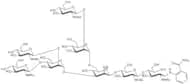
Discontinued productNGA3B N-Glycan
CAS:NGA3B N-Glycan is a high purity, custom synthesis, methylation and fluorination modification of the product. This product is an oligosaccharide that is composed of saccharides and sugars. It has a CAS No. 1620146-04-4.
Formula:C66H110N6O46Purity:Min. 95%Color and Shape:SolidMolecular weight:1,723.59 g/molRef: 3D-ON10167
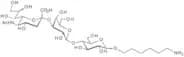
Discontinued product1-O-Aminohexyl 3'-sialyllactose sodium
Key synthetic precursor for the synthesis of lacto-oligosaccharides
Formula:C29H52N2O19•NaPurity:Min. 95 Area-%Color and Shape:PowderMolecular weight:755.71 g/molD-Tagatose
CAS:D-Tagatose is a sugar that is found naturally in some dairy products such as yogurt. It is a complex carbohydrate that can be modified by methylation, fluorination, and click chemistry. D-Tagatose has been shown to have anti-inflammatory properties in animal studies and can inhibit the growth of bacteria such as Escherichia coli and Helicobacter pylori.
D-tagatose is water soluble, stable at high temperatures, and does not react with other compounds; it also has a CAS number of 87-81-0. D-tagatose can be custom synthesized to meet your needs.Formula:C6H12O6Purity:Min. 98.5 Area-%Molecular weight:180.16 g/molRef: 3D-W-200517
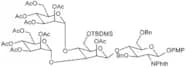
Discontinued product4-Methoxyphenyl 4-O-[2-O-acetyl-3,4-di-O-(2,3,4,6-tetra-O-acetyl-α-D-mannopyranosyl)-6-O-tert-butyldimethylsilyl-β-D-mannopyranosyl] -3,6-di-O-benzyl-2-deoxy-2-phthalimido-β-D-glucopyranoside
This is a modification of the monosaccharide, methylation, glycosylation and polysaccharide. This product has been custom synthesized and is available in high purity with CAS No. The molecular weight of this compound is 476.19 g/mol. The chemical formula is C28H39NO8.
Formula:C77H95NO32SiPurity:Min. 95%Molecular weight:1,574.65 g/molRef: 3D-OM10974
Discontinued productNGA3 Glycan, 2-AB labelled
NGA3 Glycan, 2-AB labelled is an oligosaccharide that is a complex carbohydrate. It is a polysaccharide that contains saccharides, which are sugars. The saccharides in this compound are monosaccharides, which are single sugar units. This compound has been modified and can be used for the detection of methylation.
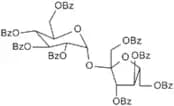
Purity:Min. 95%2,3,4,6,1',3',4',6'-Octa-O-benzoyl-D-sucrose
CAS:Sucrose octabenzoate is a practically colorless, odorless, transparent, glass-like material which is compatible with a number of synthetic resins, such as polyvinyl chloride, vinyl chloride-vinyl acetate copolymer, polyvinyl acetate and cellulose acetate. Sucrose octabenzoate improves the hardness and gloss of these products and has also been found to be useful as a component of inks, adhesives, coatings and plastic objects.
Formula:C68H54O19Purity:Min. 95%Color and Shape:White/Off-White SolidMolecular weight:1,175.14 g/molRef: 3D-OO174966
Discontinued productGlucomannan oligosaccharides, from Konjac MW <10KDa
Glucomannan oligosaccharides are modified polysaccharides of plant origin. They are not digested in the small intestine and are instead fermented by the large intestine to produce short-chain fatty acids. This is a novel approach to weight control. The modified monosaccharide backbone provides for a more complex carbohydrate than found in other dietary fibers, and this complex carbohydrate is resistant to digestion by mammalian enzymes. Glucomannan oligosaccharides can be used as a replacement for high-calorie sweeteners in many food applications and as a bulk laxative.
Purity:Min. 95%Color and Shape:PowderRef: 3D-OG63199
Discontinued productMan-9 Glycan, 2-AB labelled
Man-9 Glycan, 2-AB labelled is a high purity, custom synthesis sugar. It has been modified with fluorination, glycosylation and methylation. This product is synthesized from a mannose core with the addition of terminal sugars and 2-AB labelling.
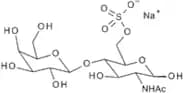
Purity:Min. 95%2-Acetamido-2-deoxy-4-O-(b-D-galactopyranosyl)-6-sulfo-D-glucopyranose sodium salt
CAS:2-Acetamido-2-deoxy-4-O-(b-D-galactopyranosyl)-6-sulfo-D-glucopyranose sodium salt is a synthetic compound that is used in glycosylation reactions. It can be used for the production of oligosaccharides and complex carbohydrates, as well as for the modification of natural products. 2 Acetamido -2 deoxy -4 O-(b-D galactopyranosyl) -6 sulfo D glucopyranose sodium salt has a purity of 98% and was synthesized by fluorination. The CAS number is 145447 78 5.
Formula:C14H24NO14S·NaPurity:90%Color and Shape:White PowderMolecular weight:485.39 g/molRef: 3D-OA09703
Discontinued productGalactosyl isomaltol
CAS:Galactosyl isomaltol is a sugar molecule that is produced by the enzymatic hydrolysis of lactose. It has been shown to have antimicrobial activity against human pathogens and can be used as an antioxidant. Galactosyl isomaltol binds to lysine residues on bacterial cell walls, preventing the formation of new cells and causing cell death by interfering with protein synthesis. The addition of galactosyl isomaltol to food decreases the levels of phycocyanin, which are a type of fluorescent pigment found in blue green algae. This compound also has magnetic resonance analysis properties that could be used for diagnosis.
Formula:C12H16O8Purity:Min. 95%Color and Shape:PowderMolecular weight:288.25 g/molRef: 3D-OG76130
Discontinued productk-Carrahexaitol trisulfate trisodium salt
k-carrageenan derived hexasaccharide alcohol trisulfate+(3-6 anhydrogalactose)
Formula:C36H55O37S3Na3Purity:Min. 95%Molecular weight:1,244.97 g/molNeoagaro oligosaccharides
Potential prebiotic oligosaccharides made from agar by enzymatic hydrolysis
Purity:Min. 95%Globopentaose
CAS:Carbohydrate moiety of globopentaosylceramide
Formula:C32H55NO26Purity:Min. 95%Color and Shape:White PowderMolecular weight:869.77 g/molRef: 3D-OG10691
Discontinued productGlycyl-disialyllacto-N-tetraose
Glycyl-disialyllacto-N-tetraose is a complex carbohydrate that contains a glycosidic bond between two monosaccharides. It has the molecular formula C9H18O4N2O8 and CAS number 327977-92-3. This compound can be modified with methylation, glycosylation, or fluorination to increase solubility and stability. Glycyl-disialyllacto-N-tetraose is also known as Oligosaccharide, CAS No., Polysaccharide, Modification, saccharide, Methylation, Glycosylation, Click modification and Carbohydrate.
Formula:C50H83N5O37Purity:Min. 95%Molecular weight:1,346.21 g/mol6-Deoxy-6-fluoro-D-lactose
Used for studies of the D-lactose pathway by non-invasive techniques using ¹â¹F-NMR spectroscopy or positron emission from the ¹âžF-labeled compound.
Formula:C12H21O10FPurity:Min. 95%Color and Shape:PowderMolecular weight:344.29 g/molGlycyl-sialyllacto-N-tetraose c
Glycyl-sialyllacto-N-tetraose c is a custom synthesis of the carbohydrate polysaccharide glycyl-sialyllacto-N-tetraose. It is a complex carbohydrate that has been modified for use in biochemical research. Glycyl-sialyllacto-N-tetraose c contains four sugars, including erythrose and threose, and has been fluorinated at the C5 position. The modification of this carbohydrate was achieved through a click reaction. This product has been purified to be greater than 95% pure and is ready for use as an organic solvent or chemical reagent in laboratory experiments.
Formula:C39H66N4O29Purity:Min. 95%Molecular weight:1,054.95 g/mol1,6-b-Galactotriose
CAS:1,6-b-Galactotriose is a glycosylation product of 1,6-galactose. It is a complex carbohydrate that is found in nature and can be used for modification of saccharides, sugar, oligosaccharides, or other monosaccharides. The product is also used as a building block for the synthesis of custom polysaccharides. It can be fluorinated or methylated and click modified to produce a desired saccharide structure.
Formula:C18H32O16Purity:Min. 95%Molecular weight:504.44 g/molGlobotriose
CAS:an important cell surface epitope that acts as the receptor for Shiga-like toxin
Formula:C18H32O16Purity:Min. 95%Color and Shape:PowderMolecular weight:504.44 g/molRef: 3D-OG01626
Discontinued productChitopentaose hydrochloride
CAS:Pentasaccharide derived from chitin
Formula:C30H57N5O21·5HClPurity:Min. 95 Area-%Color and Shape:White PowderMolecular weight:1,006.01 g/molRef: 3D-OC09269
Discontinued productMaltotetraose
CAS:Maltotetraose is the shortest chain oligosaccharide that can be classified as a maltodextrin. It’s a component of liquid glucose (a commercial sweetener composed of glucose, maltose, maltotriose and maltotetraose), used in bread-making industry.
Formula:C24H42O21Purity:Min. 95 Area-%Color and Shape:White PowderMolecular weight:666.58 g/molRef: 3D-OM02796
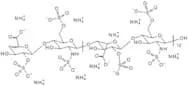
Discontinued productHeparin derived dp26 saccharide ammonium salt
Heparin derived dp26 saccharide ammonium salt (HDA) is a glycosylation product of heparin. It is a complex carbohydrate polymer with a molecular weight of over 10,000 Da and consists of repeating disaccharides. The first sugar in the repeating disaccharide is N-acetyl-D-glucosamine, which is then methylated on the 6 position. HDA has been modified by fluorination to give it improved stability and prolonged half life. This product has been custom synthesized for use in biotechnology research and has high purity.
Formula:C156H207N13O247S39Na52Purity:Min. 95%Molecular weight:8,662.29 g/molMaltononaose
CAS:α 1,4-glucononasaccharide derived from starch by hydrolysis and chromatography
Formula:C54H92O46Color and Shape:White PowderMolecular weight:1,477.28 g/molD-Cellopentaose
CAS:Cellotriose is a bifunctional sugar that can be chemically converted to cellobiose and D-cellopentaose. Cellotriose is a component of cellulose, which is the most abundant biopolymer on Earth. Cellotriose is a source of chitin, which is a major component of the exoskeleton of insects and crustaceans. The molecule has been observed using atomic force microscopy to have an amphiphilic nature, in that it has both hydrophobic and hydrophilic regions. Cellotriose has been synthesized in the laboratory for use as an artificial sweetener, but it does not taste as good as sucrose because it lacks the sweetness profile. When heated, cellotriose undergoes a color change from yellow to blue-green due to its ability to form hydrogen bonds with oxygen molecules. This property can be used as a colorimetric test for cellulase activity in solutions.
Formula:C30H52O26Purity:Min. 95%Color and Shape:White Off-White PowderMolecular weight:828.72 g/molRef: 3D-OC04683
Discontinued productN-Glycolylneuraminic acid dimer sodium salt
N-Glycolylneuraminic acid dimer sodium salt is a synthetic sugar that is a glycosylat of N-glycolylneuraminic acid. It is soluble in water and has a CAS number of 1114-12-3. The product has been modified with methyl groups and is available for custom synthesis. It can be used as an intermediate for the synthesis of oligosaccharides, or it can be modified to form complex carbohydrates. This product has been fluorinated and is high purity, making it ideal for use in Click chemistry applications.
Purity:Min. 95%GD1a-Oligosaccharide
CAS:GD1a oligosaccharide is the carbohydrate moiety from the disialylated glycosphingolipid GD1a of the a-series (shown in the sodium form), a major ganglioside found in neuronal and glial membranes. GD1a oligosaccharide has a core tetrasaccharide structure (Galβ1,3GalNAcβ1,4Galβ1,4Glc) with sialic acids linked α2,3/α2,8 to the inner galactose residue, α2,3 to the outer galactose residue (Ledeen, 2009). GD1a ganglioside interacts with myelin-associated glycoprotein (MAG) and is essential for long-term axon-myelin stability. GD1a ganglioside plays a role in viral infection as it is a receptor for viral glycoproteins in rotavirus and paramyxovirus 1. The hexasaccharide GD1a moiety was also found on a glycoprotein that acts as a receptor for adenovirus type 37. Additionally, GD1a ganglioside interacts with botulinum neurotoxin (BoNT) and is crucial for its entry into cells (Kolter, 2012).
Formula:C48H79N3O37Purity:Min. 95%Color and Shape:PowderMolecular weight:1,290.14 g/mol6-a-D-Maltotriosyl-maltotriose
CAS:Derived from pullulan using pullulanase
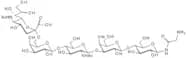
Formula:C36H62O31Purity:Min. 95%Color and Shape:PowderMolecular weight:990.86 g/molGlcA[3S]b(1-3)Galb(1-4)GlcNAcb(1-2)Mana-Ethylazide
GlcA[3S]b(1-3)Galb(1-4)GlcNAcb(1-2)Mana-Ethylazide is an oligosaccharide used in glycosylation and esterification reactions. It is a complex carbohydrate that consists of a methylated mannosamine backbone, with alpha-D-glucose and alpha-D-galactose units attached to the mannosamine. GlcA[3S]b(1-3)Galb(1-4)GlcNAcb(1-2)Mana-Ethylazide has a fluorinated ethyl group at the 3 position of the mannosamine, which can be modified with other reactive groups. The CAS number for this compound is 84726-43-7.
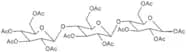
Formula:C28H44N4Na20O25SPurity:Min. 95%Molecular weight:1,328.52 g/molD-Cellotriose undecaacetate
CAS:D-Cellotriose undecaacetate is a glycosylation product of cellobiose and erythritol. It is a methylated polysaccharide, which is an oligosaccharide that contains a single sugar unit. This compound can be custom synthesized and has high purity. D-Cellotriose undecaacetate is used in the synthesis of polysaccharides in the food industry and for medical purposes as a drug delivery system.
Formula:C40H54O27Purity:Min. 95%Color and Shape:White To Off-White SolidMolecular weight:966.84 g/molRef: 3D-OC04692
Discontinued product1,6-Anhydro-N,N’-diacetylchitobiose
CAS:1,6-Anhydro-N,N’-diacetylchitobiose is an anhydrosugar that can be used in the synthesis of oligosaccharides
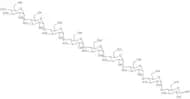
Formula:C16H26N2O10Purity:Min. 95%Color and Shape:PowderMolecular weight:406.39 g/molMaltodecaose - min 90%
CAS:α 1,4-glucodecasaccharide derived from starch by hydrolysis and chromatography
Formula:C60H102O51Color and Shape:White PowderMolecular weight:1,639.42 g/molRef: 3D-OM146832
Discontinued productSucrose stearate - 25-33% monostearate
CAS:The "tallowate" esters are probably the best known derivatives of sucrose and many attempts have been made to commercialise them in order to exploit their excellent surfactant functionalities. The most functional products are the mono- and diesters of the tallow acids (stearic, palmitic, oleic) with hydrophile-lipophile balance (HLB) values that lend themselves to surfactant applications in foods and cosmetics. They also have other uses, for example in coating fruits with a semipermeable membrane that acts as a preservative. Manufacturing economics have prevented these products from mass production and they remain in niche applications.
Formula:C30H56O12Color and Shape:White PowderMolecular weight:608.77 g/molRef: 3D-OS15187
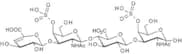
Discontinued productDermatan sulphate tetrasaccharide ammonium salt
Dermatan sulphate tetrasaccharide ammonium salt is a synthetic, high purity oligosaccharide that is also known as Dermatan sulfate. Dermatan sulfate is a complex carbohydrate that is composed of a repeating sequence of three monosaccharides: glucuronic acid, N-acetylgalactosamine and N-acetylglucosamine. Dermatan sulfate has been shown to have an inhibitory effect on the growth of bacteria such as Staphylococcus aureus and Mycobacterium tuberculosis. This molecule can be modified to include fluorination or methylation for custom synthesis.
Purity:Min. 95%6'-Fucosyllactose
CAS:6'-Fucosyllactose is a fucosylated form of lactose, which is a complex carbohydrate. It is a custom synthesis and has been synthesized in high purity. 6'-Fucosyllactose has CAS No. 80756-86-1 and can be found as an oligosaccharide or polysaccharide. 6'-Fucosyllactose is a monosaccharide that has been methylated and glycosylated to increase its stability. The saccharides are modified with fluorination to make it more soluble in water and to improve its solubility in organic solvents.
Formula:C18H32O15Purity:Min. 95%Color and Shape:PowderMolecular weight:488.44 g/molRef: 3D-OF58223
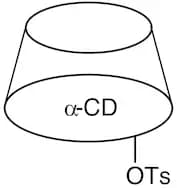
Discontinued productMono-2-O-(p-toluenesulfonyl)-α-cyclodextrin
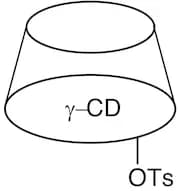
CAS:Formula:C43H66O32SPurity:>98.0%(HPLC)Color and Shape:White to Almost white powder to crystalMolecular weight:1,127.03Mono-2-O-(p-toluenesulfonyl)-γ-cyclodextrin
CAS:Formula:C55H86O42SPurity:>95.0%(HPLC)Color and Shape:White to Almost white powder to crystalMolecular weight:1,451.31Methyl 2-acetamido-2-deoxy-3-O-(b-D-galactopyranosyl)-b-D-galactopyranoside
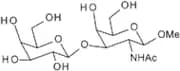
CAS:Methyl 2-acetamido-2-deoxy-3-O-(b-D-galactopyranosyl)-b-D-galactopyranoside is a carbohydrate that is modified by the addition of fluorine at the 3 position. It has CAS number 88274-25-3 and belongs to the group of oligosaccharides. Methyl 2-acetamido-2-deoxy-3-(b, b'-D, galactopyranosyl)-b, D galactopyranoside is a synthetic polymer that is glycosylated with methyl groups. This product can be custom synthesized for your needs.
Formula:C15H27NO11Purity:Min. 95%Color and Shape:PowderMolecular weight:397.38 g/molRef: 3D-OM05013
Discontinued productFructodecasaccharide
Fructodecasaccharide is a methylated, custom-synthesized oligosaccharide that is a polysaccharide with the molecular formula C10H17O11. Fructodecasaccharide is a complex carbohydrate that consists of a monosaccharide and two disaccharides. It has been modified to include fluorine atoms in the glycosidic linkages between the sugar residues. This modification can alter the physical properties of fructodecasaccharide, such as increasing its solubility and stabilizing its structure. Fructodecasaccharide is used in many industries as a high-purity, synthetic product for use in medical applications, including pharmaceuticals and cosmetics.
Formula:C60H102O51Purity:Min. 95%Color and Shape:PowderMolecular weight:1,639.42 g/molRef: 3D-OF59778
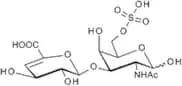
Discontinued productChondroitin disaccharide 6S sodium salt
CAS:Chondroitin disaccharide 6S sodium salt is a synthetic, fluorinated, oligosaccharide that has been custom synthesized and glycosylated. It is a sugar-based compound with a high purity and excellent solubility in water. It was synthesized by click modification of the sugar monomer with an amine group at the reducing end. The chondroitin disaccharide 6S sodium salt was further modified with methylation to yield a product with a higher purity.
Formula:C14H21NO15S·2NaPurity:Min. 90 Area-%Color and Shape:PowderMolecular weight:521.36 g/molRef: 3D-OC01702
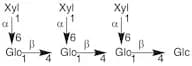
Discontinued productHeptasaccharide Glc4Xyl3
CAS:Formula:C39H66O33Purity:>80.0%(HPLC)Color and Shape:White to Almost white powder to crystalMolecular weight:1,062.92
















![GlcA[3S]b(1-3)Galb(1-4)GlcNAcb(1-2)Mana-Ethylazide](/_next/image/?url=https%3A%2Fstatic.cymitquimica.com%2Fproducts%2F3D%2Fthumb-webp%2FOG44930.webp&w=3840&q=75)