Oligosaccharides
Oligosaccharides are carbohydrates composed of a small number of monosaccharide units linked by glycosidic bonds. These molecules play significant roles in various biological processes, including cell recognition, signaling, and immune responses. In this section, you will find a comprehensive selection of oligosaccharides essential for research in glycoscience, biochemistry, and molecular biology. These compounds are vital for studying complex carbohydrate structures, their functions, and their interactions with other biomolecules. At CymitQuimica, we provide high-quality oligosaccharides to support your research and development needs, ensuring accurate and reliable results in your experiments.
Subcategories of "Oligosaccharides"
- Aminoethyl Glycosides, Aminopropyl Glycosides(14 products)
- Asn Binding Glycans(33 products)
- Biotinated Oligosaccharides(13 products)
- Blood Groups and Lewis Antigens(11 products)
- Blood Type Oligosaccharides(13 products)
- Cellooligosaccharides(1 products)
- Cyclodextrins(183 products)
- Disaccharides(192 products)
- Epitope Oligosaccharides(19 products)
- Fructooligosaccharides(2 products)
- Functional Oligosaccharides(554 products)
- Functionalised Oligosaccharides(1 products)
- Galactosamine(41 products)
- Galactose(261 products)
- Galb(1-3)GalNAc(21 products)
- Ganglio-series(11 products)
- Globo- and Isoglobo-series(17 products)
- Glucosamine(128 products)
- Glucuronic Acids(51 products)
- Glycoproteins, Glycopeptides(59 products)
- Glycosaminoglycan(26 products)
- Human Milk Oligosaccharides(22 products)
- Labeled O-Glycans(9 products)
- Labeled Oligosaccharides(36 products)
- LacNAc(53 products)
- Lacto- and Neolacto-series(14 products)
- Lacto-N-biose(10 products)
- Lactooligosaccharides(7 products)
- Linker Attached Oligosaccharides(19 products)
- Maltooligosaccharides(6 products)
- Milk Oligosaccharides(31 products)
- N-Glycans(149 products)
- Natural Glycosides(177 products)
- Natural Oligosaccharides(103 products)
- O-Glycan(18 products)
- Oligosaccharide Building Blocks(7 products)
- Oligosaccharide Replacement(2 products)
- Oligosaccharides by Component Sugar(225 products)
- Oligoses(24 products)
- Other Oligosaccharides(14 products)
- PEG Oligomers(33 products)
- Phosphated Sugars(17 products)
- Protected Sugars(526 products)
- Reagents for Oligosaccharide Synthesis(254 products)
- Ser, Thr Binding Glycans(9 products)
- Sialylated Oligosaccharides(3 products)
- Sphingoglycolipids(42 products)
- Sugar Amino Acids, Sugar Peptides(20 products)
- Sugar Antigens(31 products)
- Sugar Building Blocks by Target Oligosaccharides(225 products)
- Sugar Conjugates(100 products)
- Sulfated Sugars(16 products)
- Tetrasaccharides(34 products)
- Trisaccharides and Above(95 products)
- Xylooligosaccharides(5 products)
Show 47 more subcategories
Found 2278 products of "Oligosaccharides"
Sort by
Purity (%)
0
100
|
0
|
50
|
90
|
95
|
100
1,6-anhydrochitobiose
<p>1,6-Anhydrochitobiose is an anhydosugar that can be used in the synthesis of oligosaccharides and polysaccharides</p>Formula:C12H22N2O8Molecular weight:322.39 g/mol1,6-Anhydro-N,N’-diacetylchitobiose
CAS:<p>1,6-Anhydro-N,N’-diacetylchitobiose is an anhydrosugar that can be used in the synthesis of oligosaccharides</p>Formula:C16H26N2O10Purity:Min. 95%Color and Shape:PowderMolecular weight:406.39 g/mol4-O-{[(6-Azidoethoxy)ethoxy]ethyl}-β-D-galactopyranosyl-2-deoxy-α-D-glucopyranose-2,1-oxazoline
CAS:<p>Please enquire for more information about 4-O-{[(6-Azidoethoxy)ethoxy]ethyl}-β-D-galactopyranosyl-2-deoxy-α-D-glucopyranose-2,1-oxazoline including the price, delivery time and more detailed product information at the technical inquiry form on this page</p>Formula:C20H34N4O12Purity:Min. 95%Molecular weight:522.5 g/mol4-O-[(2-Azidoethoxyimino)-6-deoxy-β-D-galactopyranosyl]-2-deoxy-α-D-glucopyranose-2,1-oxazoline
CAS:<p>Please enquire for more information about 4-O-[(2-Azidoethoxyimino)-6-deoxy-β-D-galactopyranosyl]-2-deoxy-α-D-glucopyranose-2,1-oxazoline including the price, delivery time and more detailed product information at the technical inquiry form on this page</p>Formula:C16H25N5O10Purity:Min. 95%Molecular weight:447.4 g/molN-Acetyl-D-lactosamine - 200mM solution in water
CAS:A natural structural element in a variety of glycoconjugates. Substrate for galactosidases, fucosyltransferases, and sialyltransferases. Useful as a lectin inhibitory sugar and for characterizing lectins.Formula:C14H25NO11Purity:Min. 95%Color and Shape:PowderMolecular weight:383.35 g/mol3'-Sialyl Lewis X 1-N-methyl-N-hydroxyethylamine
<p>3'-Sialyl Lewis X 1-N-methyl-N-hydroxyethylamine is a custom synthesis of a monosaccharide that contains an N-hydroxymethyl group. The fluorination and methylation reactions are examples of modifications that can be done to this molecule. This monosaccharide can be modified by the click chemistry reaction, which involves the use of azide and alkyne reagents. 3'-Sialyl Lewis X 1-N-methyl-N-hydroxyethylamine is used in glycosylation with complex carbohydrates such as polysaccharides and saccharides, which are large sugars or sugar chains.</p>Formula:C34H60N4O23Purity:Min. 95%Color and Shape:PowderMolecular weight:892.85 g/mol2,3,6-Tri-O-acetyl-4-O-(2,3,6-tri-O-acetyl-4-O-[(2,3,4,6-tetra-O-acetyl-b-D-galactopyranosyl)]-b-D-glucopyranosyl)-a-D-glucopyranosy l bromide
<p>2,3,6-Tri-O-acetyl-4-O-(2,3,6-tri-O-acetyl-4-O-[(2,3,4,6-tetra-O-acetyl bDgalactopyranosyl)]bDglucopyranosyl)-aDglucopyranosyldimethyl bromide is a synthetic sugar that is used as a building block for the synthesis of glycosides. This monosaccharide has been modified using click chemistry to obtain a methylated form that can be used in the synthesis of oligosaccharides and polysaccharides. It is also used to produce an acetal derivative that can be used in the synthesis of glycosidic linkages.</p>Formula:C38H51BrO25Purity:Min. 95%Molecular weight:987.7 g/mol2-Aminoethyl 3-O-(α-D-galactopyranosyl)-β-D-galactopyranoside
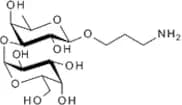
CAS:<p>Ai Product Descriptions 50 Creative</p>Formula:C14H27NO11Purity:Min. 95%Molecular weight:385.36 g/mol3-O-(a-D-Galactopyranosyl)-b-D-fucopyranosyl propylamine
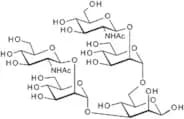
<p>3-O-(a-D-Galactopyranosyl)-b-D-fucopyranosyl propylamine is a custom synthesis. It is a modification of the natural product. This compound has been fluorinated, methylated and monosaccharide modified. <br>3-O-(a-D-Galactopyranosyl)-b-D-fucopyranosyl propylamine is a synthetic compound that has been created by click chemistry. It contains an oligosaccharide and saccharide group. The CAS number for this compound is 5873087-81-8. 3-O-(a-D-Galactopyranosyl)-b-D-fucopyranosyl propylamine is also glycosylated with sugar groups and has complex carbohydrate chains.</p>Formula:C15H29NO10Purity:Min. 95%Molecular weight:383.39 g/molBianntennary N-linked core pentasaccharide
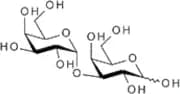
<p>The bianntennary N-linked core pentasaccharide is an oligosaccharide that contains a biantennary glycan and a high purity. This product can be custom synthesized with custom modifications. The bianntennary N-linked core pentasaccharide is an excellent substrate for Click modification, fluorination, and glycosylation reactions. It has been shown to have antiviral activity against herpes simplex virus type 1 (HSV-1) in the guinea pig erythrocyte assay. This product has been methylated at the 6 position of the sugar moiety to yield a modified form.</p>Formula:C34H58N2O26Purity:Min. 95 Area-%Color and Shape:White PowderMolecular weight:910.82 g/mol3-O-(α-D-Galactopyranosyl)-D-galactopyranose
CAS:A carbohydrate, commonly known as alpha gal, found in most mammalian cell membranes. It is not found in primates, including humans, whose immune systems recognize it as a foreign body and produce xenoreactive immunoglobulin M antibodies, leading to organ rejection after transplantation. Anti-α gal immunoglobulin G antibodies are some of the most common in humans. Regular stimulation from gut flora, typically initiated within the first six months of life, leads to an exceptionally high titre of around 1% of all circulating IgG. Recent studies are showing increasing evidence that this allergy may be induced by the bite of the lone star tick (Amblyomma americanum) in North America and the castor bean tick (Ixodes ricincus) in Sweden.Formula:C12H22O11Purity:Min. 95 Area-%Color and Shape:PowderMolecular weight:342.3 g/mol2-Acetamido-2-deoxy-6-O-(a-L-fucopyranosyl)-D-glucopyranose
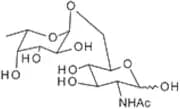
CAS:Adhesion molecule in eukaryotic-bacterial cell interactionsFormula:C14H25NO10Purity:Min. 95%Color and Shape:White PowderMolecular weight:367.35 g/molGal-b-1-3-GalNAc-b-1-4-Gal-b-1-4-Glc-b-ethylazide
Gal-b-1-3-GalNAc-b-1-4-Gal-b-1-4-Glc is a polysaccharide that is an important component of the outer membrane of Gram negative bacteria. It has been synthesized and modified with methylation, saccharide, Click modification, and glycosylation. The oligosaccharide has a high purity and is synthesized by custom synthesis. GalNAc is purified by HPLC and fluorinated to achieve complex carbohydrate.Purity:Min. 95%Disialyllacto-N-tetraose
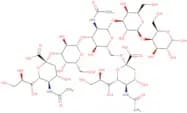
CAS:Disialyllacto-N-tetraose is a medicinal compound that has shown promising anticancer properties. It is an analog of a human urinary glycoprotein and has been found to induce apoptosis in cancer cells. Disialyllacto-N-tetraose acts as a tumor inhibitor by blocking the activity of certain protein kinases, which are enzymes that play a role in cell growth and division. This compound has been studied extensively in Chinese medicine and has shown potential as an effective anticancer agent. Its unique structure and mechanism of action make it a promising candidate for further research into cancer treatment.Formula:C48H79N3O37Purity:Min. 85%Molecular weight:1,290.16 g/molHyaluronate rhodamine - Molecular Weight - 10kDa
<p>Hyaluronate rhodamine is a fluorescent dye that is used in molecular biology to visualize the distribution of intracellular glycoconjugates. It is a water-soluble, cationic dye that binds to negatively charged saccharides and glycosaminoglycans. The dye fluoresces when bound to these molecules, making it useful for detecting the distribution of glycoproteins in cells. Hyaluronate rhodamine can be used as a marker for carbohydrate-rich tissues such as cartilage, synovial fluid, and vitreous humor. This dye can also be used to detect glycoconjugates on the surface of cells and in extracellular spaces.</p>Purity:Min. 95%Human milk neutral tetrasaccharides
<p>Mainly a mixture of Lacto-N-tetraose, Lacto-N-neo-tetraose, Lactodifucotetraose</p>Purity:Min. 95%Color and Shape:PowderMethyl 2-O-(a-D-galactopyranosyl)-b-D-galactopyranoside
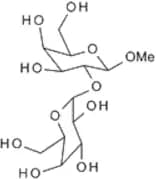
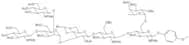
<p>Methyl 2-O-(a-D-galactopyranosyl)-b-D-galactopyranoside is a custom synthesis that is fluorinated at the 2 position. It is an oligosaccharide, polysaccharide, and carbohydrate. The product has been modified with the Click modification and has high purity. It is also a monosaccharide sugar or synthetic sugar. Methyl 2-O-(a-D-galactopyranosyl)-b-D-galactopyranoside can be used in complex carbohydrates and fluorination reactions.</p>Formula:C13H24O11Purity:Min. 95%Molecular weight:356.32 g/mol4-Methoxyphenyl 4-O-{4-O-[[3-O-[2,4-di-O-(3,4,6-tri-O-acetyl-2-deoxy-2-phthalimido-β-D-glucopyranosyl)-3,6-di-O-benzyl-α-D-mannopyra nosyl]-4,6-O-benzylidene-2-O-levulinoyl-β-D-glucopyranosyl]]-3,6-di-O-benzyl-2-deoxy-2-phthalimido-β-D-glucopyranosyl}
<p>4-Methoxyphenyl 4-O-{4-O-[3,6-di-O-(3,4,6-tri-O-acetyl-2-deoxy-2-phthalimido-bDglucopyranosyl)-2,4,6-trihydroxybenzylidene]-aDmannopyra nosyl} -3,6diO(benzyl) -2deoxy2phthalimido -bDglucopyranoside is a high purity synthetic oligosaccharide. It is a complex carbohydrate with a high degree of polymerization. This product has been synthesized by Click modification and fluorination. The product contains an acetate group at the reducing end of the sugar chain and may be glycosylated. The CAS number for this product is</p>Formula:C161H160N4O48Purity:Min. 95%Molecular weight:2,918.99 g/molPentagalacturonic Acid
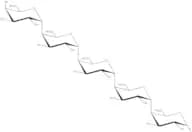
CAS:<p>Pentagalacturonic acid (α-1,4 galacturonopentaose) is derived from pectin or pectic acid, by enzymatic or partial acid hydrolysis (Combo, 2012). It is used in galacturonic acid metabolism research as a substrate to identify, differentiate and characterize endo- and exopolygalacturonase(s) and gluconase(s) (Jayani, 2005). The addition of very short fragments of homogalacturonan, tri-galacturonate, tetra-galacturonate, and penta-galacturonate oligosaccharides, restores development in dark-grown, de-etiolated seedling mutants, suggesting that they are unable to generate de-methylesterified pectin fragments. A model of spatiotemporally separated photoreceptive and signal-responsive cell types has been proposed that contains overlapping subsets of the regulatory network of light-dependent seedling development (Sinclair, 2017).</p>Formula:C30H42O31Purity:Min. 95%Color and Shape:PowderMolecular weight:898.64 g/mol6-O-(b-D-Galactopyranosyl)-D-galactopyranose
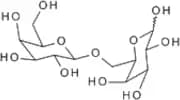
CAS:6-O-(b-D-Galactopyranosyl)-D-galactopyranose is a natural product disaccharide obtained from acid hydrolysis of larch wood.Formula:C12H22O11Purity:Min. 95 Area-%Color and Shape:PowderMolecular weight:342.3 g/mol

![4-O-{[(6-Azidoethoxy)ethoxy]ethyl}-β-D-galactopyranosyl-2-deoxy-α-D-glucopyranose-2,1-oxazoline](/_next/image/?url=https%3A%2Fstatic.cymitquimica.com%2Fproducts%2F3D%2Fthumb-webp%2FOA183929.webp&w=3840&q=75)
![4-O-[(2-Azidoethoxyimino)-6-deoxy-β-D-galactopyranosyl]-2-deoxy-α-D-glucopyranose-2,1-oxazoline](/_next/image/?url=https%3A%2Fstatic.cymitquimica.com%2Fproducts%2F3D%2Fthumb-webp%2FOA183930.webp&w=3840&q=75)
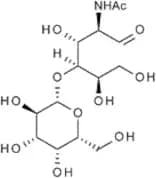
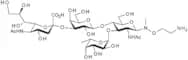
![2,3,6-Tri-O-acetyl-4-O-(2,3,6-tri-O-acetyl-4-O-[(2,3,4,6-tetra-O-acetyl-b-D-galactopyranosyl)]-b-D…](/_next/image/?url=https%3A%2Fstatic.cymitquimica.com%2Fproducts%2F3D%2Fthumb-webp%2FOT11432.webp&w=3840&q=75)