Dyes, Stains and Tinctures
Subcategories of "Dyes, Stains and Tinctures"
- Acid Dyes(49 products)
- Azobenzenes(270 products)
- Azoic Dyes(7 products)
- Basic Dyes(27 products)
- Coumarin Dyes(72 products)
- Cyanine Dyes, Squarylium Dyes(53 products)
- DCM Dyes(4 products)
- Diarylethenes(12 products)
- Dipyrromethene Dyes(26 products)
- Direct Dyes(17 products)
- Disperse Dyes(2 products)
- Dye Sensitizers(12 products)
- Dyes(418 products)
- Dyes & Stains(911 products)
- Generating Insoluble Dyes(14 products)
- Generating Soluble Dyes(11 products)
- Hexaarylbiimidazole(4 products)
- Indicators(575 products)
- Mordant Dyes(10 products)
- Near-Infrared (NIR) Dyes(28 products)
- Oil Dyes(15 products)
- Other Stains and Dyes(2 products)
- Perylene Dyes(17 products)
- Photochromic Dyes(40 products)
- Phthalocyanine Dyes, Porphyrin Dyes(101 products)
- Quinacridone Dyes(8 products)
- Spiropyrans(16 products)
- Stains and Dyes(243 products)
- Stains and Dyes for Microscopy(5 products)
- Vat Dyes(5 products)
- Xanthene Dyes(67 products)
Found 758 products of "Dyes, Stains and Tinctures"
C.I.Disperse Yellow 134
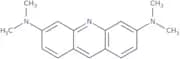
CAS:Please enquire for more information about C.I.Disperse Yellow 134 including the price, delivery time and more detailed product information at the technical inquiry form on this pagePurity:Min. 95%Acridine orange base
CAS:Acridine orange is a fluorescent dye that can pass through the cell membrane and bind to the cytoplasmic structures of cells. It can be used as a probe for determining the presence of cell nuclei, mitochondria, and other organelles. Acridine orange is also used in experiments to determine mitochondrial membrane potential. In this type of experiment, acridine orange is added to cells and its uptake into mitochondria is observed. The dye changes color from orange to green when it binds with the mitochondria because it emits green fluorescence at higher excitation wavelengths than red fluorescence. Acridine orange has been shown to increase fatty acid synthesis by binding with fatty acid synthase, which is an enzyme involved in fatty acid biosynthesis. Acridine orange also increases ATP levels by inhibiting oxidative phosphorylation in mitochondria.Formula:C17H19N3Color and Shape:Orange PowderMolecular weight:265.35 g/molC.I.Reactive Orange 13
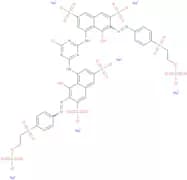
CAS:C.I.Reactive Orange 13 is a reactive dye that can be used for the detection of bacterial strains, including Legionella pneumophila and Pseudomonas aeruginosa. The dye reacts with metal ions to form a precipitate, which can be detected by measuring the viscosity or turbidity of the solution. C.I.Reactive Orange 13 has been shown to bind to biomass from fungi and bacteria, which is why it is often used for monitoring water quality in wastewater treatment plants and for detecting microbial contamination in food products. C.I.Reactive Orange 13 is also an effective metal chelator that can be used for kinetic studies on borohydride reduction reactions involving iron and other transition metals.
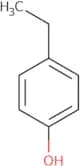
Formula:C24H15ClN7O10S3·3NaPurity:Min. 95%Molecular weight:762.04 g/mol4-Ethylphenol
CAS:Produces a fluorogenic signal in the presence of peroxidaseFormula:C8H10OPurity:Min. 95%Color and Shape:PowderMolecular weight:122.16 g/molBis(5-bromo-4-chloro-3-indoxyl)pyrophosphoric acid disodium salt
Please enquire for more information about Bis(5-bromo-4-chloro-3-indoxyl)pyrophosphoric acid disodium salt including the price, delivery time and more detailed product information at the technical inquiry form on this pageFormula:C16H8Br2Cl2N2Na2O7P2Molecular weight:678.90 g/molBis(5-bromo-6-chloro-3-indoxyl)pyrophosphoric acid, disodium salt
Please enquire for more information about Bis(5-bromo-6-chloro-3-indoxyl)pyrophosphoric acid, disodium salt including the price, delivery time and more detailed product information at the technical inquiry form on this pagePurity:Min. 95%Bis(6-chloro-3-indoxyl)pyrophosphoric acid, disodium salt
Bis(6-chloro-3-indoxyl)pyrophosphoric acid, disodium salt is a fine chemical that can be used as a versatile building block in the synthesis of complex compounds. It is an intermediate in research chemicals and is used as a reagent and speciality chemical. The compound has potential use as a useful scaffold for the synthesis of pharmaceuticals, dyes, and pesticides.
Formula:C16H10Cl2N2Na2O7P2Molecular weight:521.10 g/molPigment Red 63:1, technical grade
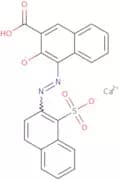
CAS:Pigment Red 63:1 is a synthetic colorant that absorbs ultraviolet light. It is typically used in paints, printing inks, and textile printing. Pigment Red 63:1 can be manufactured with low levels of impurities by following the appropriate manufacturing process. The physical properties of this pigment are best determined using analytical methods such as chromatographic and magnetic resonance spectroscopy. Regulatory bodies may require the use of validated test samples and validation to ensure that the product meets their requirements. Pigment Red 63:1 has a number of isomers that are difficult to distinguish from each other by chromatographic techniques alone. This pigment often has additives such as stabilizers, dispersants, and extenders that affect its performance in different applications. Hplc analysis is used to identify these additives.Formula:C21H14N2O6S•CaPurity:Min. 95%Color and Shape:PowderMolecular weight:462.49 g/molNile red
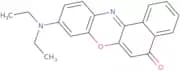
CAS:Fluorescent probe of intracellular lipids and hydrophobic domains of proteins
Formula:C20H18N2O2Color and Shape:PowderMolecular weight:318.37 g/molVat Orange 3 - Technical
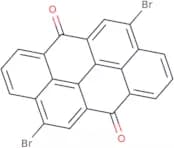
CAS:Vat Orange 3 is a reactive dye used in the production of polyester fibers. It has been classified as a triarylmethane dye and belongs to the group of vat dyes. Vat Orange 3 has three functional groups, an aromatic hydrocarbon, fatty acid, and hydroxyl group. The monomers are ethylene glycols and propionates. The polymerization initiator is sodium methoxide or potassium methoxide. The molecular weight is about 600 g/mol. Vat Orange 3 is an electrophotographic dye that reacts with metal hydroxides such as aluminium hydroxide to produce a bright orange coloration in the presence of light. It also exhibits fluorescence when exposed to ultraviolet light at 350 nm (UV-A).
Formula:C22H8Br2O2Purity:Min. 95%Color and Shape:Red PowderMolecular weight:464.11 g/molAllura red AC
CAS:Allura red AC is a synthetic food dye that has been shown to inhibit locomotor activity in animals, and is therefore considered to be an inhibitor of the central nervous system. Allura red AC inhibits the growth of bacteria by binding to DNA and altering its structure. It has been used as a model for nuclear dna in analytical methods, with the dye serving as an optical sensor. Allura red AC is not toxic to humans when ingested in small amounts. It has been shown to have genotoxic activity and metabolic disorders at high doses. The linear calibration curve for allura red was determined using electrochemical impedance spectroscopy (EIS), which led to a more sensitive detection of the dye in human serum samples than previous methods.Formula:C18H14N2Na2O8S2Purity:Min. 95%Molecular weight:496.42 g/molMethylene Green zinc chloride double salt
CAS:Methylene green zinc chloride double salt is a reactive dye that is used in biological and analytical methods. It has a high affinity for proteins, which allows it to be used as a marker for protein-dye interactions. The methylene green zinc chloride double salt is an optical sensor that changes color when the dye interacts with other substances. It can be used to detect the presence of pathogens, such as bacteria or viruses, by determining the amount of dye remaining after exposure to the pathogen. Methylene green zinc chloride double salt also reacts with tetrazolium dye in biological samples, such as human serum or brain tissue, to produce a color change. This reaction mechanism can be used to measure metabolic activity in cells and tissues. In wastewater treatment, methylene green zinc chloride double salt can be used as an adsorbent for removal of organic pollutants from water. Methylene green zinc chloride double salt also has radiation-blocking properties and can be used as a protective agent against radiation exposure
Formula:C16H17ClN4O2S•(ZnCl2)0Purity:Min. 70 Area-%Color and Shape:PowderMolecular weight:432.99 g/molReactive red 230
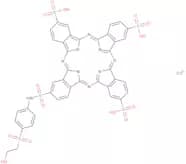
CAS:Please enquire for more information about Reactive red 230 including the price, delivery time and more detailed product information at the technical inquiry form on this pagePurity:Min. 95%Solvent blue 104
CAS:Solvent Blue 104 is a dye that is used as a cross-linking agent and viscosity regulator in polymers. It is also used to control the reaction rate of organic solvents, such as alcohols, esters, ethers, ketones, and nitriles. Solvent Blue 104 has phoretic properties that allow it to be transported through the environment. This property may be due to its hydroxyl group or carbonyl group. Solvent Blue 104 is not soluble in water but can dissolve in organic solvents such as alcohols and acetone. The compound exhibits low toxicity and adverse effects on the environment because it does not react with oxygen or ozone. Solvent Blue 104 is usually mixed with matrix polymers for optical applications, which are applied in textiles and plastics.Formula:C32H30N2O2Color and Shape:PowderMolecular weight:474.59 g/molNuclear fast red
CAS:Nuclear fast red (NFR) is a fluorescent dye that binds to the DNA of cells in tissue sections. NFR has been shown to bind to the nuclear region of cells, where it can be used as a marker for disease activity or cell nuclei. It is commonly used in immunofluorescence staining and flow cytometry. Disulfide bonds are present in this molecule and are important for its stability and function. When disulfide bonds are broken, the dye becomes non-fluorescent. Nuclear fast red is a monosodium salt with a molecular weight of 694.3 g/mol and an empirical formula of C 34 H 29 NO 10 Na 2 .
Formula:C14H9NO7S•NaPurity:Min. 95 Area-%Color and Shape:PowderMolecular weight:358.28 g/molIsoflupredone
CAS:Controlled ProductIsoflupredone is a nonsteroidal anti-inflammatory drug that is used for the treatment of inflammation and pain. It works by inhibiting the production of prostaglandin, which is a hormone that causes inflammation and pain. Isoflupredone has been shown to decrease cortisol concentration in rats and reduce the amount of hydrogen fluoride needed to inhibit bacterial growth. Isoflupredone also inhibits the activity of toll-like receptor 2, which plays an important role in inflammatory responses.Formula:C21H27FO5Purity:Min. 95%Color and Shape:White PowderMolecular weight:378.43 g/mol4-Hydroxyphenethyl alcohol
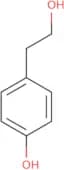
CAS:Produces a fluorogenic signal in the presence of peroxidaseFormula:C8H10O2Purity:Min. 98 Area-%Color and Shape:PowderMolecular weight:138.16 g/molMetanil Yellow
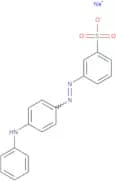
CAS:Metanil Yellow is a reactive dye that is used in wastewater treatment as an adsorbent for removing organic pollutants. It has been shown to be effective in removing glycol ethers, which are toxic and persistent compounds used in industrial solvents. Metanil Yellow can also remove other toxic components such as phenol, benzene, and toluene. The Langmuir adsorption isotherm was used to determine the amount of dye required for maximum effectiveness. Metanil Yellow has been shown to have no significant negative effects on the growth of bacteria or yeast at concentrations up to 3%. The only adverse effect observed was a slight decrease in the rate of hydrogen fluoride degradation.Formula:C18H14N3O3SNaPurity:Min. 98 Area-%Color and Shape:PowderMolecular weight:375.38 g/molReactive blue 21
CAS:Reactive Blue 21 is a kinetic, high-salt and reactive dye that is used as an analytical indicator. It has been shown to be useful in wastewater treatment, where it has been used to measure the adsorption of cationic surfactants on activated sludge. Reactive Blue 21 is also used as a feedstock for the production of polyclonal antibodies. The FTIR spectrum of this dye shows that it contains a pyrazole ring with an absorption band at 2,600 cm-1.Purity:Min. 95%Color and Shape:Powderp-Hydroxyhippuric acid
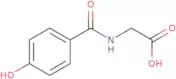
CAS:Substrate for the hippuricase enzymeFormula:C9H9NO4Purity:(Titration) Min. 98%Color and Shape:White PowderMolecular weight:195.17 g/mol