Dyes, Stains and Tinctures
Dyes, stains, and tinctures are essential tools in molecular biology, crucial for visualizing and studying DNA, chromosomes, and cell nuclei. These compounds enable researchers to highlight specific cellular components, facilitating detailed observation and analysis under a microscope. In this category, you will find a wide range of high-quality dyes and stains used in various staining techniques, including fluorescent dyes for DNA and chromosomal analysis, histological stains for tissue samples, and specific stains for cellular structures. These tools are indispensable in genetic research, cytology, histology, and diagnostics, providing clarity and contrast in biological specimens. At CymitQuimica, we offer a comprehensive selection of dyes, stains, and tinctures to support your molecular biology research and ensure precise and reliable results in your studies.
Subcategories of "Dyes, Stains and Tinctures"
- Acid Dyes(49 products)
- Azobenzenes(270 products)
- Azoic Dyes(7 products)
- Basic Dyes(27 products)
- Coumarin Dyes(72 products)
- Cyanine Dyes, Squarylium Dyes(53 products)
- DCM Dyes(4 products)
- Diarylethenes(12 products)
- Dipyrromethene Dyes(26 products)
- Direct Dyes(17 products)
- Disperse Dyes(2 products)
- Dye Sensitizers(12 products)
- Dyes(418 products)
- Dyes & Stains(911 products)
- Generating Insoluble Dyes(14 products)
- Generating Soluble Dyes(11 products)
- Hexaarylbiimidazole(4 products)
- Indicators(575 products)
- Mordant Dyes(10 products)
- Near-Infrared (NIR) Dyes(28 products)
- Oil Dyes(15 products)
- Other Stains and Dyes(2 products)
- Perylene Dyes(17 products)
- Photochromic Dyes(40 products)
- Phthalocyanine Dyes, Porphyrin Dyes(101 products)
- Quinacridone Dyes(8 products)
- Spiropyrans(16 products)
- Stains and Dyes(243 products)
- Stains and Dyes for Microscopy(5 products)
- Vat Dyes(5 products)
- Xanthene Dyes(67 products)
Show 23 more subcategories
Found 758 products of "Dyes, Stains and Tinctures"
Sort by
Purity (%)
0
100
|
0
|
50
|
90
|
95
|
100
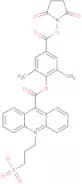
2',6'-Dimethylcarbonylphenyl-10-sulfopropylacridinium-9-carboxylate 4'-NHS ester
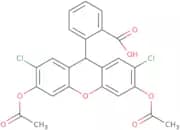
CAS:2',6'-Dimethylcarbonylphenyl-10-sulfopropylacridinium-9-carboxylate 4'-NHS ester is a chemiluminescent acridinium ester label used widely in clinical diagnostics, particularly in automated immunochemistry analysers. Acridinium ester labels are also useful research tools for the investigation of protein-carbohydrate interactions to characterise the binding affinity between specific carbohydrate and its binding protein. An example of those are lectin-acridinium ester conjugates used as chemiluminescent probes.Formula:C30H26N2O9SPurity:Min. 95 Area-%Color and Shape:Yellow PowderMolecular weight:590.6 g/mol2',7'-Dichlorodihydrofluorescein diacetate
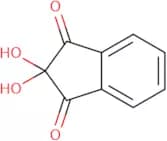
CAS:Cell permeable reagent for use in detection of peroxidase activityFormula:C24H16Cl2O7Purity:Min. 97 Area-%Color and Shape:PowderMolecular weight:487.29 g/molNinhydrin
CAS:Reagent for quantification of amino acids and peptidesFormula:C9H6O4Purity:Min. 99.0%Color and Shape:Yellow PowderMolecular weight:178.14 g/molTetrazolium violet
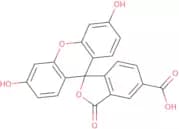
CAS:Tetrazolium violet is a monotetrazolium salt which forms water-insoluble formazans forming a purple colour. These salts are mainly used as indicators of extracellular redox activity and cell redox potential. Tetrazolium violet is positively charged and cell-permeable. Tetrazolium Violet has been used to stain agar layers in bacteriophage plaque formation assays.Formula:C23H17N4•ClPurity:Min. 98 Area-%Molecular weight:384.86 g/mol5-Carboxyfluorescein
CAS:5-Carboxyfluorescein (5-FAM) is a self-quenching dye and one of the most common labelling agents for biomolecules, cell staining and localisation studies. The fluorescence is pH dependent, therefore it has been used to measure the internal pH of cells. As it is only membrane permeable to dead cells, it can be used as a staining agent to distinguish viable and non-viable cells. It is also used in PCR to label the 5â end of oligonucleotides in the presence of a quencher at the 3â end (dual labelled probe). During the amplification process, the dye is cleaved and the fluorescence increases proportionally with the amount of the specific sequence amplified during the PCR process. The development of the fluorescence signal is therefore specifically related to the amplification of the target sequence. The carboxylic acid can be activated to react with a primary amine.Formula:C21H12O7Purity:Min. 98 Area-%Color and Shape:Yellow PowderMolecular weight:376.32 g/molNitroblue tetrazolium chloride
CAS:Nitroblue tetrazolium chloride is colorless to yellow dye that is reducible to blue or black formazan crystals by certain cells; formerly used to distinguish between nonbacterial and bacterial diseases, the latter causing neutrophils to reduce the dye; used to confirm diagnosis of chronic granulomatous disease.
Formula:C40H30Cl2N10O6Purity:Min. 98 Area-%Color and Shape:White Yellow PowderMolecular weight:817.64 g/molAmylose azure
CAS:Amylose azure is a dye commonly used to detect and measure α-amylase activity in various applications. This dye is particularly useful in assessing the hydrolysis of starch by α-amylase. Amylose azure reacts with the enzyme and produces a blue color that can be quantified using spectrophotometry. In addition to its analytical applications, amylose azure is also used as a visual indicator of the presence of aluminum. The dye forms a complex with aluminum ions, resulting in a distinct color change that can be easily observed.Purity:Min. 95%Color and Shape:PowderThymolphthalein
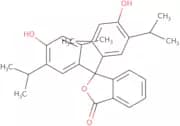
CAS:Phthalein dye used as a acidâbase indicator in pH range of 9.3â10.5Formula:C28H30O4Color and Shape:PowderMolecular weight:430.54 g/mol8-Acetoxypyrene-1,3,6-trisulfonic acid trisodium salt
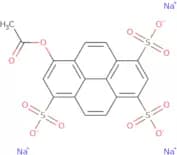
CAS:Fluorogenic substrate for esterase; cell-permeableFormula:C18H9Na3O11S3Purity:Min. 98.0 Area-%Color and Shape:PowderMolecular weight:566.42 g/molAlizarin complexone dihydrate
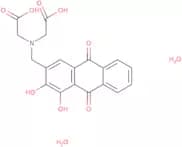
CAS:Alizarin complexone dihydrate reacts with Lanthanum or Cesium(III) ions to form a red chelate, which, in turn, reacts with fluoride ions to give a blue ternary complex (Alizarin Fluorine Blue); to detect fluoride.Formula:C19H15NO8·2H2OColor and Shape:PowderMolecular weight:421.35 g/mol8-Anilinonaphthalene-1-sulfonic acid ammonium salt
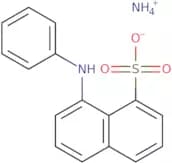
CAS:Fluorophore used to study molecular assemblies of surfactants and amphiphilesFormula:C16H16N2O3SPurity:Min. 98 Area-%Color and Shape:PowderMolecular weight:316.4 g/molResorufin
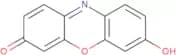
CAS:The substructure resorufin is a fluorescent dye that changes color from orange to bright pink; excitation/emission maxima = 563/587 nm.Formula:C12H7NO3Purity:Min. 95 Area-%Color and Shape:Purple PowderMolecular weight:213.19 g/molThymol blue
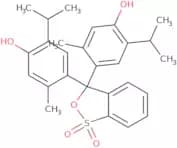
CAS:pH indicatorFormula:C27H30O5SPurity:Min. 95%Color and Shape:Red Clear LiquidMolecular weight:466.59 g/molWST-8
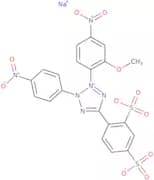
CAS:WST-8 is a key substrate that serves as a sensitive chromogenic indicator for NADH. WST-like substrates have been applied to measure activity of dehydrogenase enzyme activity and the oxidation of NADH using NADH oxidase.Formula:C20H13N6NaO11S2Purity:Min. 90 Area-%Color and Shape:Off-White PowderMolecular weight:600.47 g/mol5(6)-Carboxyeosin diacetate
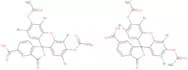
CAS:Brominated analog of carboxyfluorescein; singlet oxygen generatorFormula:C25H12Br4O9Purity:Min. 95%Color and Shape:PowderMolecular weight:775.97 g/mol5-(6)-Carboxytetramethylrhodamine
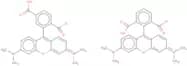
CAS:5-(6)-Carboxytetramethylrhodamine (TAMRA) is a fluorescent dye that is used as a probe for DNA-based analysis. It binds to the 5' end of dsDNA, forming an intrastrand duplex. The fluorescence of TAMRA increases when it binds to dsDNA and can be used as a measure of the amount of DNA in a sample. TAMRA has been shown to be useful in the diagnosis of bowel disease and in the investigation of gene expression during body formation. This dye is also used as a marker for covalent linkages and high molecular weight proteins such as cyclin D2.Formula:C25H22N2O5Purity:Min. 95 Area-%Color and Shape:Red PowderMolecular weight:430.45 g/molLuminol HCl
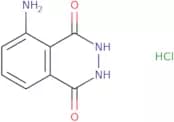
CAS:Chemiluminescence detection of biological residuesFormula:C8H7N3O2·HClPurity:(Hplc) Min. 98.0%Color and Shape:White PowderMolecular weight:213.62 g/mol5-Carboxytetramethylrhodamine
CAS:5-Carboxytetramethylrhodamine - (TAMRA) is a widely employed fluorescent dye (orange/red) that is suitable for different uses. In PCR applications, it has been used as both a reporter at the 5â or as a quencher at the 3â end. TAMRA-labelled oligonucleotides have been used to study interactions with DNA or DNA/protein interactions. It is an excellent fluorescent acceptor for FRET applications with a suitable dye pair. It is used as a protein/antibody labelling agent for structural studies, immunochemistry and flow cytometry. Bioconjugation is generally performed through coupling of the carboxylic acid to a primary amine at the N-terminus of a protein, on lysine side chains or amino-modified oligonucleotide.Formula:C25H22N2O5Purity:Min. 95 Area-%Color and Shape:Green PowderMolecular weight:430.45 g/molWST-1
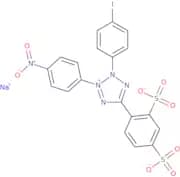
CAS:WST-1 is a water soluble cell permeable dye. Upon NADH-dependent enzymatic cleavage by cellular mitochondrial dehydrogenases, formazan is released, which can be quantified by colorimetric detection at 450 nm.
Formula:C19H11IN5NaO8S2Purity:Min. 95 Area-%Color and Shape:PowderMolecular weight:651.35 g/molNucleic Acid Dye Green I - solution in DMSO (6.11 mg/ml)
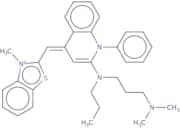
CAS:Nucleic Acid Dye Green I is a DNA-staining dye that has found application in various high resolution assays for the detection of microbial or viral contaminant DNA.Formula:C32H37N4SPurity:Min. 95%Color and Shape:Clear LiquidMolecular weight:509.73 g/mol