


Building Blocks
This section contains fundamental products for the synthesis of organic and biological compounds. Building blocks are the essential starting materials used to construct complex molecules through various chemical reactions. They play a critical role in drug discovery, material science, and chemical research. At CymitQuimica, we offer a diverse range of high-quality building blocks to support your innovative research and industrial projects, ensuring you have the essential components for successful synthesis.
Subcategories of "Building Blocks"
- Boronic Acids & Boronic Acid Derivatives(5,756 products)
- Chiral Building Blocks(1,242 products)
- Hydrocarbon Building Blocks(6,095 products)
- Organic Building Blocks(60,526 products)
Found 195848 products of "Building Blocks"
Sort by
Purity (%)
0
100
|
0
|
50
|
90
|
95
|
100
1-[4-(Trifluoromethyl)phenyl]propan-2-amine hydrochloride
CAS:Controlled Product<p>Versatile small molecule scaffold</p>Formula:C10H13ClF3NPurity:Min. 95%Molecular weight:239.66 g/mol1,3-Bis(trichloromethyl)benzene
CAS:<p>1,3-Bis(trichloromethyl)benzene is a chlorinated hydrocarbon that is used as an intermediate in the industrial production of pharmaceuticals. It is produced by heating chlorine with benzene in the presence of a catalyst, such as cocl2. The reaction produces hydrogen chloride and 1,3-bis(trichloromethyl)benzene. The synthesis process may be carried out in either an organic or aqueous solvent. Hydrogen chloride gas is generated during the process and can be released into the environment during production or processing. Irradiation may also be used to produce 1,3-bis(trichloromethyl)benzene.<br>1,3-Bis(trichloromethyl)benzene is not toxic to humans because it does not react with human tissues and cells. However, it has been shown to cause liver cancer in rats when they were exposed to high doses over</p>Formula:C8H4Cl6Purity:Min. 95%Molecular weight:312.84 g/mol2-Bromo-1-(4-methoxyphenyl)butan-1-one
CAS:<p>Versatile small molecule scaffold</p>Formula:C11H13BrO2Purity:Min. 95%Molecular weight:257.12 g/mol2-(1,1-Dioxidotetrahydrothien-3-yl)-5-methyl-2,4-dihydro-3H-pyrazol-3-one
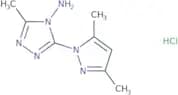
CAS:<p>Versatile small molecule scaffold</p>Formula:C8H12N2O3SPurity:Min. 95%Molecular weight:216.26 g/mol3-(3,5-Dimethyl-1H-pyrazol-1-yl)-5-methyl-4H-1,2,4-triazol-4-amine hydrochloride
CAS:<p>Versatile small molecule scaffold</p>Formula:C8H13ClN6Purity:Min. 95%Molecular weight:228.68 g/molN'-Methyl(benzyloxy)carbohydrazide hydrochloride
CAS:<p>Versatile small molecule scaffold</p>Formula:C9H13ClN2O2Purity:Min. 95%Molecular weight:216.66 g/mol3-(Dimethylamino)propiophenone Hydrochloride
CAS:<p>3-(Dimethylamino)propiophenone hydrochloride is a quaternary ammonium compound that has been used as an antimicrobial agent. 3-(Dimethylamino)propiophenone hydrochloride's antimicrobial activity is due to its ability to inhibit microbial cell wall synthesis. This drug also inhibits the growth of microsporum and other fungi, including dermatophytes. 3-(Dimethylamino)propiophenone hydrochloride's anti-infective properties are believed to be due to its quaternization of acidic groups on the microbial cell membrane, which prevents protonation and therefore prevents the transport of molecules across the membrane. 3-(Dimethylamino)propiophenone hydrochloride may also have an effect on protein synthesis by modifying ribosomes or interfering with RNA transcription or translation. The structural isomers of this drug are propiophenone and 2-dimethylaminopropiophenone, which may have</p>Formula:C11H15NO·HClPurity:Min. 95%Molecular weight:213.71 g/mol7-methoxy-2,3-dihydroquinolin-4(1H)-one
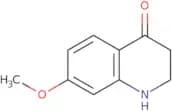
CAS:<p>Versatile small molecule scaffold</p>Formula:C10H11NO2Purity:Min. 95%Molecular weight:177.19 g/molPhenyl(1,3-thiazol-2-yl)methanol
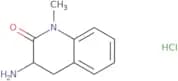
CAS:<p>Versatile small molecule scaffold</p>Formula:C10H9NOSPurity:Min. 95%Molecular weight:191.25 g/mol3-Amino-1-methyl-1,2,3,4-tetrahydroquinolin-2-one hydrochloride
CAS:<p>Versatile small molecule scaffold</p>Formula:C10H13ClN2OPurity:Min. 95%Molecular weight:212.67 g/mol1-Methyl-1,3-diazaspiro[4.5]decane-2,4-dione
CAS:<p>Versatile small molecule scaffold</p>Formula:C9H14N2O2Purity:Min. 95%Molecular weight:182.22 g/mol2,4,6-Trimethoxy-1,3,5-triazine
CAS:<p>2,4,6-Trimethoxy-1,3,5-triazine is a trimethyl triazine that is used as a polymerization initiator in the production of polyester. It has been shown to be reactive with monocarboxylic acids and ester compounds. The molecular weight of 2,4,6-trimethoxy-1,3,5-triazine increases with increasing temperature. This chemical has also been shown to be an efficient crosslinking agent for both hydrated and linear filaments.</p>Formula:C6H9N3O3Purity:Min. 95%Molecular weight:171.15 g/molDisodium [4-(sulfanidylmethanethioyl)piperazine-1-carbothioyl]sulfanide
CAS:<p>Disodium [4-(sulfanidylmethanethioyl)piperazine-1-carbothioyl]sulfanide is a dithiocarbamate that has been shown to be an inhibitor of carbonic anhydrase. It has been used in the treatment of cancer and microbial infections. Disodium [4-(sulfanidylmethanethioyl)piperazine-1-carbothioyl]sulfanide is mainly used as a monovalent cation and inhibitor of anhydrase, which can cause eye disease and microbial infection.</p>Formula:C6H8N2Na2S4Purity:Min. 95%Molecular weight:282.4 g/mol3-Methyl-5-[2-(methylsulfanyl)ethyl]-2-sulfanylideneimidazolidin-4-one
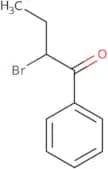
CAS:<p>Versatile small molecule scaffold</p>Formula:C7H12N2OS2Purity:Min. 95%Molecular weight:204.3 g/mol2-Bromo-1-phenylbutan-1-one
CAS:<p>2-Bromo-1-phenylbutan-1-one is a copper salt that yields an acceptor in the presence of acetonitrile. It is used as a diagnostic agent, yielding a blue color when reacted with diazonium salt. 2-Bromo-1-phenylbutan-1-one also reacts with dopamine to form the diagnostic dye 2,6 dibromopurpurin. This compound has been shown to be cytotoxic for mammary cancer cells and other cancer cells, but not for healthy cells. The mechanism of action of this compound may involve sulfate and copper ions, which are required for its activity.</p>Formula:C10H11BrOPurity:Min. 95%Molecular weight:227.1 g/mol3-Mercapto-6-methyl-[1,2,4]triazolo[4,3-b][1,2,4]triazin-7-ol
CAS:<p>Versatile small molecule scaffold</p>Formula:C5H5N5OSPurity:Min. 95%Molecular weight:183.19 g/mol1,2,3,4,5-Pentachloro-6-methylbenzene
CAS:<p>Pentachloro-6-methylbenzene is a chlorinated aromatic hydrocarbon that is used as an organic solvent. The chemical has been shown to be mutagenic, carcinogenic, and teratogenic in CD-1 mice. It also has the ability to cause light emission, which can be used for chemiluminescence or mechanoluminescence. Pentachloro-6-methylbenzene also reacts with magnesium oxide and fluorine to form 1,2,3,4,5-pentachloro-6-(4'-fluorophenyl)benzene (PCB), which is a highly chlorinated derivative of PCBM that can be used in organic light emitting diodes.</p>Formula:C7H3Cl5Purity:Min. 95%Color and Shape:PowderMolecular weight:264.4 g/mol1-Phenyl-1H-pyrazol-5-ol
CAS:<p>1-Phenyl-1H-pyrazol-5-ol is a nitrate that has a polyester, copper, and carbonyl backbone. The ligand in this compound is unidentate, bidentate, or c1-4 alkoxy. This ligand can bind to lanthanide metals with the help of oxygen atoms and phenyl rings. 1-Phenyl-1H-pyrazol-5-ol has many different bonding options because it has two carbonyl groups and two c1-4 alkoxy groups. It also has an anion on the phenyl ring that can be either c1-4 alkyl or O-.</p>Formula:C9H8N2OPurity:Min. 95%Molecular weight:160.17 g/mol4-Bromo-6-methyl-2,3-dihydro-1H-inden-1-one
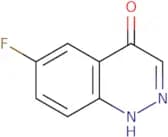
CAS:<p>Versatile small molecule scaffold</p>Formula:C10H9BrOPurity:Min. 95%Molecular weight:225.09 g/mol6-Fluoro-1,4-dihydrocinnolin-4-one
CAS:<p>Versatile small molecule scaffold</p>Formula:C8H5FN2OPurity:Min. 95%Molecular weight:164.14 g/mol6-Chlorocinnolin-4-ol
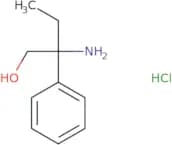
CAS:<p>Versatile small molecule scaffold</p>Formula:C8H5ClN2OPurity:Min. 95%Molecular weight:180.59 g/mol2-Amino-2-phenylbutan-1-ol hydrochloride
CAS:<p>Versatile small molecule scaffold</p>Formula:C10H16ClNOPurity:Min. 95%Molecular weight:201.69 g/mol4-(Methoxymethoxy)aniline
CAS:<p>4-(Methoxymethoxy)aniline is an antibacterial agent that belongs to the group of fluoroquinolones. It has been shown to have a broad spectrum of activity against gram-negative bacteria and is also active against some gram-positive bacteria. 4-(Methoxymethoxy)aniline inhibits the synthesis of bacterial proteins by binding to ribosomes and inhibiting the activity of phosphatases, which are enzymes that catalyze reactions in the cell. This drug can be synthesized from 4-chloroaniline, which is converted into 4-methoxyaniline through a sequence of reactions involving benzyl esters and azide. The final product is then converted into 4-(methoxymethoxy)aniline using a phosphatase enzyme.</p>Formula:C8H11NO2Purity:Min. 95%Molecular weight:153.18 g/mol2-(1,1-Dioxidotetrahydrothien-3-yl)-1,1-dimethylhydrazine hydrochloride
CAS:<p>Versatile small molecule scaffold</p>Formula:C6H15ClN2O2SPurity:Min. 95%Molecular weight:214.71 g/mol4-(Aminomethyl)-2,6-dimethylphenol
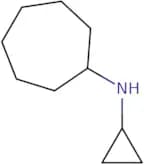
CAS:<p>Versatile small molecule scaffold</p>Formula:C9H13NOPurity:Min. 95%Molecular weight:151.21 g/molN-Cyclopropylcycloheptanamine
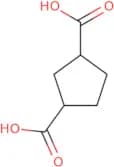
CAS:<p>Versatile small molecule scaffold</p>Formula:C10H19NPurity:Min. 95%Molecular weight:153.26 g/mol(1R,3S)-Cyclopentane-1,3-dicarboxylic acid
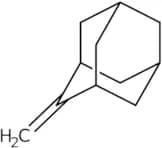
CAS:<p>(1R,3S)-Cyclopentane-1,3-dicarboxylic acid is a cyclic organic compound. It has an energy of -10.5 kcal/mol and a population of 1. It has a geometry of linear and has the proton on the left side of the molecule. The conformational geometry is antiperiplanar with hydrogen bonds to the right side of the molecule. The intramolecular hydrogen bonding distance is 2.02 A and the intramolecular hydrogen bond strength is 3.2 kcal/mol. This compound is an organic acid that can form diacids or monoanions when two molecules interact in one half-equation, but cannot form dianions when interacting with itself in one half-equation as it lacks a second proton to donate to form three hydrogen bonds in that interaction.</p>Formula:C7H10O4Purity:Min. 95%Molecular weight:158.15 g/mol2-Methylideneadamantane
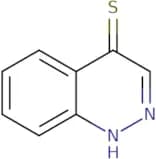
CAS:<p>2-Methylideneadamantane is a molecule that has been shown to have patterning effects in some light-exposed samples. This compound can be used as a reactive functional group for polymerization initiators in the production of polymers and plastics. 2-Methylideneadamantane also has properties similar to an immunoassay, which are tests that measure the presence or concentration of a substance in blood or other bodily fluids. It is often used for the detection of chloride ions, immunoglobulins, and antigens. The compound is a colorless liquid with a strong odor and is soluble in water, alcohols, ethers, chloroform, carbon tetrachloride, and benzene. 2-Methylideneadamantane reacts with hydrochloric acid to form ethyl diazoacetate and hydrogen chloride gas. It reacts with ethyl diazoacetate to form methylenediadamantan</p>Formula:C11H16Purity:Min. 95%Molecular weight:148.24 g/molCinnoline-4-thiol
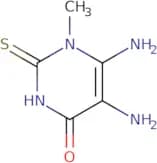
CAS:<p>Cinnoline-4-thiol is an inhibitor of the protein PD-L1, which is a targetable tumor antigen. It blocks the interaction between PD-L1 and its receptor CTLA-4, thereby inhibiting the activation of T cells and reducing their proliferation. This molecule has been shown to have anti-tumor activity in vitro and in vivo. Cinnoline-4-thiol has been shown to inhibit tumor growth by suppressing cancer cell proliferation. It also induces apoptosis, which leads to cancer cell death by activating caspases. Cinnoline-4-thiol has been shown to be active against many different types of cancers, including breast cancer, colorectal cancer, non-small cell lung cancer, ovarian carcinoma, pancreatic cancer and prostate cancer.</p>Formula:C8H6N2SPurity:Min. 95%Molecular weight:162.21 g/mol5,6-Diamino-1-methyl-2-sulfanylidene-1,2,3,4-tetrahydropyrimidin-4-one
CAS:<p>Versatile small molecule scaffold</p>Formula:C5H8N4OSPurity:Min. 95%Molecular weight:172.21 g/mol4-(2-Hydrazinylethyl)morpholine dihydrochloride
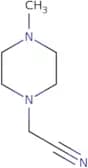
CAS:<p>Versatile small molecule scaffold</p>Formula:C6H15N3O·2HClPurity:Min. 95%Molecular weight:218.13 g/mol(4-Methyl-piperazin-1-yl)-acetonitrile
CAS:<p>4-Methyl-piperazin-1-yl)-acetonitrile (4MPAN) is a synthetic compound that is used as an intermediate in the production of pharmaceuticals. It is a reaction rate accelerator and a dehydration agent. 4MPAN has been shown to be stereoselective, reacting faster with one enantiomer than with the other. It also reacts with halides and inorganic compounds. 4MPAN has been extensively studied for its biological properties, including potent antibacterial activity against staphylococcus and cyanides. This compound also reacts with amines, which may account for its antibacterial activity.</p>Formula:C7H13N3Purity:Min. 95%Molecular weight:139.2 g/molN-Methyl-4-methylbenzylamine hydrochloride
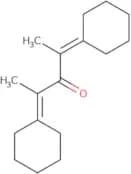
CAS:<p>Versatile small molecule scaffold</p>Formula:C9H13N·HClPurity:Min. 95%Molecular weight:171.67 g/mol1-cyclohexylidenepropan-2-one
CAS:<p>1-cyclohexylidenepropan-2-one is a carboxylic acid that is used in the synthesis of medicines and other organic compounds. It has been shown to have antioxidant, anti-inflammatory, and hypocholesterolaemic properties. 1-cyclohexylidenepropan-2-one is also used as a pheromone in insects.</p>Formula:C9H14OPurity:Min. 95%Molecular weight:138.21 g/mol4-Hydrazinyl-1,1-dioxothiolan-3-ol
CAS:<p>Versatile small molecule scaffold</p>Formula:C4H10N2O3SPurity:Min. 95%Molecular weight:166.2 g/mol[1,2,4]Triazolo[1,5-a]pyridin-2-amine
CAS:<p>1,2,4-Triazolo[1,5-a]pyridin-2-amine is an organic compound that is a member of the heterocyclic aromatic amine class. It has been shown to be a potent inhibitor of Jak2 kinase. 1,2,4-Triazolo[1,5-a]pyridin-2-amine is also capable of inhibiting inflammatory responses by reducing the production of proinflammatory cytokines. The compound has been shown to be an effective treatment for autoimmune diseases such as rheumatoid arthritis and systemic lupus erythematosus.</p>Formula:C6H6N4Purity:Min. 95%Molecular weight:134.14 g/mol3-Chloro-2-methylbenzaldehyde
CAS:<p>Versatile small molecule scaffold</p>Formula:C8H7ClOPurity:Min. 95%Molecular weight:154.6 g/mol2-Amino-6-chloro-3-methyl-3,4-dihydropyrimidin-4-one
CAS:<p>Versatile small molecule scaffold</p>Formula:C5H6ClN3OPurity:Min. 95%Molecular weight:159.57 g/molTetrahydro-3-methyl-thiophene-3-ol 1,1-dioxide
CAS:<p>Versatile small molecule scaffold</p>Formula:C5H10O3SPurity:Min. 95%Molecular weight:150.2 g/molN-Cyclopropylcyclopentanamine
CAS:<p>Versatile small molecule scaffold</p>Formula:C8H15NPurity:Min. 95%Molecular weight:125.21 g/mol3,4-Dimethylpyridin-2-amine hydrochloride
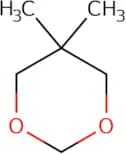
CAS:<p>Versatile small molecule scaffold</p>Formula:C7H11ClN2Purity:Min. 95%Molecular weight:158.63 g/mol5,5-Dimethyl-1,3-dioxane
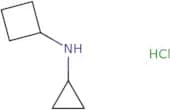
CAS:<p>5,5-Dimethyl-1,3-dioxane is a byproduct of the polymerization reaction between ethylene oxide and propylene oxide. It is used in wastewater treatment to remove organic pollutants. 5,5-Dimethyl-1,3-dioxane reacts with benzene to form dioxanes and yields of dioxanes are increased when phenyl groups are present. The conformation of 5,5-Dimethyl-1,3-dioxane is cyclic and it can react with terephthalic acid or alcohols to form telomerization products. When reacted with oxygen atoms from air, 5,5-Dimethyl-1,3-dioxane will create organic compounds such as ethers or esters.</p>Formula:C19H19BrN2OSPurity:Min. 95%Molecular weight:403.34 g/molN-Cyclopropylcyclobutanamine hydrochloride
CAS:<p>Versatile small molecule scaffold</p>Formula:C7H14ClNPurity:Min. 95%Molecular weight:147.64 g/mol[3-(Dimethylamino)propyl]hydrazine dihydrochloride
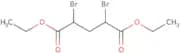
CAS:<p>Versatile small molecule scaffold</p>Formula:C5H17Cl2N3Purity:Min. 95%Molecular weight:190.11 g/molDiethyl 2,4-dibromopentanedioate
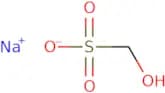
CAS:<p>Versatile small molecule scaffold</p>Formula:C9H14Br2O4Purity:Min. 95%Molecular weight:346.01 g/molFormaldehyde Sodium Bisulfite
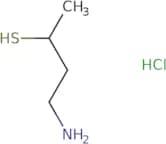
CAS:<p>Formaldehyde Sodium Bisulfite is an aqueous solution of formaldehyde and sodium bisulfite. It is used as a disinfectant in the treatment of wastewater, including sewage and other industrial effluents. Formaldehyde Sodium Bisulfite is also used as a detergent additive to prevent the formation of acid in detergent compositions. This product can be used in analytical methods to determine the presence of formaldehyde and dimethyl fumarate by mass spectrometry (LC-MS/MS). Formaldehyde Sodium Bisulfite can also be utilized in glycol ester polymerization reactions, where it acts as an epidermal growth factor (EGF) receptor antagonist.</p>Formula:CH3NaO4SPurity:Min. 95%Molecular weight:134.08 g/mol4-Aminobutane-2-thiol hydrochloride
CAS:<p>Versatile small molecule scaffold</p>Formula:C4H12ClNSPurity:Min. 95%Molecular weight:141.66 g/molDimethyl 2,4-dibromoglutarate
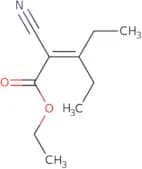
CAS:<p>Dimethyl 2,4-dibromoglutarate is a stereospecific, unselective opioid receptor ligand. It interacts with the opioid receptors and has been shown to have affinity for both mu and kappa receptors. Dimethyl 2,4-dibromoglutarate has been studied as a potential model for morphine and other selective ligands. The two enantiomers of dimethyl 2,4-dibromoglutarate were synthesized in order to study their selectivity for the opioid receptor. The racemic mixture of dimethyl 2,4-dibromoglutarate was found to be more potent than either of the individual enantiomers. The cyclopropane ring on the left side of the molecule is responsible for this effect. This ring confers higher affinity and selectivity than that on the right side of the molecule.</p>Formula:C7H10Br2O4Purity:Min. 95%Molecular weight:317.96 g/molEthyl 2-cyano-3-ethylpent-2-enoate
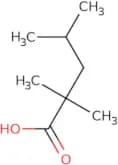
CAS:<p>Versatile small molecule scaffold</p>Formula:C10H15NO2Purity:Min. 95%Molecular weight:181.23 g/mol2,2,4-Trimethylpentanoic acid
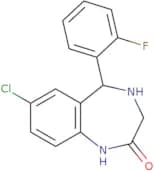
CAS:<p>Versatile small molecule scaffold</p>Formula:C8H16O2Purity:Min. 95%Molecular weight:144.21 g/mol7-Chloro-5-(2-fluorophenyl)-2,3,4,5-tetrahydro-1H-1,4-benzodiazepin-2-one
CAS:Controlled Product<p>Versatile small molecule scaffold</p>Formula:C15H12ClFN2OPurity:Min. 95%Molecular weight:290.72 g/mol1,3-Diazaspiro[4.11]hexadecane-2,4-dione
CAS:<p>Versatile small molecule scaffold</p>Formula:C14H24N2O2Purity:Min. 95%Molecular weight:252.35 g/mol4-[1-(4-Aminophenyl)-1-methylethyl]-phenol
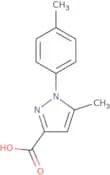
CAS:<p>4-[1-(4-Aminophenyl)-1-methylethyl]-phenol is a processable organic solvent that can be used in temperatures between -20°C and 100°C. It has a transition temperature of -10°C and exhibits an unsymmetrical boiling point distribution. 4-[1-(4-Aminophenyl)-1-methylethyl]-phenol has high viscosity and is catalytic, showing nucleophilic properties with techniques such as catalytic reduction or catalytic hydrogenation. The solvents are also soluble in many other solvents, which makes it useful for diffraction techniques. 4-[1-(4-Aminophenyl)-1-methylethyl]-phenol is soluble in many solvents including water, acetone, and tetrahydrofuran (THF).</p>Formula:C15H17NOPurity:Min. 95%Molecular weight:227.3 g/mol5-Methyl-1-(4-methylphenyl)-1H-pyrazole-3-carboxylic acid
CAS:<p>Versatile small molecule scaffold</p>Formula:C12H12N2O2Purity:Min. 95%Molecular weight:216.24 g/mol2-[(4-Chloronaphthalen-1-yl)oxy]acetic acid
CAS:<p>Versatile small molecule scaffold</p>Formula:C12H9ClO3Purity:Min. 95%Molecular weight:236.65 g/mol4-(Ethoxycarbonyl)bicyclo-[2.2.2]octane-1-carboxylic acid
CAS:<p>Versatile small molecule scaffold</p>Formula:C12H18O4Purity:Min. 95%Molecular weight:226.27 g/mol(2,4-Dioxo-1,3-diaza-spiro[4.5]dec-3-yl)-acetic acid
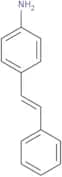
CAS:<p>Versatile small molecule scaffold</p>Formula:C10H14N2O4Purity:Min. 95%Molecular weight:226.23 g/mol4-Aminostilbene
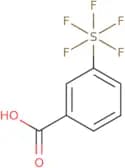
CAS:<p>4-Aminostilbene is a fluorescent stilbene derivative that is used as a synthetic estrogen. It has been shown to possess anti-inflammatory properties and inhibit the production of reactive oxygen species in target tissues. 4-Aminostilbene also possesses anti-cancer properties and has been shown to be effective against Pseudomonas aeruginosa. The mechanism of action for this compound is thought to be via its ability to react with amines, forming diazonium salts in an organic solution.</p>Formula:C14H13NPurity:Min. 95%Molecular weight:195.27 g/mol3-(Pentafluorosulfanyl)benzoic acid
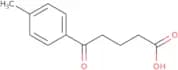
CAS:<p>3-(Pentafluorosulfanyl)benzoic acid (3PFSA) is a quinoline derivative used as an agrochemical. It is a research chemical that has not been tested for neurotoxicity, but it is suspected to be neurotoxic due to its structural similarity to other neurotoxic substances. 3PFSA has the potential to be an analog of the synthetic drug pentafluorobenzoic acid (5FBBA). The structure of 3PFSA includes a trifluoromethyl group, which is a functional group that can make compounds more permeable in the brain and could contribute to neurotoxicity.</p>Formula:C7H5F5O2SPurity:Min. 95%Molecular weight:248.17 g/mol5-(4-Methylphenyl)-5-oxopentanoic acid
CAS:<p>Versatile small molecule scaffold</p>Formula:C12H14O3Purity:Min. 95%Molecular weight:206.24 g/mol5-(4-Nitro-phenyl)-[1,3,4]thiadiazol-2-ylamine
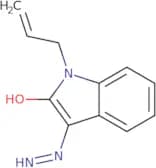
CAS:<p>Versatile small molecule scaffold</p>Formula:C8H6N4O2SPurity:Min. 95%Molecular weight:222.23 g/mol3-Hydrazinylidene-1-(prop-2-en-1-yl)-2,3-dihydro-1H-indol-2-one
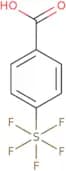
CAS:<p>Versatile small molecule scaffold</p>Formula:C11H11N3OPurity:Min. 95%Molecular weight:201.22 g/mol4-(Pentafluorosulfanyl)benzoic acid
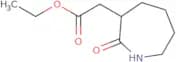
CAS:<p>4-(Pentafluorosulfanyl)benzoic acid is a benzoic acid derivative that has been synthesized by oxidation of the corresponding aniline. It is used as a starting material for the synthesis of other benzoic acid derivatives, such as 4-fluorobenzoic acid and 4-fluorobenzenesulfonic acid. The compound crystallizes with two molecules in the asymmetric unit, each with one fluorine atom. The molecule has a trigonal planar geometry and contains two sulfonyl groups on the para position of the phenyl ring. The compound has been characterized by X-ray diffraction analysis.</p>Formula:C7H5F5O2SPurity:Min. 95%Molecular weight:248.17 g/molEthyl 2-(2-oxoazepan-3-yl)acetate
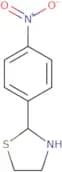
CAS:<p>Versatile small molecule scaffold</p>Formula:C10H17NO3Purity:Min. 95%Molecular weight:199.25 g/mol2-(4-Nitrophenyl)-1,3-thiazolidine
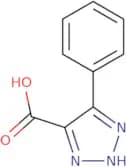
CAS:<p>Versatile small molecule scaffold</p>Formula:C9H10N2O2SPurity:Min. 95%Molecular weight:210.26 g/mol5-Phenyl-1H-1,2,3-triazole-4-carboxylic acid
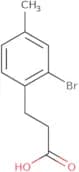
CAS:<p>Versatile small molecule scaffold</p>Formula:C9H7N3O2Purity:Min. 95%Molecular weight:189.17 g/mol3-(2-bromo-4-methylphenyl)propanoic acid
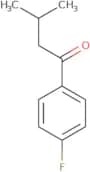
CAS:<p>Versatile small molecule scaffold</p>Formula:C10H11BrO2Purity:Min. 95%Molecular weight:243.1 g/mol1-(4-Fluorophenyl)-3-methylbutan-1-one
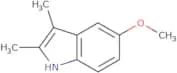
CAS:<p>Versatile small molecule scaffold</p>Formula:C11H13FOPurity:Min. 95%Molecular weight:180.22 g/mol5-Methoxy-2,3-dimethyl-1H-indole
CAS:<p>5-Methoxy-2,3-dimethyl-1H-indole is an indole that is used as a drug. It has anti-inflammatory activity and belongs to the class of intermolecular drugs. It works by inhibiting cyclooxygenase (COX) enzymes, which are involved in the synthesis of prostaglandins. 5-Methoxy-2,3-dimethyl-1H-indole can be found as crystals and has a crystal structure that contains a five membered ring with one double bond and one methyl group on each side of the ring.</p>Formula:C11H13NOPurity:Min. 95%Molecular weight:175.23 g/mol5-(2-Chloro-phenyl)-[1,3,4]thiadiazol-2-ylamine
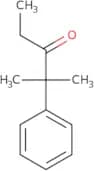
CAS:<p>5-(2-Chloro-phenyl)-[1,3,4]thiadiazol-2-ylamine is a chemical compound that is a member of the heterocyclic family of compounds. It has been shown to be an excellent catalyst for the condensation reaction between amines and aldehydes or ketones. 5-(2-Chloro-phenyl)-[1,3,4]thiadiazol-2-ylamine has also been found to be an efficient catalyst for the hydrogenation of carboxylic acids. The elemental analysis of this product shows that it is composed of carbon (C), chlorine (Cl), hydrogen (H), and nitrogen (N).</p>Formula:C8H6ClN3SPurity:Min. 95%Molecular weight:211.67 g/mol2-Methyl-2-phenylpentan-3-one
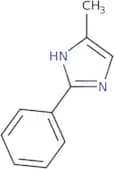
CAS:<p>Versatile small molecule scaffold</p>Formula:C12H16OPurity:Min. 95%Molecular weight:176.25 g/mol4-Methyl-2-phenylimidazole
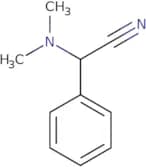
CAS:<p>4-Methyl-2-phenylimidazole is a molecule that has a functional theory. It is used as an inhibitor of corrosion and has been shown to inhibit the activity of magnesium oxide in photoelectron spectroscopy. The molecule has two tautomeric forms, which are the keto form and the enol form. When the molecule is irradiated with light, it absorbs photons and changes into its keto form. Its vibrational modes are also observed in infrared spectroscopy. 4-Methyl-2-phenylimidazole has an activation energy of 6.8 eV and can be classified as stable because it does not decompose at room temperature.</p>Formula:C10H10N2Purity:Min. 95%Molecular weight:158.2 g/mol2-(dimethylamino)-2-phenyl-acetonitrile
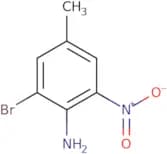
CAS:<p>2-(dimethylamino)-2-phenyl-acetonitrile is a chiral, electron-rich reagent that can be used for the synthesis of chiral anions. It is a basic reagent and can react with halides to form alkylating agents. The electron-transfer property of this compound makes it useful in organic synthesis as an intermediate in the alkylation of alcohols and phenols with electrophilic reagents.</p>Formula:C10H12N2Purity:Min. 95%Molecular weight:160.22 g/mol2-Bromo-4-methyl-6-nitroaniline
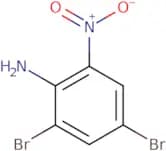
CAS:<p>Versatile small molecule scaffold</p>Formula:C7H7BrN2O2Purity:Min. 95%Molecular weight:231.05 g/mol2,4-Dibromo-6-nitroaniline
CAS:<p>2,4-Dibromo-6-nitroaniline is a nitro compound that has been used in the production of dyes. It is also used as a component in the synthesis of other organic compounds. 2,4-Dibromo-6-nitroaniline can be produced by electrolysis of an acid solution containing radical cations and benzene. The radical cations are formed by proton transfer from the acid to the benzene, followed by electron transfer from benzene to the electrode. This process results in the formation of nitro groups on the benzene ring, which undergoes oxidation to form 2,4-dibromo-6-nitroaniline. The cyclic voltammetry shows that this process occurs via two pathways: one with a fast rate and one with a slow rate. The mechanism for this reaction is not yet known.</p>Formula:C6H4Br2N2O2Purity:Min. 95%Molecular weight:295.92 g/molBicyclo[2.2.2]octane-2-sulfonyl fluoride
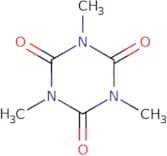
CAS:<p>Versatile small molecule scaffold</p>Formula:C8H13FO2SPurity:Min. 95%Molecular weight:192.25 g/molTrimethyl-1,3,5-triazinane-2,4,6-trione
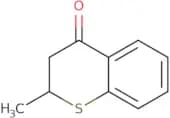
CAS:<p>Trimethyl-1,3,5-triazinane-2,4,6-trione is a molecule that belongs to the class of aliphatic hydrocarbons. It is an ester compound that has reactive properties and can be used as a crosslinking agent. Trimethyl-1,3,5-triazinane-2,4,6-trione reacts with calcium carbonate to form trimethylcalcium carbonate. The reactive properties of this molecule are due to the presence of nitrogen atoms and divalent hydrocarbon groups. Trimethyl-1,3,5-triazinane-2,4,6-trione also reacts with fatty acids to produce monocarboxylic acid and fatty acid molecules. Molecular modelling studies have shown that trimethyl-1,3,5-triazinane-2,4,6-trione forms linear molecules. Linear regression analysis has been used to determine</p>Formula:C6H9N3O3Purity:Min. 95%Molecular weight:171.15 g/mol2-Methyl-3,4-dihydro-2H-1-benzothiopyran-4-one
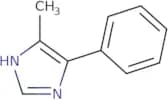
CAS:<p>2-Methyl-3,4-dihydro-2H-1-benzothiopyran-4-one is a synthetic compound that is used in the synthesis of thioflavones. It can be prepared by cyclodehydration of acetophenone with chlorides and sulfur. This reagent has been shown to react selectively with nucleophiles such as lithium diisopropylamide and triflic acid at the 2 position of the aromatic ring to form an intramolecular cyclic compound. Cyclodehydration of 2-methylbenzothiophene can also produce this compound.</p>Formula:C10H10OSPurity:Min. 95%Molecular weight:178.25 g/mol5-Methyl-4-phenyl-1H-imidazole
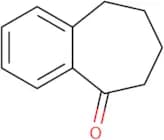
CAS:<p>5-Methyl-4-phenyl-1H-imidazole is an epoxy that is used as a medicine. It is a hardener in the form of ammonium salt and has vasodilating properties. It is used to treat cerebral and vascular diseases, such as hypertension and atherosclerosis. 5-Methyl-4-phenyl-1H-imidazole is toxic for the liver and kidneys when administered orally. This compound also has a high affinity for absorbing certain gases, such as dichlorobenzaldehyde, which may be due to its ability to bind with oxygen molecules.</p>Formula:C10H10N2Purity:Min. 95%Molecular weight:158.2 g/mol1-Benzosuberone
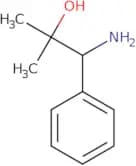
CAS:<p>1-Benzosuberone is an organic compound that is reactive. It has been shown to have inhibitory properties in pharmaceutical preparations. The 1-benzosuberone molecule binds to the active site of the enzyme methyl ketones, which catalyzes the oxidation of methyl ketones to form mcf-7. The binding of 1-benzosuberone inhibits this reaction, reducing the production of mcf-7. This reactive form may also be responsible for significant cytotoxicity and asymmetric synthesis in amines. 1-Benzosuberone has been shown to have receptor activity against cervical cancer cells and antimicrobial agents such as dimethyl fumarate and hydroxyl group.</p>Formula:C11H12OPurity:Min. 95%Molecular weight:160.21 g/mol1-Amino-2-methyl-1-phenylpropan-2-ol
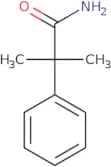
CAS:<p>Versatile small molecule scaffold</p>Formula:C10H15NOPurity:Min. 95%Molecular weight:165.23 g/mol2-Methyl-2-phenylpropanamide
CAS:<p>2-Methyl-2-phenylpropanamide (2MPPA) is a δ-opioid receptor agonist that has been shown to have anorectic and antinociceptive properties. It also interacts with other protein targets, such as the proton pump, in addition to its interactions with the δ opioid receptor. 2MPPA was also found to be safe when tested on mice, although studies are needed to identify its mechanism of action. A functional theory suggests that 2MPPA may act by binding to the δ opioid receptor, which would lead to a decrease in the release of neurotransmitters such as dopamine and serotonin. This would result in an anti-depressant effect and decreased appetite.</p>Formula:C10H13NOPurity:Min. 95%Molecular weight:163.22 g/molBicyclo[2.2.2]octane-1,4-diyldimethanol
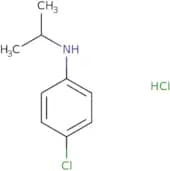
CAS:<p>Bicyclo[2.2.2]octane-1,4-diyldimethanol is a new macrocyclic compound that has been shown to have hypotensive effects in animal models. This molecule binds to G protein coupled receptors and activates the ganglionic system. The molecular modelling of this compound has shown that it interacts with the binding site of the receptor, which leads to inhibition of the G protein coupled receptor signaling pathway and activation of the ganglionic system.</p>Formula:C10H18O2Purity:Min. 95%Molecular weight:170.25 g/mol4-Chloro-N-(propan-2-yl)aniline hydrochloride
CAS:<p>Versatile small molecule scaffold</p>Formula:C9H13Cl2NPurity:Min. 95%Molecular weight:206.11 g/molrac-(1R,3R)-Cyclopentane-1,3-dicarboxylic acid
CAS:<p>Versatile small molecule scaffold</p>Formula:C7H10O4Purity:Min. 95%Molecular weight:158.15 g/mol2-{Bicyclo[2.2.1]hept-5-en-2-yl}acetic acid
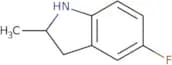
CAS:<p>2-{Bicyclo[2.2.1]hept-5-en-2-yl}acetic acid is a monomer that is able to be encapsulated. This monomer has been shown to have selective functionalities in the polymerization of ethylene and other reactive monomers. It has also been shown to react with chlorine, leading to increased stability in the presence of light and heat, as well as being able to act as a catalyst for polymerization reactions. It can also be used as a fluorescent probe because fluorescence intensity increases upon interaction with biomolecules. 2-{Bicyclo[2.2.1]hept-5-en-2-yl}acetic acid may be effective against cancer cells due to its ability to prevent adipose tissue from accumulating in mice by inhibiting lipogenesis and stimulating lipolysis, or breakdown of fat cells, respectively. It also has been shown to stimulate reconstructive tissue formation by</p>Formula:C9H12O2Purity:Min. 95%Molecular weight:152.19 g/mol5-Fluoro-2-methylindoline
CAS:<p>Versatile small molecule scaffold</p>Formula:C9H10FNPurity:Min. 95%Molecular weight:151.18 g/mol2-Phenyl-1,3,4-oxadiazole
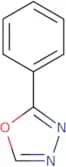
CAS:<p>2-Phenyl-1,3,4-oxadiazole is a 2-phenyloxazole with an oxygen atom at the 1 position. It is a white crystalline solid that is soluble in water and has antibacterial properties. This chemical can be used as a catalyst for the synthesis of organic compounds. 2-Phenyl-1,3,4-oxadiazole reacts with nitro groups to form oxime derivatives and has been shown to inhibit the growth of fungi such as Candida albicans and Aspergillus niger. 2-Phenyl-1,3,4-oxadiazole can also be used as an antifungal agent against Trichophyton rubrum.<br>2-Phenyl-1,3,4-oxadiazole may be synthesized by reacting phenol with acetone in the presence of nitric acid or sulfuric acid. The structural formula for this compound is</p>Formula:C8H6N2OPurity:Min. 95%Molecular weight:146.15 g/mol(Cyclopent-1-en-1-yl)benzene
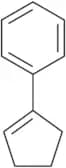
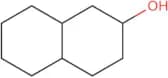
CAS:<p>Cyclopent-1-en-1-yl)benzene is an aliphatic hydrocarbon that is a cyclopentyl molecule. It is acidic and reacts with water vapor in the atmosphere to produce an ion-exchange reaction. Cyclopent-1-en-1-yl)benzene has been shown to react with aziridine, which may form ring opening products. This chemical has optical properties that are similar to those of benzene, which can be used as a reference for identification. Cyclopent-1-en-1-yl)benzene is an alicyclic aromatic hydrocarbon and it is an acid catalyst for chemical reactions like esterification and saponification. Cyclopent-1-en-1-yl)benzene also has enantiomer, which means that the molecules have different shapes when they rotate around their axis.</p>Formula:C11H12Purity:Min. 95%Molecular weight:144.21 g/molDecahydro-2-naphthol (mixture of isomers)
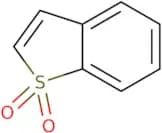
CAS:<p>Decahydro-2-naphthol is an organic compound that belongs to the group of aromatic compounds. It has two isomers, known as 2,6-decahydronaphthalene and 2,7-decahydronaphthalene. Decahydro-2-naphthol can be obtained by the oxidation of decahydronaphthalene with an oxidation catalyst, such as platinum dioxide. The risk group for this substance is unknown. Decahydro-2-naphthol has anticancer activity as it binds to the carbonyl group on DNA and inhibits nucleic acid synthesis by inhibiting the enzyme ribonucleotide reductase. This substance also has been shown to have a rate enhancement effect on chemical reactions such as substrate binding when mixed with other substances in a ternary complex.</p>Formula:C10H18OPurity:Min. 95%Molecular weight:154.25 g/mol1-Benzothiophene 1,1-dioxide
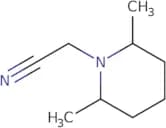
CAS:<p>1-Benzothiophene 1,1-dioxide is a potential drug target for the treatment of cryptococcus neoformans. It inhibits bacterial growth by inhibiting the transport properties of the bacteria, which in turn leads to cell death. This compound has been shown to have potent antitumor activity and may be activated through x-ray diffraction data analysis. The compound also has fluorescence properties and hydrogen bond formation, which may aid in its chemical structure.</p>Formula:C8H6O2SPurity:Min. 95%Molecular weight:166.2 g/mol2-(2,6-Dimethylpiperidin-1-yl)acetonitrile
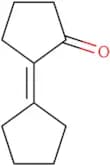
CAS:<p>Versatile small molecule scaffold</p>Formula:C9H16N2Purity:Min. 95%Molecular weight:152.24 g/mol2-Cyclopentylidenecyclopentan-1-one
CAS:<p>Cyclopentylidenecyclopentan-1-one is a synthetic chemical with bioactive properties. It is a predictable and reliable reagent for the synthesis of Grignard reagents and x-ray structures. It can be used as a starting material to synthesize unsaturated ketones through thermal isomerization, which leads to reaction time and transfer reactions.</p>Formula:C10H14OPurity:Min. 95%Molecular weight:150.22 g/mol2-Methylbicyclo[2.2.1]hept-5-ene-2-carboxylic acid
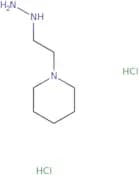
CAS:<p>Versatile small molecule scaffold</p>Formula:C9H12O2Purity:Min. 95%Molecular weight:152.19 g/mol1-(2-Hydrazinylethyl)piperidine dihydrochloride
CAS:<p>Versatile small molecule scaffold</p>Formula:C7H19Cl2N3Purity:Min. 95%Molecular weight:216.15 g/mol2-Methyl-2,3-dihydro-1H-indene
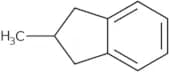
CAS:<p>2-Methyl-2,3-dihydro-1H-indene is a synthetic compound that has been shown to have hypolipidemic effects in animal models. It has been found to stimulate the activity of phosphatase and increase the levels of isoeugenol in plasma. 2-Methyl-2,3-dihydro-1H-indene also has hepatotoxic effects and can cause nausea, vomiting, and diarrhea when consumed by humans. The chemical is activated by spin resonance and can be used as an insecticide.</p>Formula:C10H12Purity:Min. 95%Molecular weight:132.2 g/mol(2-Bromo-4-methylphenyl)methanol
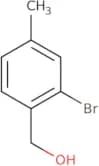
CAS:<p>Versatile small molecule scaffold</p>Formula:C8H9BrOPurity:Min. 95%Molecular weight:201.06 g/mol2-Nitrophenol Sodium Salt
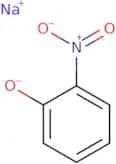
CAS:<p>2-Nitrophenol sodium salt is a polymer film that is used for wastewater treatment. It prevents the growth of bacteria by interacting with active substances in the polymer matrix. 2-Nitrophenol sodium salt can also be used as a nutrient solution for plants, such as solanum tuberosum, which is a potato species. The polymer film has been shown to have a pH of 3 and 4, which makes it acidic. When mixed with hydroxide solution, it becomes basic, with a pH of 10 or 11. The interaction between 2-nitrophenol sodium salt and the hydroxide solution creates hydrogen bonding interactions that are necessary to maintain its acidity or basicity.</p>Formula:C6H4NNaO3Purity:Min. 95%Molecular weight:161.09 g/mol4H,5H-Thieno[2,3-d]pyridazin-4-one
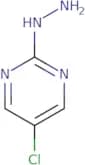
CAS:<p>Versatile small molecule scaffold</p>Formula:C6H4N2OSPurity:Min. 95%Molecular weight:152.18 g/mol5-Chloro-2-hydrazinopyrimidine
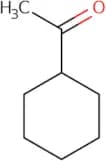
CAS:<p>Versatile small molecule scaffold</p>Formula:C4H5ClN4Purity:Min. 95%Molecular weight:144.56 g/mol1-Cyclohexylethanone
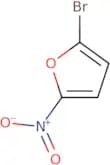
CAS:<p>1-Cyclohexylethanone is an oxidation catalyst for organic substrates. It has been shown to be a potent inhibitor of the synthesis of fatty acids, as well as an effective agent against Mycobacterium tuberculosis and other bacteria. 1-Cyclohexylethanone has been shown to have a high affinity for the lipid bilayer in membranes, where it forms a reversible covalent bond with the hydroxyl group on the fatty acid chain. It also has receptor activity with ferroelectric materials that may make it useful in biological sensors and drug delivery systems.</p>Formula:C8H14OPurity:Min. 95%Molecular weight:126.2 g/mol2-Bromo-5-nitrofuran
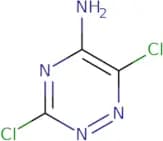
CAS:<p>2-Bromo-5-nitrofuran is a labile, reactive chemical that can be used in a number of different reactions. This chemical has been shown to be an effective antibacterial agent against Gram-positive and Gram-negative bacteria. The mechanism of action for this drug is not well understood, but it may act as a competitive inhibitor of the enzyme protein synthesis by binding to the amine group of amino acids. 2-Bromo-5-nitrofuran has been used in analytical HPLC and is useful in the determination of carbonyl groups.</p>Formula:C4H2BrNO3Purity:Min. 95%Molecular weight:191.97 g/molDichloro-1,2,4-triazin-5-amine
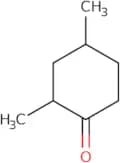
CAS:<p>Versatile small molecule scaffold</p>Formula:C3H2Cl2N4Purity:Min. 95%Molecular weight:164.98 g/mol2,4-Dimethylcyclohexan-1-one
CAS:<p>Versatile small molecule scaffold</p>Formula:C8H14OPurity:Min. 95%Molecular weight:126.2 g/mol4-[4-(Chloromethyl)-1,3-oxazol-2-yl]benzonitrile
CAS:<p>Versatile small molecule scaffold</p>Formula:C11H7ClN2OPurity:Min. 95%Molecular weight:218.64 g/molrac-(1S,3S)-3-({1-[(tert-Butoxy)carbonyl]azetidin-3-yl}({[(9H-fluoren-9-yl)methoxy]carbonyl})amino)cyclobutane-1-carboxylic acid
CAS:<p>Versatile small molecule scaffold</p>Formula:C28H32N2O6Purity:Min. 95%Molecular weight:492.6 g/molrac-tert-Butyl N-[(6S,9S)-1-oxa-4-azaspiro[5.5]undecan-9-yl]carbamate
CAS:<p>Versatile small molecule scaffold</p>Formula:C14H26N2O3Purity:Min. 95%Molecular weight:270.37 g/mol(2S)-1-[(2-Methyl-2H-1,2,3,4-tetrazol-5-yl)methyl]pyrrolidine-2-carboxylic acid hydrochloride
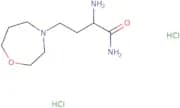
CAS:<p>Versatile small molecule scaffold</p>Formula:C8H14ClN5O2Purity:Min. 95%Molecular weight:247.68 g/mol(2S)-2-Amino-4-(1,4-oxazepan-4-yl)butanamide dihydrochloride
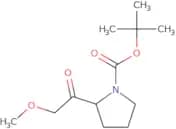
CAS:<p>Versatile small molecule scaffold</p>Formula:C9H21Cl2N3O2Purity:Min. 95%Molecular weight:274.19 g/moltert-Butyl (2R)-2-(2-methoxyacetyl)pyrrolidine-1-carboxylate
CAS:<p>Versatile small molecule scaffold</p>Formula:C12H21NO4Purity:Min. 95%Molecular weight:243.3 g/molPotassium 2-{[(3S)-3-hydroxypyrrolidin-1-yl]methyl}-1,3-oxazole-4-carboxylate
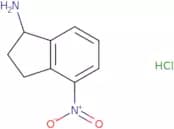
CAS:<p>Versatile small molecule scaffold</p>Formula:C9H11KN2O4Purity:Min. 95%Molecular weight:250.29 g/mol(1R)-4-Nitro-2,3-dihydro-1H-inden-1-amine hydrochloride
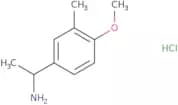
CAS:<p>Versatile small molecule scaffold</p>Formula:C9H11ClN2O2Purity:Min. 95%Molecular weight:214.65 g/mol(1R)-1-(4-Methoxy-3-methylphenyl)ethan-1-amine hydrochloride
CAS:<p>Versatile small molecule scaffold</p>Formula:C10H16ClNOPurity:Min. 95%Molecular weight:201.69 g/mol3-Amino-N-[(2R)-butan-2-yl]propanamide hydrochloride
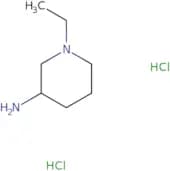
CAS:<p>Versatile small molecule scaffold</p>Formula:C7H17ClN2OPurity:Min. 95%Molecular weight:180.7 g/mol(3S)-1-Ethylpiperidin-3-amine dihydrochloride
CAS:<p>Versatile small molecule scaffold</p>Formula:C7H18Cl2N2Purity:Min. 95%Molecular weight:201.13 g/mol(2R)-2-[(tert-Butoxy)methyl]piperidine hydrochloride
CAS:<p>Versatile small molecule scaffold</p>Formula:C10H22ClNOPurity:Min. 95%Molecular weight:207.74 g/mol[rac-(1R,4S)-1-Methyl-2-oxabicyclo[2.2.2]octan-4-yl]methanol
CAS:<p>Versatile small molecule scaffold</p>Formula:C9H16O2Purity:Min. 95%Molecular weight:156.22 g/molrac-(1S,3S)-3-({1-[(tert-Butoxy)carbonyl]piperidin-4-yl}({[(9H-fluoren-9-yl)methoxy]carbonyl})amino)cyclobutane-1-carboxylic acid
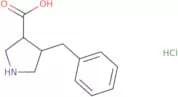
CAS:<p>Versatile small molecule scaffold</p>Formula:C30H36N2O6Purity:Min. 95%Molecular weight:520.6 g/mol(3S,4S)-4-Benzylpyrrolidine-3-carboxylic acid hydrochloride
CAS:<p>Versatile small molecule scaffold</p>Formula:C12H16ClNO2Purity:Min. 95%Molecular weight:241.71 g/molrac-(1S,3S)-3-({[(9H-Fluoren-9-yl)methoxy]carbonyl}(methyl)amino)cyclobutane-1-carboxylic acid
CAS:<p>Versatile small molecule scaffold</p>Formula:C21H21NO4Purity:Min. 95%Molecular weight:351.4 g/mol(2R)-2-[Benzyl({[(9H-fluoren-9-yl)methoxy]carbonyl})amino]propanoic acid
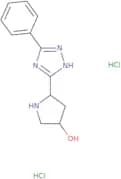
CAS:<p>Versatile small molecule scaffold</p>Formula:C25H23NO4Purity:Min. 95%Molecular weight:401.5 g/mol(3R,5S)-5-(5-Phenyl-1H-1,2,4-triazol-3-yl)pyrrolidin-3-ol dihydrochloride
CAS:<p>Versatile small molecule scaffold</p>Formula:C12H16Cl2N4OPurity:Min. 95%Molecular weight:303.18 g/molMethyl (2S)-2-amino-4-[(trifluoromethyl)sulfanyl]butanoate hydrochloride
CAS:<p>Versatile small molecule scaffold</p>Formula:C6H11ClF3NO2SPurity:Min. 95%Molecular weight:253.67 g/mol(2S,4S)-1-[(tert-Butoxy)carbonyl]-4-hydroxy-4-(trifluoromethyl)pyrrolidine-2-carboxylic acid
CAS:<p>Versatile small molecule scaffold</p>Formula:C11H16F3NO5Purity:Min. 95%Molecular weight:299.24 g/molrac-[(1R,3R)-3-Fluoro-1-phenylcyclobutyl]methanamine
CAS:<p>Versatile small molecule scaffold</p>Formula:C11H14FNPurity:Min. 95%Molecular weight:179.23 g/mol(3R,8aS)-N'-Hydroxy-hexahydro-1H-pyrrolo[2,1-c]morpholine-3-carboximidamide
CAS:<p>Versatile small molecule scaffold</p>Formula:C8H15N3O2Purity:Min. 95%Molecular weight:185.22 g/mol(6S)-2,8,11-Triazatricyclo[8.4.0.0,2,6]tetradeca-1(14),10,12-triene
CAS:<p>Versatile small molecule scaffold</p>Formula:C11H15N3Purity:Min. 95%Molecular weight:189.26 g/mol(2R,4S)-4-Azido-1-{[(9H-fluoren-9-yl)methoxy]carbonyl}pyrrolidine-2-carboxylic acid
CAS:<p>Versatile small molecule scaffold</p>Formula:C20H18N4O4Purity:Min. 95%Molecular weight:378.4 g/mol5-({[(3S)-1-[(tert-Butoxy)carbonyl]pyrrolidin-3-yl]({[(9H-fluoren-9-yl)methoxy]carbonyl})amino}methyl)thiophene-2-carboxylic acid
CAS:<p>Versatile small molecule scaffold</p>Formula:C30H32N2O6SPurity:Min. 95%Molecular weight:548.6 g/mol(1S,3S)-1-({[(9H-Fluoren-9-yl)methoxy]carbonyl}amino)-3-hydroxycyclobutane-1-carboxylic acid
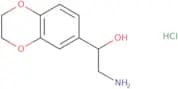
CAS:<p>Versatile small molecule scaffold</p>Formula:C20H19NO5Purity:Min. 95%Molecular weight:353.4 g/mol(1R)-2-Amino-1-(2,3-dihydro-1,4-benzodioxin-6-yl)ethan-1-ol hydrochloride
CAS:Controlled Product<p>Versatile small molecule scaffold</p>Formula:C10H14ClNO3Purity:Min. 95%Molecular weight:231.67 g/mol2-[rac-(1R,4R)-4-Aminocyclohexyl]pyrimidin-4-ol dihydrochloride
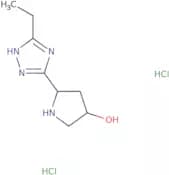
CAS:<p>Versatile small molecule scaffold</p>Formula:C10H17Cl2N3OPurity:Min. 95%Molecular weight:266.16 g/mol(3R,5S)-5-(5-Ethyl-1H-1,2,4-triazol-3-yl)pyrrolidin-3-ol dihydrochloride
CAS:<p>Versatile small molecule scaffold</p>Formula:C8H16Cl2N4OPurity:Min. 95%Molecular weight:255.14 g/mol(2S)-2-Amino-3-(2-oxo-2,3-dihydro-1,3-benzoxazol-5-yl)propanoic acid hydrochloride
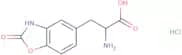
CAS:<p>Versatile small molecule scaffold</p>Formula:C10H11ClN2O4Purity:Min. 95%Molecular weight:258.66 g/mol(1R)-1-(4-Bromo-5-fluoro-2-methylphenyl)ethan-1-amine hydrochloride
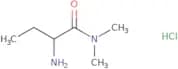
CAS:<p>Versatile small molecule scaffold</p>Formula:C9H12BrClFNPurity:Min. 95%Molecular weight:268.55 g/mol(2R)-2-Amino-N,N-dimethylbutanamide hydrochloride
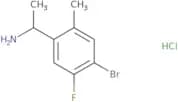
CAS:<p>Versatile small molecule scaffold</p>Formula:C6H15ClN2OPurity:Min. 95%Molecular weight:166.65 g/mol(2S)-2-({[(9H-Fluoren-9-yl)methoxy]carbonyl}amino)-3-(propan-2-yloxy)propanoic acid
CAS:<p>Versatile small molecule scaffold</p>Formula:C21H23NO5Purity:Min. 95%Molecular weight:369.4 g/mol(1S)-1-(2-Methyl-2,3-dihydro-1-benzofuran-5-yl)ethan-1-amine hydrochloride
CAS:<p>Versatile small molecule scaffold</p>Formula:C11H16ClNOPurity:Min. 95%Molecular weight:213.7 g/mol(4S)-3-[(Oxolan-3-yl)methanesulfonyl]-1,3-thiazolidine-4-carboxylic acid
CAS:<p>Versatile small molecule scaffold</p>Formula:C9H15NO5S2Purity:Min. 95%Molecular weight:281.3 g/molrac-(1S,3S)-3-({1-[(tert-Butoxy)carbonyl]piperidin-3-yl}({[(9H-fluoren-9-yl)methoxy]carbonyl})amino)cyclobutane-1-carboxylic acid
CAS:<p>Versatile small molecule scaffold</p>Formula:C30H36N2O6Purity:Min. 95%Molecular weight:520.6 g/mol(1R,4R)-4-[3-(Oxolan-2-yl)propanamido]cyclohexane-1-carboxylic acid
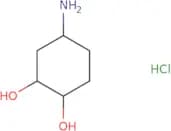
CAS:<p>Versatile small molecule scaffold</p>Formula:C14H23NO4Purity:Min. 95%Molecular weight:269.3 g/molrac-(1R,2S)-4-Aminocyclohexane-1,2-diol hydrochloride
CAS:<p>Versatile small molecule scaffold</p>Formula:C6H14ClNO2Purity:Min. 95%Molecular weight:167.6 g/molrac-[(1R,5R,6S)-6-Aminobicyclo[3.2.0]heptan-3-yl]methanol
CAS:<p>Versatile small molecule scaffold</p>Formula:C8H15NOPurity:Min. 95%Molecular weight:141.2 g/molrac-(3aR,6aR)-Hexahydro-2H-furo[3,2-b]pyrrole-5-carboxylic acid hydrochloride
CAS:<p>Versatile small molecule scaffold</p>Formula:C7H12ClNO3Purity:Min. 95%Molecular weight:193.6 g/molrac-(1R,5R,6S)-6-Aminobicyclo[3.2.0]heptane-3-carboxylic acid hydrochloride
CAS:<p>Versatile small molecule scaffold</p>Formula:C8H14ClNO2Purity:Min. 95%Molecular weight:191.7 g/molrac-(1R,5R,6S)-6-{[(tert-Butoxy)carbonyl]amino}bicyclo[3.2.0]heptane-3-carboxylic acid
CAS:<p>Versatile small molecule scaffold</p>Formula:C13H21NO4Purity:Min. 95%Molecular weight:255.3 g/molrac-Methyl (1R,5R)-6-hydroxybicyclo[3.2.0]heptane-3-carboxylate
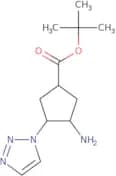
CAS:<p>Versatile small molecule scaffold</p>Formula:C9H14O3Purity:Min. 95%Molecular weight:170.2 g/molrac-tert-Butyl (3R,4S)-3-amino-4-(1H-1,2,3-triazol-1-yl)cyclopentane-1-carboxylate
CAS:<p>Versatile small molecule scaffold</p>Formula:C12H20N4O2Purity:Min. 95%Molecular weight:252.3 g/molrac-(6R,7R)-7-Amino-2-methyl-1-(propan-2-yl)-2-azaspiro[3.4]octan-6-ol
CAS:<p>Versatile small molecule scaffold</p>Formula:C11H22N2OPurity:Min. 95%Molecular weight:198.3 g/molrac-[(3aR,6aR)-Hexahydrofuro[2,3-c]furan-2-yl]methanamine
CAS:<p>Versatile small molecule scaffold</p>Formula:C7H13NO2Purity:Min. 95%Molecular weight:143.2 g/molrac-Methyl (1R,5R,6S)-6-aminobicyclo[3.2.0]heptane-3-carboxylate hydrochloride
CAS:<p>Versatile small molecule scaffold</p>Formula:C9H16ClNO2Purity:Min. 95%Molecular weight:205.7 g/molrac-(6R,7R)-7-Amino-2-ethyl-1-(propan-2-yl)-2-azaspiro[3.4]octan-6-ol dihydrochloride
CAS:<p>Versatile small molecule scaffold</p>Formula:C12H26Cl2N2OPurity:Min. 95%Molecular weight:285.3 g/molrac-(6R,7R)-7-Amino-2-benzyl-1-(propan-2-yl)-2-azaspiro[3.4]octan-6-ol dihydrochloride
CAS:<p>Versatile small molecule scaffold</p>Formula:C17H28Cl2N2OPurity:Min. 95%Molecular weight:347.3 g/molrac-[(1R,5R)-6-Aminobicyclo[3.2.0]heptan-3-yl]methanol
CAS:<p>Versatile small molecule scaffold</p>Formula:C8H15NOPurity:Min. 95%Molecular weight:141.2 g/mol2-{[(9H-Fluoren-9-yl)methoxy]carbonyl}-2-azaspiro[3.4]octane-1-carboxylic acid
CAS:<p>Versatile small molecule scaffold</p>Formula:C23H23NO4Purity:Min. 95%Molecular weight:377.4 g/mol4-[(tert-Butoxy)carbonyl]-2,3,4,5-tetrahydro-1,4-benzoxazepine-5-carboxylic acid
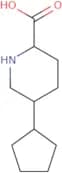
CAS:<p>Versatile small molecule scaffold</p>Formula:C15H19NO5Purity:Min. 95%Molecular weight:293.31 g/mol5-Cyclopentylpiperidine-2-carboxylic acids
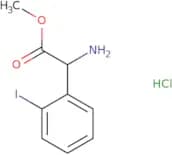
CAS:<p>Versatile small molecule scaffold</p>Formula:C11H19NO2Purity:Min. 95%Molecular weight:197.3 g/molMethyl 2-amino-2-(2-iodophenyl)acetate hydrochloride
CAS:<p>Versatile small molecule scaffold</p>Formula:C9H11ClINO2Purity:Min. 95%Molecular weight:327.54 g/mol3-{[(9H-Fluoren-9-yl)methoxy]carbonyl}-2-(4-hydroxyphenyl)-1,3-thiazolidine-4-carboxylic acid
CAS:<p>Versatile small molecule scaffold</p>Formula:C25H21NO5SPurity:Min. 95%Molecular weight:447.5 g/mol2-Amino-3-hydroxy-3-(pyridin-3-yl)propanoic acid hydrochloride
CAS:<p>Versatile small molecule scaffold</p>Formula:C8H11ClN2O3Purity:Min. 95%Molecular weight:218.6 g/mol2-Amino-2-(2,3-dihydro-1-benzofuran-5-yl)acetic acid hydrochloride
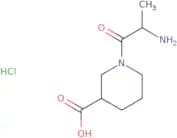
CAS:<p>Versatile small molecule scaffold</p>Formula:C10H12ClNO3Purity:Min. 95%Molecular weight:229.7 g/mol1-(2-Aminopropanoyl)piperidine-3-carboxylic acid hydrochloride
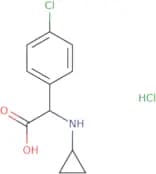
CAS:<p>Versatile small molecule scaffold</p>Formula:C9H17ClN2O3Purity:Min. 95%Molecular weight:236.7 g/mol2-(4-Chlorophenyl)-2-(cyclopropylamino)acetic acid hydrochloride
CAS:<p>Versatile small molecule scaffold</p>Formula:C11H13Cl2NO2Purity:Min. 95%Molecular weight:262.1 g/mol4-{[(9H-Fluoren-9-yl)methoxy]carbonyl}thiomorpholine-3-carboxylic acid 1,1-dioxide
CAS:<p>Versatile small molecule scaffold</p>Formula:C20H19NO6SPurity:Min. 95%Molecular weight:401.4 g/mol2-({[(9H-Fluoren-9-yl)methoxy]carbonyl}amino)-3-[3-(trifluoromethyl)-1H-pyrazol-1-yl]propanoic acid
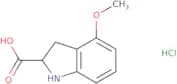
CAS:<p>Versatile small molecule scaffold</p>Formula:C22H18F3N3O4Purity:Min. 95%Molecular weight:445.4 g/mol4-Methoxy-2,3-dihydro-1H-indole-2-carboxylic acid hydrochloride
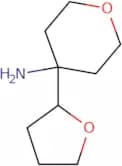
CAS:<p>Versatile small molecule scaffold</p>Formula:C10H12ClNO3Purity:Min. 95%Molecular weight:229.7 g/mol4-(Oxolan-2-yl)oxan-4-amine
CAS:<p>Versatile small molecule scaffold</p>Formula:C9H17NO2Purity:Min. 95%Molecular weight:171.24 g/molMethyl 2-oxa-5-azabicyclo[2.2.1]heptane-4-carboxylate hydrochloride
CAS:<p>Versatile small molecule scaffold</p>Formula:C7H12ClNO3Purity:Min. 95%Molecular weight:193.63 g/mol3-[(Oxiran-2-yl)methyl]oxetan-3-ol
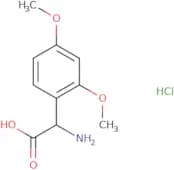
CAS:<p>Versatile small molecule scaffold</p>Formula:C6H10O3Purity:Min. 95%Molecular weight:130.14 g/mol2-Amino-2-(2,4-dimethoxyphenyl)acetic acid hydrochloride
CAS:<p>Versatile small molecule scaffold</p>Formula:C10H14ClNO4Purity:Min. 95%Molecular weight:247.7 g/mol1-{[(9H-Fluoren-9-yl)methoxy]carbonyl}-4,4-dimethylpiperidine-2-carboxylic acid
CAS:<p>Versatile small molecule scaffold</p>Formula:C23H25NO4Purity:Min. 95%Molecular weight:379.4 g/mol5-[(tert-Butoxy)carbonyl]-2H,4H,5H,6H-pyrrolo[3,4-c]pyrazole-4-carboxylic acid
CAS:<p>Versatile small molecule scaffold</p>Formula:C11H15N3O4Purity:Min. 95%Molecular weight:253.25 g/mol7-{[(9H-Fluoren-9-yl)methoxy]carbonyl}-5H,6H,7H,8H-[1,2,4]triazolo[4,3-a]pyrazine-6-carboxylic acid
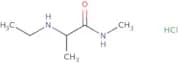
CAS:<p>Versatile small molecule scaffold</p>Formula:C21H18N4O4Purity:Min. 95%Molecular weight:390.4 g/mol2-(Ethylamino)-N-methylpropanamide hydrochloride
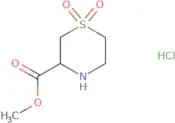
CAS:<p>Versatile small molecule scaffold</p>Formula:C6H15ClN2OPurity:Min. 95%Molecular weight:166.6 g/molMethyl thiomorpholine-3-carboxylate 1,1-dioxide hydrochloride
CAS:<p>Versatile small molecule scaffold</p>Formula:C6H12ClNO4SPurity:Min. 95%Molecular weight:229.68 g/mol1,4-Dioxa-9-azaspiro[5.6]dodecane hydrochloride
CAS:<p>Versatile small molecule scaffold</p>Formula:C9H18ClNO2Purity:Min. 95%Molecular weight:207.7 g/mol2-(4-{[(9H-Fluoren-9-yl)methoxy]carbonyl}piperazin-1-yl)pentanoic acid
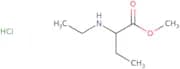
CAS:<p>Versatile small molecule scaffold</p>Formula:C24H28N2O4Purity:Min. 95%Molecular weight:408.5 g/molMethyl 2-(ethylamino)butanoate hydrochloride
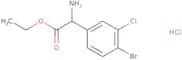
CAS:<p>Versatile small molecule scaffold</p>Formula:C7H16ClNO2Purity:Min. 95%Molecular weight:181.7 g/molEthyl 2-amino-2-(4-bromo-3-chlorophenyl)acetate hydrochloride
CAS:<p>Versatile small molecule scaffold</p>Formula:C10H12BrCl2NO2Purity:Min. 95%Molecular weight:329.01 g/mol1-{[(9H-Fluoren-9-yl)methoxy]carbonyl}-3,3-dimethylazetidine-2-carboxylic acid
CAS:<p>Versatile small molecule scaffold</p>Formula:C21H21NO4Purity:Min. 95%Molecular weight:351.4 g/mol2-({[(9H-Fluoren-9-yl)methoxy]carbonyl}amino)-3-hydroxy-4-phenylbutanoic acid
CAS:<p>Versatile small molecule scaffold</p>Formula:C25H23NO5Purity:Min. 95%Molecular weight:417.5 g/mol2-({[(9H-Fluoren-9-yl)methoxy]carbonyl}amino)-2-[1-(trifluoromethyl)cyclopropyl]acetic acid
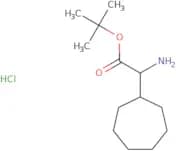
CAS:<p>Versatile small molecule scaffold</p>Formula:C21H18F3NO4Purity:Min. 95%Molecular weight:405.4 g/moltert-Butyl 2-amino-2-cycloheptylacetate hydrochloride
CAS:<p>Versatile small molecule scaffold</p>Formula:C13H26ClNO2Purity:Min. 95%Molecular weight:263.8 g/mol2-(4-Hydroxypiperidin-1-yl)propanoic acid hydrochloride
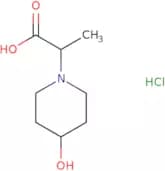
CAS:<p>Versatile small molecule scaffold</p>Formula:C8H16ClNO3Purity:Min. 95%Molecular weight:209.67 g/mol2-Amino-4-(1H-1,2,3,4-tetrazol-5-yl)butanoic acid hydrochloride
CAS:<p>Versatile small molecule scaffold</p>Formula:C5H10ClN5O2Purity:Min. 95%Molecular weight:207.6 g/molN,N,3-Trimethyl-5H,6H,7H,8H-[1,2,4]triazolo[4,3-a]pyrazine-6-carboxamide
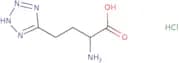
CAS:<p>Versatile small molecule scaffold</p>Formula:C9H15N5OPurity:Min. 95%Molecular weight:209.25 g/mol1-{[(9H-Fluoren-9-yl)methoxy]carbonyl}-4-methyl-5-oxopiperazine-2-carboxylic acid
CAS:<p>Versatile small molecule scaffold</p>Formula:C21H20N2O5Purity:Min. 95%Molecular weight:380.4 g/mol2-Cycloheptyl-2-(piperidin-1-yl)acetic acid hydrochloride
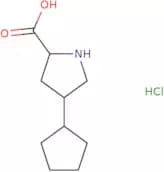
CAS:<p>Versatile small molecule scaffold</p>Formula:C14H26ClNO2Purity:Min. 95%Molecular weight:275.8 g/mol4-Cyclopentylpyrrolidine-2-carboxylic acid hydrochloride
CAS:<p>Versatile small molecule scaffold</p>Formula:C10H18ClNO2Purity:Min. 95%Molecular weight:219.71 g/mol7-{[(9H-Fluoren-9-yl)methoxy]carbonyl}-3-methyl-5H,6H,7H,8H-[1,2,4]triazolo[4,3-a]pyrazine-6-carboxylic acid
CAS:<p>Versatile small molecule scaffold</p>Formula:C22H20N4O4Purity:Min. 95%Molecular weight:404.4 g/mol(3-Methoxyoxan-3-yl)methanol
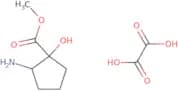
CAS:<p>Versatile small molecule scaffold</p>Formula:C7H14O3Purity:Min. 95%Molecular weight:146.2 g/molMethyl 2-amino-1-hydroxycyclopentane-1-carboxylate, oxalic acid
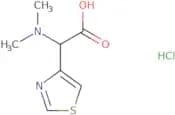
CAS:<p>Versatile small molecule scaffold</p>Formula:C9H15NO7Purity:Min. 95%Molecular weight:249.22 g/mol2-(Dimethylamino)-2-(1,3-thiazol-4-yl)acetic acid hydrochloride
CAS:<p>Versatile small molecule scaffold</p>Formula:C7H11ClN2O2SPurity:Min. 95%Molecular weight:222.69 g/mol1,7-Dioxaspiro[4.4]nonan-4-amine
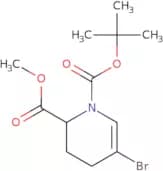
CAS:<p>Versatile small molecule scaffold</p>Formula:C7H13NO2Purity:Min. 95%Molecular weight:143.18 g/mol1-tert-Butyl 2-methyl 5-bromo-1,2,3,4-tetrahydropyridine-1,2-dicarboxylate
CAS:<p>Versatile small molecule scaffold</p>Formula:C12H18BrNO4Purity:Min. 95%Molecular weight:320.18 g/mol1-[(Benzyloxy)carbonyl]-3-phenylpiperidine-2-carboxylic acid
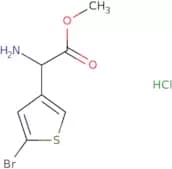
CAS:<p>Versatile small molecule scaffold</p>Formula:C20H21NO4Purity:Min. 95%Molecular weight:339.4 g/molMethyl 2-amino-2-(5-bromothiophen-3-yl)acetate hydrochloride
CAS:<p>Versatile small molecule scaffold</p>Formula:C7H9BrClNO2SPurity:Min. 95%Molecular weight:286.57 g/mol1-{[(9H-Fluoren-9-yl)methoxy]carbonyl}-5-(4-methoxyphenyl)pyrrolidine-2-carboxylic acid
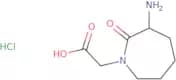
CAS:<p>Versatile small molecule scaffold</p>Formula:C27H25NO5Purity:Min. 95%Molecular weight:443.5 g/mol2-(3-Amino-2-oxoazepan-1-yl)acetic acid hydrochloride
CAS:<p>Versatile small molecule scaffold</p>Formula:C8H15ClN2O3Purity:Min. 95%Molecular weight:222.7 g/mol1,4-Dioxa-9-azaspiro[5.6]dodecan-10-one
CAS:<p>Versatile small molecule scaffold</p>Formula:C9H15NO3Purity:Min. 95%Molecular weight:185.22 g/mol
![1-[4-(Trifluoromethyl)phenyl]propan-2-amine hydrochloride](/_next/image/?url=https%3A%2Fstatic.cymitquimica.com%2Fproducts%2F3D%2Fthumb-webp%2FAAA88200.webp&w=3840&q=75)





![1-Methyl-1,3-diazaspiro[4.5]decane-2,4-dione](/_next/image/?url=https%3A%2Fstatic.cymitquimica.com%2Fproducts%2F3D%2Fthumb-webp%2FAAA87846.webp&w=3840&q=75)

![Disodium [4-(sulfanidylmethanethioyl)piperazine-1-carbothioyl]sulfanide](/_next/image/?url=https%3A%2Fstatic.cymitquimica.com%2Fproducts%2F3D%2Fthumb-webp%2FAAA87778.webp&w=3840&q=75)
![3-Methyl-5-[2-(methylsulfanyl)ethyl]-2-sulfanylideneimidazolidin-4-one](/_next/image/?url=https%3A%2Fstatic.cymitquimica.com%2Fproducts%2F3D%2Fthumb-webp%2FAAA87749.webp&w=3840&q=75)
![3-Mercapto-6-methyl-[1,2,4]triazolo[4,3-b][1,2,4]triazin-7-ol](/_next/image/?url=https%3A%2Fstatic.cymitquimica.com%2Fproducts%2F3D%2Fthumb-webp%2FAAA87728.webp&w=3840&q=75)









![[1,2,4]Triazolo[1,5-a]pyridin-2-amine](/_next/image/?url=https%3A%2Fstatic.cymitquimica.com%2Fproducts%2F3D%2Fthumb-webp%2FAAA87446.webp&w=3840&q=75)


![[3-(Dimethylamino)propyl]hydrazine dihydrochloride](/_next/image/?url=https%3A%2Fstatic.cymitquimica.com%2Fproducts%2F3D%2Fthumb-webp%2FAAA87156.webp&w=3840&q=75)

![1,3-Diazaspiro[4.11]hexadecane-2,4-dione](/_next/image/?url=https%3A%2Fstatic.cymitquimica.com%2Fproducts%2F3D%2Fthumb-webp%2FAAA83932.webp&w=3840&q=75)
![4-[1-(4-Aminophenyl)-1-methylethyl]-phenol](/_next/image/?url=https%3A%2Fstatic.cymitquimica.com%2Fproducts%2F3D%2Fthumb-webp%2FAAA83711.webp&w=3840&q=75)
![2-[(4-Chloronaphthalen-1-yl)oxy]acetic acid](/_next/image/?url=https%3A%2Fstatic.cymitquimica.com%2Fproducts%2F3D%2Fthumb-webp%2FAAA83508.webp&w=3840&q=75)
![4-(Ethoxycarbonyl)bicyclo-[2.2.2]octane-1-carboxylic acid](/_next/image/?url=https%3A%2Fstatic.cymitquimica.com%2Fproducts%2F3D%2Fthumb-webp%2FAAA83450.webp&w=3840&q=75)
![(2,4-Dioxo-1,3-diaza-spiro[4.5]dec-3-yl)-acetic acid](/_next/image/?url=https%3A%2Fstatic.cymitquimica.com%2Fproducts%2F3D%2Fthumb-webp%2FAAA83445.webp&w=3840&q=75)
![5-(4-Nitro-phenyl)-[1,3,4]thiadiazol-2-ylamine](/_next/image/?url=https%3A%2Fstatic.cymitquimica.com%2Fproducts%2F3D%2Fthumb-webp%2FAAA83363.webp&w=3840&q=75)
![5-(2-Chloro-phenyl)-[1,3,4]thiadiazol-2-ylamine](/_next/image/?url=https%3A%2Fstatic.cymitquimica.com%2Fproducts%2F3D%2Fthumb-webp%2FAAA82881.webp&w=3840&q=75)
![Bicyclo[2.2.2]octane-2-sulfonyl fluoride](/_next/image/?url=https%3A%2Fstatic.cymitquimica.com%2Fproducts%2F3D%2Fthumb-webp%2FAAA82718.webp&w=3840&q=75)
![Bicyclo[2.2.2]octane-1,4-diyldimethanol](/_next/image/?url=https%3A%2Fstatic.cymitquimica.com%2Fproducts%2F3D%2Fthumb-webp%2FAAA82645.webp&w=3840&q=75)
![2-{Bicyclo[2.2.1]hept-5-en-2-yl}acetic acid](/_next/image/?url=https%3A%2Fstatic.cymitquimica.com%2Fproducts%2F3D%2Fthumb-webp%2FAAA82571.webp&w=3840&q=75)
![2-Methylbicyclo[2.2.1]hept-5-ene-2-carboxylic acid](/_next/image/?url=https%3A%2Fstatic.cymitquimica.com%2Fproducts%2F3D%2Fthumb-webp%2FAAA82503.webp&w=3840&q=75)
![4H,5H-Thieno[2,3-d]pyridazin-4-one](/_next/image/?url=https%3A%2Fstatic.cymitquimica.com%2Fproducts%2F3D%2Fthumb-webp%2FAAA82423.webp&w=3840&q=75)
![4-[4-(Chloromethyl)-1,3-oxazol-2-yl]benzonitrile](/_next/image/?url=https%3A%2Fstatic.cymitquimica.com%2Fproducts%2F3D%2Fthumb-webp%2FCIA59469.webp&w=3840&q=75)
![rac-(1S,3S)-3-({1-[(tert-Butoxy)carbonyl]azetidin-3-yl}({[(9H-fluoren-9-yl)methoxy]carbonyl})amino…](/_next/image/?url=https%3A%2Fstatic.cymitquimica.com%2Fproducts%2F3D%2Fthumb-webp%2FMKD09109.webp&w=3840&q=75)
![rac-tert-Butyl N-[(6S,9S)-1-oxa-4-azaspiro[5.5]undecan-9-yl]carbamate](/_next/image/?url=https%3A%2Fstatic.cymitquimica.com%2Fproducts%2F3D%2Fthumb-webp%2FMKD09246.webp&w=3840&q=75)
![(2S)-1-[(2-Methyl-2H-1,2,3,4-tetrazol-5-yl)methyl]pyrrolidine-2-carboxylic acid hydrochloride](/_next/image/?url=https%3A%2Fstatic.cymitquimica.com%2Fproducts%2F3D%2Fthumb-webp%2FMKD09255.webp&w=3840&q=75)
![Potassium 2-{[(3S)-3-hydroxypyrrolidin-1-yl]methyl}-1,3-oxazole-4-carboxylate](/_next/image/?url=https%3A%2Fstatic.cymitquimica.com%2Fproducts%2F3D%2Fthumb-webp%2FMKD09541.webp&w=3840&q=75)
![3-Amino-N-[(2R)-butan-2-yl]propanamide hydrochloride](/_next/image/?url=https%3A%2Fstatic.cymitquimica.com%2Fproducts%2F3D%2Fthumb-webp%2FMKD09873.webp&w=3840&q=75)
![(2R)-2-[(tert-Butoxy)methyl]piperidine hydrochloride](/_next/image/?url=https%3A%2Fstatic.cymitquimica.com%2Fproducts%2F3D%2Fthumb-webp%2FMKD09942.webp&w=3840&q=75)
![[rac-(1R,4S)-1-Methyl-2-oxabicyclo[2.2.2]octan-4-yl]methanol](/_next/image/?url=https%3A%2Fstatic.cymitquimica.com%2Fproducts%2F3D%2Fthumb-webp%2FMKD09953.webp&w=3840&q=75)
![rac-(1S,3S)-3-({1-[(tert-Butoxy)carbonyl]piperidin-4-yl}({[(9H-fluoren-9-yl)methoxy]carbonyl})amin…](/_next/image/?url=https%3A%2Fstatic.cymitquimica.com%2Fproducts%2F3D%2Fthumb-webp%2FMKD13471.webp&w=3840&q=75)
![rac-(1S,3S)-3-({[(9H-Fluoren-9-yl)methoxy]carbonyl}(methyl)amino)cyclobutane-1-carboxylic acid](/_next/image/?url=https%3A%2Fstatic.cymitquimica.com%2Fproducts%2F3D%2Fthumb-webp%2FMKD13493.webp&w=3840&q=75)
![(2R)-2-[Benzyl({[(9H-fluoren-9-yl)methoxy]carbonyl})amino]propanoic acid](/_next/image/?url=https%3A%2Fstatic.cymitquimica.com%2Fproducts%2F3D%2Fthumb-webp%2FMKD13565.webp&w=3840&q=75)
![Methyl (2S)-2-amino-4-[(trifluoromethyl)sulfanyl]butanoate hydrochloride](/_next/image/?url=https%3A%2Fstatic.cymitquimica.com%2Fproducts%2F3D%2Fthumb-webp%2FMKD13578.webp&w=3840&q=75)
![(2S,4S)-1-[(tert-Butoxy)carbonyl]-4-hydroxy-4-(trifluoromethyl)pyrrolidine-2-carboxylic acid](/_next/image/?url=https%3A%2Fstatic.cymitquimica.com%2Fproducts%2F3D%2Fthumb-webp%2FMKD13587.webp&w=3840&q=75)
![rac-[(1R,3R)-3-Fluoro-1-phenylcyclobutyl]methanamine](/_next/image/?url=https%3A%2Fstatic.cymitquimica.com%2Fproducts%2F3D%2Fthumb-webp%2FMKD13614.webp&w=3840&q=75)
![(3R,8aS)-N'-Hydroxy-hexahydro-1H-pyrrolo[2,1-c]morpholine-3-carboximidamide](/_next/image/?url=https%3A%2Fstatic.cymitquimica.com%2Fproducts%2F3D%2Fthumb-webp%2FMKD13641.webp&w=3840&q=75)
![(6S)-2,8,11-Triazatricyclo[8.4.0.0,2,6]tetradeca-1(14),10,12-triene](/_next/image/?url=https%3A%2Fstatic.cymitquimica.com%2Fproducts%2F3D%2Fthumb-webp%2FMKD14224.webp&w=3840&q=75)
![(2R,4S)-4-Azido-1-{[(9H-fluoren-9-yl)methoxy]carbonyl}pyrrolidine-2-carboxylic acid](/_next/image/?url=https%3A%2Fstatic.cymitquimica.com%2Fproducts%2F3D%2Fthumb-webp%2FMKD14263.webp&w=3840&q=75)
![5-({[(3S)-1-[(tert-Butoxy)carbonyl]pyrrolidin-3-yl]({[(9H-fluoren-9-yl)methoxy]carbonyl})amino}met…](/_next/image/?url=https%3A%2Fstatic.cymitquimica.com%2Fproducts%2F3D%2Fthumb-webp%2FMKD14301.webp&w=3840&q=75)
![(1S,3S)-1-({[(9H-Fluoren-9-yl)methoxy]carbonyl}amino)-3-hydroxycyclobutane-1-carboxylic acid](/_next/image/?url=https%3A%2Fstatic.cymitquimica.com%2Fproducts%2F3D%2Fthumb-webp%2FMKD14357.webp&w=3840&q=75)
![2-[rac-(1R,4R)-4-Aminocyclohexyl]pyrimidin-4-ol dihydrochloride](/_next/image/?url=https%3A%2Fstatic.cymitquimica.com%2Fproducts%2F3D%2Fthumb-webp%2FMKD14373.webp&w=3840&q=75)
![(2S)-2-({[(9H-Fluoren-9-yl)methoxy]carbonyl}amino)-3-(propan-2-yloxy)propanoic acid](/_next/image/?url=https%3A%2Fstatic.cymitquimica.com%2Fproducts%2F3D%2Fthumb-webp%2FMKD14608.webp&w=3840&q=75)
![(4S)-3-[(Oxolan-3-yl)methanesulfonyl]-1,3-thiazolidine-4-carboxylic acid](/_next/image/?url=https%3A%2Fstatic.cymitquimica.com%2Fproducts%2F3D%2Fthumb-webp%2FMKD42071.webp&w=3840&q=75)
![rac-(1S,3S)-3-({1-[(tert-Butoxy)carbonyl]piperidin-3-yl}({[(9H-fluoren-9-yl)methoxy]carbonyl})amin…](/_next/image/?url=https%3A%2Fstatic.cymitquimica.com%2Fproducts%2F3D%2Fthumb-webp%2FMKD42656.webp&w=3840&q=75)
![(1R,4R)-4-[3-(Oxolan-2-yl)propanamido]cyclohexane-1-carboxylic acid](/_next/image/?url=https%3A%2Fstatic.cymitquimica.com%2Fproducts%2F3D%2Fthumb-webp%2FMKD42784.webp&w=3840&q=75)
![rac-[(1R,5R,6S)-6-Aminobicyclo[3.2.0]heptan-3-yl]methanol](/_next/image/?url=https%3A%2Fstatic.cymitquimica.com%2Fproducts%2F3D%2Fthumb-webp%2FMKD43281.webp&w=3840&q=75)
![rac-(3aR,6aR)-Hexahydro-2H-furo[3,2-b]pyrrole-5-carboxylic acid hydrochloride](/_next/image/?url=https%3A%2Fstatic.cymitquimica.com%2Fproducts%2F3D%2Fthumb-webp%2FMKD43291.webp&w=3840&q=75)
![rac-(1R,5R,6S)-6-Aminobicyclo[3.2.0]heptane-3-carboxylic acid hydrochloride](/_next/image/?url=https%3A%2Fstatic.cymitquimica.com%2Fproducts%2F3D%2Fthumb-webp%2FMKD43363.webp&w=3840&q=75)
![rac-(1R,5R,6S)-6-{[(tert-Butoxy)carbonyl]amino}bicyclo[3.2.0]heptane-3-carboxylic acid](/_next/image/?url=https%3A%2Fstatic.cymitquimica.com%2Fproducts%2F3D%2Fthumb-webp%2FMKD43413.webp&w=3840&q=75)
![rac-Methyl (1R,5R)-6-hydroxybicyclo[3.2.0]heptane-3-carboxylate](/_next/image/?url=https%3A%2Fstatic.cymitquimica.com%2Fproducts%2F3D%2Fthumb-webp%2FMKD43422.webp&w=3840&q=75)
![rac-(6R,7R)-7-Amino-2-methyl-1-(propan-2-yl)-2-azaspiro[3.4]octan-6-ol](/_next/image/?url=https%3A%2Fstatic.cymitquimica.com%2Fproducts%2F3D%2Fthumb-webp%2FMKD43435.webp&w=3840&q=75)
![rac-[(3aR,6aR)-Hexahydrofuro[2,3-c]furan-2-yl]methanamine](/_next/image/?url=https%3A%2Fstatic.cymitquimica.com%2Fproducts%2F3D%2Fthumb-webp%2FMKD43438.webp&w=3840&q=75)
![rac-Methyl (1R,5R,6S)-6-aminobicyclo[3.2.0]heptane-3-carboxylate hydrochloride](/_next/image/?url=https%3A%2Fstatic.cymitquimica.com%2Fproducts%2F3D%2Fthumb-webp%2FMKD43445.webp&w=3840&q=75)
![rac-(6R,7R)-7-Amino-2-ethyl-1-(propan-2-yl)-2-azaspiro[3.4]octan-6-ol dihydrochloride](/_next/image/?url=https%3A%2Fstatic.cymitquimica.com%2Fproducts%2F3D%2Fthumb-webp%2FMKD44008.webp&w=3840&q=75)
![rac-(6R,7R)-7-Amino-2-benzyl-1-(propan-2-yl)-2-azaspiro[3.4]octan-6-ol dihydrochloride](/_next/image/?url=https%3A%2Fstatic.cymitquimica.com%2Fproducts%2F3D%2Fthumb-webp%2FMKD44032.webp&w=3840&q=75)
![rac-[(1R,5R)-6-Aminobicyclo[3.2.0]heptan-3-yl]methanol](/_next/image/?url=https%3A%2Fstatic.cymitquimica.com%2Fproducts%2F3D%2Fthumb-webp%2FMKD44044.webp&w=3840&q=75)
![2-{[(9H-Fluoren-9-yl)methoxy]carbonyl}-2-azaspiro[3.4]octane-1-carboxylic acid](/_next/image/?url=https%3A%2Fstatic.cymitquimica.com%2Fproducts%2F3D%2Fthumb-webp%2FMKD44287.webp&w=3840&q=75)
![4-[(tert-Butoxy)carbonyl]-2,3,4,5-tetrahydro-1,4-benzoxazepine-5-carboxylic acid](/_next/image/?url=https%3A%2Fstatic.cymitquimica.com%2Fproducts%2F3D%2Fthumb-webp%2FMKD44290.webp&w=3840&q=75)
![3-{[(9H-Fluoren-9-yl)methoxy]carbonyl}-2-(4-hydroxyphenyl)-1,3-thiazolidine-4-carboxylic acid](/_next/image/?url=https%3A%2Fstatic.cymitquimica.com%2Fproducts%2F3D%2Fthumb-webp%2FMKD44663.webp&w=3840&q=75)
![4-{[(9H-Fluoren-9-yl)methoxy]carbonyl}thiomorpholine-3-carboxylic acid 1,1-dioxide](/_next/image/?url=https%3A%2Fstatic.cymitquimica.com%2Fproducts%2F3D%2Fthumb-webp%2FMKD44797.webp&w=3840&q=75)
![2-({[(9H-Fluoren-9-yl)methoxy]carbonyl}amino)-3-[3-(trifluoromethyl)-1H-pyrazol-1-yl]propanoic acid](/_next/image/?url=https%3A%2Fstatic.cymitquimica.com%2Fproducts%2F3D%2Fthumb-webp%2FMKD44831.webp&w=3840&q=75)
![Methyl 2-oxa-5-azabicyclo[2.2.1]heptane-4-carboxylate hydrochloride](/_next/image/?url=https%3A%2Fstatic.cymitquimica.com%2Fproducts%2F3D%2Fthumb-webp%2FMKD45100.webp&w=3840&q=75)
![3-[(Oxiran-2-yl)methyl]oxetan-3-ol](/_next/image/?url=https%3A%2Fstatic.cymitquimica.com%2Fproducts%2F3D%2Fthumb-webp%2FMKD45132.webp&w=3840&q=75)
![1-{[(9H-Fluoren-9-yl)methoxy]carbonyl}-4,4-dimethylpiperidine-2-carboxylic acid](/_next/image/?url=https%3A%2Fstatic.cymitquimica.com%2Fproducts%2F3D%2Fthumb-webp%2FMKD45189.webp&w=3840&q=75)
![5-[(tert-Butoxy)carbonyl]-2H,4H,5H,6H-pyrrolo[3,4-c]pyrazole-4-carboxylic acid](/_next/image/?url=https%3A%2Fstatic.cymitquimica.com%2Fproducts%2F3D%2Fthumb-webp%2FMKD45734.webp&w=3840&q=75)
![7-{[(9H-Fluoren-9-yl)methoxy]carbonyl}-5H,6H,7H,8H-[1,2,4]triazolo[4,3-a]pyrazine-6-carboxylic acid](/_next/image/?url=https%3A%2Fstatic.cymitquimica.com%2Fproducts%2F3D%2Fthumb-webp%2FMKD45764.webp&w=3840&q=75)
![1,4-Dioxa-9-azaspiro[5.6]dodecane hydrochloride](/_next/image/?url=https%3A%2Fstatic.cymitquimica.com%2Fproducts%2F3D%2Fthumb-webp%2FMKD45811.webp&w=3840&q=75)
![2-(4-{[(9H-Fluoren-9-yl)methoxy]carbonyl}piperazin-1-yl)pentanoic acid](/_next/image/?url=https%3A%2Fstatic.cymitquimica.com%2Fproducts%2F3D%2Fthumb-webp%2FMKD45863.webp&w=3840&q=75)
![1-{[(9H-Fluoren-9-yl)methoxy]carbonyl}-3,3-dimethylazetidine-2-carboxylic acid](/_next/image/?url=https%3A%2Fstatic.cymitquimica.com%2Fproducts%2F3D%2Fthumb-webp%2FMKD46224.webp&w=3840&q=75)
![2-({[(9H-Fluoren-9-yl)methoxy]carbonyl}amino)-3-hydroxy-4-phenylbutanoic acid](/_next/image/?url=https%3A%2Fstatic.cymitquimica.com%2Fproducts%2F3D%2Fthumb-webp%2FMKD46258.webp&w=3840&q=75)
![2-({[(9H-Fluoren-9-yl)methoxy]carbonyl}amino)-2-[1-(trifluoromethyl)cyclopropyl]acetic acid](/_next/image/?url=https%3A%2Fstatic.cymitquimica.com%2Fproducts%2F3D%2Fthumb-webp%2FMKD46264.webp&w=3840&q=75)
![N,N,3-Trimethyl-5H,6H,7H,8H-[1,2,4]triazolo[4,3-a]pyrazine-6-carboxamide](/_next/image/?url=https%3A%2Fstatic.cymitquimica.com%2Fproducts%2F3D%2Fthumb-webp%2FMKD46330.webp&w=3840&q=75)
![1-{[(9H-Fluoren-9-yl)methoxy]carbonyl}-4-methyl-5-oxopiperazine-2-carboxylic acid](/_next/image/?url=https%3A%2Fstatic.cymitquimica.com%2Fproducts%2F3D%2Fthumb-webp%2FMKD47037.webp&w=3840&q=75)
![7-{[(9H-Fluoren-9-yl)methoxy]carbonyl}-3-methyl-5H,6H,7H,8H-[1,2,4]triazolo[4,3-a]pyrazine-6-carbo…](/_next/image/?url=https%3A%2Fstatic.cymitquimica.com%2Fproducts%2F3D%2Fthumb-webp%2FMKD47246.webp&w=3840&q=75)
![1,7-Dioxaspiro[4.4]nonan-4-amine](/_next/image/?url=https%3A%2Fstatic.cymitquimica.com%2Fproducts%2F3D%2Fthumb-webp%2FMKD47743.webp&w=3840&q=75)
![1-[(Benzyloxy)carbonyl]-3-phenylpiperidine-2-carboxylic acid](/_next/image/?url=https%3A%2Fstatic.cymitquimica.com%2Fproducts%2F3D%2Fthumb-webp%2FMKD47829.webp&w=3840&q=75)
![1-{[(9H-Fluoren-9-yl)methoxy]carbonyl}-5-(4-methoxyphenyl)pyrrolidine-2-carboxylic acid](/_next/image/?url=https%3A%2Fstatic.cymitquimica.com%2Fproducts%2F3D%2Fthumb-webp%2FMKD48202.webp&w=3840&q=75)
![1,4-Dioxa-9-azaspiro[5.6]dodecan-10-one](/_next/image/?url=https%3A%2Fstatic.cymitquimica.com%2Fproducts%2F3D%2Fthumb-webp%2FMKD48434.webp&w=3840&q=75)