Antimicrobials
Subcategories of "Antimicrobials"
- Antibiotics(4,135 products)
- Antifungals(896 products)
- Antiparasitics(696 products)
- Antivirals(766 products)
Found 2434 products of "Antimicrobials"
Faropenem sodium hemipentahydrate
CAS:Faropenem sodium hemipentahydrate is a penem-class beta-lactam antibiotic with action on bacterial cell wall synthesis and is used for treating respiratory, skin, and urinary tract infections.Formula:C12H15NO5S•(H2O)2•NaPurity:Min. 95%Color and Shape:PowderMolecular weight:353.34 g/molDoxycycline hydrochloride
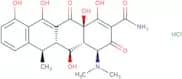
CAS:Antibiotic; anti-protozoal; anti-helmintic; protein synthesis inhibitorFormula:C22H24N2O8•HClPurity:Min. 95%Molecular weight:480.9 g/mol2,4-Diacetylphloroglucinol
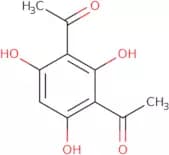
CAS:2,4-Diacetylphloroglucinol is a natural phenol produced by certain bacteria, used for its biocontrol properties against plant pathogens.
Formula:C10H10O5Purity:Min. 95%Color and Shape:Beige PowderMolecular weight:210.18 g/molKanamycin sulfate
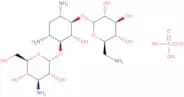
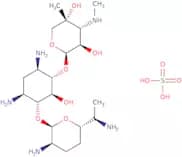
CAS:Inhibitor of protein synthesis; aminoglycoside
Formula:C18H38N4O15SColor and Shape:White PowderMolecular weight:582.58 g/molPenciclovir - Bio-X ™
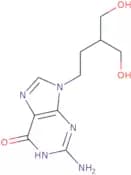
CAS:Penciclovir is an antiviral agent and acyclic guanine derivative that has proven efficient in the treatment of Herpes Simplex type 1 and 2 (HSV1 and HSV2) infection. Penciclovir is transformed by the virus into an active derivative able to block the deoxyguanosine triphosphate substrate binding site of the HSV polymerase.
Formula:C10H15N5O3Purity:Min. 95%Color and Shape:PowderMolecular weight:253.26 g/molIndinavir sulfate
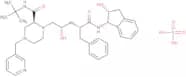
CAS:Anti-viral; HIV-1 protease inhibitorFormula:C36H47N5O4•H2O4SPurity:Min. 95%Color and Shape:White To Off-White SolidMolecular weight:711.87 g/molNeomycin trisulfate, Antibiotic for Culture Media Use Only
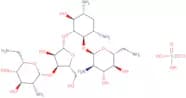
CAS:Neomycin, one of the many oligosaccharide containing antibiotics, is an aminoglycoside antibiotic found in Streptomyces fradiae (Collins, 2006) with wide spectrum, active against Gram-negative Gram-positive bacteria. Neomycin is commony used as a selection marker in cloning, and is therefore used in growth media to select colonies with the neomycin resistance cassette integrated into their genome. Neomycin is a mixture of neomycin B (Framycetin) and its epimer Neomycin C, the latter component accounting for some 5â15% of the mixture.Formula:C23H52N6O25S3Molecular weight:908.88 g/molCefoxitin sodium salt, Antibiotic for Culture Media Use Only
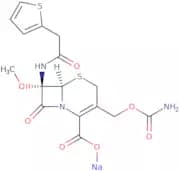
CAS:Cefoxitin sodium salt is a cephamycin-type antibiotic, which is a semi-synthetic derivative of cephalosporin. As a beta-lactam antibiotic, it is derived from the fermentation of *Streptomyces lactamdurans* and chemically modified to enhance stability against certain bacterial beta-lactamases. Its primary mode of action involves inhibiting bacterial cell wall synthesis by binding to penicillin-binding proteins, disrupting the transpeptidation or cross-linking of peptidoglycan layers. This action effectively prevents the bacteria from maintaining cell wall integrity, leading to cell lysis.Formula:C16H16N3NaO7S2Purity:Min. 98.0 Area-%Molecular weight:449.43 g/molRef: 3D-C-2480
1gTo inquire5gTo inquire10gTo inquire500mgTo inquire2500mgTo inquire-Unit-ggTo inquire1,3-Di-HABA kanamycin A
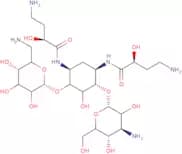
CAS:1,3-Di-HABA kanamycin A is a derivative of kanamycin A, an aminoglycoside antibiotic used to treat bacterial infections by blocking cell wall synthesis or by inhibiting protein synthesis.Formula:C26H50N6O15Purity:Min. 95 Area-%Color and Shape:White PowderMolecular weight:686.71 g/molEIDD-1931
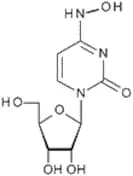
CAS:Nucleoside analog with antiviral activity against coronaviruses, hepatitis and influenzas viruses. EIDD 1931 inhibited the Middle East Respiratory Syndrome coronavirus (MERS-CoV) and the murine hepatitis virus (MHV) replication in vitro at submicromolar concentrations. EIDD 1931 is able to evade the proofreading exonuclease ExoN and presents with high barrier to development of drug resistance.
Formula:C9H13N3O6Purity:Min. 98 Area-%Color and Shape:White Off-White PowderMolecular weight:259.22 g/molImipenem monohydrate
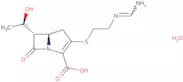
CAS:Inhibitor of cell-wall synthesis; carbapenem class
Formula:C12H19N3O5SPurity:(Hplc) 98.0 To 101.0%Color and Shape:Brown White Yellow PowderMolecular weight:317.36 g/molRibostamycin sulphate
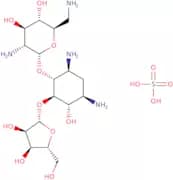
CAS:Ribostamycin sulphate is an aminoglycoside antibiotic with action on bacterial protein synthesis by binding to the 30S ribosomal subunit and is used for treating bacterial infections like sepsis and pneumonia.
Formula:C17H34N4O10·xH2O4SPurity:Min. 95%Color and Shape:PowderMolecular weight:454.47 g/molCefditoren pivoxil
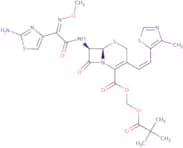
CAS:Cefditoren pivoxil is a third-generation cephalosporin antibiotic with action on bacterial cell wall synthesis and is used for treating respiratory and skin infections.Formula:C25H28N6O7S3Purity:Min. 95%Color and Shape:White PowderMolecular weight:620.72 g/molRidinilazole
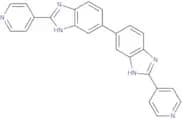
CAS:Ridinilazole is a narrow-spectrum antibiotic with action on bacterial cell division inhibition and is used for treating Clostridioides difficile infections.Formula:C24H16N6Purity:Min. 95%Molecular weight:388.4 g/molPolymyxin B sulfate, Antibiotic for Culture Media Use Only
CAS:Polymyxin B is a sulfonamide antibiotic with broad spectrum of activity against Gram-negative bacteria. It binds to the bacterial membrane, causing an increase in the cellâs permeability and thus leading to cell death. A study on human neutrophils showed that polymyxin B reduces the expression of neomycin sulfate through inhibition of protein synthesis, which leads to cell death by lysosomal enzyme release. This antibiotic has been shown to be effective on clostridium perfringens, where it inhibits bacterial growth and leads to hypersensitivity reactions in some patients.Formula:C55H100N16O21S2Purity:Min. 90.0 Area-%Molecular weight:1,385.61 g/molClindamycin hydrochloride
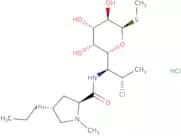
CAS:Inhibitor of protein synthesis; lincosamide classFormula:C18H34Cl2N2O5SColor and Shape:White PowderMolecular weight:461.44 g/molTelavancin HCl
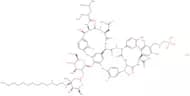
CAS:Telavancin HCl is a lipoglycopeptide antibiotic with action on bacterial cell wall synthesis and membrane integrity and is used for treating complicated skin infections and hospital-acquired pneumonia caused by gram-positive bacteria.Formula:C80H106Cl2N11O27P·HClPurity:(%) Min. 92%Color and Shape:White PowderMolecular weight:1,792.1 g/molPiperacillin sodium
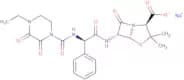
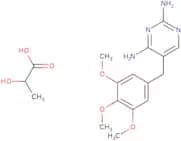
CAS:Piperacillin sodium is a broad-spectrum beta-lactam antibiotic with action on bacterial cell wall synthesis and is used for treating severe infections caused by gram-negative bacteria, including Pseudomonas aeruginosa.Formula:C23H27N5O7S•NaPurity:Min. 95%Color and Shape:PowderMolecular weight:540.55 g/mol5-(3,4,5-Trimethoxybenzyl)pyrimidine-2,4-diamine 2-hydroxypropanoate
CAS:5-(3,4,5-Trimethoxybenzyl)pyrimidine-2,4-diamine 2-hydroxypropanoate is an antibacterial compound with a broad spectrum of activity against Gram-positive and Gram-negative bacteria. It is active against strains resistant to other antibiotics, such as, tetracycline and penicillin. 5-(3,4,5-Trimethoxybenzyl)pyrimidine-2,4-diamine 2-hydroxypropanoate has been shown to be effective in vitro against Campylobacter jejuni - the most common cause of bacterial gastroenteritis in humans. The compound also inhibits the growth cycle of Campylobacter jejuni by arresting the cells at the G1 phase. The molecule has been shown to inhibit DNA synthesis in E. coli and S. typhimurium with IC50 values of 1 ÎŒM and 0.8 ÎŒM respectively. This molecule has been tested for its surface active properties and it can be used as an additive in personal care products for improved wetting and spreading on surfaces. The compound is also researched for its antifungal efficacy against Candida albicans by inhibiting the growth cycle of the fungus.
Formula:C17H24N4O6Purity:Min. 98 Area-%Molecular weight:380.40 g/molAvibactam free acid
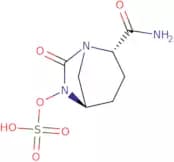
CAS:Avibactam free acid is a β-lactamase inhibitor and is used for the treatment of bacterial infections in combination with β-lactam antibiotics. It inactivates β-lactamases by a covalent and reversible mechanismFormula:C7H11N3O6SPurity:Min. 95 Area-%Color and Shape:PowderMolecular weight:265.24 g/molCefozopran hydrochloride
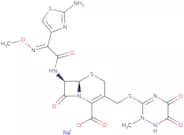
CAS:Cefozopran hydrochloride is a fourth-generation cephalosporin antibiotic with action on bacterial cell wall synthesis and is used for treating severe bacterial infections, including those caused by resistant strains.Formula:C19H18ClN9O5S2Purity:Min. 95%Molecular weight:551.99 g/molChlorotetracycline monohydrochloride, Antibiotic for Culture Media Use Only
CAS:Chlorotetracycline monohydrochloride is an antibiotic designed for culture media use. It is derived from the bacterium *Streptomyces aureofaciens*, and functions primarily by inhibiting bacterial protein synthesis. This action prevents the attachment of aminoacyl-tRNA to the ribosomal acceptor site, effectively halting the growth of bacteria by disrupting protein production, which is essential for their survival and replication.
Formula:C22H24Cl2N2O8Purity:(Chlortetracycline Hcl) Min. 89.5%Molecular weight:515.34 g/molErythromycin stearate
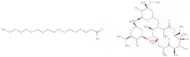
CAS:Erythromycin stearate is a macrolide antibiotic with action on bacterial protein synthesis inhibition and is used for treating respiratory tract infections, skin infections, and sexually transmitted infections.Formula:C55H103NO15Purity:79 To 102%Color and Shape:PowderMolecular weight:1,018.4 g/molDarunavir Ethanolate
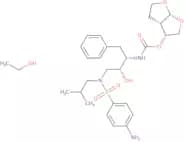
CAS:Darunavir is a HIV-1 protease inhibitor used orally in the treatment of patients with multi-drug resistant HIV-1 infection (Ghosh, 2007). It has also been shown to be effective against other infectious diseases such as hepatitis C virus and SARS coronavirus. Metabolized by cytochrome P450 3A (CYP3A) isoenzymes, darunavir is often administered together with ritonavir that prolongs its bioavaiability, giving a terminal elimination half-life (t1/2) of 15 hours (Back, 2008). The effect of darunavir on natural compounds such as matrix proteins and toll-like receptor activity has also been studied via high performance liquid chromatography (HPLC) experiments.
Formula:C27H37N3O7S·C2H6OPurity:Min. 95%Color and Shape:White PowderMolecular weight:593.73 g/molRupintrivir
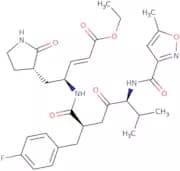
CAS:Rupintrivir is a peptidomimetic antiviral with action on rhinovirus 3C protease to inhibit viral replication and is used for research on rhinovirus and other viral infections.
Formula:C31H39FN4O7Purity:Min. 98 Area-%Color and Shape:PowderMolecular weight:598.28028STAADIUM™ GlucuroniZide
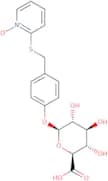
CAS:STAADIUMTM GlucuroniZide is a targeted inhibitor of glucuronidase-producing bacteria, which is activated by E. coli-specific glucuronidase enzyme. Glucuronidases are enzymes catalyzing the cleavage of complex carbohydrates and E. coli is a well-known producer. In complex cultures, E. coli strains often outcompete bacteria that present at lower titre and STAADIUMTM GlucuroniZide can help to selectively reduce the growth of E. coli. STAADIUMTM GlucuroniZide can be used in microbiome studies, food control, environmental safety, hygiene, and clinical diagnostics. More details can be found in the application notes document.Formula:C18H19NO8SPurity:Min. 95 Area-%Color and Shape:PowderMolecular weight:409.41 g/molFlorfenicol - Bio-X ™
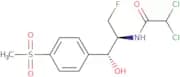
CAS:Florfenicol is a broad-spectrum antibiotic used for the treatment of various bacteria infections. This drug is used in veterinary medicine and to treat animals with those infections. This drug works by inhibiting bacteria synthesis. It is a fluorinated synthetic analog of thiamphenicol.Formula:C12H14Cl2FNO4SPurity:Min. 98 Area-%Color and Shape:PowderMolecular weight:358.21 g/molCefadroxil monohydrate
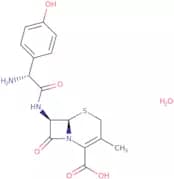
CAS:Cefadroxil monohydrate is a hydrated form of cefadroxil with similar action and applications as cefadroxil.Formula:C16H17N3O5S•H2OPurity:Min. 95%Color and Shape:PowderMolecular weight:381.41 g/molCeftriaxone sodium hydrate - Bio-X ™
CAS:Ceftriaxone is a broad-spectrum cephalosporin antibiotic that is used for the treatment of bacterial infections in different locations such as the skin, soft tissue and respiratory tract. This drug works by inhibiting mucopeptide synthesis in the bacterial cell wall. As a result, bacteria will produce defective cell walls leading to cell death.Formula:C18H16N8Na2O7S3·5H2OPurity:Min. 95%Color and Shape:PowderMolecular weight:661.6 g/molPirazinecarboxamide
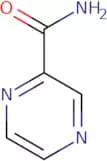
CAS:Pirazinecarboxamide (Pyrazinamide) is an antitubercular agent with action on Mycobacterium tuberculosis by disrupting membrane energetics and is used for treating tuberculosis in combination with other drugs.Formula:C5H5N3OPurity:Min. 95%Color and Shape:PowderMolecular weight:123.11 g/molGS 441524
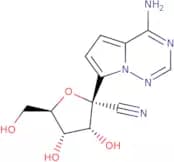
CAS:Nucleoside analog with antiviral activity against zoonotic feline infectious peritonitis virus (FIPV) and severe acute respiratory syndrome (SARS) virus from Coronaviridae family. The compound is a pro-drug and undergoes intracellular phosphorylation resulting in the active triphosphate metabolite. The triphosphorylated GS 441524 analog competes with natural nucleoside triphosphates and interferes with viral RNA synthesis. In previous studies it was tested in vitro as well as in experimental animals and showed good safety profile.Formula:C12H13N5O4Purity:Min. 98 Area-%Color and Shape:PowderMolecular weight:291.26 g/molHerbicidin E
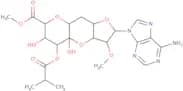
CAS:Herbicidin E is a potent herbicidal compound, derived from blue-green algae, with a biochemical mode of action focused on inhibiting photosynthetic electron transport. It effectively disrupts the photosynthetic process by binding to specific sites within the chloroplasts of target plants, impairing their ability to convert light energy into chemical energy. This leads to a depletion of essential energy reserves, resulting in the controlled demise of the plant.Formula:C22H29N5O10Purity:Min. 95%Molecular weight:523.49 g/molStreptomycin sulfate, Antibiotic for Culture Media Use Only
CAS:Streptomycin sulfate is an antibiotic that inhibits the growth of bacteria by binding to the ribosomal subunit and interfering with protein synthesis. It is used in culture media for the production of human antibodies as well as in drug therapy for methicillin-resistant staphylococcus. Streptomycin sulfate has a high specific activity and low sensitivity, but it also has a low solubility in water. The active form of streptomycin sulfate is streptomycin A, which is produced by the addition of a phenyl ring to neomycin sulfate. In plant roots, streptomycin sulfate inhibits cyanogenic glycosides from being hydrolyzed into hydrogen cyanide (HCN) and benzaldehyde.Formula:C42H84N14O36S3Molecular weight:1,457.40 g/molRef: 3D-S-8500
25gTo inquire50gTo inquire100gTo inquire250gTo inquire500gTo inquire-Unit-kgkgTo inquireAzithromycin N-oxide
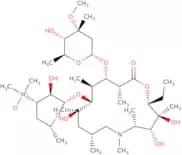
CAS:Azithromycin N-oxide is a macrolide antibiotic derivative and is used for research purposes. Its mode of action is similar to azithromycin.
Formula:C38H72N2O13Purity:Min. 95%Color and Shape:White PowderMolecular weight:764.98 g/mol3-Formyl rifamycin
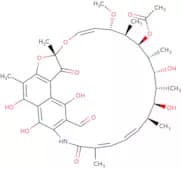
CAS:3-Formyl rifamycin is an intermediate in the synthesis of rifampicin that has been used to develop rifamycin derivatives with antibiotic activity. Rifampicin is aa anti-tuberculosis drug that inhibits bacterial DNA replicationFormula:C38H47NO13Purity:Min. 99 Area-%Color and Shape:Red PowderMolecular weight:725.78 g/molCefuroxime
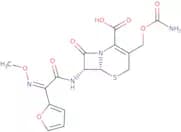
CAS:Cefuroxime is a second-generation cephalosporin antibiotic with action on bacterial cell wall synthesis and is used for treating respiratory tract infections, urinary tract infections, and Lyme disease.Formula:C16H16N4O8SPurity:Min. 98.0 Area-%Color and Shape:White Orange PowderMolecular weight:424.39 g/molMarbofloxacin
CAS:Antibiotic of fluoroquinolone class; DNA replication inhibitor
Formula:C17H19N4O4FPurity:Min. 95%Color and Shape:Yellow PowderMolecular weight:362.36 g/molOmadacycline tosylate
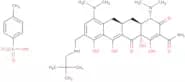
CAS:Omadacycline tosylate is a aminomethylcycline antibiotic with action on bacterial protein synthesis inhibition and is used for treating community-acquired bacterial pneumonia and skin infections.Formula:C36H48N4O10SPurity:Min. 95%Color and Shape:PowderMolecular weight:728.85 g/molGentamycin sulphate
CAS:Gentamycin sulphate is the salt form of the broad-spectrum antibiotic gentamycin (a.k.a. gentamicin). Gentamycin is active against clinically relevant bacteria, such as: Pseudomonas aeruginosa, Klebsiella pneumoniae, Escherichia coli, Serratia marcescens, and is used to fight infections from Staphylococcus, Citrobacter and Enterobacteriaceae species. Gentamycin is a natural mixture of four congeners, one of which is gentamicin C2a. Gentamycin has been included in biomedical implantable materials, such as, bone grafts, to reduce the risk of infection.Formula:C21H43N5O7·H2SO4Color and Shape:White PowderMolecular weight:575.68 g/molNovobiocin sodium salt, Antibiotic for Culture Media Use Only
CAS:Novobiocin sodium salt inhibits bacterial growth by binding to the 50S subunit of the bacterial ribosome, blocking the peptidyl transferase activity required for protein synthesis. The drug binds to DNA sequences containing glucuronic acid, which are essential for peptide bond formation. Novobiocin sodium can be found in pharmaceuticals due to its antimicrobial activity and membrane stability, which makes it suitable for pressuring ionization techniques. It also exhibits less resistance than other antibiotics like triclosan or nalidixic acid because it does not typically bind to the membranes of cells.Formula:C31H35N2NaO11Purity:Min. 90.0 Area-%Molecular weight:634.61 g/molFusidic acid
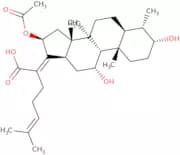
CAS:Inhibitor of protein synthesis; steroid antibiotic
Formula:C31H48O6Purity:Min. 95 Area-%Color and Shape:White Off-White PowderMolecular weight:516.71 g/molLinezolid
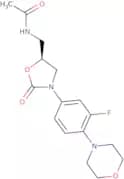
CAS:Antibiotic; inhibits bacterial mRNA translation; inhibits monoamine oxidaseFormula:C16H20FN3O4Purity:Min. 98 Area-%Color and Shape:White PowderMolecular weight:337.35 g/molMaraviroc
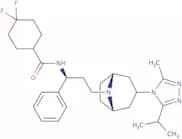
CAS:CCR-5 chemokine receptor antagonist; inhibits HIV entry via gp120 protein
Formula:C29H41F2N5OPurity:Min. 95%Color and Shape:PowderMolecular weight:513.67 g/molErythromycin thiocyanate
CAS:Erythromycin thiocyanate is a macrolide antibiotic derivative with action on bacterial protein synthesis inhibition and is used for research and pharmaceutical applications.Formula:C37H67NO13•CHNSPurity:Min. 95%Color and Shape:PowderMolecular weight:793.02 g/molClotrimazole
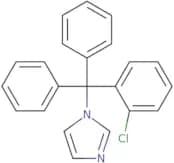
CAS:Clotrimazole is an azole antifungal medication with action on fungal cell membrane disruption and is used for treating fungal infections like athlete's foot, ringworm, and vaginal yeast infections.
Formula:C22H17ClN2Purity:Min. 95%Color and Shape:White PowderMolecular weight:344.84 g/molEnrofloxacin, Antibiotic for Culture Media Use Only
CAS:Enrofloxacin is a rapidly bactericidal antibiotic, that inhibits bacterial growth by binding to the 50S ribosomal subunit and blocking protein synthesis, thereby preventing the bacteria from making new proteins. Enrofloxacin also has strong activity against gram-positive bacteria, including Clostridium perfringens which is an anaerobic bacterium that causes food-borne illness. This antibiotic is used for the treatment of acute bacterial infections in humans, such as, skin or soft tissue infections, urinary tract infections (UTIs) and septicemia (bloodstream infection). Enrofloxacin has shown excellent bioavailability with high serum protein binding capacity. Additionally, it has good efficacy against clinical isolates of Escherichia coli and Klebsiella pneumoniae. Enrofloxacin can be used effective in treatments for Pseudomonas aeruginosa and Enterobacter species.Formula:C19H22FN3O3Purity:Min. 98.5 Area-%Molecular weight:359.39 g/molTenofovir diphosphate triethylamine(mixture of diastereomers)
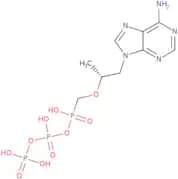
CAS:Tenofovir diphosphate triethylamine (mixture of diastereomers) is an antiviral compound, which is a synthetic chemical product derived from the parent compound, tenofovir. This formulation includes a mixture of diastereomers to enhance its solubility and bioavailability. The compound primarily functions as a nucleotide reverse transcriptase inhibitor (NRTI). It targets viral reverse transcriptase enzymes, inhibiting DNA synthesis and subsequent viral replication by causing premature chain termination.Formula:C9H16N5O10P3•(C6H15N)xPurity:Min. 95%Bleomycin A5 hydrochloride, copper complex
CAS:Bleomycin A5 inhibits DNA replication and repair. It also cleaves RNA in vitro and in vivo, and exhibits anticancer activity. It is used for various types of cancer such as squamous cell cancers, melanoma, sarcoma, testicular and ovarian cancer, Hodgkin's and non-Hodgkin's lymphoma.Formula:C57H89CuN19O21S2•(HCl)3Purity:Min. 95%Color and Shape:White PowderMolecular weight:1,613.49 g/molLeucomycin A3
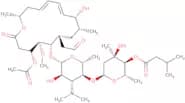
CAS:Leucomycin A3 is a macrolide antibiotic with a mode of action that inhibits bacterial protein synthesis by binding to the 50S ribosomal subunit. It is used for treating bacterial infections and has shown potential antiviral activity.Formula:C42H69NO15Purity:Min. 95%Color and Shape:White PowderMolecular weight:828 g/molFosfomycin sodium
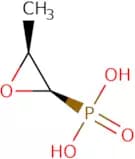
CAS:Broad-spectrum antibiotic; bacterial cell wall biogenesis inhibitorFormula:C3H7O4P·xNaPurity:Min. 95%Color and Shape:White Off-White PowderMolecular weight:138.06 g/mol